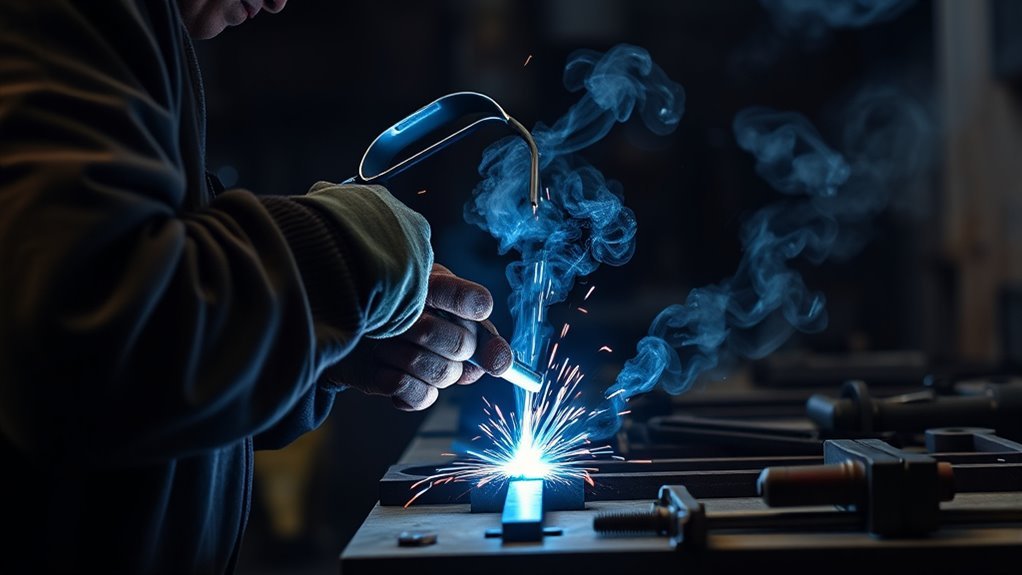
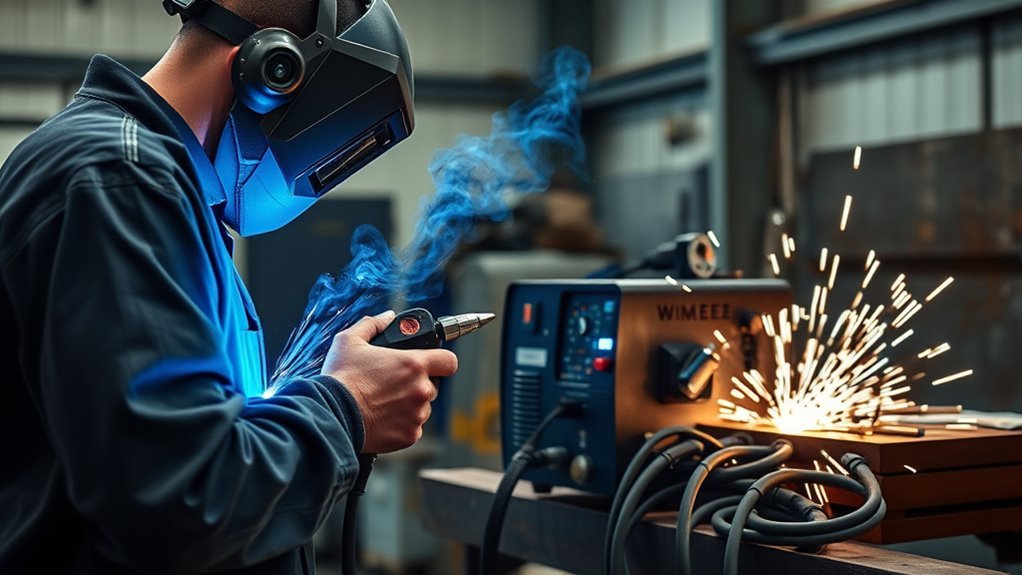
In automotive work, a welder and a fabricator can both work on metal, but they solve different problems. A welder joins parts that already fit. A fabricator cuts, shapes, measures, and builds those parts so they fit the vehicle in the first place. Knowing the difference helps you hire the right person for frame work, exhaust repair, brackets, roll cages, rust patches, chassis tabs, and custom body panels.
Quick Answer
A welder is best when the parts are already cut, fitted, and ready to join. A fabricator is best when metal must be measured, cut, bent, shaped, mocked up, or assembled first. Many automotive projects need both roles, especially structural repairs, custom brackets, cages, mounts, and panel work.
Key Takeaways
- Welders focus on joining metal with controlled heat, filler metal, shielding gas, and proper weld technique.
- Fabricators focus on layout, cutting, bending, shaping, fitting, and assembling metal parts before final joining.
- Automotive work often overlaps, so a fabricator-welder can be useful when a job needs both fit-up and strong welds.
- For safety-critical work, choose the person by process, material, repair procedure, certification, and quality checks, not by job title alone.
What Does a Welder Do in Automotive?
In automotive work, a welder joins metal components with processes such as MIG welding, TIG welding, resistance spot welding, or brazing, depending on the material and repair procedure. The official O*NET description for welders says they use hand-welding, flame-cutting, soldering, or brazing equipment to weld or join metal components or fill holes, indentations, and seams in fabricated metal products. O*NET’s welder role summary backs up that core definition.
In a shop, you may call a welder for an exhaust crack, a broken bracket, a frame tab, a suspension mount, a roll cage joint, or a replacement panel that is already trimmed and clamped in place. The welder’s main job is to control heat, travel speed, bead placement, filler choice, shielding gas, and penetration so the joint is strong without warping the surrounding metal.
A good automotive welder also checks fit-up before striking an arc. O*NET lists tasks such as examining workpieces for defects, welding in flat, vertical, or overhead positions, preparing surfaces, setting up equipment, and choosing welding methods based on metallurgy and technique. That means welding is not just “burning metal together.” It is process control.
Warning: Do not weld on vehicle structural parts, coated metal, fuel-adjacent areas, battery-connected systems, or safety-critical components unless you have the correct repair information, PPE, ventilation, fire protection, and equipment. Welding can create fumes, UV radiation, burns, eye damage, electric shock, and fire hazards.
For automotive work, MIG is common because it is fast and practical for many steel repairs and fabrication jobs. TIG is often better for thin stainless, aluminum, visible custom welds, and work that needs tighter heat control. The best process depends on the metal, joint design, thickness, access, and the vehicle manufacturer’s repair procedure.
Your work supports reliable transport and gives you technical control over the metal joints that carry load, vibration, and heat. Mastering key welding parameters is essential for protecting weld quality and reducing rework.
What Does a Fabricator Do in Automotive?
While welding joins metal parts, fabrication starts earlier. A fabricator measures, lays out, cuts, bends, shapes, fits, and assembles metal so each piece matches the drawing, template, vehicle, or repair plan.
In automotive fabrication, you turn raw metal into chassis sections, brackets, tabs, mounts, patch panels, bumper parts, intercooler piping, exhaust sections, body supports, and custom structural pieces. You may use saws, grinders, shears, presses, tube notchers, tube benders, plasma cutters, laser cutters, drill presses, clamps, fixtures, and measuring tools to form clean, repeatable parts.
O*NET defines structural metal fabricators and fitters as workers who fabricate, position, align, and fit parts of structural metal products. It also lists tasks such as studying engineering drawings, verifying specifications with measuring tools, positioning and aligning parts, tack-welding fitted parts, and setting up brakes, rolls, shears, flame cutters, grinders, and drill presses. O*NET’s structural metal fabricator role summary supports this broader scope.
- Measure and mark the stock accurately.
- Cut, bend, notch, drill, and form the metal.
- Mock up the part on the vehicle or fixture.
- Tack, assemble, weld, grind, and finish when the job requires it.
- Verify fit, strength, clearance, and dimensional control.
A fabricator often understands welding, but fabrication is not just welding. The value is in turning a rough idea or flat sheet into a part that actually fits. That requires material knowledge, layout skill, math, mechanical judgment, and patience. A deep knowledge of flux core MIG welding techniques can also help a fabricator create strong, reliable joints when the job calls for flux-cored welding.
Welder vs Fabricator in Automotive Work
When you compare a welder and a fabricator in automotive work, the simplest difference is this: the welder joins metal, while the fabricator makes the metal part fit before it is joined. In real shops, the roles often overlap, but the main responsibility is still different.
| Category | Welder | Fabricator |
|---|---|---|
| Main focus | Joining metal parts with a strong, controlled weld. | Creating, shaping, fitting, and assembling metal parts. |
| Best for | Exhaust welds, bracket repair, seam welding, plug welds, tabs, and final joining. | Custom brackets, panels, mounts, cages, patch pieces, and complex fit-up. |
| Core tools | MIG, TIG, spot welder, clamps, helmet, gloves, wire, gas, filler rod. | Saws, plasma cutter, shears, brakes, tube bender, grinder, drill press, layout tools. |
| Quality concern | Penetration, bead consistency, distortion control, and clean metal. | Measurements, tolerances, clearances, symmetry, and repeatable fit. |
| Overlap | May fit and prep parts before welding. | May tack-weld, weld, grind, and finish parts. |
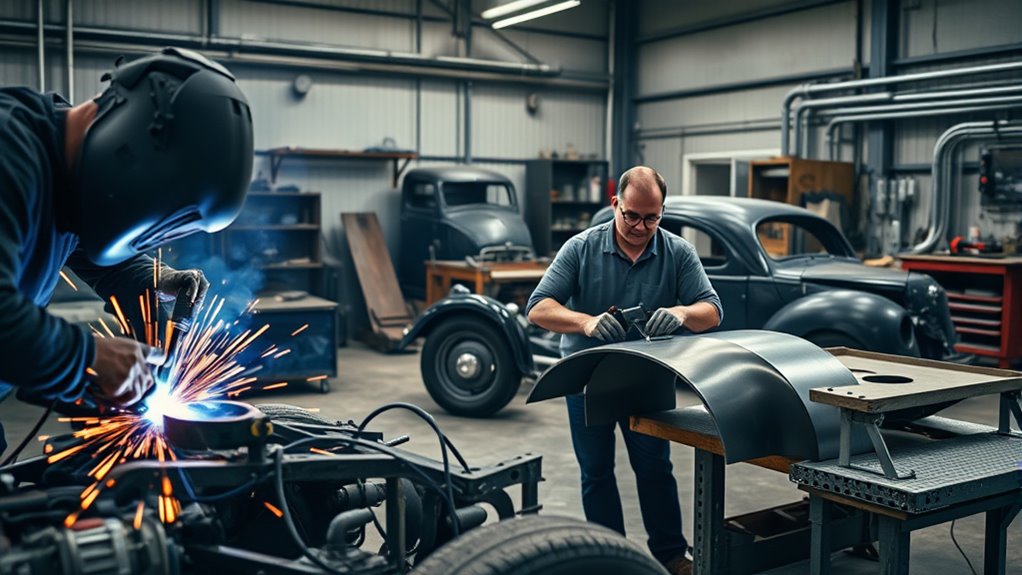
In the shop, you often need both. The fabricator makes the part fit the vehicle. The welder locks the part in place. If one person can do both well, you may hear titles such as fabricator-welder, welder-fitter, or custom metal fabricator.
Products Worth Considering

Heavy-Duty 304 Stainless Steel:Built for durability with corrosion-resistant stainless steel, ideal for high-temperature exhaust fabrication and industrial welding

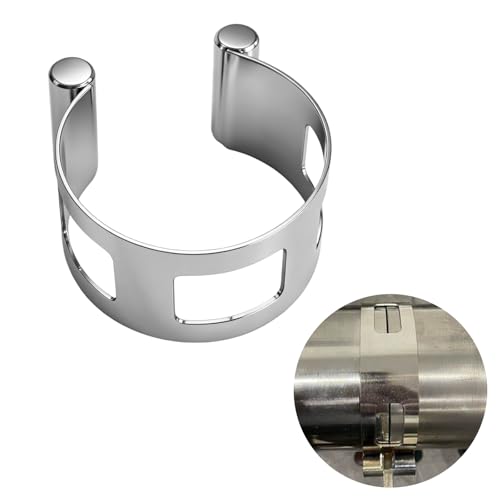
Durable Stainless Steel– Made from sturdy, corrosion-resistant stainless steel, this 2"tacking band ensures long-lasting performance in welding and fabrication applications.
Role Differences
Although both roles work with metal in automotive production, welders and fabricators serve different functions. Welders join prefabricated components with MIG, TIG, spot welding, or similar processes to create strong, permanent bonds. Fabricators shape, cut, bend, and assemble raw material into parts and subassemblies from design specifications, templates, or vehicle measurements.
In the automotive industry, you rely on fabricators and welders in sequence, not interchangeably.
- Welders focus on controlled metal joining.
- Fabricators manage layout, cutting, forming, and fit-up.
- Welding methods support structural integrity when the joint design is correct.
- Fabrication skills turn drawings, mock-ups, or measurements into accurate parts.
This division keeps production efficient, accurate, and less wasteful. It also reduces the risk of forcing a welder to solve a fit-up problem that should have been handled before welding started. The welder often uses techniques like gas metal arc welding to create strong joints in metal components.
Tools and Skills
In automotive work, the tools you use depend on whether you are welding or fabricating. Welders rely on MIG and TIG machines, spot welders, welding helmets, gloves, filler material, shielding gas, and clamps. Fabricators use saws, plasma cutters, shears, brakes, tube benders, drill presses, grinders, jigs, and layout tools to cut, shape, and assemble raw metal into parts.
You need welding skills for heat control, clean beads, surface prep, penetration, and tight tolerances. As a fabricator, you also need blueprint reading, measurement accuracy, material judgment, and design awareness to turn ideas into functional automotive components.
Both paths demand safety gear. Welders need helmets, gloves, protective clothing, respiratory protection where required, and safe ventilation. Fabricators need eye protection, hearing protection, gloves, machine guarding, dust control, and safe lifting practices.
Shop vs Field
Welders in automotive work usually spend most of their time in specialized shops, where fixtures, lifts, tables, ventilation, and controlled lighting support clean, accurate welds. Shop conditions are better for frames, brackets, cages, exhaust sections, and components that need repeatable fit-up.
Field or mobile work can be useful when the vehicle cannot move or when the job is simple and accessible. The tradeoff is that mobile work may involve weather, limited power, tighter access, more fire risk, and fewer fixtures.
- Shop welding supports repeatable metal fabrication and welding.
- Field welding demands careful measurement, fire control, and access planning.
- Fabricators may work in the shop or field, depending on how much measuring and fitting the job needs.
- A welder and fabricator work best when the fit-up plan is clear before final welding starts.
Tools and Skills for Each Role
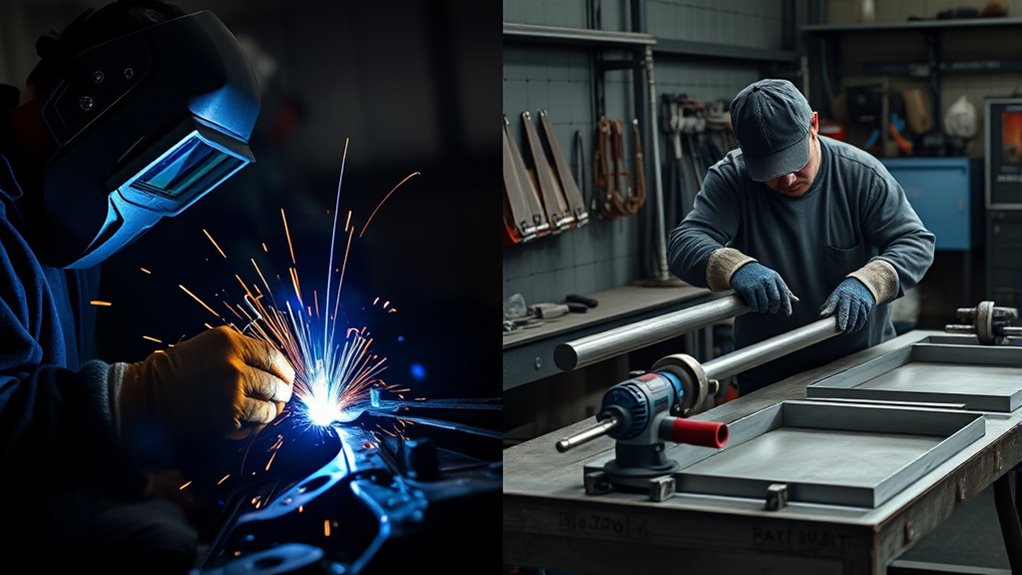
When you compare the two roles, the key difference is in both the tools you use and the skills you need. Welders rely on MIG and TIG machines, helmets, gloves, clamps, filler materials, and safety gear to join metal with precision. Fabricators work with a broader set of equipment, including saws, plasma cutters, brakes, tube benders, drill presses, and grinders to cut, shape, and assemble parts to spec. Understanding plasma cutting amperage is useful when cutting different material thicknesses cleanly.
| Role | Core tools | Core skills |
|---|---|---|
| Welder | MIG/TIG machines, spot welder, helmet, gloves, clamps, wire, gas, filler rod | Heat control, bead consistency, weld prep, penetration, shielding, inspection |
| Fabricator | Saws, plasma cutters, shears, brakes, tube benders, grinders, drill presses, jigs | Measuring, layout, bending, cutting, fit-up, mock-up, material choice, finishing |
Pro Tip: For custom automotive work, ask to see finished examples, not just weld beads. Clean welding matters, but so do symmetry, gap control, bolt-hole alignment, panel fit, and how the part looks after paint, coating, or installation.
If you learn both tools and skills, you gain freedom to move between welding and fabrication tasks. You also solve more problems without waiting on another specialist. That is why many strong automotive shops value people who can measure, cut, tack, weld, grind, inspect, and adjust the part as one connected workflow.
Products Worth Considering


【304 Stainless Steel: Built to Last Through Extreme Heat & Corrosion】Crafted from genuine 304 stainless steel, our exhaust tacking bands outperform standard stainless steel alternatives on the market. They easily withstand the high temperatures of TIG welding, resist rust and corrosion, and maintain their structural integrity even after years of heavy use. Say goodbye to flimsy tools that warp or break—this is a long-term investment for your welding projects

Common Automotive Examples
The easiest way to choose between a welder and a fabricator is to look at the job, not the job title. Some tasks are mostly joining. Others require layout, cutting, shaping, and test fitting before welding ever starts.
| Automotive job | Best fit | Why |
|---|---|---|
| Small exhaust crack or broken hanger | Welder | The part usually needs cleaning, positioning, and a controlled weld. |
| Custom turbo bracket or engine mount | Fabricator-welder | The part must be measured, cut, fitted, tacked, and welded. |
| Roll cage or chassis reinforcement | Both roles or one highly skilled fabricator-welder | Tube fit-up, notching, welding access, and structural quality all matter. |
| Rust patch panel | Fabricator-welder | The patch must match the panel shape before low-heat welding begins. |
| Aluminum intercooler pipe | TIG welder or fabricator-welder | The job needs precise fit-up, clean material, and careful heat control. |
| Body panel replacement | Technician trained in the repair procedure | OEM attachment method, panel prep, corrosion protection, and weld type matter. |
When to Hire a Welder or Fabricator
Knowing the toolset and skill set for each role makes the hiring choice clearer. Hire a welder when your job centers on welding metal components through heat-based joining and the parts are already shaped, fitted, and ready to join. Choose a fabricator when the job demands cutting, shaping, measuring, bending, or building parts from raw material.
- Use a welder for focused joining tasks, such as a clean exhaust weld or a bracket repair.
- Use a fabricator for broader metalwork, such as building a mount, panel, tab, cage, or custom support.
- Use both roles when the project needs design, fit-up, tack welding, final welding, and finishing.
- Match the specialist to the material, joint type, access, and required repair standard.
Pay can help you plan a budget, but it should not be the only deciding factor. The U.S. Bureau of Labor Statistics reported 2024 median pay of $51,000 per year, or $24.52 per hour, for welders, cutters, solderers, and brazers. For the broader assemblers and fabricators group, BLS reported $43,570 per year, or $20.95 per hour, while the detailed structural metal fabricators and fitters category was listed at $49,900 per year. See the BLS pages for welders, cutters, solderers, and brazers and assemblers and fabricators for the official wage context.
Real shop rates can be much higher or lower than national wage medians because they include overhead, insurance, specialty equipment, mobile service, location, material, project risk, and finish quality. A certified welder doing structural work may cost more than a general fabricator. A custom fabricator who designs, builds, welds, and finishes a complex part may also cost more than a basic welding repair.
Understanding common MIG welding issues can also help you ask better questions before hiring a welder for a vehicle project.
How to Choose Before You Hire
Before you hire anyone, define the job clearly. A vague request like “weld this on” can lead to poor fit, weak joints, heat damage, or a part that works on the bench but not on the vehicle.
- Identify the material: mild steel, stainless steel, aluminum, galvanized steel, high-strength steel, or coated panel.
- Decide whether the part already fits: if it does not fit, you need fabrication before final welding.
- Check the repair procedure: for structural or collision work, follow the vehicle manufacturer’s method and attachment locations.
- Ask about process choice: MIG, TIG, spot welding, brazing, or another method may be required.
- Ask how the work will be checked: fit-up, penetration, distortion, corrosion protection, and final alignment should all be considered.
- Review past work: look for clean fit, consistent welds, safe routing, smooth finish, and parts that survived real use.
Note: A beautiful weld does not fix poor fabrication. If the part is mismeasured, stressed, crooked, or poorly supported, even a clean weld can fail or cause alignment problems later.
Why Automotive Projects Need Both Roles
Automotive projects often need both welders and fabricators because each role solves a different part of the build process. You rely on the fabricator to cut, shape, and fit parts to exact specs so the design matches the vehicle’s geometry, clearance, and performance needs.
Then the welder locks those parts together with strong joints that can handle load, vibration, heat, and use. In a metal fabrication shop, this division of labor keeps work moving and reduces rework. It also improves quality because each specialist can focus on the task they do best.
Modern automotive projects are complex, so you need both precision and structural integrity. A skilled fabricator may also handle welding, which adds flexibility when schedules tighten or layouts change. Understanding welding challenges can help ensure that the final assembly is safe, durable, and properly finished.
When you combine fabrication and welding correctly, you get cleaner fit-up, fewer gaps, less distortion, better strength, and a finished part that works on the vehicle instead of only looking good on a bench.
Quality and Safety Checks That Matter
Good automotive welding and fabrication depend on preparation before the final weld. The metal should be clean, the parts should fit without being forced, and the joint should be easy enough to access for a proper weld. Poor prep causes porosity, lack of fusion, distortion, weak welds, and ugly grinding work later.
- Clean the metal: remove paint, rust, oil, grease, seam sealer, zinc coating where required, and moisture near the joint.
- Control fit-up: gaps, clamps, tack welds, and alignment matter before final welding.
- Control heat: too much heat can warp panels, weaken surrounding metal, or damage nearby parts.
- Protect the vehicle: disconnect or protect electronics where required, move flammable materials, and shield glass, wiring, fuel lines, and interiors.
- Use PPE and ventilation: welding and cutting can expose you to fumes, UV radiation, burns, eye damage, electric shock, cuts, and crush hazards. OSHA’s welding, cutting, and brazing hazard guidance explains these risks and the need for safe work practices and PPE.
- Inspect the result: look for consistent bead shape, proper tie-in, no cracks, no obvious undercut, no porosity, and correct alignment.
The right hire is not always the person with the best-looking weld bead. It is the person who can make the part fit, choose the correct process, protect the vehicle, and verify the finished work.
Frequently Asked Questions
Is a fabricator the same as a welder?
No. A welder mainly joins metal parts. A fabricator cuts, bends, forms, fits, and assembles metal parts. Some people can do both, but the skills are not identical.
Who gets paid more, a welder or a fabricator?
It depends on the process, location, industry, certification, and project risk. BLS reported higher 2024 median pay for welders, cutters, solderers, and brazers than for the broad assemblers and fabricators group, but custom automotive shop rates can vary widely.
What type of welder is best for automotive work?
MIG welding is common for many automotive steel repairs because it is fast and practical. TIG welding is often better for thin stainless, aluminum, visible custom work, and precise heat control. The best choice depends on the material, thickness, access, and repair procedure.
Is fabrication just welding?
No. Fabrication may include welding, but it also includes measuring, layout, cutting, bending, drilling, forming, fitting, tack-up, grinding, and finishing. Welding is one joining step inside the larger fabrication process.
Can one person be both a welder and a fabricator?
Yes. Many automotive shops use fabricator-welders who can design, cut, fit, tack, weld, and finish parts. That combination is useful for custom brackets, cages, exhaust work, chassis tabs, and restoration panels.
Do I need a certified welder for automotive work?
For casual non-structural work, certification may not always be required. For structural, safety-critical, race, commercial, or regulated work, ask about certifications, procedure qualifications, insurance, and experience with the material and application.
Should I use a mobile welder or a shop fabricator?
Use a mobile welder for simple, accessible repairs when moving the vehicle is not practical. Use a shop fabricator for custom parts, tight tolerances, tube work, panels, jigs, fixtures, structural repairs, or any job that needs careful measuring and fitting.
Conclusion
In automotive work, you need a welder when the main task is creating strong, clean metal joints. You need a fabricator when the job starts with raw metal, measurements, cutting, bending, fitting, or custom part building. Many real projects need both because a good weld depends on good fit-up. Think of the fabricator as the person who gives the part its shape and the welder as the person who locks that shape into a durable assembly. Together, they help you finish safer, stronger, and with less rework.
Sources
- O*NET OnLine: Welders, Cutters, Solderers, and Brazers — supports welder job definition, tasks, surface prep, and process-control responsibilities.
- O*NET OnLine: Structural Metal Fabricators and Fitters — supports fabricator job definition, blueprint use, layout, fit-up, tack welding, and fabrication-machine tasks.
- U.S. Bureau of Labor Statistics: Welders, Cutters, Solderers, and Brazers — supports wage context, duties, work environment, training, and safety-related occupation notes.
- U.S. Bureau of Labor Statistics: Assemblers and Fabricators — supports fabricator wage context, duties, detailed structural metal fabricator data, and work environment.
- OSHA: Welding, Cutting, and Brazing Hazards and Solutions — supports welding safety hazards, PPE, fume, UV, burn, shock, cut, and crush-risk guidance.