Choosing the best welding rod size for auto repair starts with one important distinction: a stick welder uses coated electrodes, a MIG welder uses continuously fed wire, and a TIG welder may use a separate filler rod. The right choice depends on the vehicle part, metal type, thickness, approved repair procedure, welding position, and machine—not diameter alone.
Quick Answer
For most light-gauge mild-steel body panels, use .023- or .024-inch ER70S-6 MIG wire rather than a stick rod. For suitable nonstructural mild-steel brackets, a 3/32-inch E6013 or E6011 may be a practical stick-welding starting point. Never choose a generic rod size for a frame, unibody, suspension, or crash-structure repair; follow the vehicle maker’s procedure.
Key Takeaways
- Use .023- or .024-inch solid MIG wire as the normal starting point for light-gauge mild-steel body panels.
- Use .030-inch MIG wire when the material is thicker, often 18 gauge or heavier, and the machine chart supports it.
- Do not treat 1/16, 3/32, or 1/8 inch as universal stick-electrode settings; each electrode classification and brand has its own operating range.
- E6013 has a softer arc for clean light-gauge steel, E6011 has a forceful digging arc, and E7018 is a low-hydrogen electrode with strict storage needs.
- Follow year-, make-, model-, and part-specific OEM procedures for every structural, high-strength-steel, aluminum, restraint-adjacent, or high-voltage vehicle repair.
- Make and inspect a test weld on matching scrap before welding the vehicle.
What’s in This Article
- Best All-Around Welding Rod Size for Auto Repair
- Welding Rod Size Chart for Automotive Sheet Metal
- Match Rod Size to Metal Thickness
- Best Rod Sizes for Frames and Brackets
- Know the Metal Before You Weld
- Prepare the Vehicle Safely Before Welding
- How Rod Size Affects Penetration and Bead Width
- Choose Rod Size by Welding Process
- Choose Electrode Type, Polarity, and Storage
- Test Weld Settings on Matching Scrap
- Common Welding Rod Size Mistakes in Auto Repair
- Frequently Asked Questions
Best All-Around Welding Rod Size for Auto Repair
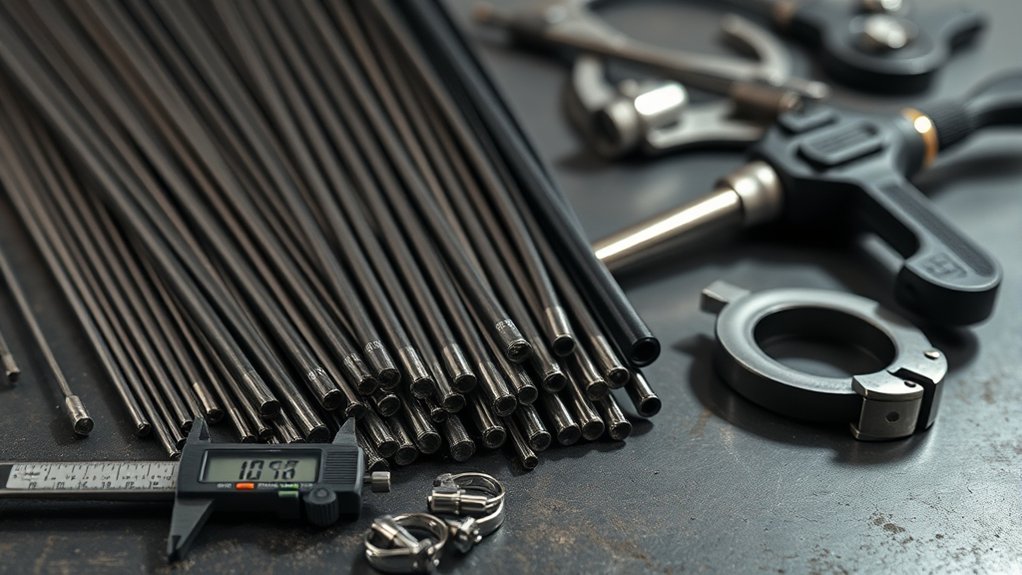
There is no single all-around rod size for every automotive repair. The best consumable depends first on the process and part being repaired.
For light-gauge mild-steel body panels, short-circuit MIG welding with .023- or .024-inch ER70S-6 wire normally gives better heat control than stick welding. Miller recommends those smaller wire sizes for most light-gauge sheet metal and says .030-inch wire may be suitable when the material is 18 gauge or thicker. Smaller wire takes less heat to melt and gives you more control over the weld puddle. See Miller’s guidance on MIG and TIG welding for sheet metal.
If stick welding is appropriate for a detached, nonstructural mild-steel bracket or fabrication, a 3/32-inch electrode is often easier to control than a 1/8-inch electrode. However, E6011, E6013, and E7018 rods of the same diameter do not use one common amperage range.
A 1/8-inch stick electrode can deposit more filler and carry more current, but that does not make it the correct choice for a vehicle frame or crash structure. Those repairs require the attachment method, weld locations, weld count, equipment, material preparation, corrosion protection, and testing specified by the vehicle maker.
Note: People often use “welding rod” as a broad term. In this guide, stick electrode means a coated SMAW rod, MIG wire means continuously fed GMAW wire, and TIG filler means the separate rod added to a GTAW puddle.
If you are doing TIG welding, choose a filler alloy that matches the base metal and keep the filler diameter no thicker than necessary for the joint. Stainless steel, aluminum, silicon bronze, and mild steel require different filler choices. Review material compatibility and use careful heat input management whenever you move beyond ordinary mild steel.
Products Worth Considering
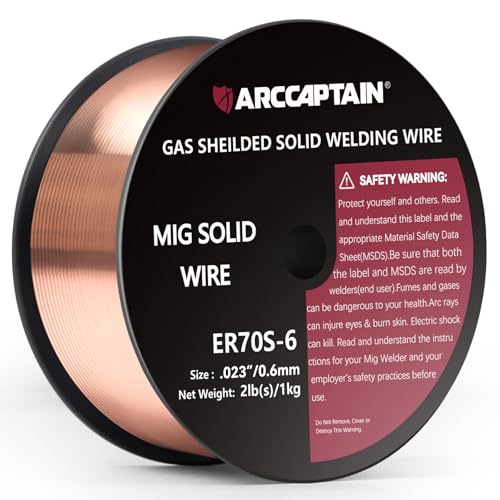
High-quality: ARCCAPTAIN's ER70S-6 mig welding wire .023" meets industry standards(Net Weight: 2lbs), ensuring consistent performance, superior strength. With its smooth feeding and stable welding parameters, you can achieve optimal penetration, high deposition rates, and exceptional overall welding performance.

ER70S-6 MIG WIRE: It's the most common wire of the copper-coated mild steel GMAW (MIG) wires for single or multiple pass welding.

ER70S-6 PERFORMANCE: This .023 MIG welding wire supports precise arc control and low spatter for single-pass and multi-pass welding.
Welding Rod Size Chart for Automotive Sheet Metal
Use the table below as a starting selector, not as permission to weld a structural vehicle part. The welder’s setup chart, filler-metal data sheet, base-metal identification, joint design, and OEM repair information take priority.
| Repair or Material | Preferred Starting Process | Typical Starting Consumable | Important Limit |
|---|---|---|---|
| 20–22 gauge mild-steel body patch | Short-circuit MIG or TIG | .023/.024-inch ER70S-6 MIG wire; small TIG filler matched to the base metal | Use short, spaced welds and allow cooling to limit distortion. |
| 18 gauge mild-steel panel or floor patch | MIG or TIG | .023/.024-inch MIG wire; .030 inch may work when the machine chart supports it | Do not assume the floor is nonstructural; confirm the repair procedure. |
| 16 gauge to approximately 1/8-inch known mild-steel tab or detached nonstructural bracket | MIG, TIG, or suitable SMAW | .030/.035-inch MIG wire or a 3/32-inch stick electrode selected by classification | Use the exact filler data sheet and test on matching scrap. |
| Thicker known mild-steel fabrication away from a vehicle safety structure | MIG, TIG, or SMAW | 3/32- or 1/8-inch stick electrode, or appropriately sized MIG wire | Joint design and required weld size matter more than rod diameter alone. |
| Frame rail, unibody rail, pillar, rocker reinforcement, suspension mounting area, seat or belt anchorage | Only the OEM-specified process | No universal rod or wire size | Obtain the year-, make-, model-, and part-specific repair procedure before work begins. |
| Aluminum, HSS, UHSS, coated steel, or unknown alloy | Material- and OEM-specific | Specified wire, filler, rivet, adhesive, brazing wire, or replacement method | Do not guess from appearance, magnet response, or thickness alone. |
Products Worth Considering

ER70S-6 MIG WIRE: It's the most common wire of the copper-coated mild steel GMAW (MIG) wires for single or multiple pass welding.

High-quality:Tooliom's .023" ER70S-6 MIG Welding Wire (10lb spool) meets all industry standards for consistent strength and performance. Enjoy smooth feeding, stable arcs, optimal penetration, and high deposition rates—everything you need for exceptional welds
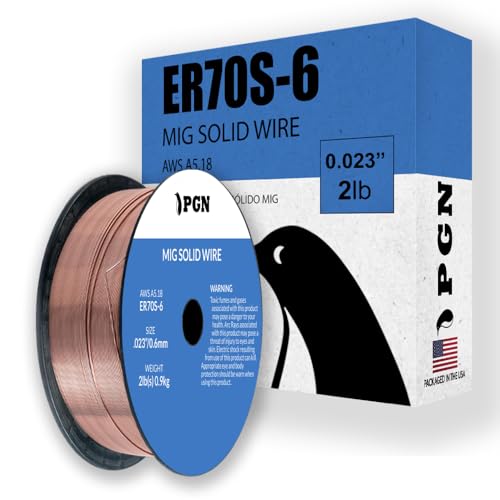
Consistent Welding Performance ... ER70S-6 solid MIG welding wire is designed to provide stable arc characteristics and reduced spatter during single-pass and multi-pass welding applications. Suitable for T-joints, butt joints, and lap joints.
Common Rod Sizes
Common mild-steel stick-electrode diameters include 5/64, 3/32, 1/8, and 5/32 inch. Some manufacturers also offer specialty smaller sizes. Availability does not mean every diameter is suitable for automotive work.
- 5/64 inch: A small diameter offered in some E6013 product lines for light-gauge fabrication. Follow the exact package or data sheet.
- 3/32 inch: A controllable size for suitable light-to-medium mild-steel SMAW work. The operating range changes with E6011, E6013, E7018, polarity, brand, and position.
- 1/8 inch: Carries more current and deposits more filler. It is generally better suited to thicker known mild steel than automotive body sheet.
- 5/32 inch: Intended for heavier fabrication with enough machine output, joint mass, and procedure support. It is rarely a sensible choice for ordinary passenger-vehicle repair.
A practical welding rod overview can help you identify common classifications, but the manufacturer’s current data sheet remains the correct source for amperage and polarity.
Thin Metal Selection
For thin automotive sheet metal, the better question is usually “Which MIG wire or TIG filler should I use?” rather than “Which stick rod should I use?” Short-circuit MIG with .023- or .024-inch solid wire is easier to control on most light-gauge mild steel because the smaller wire melts with less heat.
Stick welding can work on some clean, heavier sheet, but it produces slag, requires repeated arc starts, and can put too much heat into a small body panel. E6011’s forceful digging arc can increase burn-through and spatter. E7018’s deposition rate and storage requirements make it a poor default body-panel electrode. E6013 has a softer arc, but even it demands careful fit-up and a compatible machine.
Pro Tip: When MIG welding a patch panel, make a series of short, separated welds instead of running one continuous bead. Move around the repair and allow cooling between welds to reduce warping.
Automotive Weld Settings
Use the settings printed inside the welder, in the machine manual, or on the filler-metal data sheet as your first reference. The following figures show why one diameter cannot have one universal amperage:
| Example Electrode | Diameter | Example Starting Range | Typical Behavior |
|---|---|---|---|
| E6011 | 3/32 inch | About 40–80 amps for one common Lincoln product | Forceful, digging arc; useful for root penetration but easy to misuse on thin panels |
| E6013 | 3/32 inch | Approximately 70–95 amps on DC+ or 75–105 amps on AC for one common Lincoln product | Softer arc and moderate penetration on clean steel |
| E7018 | 3/32 inch | Often around 75–110 amps, depending on product and polarity | Low-hydrogen deposit; requires clean steel and controlled storage |
| E6011 | 1/8 inch | About 55–110 amps for one common Lincoln product | More heat and filler than 3/32 inch |
| E7018 | 1/8 inch | Often around 90–160 amps, depending on product and polarity | Higher deposition for thicker prepared steel |
These are manufacturer examples, not universal settings. Confirm the range for the exact electrode package. The same rule applies when using a stick welding amperage chart: classification, polarity, position, joint type, and machine performance can move the usable setting.
Match Rod Size to Metal Thickness
Base-metal thickness is important, but it is only one part of the setup. Joint type, fit-up, root opening, weld position, heat sinking, access, base-metal strength, coating, filler classification, and required weld size also affect the correct consumable.
On mild-steel sheet, use the smallest practical filler that lets you maintain a stable arc and sound fusion without overheating the panel. On thicker known mild steel, a larger consumable may improve deposition and bead size, but it may also demand more current than the machine or joint can handle.
Warning: Do not choose a welding rod for a frame rail, unibody rail, rocker reinforcement, pillar, suspension mounting point, seat mounting point, seat-belt anchorage, battery enclosure, or crash structure from a generic thickness chart. Obtain and follow the vehicle maker’s current repair procedure for the exact year, make, model, and part.
Thin Sheet Metal
Thin body sheet needs low heat, accurate fit-up, and controlled weld spacing. For most light-gauge mild steel, .023- or .024-inch ER70S-6 MIG wire with an argon-rich shielding-gas blend is a practical starting point. Use electrode-positive polarity with solid MIG wire unless the wire or machine instructions state otherwise.
For TIG work, use a small tungsten and a filler rod that matches the base metal and is no thicker than necessary. Keep the arc tight, avoid dwelling in one spot, and move fast enough to prevent a wide heat-affected zone.
If stick welding is the only process available, first confirm that the panel is thick enough for the machine to maintain a stable low-current arc. A small E6013 offered by the electrode manufacturer may be more manageable than E6011, but it is still not a substitute for the correct collision-repair process.
Thicker Panel Welding
As known mild steel gets thicker, you may increase MIG wire, TIG filler, or stick-electrode diameter. Do not jump to a larger filler simply because the smaller one feels slow. First check whether the joint needs beveling, multiple passes, a different transfer mode, or better access.
- About 16 gauge to 1/8 inch: .030-inch MIG wire or a 3/32-inch stick electrode may suit some nonstructural mild-steel work.
- About 1/8 to 1/4 inch: .030- or .035-inch MIG wire, TIG filler selected for the joint, or a 3/32- to 1/8-inch stick electrode may work on suitable fabrication.
- Heavier material: Joint design, machine duty cycle, available current, preheat requirements, weld procedure, and multiple-pass technique become increasingly important.
These ranges do not authorize repairs to vehicle structures. Material that looks like ordinary thick steel may be heat-treated, high-strength, hydroformed, coated, or part of a controlled crash-management system.
Best Rod Sizes for Frames and Brackets
Separate ordinary fabricated brackets from safety-related vehicle structures. A detached shop-made bracket made from identified mild steel may be suitable for MIG, TIG, or stick welding. A frame rail, crossmember, suspension bracket, hitch mounting area, steering component, seat mount, or crash structure requires a documented repair plan.
For suitable nonstructural mild-steel fabrication, a 3/32-inch electrode offers more control, while a 1/8-inch electrode deposits more metal on a thicker joint. Choose E6013, E6011, or E7018 by the condition of the steel, required mechanical properties, polarity, position, and storage capability—not by diameter alone.
Vehicle structural work is different. I-CAR states that repairers should begin with the body repair manual and OEM position statements for the exact vehicle. Attachment methods can include squeeze-type resistance spot welding, MIG/MAG welding, MIG brazing, riveting, adhesive bonding, or complete part replacement. Review I-CAR’s guidance to always follow vehicle maker procedures.
Clean preparation remains essential. Remove paint, rust, oil, seam sealer, scale, and coatings from the weld area as required by the repair procedure. E6011 may tolerate less-than-perfect steel better than some electrodes, but it does not make contamination harmless. Review these metal preparation principles before setting the machine.
Know the Metal Before You Weld
Automotive steel cannot always be identified by thickness or appearance. A modern vehicle can use several grades of mild steel, high-strength steel, advanced high-strength steel, and ultra-high-strength steel in one body structure. It may also contain aluminum castings, aluminum sheet, magnesium, composites, adhesives, foam, and coated steel.
- Mild steel: Often repairable with conventional MIG, TIG, or approved spot-welding methods when the vehicle procedure permits it.
- High-strength steel: Heat input, straightening, sectioning, and attachment restrictions can differ by grade and location.
- Ultra-high-strength steel: Many parts have strict replacement and attachment rules because uncontrolled heat can alter their properties.
- Aluminum: Requires dedicated preparation, compatible filler, contamination control, and often separate tools and work areas.
- Galvanized or coated steel: Coatings affect arc behavior, corrosion protection, and fume exposure. Remove and restore coatings only as the repair procedure directs.
- Unknown material: Stop and identify it through OEM repair information before welding.
I-CAR’s OEM Technical Information Matrix summarizes where manufacturers publish material identification, attachment methods, sectioning rules, corrosion protection, and related collision-repair information.
Prepare the Vehicle Safely Before Welding
Welding a vehicle creates more hazards than welding a clean coupon on a bench. Heat and sparks can travel through gaps, reinforcement cavities, seams, holes, and floor openings. Inspect both sides of the work and every nearby enclosed space.
- Obtain the repair procedure. Confirm the material, allowed attachment method, weld locations, weld count, preparation, and corrosion-protection steps.
- Follow the OEM electrical shutdown procedure. Battery disconnection alone may not be enough. Some vehicles require a waiting period, module precautions, memory procedures, or a defined hybrid/EV high-voltage disable process.
- Protect restraint and electronic systems. Identify nearby airbags, pretensioners, sensors, control modules, grounds, harnesses, and communication wiring. Follow OEM removal or setback instructions.
- Inspect for fuel and fluid hazards. Locate fuel tanks, vapor lines, fuel lines, brake lines, hoses, refrigerant lines, and fluid-soaked insulation before hot work.
- Remove or shield combustible material. Check carpet, sound deadener, foam, trim, seam sealer, undercoating, adhesives, wiring loom, and material on the hidden side of the panel.
- Prepare the metal correctly. Remove coatings from the weld zone as required. Do not weld through oil, chlorinated cleaner residue, heavy paint, rust scale, or unknown coatings.
- Control fumes. Use effective ventilation or local exhaust, especially around zinc-bearing, coated, stainless, or painted metal. Keep your head out of the fume plume.
- Place the work clamp correctly. Follow the OEM procedure and position the clamp on clean metal close to the weld area when permitted, reducing the current path through bearings, modules, and vehicle systems.
- Prepare for fire. Keep a suitable extinguisher ready, assign a fire watch when needed, and inspect the repair and hidden side repeatedly during and after welding.
- Restore protection. After inspection and cooling, restore weld-through primer where specified, seam sealer, cavity wax, coatings, paint, foam, and corrosion protection according to the repair procedure.
Warning: Do not work on a hybrid or electric vehicle’s high-voltage system unless you are trained, equipped, and authorized to follow the manufacturer’s disable and verification procedure. An orange cable should never be treated as de-energized based only on battery disconnection or ignition position.
OSHA requires suitable PPE, protection from arc radiation and hot metal, ventilation appropriate to the work, control of nearby fire hazards, and immediately available fire-extinguishing equipment. Review OSHA’s rules for welding ventilation and protection and hot-work fire prevention.
How Rod Size Affects Penetration and Bead Width
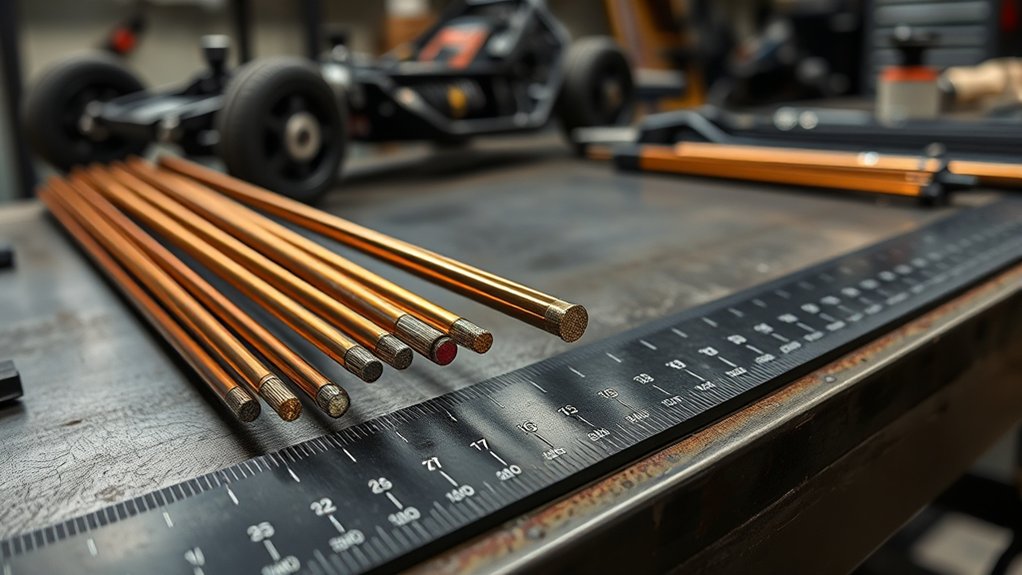
Rod or wire diameter affects current capacity, deposition rate, puddle size, and bead control, but it does not determine penetration by itself. Electrode classification, polarity, voltage, wire-feed speed, arc length, travel speed, joint design, torch angle, and technique also change the result.
A smaller consumable generally needs less heat to melt and can make it easier to control a narrow puddle on thin sheet. That is why .023- or .024-inch MIG wire is useful on light-gauge body work. It gives the operator more time to react before the panel overheats.
A larger consumable can carry more current and deposit more metal, which helps fill a larger joint on thicker steel. However, installing an oversized rod does not guarantee fusion. If the current is too low, the rod may stick and leave a cold bead. If the current is too high, the joint may undercut, distort, or burn through.
Electrode type matters as much as diameter. A 3/32-inch E6011 has a more forceful digging arc than a 3/32-inch E6013. A 3/32-inch E7018 has a different coating, puddle, storage requirement, and intended use. Use diameter as one setup choice within a complete welding procedure.
Learning how flux-core welding works can improve your process knowledge, but self-shielded flux-core wire is generally too hot and messy for delicate exterior body sheet.
Choose Rod Size by Welding Process
MIG, TIG, and stick welding handle heat and filler metal differently. Choose the process first, then select the wire, filler rod, or electrode that fits the material and approved repair.
MIG Welding
For most light-gauge mild-steel body panels, start with .023- or .024-inch ER70S-6 solid wire. A 75% argon and 25% carbon-dioxide shielding-gas blend is commonly used for short-circuit mild-steel work because it produces less spatter than straight carbon dioxide.
When the material is 18 gauge or thicker, .030-inch wire may work well. Use .035-inch wire for thicker material only when the machine chart and joint support it. Miller’s general parameter guide lists broad amperage capabilities of 30–130 amps for .023 wire, 40–145 amps for .030 wire, and 50–180 amps for .035 wire, but the actual vehicle setup must be tested and adjusted.
Stick Welding
A 3/32-inch electrode is a practical small SMAW size for suitable mild-steel fabrication. Choose its classification carefully:
- E6013: Softer arc, moderate penetration, and good bead appearance on clean new sheet or light fabrication.
- E6011: Forceful arc and deeper penetration; useful for some repair and maintenance work but easy to overheat thin sheet.
- E7018: Low-hydrogen electrode with a higher minimum weld-metal tensile-strength classification, good ductility, and specific storage requirements.
A 1/8-inch electrode suits thicker material and higher deposition, not delicate body panels. Always check whether the machine can run the required current and polarity.
TIG Welding
TIG gives excellent puddle and heat control when access, cleanliness, and operator skill allow it. Select tungsten and filler size based on the base metal and joint. For mild-steel sheet, ER70S-2 is a common filler, while silicon bronze may be used only where the applicable repair method permits it.
Do not assume that a TIG filler rod should be 1/16 or 3/32 inch for every repair. A filler that is too large can chill the puddle and force extra heat into the panel before it melts. Proper material compatibility is more important than copying a favorite diameter.
Choose Electrode Type, Polarity, and Storage
E6013 for Clean Light Fabrication
E6013 produces a relatively soft, stable arc and is available in sizes intended for light-to-medium clean steel. It can be easier to control than E6011 on suitable sheet, but slag must be removed between passes and the joint still needs clean preparation.
E6011 for Penetration and Less-Than-Perfect Conditions
E6011 can run on compatible AC or DC equipment and produces a forceful arc with fast-freezing slag. It is useful where penetration and positional capability matter. It is not permission to weld through oil, paint, undercoating, heavy rust, seam sealer, or unknown coatings.
E7018 for Low-Hydrogen Applications
E7018 is a low-hydrogen electrode commonly used on properly prepared steel when the procedure calls for its mechanical properties. Its “70” classification represents a higher minimum weld-metal tensile-strength class than E6011’s “60,” but the number does not prove that a vehicle repair will be safe or stronger.
Low-hydrogen performance depends on storage. Keep unopened packages sealed and store opened electrodes at the temperature specified by the manufacturer or applicable welding code. A plastic tube at room temperature does not automatically preserve code-level low-hydrogen condition. Review Lincoln Electric’s electrode storage and redrying guidance.
Note: Polarity labels such as DCEP, DC+, DCEN, DC−, and AC are not interchangeable. Use the polarity printed on the electrode package and supported by the welding machine.
Test Weld Settings on Matching Scrap
A test coupon should match the repair as closely as possible. A bead laid on thick bench plate does not prove that your settings will work on a thin vertical lap joint inside a vehicle.
- Match the material. Use scrap of the same identified alloy, coating condition, and thickness.
- Copy the joint. Reproduce the butt, lap, plug, fillet, flange, gap, backing, and welding position used in the repair.
- Use the planned preparation. Clean the coupon and apply weld-through primer only if the OEM procedure and product instructions require it.
- Start with published settings. Use the welder chart and filler data sheet, then adjust one variable at a time.
- Inspect the weld. Look for uniform fusion, correct profile, adequate plug-weld nugget size where applicable, complete slag removal, and no visible cracks, holes, severe undercut, porosity, or cold overlap.
- Perform the required test. Use an OEM-, I-CAR-, or procedure-specified destructive test when structural collision-repair welding is involved.
- Record the setup. Note wire or rod classification, diameter, polarity, voltage, wire-feed speed or amperage, gas, flow, position, and technique.
Pro Tip: Keep a setup log with a photo of each successful test coupon. Recording material thickness, joint type, consumable, polarity, machine settings, and position makes good results easier to repeat.
Common Welding Rod Size Mistakes in Auto Repair
Rod size is only one possible source of trouble. Wrong process selection, unidentified metal, poor fit-up, incorrect polarity, contamination, weak grounding, moisture-damaged electrodes, and excessive heat can all ruin a repair.
| Mistake | Likely Result | Better Fix |
|---|---|---|
| Using stick welding by default on a thin body panel | Burn-through, slag, spatter, and distortion | Use .023/.024-inch solid MIG wire or a suitable TIG setup when the repair procedure permits it. |
| Oversized rod or wire | Excessive heat, wide bead, poor access, or burn-through | Use the smallest practical consumable supported by the machine and procedure. |
| Undersized consumable with poor joint design | Slow deposition, repeated heating, or incomplete fusion | Correct the joint preparation or use multiple controlled passes. |
| Combining all 3/32-inch electrodes into one amperage range | Unstable arc, sticking, undercut, or overheating | Use the exact E6011, E6013, or E7018 product data. |
| Wrong polarity | Poor arc behavior, spatter, weak fusion, or rapid electrode consumption | Match the package polarity to the machine terminals and mode. |
| Welding paint, oil, seam sealer, galvanizing, or heavy rust | Porosity, toxic fumes, arc instability, and contamination | Prepare and ventilate the area according to OEM, filler, coating, and safety instructions. |
| Moisture-damaged E7018 | Porosity or increased hydrogen-cracking risk | Use sealed or correctly stored electrodes and follow reconditioning limits. |
| Long continuous weld on a body panel | Panel warping and a large heat-affected zone | Use short, spaced welds and allow controlled cooling. |
| Choosing a rod for a structural part without OEM information | Changed crash performance or an unsafe repair | Stop and obtain the year-, make-, model-, and part-specific procedure. |
| Skipping a representative test coupon | Unknown fusion, nugget size, or heat control | Duplicate and inspect the repair joint on matching scrap first. |
Properly matching amperage to thickness helps stabilize the arc, but a sound repair still depends on material identification, approved process, preparation, joint design, filler classification, and testing.
Frequently Asked Questions
Is E6011 or E7018 stronger?
E7018 belongs to a 70,000-psi minimum tensile-strength weld-metal classification, while E6011 belongs to a 60,000-psi classification. That does not mean any repair made with E7018 is automatically stronger. Base metal, joint design, fusion, heat input, electrode condition, and the approved repair procedure determine the completed joint’s performance.
What size welder is best for automotive work?
For body-panel work, stable low-output control, compatible .023/.024-inch wire, shielding gas, and a usable duty cycle matter more than a large maximum-amperage number. A machine suitable for thin sheet may not meet OEM equipment requirements for structural work. Select the welder around the repair process and thickness range you actually need.
Should you coat welding rods with WD-40?
No. Oil contaminates the electrode and weld area and can create fumes, porosity, and unstable arc behavior. Keep electrodes in the storage conditions specified by their manufacturer. Low-hydrogen E7018 requires especially careful moisture control after its sealed package is opened.
What amperage should I use for a 3/32-inch E6013 rod?
One common Lincoln E6013 product lists a range near 70–95 amps on DC+ and 75–105 amps on AC, but other products can differ. Read the amperage and polarity printed on the exact electrode package, start near the lower end for thinner material, and confirm the result on matching scrap.
Can you stick weld automotive sheet metal?
You can stick weld some clean, heavier automotive sheet, but light body panels burn through and distort easily. Short-circuit MIG with .023/.024-inch solid wire or TIG normally gives better control. Use stick welding only when the material, thickness, machine, repair type, and applicable procedure support it.
What rod size is best for auto body panels?
For most mild-steel auto body panels, use .023- or .024-inch MIG wire instead of a stick rod. If TIG is used, select a small filler matched to the base metal and joint. Small specialty stick electrodes exist, but they are not the normal first choice for exterior light-gauge sheet.
Can you weld a vehicle frame with E7018?
Do not decide from the electrode alone. Some conventional mild-steel fabrications may use a low-hydrogen electrode under an approved procedure, while many vehicle frames and unibody structures prohibit generic sectioning or specify another attachment method. Obtain the exact OEM repair or modification instructions before applying heat.
Is .023 or .030 MIG wire better for body panels?
Use .023 or .024 inch for most light-gauge body sheet because it melts with less heat and gives better puddle control. .030-inch wire may work well on 18-gauge and thicker steel, depending on the welder and joint. Test the machine’s recommended setting on matching scrap before the repair.
Can you weld galvanized automotive steel?
Galvanized steel can be welded only with the correct repair method, surface preparation, ventilation, and corrosion-restoration steps. Zinc coating affects the arc and produces hazardous fumes when heated. Follow the OEM procedure, remove coating only where directed, use effective fume control, and restore corrosion protection after welding.
Conclusion
The best welding rod size for auto repair depends on far more than metal thickness. For most light-gauge mild-steel body panels, .023- or .024-inch solid MIG wire is a better starting choice than a stick electrode. When stick welding is appropriate for known nonstructural mild-steel fabrication, 3/32-inch E6013 or E6011 can offer useful control, while 1/8-inch electrodes suit thicker work and higher deposition.
Never use a generic size chart to plan a frame, unibody, suspension, restraint, aluminum, HSS, UHSS, battery-enclosure, or crash-structure repair. Identify the material, obtain the OEM procedure, prepare the vehicle safely, follow the filler and machine data, and prove the setup on a matching test coupon. That process—not rod diameter by itself—produces a controlled and defensible repair.
Sources
- Miller — Successfully Welding Sheet Metal With MIG and TIG — light-gauge wire selection, shielding gas, polarity, filler sizing, and heat control.
- Miller — MIG Welding: Setting the Correct Parameters — wire-size amperage ranges and parameter adjustment.
- Lincoln Electric — Fleetweld 37 E6013 — manufacturer-specific electrode diameters, polarity, and operating data.
- Lincoln Electric — Storing and Redrying Electrodes — low-hydrogen electrode storage and moisture control.
- I-CAR — Always Follow Vehicle Maker Procedures — OEM repair-information hierarchy and structural-repair planning.
- OSHA — 29 CFR 1910.252 — welding PPE, ventilation, coatings, fumes, and general hot-work protection.