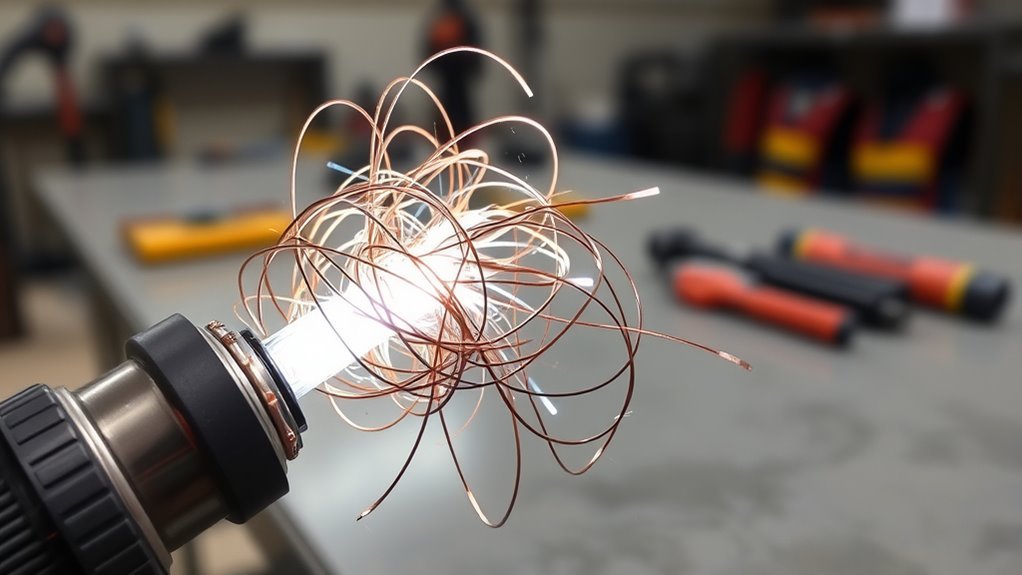
A MIG welder can stop feeding in seconds when the electrode wire buckles and tangles beside the drive rolls. This problem is called bird nesting. The fastest repair is to clear the damaged wire safely, then find the resistance or setup error that made the wire buckle instead of moving through the gun.
Quick Answer
Bird nesting in MIG welding happens when the wire buckles and tangles between the drive rolls and gun liner. Common causes include too much drive-roll pressure, a blocked or kinked liner, the wrong contact tip, excessive spool drag, poor component alignment, and using the wrong feed system for soft aluminum wire.
Key Takeaways
- A bird nest forms at the feeder when the drive rolls keep pushing but the wire cannot move freely through the gun.
- Too much roll pressure can flatten or shave wire, while too little pressure can cause slipping and uneven feeding.
- Check the contact tip, liner, gun cable, inlet guide, drive rolls, and spool brake in a logical order.
- Use feeder parts that match the wire diameter and type; soft aluminum often needs a U-groove roll and a dedicated feeding system.
- Turn off and disconnect the welder before touching tangled wire or opening the drive system.
At a Glance
| Time Required | Usually a short job once the machine is safely isolated; replacing a liner or rolls takes longer |
| Difficulty | Beginner to intermediate |
| Tools Needed | Safety glasses, side cutters, needle-nose pliers, correct contact tip, clean cloth, and the welder’s manual |
| Cost | No cost for basic adjustments; replacement tips, liners, and drive rolls vary by welder |
What Causes Bird Nesting in MIG Welding?
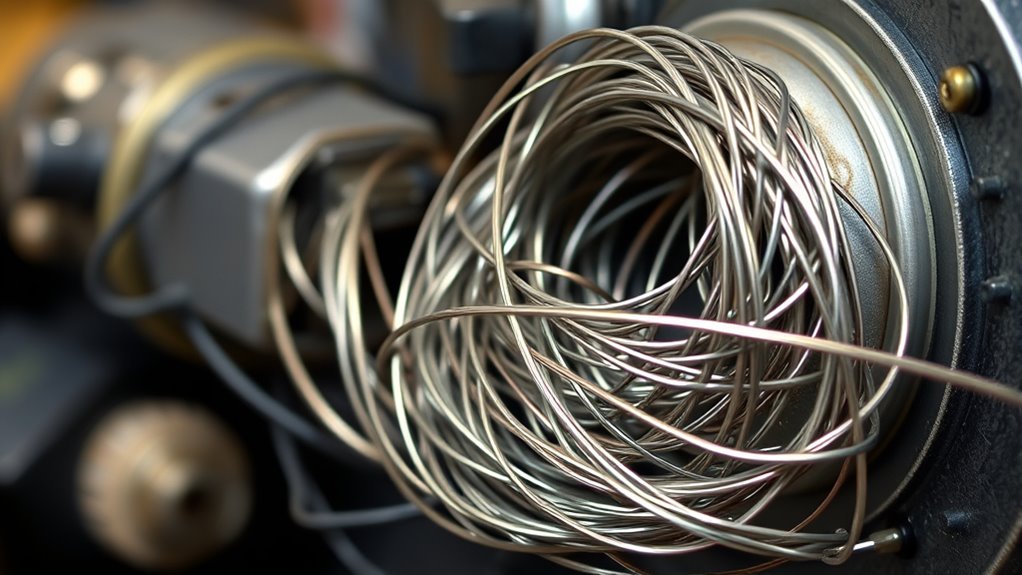
Bird nesting is the tangling of electrode wire between the drive rolls and the gun liner. It happens when the feeder continues pushing but resistance farther along the wire path prevents normal movement.
Excessive drive-roll pressure is a common cause. Rolls that are too tight can flatten, deform, or shave the wire. Copper-colored dust around the drive assembly or deep marks on solid wire are useful clues.
Insufficient pressure creates a different problem. The rolls may slip instead of feeding at a steady speed. Increasing pressure without first checking for a blocked liner or contact tip can make the final bird nest worse.
Spool-hub or brake tension also matters. Too much brake pressure makes the drive motor pull against unnecessary resistance. Too little pressure may let the spool continue turning after the trigger is released, creating loose loops called spool backlash. Set the hub or brake according to the welder’s manual so the spool turns freely but stops without overrunning.
A bird nest is usually a symptom of resistance or poor alignment somewhere between the spool and the contact tip—not proof that the wire feeder motor is defective.
The drive-roll groove must match the wire diameter and type. Smooth V-groove rolls are commonly used for solid steel wire, knurled rolls for many flux-cored or metal-cored wires, and U-groove rolls for soft aluminum. Always confirm the exact roll specified by the feeder and wire manufacturers.
A dirty, kinked, worn, incorrectly sized, or poorly trimmed liner can catch the wire. Manufacturer guidance also identifies gaps or misalignment between the liner, power pin, inlet guide, and contact tip as causes of bird nesting, burnback, and an erratic arc. Keep a smooth, clear wire feed path.
Other causes include a gun cable wrapped in tight loops, a damaged gun neck, a clogged or undersized contact tip, a worn drive roll, rusty wire, tangled spool layers, an inlet guide positioned too far from the rolls, or a gun that is not seated correctly in the feeder.
Bird Nesting vs. Other Wire-Feed Problems
Several wire-feed faults can look similar. Check where the wire stops and where loose wire appears before changing parts.
| Symptom | Likely Problem | First Check |
|---|---|---|
| Wire tangles beside or in front of the drive rolls | Bird nesting | Tip, liner, cable bends, roll pressure, and feeder alignment |
| Loose loops form around the spool after the trigger is released | Spool backlash or overrun | Spool-hub or brake tension |
| Wire fuses inside or to the contact tip | Burnback | Contact tip, feed interruption, parameters, and stick-out |
| Drive rolls turn but leave polished marks while the wire barely moves | Drive-roll slipping | Roll pressure, groove size, spool drag, and downstream blockage |
| Wire feeds normally after the contact tip is removed | Tip restriction | Tip size, spatter, keyholing, or burnback damage |
Note: A bird nest and spool backlash can happen at the same time, but they have different causes. A nest forms in the drive system; backlash forms on or around the spool.
How to Clear a Bird Nest Safely
Warning: Release the trigger, switch off the welder, unplug cord-connected equipment, and keep the plug under your control before touching the drive rolls or tangled wire. In a workplace, follow the employer’s energy-control procedure. Wear safety glasses and hold the spool-side wire firmly because coiled electrode can spring loose.
- Stop feeding immediately. Release the trigger as soon as the wire stalls or the drive system makes an unusual sound.
- Isolate the power. Turn off and disconnect the machine before opening the feeder or moving your hands near the drive rolls.
- Control the spool. Hold the loose wire end so the spool cannot unwind into a second tangle.
- Release drive-roll pressure. Open the pressure arm or drive assembly as directed in the welder’s manual.
- Cut out the damaged wire. Use side cutters to remove the tangled section. Do not force bent or kinked wire through the liner.
- Inspect the feed path. Check the drive-roll groove, inlet guide, liner, gun cable, contact tip, and gun connection before loading new wire.
- Remove damaged wire from the gun. Follow the gun manufacturer’s procedure. Remove the contact tip if needed and avoid dragging a sharp, kinked end through the liner.
- Rethread clean wire. Trim off damaged or rusty wire, smooth the leading end, guide it through the inlet, and close the pressure arm.
- Restore power only for a controlled feed test. Aim the gun away from your face and body, wear eye protection, and use the jog or inch function when available.
- Test on scrap metal. Confirm smooth feeding and a stable arc before returning to the workpiece.
How to Diagnose and Fix Repeated Bird Nesting
Work from the easiest restriction to the least accessible one. Changing several settings at once can hide the original cause.
- Check the contact tip. Remove spatter and verify that the tip matches the wire and application. Replace it if the bore is clogged, enlarged, oval, rough, or damaged by burnback.
- Straighten the gun cable. Lay the cable in a broad curve. Tight loops, sharp bends, crushed sections, and kinks increase drag.
- Test the liner and gun. With the machine safely isolated, check for a dirty, rusty, undersized, oversized, kinked, or poorly trimmed liner. Replace it if cleaning does not restore smooth movement.
- Confirm gun seating and alignment. Make sure the gun connector is fully seated and secured. The inlet guide or liner should support the wire close to the rolls without touching them.
- Inspect the drive rolls. Confirm the groove matches the wire diameter and type. Replace rolls with sharp edges, heavy wear, packed debris, or damaged grooves.
- Set roll pressure. Begin with the manufacturer’s setting. Apply only enough pressure to feed without slipping; extra pressure does not overcome a blocked gun.
- Check the spool. Look for crossed layers, rust, damaged wire, incorrect installation, and excess hub drag. Adjust the brake so the spool stops without freewheeling.
- Run a controlled feed test. If wire feeds with the contact tip removed but stalls when the tip is installed, replace the tip with the correct manufacturer-recommended size.
A common pressure test is to feed wire against a nonconductive wood block and adjust the rolls until the wire curls without slipping. The exact method and acceptable curl depend on the welder, so follow the machine’s manual rather than using maximum pressure.
You can also test the wire feeding mechanism with the contact tip removed. Keep the gun pointed away from people and de-energize the machine again before reinstalling or touching any part.
Pro Tip: Make one adjustment at a time, then feed several feet of wire before welding. This makes it easier to identify whether the tip, cable position, liner, rolls, or spool was the real cause.
Choose the Right Rolls, Liner, and Contact Tip
Every part of the feed path should match the electrode. Do not assume that a setup used for solid steel wire will also feed flux-cored or aluminum wire correctly.
| Wire Type | Common Roll Style | Important Setup Notes |
|---|---|---|
| Solid steel wire | Smooth V-groove | Match the groove, liner, and tip to the wire diameter. Avoid pressure that leaves deep marks. |
| Flux-cored or metal-cored wire | Often knurled or V-knurled | Use the roll specified for the electrode. Excess pressure can crush a tubular wire. |
| Aluminum wire | Smooth U-groove | Use an aluminum-compatible liner and tip. Keep the cable straight or use a spool gun or push-pull system. |
Manufacturer guidance recommends knurled rolls for many softer flux-cored wires because they grip without requiring as much pressure. However, roll designs vary, so use the part number or groove listed for your machine and electrode.
The liner should fit the wire-size range and be cut and installed according to the gun instructions. A liner that is too short can leave an unsupported gap. A liner that is too long may buckle or prevent the gun from seating correctly.
The contact tip normally corresponds to the wire diameter, but the correct part can vary with the wire material and gun system. Use the gun manufacturer’s tip chart instead of enlarging a clogged tip with a drill or improvised tool.
Products Worth Considering


1. Package Includes 30 Premium Quality .030” (Ø0.8mm)welding Tips.
Why Aluminum Wire Bird-Nests More Easily
Aluminum electrode has lower column strength than steel wire, so it buckles more easily when pushed through a long or restrictive cable. A tight bend, incorrect roll, excessive pressure, or small liner problem can quickly stop thin aluminum wire.
For occasional aluminum work, a properly configured push-only system may work when the manufacturer allows it. It normally requires U-groove rolls, an aluminum-compatible liner, matching consumables, correct pressure, and a straight gun cable.
For more reliable feeding, a spool gun or push-pull system shortens the unsupported feed distance or keeps controlled tension on the wire. These systems reduce the chance that soft wire will buckle between the feeder and gun.
Note: Do not use a steel-wire liner or sharply knurled roll for aluminum unless the equipment manufacturer specifically approves that combination. It can shave or deform the soft wire and contaminate the liner.
Simple Fixes to Stop Bird Nesting
The most effective fix depends on where the resistance begins. Use the following table as a repair checklist.
| Fix | What to Do |
|---|---|
| Wire Feed Path | Lay the gun cable in a broad curve and replace crushed, kinked, or damaged sections. |
| Roll Pressure | Use only enough pressure for steady feeding without slipping, shaving, or flattening the wire. |
| Drive-Roll Type | Match the groove style and diameter to the electrode and feeder manual. |
| Liner Maintenance | Clean the liner only by an approved method and replace it if it is kinked, worn, incorrectly sized, or poorly trimmed. |
| Contact Tip | Replace a clogged, keyholed, rough, oversized, undersized, or burnback-damaged tip. |
| Spool Brake | Set enough drag to stop overrun without making the drive rolls pull against the spool. |
| Wire Condition | Discard rusty, contaminated, deeply marked, flattened, kinked, or tangled wire. |
Correct stick-out length helps prevent stubbing and burnback during welding, but it does not repair a blocked liner or misaligned feeder. Correct the mechanical wire path first, then set stick-out and welding parameters for the selected process and wire.
Pro Tip: Keep the correct contact tips, one replacement liner, and the proper drive roll for each wire type with the welder. Label the parts by wire diameter to prevent setup mistakes.
Essential Maintenance Practices to Prevent Bird Nesting
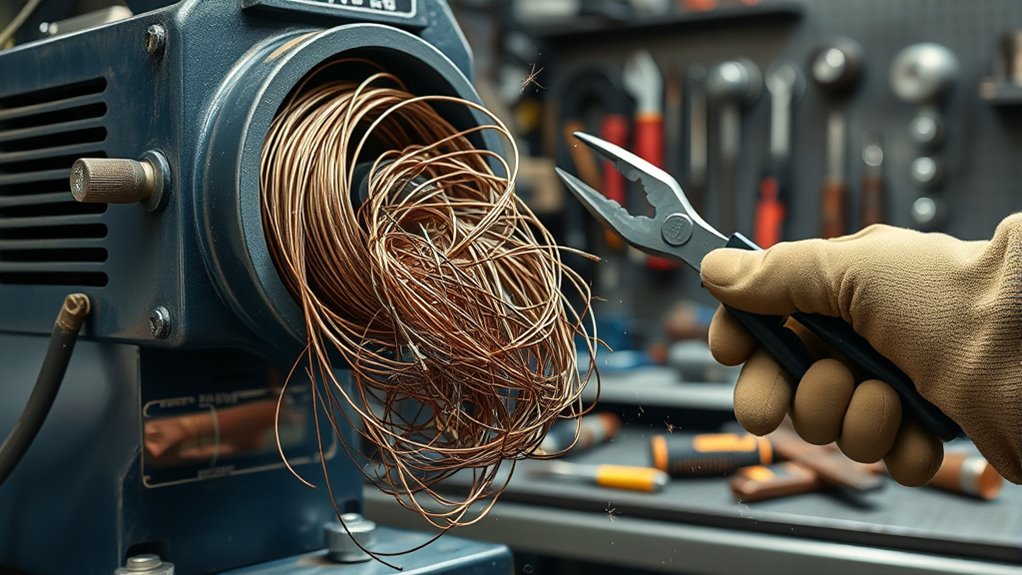
A clean, correctly assembled MIG welding setup feeds wire with less resistance. Add these checks to your normal setup and maintenance routine:
- Inspect the contact tip for spatter, burnback, roughness, and an enlarged or oval bore.
- Check the liner for dirt, copper flakes, rust, poor trimming, wear, and kinks.
- Clean the liner with dry compressed air only when the gun manufacturer permits it; wear eye protection and direct debris away from people.
- Keep the gun cable in broad curves instead of tight coils.
- Check that the gun connector is fully seated and that guides support the wire close to the rolls.
- Set spool-brake tension so the spool stops without overrun or heavy drag.
- Use the correct drive rolls and inspect the grooves for packed debris or sharp wear.
- Adjust roll pressure whenever wire diameter or type changes.
- Store wire in a clean, dry area and replace wire that has rust or heavy contamination.
- Use regular maintenance to catch feed problems before they stop a weld.
Warning: Do not clean drive rolls, remove a bird nest, replace a liner, or open the feeder while the welder is energized. Disconnect the power source and follow the manufacturer’s instructions. Repairs involving internal wiring, damaged controls, or an unexpected motor start should be handled by qualified personnel.
How Bird Nesting Affects Weld Quality and Efficiency
Bird nesting stops or interrupts electrode delivery. The arc may stutter, extinguish, or burn the wire back into the contact tip. This can produce an uneven bead, excess spatter, poor tie-in, or incomplete sections that require grinding and repair.
Each nest also wastes electrode, shielding gas, contact tips, and production time. Forcing more roll pressure onto a blocked feed path can add copper shavings to the liner and shorten the life of the rolls and gun consumables.
Frequent nests usually indicate a repeatable setup or component problem. Proper drive roll tension is important, but it should be adjusted only after confirming that the liner, tip, guides, gun cable, and spool can move the wire freely.
When to Replace Parts Instead of Adjusting Them
Replace the contact tip if cleaning does not restore smooth feeding or if the bore is enlarged, oval, rough, clogged, or damaged by burnback. A worn tip can cause poor electrical contact and an unstable arc even when wire still passes through it.
Replace the liner if it is kinked, crushed, rusty, incorrectly sized, badly trimmed, or still restrictive after approved cleaning. Follow the gun instructions closely because liner length and seating vary by design.
Replace drive rolls that have sharp edges, uneven grooves, heavy wear, damaged teeth, or poor alignment. Replace rusty or badly tangled electrode rather than feeding contamination and damaged wire through a new liner.
Stop using the welder and seek qualified service if the drive motor starts unexpectedly, runs erratically with the gun disconnected, repeatedly trips protection, has damaged wiring, or continues bird nesting after the complete external feed path has been inspected and corrected.
Related guides: see arc length vs. stickout in welding and MIG transfer modes compared.
Products Worth Considering

welding tools Package List - 2pcs Snap on gas nozzles, 2pcs gas diffusers M6 internal thread, 2pcs Red copper contact tips 0.024''(0.6mm), 5pcs Copper contact tips 0.030''(0.8mm for long continuous welding), 3pcs Copper welding contact tips 0.040''(1.0mm for spot welding). Totally 14pcs in this welder kit of 15AK MIG MAG welding torch consumable parts set.

Package list: 30 pieces of 0.030 inch mig welder tips.
Frequently Asked Questions
Why does my MIG machine keep bird nesting?
Repeated bird nesting means the wire is meeting resistance or losing support somewhere in the feed path. Check the contact tip, cable bends, liner condition and size, gun seating, inlet-guide position, drive-roll groove and pressure, spool brake, and wire condition.
How can bird nesting be eliminated in welding?
Remove the damaged wire, correct any blockage or alignment problem, match all feed parts to the wire, and use only enough roll pressure for reliable feeding. Soft aluminum may require a spool gun or push-pull feeder for dependable results.
What is bird nesting in welding?
Bird nesting is a tangled mass of welding wire that forms beside the drive rolls when the rolls push wire faster than it can move through the gun, liner, and contact tip.
Can a bad contact tip cause bird nesting?
Yes. A clogged, undersized, rough, or burnback-damaged tip can stop the wire at the gun while the drive rolls continue pushing. If wire feeds smoothly with the tip removed, install the correct new tip and test again.
How tight should MIG drive rolls be?
Set them only tight enough to feed without slipping. The wire should not be crushed, flattened, or deeply marked. Begin with the manufacturer’s recommended setting and correct downstream restrictions before adding pressure.
Why is aluminum MIG wire more likely to bird-nest?
Aluminum wire is softer and has less column strength than steel, so it buckles more easily when pushed through a restrictive or sharply curved cable. U-groove rolls, an aluminum-compatible liner, and a spool gun or push-pull system reduce this risk.
Conclusion
Bird nesting usually begins when the drive rolls push against resistance in the tip, liner, cable, guides, gun connection, or spool system. Clear the tangled wire safely, then inspect the feed path in order instead of adding more roll pressure immediately.
Match the rolls, liner, and contact tip to the electrode; keep the cable in broad curves; set only enough roll and spool tension for smooth feeding; and replace worn parts before they damage new wire. A stable feed system produces more consistent starts, cleaner beads, and less wasted time.
Sources
- Miller — Common MIG Weld Defects on Aluminum and Steel — definition of bird nesting and aluminum feed-system options.
- Miller — How to Choose MIG Welding Consumables — liner sizing, installation, cleaning, wear, and contact-tip guidance.
- Miller — Flux-Cored Welding Basics — knurled drive rolls, wire tension, and consumable inspection.
- Miller — Welding Aluminum vs. Steel — V-groove, knurled, and U-groove roll selection and pressure testing.
- Fronius — PullMig Operating Instructions — liner placement, feed-roll pressure, cable routing, and maintenance safety.
- OSHA — 29 CFR 1910.147, Control of Hazardous Energy — power isolation requirements for servicing and unjamming equipment.