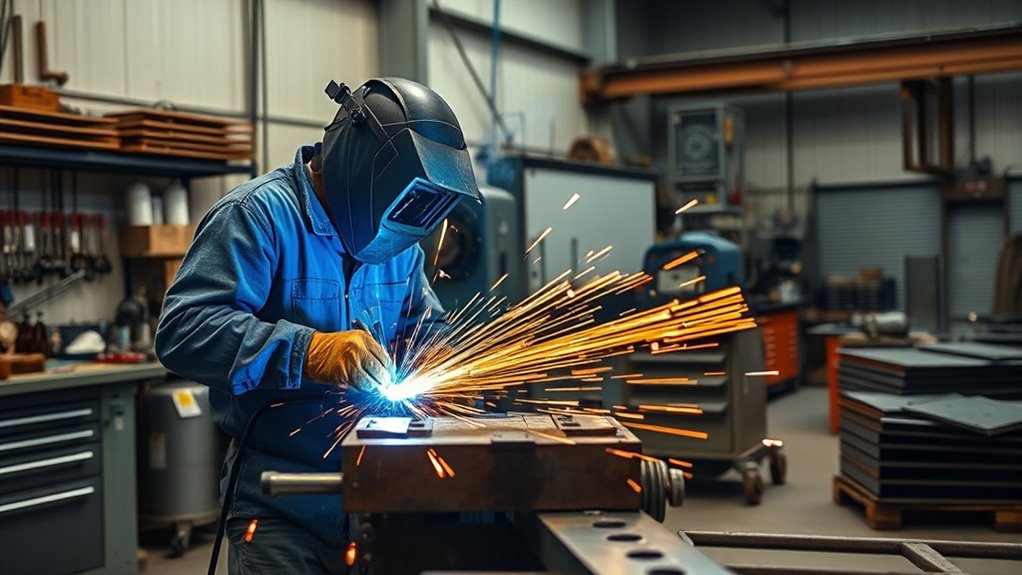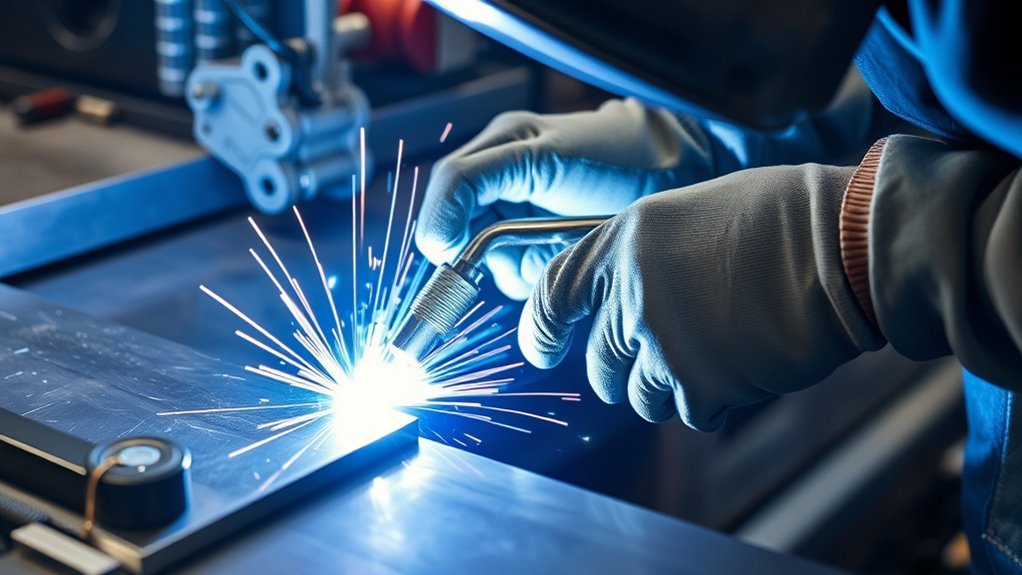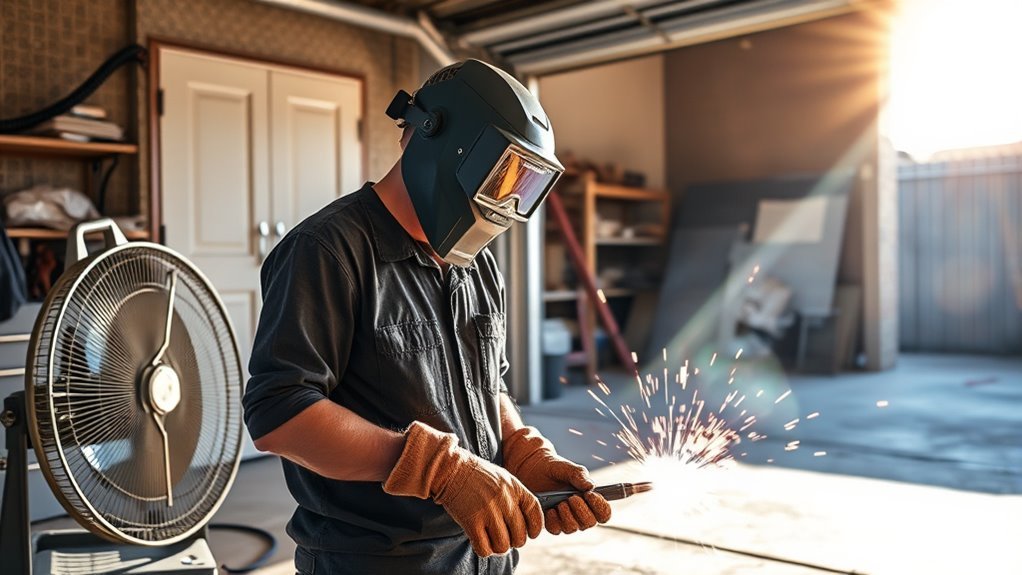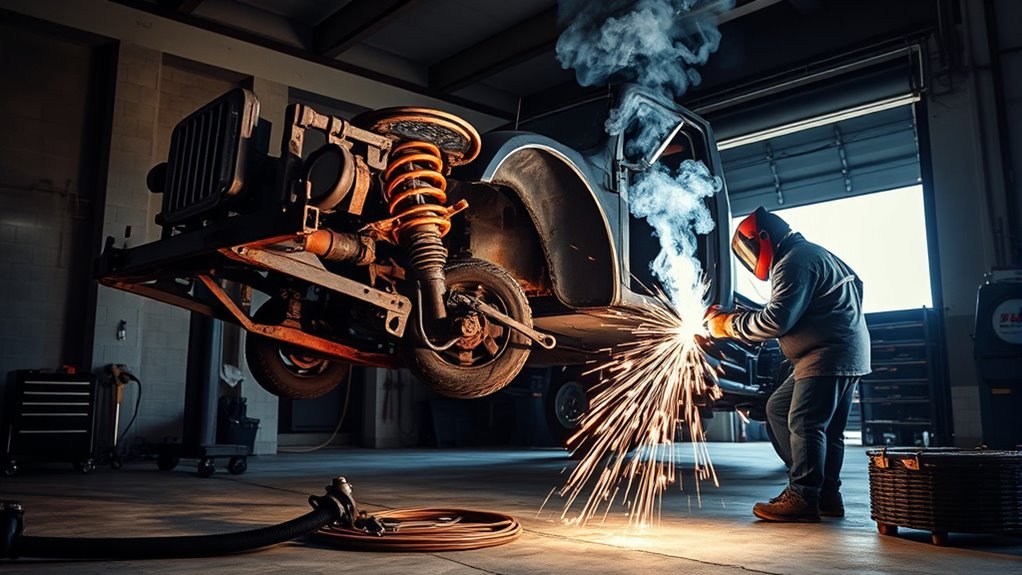
You use stick welding, also called shielded metal arc welding or SMAW, in automotive work when the job involves thicker steel, field repair, brackets, mounts, older ladder frames, trailers, or off-road parts. It is not the best first choice for thin body panels or most late-model structural collision repairs unless the vehicle maker’s repair procedure allows it. When used in the right place, it gives strong fusion, simple equipment, and good outdoor flexibility.
Quick Answer
Stick welding is used in auto repair for thick steel parts such as older frames, brackets, crossmembers, mounts, and field repairs where portability and penetration matter. It is usually a poor choice for thin sheet metal, cosmetic panels, aluminum body structures, and modern collision repairs that require OEM-approved joining methods.
Key Takeaways
- Stick welding works best on thick carbon steel, not thin exterior body panels.
- Use it only on structural vehicle parts when the OEM repair procedure allows that process.
- Its flux coating helps outdoors, but you still need clean metal, safe ventilation, and fire control.
- E6011, E6013, and E7018 rods each fit different automotive repair situations.
- MIG, MAG, resistance spot welding, rivet bonding, and MIG brazing are more common in modern collision repair.
At a Glance
| Time Required | 15–30 minutes for setup and test welds; repair time depends on damage, access, and required OEM steps. |
| Difficulty | Intermediate to advanced for structural or overhead automotive work. |
| Tools Needed | Constant-current stick welder, correct electrodes, grinder, wire brush, clamps, chipping hammer, PPE, ventilation, and fire protection. |
| Cost | Low equipment cost compared with many shop processes, but structural repair cost depends on inspection, parts, labor, and OEM procedure access. |
What Is Stick Welding Used for in Auto Repair?
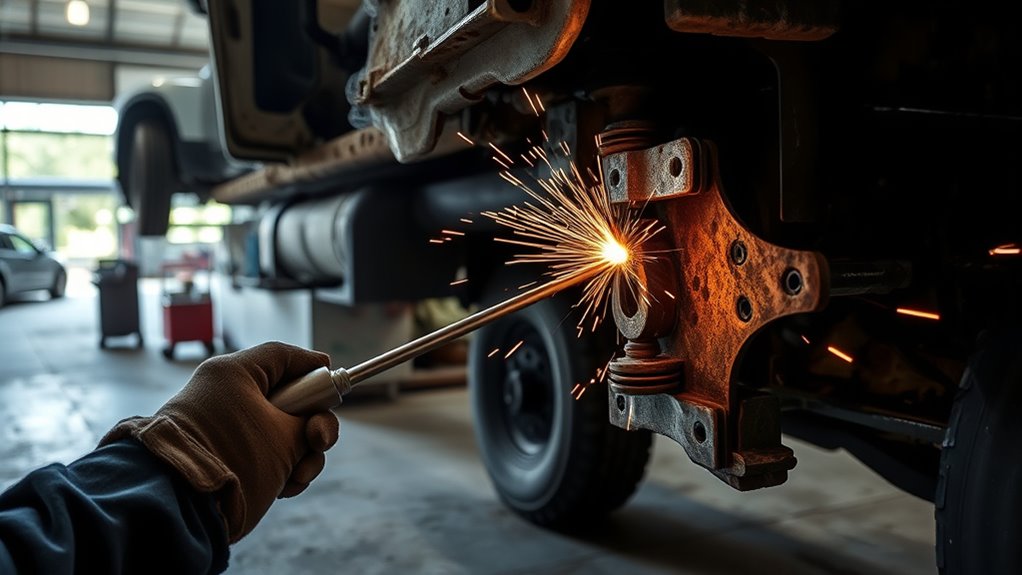
Stick welding is used in auto repair when you need a rugged process for thicker steel parts. Good examples include older truck frames, ladder-frame sections, trailer hitches, off-road brackets, crossmembers, spring hangers, suspension mounts, and farm or fleet repairs.
The process uses a flux-coated electrode. As the rod burns, the flux creates shielding gas and slag that help protect the weld pool. That makes stick welding useful outdoors because it does not depend on an external shielding gas bottle the way gas-shielded MIG or TIG does.
Stick welding can also tolerate light rust or mill scale better than many other processes. That does not mean you should weld through heavy paint, oil, undercoating, or deep corrosion. For a strong repair, clean the weld area to sound metal, fit the parts tightly, and remove coatings that can create porosity or toxic fumes.
For modern collision repair, the key rule is simple: follow the vehicle maker’s OEM repair information. Many late-model structures require specific joining methods, such as MAG/MIG welding, squeeze-type resistance spot welding, MIG brazing, rivet bonding, or adhesive bonding. Stick welding should not replace those methods unless the approved procedure allows it.
Warning: Do not stick weld a vehicle frame, fuel-system area, high-strength steel part, or late-model structural part just because the metal looks thick. Check the OEM repair procedure first. The wrong weld process can weaken crash protection, damage nearby components, or create a fire hazard.
Why Stick Welding Works on Frames and Chassis
You use stick welding on suitable frames and chassis parts because it can put high heat into thick steel and create deep fusion. This matters when a bracket, mount, or frame section must carry load instead of just look smooth.
On older or non-unibody steel parts, stick welding can be practical because the gear is portable, simple, and durable. You can also use different rod types and sizes to match the steel thickness, weld position, and joint shape. For a deeper look at matching rod size and heat, see this guide to stick welding amperage for metal thickness.
Thick Metal Penetration
Thick automotive steel needs enough heat to fuse the root of the joint, not just melt the surface. Stick welding can do this well when the rod, amperage, travel speed, and joint prep match the job.
Good penetration does not come from heat alone. You also need clean edges, correct bevels on thicker parts, solid clamps, and a steady arc length. A bead that looks large can still be weak if it has undercut, slag trapped inside, or poor root fusion.
Pro Tip: Make a test weld on the same thickness and position before touching the vehicle. If the repair is overhead, test overhead. If the repair is vertical, test vertical. Then cut, bend, or break the coupon to check fusion before you weld the actual part.
Frame Repair Strength
Stick welding can produce strong frame repairs on appropriate steel because it creates a fused joint with filler metal added from the electrode. That strength is useful on brackets, mounts, crossmembers, and reinforcements that see vibration and road shock.
Still, welding is only one part of frame repair. You also need measuring, pulling, alignment checks, corrosion assessment, and inspection. A weld cannot make a bent frame straight by itself. It also cannot make a repair safe if the repair location, sectioning point, or joining method is not approved.
For automotive weld quality, AWS D8.8M:2021 covers minimum quality requirements for arc welding of steel automotive and light truck components. Use that kind of standard as support, but still follow the exact vehicle maker procedure when repairing a vehicle structure.
Outdoor Repair Flexibility
Stick welding is popular for outdoor and mobile repair because it does not need an external shielding gas cylinder. The flux coating shields the arc and helps the weld pool resist wind better than gas-shielded processes.
- Portable machines fit mobile repair work.
- Rugged equipment handles rough shop or field conditions.
- Electrodes are easy to carry and change.
- The process can weld flat, horizontal, vertical, and overhead when the rod supports that position.
This flexibility is useful for older vehicles, farm trucks, trailers, and off-road repairs. It is less useful on thin body panels, modern unibody structures, and any job where the OEM procedure names another joining method.
Stick Welding for Dirty or Rusty Auto Parts
Stick welding has better rust tolerance than MIG or TIG, but that advantage is easy to misuse. The flux can help the arc work through light rust, mill scale, and minor surface dirt. It cannot make rotten steel strong, and it cannot remove the safety risk from oil, paint, seam sealer, undercoating, fuel residue, or zinc coating.
For related field-process comparisons, flux-core welding can also be useful outdoors, but it has different wire, machine, and cleanup needs.
Rust Tolerance
Stick welding can help when you are repairing older steel because the arc is forceful and the flux system is forgiving. That makes it useful on brackets, mounts, and frame steel where light rust remains after brushing or grinding.
Do not weld over heavy rust. Deep rust thins the steel and may leave weak edges that melt away under the arc. If the part is load-bearing, grind back to solid metal or replace the damaged section.
- Light rust: clean with a wire wheel or grinder before welding.
- Heavy scale: remove until the base steel is visible.
- Deep pitting: evaluate thickness before repair.
- Rot-through: replace the section instead of filling holes with weld.
Surface Contaminants
Surface prep still matters. Stick welding is forgiving, but it is not magic. Clean metal gives you better arc starts, better fusion, less porosity, and less smoke.
| Contaminant | What you should do before welding |
|---|---|
| Light rust | Wire-brush or grind until the surface is firm and bright enough for stable fusion. |
| Paint or primer | Remove it from the weld zone and nearby heat zone to reduce fumes and porosity. |
| Oil or grease | Degrease first, then dry the part fully before striking an arc. |
| Undercoating or seam sealer | Remove it well away from the weld area because it can burn, smoke, and contaminate the joint. |
| Galvanized coating | Avoid welding unless you can remove the coating safely and provide proper ventilation and respiratory protection. |
Note: Welding fumes come from the filler metal, base metal, coatings, cleaners, and the process itself. Follow OSHA welding fume guidance and the safety data sheets for the materials you are heating.
Repair Reliability
A reliable stick weld comes from the full repair process, not only from the rod. For automotive steel, focus on fit-up, metal thickness, joint design, heat control, and inspection.
- Use clamps to hold the parts in alignment.
- Make short welds when heat distortion is a risk.
- Remove slag between passes.
- Watch for undercut, porosity, cracks, and lack of fusion.
- Do not weld over cracks without drilling, grinding, or preparing the crack ends as the repair procedure requires.
If the part is structural, document the process and compare it with the OEM procedure. For late-model vehicles, a weld that looks strong may still be wrong if it changes the crash path or heat-affected zone of advanced steel.
When Stick Welding Handles Thick Metal Best
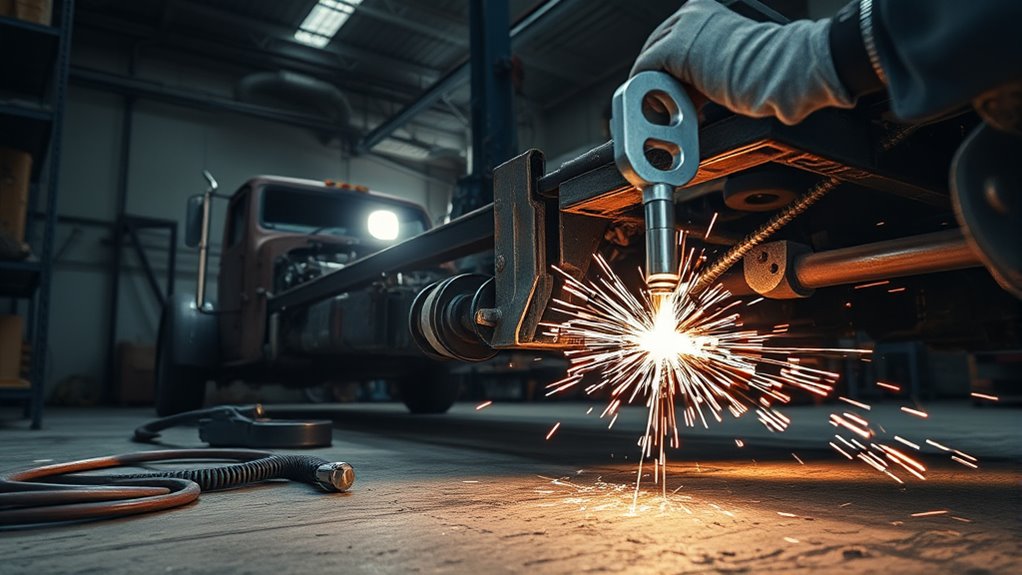
Stick welding performs best when the repair involves thick carbon steel and access is good enough to control the rod angle. It is a strong fit for heavy brackets, older frame rails, crossmembers, spring perches, gussets, skid-plate mounts, and trailer or utility vehicle repairs.
For thick automotive steel, stick welding is useful when strength, portability, and field repair matter more than cosmetic bead appearance.
Use extra care with heat input. Thick steel may need beveling, multiple passes, or a larger electrode. Thin edges near the repair may need lower heat, skip welding, or a different process. If you are working with stainless steel parts, use compatible filler and process settings. This guide on stick welding stainless steel explains why filler choice matters.
Avoid using stick welding as a shortcut on aluminum vehicle parts. Automotive aluminum often needs OEM-approved MIG, TIG, rivet bonding, adhesives, or replacement methods. Be careful with any claims around flux-core aluminum welding rods or flux-core aluminum welding for vehicle structures, because modern aluminum repair is highly procedure-specific.
Best Stick Electrodes for Automotive Repair
Your electrode choice controls penetration, bead shape, slag behavior, and crack risk. Always match the rod to the base metal, thickness, position, and repair requirements.
| Electrode | Best automotive use | Main caution |
|---|---|---|
| E6011 | Dirty field repairs, older steel, AC or DC machines, deeper digging arc. | Can be rougher and less cosmetic. Not ideal for thin panels. |
| E6013 | Light fabrication, brackets, cleaner steel, easier starts for beginners. | Shallower penetration than E6011 or E7018. |
| E7018 | Clean structural mild steel, stronger low-hydrogen welds, multiple-pass work. | Needs proper storage and clean prep. Damp rods raise defect risk. |
Small stick welders can handle light repair tasks, but they have limits. A 70-amp machine may run small rods on thinner steel, but it may not have enough output for thick structural work. Learn more in this guide to welding with a 70-amp stick welder.
Products Worth Considering

E7018 Welding Rod: Diameter: 3/32''; Length: 14"; Weight: 5 lb.

Product Introduction: E6013 welding rod is suitable for both AC and DC applications and can be used for all position welding

Product Introduction: E6013 welding rod is suitable for both AC and DC applications and can be used for all position welding
Stick Welding vs. MIG, TIG, and Flux-Core
Stick welding is only one choice. You get better results when you match the process to the part instead of forcing one process onto every repair.
| Process | Where it fits | Where it struggles |
|---|---|---|
| Stick welding | Thick steel, field repairs, older frames, brackets, mounts, outdoor work. | Thin sheet metal, cosmetic panels, tight access, high-volume collision work. |
| MIG/MAG | Steel body repair, plug welds, controlled shop repairs, many OEM procedures. | Outdoor wind without shielding control, dirty metal, poor fit-up. |
| TIG | Precision work, thin parts, stainless, aluminum fabrication, visible welds. | Speed, dirty parts, awkward field repairs, beginner learning curve. |
| Flux-core | Outdoor steel repair, higher deposition, portable wire-feed work. | Spatter, smoke, thin panels, and process limits by wire type. |
If you are comparing outdoor wire-feed repairs, this overview of what flux-core welding is used for can help you decide whether flux-core or stick is the better fit.
Products Worth Considering

Comprehensive Welding Package: our package comes with 24 low temperature universal welding rods available to meet your welding requirements; Whether you are a novice or an experienced welder, this kit of welding rods ensures you have things you need for your welding projects; Material is relatively brittle, received with breakage is a normal phenomenon, does not affect the use

Package includes: you will receive 78 pieces of plastic welding rods in various colors, such as black, white, gray, transparent, etc., each color counting 12 pieces except for 6 pieces of transparent poly-carbonate rods, which are sufficient quantity and diverse varieties to meet your multiple demands

Compatible Accessories: Use with JOUNJIP Boot Tips (sold separately) and Plastic Welding Kit Set (sold separately) together
Why Some Auto Repair Shops Use Stick Welding
Some auto repair shops, fleet shops, farm shops, and mobile repair techs keep stick welding equipment because it is simple, portable, and useful on heavy steel. It is not always the main process in a collision center, but it still has value in the right job.
- Low setup cost: A basic constant-current machine and electrodes can handle many steel repair tasks.
- Field use: You can repair equipment, trailers, and older vehicles outside the main bay.
- Thick steel capability: Stick welding can handle heavier brackets and mounts better than small wire-feed machines.
- Flexible positions: With the right rod, you can weld flat, vertical, horizontal, or overhead.
- Less gas dependence: You do not need a shielding gas cylinder for basic SMAW work.
The tradeoff is cleanup and control. Stick welding creates slag and more spatter than many MIG repairs. It also needs more skill on thin or awkward parts. For quick, clean, repeatable work on modern body structures, OEM-specified MAG/MIG, spot welding, rivet bonding, and MIG brazing are often more appropriate.
Stick Welding Limits in Automotive Work
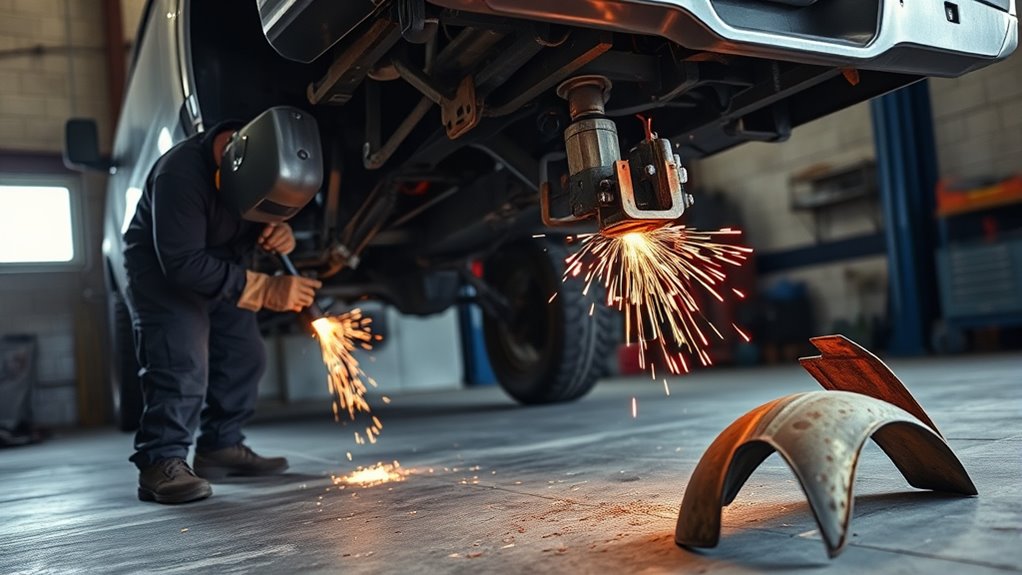
Stick welding has clear limits in automotive work. It is slower than MIG, creates slag, and puts a lot of heat into a small area. That heat can warp panels, burn through thin sheet metal, and damage coatings or nearby parts.
- Thin body panels: Stick welding usually runs too hot for doors, fenders, quarter panels, and patch panels.
- Modern unibody structures: OEM procedures may require another joining method.
- UHSS or advanced steel: Extra heat can damage strength and crash performance.
- Aluminum structures: Stick welding is usually not an approved automotive body repair method.
- Fuel or vapor areas: Sparks and heat can ignite vapors if the system is not isolated and controlled.
- Cosmetic work: Stick beads often need more grinding and finishing.
For thin, delicate, or visible areas, MIG or TIG usually gives you better control. For late-model structural repairs, do not guess. Use the factory repair manual, OEM position statements, and collision repair information before selecting a process.
Basic Workflow Before You Stick Weld Auto Parts
Before you weld, slow down and confirm the job is a good fit for stick welding. This simple workflow helps you avoid unsafe shortcuts.
- Identify the part: Confirm whether it is cosmetic, load-bearing, frame, bracket, aluminum, UHSS, or coated steel.
- Check the repair procedure: Use OEM repair information for structural parts and late-model vehicles.
- Remove hazards: Move flammables, protect glass and wiring, isolate fuel components, and disconnect batteries as required.
- Clean the weld zone: Remove rust, paint, oil, seam sealer, undercoating, and zinc coating when safe to do so.
- Fit and clamp: Align the parts before welding. Do not use weld metal to fill poor fit-up unless the repair allows it.
- Make a test weld: Use the same thickness, position, rod, and machine settings.
- Weld in control: Keep a short arc, steady travel speed, and correct rod angle.
- Inspect the repair: Remove slag and look for cracks, undercut, porosity, missed edges, and poor fusion.
For starting points on rod diameter, polarity, and amperage, use a stick welder settings chart, then fine-tune on scrap before welding the vehicle.
Beginner Skills for Automotive Stick Welding
For beginners, automotive stick welding starts with control, not speed. You need to read the puddle, keep the arc short, and manage heat so the weld penetrates without burning away the edge.
| Skill | What you do | Why it matters |
|---|---|---|
| Electrode selection | Match rod type and size to the steel, thickness, and position. | The wrong rod can cause weak fusion, excess spatter, or cracking risk. |
| Arc length | Hold a short, steady gap between rod and work. | A long arc adds spatter and poor bead shape. A short arc can stick the rod. |
| Travel speed | Move slowly enough to fuse both sides but fast enough to avoid overheating. | Speed controls bead size, heat input, and distortion. |
| Slag control | Chip and brush slag between passes. | Trapped slag can weaken the weld and hide defects. |
| Safety setup | Wear PPE, ventilate, remove combustibles, and control sparks. | Welding can burn skin, damage eyes, start fires, and create hazardous fumes. |
Practice on scrap before you work on a vehicle. Run beads flat, then try lap joints, T-joints, vertical welds, and overhead welds. When your beads are consistent and your test pieces break in the base metal instead of the weld, you are closer to doing reliable repair work.
Automotive Stick Welding Safety Checklist
Stick welding creates intense UV light, hot slag, sparks, fumes, and fire risk. Follow AWS Z49.1 welding safety guidance, OSHA rules, and your shop’s hot-work procedure.
- Wear a welding helmet with the right shade, leather gloves, flame-resistant clothing, and eye protection under the helmet.
- Use ventilation or local exhaust to control welding fumes.
- Remove flammable trim, carpet, insulation, rags, solvents, and undercoating near the weld area.
- Keep a charged fire extinguisher nearby and use a fire watch when sparks can travel into hidden areas.
- Disconnect or protect batteries, electronics, sensors, and wiring as the repair procedure requires.
- Do not weld near fuel lines, tanks, vapors, or fuel-soaked parts unless the fuel system is isolated and hot-work controls are in place.
- Let parts cool naturally unless the repair procedure says otherwise. Quenching can change metal properties.
Warning: OSHA hot-work rules require used tanks, containers, and connected lines to be cleaned, disconnected, or blanked before welding if flammable or toxic vapors may be present. Never treat an “empty” fuel tank or line as safe without proper vapor control.
Frequently Asked Questions
Can stick welding be used on vehicle body panels?
Usually, no. Stick welding runs too hot for most thin vehicle body panels and can cause burn-through, warping, and rough cleanup. MIG or TIG usually gives you better control for doors, fenders, quarter panels, and patch panels.
What electrodes work best for automotive stick welding?
E6011 works well for rougher field repairs and light contamination. E6013 is easier for cleaner light fabrication. E7018 is a common low-hydrogen choice for clean structural mild steel, but it needs proper storage and prep. Always match the rod to the steel, thickness, position, and repair procedure.
Is stick welding safe near fuel lines?
Not unless strict hot-work controls are in place. Fuel lines, tanks, vapors, and fuel-soaked parts can ignite from sparks or heat. The system must be isolated, cleaned, shielded, ventilated, and checked for vapors. Use a fire watch and follow OSHA, shop, and OEM procedures.
How do you prevent warping during stick welds?
Control heat input. Use short beads, skip around the joint, clamp the work, let the part cool between passes, and avoid overwelding. Good fit-up also helps because you do not need extra heat to fill large gaps.
What power source is needed for automotive stick welding?
You need a constant-current AC or DC stick welder. DC usually gives a smoother arc, while AC can work with compatible rods such as many E6011 and AC-rated E7018 electrodes. The machine must have enough amperage for the rod size and steel thickness.
Can I stick weld a car frame at home?
Only if the frame material, repair location, and OEM procedure allow it, and only if you have the skill and safety setup to do the job correctly. Many late-model structural repairs require specific factory methods. When in doubt, use a certified collision repair shop.
Conclusion
In automotive work, stick welding is best treated as a rugged tool for thick steel repairs, older frames, brackets, mounts, field work, and non-cosmetic jobs where penetration and portability matter. It is not the right default for thin body panels or modern structural collision repairs. Before you weld, check the OEM procedure, clean the metal, choose the right rod, control heat, and protect yourself from fumes, fire, and fuel hazards.
Sources
- AWS Z49.1:2021 Safety in Welding, Cutting, and Allied Processes — supports PPE, ventilation, fire prevention, and general welding safety guidance.
- OSHA 29 CFR 1910.252 General Requirements — supports hot-work, fire prevention, and fuel/container safety precautions.
- OSHA Fact Sheet: Controlling Hazardous Fume and Gases during Welding — supports ventilation and fume hazard guidance.
- I-CAR Welding Training and Certification — supports modern collision repair training and the need to meet OEM specifications.
- Ford Structural Repairs Position Statement — supports following OEM structural repair procedures and validated repair methods.
- AWS D8.8M:2021 Specification for Automotive Weld Quality, Arc Welding of Steel — supports automotive steel arc-weld quality context.