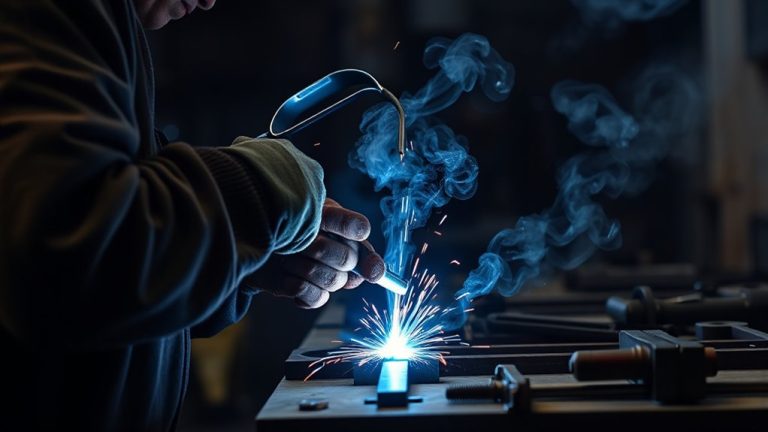
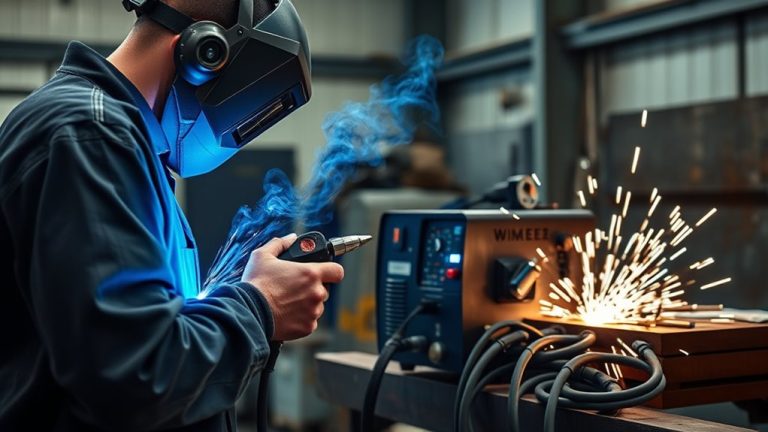
Stick welding can make sense for automotive work, but only in the right place. Use it for thicker steel parts such as brackets, mounts, reinforcements, trailer repairs, farm-style utility parts, and some older frame sections when the repair procedure allows welding. For thin body panels, modern collision structures, cosmetic seams, and heat-sensitive sheet metal, MIG or TIG is usually the better choice.
Quick Answer
Stick welding makes sense on cars when the steel is thick enough to handle the heat and the repair needs strength more than appearance. It is useful for brackets, reinforcements, and outdoor repairs, but it is usually too hot and rough for thin body panels or modern crash structures.
Key Takeaways
- Stick welding is best for thicker automotive steel, brackets, reinforcements, and rough outdoor repairs.
- MIG is usually better for sheet metal because it is faster, cleaner, and easier to control on thin panels.
- TIG is best when the repair needs precise heat control, clean appearance, or work on aluminum and stainless parts.
- Never weld safety-critical frame, rail, suspension, or crash-zone parts unless the vehicle manufacturer allows that repair method.
- Clean the joint, protect the vehicle from fire, use proper PPE, and test settings on scrap before welding the car.
At a Glance
| Best Use | Thick steel brackets, reinforcements, utility repairs, older steel parts, and outdoor work |
| Avoid On | Thin body panels, modern high-strength crash structures, fuel areas, cosmetic seams, and unknown alloys |
| Difficulty | Moderate to hard, especially on thin metal or out-of-position welds |
| Tools Needed | Stick welder, correct electrodes, chipping hammer, wire brush, grinder, clamps, PPE, fire watch, and ventilation |
| Cost | Low consumable cost, but total cost depends on PPE, prep tools, repair access, and whether professional inspection is needed |
Warning: Automotive welding can affect crash safety, suspension alignment, fuel systems, wiring, corrosion protection, and airbags. Follow the vehicle manufacturer’s repair procedure. Do not weld frame rails, crumple zones, suspension mounts, or high-strength steel parts unless the approved repair information allows it.
When Stick Welding Makes Sense for Cars
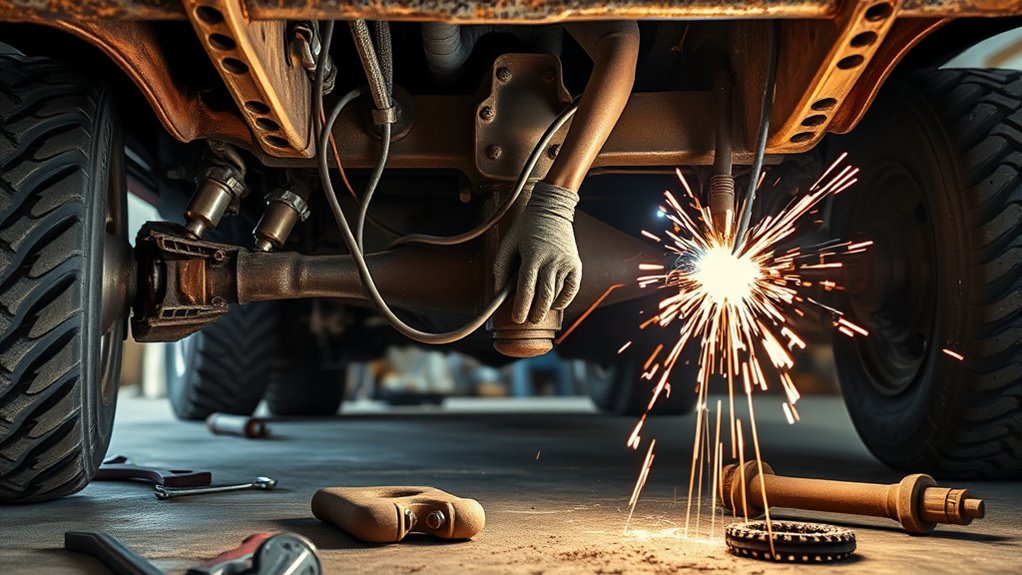
Stick welding, also called shielded metal arc welding or SMAW, makes the most sense when the automotive part is thick enough to absorb heat without blowing through. It uses a flux-coated electrode, so it does not need a separate shielding gas bottle. That makes it useful outside the shop, in drafty areas, or on repairs where a gas-shielded process is hard to protect.
Good automotive uses include heavy steel brackets, trailer parts, bumpers, utility racks, older steel mounts, and reinforcement plates where appearance is less important than strength. It can also help when the metal has light rust or less-than-perfect access. Stick welding is less sensitive to wind than MIG or TIG because the electrode coating creates shielding around the arc.
That does not mean the metal can be filthy. Remove paint, undercoating, seam sealer, oil, heavy rust, zinc coating, and dirt before welding. Light rust tolerance is helpful, but a cleaner joint still gives you a stronger weld, fewer pores, and less toxic smoke. If you are deciding between processes, flux core welding can also be a practical option for outdoor steel repairs because it is more forgiving than gas-shielded MIG in windy conditions.
Note: Stick welding is not a shortcut around repair procedures. On modern vehicles, the steel type and crash design matter as much as the weld bead.
Stick Welding for Frames, Brackets, and Reinforcements
For frames, brackets, and reinforcements, stick welding can deliver deep penetration and durable welds on heavy steel. That is why it is common in maintenance, fabrication, farm equipment, trailers, and field repairs. On automotive work, use that strength carefully.
Stick welding may be reasonable on older, thicker steel parts when the repair area is not part of a designed crash-management zone and when the manufacturer allows welding. It can work well for a non-cosmetic bracket, utility mount, or reinforcement plate if the metal is thick enough, the fit-up is tight, and the rod matches the job.
Modern vehicles often use high-strength steel, ultra-high-strength steel, aluminum, adhesives, rivets, and designed crush zones. Welding the wrong area can weaken the part or change how the vehicle reacts in a crash. Before welding a frame rail, rocker, pillar, suspension mount, tow point, or structural reinforcement, confirm the approved repair method. If the procedure says replace, section, rivet-bond, or avoid heat, do not substitute stick welding.
Heat control matters on every structural repair. Excess heat can cause distortion, reduce corrosion protection, damage nearby coatings, and create hard or brittle heat-affected zones. For related technique, this guide on heat control explains why travel speed, amperage, and electrode control affect the final weld.
Pro Tip: Practice on scrap steel with the same thickness and joint shape before welding the vehicle. Cut or bend the test weld if possible. A bead that looks good on top can still have poor fusion inside.
Why Stick Welding Handles Dirt and Wind
Stick welding handles rough conditions better than many automotive processes because the flux coating on the electrode creates shielding gas and slag as it burns. This helps protect the molten weld pool from oxygen and nitrogen in the air. It also makes the process less dependent on a gas nozzle and flowmeter.
That is why stick welding can keep working in areas where a breeze would push MIG shielding gas away. It also explains why stick welding can tolerate lightly rusty or imperfect surfaces better than TIG or gas MIG. The process is rugged, portable, and simple to set up, which helps when you are working outside, under a vehicle, or away from a full shop.
Still, surface prep is not optional. Oil, grease, thick rust, paint, rubberized undercoating, galvanized coating, and seam sealer can cause porosity, slag inclusions, toxic fumes, or fire. Clean the weld zone to bright metal when possible, and keep a fire extinguisher close. For more defect guidance, review common contaminated surfaces and weld-quality problems before starting.
Stick welding is forgiving in wind and light rust, but it is not forgiving enough to make dirty, oily, or safety-critical vehicle parts safe to weld without proper prep.
When MIG or TIG Is the Better Choice
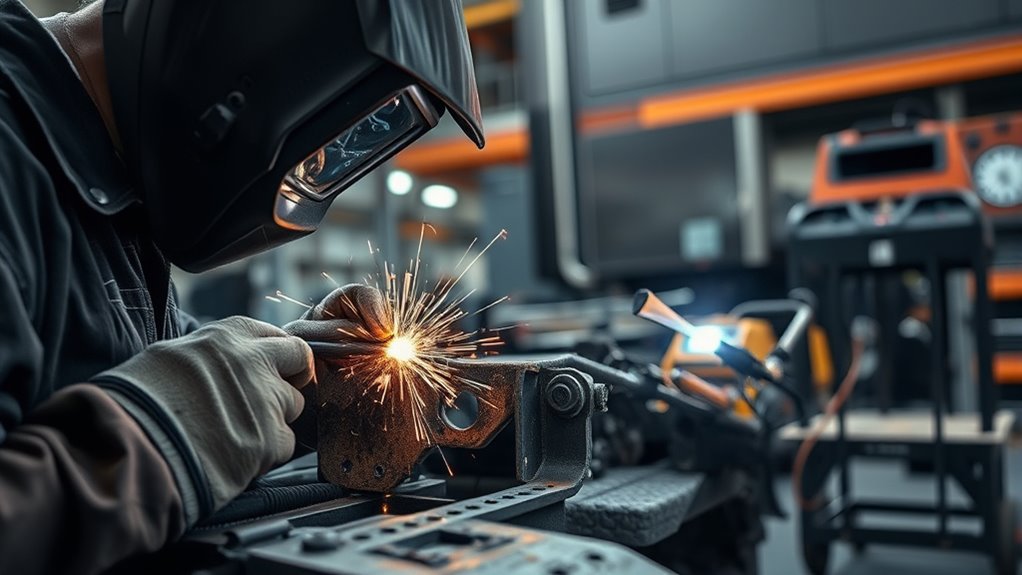
MIG or TIG is often the better choice when you need cleaner results, lower heat input, and better control on automotive work. Most thin body panels are easier to repair with MIG because the wire feed is continuous, the puddle is small, and the weld can be made in short tacks. TIG gives even finer control, especially on aluminum, stainless steel, exhaust parts, and visible welds.
Use MIG when you need speed on steel sheet metal, patch panels, floor pans, or non-structural body repairs. Use TIG when you need precision, clean bead appearance, or careful heat input. For stainless repairs, filler choice matters. For example, ER308L filler wire is commonly discussed for 304 stainless, but it is not a universal filler for every automotive metal.
| Process | Best Automotive Use | Main Limitation |
|---|---|---|
| Stick | Thick steel brackets, utility parts, outdoor repairs, and rough access | Too much heat and slag for most thin panels |
| MIG | Sheet metal, patch panels, floor pans, and general steel repair | Shielding gas can be disturbed by wind |
| TIG | Aluminum, stainless, exhaust, precise visible welds, and thin material | Slower and requires more skill |
| Flux-core | Outdoor steel repairs and thicker parts where portability matters | More spatter and cleanup than gas MIG |
How to Protect Thin Auto Panels
Thin auto panels need careful heat control because stick welding can burn through light-gauge steel quickly. If you must use stick on thin metal, use the smallest suitable electrode, low amperage, a tight arc, short welds, and quick travel. Even then, MIG is usually safer and cleaner for body panels.
A copper or aluminum backing bar can absorb heat and support the puddle. Short tack welds help spread heat instead of concentrating it in one long bead. Let each tack cool before adding the next one. Do not chase a hole with more heat, because the opening will usually grow.
| Control | Action | Effect |
|---|---|---|
| Amperage | Use the lowest stable setting | Limits burn-through |
| Arc Length | Keep a tight arc | Reduces spatter and excess heat |
| Motion | Use short tacks, not long beads | Reduces warping |
| Support | Add a backing bar | Absorbs heat and supports the puddle |
| Prep | Clean to bright metal | Improves arc stability and fusion |
Joint size matters too. A weld that is too large adds heat without adding useful strength. Always keep the maximum fillet weld size appropriate for the metal thickness and joint design.
Choosing Stick Electrodes for Automotive Work
Electrode choice affects penetration, bead shape, slag, cracking risk, and ease of use. For automotive steel, common rods include 6013, 6011, and 7018. The right choice depends on metal thickness, position, joint type, and whether the repair is structural.
- 6013: Easier to run, smoother bead, lighter penetration. It can be useful for thinner mild steel and non-critical brackets when fit-up is good.
- 6011: Deeper penetration and better tolerance for light rust or less-than-perfect surfaces. It is useful for repair work, but it can be aggressive on thin metal.
- 7018: Low-hydrogen rod often used where strength and crack resistance matter. It needs clean steel, good technique, and dry storage.
For thin work, rod diameter matters. A small rod at low amperage gives you more control than a large rod that forces too much heat into the panel. For heavier brackets or reinforcements, a larger rod may be useful, but only if the joint is prepared correctly and the base metal can handle the heat.
Note: Low-hydrogen rods such as 7018 should be stored dry. Damp electrodes can increase hydrogen-related cracking risk and lead to poor weld quality.
Setup Checklist Before Welding a Car
Good stick welds start before the arc. Use this checklist before welding any vehicle part:
- Check the repair procedure. Confirm the vehicle manufacturer allows welding in that exact area.
- Identify the metal. Do not assume every part is mild steel. Modern vehicles may use high-strength steel or aluminum.
- Disconnect and protect electronics. Follow service information for battery and module protection.
- Remove fire hazards. Keep fuel lines, brake lines, wiring, carpet, foam, seam sealer, and undercoating away from heat.
- Clean the joint. Grind to bright metal and remove coatings from both sides if heat will reach them.
- Clamp the work. Tight fit-up reduces gaps, burn-through, and slag traps.
- Set amperage on scrap. Use scrap of the same thickness before welding the actual part.
- Plan the weld sequence. Use tacks, short beads, and cooling time to reduce distortion.
- Protect yourself. Use a proper welding helmet, gloves, sleeves, eye protection for slag removal, and ventilation.
- Inspect after welding. Remove slag, look for undercut, cracks, porosity, and incomplete fusion, then restore corrosion protection.
Common Stick Welding Problems on Car Repairs
| Problem | Likely Cause | Fix |
|---|---|---|
| Burn-through | Metal too thin, amperage too high, travel too slow | Use MIG instead, lower amperage, use smaller rod, add backing bar, and weld in short tacks |
| Porosity | Oil, paint, rust, damp rods, long arc | Clean the metal, use dry rods, shorten the arc, and improve shielding from drafts |
| Slag inclusion | Poor angle, low amperage, bad cleanup between passes | Chip and brush each pass, adjust angle, and avoid trapping slag at the toe of the weld |
| Undercut | Too much heat, long arc, wrong travel speed | Reduce amperage, tighten the arc, and pause briefly at the weld toes |
| Rod sticking | Low amperage, poor ground, weak arc start | Increase amperage slightly, clean the ground clamp area, and practice arc starts on scrap |
Safety and OEM Repair Notes
Welding on a vehicle adds risks you do not always face on a bench. Heat can travel through panels and ignite materials on the back side. Sparks can enter carpet, insulation, trunk liners, fuel-vapor areas, or hidden cavities. Welding fumes can also come from coatings, paint, rust converters, galvanized steel, and underbody products.
Use the safety guidance from OSHA welding, cutting, and brazing resources, and use welding equipment guidance from TWI’s manual metal arc welding equipment guide. At minimum, protect your eyes, skin, lungs, and surroundings before striking an arc.
For vehicle structure, remember that NHTSA vehicle safety information treats vehicle safety as a core concern. That is why repair procedure matters. If a weld changes how a vehicle manages crash energy, a strong-looking bead is not enough. When in doubt, get the OEM procedure or use a qualified collision repair professional.
Warning: Do not weld near fuel tanks, fuel lines, brake lines, batteries, airbag components, or sealed cavities unless the area is made safe according to service information. Keep a fire watch after welding because hot slag and sparks can smolder behind panels.
Frequently Asked Questions
Is stick welding good for automotive work?
Yes, stick welding can be good for automotive work when the steel is thick enough and the repair needs strength more than appearance. It is useful for brackets, reinforcements, trailers, bumpers, and older steel parts. It is usually not the best choice for thin body panels or modern structural collision repairs.
Should I use 6013 or 7018 on car steel?
Use 6013 for easier starts, smoother beads, and lighter work on mild steel when the part is not safety-critical. Use 7018 when the job calls for stronger low-hydrogen welds on thicker steel, but only with clean metal, dry rods, and proper technique. Do not use either rod as a substitute for the vehicle manufacturer’s approved structural repair method.
Can I stick weld thin auto body panels?
You can sometimes stick weld thin panels with a small rod, low amperage, short tacks, and a backing bar, but it is easy to burn holes and warp the panel. MIG is usually the better process for patch panels, floor pans, and sheet metal because it gives more control with less cleanup.
Can I stick weld a car frame?
Only weld a car frame if the manufacturer’s repair information allows welding in that exact area and you have the skill, tools, and inspection method to do it correctly. Many modern frame rails, crush zones, and high-strength steel parts have strict heat limits or replacement procedures.
Can welders make $100,000 a year?
Some welders can reach $100,000 with overtime, travel work, union work, pipeline jobs, shutdown work, inspection roles, or specialized certifications. It is not the typical base pay for all welders. The U.S. Bureau of Labor Statistics lists the median annual wage for welders, cutters, solderers, and brazers at $51,000 in May 2024, with the highest 10 percent earning more than $75,850.
What is the golden rule in welding?
The golden rule is to prepare the joint before you weld. Clean metal, tight fit-up, correct electrode choice, proper amperage, and safe working conditions matter more than trying to fix a bad setup with extra heat. A clean, controlled weld is stronger than a rushed weld over dirt, paint, or gaps.
Conclusion
Stick welding makes sense on automotive work when the part is thick, steel, accessible, and approved for welding. It is a strong choice for brackets, reinforcements, utility parts, and outdoor repairs where portability and penetration matter. It is not the best choice for thin body panels, cosmetic seams, aluminum panels, or modern crash structures.
Use MIG when you need speed and control on sheet metal. Use TIG when precision and appearance matter. Use stick when the job is heavy enough for the heat and the repair plan supports it. Above all, clean the joint, control heat, protect yourself from fumes and fire, and follow the vehicle manufacturer’s repair information before welding anything that affects safety.
Sources
- TWI: Equipment for Manual Metal Arc Welding — supports SMAW equipment needs, electrode care, PPE, shade guidance, and fume extraction.
- OSHA: Welding, Cutting, and Brazing — supports welding hazard, standards, and safety-resource guidance.
- NHTSA: Vehicle Safety — supports the importance of vehicle safety when repairs affect vehicle equipment and crash performance.
- U.S. Bureau of Labor Statistics: Welders, Cutters, Solderers, and Brazers — supports current wage and career context for the welder income FAQ.