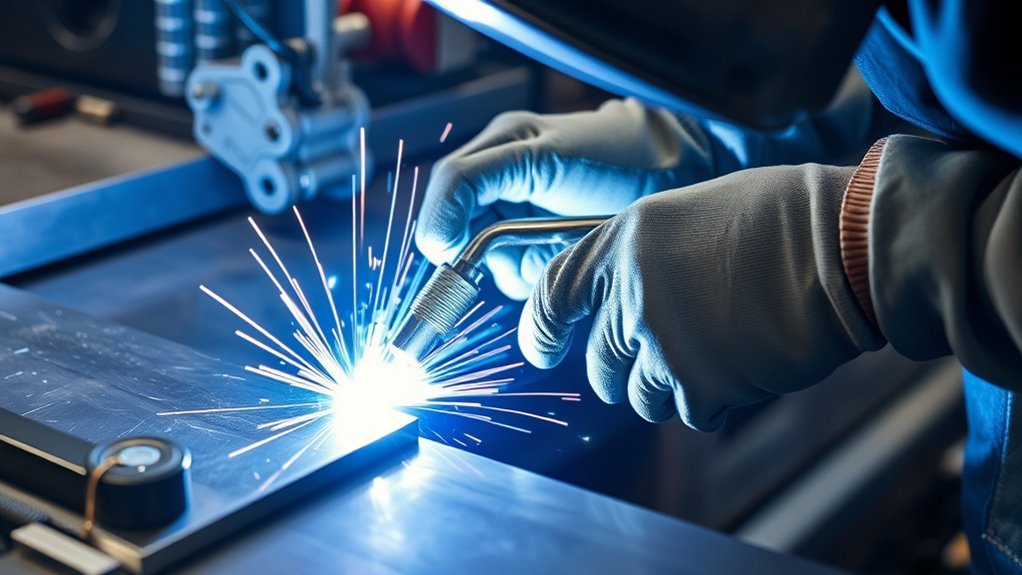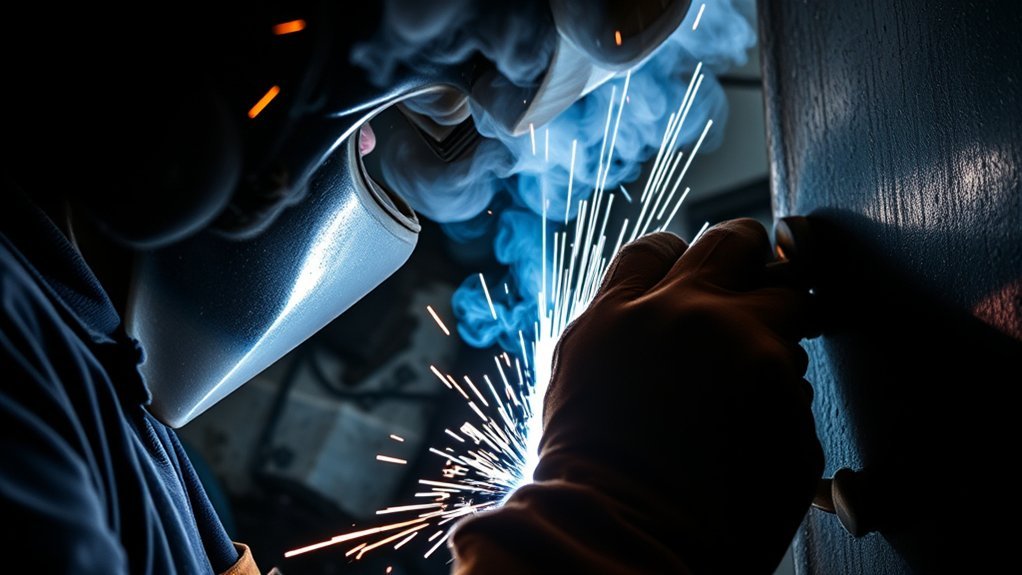
Black smoke during welding can mean anything from a dirty workpiece to lost shielding gas, but not every black mark has the same cause. Aluminum often leaves a wipeable black deposit called smut, while a thick airborne plume from paint, oil, galvanizing, or unknown coatings can signal a serious exposure hazard. Diagnose the process before you continue.
Quick Answer
Black smoke or soot usually comes from contamination, coatings, poor shielding-gas coverage, incorrect settings, or filler-metal vapor. On aluminum, a wipeable black deposit may be normal smut, especially with 5356 filler, but a thick plume, porosity, an unstable arc, or coated metal calls for immediate troubleshooting and better fume control.
Key Takeaways
- First identify whether you are seeing airborne smoke, normal process fume, or a wipeable deposit on the metal.
- Oil, paint, rust, moisture, mill scale, and metallic coatings can increase smoke and cause porosity or an unstable arc.
- Low gas flow, excessive gas flow, drafts, leaks, a clogged nozzle, and poor torch position can all damage shielding coverage.
- Aluminum 5356 filler normally creates more black smut than 4043, but filler must be selected for the base alloy and service requirements—not appearance alone.
- Welding fumes are hazardous even when the smoke looks light. Use source-capture ventilation and the respiratory protection required by the job’s hazard assessment.
At a Glance
| Time Required | About 10–20 minutes for basic cleaning, gas checks, and a test bead |
| Difficulty | Beginner to intermediate; stop and get qualified help for unknown coatings, confined spaces, or repeated weld defects |
| Tools Needed | Clean cloths, approved degreaser, material-appropriate brush or abrasive, flowmeter, nozzle-cleaning tools, scrap metal, PPE, and suitable ventilation |
| Cost | Usually $0–$25 if you already have PPE and cleaning supplies; more if gas hardware or fume controls need repair |
Black Smoke, Soot, or Normal Welding Fume?
Before changing machine settings, look at where the black material appears and how it behaves. A dry deposit that wipes off aluminum is often smut formed when vaporized filler-metal constituents condense and oxidize near the bead. A dense airborne cloud is more likely to involve contaminants, coatings, flux, or excessive fume generation.
| What You See | Likely Meaning | Next Check |
|---|---|---|
| Wipeable black ring beside an aluminum MIG bead | Aluminum or magnesium smut; more common with 5xxx filler | Confirm filler choice, cleaning, gas coverage, push angle, and stickout |
| Pepper-like flakes or a dirty TIG puddle on aluminum | Oxide contamination, poor shielding, wrong polarity, or unsuitable AC balance | Verify AC setup, clean metal, gas path, cup condition, and tungsten |
| Thick smoke from steel before a stable puddle forms | Oil, paint, cutting fluid, rust, moisture, or another contaminant may be burning | Stop, identify the surface, clean it correctly, and improve source capture |
| Steady fume from stick or flux-cored welding | Some visible fume comes from the flux system, but it is not harmless | Check electrode condition and parameters, then control exposure with ventilation and required PPE |
| White, gray, yellow, or unusual fumes from plated or painted metal | The coating may be producing hazardous compounds; color cannot identify the hazard reliably | Stop and identify the coating, SDS, ventilation, and respiratory requirements |
Note: Smoke color and bead appearance cannot tell you which metals or gases are present. Treat welding fume as an exposure hazard and use the work procedure, safety data sheets, and air-monitoring results when available.
Causes of Black Smoke in Welding
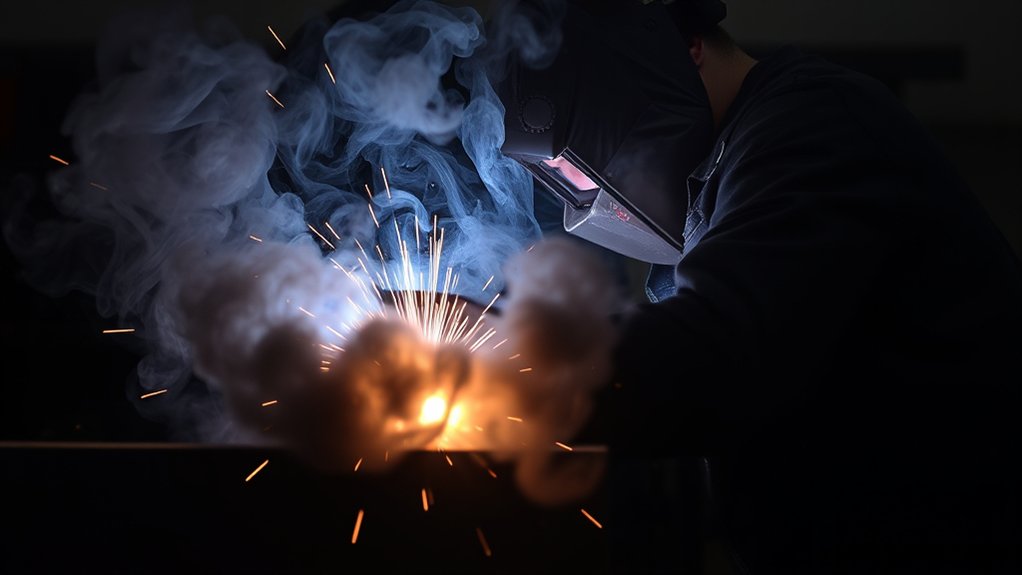
Black smoke often points to one or more problems that should be checked before you keep welding. The most common causes are surface contamination, coatings, disturbed shielding gas, incorrect setup, unsuitable technique, and filler-metal smut.
Dirty or Coated Base Metal
Oil, grease, paint, adhesive, cutting fluid, rust, mill scale, moisture, and metallic coatings can burn or decompose under the arc. Besides increasing smoke, contamination may contribute to porosity, spatter, arc instability, lack of fusion, and poor bead appearance.
Galvanized steel needs special controls because zinc oxide fume can cause metal fume fever. Stainless steel, lead- or cadmium-coated parts, and unknown painted surfaces can present different hazards. Do not assume that grinding a narrow strip automatically makes the job safe; the required controls depend on the material, coating, work location, and exposure assessment.
Poor Shielding-Gas Coverage
Gas-shielded MIG and TIG welding depend on a stable gas envelope around the arc and molten puddle. Low flow, excessive flow, wind, a fan, a leaking hose, loose connections, damaged torch seals, a blocked diffuser, nozzle spatter, or holding the torch too far away can allow air into the shielding zone. Oxygen and moisture then increase oxidation, discoloration, smut, and porosity.
Aluminum Filler-Metal Smut
On aluminum, black soot is often metallic smut rather than carbon. Hobart explains that magnesium in 5xxx-series filler can vaporize in the arc and condense as black powder beside the bead. This is why 5356 commonly leaves more smut than 4043. The deposit may be cosmetic, but excessive smut can still point to poor gas coverage, contamination, or unsuitable technique.
Your choice of filler metal matters, but it must follow the base alloy and service requirements. MIG uses continuously fed wire, while TIG commonly uses cut-length filler rod. A 4043 product may wet out more smoothly and require less cleanup, while 5356 can provide different strength, ductility, corrosion, anodizing, and feedability characteristics. Use a manufacturer selection chart or the approved welding procedure instead of switching only for appearance.
Incorrect Settings or Process
Voltage, amperage, wire-feed speed, polarity, transfer mode, AC balance, travel speed, and electrode condition all affect the arc. An unstable or overly long arc can increase spatter and fume. On aluminum TIG, incorrect polarity or insufficient oxide-cleaning action can contaminate the puddle. On self-shielded flux-core or stick welding, more visible fume is expected than with clean gas-shielded MIG, but a sudden change still deserves investigation.
Why Gas Flow Matters in Welding
Proper gas flow keeps air away from the molten weld pool. Too little flow leaves the arc exposed; too much can create turbulence that pulls surrounding air into the gas stream. The correct setting also depends on nozzle or cup size, joint shape, torch design, gas type, hose length, and airflow around the work.
There is no single CFH setting for every welder. For one aluminum spool-gun setup, Miller lists 35 CFH as a starting point and recommends 1/2- to 3/4-inch wire stickout. Treat those figures as a machine-and-process example, not a universal rule. Start with the chart inside the welder, the owner’s manual, the consumable manufacturer’s data, or the welding procedure. This guide to correct gas flow rates provides more background for TIG setups.
Products Worth Considering

WIDE APPLICATION: It easily connects to Argon, Helium, and Argon/CO₂ mixed gas tanks via the CGA-580 inlet nut. No additional adapters are required. Featuring superior airtight and leak-proof performance, it achieves stable and sealed gas supply with minimal gas loss. This regulator is ideal for MIG/TIG welding, chemical processing, general industrial use, and electronics industry applications.

Brand New BETOOLL Argon / CO2 regulator and flow meter.

Compatible with CGA-580 tanks: Easily attach this Gas Pressure Regulator/Flowmeter to your Argon, Helium, and CO2 tanks with its CGA-580 inlet connector
Effects of Too Little or Too Much Gas
| Gas-Flow Issue | Likely Effect | What to Check |
|---|---|---|
| Low flow | Oxidation, soot, porosity, and an unstable puddle | Cylinder valve, regulator, flowmeter, gas setting, restrictions, and leaks |
| Broken gas blanket | Air reaches the arc even when the flowmeter looks normal | Wind, fans, exhaust pickup position, torch angle, cup size, and distance |
| Excessive flow | Turbulence, wasted gas, and possible air entrainment | Lower the setting toward the manual’s range and retest |
| Leak or damaged seal | Weak or contaminated shielding at the torch | Hoses, O-rings, torch body, fittings, and water-cooled connections |
| Dirty nozzle or diffuser | Uneven gas distribution and poor coverage | Spatter buildup, damaged consumables, and correct assembly |
How to Check the Gas System
- Confirm that the cylinder contains the gas specified for the welding process and filler metal.
- Open and operate the system exactly as the regulator and machine manuals require.
- Read the flowmeter while gas is actually flowing, not only while the system is static.
- Listen for leaks and use the manufacturer-approved leak-check method on fittings and hoses.
- Inspect the nozzle, diffuser, collet body, cup, O-rings, and torch seals for dirt, damage, or incorrect assembly.
- Move fans and source-capture hoods so they remove fume without pulling shielding gas away from the arc.
Pro Tip: Test one variable at a time on clean scrap from the same material. Record the gas setting, voltage or amperage, wire speed, torch angle, travel speed, and result so you can identify the change that actually solved the problem.
Filler Rod Selection and Black Smoke
Choosing the right filler wire or rod can reduce black smut and improve weld behavior, but appearance is only one selection factor. On aluminum, match the filler to the base alloy, joint design, service temperature, corrosion conditions, anodizing requirements, and required strength or ductility.
A 5356 aluminum filler contains magnesium and commonly produces more black smut than 4043. A 4043 filler has a more fluid puddle and often gives a smoother-looking bead with less cleanup. However, 4043 is not an automatic substitute for every 5356 application. Check the approved filler chart or welding procedure before changing alloys.
For flux-core work, a product such as Blue Demon 309LFC-O uses self-shielding flux and behaves differently from gas-shielded aluminum wire. Match the wire classification, polarity, diameter, and process to the machine and base metal before blaming filler choice for smoke.
Products Worth Considering

ER4043 TIG WELDING ROD: This TIG welding rod has 5% added silicon, This can improve the liquidity of the melt pool.

ER4043 TIG WELDING ROD: This TIG welding rod has 5% added silicon, This can improve the liquidity of the melt pool.

ER4043 TIG WELDING ROD: ER4043 is a 5% silicon -containing aluminum and silicon alloy welding rod. It has high silicon content, good liquidity, and strong heat resistance
How Welding Techniques Influence Smoke Production
Your torch or gun angle, arc length, stickout, travel speed, and position can affect shielding and fume. A shallow gun angle may expose the puddle, while excessive distance spreads the gas before it reaches the weld. Follow the machine or consumable guidance rather than applying one distance to every process.
MIG Technique
For aluminum MIG with a spool gun, a push technique helps direct shielding gas over the weld zone. Miller’s example uses a 20-degree work angle and 1/2- to 3/4-inch wire stickout, but other guns and procedures may differ. Keep the nozzle clean, maintain a steady travel speed, and stay ahead of the puddle.
Wire speed and voltage must work together. Too little energy can create an erratic bead or poor fusion; too much can increase spatter, burn-through, or an uncontrollable puddle. Use the machine chart as the baseline, then make small changes. This wire speed and voltage guide explains the relationship.
TIG Technique
Keep the cup close enough to maintain coverage without touching the work. Hold the filler inside the gas envelope and avoid dipping the tungsten into the puddle or touching it with the filler rod. If the tungsten becomes contaminated, stop and regrind or replace it using the manufacturer’s procedure.
When TIG welding aluminum, verify that the machine is set for AC unless an approved procedure specifies otherwise. Incorrect polarity or unsuitable AC balance can leave oxide contamination and pepper-like flakes in the puddle. Wait for a clean, shiny puddle before adding filler.
Stick and Flux-Core Technique
Stick and flux-cored processes make more visible fume because their flux ingredients provide shielding and slag. Excessively long arc length, damp or damaged electrodes, incorrect polarity, high amperage, and burning contaminants can increase smoke. Follow the electrode data sheet and storage instructions. The existing flux-core welding tips and stick welding amperage guide can help with basic setup.
Essential Surface Prep for Quality Welding
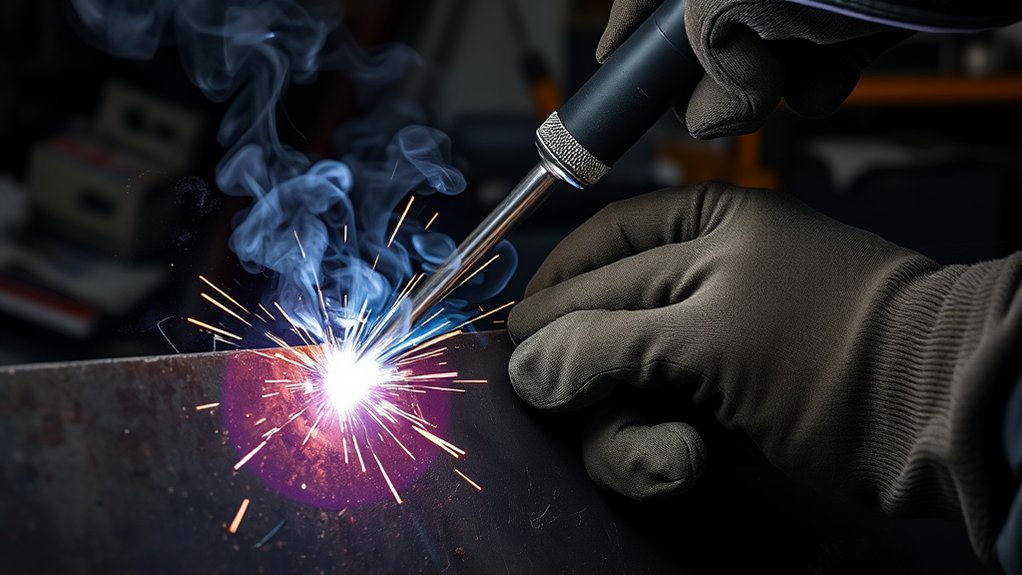
Proper surface preparation reduces smoke and gives the arc a cleaner path. The cleaning method must match the base metal and contaminant. Never weld over an unknown coating until it has been identified and the required controls are in place.
Cleaning Steel Before Welding
- Remove grease, oil, cutting fluid, dirt, and moisture with a product approved for the material and job.
- Remove paint, rust, and mill scale far enough from the joint to prevent them from entering the arc or heat-affected area.
- Use clean abrasives and brushes that will not cross-contaminate stainless steel or other alloys.
- Inspect crevices, lap joints, and the back side of the work for trapped coatings or fluids.
Cleaning Aluminum Before Welding
- Degrease first with an approved residue-free cleaner and a clean, lint-free cloth.
- After removing oil and grease, use a clean stainless steel brush dedicated only to aluminum to remove oxide near the joint.
- Wipe away the loosened oxide dust with a clean cloth.
- Keep filler wire or rods clean, dry, and covered until use.
- Weld soon after preparation because a new oxide film begins forming when bare aluminum contacts air.
Warning: Cleaning solvents may be toxic or flammable. Keep all vapors away from the arc, follow the product label and safety data sheet, and never allow chlorinated-degreaser vapors into a welding area. Let approved cleaners and vapors fully clear before striking an arc.
For additional beginner context, removing contaminants such as oil before flux-core welding can improve arc stability and bead quality.
How Environment Affects Welding Smoke
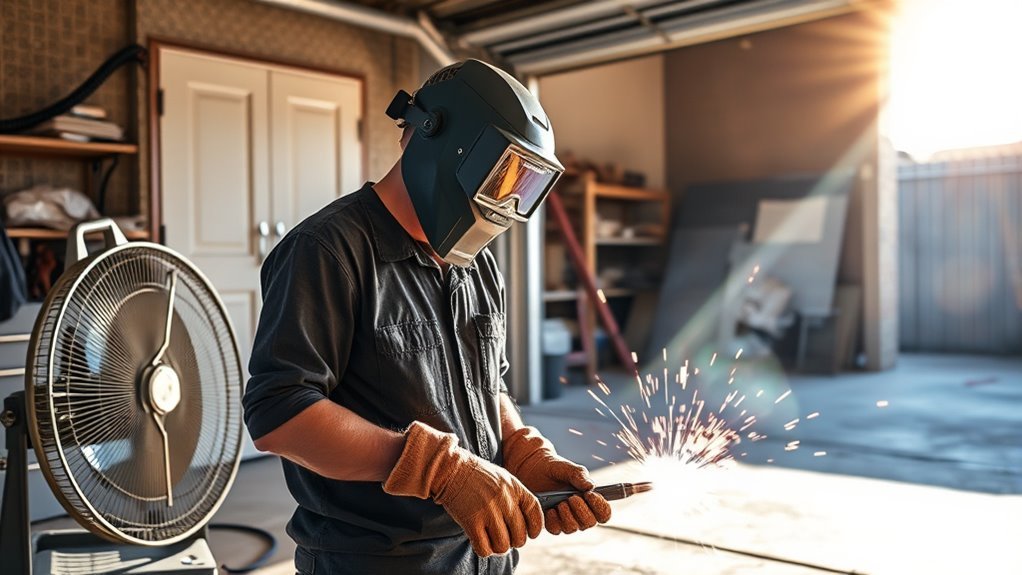
Wind, open doors, fans, and poorly placed exhaust hoods can push or pull shielding gas away from the weld pool. This problem is most obvious with gas-shielded MIG and TIG, but the breathing zone still needs effective fume control.
Use a wind screen or sheltered work area when outdoor airflow disturbs the arc. Indoors, use local exhaust ventilation close enough to capture fume at its source, but position the hood so it does not strip away the shielding gas. Never use oxygen for ventilation.
Good ventilation removes fume from the breathing zone without creating a cross-draft through the shielding-gas envelope.
Troubleshooting Tips for Reducing Black Smoke
Start with the safest and easiest checks. Make one change at a time, then run a short test bead on clean scrap.
- Stop and identify the material. Confirm the base metal, plating, paint, primer, adhesive, oil, and any unknown coating before welding.
- Check ventilation. Capture fumes near the source without pulling shielding gas away from the arc.
- Clean the joint correctly. Remove oil and coatings with material-appropriate methods; on aluminum, degrease before using a dedicated stainless brush.
- Verify the process and consumable. Confirm wire or rod classification, diameter, polarity, shielding gas, and base-metal compatibility.
- Inspect the gas supply. Check cylinder contents, regulator, flowmeter, hoses, fittings, torch seals, and water-cooled connections.
- Clean and assemble the torch. Remove nozzle spatter and replace damaged cups, diffusers, tips, collets, or O-rings.
- Set gas flow from the manual. Avoid assuming that a CFH value from another machine applies to yours.
- Control airflow. Block wind and move fans or exhaust pickups that disturb the gas blanket.
- Correct torch position. Use the specified push or drag technique, work angle, travel angle, cup distance, and stickout.
- Return to baseline settings. Use the machine chart or approved welding procedure for amperage, voltage, wire speed, AC balance, and transfer mode.
- Replace contaminated consumables. Regrind a contaminated TIG electrode and replace dirty, wet, rusty, or damaged wire or electrodes.
- Retest and inspect. Look for porosity, cracks, undercut, lack of fusion, trapped slag, erratic bead shape, and continued heavy smoke.
Pro Tip: If the problem began after changing gas, wire, torch parts, polarity, or a machine program, return to the last verified setup and compare each changed item.
When Black Smoke Means You Should Stop Welding
Stop the job and reassess when any of these conditions appear:
- The metal has an unknown coating, plating, primer, paint, or chemical residue.
- A dense plume appears suddenly or the odor changes.
- The shielding gas stops, the arc becomes unstable, or the puddle turns dirty and porous.
- The weld shows cracks, visible porosity, trapped slag, severe undercut, or lack of fusion.
- You are working in a confined or enclosed space without an approved entry and ventilation plan.
- You or a nearby worker develops eye, nose, or throat irritation, dizziness, nausea, breathing difficulty, confusion, chest symptoms, or an unusual headache.
Do not accept or reject a structural weld from smoke color alone. Follow the applicable welding procedure specification, inspection criteria, code, and qualified supervisor or inspector requirements.
Health and Safety Risks From Welding Smoke
Welding fume can contain metal oxides, gases, and particles from the base metal, filler, flux, coating, and contaminants. OSHA notes that health effects can include metal fume fever, lung damage, nervous-system effects, and cancer, depending on the substances and exposure. Stainless steel can produce hexavalent chromium, while galvanized steel can produce zinc oxide fume.
Use engineering controls first, especially local exhaust ventilation at the source. Respirators are not a substitute for required ventilation and must be selected for the specific hazard. In workplaces where respirators are required, OSHA’s respiratory-protection standard requires a program that includes medical evaluation, fit testing, training, and proper selection.
For more PPE context, review the site’s plasma-cutting safety gear guide. Welding hazards differ by process, so always follow the welder manual, consumable safety data sheet, workplace rules, and task-specific hazard assessment.
Warning: If welding fumes cause breathing difficulty, chest pain, confusion, fainting, or severe symptoms, leave the area and seek emergency medical help. For irritation, dizziness, nausea, or headache, stop exposure, move to fresh air, and obtain medical advice if symptoms persist or worsen.
Galvanized metal requires special care. OSHA’s welding rules specify ventilation controls for indoor and confined-space work involving zinc-bearing materials. This guide to MIG welding galvanized steel covers additional setup considerations, but workplace rules and OSHA requirements take priority.
Safety Disclaimer: This article is for informational purposes only and does not replace hands-on welding instruction, an exposure assessment, equipment manuals, an approved welding procedure, or workplace safety requirements. Obtain qualified help for unknown coatings, confined spaces, structural work, and recurring weld defects.
Frequently Asked Questions
How Do You Stop Black Soot When Welding Aluminum?
Degrease the aluminum, remove oxide with a clean stainless steel brush dedicated to aluminum, verify the gas path, block drafts, clean the cup or nozzle, and use the torch angle and stickout listed for the process. Remember that 5356 filler normally leaves more smut than 4043, so some wipeable residue can remain even with a sound setup.
Why Can Welding Fumes Harm Welders Over Time?
Fume composition changes with the base metal, filler, flux, coating, and process. Repeated exposure may affect the lungs and nervous system, and some welding fumes contain carcinogenic compounds such as hexavalent chromium. Control fume at the source, follow exposure limits, and use properly selected respiratory protection when the hazard assessment requires it.
What Does a Failed Weld Look Like?
Possible warning signs include cracks, visible porosity, lack of fusion, incomplete penetration, trapped slag, severe undercut, overlap, burn-through, or an irregular bead. Appearance alone cannot prove that a weld is acceptable. Critical welds must meet the applicable procedure, code, and inspection requirements.
Can Welding Trigger a Migraine?
Bright arc light, glare, heat, noise, stress, and fume may trigger headache or migraine in some people. A headache during or after welding can also be a sign of harmful exposure, especially when it appears with nausea, dizziness, irritation, or breathing symptoms. Stop work, move to fresh air, and seek medical advice for persistent, severe, or unusual symptoms.
Is Black Smoke Always a Sign of Bad Welding?
No. Aluminum filler—especially 5356—can leave normal black smut, and flux-based processes naturally create more visible fume. However, dense smoke, a sudden change, porosity, a dirty puddle, or coated metal should never be ignored. Check the material, setup, shielding, technique, ventilation, and weld acceptance criteria.
Conclusion
Black smoke during welding is a symptom, not a diagnosis. First decide whether you are seeing airborne fume or wipeable aluminum smut. Then check the material and coatings, clean the joint, verify the gas system and consumables, correct your technique, and retest one variable at a time. Keep fume out of your breathing zone, and stop whenever the coating or hazard is unknown.
Sources
- OSHA: Controlling Hazardous Fume and Gases During Welding — health effects, ventilation, coatings, and fume controls.
- OSHA 29 CFR 1910.252: Welding, Cutting, and Brazing — ventilation, zinc-bearing materials, cleaning compounds, and confined-space requirements.
- Miller: MIG Welding Aluminum With a Spool Gun — example gas-flow starting point, push technique, stickout, and cleaning.
- Hobart Brothers: Weld Discoloration, Spatter, and Black Smut — magnesium smut, air contamination, gas coverage, and aluminum preparation.
- Hobart Brothers: Aluminum Filler Metal Selection — differences between 4043 and 5356 filler metals.
- Miller: Common TIG Welding Problems — shielding contamination, aluminum polarity, and AC-balance troubleshooting.