Welding aluminum to steel is difficult because the two metals do not melt, move heat, expand, or react in the same way. A normal arc weld can melt the aluminum long before the steel is ready to fuse, while heat at the interface can create hard, brittle iron-aluminum compounds. Reliable joints usually need a controlled welding-brazing process, a solid-state process, a bimetallic transition insert, or a nonwelded joining method.
Quick Answer
You can join aluminum to steel, but direct fusion welding is rarely suitable. The metals have very different melting temperatures and form brittle iron-aluminum compounds at the interface. Better options include bimetallic transition inserts, friction-based joining, laser or low-heat welding-brazing, mechanical fasteners, and structural adhesives.
Key Takeaways
- Pure aluminum melts at about 660°C (1,220°F), while iron melts at about 1,538°C (2,800°F); actual steel melting ranges vary by grade.
- Heat can form brittle Fe-Al intermetallic layers, so joint strength depends heavily on limiting interface temperature and time at temperature.
- Standard MIG or TIG welding directly from bare aluminum to bare steel is not a normal, dependable fabrication method.
- Transition inserts, friction welding, laser welding-brazing, controlled low-heat arc brazing, fasteners, and adhesives are practical alternatives.
- The finished joint also needs corrosion isolation, surface preparation, process qualification, and testing when it carries structural or safety-critical loads.
Understanding the Challenges of Welding Aluminum to Steel
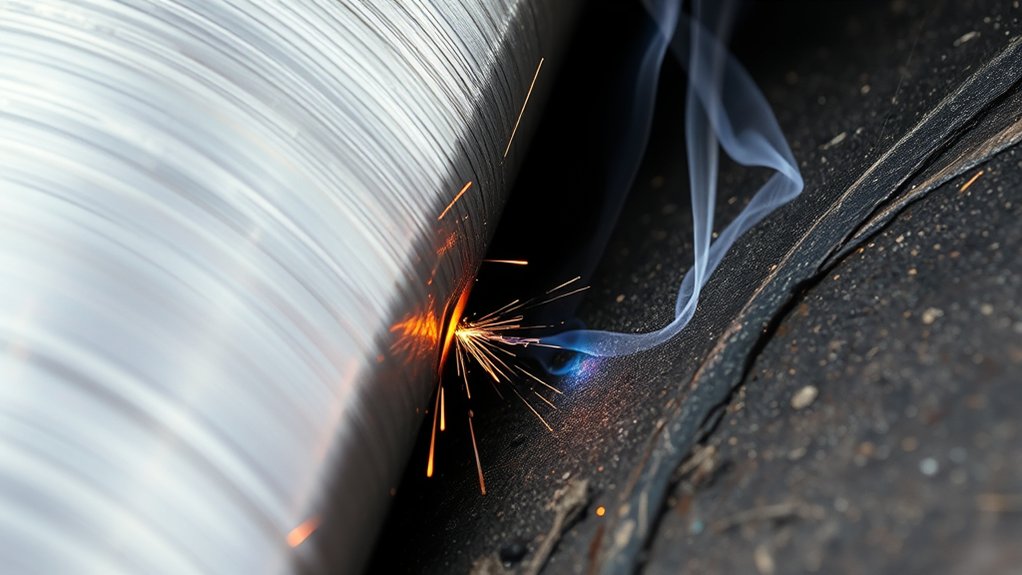
Aluminum and steel can be joined, but they cannot be treated as if they were two grades of the same metal. Their physical properties and chemistry are too different. The Welding Institute explains that aluminum and steel differ in melting temperature, thermal conductivity, expansion behavior, and mutual solubility, all of which make direct fusion welding difficult.
The main goal is not simply to melt both metals. It is to create a load path while keeping the brittle iron-aluminum reaction layer thin and controlled.
How Melting Points Affect Welding
Pure aluminum melts at about 660°C (1,220°F). Pure iron melts at about 1,538°C (2,800°F), while steel melts over a range that depends on its carbon and alloy content. If an arc is hot enough to melt the steel edge, the nearby aluminum may already be excessively fluid, burned through, or badly distorted.
- Aluminum can melt and pull away: The lower-melting metal may collapse before a useful steel weld pool forms.
- Heat input is hard to balance: Aluminum conducts heat quickly, while thin aluminum can still burn through once the local temperature rises.
- Cooling creates stress: The metals expand and contract at different rates, which can strain the interface and surrounding base metal.
Plasma-cutting amperage settings may affect edge quality during preparation, but they do not provide a welding procedure for an aluminum-to-steel joint. Welding heat input must be controlled through a qualified process, joint design, travel speed, filler, and equipment setup.
Warning: Do not try to make a structural aluminum-to-steel joint by turning up a standard MIG or TIG machine until both edges melt. That approach can create burn-through, an uncontrolled brittle layer, and a joint that looks attached but fails with little warning.
Metallurgical Issues: Intermetallic Compounds Explained
Iron and aluminum have very limited mutual solubility. When they are held together at elevated temperature, iron-aluminum intermetallic compounds can grow at the interface. Common phases reported in these joints include Fe2Al5 and FeAl3 (also described in some literature as Fe4Al13).
These compounds are much harder and less ductile than either base metal. A very thin reaction layer may be part of a successful welding-brazing joint, but excessive heat or dwell time can make that layer thicker and more prone to cracking. This is why controlled processes focus on a short thermal cycle and low heat input rather than full mixing of the two base metals.
The problem is different from repairs such as welding cast iron with flux core. Cast iron cracking advice, nickel filler practices, and preheat rules should not be transferred to an aluminum-steel interface.
Aluminum Oxide and Surface Contamination
Aluminum quickly forms a tough oxide film. The oxide melts at a far higher temperature than the base aluminum and can trap moisture or contamination. Miller recommends removing oil, grease, dirt, moisture, and oxide before aluminum welding, using a dedicated stainless-steel brush after solvent cleaning.
Steel may also carry mill scale, rust, oil, paint, zinc, or an aluminum-silicon coating. Those surface conditions change wetting, fume hazards, and process behavior. Identify both alloys and every coating before choosing a filler or heat source.
Galvanic Corrosion After Joining
Even a mechanically strong joint can fail in service if water or salt reaches electrically connected aluminum and steel. Dissimilar metals in contact with an electrolyte can form a galvanic cell, and the aluminum is commonly the metal that corrodes preferentially. NASA describes galvanic corrosion as the electrochemical action between dissimilar metals in the presence of an electrolyte and an electrical path.
Use compatible primers, sealants, isolating washers or sleeves, and joint geometry that does not trap water. Protect cut edges and damaged coatings. The exact corrosion-control system should match the service environment, temperature, required electrical bonding, and applicable design standard.
Note: Electrical isolation and corrosion sealing are not the same task. Some assemblies must conduct electricity across the joint, so the corrosion-control plan must be designed rather than improvised.
Effective Techniques for Welding Aluminum to Steel
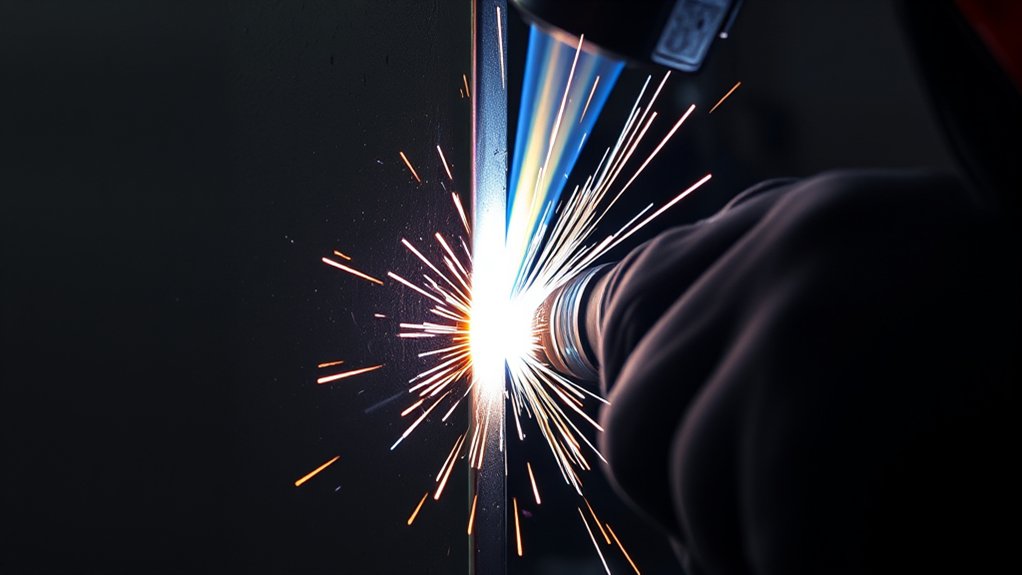
The best joining method depends on part shape, alloy, thickness, production volume, load direction, temperature, corrosion exposure, inspection needs, and available equipment. No single process is best for every aluminum-to-steel joint.
| Method | Best Fit | Main Limitation |
| Bimetallic transition insert | Structural fabrications that can accept a purpose-made transition section | Cost, sourcing, geometry limits, and risk of overheating the bonded interface |
| Rotary friction or friction-based joining | Repeatable production parts and suitable round, lap, or spot geometries | Special equipment, tooling, and geometry constraints |
| Laser welding-brazing | Thin sheet and automated production with precise heat control | High equipment cost and tight fit-up/process-control requirements |
| Low-heat MIG welding-brazing, including qualified CMT-type processes | Coated-steel-to-aluminum sheet joints developed for a specific production procedure | Not a general-purpose setting; coating, filler, gas, fit-up, and parameters must be validated |
| Mechanical fastening or adhesive-hybrid joining | Sheet assemblies where heat must be avoided | Added parts, cure or surface-prep requirements, peel loads, and corrosion isolation |
Bimetallic Transition Inserts
A transition insert is manufactured with an aluminum side already bonded to a steel side by a controlled process such as explosion bonding, rolling, friction welding, flash welding, or pressure welding. The fabricator then welds aluminum to the aluminum side and steel to the steel side using normal procedures for each metal.
ESAB advises welding the aluminum side first and avoiding excess heat at the original aluminum-steel bond. These inserts can produce high-quality structural connections, but the insert supplier’s limits and the approved welding procedure must be followed.
Friction Welding and Friction-Stir Processes
Rotary friction welding, friction stir welding, friction stir spot welding, and related processes generate heat through friction and deformation rather than melting both parts into one weld pool. Their short thermal cycles can limit intermetallic growth, although tool position, pressure, speed, dwell time, and alloy choice still require careful development.
These methods are most practical when the part shape and production volume justify dedicated machinery and tooling. They are not usually a hand-held repair option.
Laser Welding-Brazing and Low-Heat Arc Brazing
In welding-brazing, the aluminum side and filler may melt while the steel is mainly wetted rather than fully fused. A laser can place heat in a narrow area and move quickly, which helps limit diffusion time and intermetallic growth. Low-heat controlled arc processes can serve a similar purpose on selected coated steels.
Fronius lists steel-to-aluminum joining among applications for its Cold Metal Transfer process. That does not mean any CMT, MIG, or pulse setting will work. The actual procedure must specify the steel coating, aluminum alloy, filler, shielding gas, joint gap, torch angle, travel speed, heat input, and acceptance tests.
Hot-Dip Aluminizing and Coated Steel
Hot-dip aluminizing coats steel with aluminum; it is not, by itself, a complete method for joining two finished parts. The coating can provide a surface that aluminum filler wets during a carefully controlled arc-welding or brazing procedure. Excess heat can penetrate or damage the barrier and promote brittle intermetallic growth.
Coating-based joints are application-specific and may not be suitable as the sole load path for highly stressed parts. Treat the coating type and thickness as essential procedure variables.
Mechanical Fasteners and Adhesive Bonding
Bolts, rivets, clinching, flow-drill screws, self-piercing rivets, and structural adhesives avoid the large thermal mismatch of fusion welding. Adhesive-fastener hybrids can spread load, improve stiffness, and help seal the interface, but they require correct surface treatment, cure conditions, overlap, and environmental qualification.
Fasteners can create stress concentrations and direct metal-to-metal contact, so isolate the metals where needed and seal the joint against moisture. Choose fastener material and coating for the full assembly, not only for installation convenience.
Can MIG or TIG Weld Aluminum to Steel?
Standard MIG or TIG welding is suitable for aluminum-to-aluminum or steel-to-steel work, but it is not normally used to make a direct fusion weld between bare aluminum and bare steel. The interface chemistry remains the problem even when the operator has excellent arc control.
MIG or TIG can still be part of a successful system in two main ways:
- Transition insert: MIG or TIG welds the aluminum component to the aluminum half of an insert, while an appropriate steel process joins the steel half.
- Qualified welding-brazing procedure: A controlled process melts aluminum filler and wets a compatible coated steel surface while limiting steel melting and interface reaction.
Conventional self-shielded flux-cored wire is not a standard solution for aluminum-to-steel welding. Review the limitations discussed in flux core aluminum welding before assuming a wire-fed machine can make this dissimilar joint.
Pro Tip: Describe the intended process accurately. Many successful aluminum-to-steel arc joints are welding-brazing joints, not full fusion welds through both base metals.
Products Worth Considering

VERSATILE ALL-METAL REPAIR: Perfectly bonds and repairs a wide range of metals including steel, cast iron, copper, brass, stainless steel, and more. Tackle common household, automotive, or plumbing fixes with confidence.

50 Rods ,1/16 ''x13' 'aluminum welding wire,Chemical Composition Requirements: Si 12%, Mg≤0.10%, Fe≤0.21%, Cu≤0.05%, Zn≤0.05%, Mn≤0.10%,AL REM

Only For Welding Aluminum - The aluminum welding rods are only used for welding aluminum, aluminum alloy and aluminum-magnesium alloy, high strength, good forgeability & good corrosion resistance.
Surface Preparation and Joint Design
Preparation starts with identifying the exact aluminum alloy, steel grade, temper, thickness, and coating. Unknown scrap is a poor choice for a load-bearing dissimilar-metal joint because filler selection, heat response, and coating fumes cannot be predicted reliably.
- Remove contaminants safely: Follow the product safety data sheet. Remove oil, dirt, moisture, paint, rust, and unwanted coatings from the specified joint area.
- Clean aluminum in the right order: Degrease first, then use a dedicated stainless-steel brush or approved method to remove oxide without cross-contaminating the surface.
- Prepare steel for the chosen process: Do not automatically grind off a zinc or aluminum coating if the qualified procedure depends on that coating for wetting.
- Control fit-up: Hold the specified overlap, gap, edge condition, and clamping force. Thin-sheet welding-brazing is sensitive to inconsistent gaps.
- Plan for movement: Use a fixture and sequence that limit distortion while allowing the metals to expand and contract.
- Seal against corrosion: Restore primers, sealants, edge protection, and drainage after joining.
The choice of plasma gas and the effect of nitrogen in plasma cutting can influence edge condition, but all dross, oxide, and contamination still need to meet the joining procedure’s preparation requirements.
How to Choose the Right Joining Method
- Define the load: Record tension, shear, peel, fatigue, vibration, impact, pressure, and expected service life.
- Define the environment: Include water, salt, chemicals, heat cycles, electrical bonding, and coating maintenance.
- Confirm the materials: Identify alloy, grade, temper, coating, thickness, and heat-treatment condition.
- Screen the processes: Eliminate methods that cannot fit the joint geometry, production rate, inspection plan, or available equipment.
- Develop and qualify the procedure: Produce coupons using the actual materials, surface preparation, filler, settings, and fixture.
- Test the joint and the assembly: Use acceptance criteria that match the real load path and failure risk.
For a decorative bracket, a sealed adhesive-fastener joint may be enough. For a pressure boundary, vehicle structure, lifting device, trailer component, or public-facing load-bearing part, use an engineer-approved design and a qualified joining procedure.
Products Worth Considering

OEM Recommended Auto Adhesive – Professional two-part epoxy designed for bonding auto body panels; trusted by OEMs for non-structural repairs like quarter panels, roofs, and door skins.
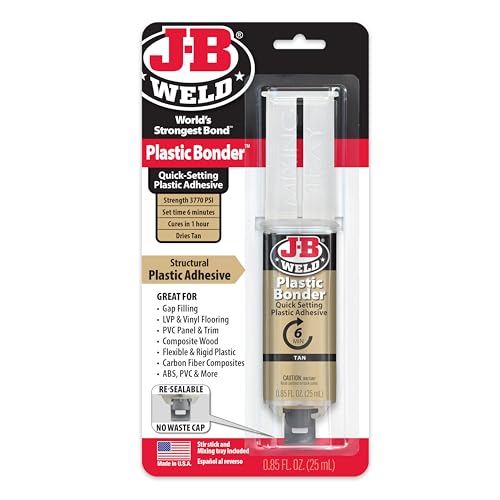
J-B WELD PLASTICBONDER (Tan): A quick setting and multipurpose two part urethane adhesive & gap filling system that provides a strong and lasting bond to many plastic surfaces. J-B Weld PlasticBonder is great for DIY plastic repairs, filling dents, bumper repairs and more! J-B Weld PlasticBonder now comes in a syringe allowing for an easy 1:1 mix ratio. The unique syringe has a re-sealable cap that prevents drying out and leaking, allowing for multiple uses!
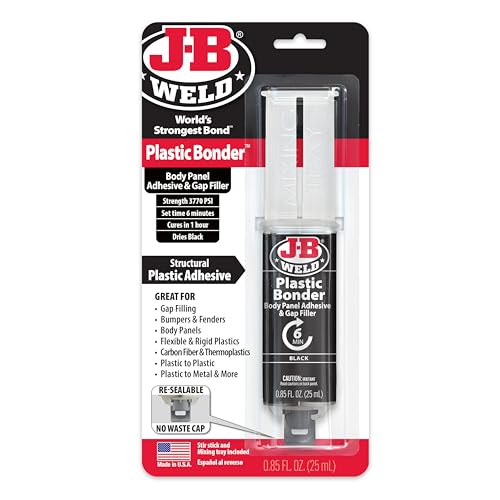
Plasticbonder: Is A Quick-Set, 2 Part, Urethane Adhesive System That Provides Strong, Lasting Repairs And Works On Thermoset, Carbon Fiber Composites, Thermoplastics, Coated Metals, Concrete & More.
When to Avoid Direct Aluminum-to-Steel Welding
Avoid an improvised direct weld when the joint carries people, pressure, lifting loads, vehicle loads, repeated vibration, impact, or fatigue. Also avoid it when the materials or coatings are unknown, the interface cannot be inspected, corrosion protection cannot be restored, or no representative test coupon can be produced.
Choose a purpose-made transition insert, a proven production process, mechanical fastening, adhesive bonding, or a redesigned joint that keeps the metals separate. If failure could cause injury or major damage, involve a welding engineer or qualified fabricator before cutting or heating the parts.
Pro Tip: Test a sample made from the same alloys, thicknesses, coatings, joint gap, and process settings as the final part. A bead on unrelated scrap does not validate the production joint.
Inspection, Testing, and Common Failure Signs
Visual appearance alone cannot prove that an aluminum-to-steel joint has a controlled interface. Inspection should begin with dimensions, wetting, bead continuity, distortion, cracks, undercut, burn-through, coating damage, and sealant coverage. The procedure may also require sectioning, metallography, hardness mapping, peel or chisel tests, lap-shear tests, tensile tests, fatigue tests, leak tests, or corrosion exposure.
Common warning signs include:
- cracking along the aluminum-steel interface;
- easy peeling with little deformation of the aluminum;
- dark contamination, porosity, or incomplete wetting;
- burn-through or severe thinning on the aluminum side;
- distortion that opens the joint or traps water;
- white aluminum corrosion products or rust streaks near the interface;
- failure outside the expected test load or failure mode.
For critical work, the acceptance criteria should come from the applicable drawing, code, procedure specification, or engineering test plan. Do not assume that a generic weld gauge can evaluate the hidden intermetallic layer.
Safety Precautions and Best Practices for Successful Welding
Wear a welding helmet with the correct filter shade, safety glasses, dry welding gloves, flame-resistant clothing, and suitable footwear. Plasma-cutting safety gear overlaps with welding PPE, but the arc process, current, radiation, spatter, and task-specific hazards determine the final protection required.
OSHA requires adequate control of welding fumes and gases. Use local exhaust near the source when needed, keep your head out of the fume plume, and follow the safety data sheets for fillers, fluxes, cleaners, coatings, and adhesives. Galvanized steel and other coated materials can create additional hazardous fumes.
Warning: Never weld near vapors from chlorinated cleaners or on a surface that is still wet with an unknown degreaser. Arc radiation and heat can break down some chlorinated solvents into highly toxic gases. Read the cleaner’s label and safety data sheet, keep incompatible cleaning operations away from hot work, and let approved cleaners fully evaporate.
Before starting, inspect the power source, leads, ground connection, torch, gas system, wire path, fixture, and fire-control area. Remove combustibles, protect nearby workers from arc radiation, secure gas cylinders, and follow confined-space rules where applicable. Do not use oxygen for ventilation.
Coatings and adhesives may release fumes or burn. Strip or protect them only as required by the approved process and manufacturer instructions. If the steel is galvanized, use the ventilation and respiratory controls required for zinc-bearing materials and the work location.
Frequently Asked Questions
Why can’t you weld aluminum to steel normally?
The metals have very different melting temperatures, heat-flow behavior, expansion rates, and chemistry. Direct fusion can overheat the aluminum and create brittle iron-aluminum compounds at the interface, so a standard steel or aluminum welding procedure is not enough.
What are the main challenges of welding aluminum to steel?
The main challenges are controlling heat, limiting brittle intermetallic growth, removing oxide and contamination, managing different expansion rates, wetting the steel surface, preventing distortion, and protecting the finished joint from galvanic corrosion.
Is it hard to weld steel to aluminum?
Yes. It is a specialized dissimilar-metal joining task rather than a routine arc-welding job. Reliable results usually come from a transition insert, friction-based process, laser or low-heat welding-brazing procedure, or a nonwelded method.
Can you use MIG or TIG to weld aluminum to steel?
Not as a normal direct fusion weld between bare aluminum and bare steel. MIG or TIG may be used on the matching sides of a bimetallic transition insert, or as part of a qualified welding-brazing procedure that uses a compatible coating, filler, joint design, and tightly controlled heat input.
What filler metal joins aluminum to steel?
There is no universal filler for direct fusion of bare aluminum to bare steel. Aluminum-silicon fillers are used in some qualified welding-brazing and coated-steel procedures, while transition inserts let the fabricator use a normal aluminum filler on the aluminum side and an appropriate steel filler on the steel side.
How do you prevent corrosion between aluminum and steel?
Keep moisture and salts out of the interface, use compatible coatings and sealants, isolate fasteners or metal surfaces where the design allows, protect cut edges, provide drainage, and maintain the coating system. Electrical-bonding requirements must be included in the corrosion-control design.
What’s the hardest metal to weld?
There is no single hardest metal because difficulty depends on alloy, thickness, process, cleanliness, joint design, and required properties. Reactive metals such as titanium demand excellent shielding and cleanliness, while dissimilar combinations such as aluminum to steel add a separate interface-metallurgy problem.
Safety Disclaimer: This article provides general information, not a welding procedure specification or engineering approval. Welding can expose you to heat, fumes, gases, arc radiation, electric shock, fire, and explosion hazards. Follow the equipment manual, safety data sheets, workplace rules, applicable codes, and advice from a qualified welding professional for structural or safety-critical work.
Conclusion
Aluminum-to-steel welding is difficult because the metals melt and expand differently, conduct heat differently, and react to form brittle compounds. The most reliable approach is to select a joining system that limits interface heat and matches the part’s load, geometry, environment, and inspection needs. Use identified materials, clean surfaces, controlled fit-up, corrosion protection, representative test coupons, and a qualified procedure before relying on the final joint.
Sources
- TWI: Can You Weld Aluminium to Steel? — melting-temperature mismatch, intermetallic compounds, transition inserts, friction welding, coatings, and galvanic corrosion.
- PubChem: Aluminum and PubChem: Iron — elemental melting points.
- Miller: Guide to Industrial Aluminum Welding — aluminum oxide, contamination control, cleaning order, and storage.
- ESAB: Learn How to Weld Aluminum to Steel — bimetallic transition inserts and coating-based arc joining.
- NASA Kennedy Space Center: Forms of Corrosion — galvanic-corrosion mechanism.
- OSHA 29 CFR 1910.252 — welding ventilation, fumes, zinc-bearing materials, confined spaces, and hot-work precautions.