Blue Demon welding rods in this list cover aluminum, stainless, mild steel and hardfacing: ER4043 and ER5356 for aluminum TIG, E308L, E309L and ER316L for stainless, ER70S-2 and ER70S-6 for mild steel TIG, E6011 for AC stick and HC470 for wear surfaces.
Choose by base metal and process first, then by diameter and pack size. Each pick below is described from its Amazon listing; Garage Welding has not run these products in the shop.
As an Amazon Associate I earn from qualifying purchases. Buying through these links costs you nothing extra.
Top Picks: Blue Demon Welding Rods by Use
|
Use case |
Product |
|---|---|
|
General-Purpose Aluminum |
|
|
For Abrasion |
|
|
For 304 Stainless |
|
|
For Dirty Steel |
|
|
For 316 Stainless |
|
|
For High-Strength Aluminum |
|
|
For Stainless-to-Steel |
|
|
For Deep Penetration |
|
|
Value Carbon Steel |
|
|
For Aluminum Stick Welding |
How to Choose a Blue Demon Rod
- Match the metal. Aluminum needs ER4043, ER5356 or the E4043 stick. Stainless needs a matching grade: 308L for 304, 316L for 316, 309L for stainless to mild steel. Mild steel uses ER70S-2, ER70S-6 or E6011.
- Match the process. ER-class rods are bare TIG filler. E-class rods are flux-coated stick electrodes and will not work as TIG filler.
- Check your machine. Aluminum TIG needs an AC-capable TIG welder and argon. E6011 is listed for AC power. Check each stick listing for the polarity it calls for (AC, DCEP) before you order.
- Pick the diameter. Thin sheet calls for 1/16 inch or smaller, general work 3/32 inch, thicker joints 1/8 inch.
- Clean first. Aluminum and stainless are the least forgiving of oil, oxide and contamination.
How These Rods Were Picked
The list uses the product titles, sizes, pack weights and descriptions shown on each Amazon listing. Garage Welding has not tested these rods, so there are no scores or test results here. Check the diameter, length and pack on the listing before you order.
The 10 Blue Demon Rods Compared
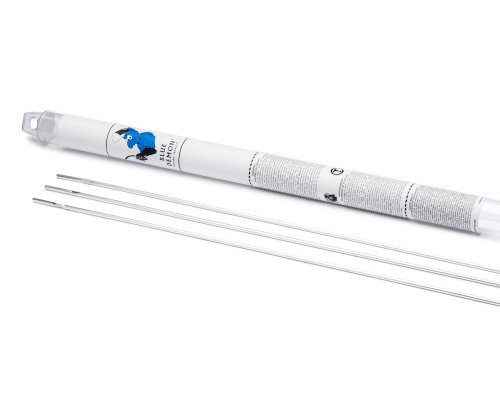
If you’re patching aluminum panels, rebuilding thin-walled parts, or laying reinforcement beads, this ER4043 filler is a dependable go-to. You get improved fluidity from silicon additives, a clean silver finish, and a convenient 1# tube that keeps rods organized.
It works well with AC machines and is forgiving enough for hobby repairs while still giving the strength you need for structural fixes. Plan to clean the rod and base metal before welding and you’ll find it flows and fills consistently for a wide range of projects.
DIY Tips
Welders who keep things simple tend to have the best results: wipe the rod and joint with a clean cloth and a little acetone, cut the 36″ rods to a manageable length if you prefer better control, and practice on scrap to dial in travel speed. Store the tube dry and sealed so moisture doesn’t affect performance, and if you’re working thicker sections consider a brief preheat to help the puddle flow evenly.
Versatility
This ER4043 fits boat work, aluminum trailers, thin-walled piping, and general fabrication where you need a dependable filler. It’s a solid choice for hobbyists and light fabricators who want one rod that covers a lot of common aluminum tasks.
Key Benefits
- Good fluidity for smooth, controlled beads thanks to silicon additives
- Versatile for thin-wall repairs, reinforcement beads, and fabrication
- Comes in a protective tube for easier storage and transport

If you need to rebuild cutting edges or protect gear that takes a beating, this hardfacing electrode is built for that job. It lays down a chromium carbide overlay that stands up to severe abrasion and moderate impact, so you can extend the life of buckets, blades, feet, and other wear parts.
It’s noticeably hard once deposited, so expect more grinding work when you shape it, and plan your layers and cooling to avoid cracks. Use it when longevity matters more than easy cleanup.
DIY Tips
Treat this like a specialist tool: preheat where recommended, run it on DCEP at the suggested amperage, and lift the puddle slightly as you build layers so the carbide transfers cleanly. Keep each layer thin if you’re worried about cracking and allow controlled cooling between passes. After welding, expect heavier grinding and use appropriate abrasive tools and PPE when finishing.
Versatility
This electrode is ideal for rebuilding bucket lips, dozer blades, snow‑plow feet, and other parts exposed to abrasive wear. It’s also useful for making trial forming dies or hard surfacing edges where long life matters more than easy rework.
Key Benefits
- Exceptional wear resistance for high‑abrasion surfaces
- Deposits a tough chromium carbide overlay that holds an edge
- Starts and wets reliably for efficient buildup work

This E308L stick electrode is a solid choice when you need dependable stainless welds without pulling out a TIG setup. You can use it on 304L and similar grades, tack up hinges, repair exhausts, or join stainless to mild steel with confidence.
It starts and restrikes easily, runs with low splatter, and produces clean-looking beads when you slow your travel a bit. If you prefer a simple, portable way to get stainless repairs done in the garage or on the road, this rod makes that practical.
DIY Tips
Wipe the joint clean and use a steady, slower travel speed since these rods run a bit slow compared with mild steel sticks. Keep a short, manageable rod length in hand, practice on scrap to find the right amp setting, and knock off slag between passes for a neat finish. Store the tube dry to avoid moisture-related issues.
Versatility
This electrode handles thin stainless sheet, exhaust and hinge repairs, and fabrication tasks where you need corrosion resistance. It’s a practical tool if you want stick welding portability but still need stainless properties.
Key Benefits
- Extra low carbon formulation for reduced carbide precipitation
- Easy arc starting and restrike for quick repairs
- Low spatter and good bead profile on stainless
- Works well for stainless-to-steel joins and thin sections

If you want a forgiving filler that handles less-than-perfect metal, this ER70S6 tube is a workhorse. You can use it for practice, light fabrication, or quick repairs where cleanliness isn’t guaranteed, and it flows predictably once you find the right technique.
The 36″ length gives you plenty of material, and the tube keeps rods organized on the cart. Cut the rods to a comfortable length if you prefer better control and keep the tube dry between jobs.
DIY Tips
Trim the 36″ sticks to a length that feels natural in your hand, keep joints as clean as practical, and practice a steady travel speed to let the rod melt and fill evenly. Store the tube sealed and dry, and if you want neater beads, knock off slag between passes and use a wire brush to prep the next pass.
Versatility
This rod is handy for auto repair, farm gear patching, light fabrication, and general maintenance where you can’t always work on pristine metal. It’s a good all-around filler for hobbyists who want a single rod that covers many common steel jobs.
Key Benefits
- Tolerant of dirty, oily, or rusty steel for field repairs
- Good puddle control and predictable flow once dialed in
- Handy 36″ length in a protective tube for storage
- Suitable for hobbyists practicing TIG filler techniques

You’ll reach for ER316L when corrosion resistance matters and you’re working with 316-grade stainless. It’s a TIG-friendly filler that gives a clean deposit and reduced risk of carbide precipitation, which is useful on food‑grade, marine, or high‑temperature parts. The 0.035″ diameter in a 1# tube is convenient for smaller jobs and specialty repairs, and it behaves predictably once you dial in the right current and technique.
DIY Tips
Keep joints and filler clean, use DC electrode negative or the recommended TIG setup, and practice on scrap to find the sweet spot for travel speed and amperage. Cut rods to a comfortable length for better control, store the tube dry, and remove any mill scale or oil from the workpiece before welding.
Versatility
This filler is handy for marine fittings, chemical processing parts, automotive applications needing corrosion resistance, and small specialty projects where 316 properties are required.
Key Benefits
- Low carbon composition reduces carbide formation on stainless
- Produces clean, strong welds suitable for corrosive environments
- Convenient 1# tube keeps rods organized and protected
- Works well for specialized automotive and marine repairs

This ER5356 pack is one to grab when strength and corrosion resistance matter for aluminum work. It fills consistently, wets out nicely, and holds up well for structural repairs, trailer work, and marine touchups where you need extra alloy strength.
The 10 lb box and long rods suit larger projects or frequent use, and while the rods may benefit from a quick wipe, they perform reliably once you dial in travel speed and current. If you want a dependable aluminum filler that covers heavier hobby and light professional tasks, this is a practical choice.
DIY Tips
Wipe rods and joint surfaces with a clean cloth and acetone if needed, set a steady travel speed so the puddle wets out, and test on scrap to confirm amperage. For longer sessions, keep the box dry and cut rods to a comfortable length for better handling and control.
Versatility
Good for trailers, boat fittings, structural aluminum repairs, and any project where you need stronger, corrosion‑resistant filler than general ER4043 can provide.
Key Benefits
- Higher strength alloy for tougher aluminum joints
- Consistent flow and good wetting for clean beads
- Large 10 lb box keeps you stocked for bigger projects
- Boxed packaging helps with storage and organization
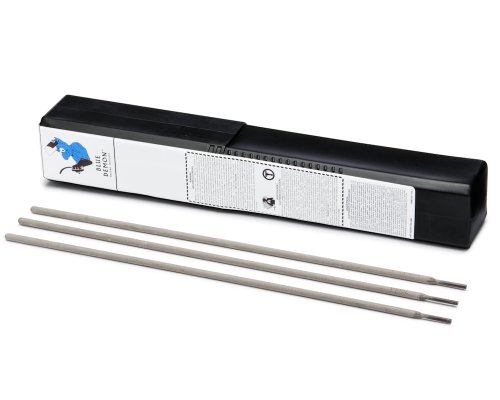
This E309L stick rod is a practical choice when you need portable stainless welding without a TIG setup. It starts easily, runs clean with low splatter, and handles thin sections as well as joining stainless to mild steel.
You can use it for exhaust work, hinges, trailer repairs, and light fabrication where accessibility matters more than a shop TIG. It’s a handy stick option that keeps repairs simple while still producing reliable, attractive beads.
DIY Tips
Clean the joint area, choose a steady, slightly slower travel speed, and use the recommended DC settings for best results. Keep rod lengths manageable for control, chip slag between passes, and practice on scrap to dial in amperage before tackling a critical part.
Versatility
Good for exhaust and hinge repairs, trailer and sheet work, and field fixes where portability is important. It’s a versatile stick rod if you need stainless properties without a TIG setup.
Key Benefits
- Easy arc starting and good restrike behavior for quick repairs
- Low spatter and neat bead profile on stainless
- Works well for stainless-to-steel joints and thin metal
- Short rod lengths and 5 lb packs suit mobile or occasional work
If you need a go‑to stick for general repairs and tacking, this E6011 is a dependable pick. You can use it on AC machines for deep penetration through painted or slightly dirty metal, and it restrikes easily so you won’t be fighting the arc when you’re working intermittently. The 5 lb plastic pack keeps rods protected on the cart, and once you find the right arc length and travel speed it lays pleasing beads for structural and farm repairs.
DIY Tips
Use an AC power source and set a short arc length to get the penetration this rod offers. Keep a steady travel speed to avoid undercut, chip slag between passes for a tidy finish, and store the plastic pack sealed and dry so rods stay ready when you need them.
Versatility
Great for tacking, fence and farm equipment repair, general maintenance, and any job where you need reliable penetration on AC without fussing over perfectly clean metal.
Key Benefits
- All‑position performance for versatile repairs
- Strong arc force and deep penetration on AC
- Easy striking and restrike behavior for quick tacks
- Protective tube packaging helps prevent damage

When you need a reliable carbon‑steel filler for general fabrication and repairs, ER70S2 is a solid choice. It contains deoxidizers that help you get good weld appearance even on semi‑clean metal, and the 10 lb box keeps you stocked for bigger jobs.
The rods are straightforward to run with DCEN, and once you dial in travel speed and current they produce consistent beads. If you want a single filler to cover routine structural work and shop projects, this one fits that role nicely.
DIY Tips
Keep the rods dry and store the box in a cool, low‑humidity spot to prevent corrosion. Cut rod lengths to what feels comfortable in your hand, test settings on scrap to find the right travel speed, and use a wire brush between passes for cleaner beads.
Versatility
This filler works for weldments, repairs, and general fabrication where you need predictable results on mild steel, making it useful for automotive, farm, and shop projects.
Key Benefits
- Consistent welds on a range of mild steel tasks
- Deoxidizers improve weld appearance on semi‑rusty metal
- Large 10 lb box is convenient for frequent use
- Good choice for hobbyists and light professional work

If you need a stick option for aluminum repairs when TIG or MIG aren’t available, this E4043 electrode is a practical choice. You can use it to patch exhausts, fix boat brackets, or tack thin‑wall aluminum where portability matters.
It runs hot and melts relatively fast compared with steel rods, so you’ll want to adjust travel speed and consider preheat on thicker pieces. For quick field fixes and occasional shop work, it gives solid, strong deposits once you get the technique down.
DIY Tips
Work on clean aluminum and remove oxides with a wire wheel or acetone before welding, and consider a short preheat on thicker parts to help the puddle flow. Keep a steady, quicker travel speed than you would on steel, cut rods to a comfortable length for control, and use proper respiratory protection or ventilation to manage fumes.
Versatility
Good for boat repairs, exhaust and small structural fixes on aluminum, and emergency field work where portability matters more than the finer finish of TIG welding.
Key Benefits
- Stable arc and good penetration for aluminum stick welding
- Produces minimal spatter compared with other stick aluminum rods
- Works well for field repairs where TIG/MIG aren’t practical
- Available in a 1# tube that’s handy for smaller jobs
Related guides: TIG welding filler rod selection chart | stick welding amperage chart | Blue Demon ER70S6 welding wire review
FAQ
Which Blue Demon rod should I use for stainless steel?
Match the grade. E308L or ER308L suits 304 and 304L, ER316L suits 316 and 316L, and E309L is meant for joining stainless to mild steel. Of these, the E308L-16 and E309L-16 are stick electrodes and the ER316L is TIG filler.
Can I use these TIG rods with a stick welder?
No. Rods starting with ER, such as ER4043, ER5356, ER316L, ER70S-2 and ER70S-6, are bare filler wire for TIG. Stick welders need coated E-class electrodes such as E6011, E308L-16 or E309L-16.
Do I need a special machine to weld aluminum with these rods?
ER4043 and ER5356 are TIG filler rods, so you need a TIG welder, shielding gas and normally an AC output. The E4043 electrode is a stick option; check the listing for the polarity and amperage it needs.
How should I store welding rods?
Keep them dry and sealed in their tube or box, and wipe aluminum and stainless rods clean before welding. Moisture and dirt cause porosity.
Bottom Line
Pick the rod for the metal first. ER4043 or ER5356 handle aluminum TIG, E308L, E309L or ER316L handle stainless depending on the grade, ER70S-2 or ER70S-6 handle mild steel TIG, and E6011 suits AC stick repairs. Keep HC470 for wear surfaces rather than general joining.
Confirm diameter, length and polarity on the Amazon listing, and clean the joint before you strike an arc.
| Product Name | Image | Material | Size | Power Source |
|---|---|---|---|---|
| Blue Demon ER4043 X 1/8″ X 36″ X 1LB Tube |
 |
General Purpose Aluminum TIG Welding Rod | 1/8 Inch | AC |
| Blue Demon HARDCOVER 470 X 1/8″ X 5LB Carton |
 |
Chromium Carbide | 1/8 Inch | N/A |
| Blue Demon E308L-16 X 1/16″ X 12″ X 1LB Tube |
 |
Stainless Steel | 1/16 Inch | AC, DCEP |
| Blue Demon ER70S6 X 3/32″ X 1LB Tube |
 |
Carbon Steel | 3/32 Inch | N/A |
| Blue Demon ER316L X .035 X 36″ X 1LB Tube |
 |
Metal | 0.035 Inch | DCEN |
| Blue Demon ER5356 X 3/32″ X 36″ X 10LB Box |
 |
Metal | 3/32 Inch | AC |