Premium welding rods are worth buying when the job needs the right classification: E7018 for structural low-hydrogen work, E6013 for general mild steel, E6011 for dirty or rusty steel, E308L for stainless and E4043 for aluminum. Here, “premium” means name-brand or bulk packs with a clear AWS classification, not a quality ranking. This guide compares ten premium welding rods on Amazon by classification, size and best use.
Pack details below come from the Amazon listings and can change, so confirm classification, diameter and pack weight on the listing before you order.
Top Picks
|
Category |
Product |
|---|---|
|
Best All-Purpose |
|
|
Best Structural Work |
|
|
Best Value 7018 |
|
|
Best Mid-Size Pack |
|
|
Best for Stainless Steel |
|
|
Name-Brand 7018 |
|
|
Best for Aluminum |
|
|
Best Pro Choice |
|
|
Best for Penetration |
|
|
Best For Inverters |
What to Check Before You Buy Premium Welding Rods
These picks are based on listing details and the typical use of each rod class, not bench testing. Check these points on each listing:
- Classification: E6013 and E6011 for mild steel, E7018 for low-hydrogen structural work, E308L for stainless, E4043 for aluminum.
- Polarity: E7018 is normally run on DC electrode positive (some are also rated for AC); E6013 runs on AC or DC.
- Packaging: sealed or resealable packs keep flux dry, which matters most for E7018.
- Pack size: 60 lb multi-packs suit daily production; smaller boxes suit occasional repairs.

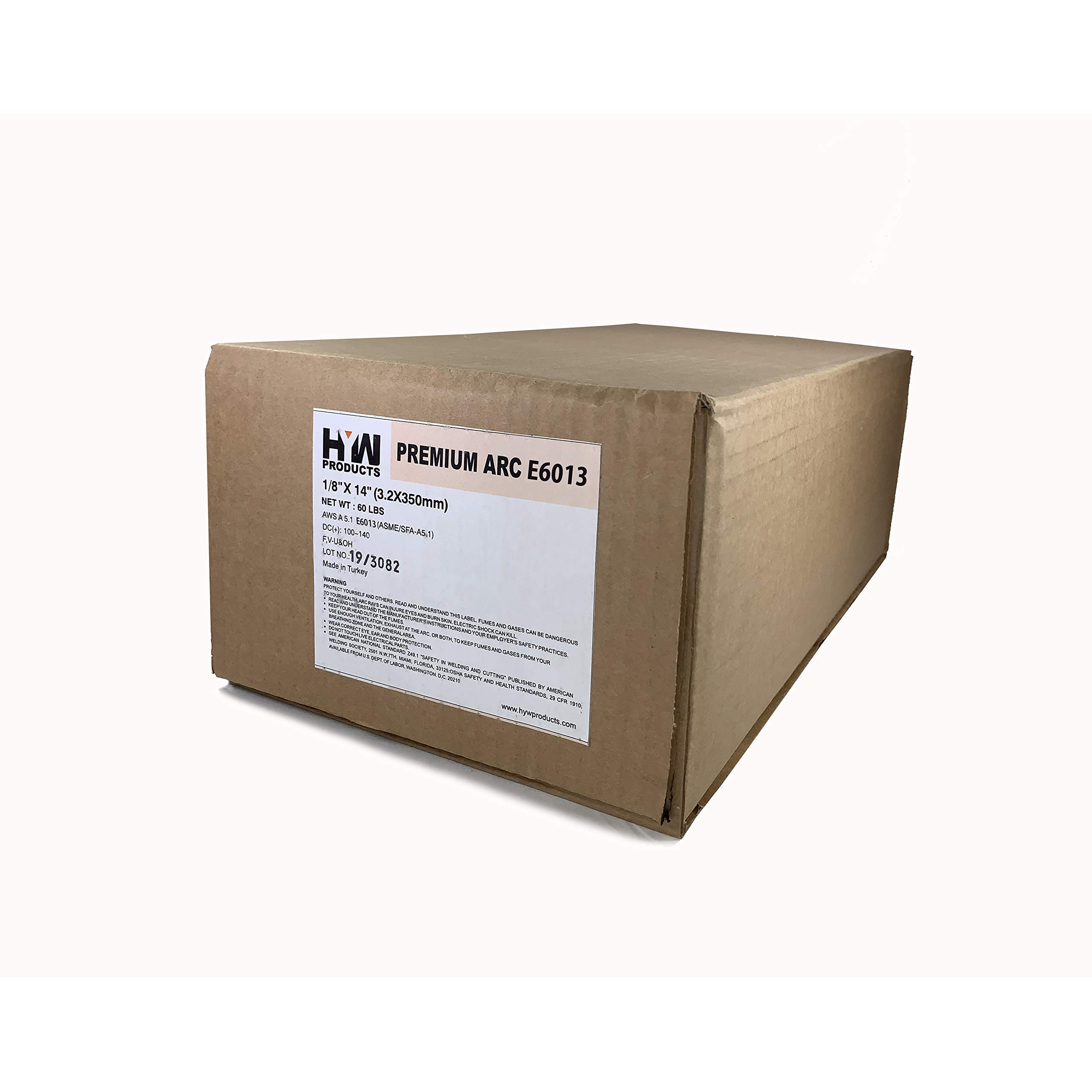
The HYW E6013 is built for general-purpose mild steel work and shines when you need a stable arc without fuss.
It handles AC or DC power, works in all positions, and is a good fit whether you’re patching a trailer, fabricating brackets, or doing routine shop repairs. If you want something that will behave consistently and keep projects moving, this is a practical, no-nonsense choice you can rely on.
Versatility
This rod is versatile across light fabrication, repairs, and production tasks. You can use it for shop fixtures, farm equipment maintenance, and jobs that need shallow penetration or forgiving puddles.
Key Benefits
- Smooth, steady arc
- AC and DC compatible
- All-position welding
- Bulk 60 lb pack for production
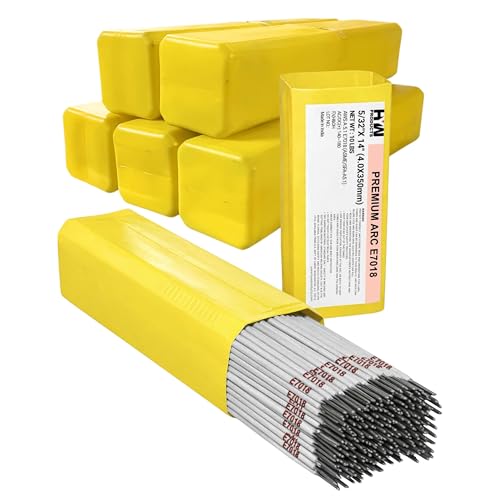
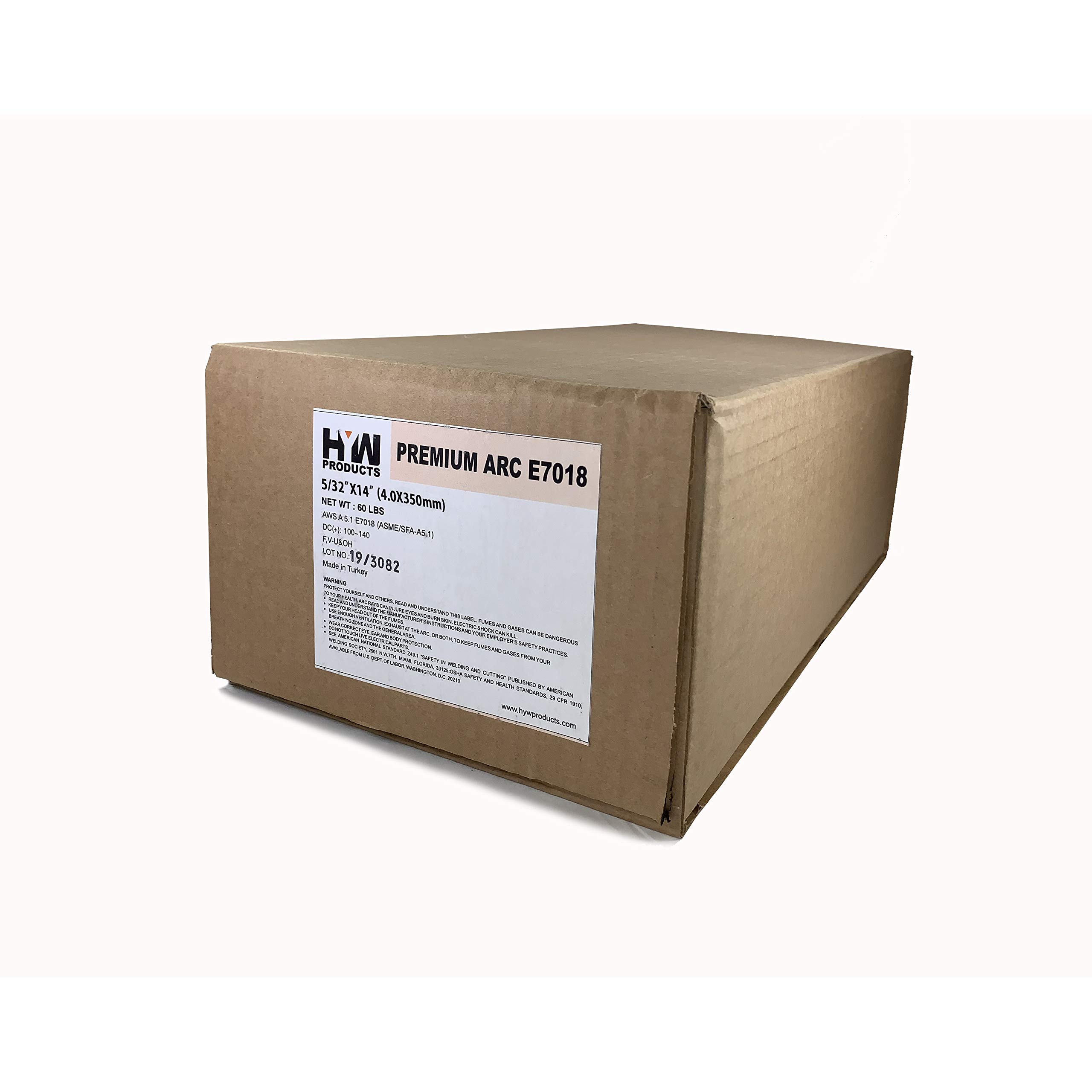
You get a professional-style 7018 that’s built to handle high-strength work without fuss. The HYW E7018 runs a smooth bead, removes slag cleanly, and is designed for the kinds of structural jobs where toughness and radiographic soundness matter.
Use it for everyday shop repairs, teaching and practice runs, or heavier projects like tanks, bridges, and frames. If you need a low-hydrogen stick that behaves on DC machines and gives predictable results, this is a solid option to keep in rotation.
Versatility
This rod covers light to heavy structural work, making it useful for daily shop repairs, fabrication, and demanding industrial applications. It’s particularly suited to jobs that need strength and low hydrogen levels but still works well for teaching or routine maintenance when you want consistent results.
Key Benefits
- Low-hydrogen coating for stronger welds
- Good mechanical properties and radiographic soundness
- Clean bead and easy slag removal
- Available in production-friendly pack sizes

You get a dependable low-hydrogen 7018 that’s built for strength and consistent beads. This Hy-weld pack is aimed at fabrication, repairs, and heavier structural work where tensile strength and clean slag removal matter.
It runs well in flat, vertical-up, and overhead positions on DC+ machines, so you can tackle tanks, frames, or routine shop jobs without constantly reworking the weld. If you want a rod that behaves predictably and gives clean results across a range of tasks, this is a sensible one to keep on the shelf.
Versatility
This rod is suitable for everyday shop repairs, structural fabrication, and industrial applications where low hydrogen and sound welds matter. It handles a range of carbon and cold-rolled steels and is useful for both teaching and production work.
Key Benefits
- Low-hydrogen coating for stronger, crack-resistant welds
- Clean bead and easy slag removal
- Performs well in all positions on DC+
- Available in production-friendly multi-box packs

You’re looking at a heavy-duty 7018 option that aims squarely at fabrication and repair work where strength matters. The findmall pack gives you a substantial supply of rods that run with the predictability you need for structural patches, frames, and routine shop fabrication. It’s the kind of rod you reach for when you want low-hydrogen performance and tidy slag removal on DC machines. If you want a solid bulk supply for repetitive tasks or teaching, this one is worth considering.
Versatility
This rod works well across fabrication, repairs, and industrial tasks where tensile strength and sound welds are required. It’s suited to flat, vertical-up, and overhead positions and is a practical choice for both shop production and instructional settings.
Key Benefits
- Low-hydrogen coating for stronger welds
- Consistent bead and tidy slag
- Bulk 50 lb pack for production or teaching
- Suitable for structural and fabrication work

You get stainless-specific stick rods that let you tackle exhaust work, small stainless repairs, and on-the-go fixes when you don’t have a MIG or TIG setup. These E308L sticks lay down tidy, self-cleaning beads and the reusable packaging helps keep unused rods dry between jobs. They’re handy for tubular work and patching where a neat, corrosion-resistant finish matters.
If you need a practical stainless option that’s easy to carry and performs reliably for light-to-medium tasks, this is a solid pick.
Versatility
Best suited to stainless repairs, small fabrications, and fieldwork where portability matters. It fills the gap when MIG/TIG aren’t available and you need corrosion-resistant welds on thinner stainless sections.
Key Benefits
- Formulated for stainless steel applications
- Produces self-cleaning, attractive beads
- Reusable, air-tight packaging for storage
- Good for exhaust and thin-walled tubing

You get a dependable, work-ready 7018 that balances ease of use with professional results. The Forney 30910 is aimed at both hobbyists stepping up their game and pros who need a consistent low-hydrogen rod for structural or repair work. It runs smoothly on a range of machines, produces tidy beads, and peels slag cleanly, so you spend less time grinding and more time welding. Use it for trailer repairs, shop fabrication, pipe tack-ups, or heavier structural joins where tensile strength and crack resistance matter.
If you want a rod that performs predictably across common shop tasks, this one is a safe bet to keep in your box.
Versatility
This rod covers repairs, light fabrication, and structural work. It handles flat, vertical-up, and overhead positions and is suitable for cold-rolled steels and many shop applications, making it useful for both teaching and production environments.
Key Benefits
- Low-hydrogen coating for reduced cracking
- Good penetration and 70,000 PSI tensile strength
- Works in all positions on DCEP or AC
- Clean slag and predictable bead shape

You’re looking at a compact aluminum rod that works well for small repairs and touch-ups on boats, exhaust components, and thin-sheet aluminum. These E4043 rods are meant to give decent penetration on lighter-gauge work and come in a resealable pack that helps keep unused rods dry between jobs.
For everyday hobby repairs or learning how aluminum behaves under stick welding, they’re a practical choice you can toss in your kit. If you need heavy structural aluminum welding you’ll want larger packs or a different process, but for patchwork and maintenance these are worth trying.
Versatility
Best for repair, brazing, and small fabrication on aluminum alloys and thin sections. It’s handy for field fixes and hobby projects but not intended for heavy structural aluminum work.
Key Benefits
- Formulated for aluminum alloy repair
- Good for thin-walled tubing and exhaust work
- Even consistency for cleaner beads
- Resealable packaging to protect unused rods

You get a low-hydrogen 7018 that behaves predictably whether you’re teaching, repairing, or fabricating. These rods lay down a steady bead, are forgiving on restart, and give you good control over the puddle so cleanup is quicker. They work well for trailer and farm repairs, shop fixtures, and many structural tasks where tensile strength and crack resistance matter.
If you want a rod that both beginners and experienced welders can run without fuss, this one is a practical choice to keep in your arsenal.
Versatility
This rod suits repairs, light to medium fabrication, and instructional use. It handles flat, vertical, and overhead positions and is a reliable option when you need strength and predictable results across common stick welding setups.
Key Benefits
- Consistent, steady bead
- Easy to strike and run
- Low sticking and good control
- Suitable for teaching and professional use

They handle dirty or painted metal better than many other electrodes, and they run well on both inverter and transformer welders.
That makes them useful for tractor and farm repairs, patching machinery, or classroom practice where repeatable results matter. If you want a versatile rod that behaves predictably and gives solid fusion in less-than-ideal conditions, these are worth keeping in your kit.
Versatility
This rod suits a wide range of work from farm repairs and trailer fixes to shop fabrication and instructional use. It excels where penetration and forgiving performance on imperfect surfaces are needed.
Key Benefits
- Deep penetration on dirty or oxidized surfaces
- Consistent, predictable arc
- Runs well on inverter and transformer machines
- Good choice for repairs and teaching
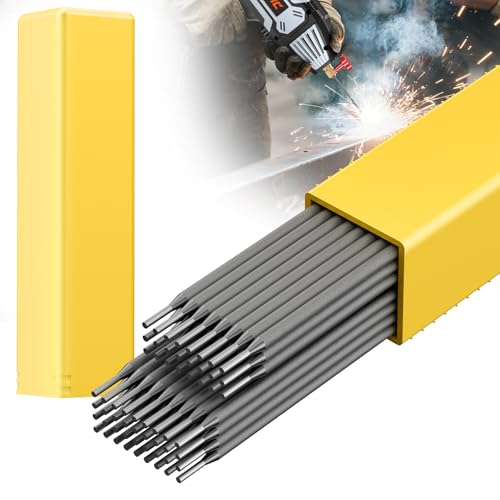
They’re easy to strike, run smoothly on both inverter and transformer welders, and lay down tidy beads with low spatter so cleanup is faster.
Because they behave well in all positions, they’re handy for awkward on-site fixes as well as shop projects. If you want a forgiving, versatile rod that helps you get consistent results without fuss, these are a solid choice to keep in your kit.
Versatility
These rods suit a wide range of tasks from porch rail repairs and trailer work to light fabrication and classroom practice. They’re not intended for heavy, high-spec structural welding but are excellent for routine shop jobs and field repairs where a stable, controllable arc matters.
Key Benefits
- Smooth, easy arc and low spatter
- Works on AC and DC/inverter machines
- All-position capability for awkward joints
- Good consistency for DIY and shop work
Related guides: how to store low-hydrogen electrodes | which welding rods need oven storage | E7018 welding rods review
FAQ
Which welding rod should I choose?
Match the electrode to the metal and the job. E6013 is a good all-purpose rod for mild steel, E7018 is a low-hydrogen rod for structural or high-strength work, E6011 suits dirty or rusty steel, E308L is for stainless and E4043 is for aluminum. Then pick a diameter for the metal thickness and test on scrap before welding the real part.
What does E7018 mean?
E stands for electrode, 70 means 70,000 psi minimum tensile strength, 1 means all positions and 8 means a low-hydrogen coating that works on AC or DC electrode positive. Low-hydrogen rods need to stay dry to avoid porosity and cracking.
How do I store low-hydrogen rods?
Keep unopened rods in their sealed packaging and opened rods in a dry container or rod oven. If E7018 rods have been exposed to moisture, follow the manufacturer redrying instructions on the box rather than a generic temperature.
Will these rods work on my welder?
Most of these rods run on common stick machines. E6013 runs on AC or DC, E7018 is normally run on DC electrode positive unless the box says AC is approved, and E6011 runs on AC or DC. Always check the polarity and amperage range printed on the box.
Can I stick weld stainless steel or aluminum?
Yes, with the matching electrode: E308L for stainless and E4043 for aluminum. Both are more demanding than steel rods, and TIG or MIG gives neater results on thin sections, so treat stick rods as a repair option.
Which Rod Type Fits Your Metal
Choose by metal first. E6013 is the easy-running general-purpose rod for mild steel. E7018 gives strong, low-hydrogen welds on structural work but must stay dry. E6011 digs through rust and paint. E308L and E4043 are for stainless and aluminum repairs. After that, pick the diameter and pack size that match your machine and workload.
Wrapping Up
Base the choice on the metal you are joining, the positions you will weld in and how well you can keep rods dry. E6013 and E6011 cover everyday carbon steel repairs. For structural, high-strength joints choose low-hydrogen E7018 in a pack size that fits your workload. For stainless or aluminum, use the matching E308L or E4043 rod rather than a mild steel electrode.
| E6013 1/8″ 5/32″ Premium Arc Welding Rods Carbon Steel Electrode 60 lb (10 lb x 6-pk) | E7018 5/32″ Premium Arc Welding Rods Carbon Steel Electrode 60 lb (10 lb x 6-pks) | 10 lbs x 6 boxes Premium Arc E7018 1/8″ Stick Electrodes Welding Rod 60 lbs | |
|---|---|---|---|
 |
 |
 |
|
| Size | 1/8″-5/32″ | 5/32″ | 1/8″ |
| Material | Mild Steel | Metal | Carbon Steel |
| Item Weight | 60 pounds | 60 pounds | 60 pounds |
| Check price on Amazon | Check price on Amazon | Check price on Amazon |