The right stick welding rods for stainless steel are E308L electrodes for 304-type stainless and E316L for 316-grade stainless. Of the 10 rods on this page, four are stainless (three E308L and one E316L), and six are E7018 and E6013 carbon steel rods for the rest of your shop. These 10 stick welding rods compare stainless and carbon steel options.
The specs come from the Amazon listings, so confirm class, diameter and pack size on the listing before you buy.
Top Picks
|
Category |
Product |
|---|---|
|
Best Low-Hydrogen |
|
|
Best Big Value |
|
|
Best For Beginners |
|
|
Best For Stainless |
|
|
Best Budget Pack |
|
|
Easiest Arc Start |
|
|
Best For Repairs |
|
|
Best For Finish |
|
|
Best For Professionals |
|
|
Best For Corrosion Resistance |
How the Picks Were Chosen
This list is built from the Amazon listing details for each product, not from hands-on testing. These are the points compared:
- Rod class: E308L-16 and E316L-16 for stainless, E7018 and E6013 for carbon steel.
- Diameter: 5/64, 3/32 and 1/8 inch.
- Pack size: from 1 lb tubes to 10 lb packs.
- Packaging: airtight or reusable containers help keep flux dry.

These E7018 rods are the kind of workhorse you reach for when you need predictable, low‑hydrogen performance. You’ll find them handy for structural repairs, farm equipment fixes, and everyday fabrication where penetration and crack resistance matter. The rods strike reliably, lay a steady bead, and come in a protective plastic box that keeps them usable after storage.
If you want a dependable stick electrode that suits both practice and production, these are a practical pick.
Versatility
You can use these rods across a wide set of jobs, from routine maintenance and farm work to light fabrication and structural tack welding. They play well with common stick welders and are forgiving enough for you to dial in amperage without constant rework.
Durability
The low‑hydrogen composition helps reduce porosity and cracking in finished welds, and the plastic storage box helps keep rods dry between uses.
Key Benefits
- Consistent, steady bead for reliable welds
- Low-hydrogen formula reduces cracking risk
- Easy to strike and control for a range of skill levels
- Protective packaging for longer shelf life

When you need a reliable low‑hydrogen rod, these YESWELDER E7018 sticks are a solid go‑to. You’ll find them useful for structural repairs, farm equipment maintenance, and general fabrication where penetration and crack resistance matter. They strike consistently, lay a tidy bead when your settings are right, and come packaged to stay dry between jobs.
If you want a dependable electrode that performs like higher‑end brands but with broad availability, these handle both practice sessions and real repairs with confidence.
Versatility
These rods are best suited to carbon steel tasks like structural welding, machinery repair, and heavy fabrication. You can count on them for thicker sections and tougher service, but they are not intended as a stainless filler if you need corrosion resistance and metallurgical match.
Durability
The low‑hydrogen composition improves weld toughness and reduces porosity, and the sealed packaging helps keep rods usable after storage.
Key Benefits
- Stable, predictable arc for consistent beads
- Low-hydrogen formula reduces risk of cracking
- Easy strike and control across experience levels
- Protective packaging helps maintain rod condition

These 3/32″ E7018 rods are a versatile choice when you want a balance between control and penetration. You can use them for light structural work, patching farm gear, and general fabrication where a reliable, low‑hydrogen electrode matters.
They strike predictably and let you lay smooth beads once your amperage is set, and the smaller diameter makes them easier to manage on thinner sections compared with 1/8″ rods. If you want a dependable stick for everyday repairs and shop projects, these are an easy rod to keep on hand.
Versatility
These 3/32″ rods work well for maintenance, light structural welding, and fabrication where you need a mix of control and penetration. They’re handy in the shop and for field repairs when you’re welding thinner sections or want easier arc control.
Durability
The E7018 low‑hydrogen chemistry yields tougher welds with less risk of hydrogen‑induced cracking, and the pack helps keep rods dry between uses. Handling gently and storing in a dry spot will keep performance consistent over time.
Key Benefits
- Good arc stability for consistent bead control
- Low-hydrogen formulation reduces cracking risk
- Smaller diameter offers better control on thinner parts
- Plastic packaging helps protect rods from moisture

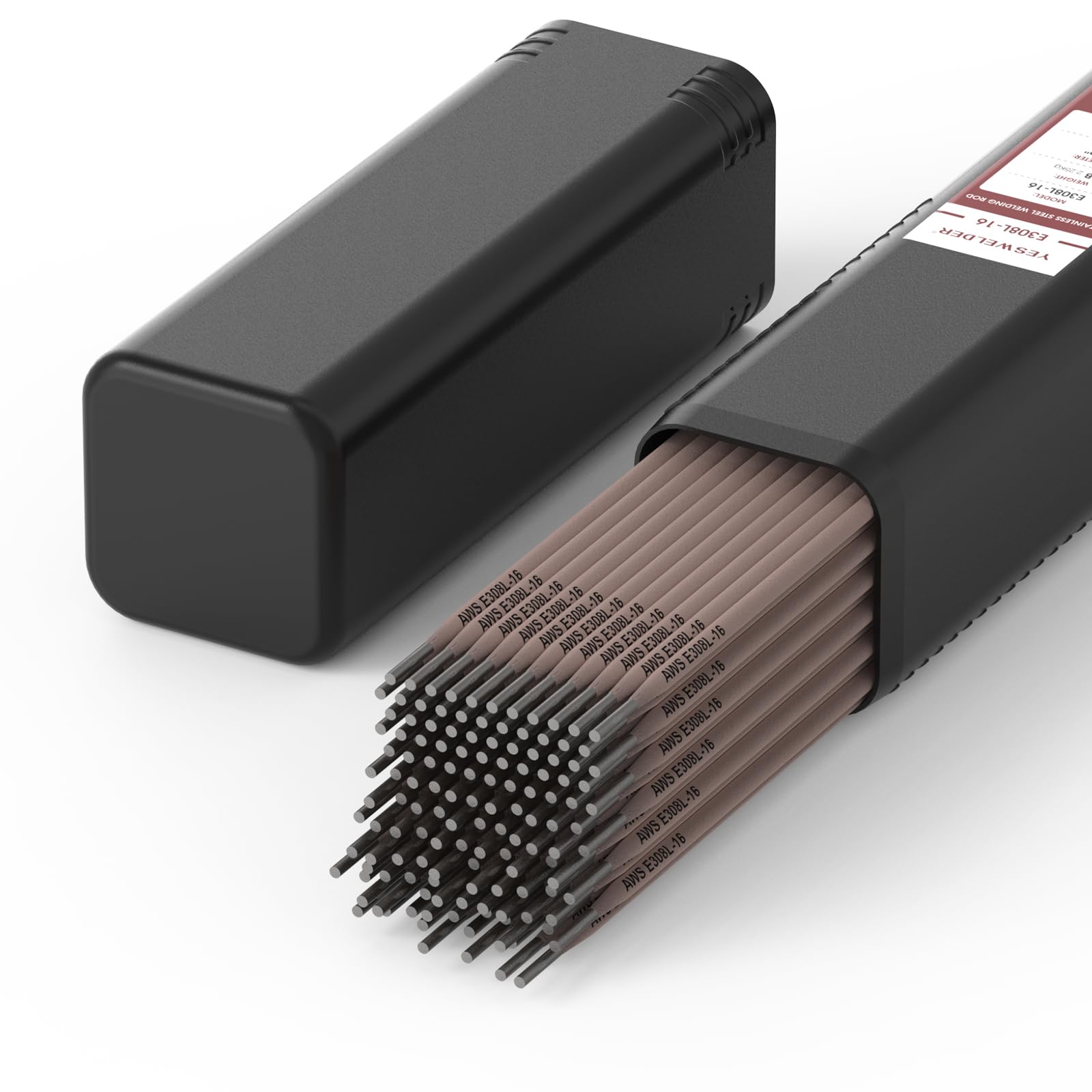
If you need to weld 300-series stainless but don’t have MIG or TIG handy, these E308L rods let you get the job done with a stick rig. You can expect clean, self‑cleaning beads that peel slag easily, which makes them useful for exhaust tubing, restaurant equipment, and general stainless repairs. The reusable airtight sleeve helps keep rods dry between jobs so they’re ready when you are. They work well in the shop and out in the field, as long as you set your angle, travel speed, and polarity correctly.
Versatility
These rods are best suited to welding 18Cr-8Ni stainless types like 301 and 304 in thin to moderate thicknesses, making them handy for exhaust work, foodservice gear, and light fabrication where a TIG or MIG isn’t available.
Durability
E308L chemistry helps limit carbide precipitation, improving corrosion resistance in finished welds, and the airtight tube protects rods in storage.
Key Benefits
- Produces clean, self-cleaning beads for easier slag removal
- Designed for 300-series stainless applications
- Reusable airtight packaging helps prevent moisture pickup
- Works well for field and shop stainless repairs

These E6013 rods are a solid choice when you want something forgiving and easy to use. You’ll find them work well with small 110V stick welders and mini inverters, making routine fixes around the yard or shop less fiddly. They’re handy for tractor repairs, light fabrication, and occasional structural tack welding where a smooth start and predictable puddle matter.
If you’re not welding every day but want rods that behave reliably, these make sense to keep on hand.
Versatility
These rods shine for occasional maintenance, farm repairs, and light fabrication where convenience matters more than industrial specs. They’re not aimed at stainless work but are versatile across common carbon steel fixes.
Durability
Performance is consistent for hobby and repair use, and they hold up well when stored properly. They aren’t intended as a heavy‑production electrode but offer dependable results for the kinds of jobs you’d tackle intermittently.
Key Benefits
- Easy arc start ideal for beginners and small welders
- Good compatibility with 110V and inverter machines
- Predictable bead for routine repairs and maintenance
- Lightweight pack suited to occasional use

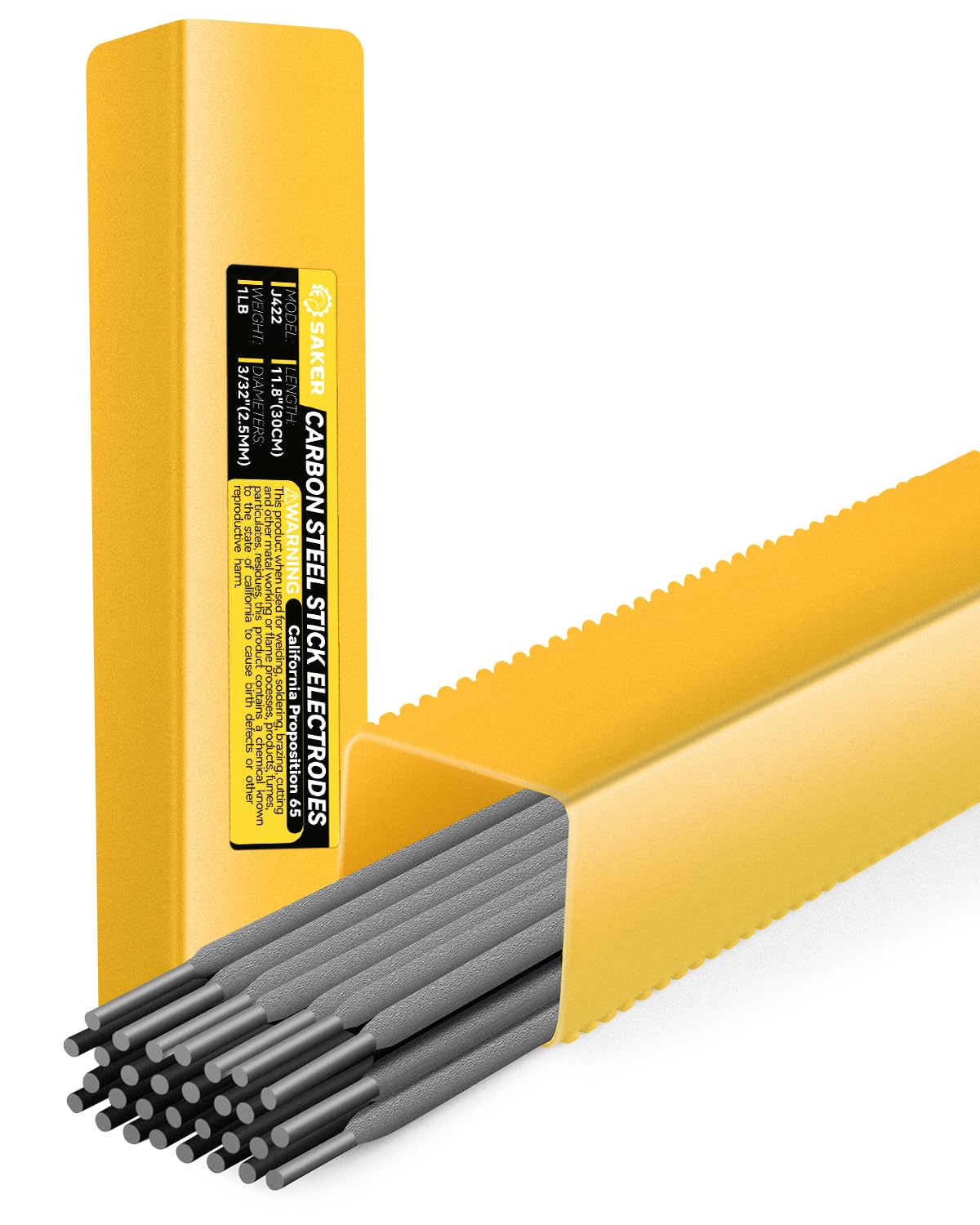
These 3/32″ E6013 rods are a friendly option if you want something that behaves predictably with smaller machines and portable welders. You’ll find them easy to strike and forgiving while you dial in technique, which makes them handy for tractor repairs, light fabrication, and casual shop projects. Expect a smooth puddle when your settings are right, along with the usual spatter for this coating type.
The plastic tube helps protect the rods in storage, so they’re ready when you need a quick fix.
Versatility
These rods suit maintenance, light structural work, and hobby fabrication where convenience and ease of use matter. They aren’t meant for stainless applications but are versatile across common carbon steel tasks.
Durability
Performance is steady for intermittent use and storage, especially when kept dry in the tube. They’ll deliver dependable welds for casual and repair work, though careful handling reduces the chance of coating damage.
Key Benefits
- Easy arc starting, great for learners
- Works well with 110V and inverter machines
- Predictable bead for routine repairs
- Protective tube keeps rods in usable condition

These E6013 rods are a reliable go‑to when you want something forgiving and predictable. You can use them for everyday shop work, equipment repairs, and lighter fabrication where a smooth puddle and easy starts save time.
They work well with small inverter and 110V welders, so they’re handy for weekend projects as much as routine maintenance. If you want an uncomplicated electrode that performs consistently and is easy to handle, these are worth keeping in your toolbox.
Versatility
These rods are well matched to maintenance, farm repairs, and hobby fabrication where convenience matters more than heavy production specs. They’re versatile for common carbon steel jobs but not intended for stainless applications.
Durability
For casual and repair use the rods hold up well when stored properly. They perform consistently out of the tube, and keeping them dry will help avoid any starter or porosity issues over time.
Key Benefits
- Easy arc start ideal for beginners and intermittent users
- Good compatibility with inverter and 110V machines
- Predictable bead for repairs and light fabrication
- Lightweight pack suited to occasional use and storage

If you need to weld 300-series stainless but don’t have MIG or TIG available, these E308L rods give you a practical stick option. You’ll notice they produce tidy, self‑cleaning beads that peel slag easily, which makes them handy for exhaust work, foodservice gear, and light stainless repairs. The reusable airtight sleeve helps keep rods dry between jobs so they’re ready when you are, and with a bit of attention to angle and travel speed you can get a clean finish even on awkward pieces.
They’re a sensible choice when you want stainless results without switching processes.
Versatility
These rods are best suited to 18Cr-8Ni stainless like 301 and 304 in thin to moderate thicknesses, making them useful for exhausts, restaurant equipment, and light fabrication when TIG or MIG isn’t an option. You can use them in both shop and field settings as long as you match your technique to the job.
Durability
E308L chemistry helps limit carbide precipitation and improve corrosion resistance in the finished weld, and the airtight sleeve reduces moisture pickup in storage.
Key Benefits
- Produces clean, self-cleaning beads for easier slag removal
- Formulated for 300-series stainless applications
- Reusable airtight packaging helps prevent moisture pickup
- Works in both shop and field conditions with proper setup

These E308L rods are made for when you need stainless results with a stick rig. You’ll get a smooth, predictable arc and a uniform bead that helps when finishing is important, so they’re a good fit for exhaust work, foodservice gear, and light fabrication. The low carbon chemistry helps reduce carbide precipitation, which is useful when corrosion resistance matters. Keep them dry and match your travel speed and angle, and they’ll serve well in both shop and field jobs.
Versatility
These electrodes are best for 18Cr-8Ni stainless types like 301, 302, 304 and 304L in plate, pipe, and light fabrication, so you can use them for kitchen equipment, exhausts, and chemical tank repairs when TIG or MIG isn’t available.
Durability
The E308L composition improves resistance to intergranular corrosion and helps the weld hold up in corrosive environments. Proper storage in a dry place is important, and rebaking may be needed if moisture exposure occurs.
Key Benefits
- Smooth running arc for cleaner welds
- Formulated for 300-series stainless applications
- Low carbon content reduces carbide precipitation
- Good for both shop and field repairs

These E316L rods are aimed at jobs where corrosion resistance matters more than flash—think marine fittings, chemical tanks, and foodservice equipment that use 316 stainless. You can expect a filler chemistry that helps limit carbide precipitation, so the weld holds up in aggressive environments when you match your technique. With a smaller 5/64″ diameter they’re useful for thinner sections and detail work, though you may need to fine-tune amperage and travel speed to get the best finish.
If you need a 316-grade stick option for specialized stainless work, these are worth testing on scrap first to dial them in.
Versatility
These electrodes are best for true 316 stainless tasks like marine hardware, chemical processing equipment, and any application where molybdenum-bearing filler is preferred. They aren’t a general-purpose carbon rod, so stick to stainless-specific repairs and fabrication.
Durability
E316L chemistry improves corrosion resistance in the finished weld, but performance depends on storage and handling. Keep rods dry, and consider rebaking if they’ve absorbed moisture to preserve toughness and avoid hydrogen-related defects.
Key Benefits
- Formulated for 316 stainless applications with added corrosion resistance
- Low carbon helps reduce carbide precipitation and intergranular corrosion
- Smaller diameter suits thinner sections and more controlled beads
- Works with standard stick-welding setups for field and shop use
Related guides: how to weld stainless steel with a stick welder, stick welding amperage chart and YESWELDER E308L-16 electrodes review.
FAQ
What stick rod should I use for stainless steel?
Use E308L for 304 and similar stainless, and E316L for 316-grade stainless. The L means low carbon, which helps resist carbide precipitation. Do not use E7018 or E6013 on stainless.
Can I weld stainless steel with a stick welder?
Yes, with the right rod, a clean joint and moderate heat. See how to weld stainless steel with a stick welder for technique and settings.
What amperage should I use with these rods?
Start with the range printed on the rod box or manufacturer data sheet for your diameter, then adjust on scrap. Our stick welding amperage chart gives typical starting points.
How do I store stainless stick electrodes?
Keep them in a dry, sealed container. Several listings mention airtight or reusable packaging for this reason. If the flux gets damp, follow the maker instructions for re-drying.
Choosing Stick Welding Rods for Stainless Steel
Identify your stainless grade first: E308L for 304, E316L for 316. Then pick the diameter for the thickness, such as 3/32 inch for sheet and light plate. Use a stainless wire brush and clean the joint, and keep heat input moderate to limit distortion. The carbon steel rods in this list should not be used on stainless.
Specs at a Glance
Figures come from the Amazon listings and can change, so confirm class, diameter and pack size before you order.
| Product Name | Image | Item Weight | Dimensions |
|---|---|---|---|
| ARCCAPTAIN E7018 Welding Rod 1/8” 10LB |
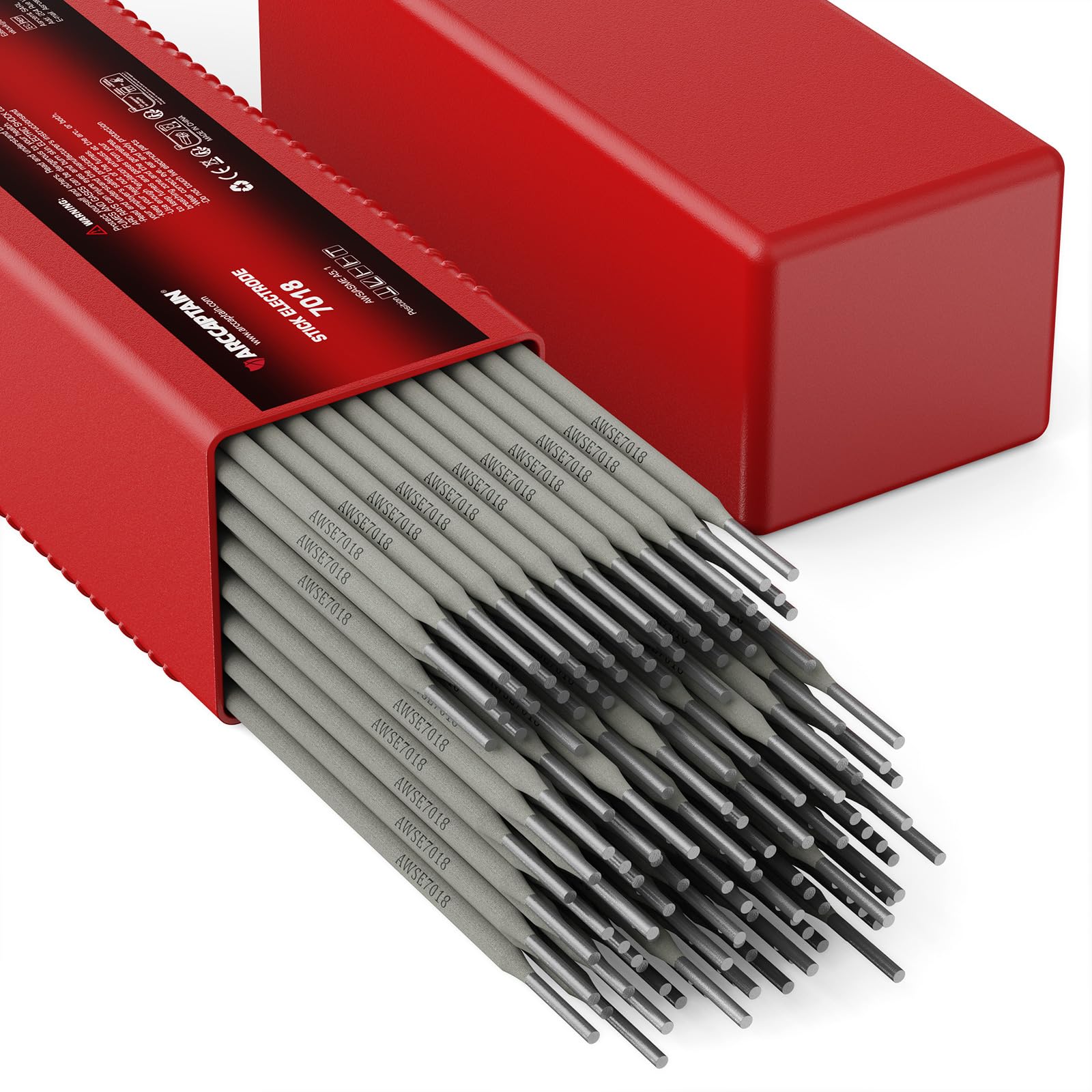 |
10.21 pounds | 14.13 x 2.83 x 2.83 inches |
| YESWELDER E7018 1/8” 10LB Welding Rod |
 |
10.34 pounds | 14.02 x 3.62 x 2.56 inches |
| ARCCAPTAIN E7018 Welding Rod 3/32” 5LB |
 |
5.28 pounds | 14.09 x 3.11 x 1.42 inches |
| YESWELDER E308L-16 Stainless Steel Stick Electrodes 3/32” 5LB |
 |
5.26 pounds | 14.09 x 2.44 x 2.44 inches |
| WISUNO E6013 Welding Rod 3/32” 1LB |
 |
1 pounds | 13.78 x 1.14 x 1.14 inches |
| Saker E6013 3/32” 1LB Welding Electrodes |
 |
1.01 pounds | 11.73 x 1.06 x 1.06 inches |
Wrapping Up
Match the rod to the grade of stainless steel, keep the flux dry, and test on scrap before you start the real joint. Check each listing for current price, pack weight and return terms before you order.