Choosing between AC and DC TIG welding starts with the metal and the welding procedure. Use AC for most manual aluminum and magnesium work because it combines oxide-cleaning action with heat in the joint. Use DCEN, or direct current electrode negative, for steel, stainless steel, nickel, titanium, copper alloys, and most TIG work that does not need AC cleaning.
Last updated: July 22, 2026. Technical guidance was checked against current Miller Electric, American Welding Society, TWI, and OSHA references.
Quick Answer
Use AC TIG for most manual aluminum and magnesium welding because the electrode-positive part of each cycle disrupts surface oxide and the electrode-negative part drives heat into the joint. Use DCEN for steel, stainless steel, nickel, titanium, copper alloys, and most other TIG work that does not need AC cleaning.
Key Takeaways
- AC TIG is the normal choice for aluminum and magnesium because it balances surface-oxide cleaning with penetration.
- DCEN TIG is the normal choice for steel, stainless steel, nickel alloys, titanium, copper alloys, and many other metals.
- DCEP TIG is rarely used by itself because it puts excessive heat into the tungsten and produces shallow penetration.
- On aluminum, AC balance controls cleaning versus penetration, while AC frequency changes arc width and focus.
- AC-balance displays differ by manufacturer, so check whether your machine shows EN percentage, EP percentage, or cleaning action.
- For code, structural, pressure, vehicle-frame, or other safety-critical work, follow the approved welding procedure and inspection requirements instead of guessing settings.
Use This Current-Selection Sequence
- Identify the base metal and governing procedure. Do not choose polarity from appearance alone.
- Use AC for normal manual TIG welding of aluminum and magnesium when in-process oxide cleaning is needed.
- Use DCEN for steel, stainless steel, nickel alloys, titanium, copper, and many copper alloys unless the procedure states otherwise.
- Treat DCEP as a special-case setting. It heavily heats the tungsten and is not the normal standalone choice for general TIG work.
- Set the supporting variables next: tungsten type and diameter, shielding gas, amperage, AC balance or frequency, torch cooling, and post-flow.
AC vs. DC: Understanding the Basics of TIG Welding
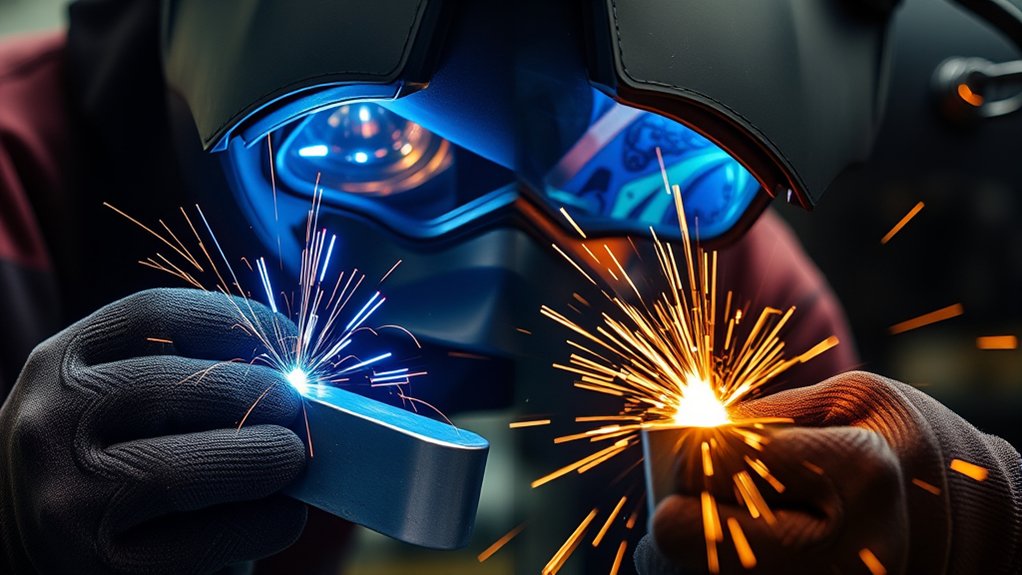
TIG welding, also called gas tungsten arc welding or GTAW, uses a non-consumable tungsten electrode, shielding gas, and a constant-current power source. The operator may add a separate filler rod while controlling the arc with a torch switch, fingertip control, or foot pedal. A power source can supply alternating current, direct current, or both, depending on the machine. Miller’s guide to TIG welding basics confirms that steel and stainless normally use DC TIG or DCEN, while aluminum normally uses AC.
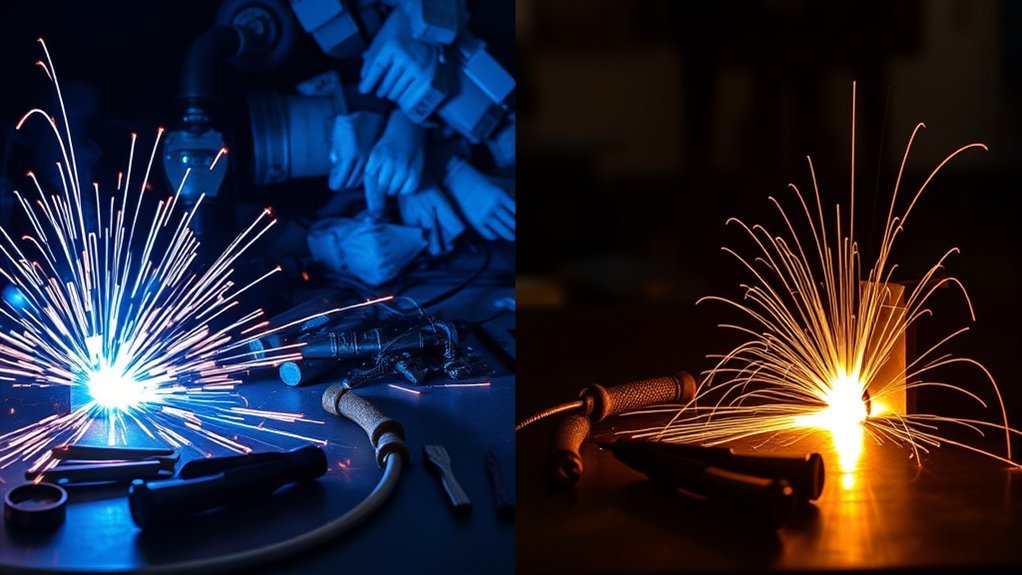
AC means alternating current. The current changes direction many times per second. In TIG welding, each part of the cycle serves a different purpose. The electrode-positive, or EP, portion helps disrupt surface oxide on aluminum and magnesium. The electrode-negative, or EN, portion directs more heat into the base metal and produces penetration.
DC means direct current. The current flows in one direction. Most DC TIG welding uses DCEN. With DCEN, the torch electrode is negative and the workpiece is positive. A commonly used GTAW rule of thumb places about 70% of the arc heat in the work and 30% in the electrode. Treat that split as an approximation, not a machine-setting formula, because actual heat transfer varies with the arc, shielding gas, equipment, and procedure. See TWI’s TIG/GTAW process guidance.
Note: AC cleaning action does not replace preparation. Remove oil, coating residue, moisture, and loose oxide before striking an arc. Clean metal, clean filler, and stable shielding gas remain essential on both AC and DC.
Key Differences in AC TIG Welding vs. DC
The simplest rule is easy to remember: AC for aluminum and magnesium; DCEN for steel, stainless steel, and most other TIG-welded metals. The final choice also depends on surface oxide, penetration requirements, tungsten heat, joint design, shielding gas, and the approved welding procedure.
| Material or Job | Usual TIG Current | Why It Works |
|---|---|---|
| Aluminum | AC | EP disrupts surface oxide, while EN provides most of the melting and penetration. |
| Magnesium | AC | Provides oxide-cleaning action and controlled penetration, similar to aluminum. |
| Mild steel and carbon steel | DCEN | Produces a stable, focused arc and useful penetration without placing excessive heat in the tungsten. |
| Stainless steel | DCEN | Supports a narrow arc and precise puddle control on sheet, tubing, and root passes. |
| Titanium and nickel alloys | DCEN | Provides focused heat, but strict cleanliness and complete shielding are critical. |
| Copper and many copper alloys | Usually DCEN | DCEN is common, but alloy chemistry matters. Highly conductive parts may need preheat or helium, and zinc-bearing alloys require suitable fume controls and a qualified procedure. |
| Thick aluminum with a specialized setup | Usually AC; DCEN only in specialized procedures | DCEN with helium-rich shielding can provide high penetration, but it supplies no AC cleaning action and is not the normal beginner or general-shop method. |
Current type is only one part of TIG process control. Torch setup, arc length, travel speed, shielding, amperage, filler selection, and remote control all affect the final weld. That is why current control precision matters when you compare TIG with other arc processes.
When to Choose AC TIG for Aluminum Welding
Choose AC TIG when welding aluminum or magnesium in a normal manual TIG setup. Aluminum quickly forms a hard oxide layer after exposure to air. That oxide melts at a much higher temperature than the base aluminum beneath it. If it remains in the joint, the puddle may look dirty, wander, or refuse to wet into the joint.
Aluminum oxide typically melts near 3,600°F, while aluminum base metal melts near 1,200°F, depending on the alloy. That large difference is why cleaning and AC balance matter so much. Source: Miller AC balance guidance.
AC addresses this problem by alternating between EP cleaning and EN penetration. Modern AC/DC TIG welders let you adjust the balance between those parts of the cycle instead of using one fixed cleaning-to-penetration ratio.
Pro Tip: Degrease aluminum first with a suitable nonchlorinated cleaner, let it dry completely, and then remove surface oxide with a dedicated stainless steel brush. Keep that brush for aluminum only so you do not embed steel contamination in the joint.
AC Balance: Cleaning vs. Penetration
AC balance controls how much of the cycle is spent in EN compared with EP. More EN time usually increases penetration, reduces tungsten heating, narrows the etched zone, and extends electrode life. More EP time increases cleaning action but also places more heat in the tungsten and reduces the time available for penetration.
Use only as much cleaning action as the prepared material needs. Excessive EP can overheat the tungsten, widen the frosted or etched area, and reduce penetration. Too little EP can leave oxide floating in or over the puddle.
Note: AC-balance displays are not standardized. Some machines show percentage EN, where a higher number means less cleaning. Others show EP or “cleaning,” where a higher number means more cleaning. Read the machine manual before changing the control.
| Control Label | When the Number Increases | Practical Effect |
|---|---|---|
| EN percentage | More time is spent electrode negative. | Usually more penetration, less cleaning, less tungsten heating, and a narrower etched zone. |
| EP percentage | More time is spent electrode positive. | Usually more oxide-cleaning action, more tungsten heating, and less time for penetration. |
| Cleaning control | The machine usually adds cleaning action. | Do not assume it matches EN or EP percentage. Confirm the direction in the owner’s manual. |
AC Frequency and Waveform
AC frequency changes how often the current switches direction. A higher frequency usually produces a tighter, more focused arc that is easier to aim into a narrow joint. A lower frequency produces a wider, softer arc that can suit broad beads or buildup work. The usable range and the effect of each setting depend on the power source.
Waveform controls, when available, also change how quickly and forcefully the current switches between EN and EP. Square, soft-square, sine, and triangular waveforms can alter arc sound, puddle response, heat input, and bead profile. These are fine-tuning tools, not substitutes for correct polarity, clean material, or suitable amperage.
If the welder has AC balance, AC frequency, and selectable waveforms, begin with the manufacturer’s recommended baseline and change one control at a time. That makes it easier to identify which adjustment improved or harmed the weld.
A quality AC welder can reduce oxide-related problems, but the machine is only part of the setup. You still need clean base metal, suitable filler, steady shielding gas, and a controlled torch angle. For more aluminum-specific setup help, see these TIG welding aluminum tips and tricks.
Benefits of DC TIG for Steel, Stainless, and Other Metals
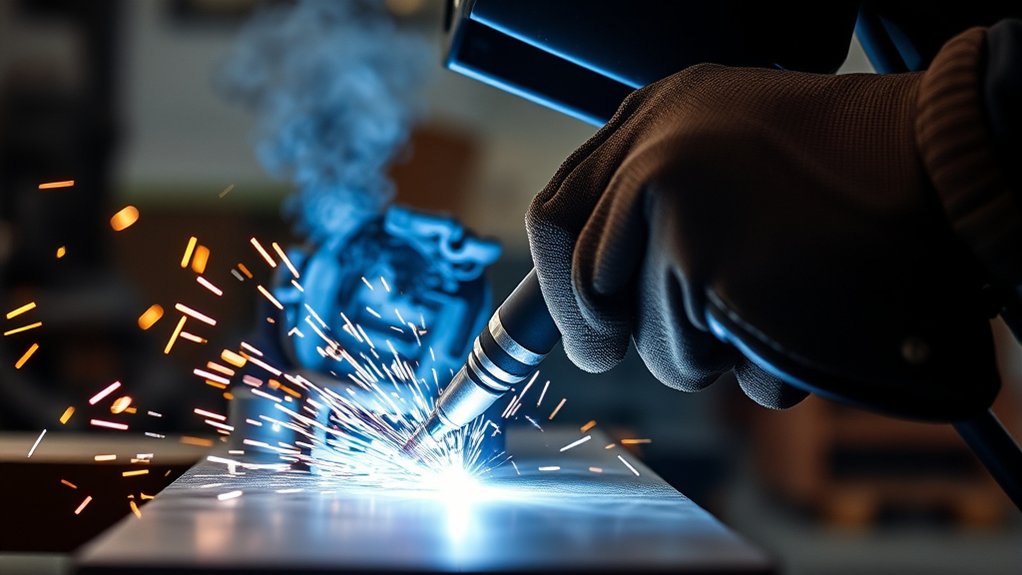
DC TIG welding is the normal choice for mild steel, carbon steel, stainless steel, nickel alloys, titanium, copper alloys, and many other metals. In most cases, that means DCEN. With DCEN, the tungsten is negative and the workpiece is positive. This concentrates most of the useful arc heat in the workpiece, supports penetration, and protects the tungsten from the extreme heat associated with DCEP.
DCEN also produces a steady, narrow arc that is easy to aim. That makes it useful for thin stainless, tubing, sheet metal, root passes, and repair work where careful puddle control matters. TIG is slower than MIG for many production jobs, but it can produce precise welds with little spatter when the setup is correct. You can compare process differences in this guide to how MIG welding differs from TIG welding.
| Benefit | What It Means in the Weld |
|---|---|
| Stable Arc | Helps you maintain a short arc and direct heat along the joint line. |
| Useful Penetration | DCEN directs most arc heat into the workpiece, which supports fusion on steel and thicker sections. |
| Focused Tungsten Point | A correctly ground and slightly truncated point produces a narrow, controlled DCEN arc. |
| Precise Bead Control | Separate control of the arc and filler rod supports clean, low-spatter welds when preparation and shielding are correct. |
For steel TIG, 100% argon is a common shielding-gas starting point. Gas type alone does not guarantee a sound weld. Clean metal, correct flow, a leak-free torch, the right cup size, sufficient post-flow, and protection from drafts still matter.
DCEN vs. DCEP: Why Polarity Matters
When people say “DC TIG,” they usually mean DCEN. That is the standard setting for most TIG welding on steel and stainless steel. DCEP, or direct current electrode positive, reverses the heat distribution. It puts much more heat into the tungsten, produces shallow penetration, and can quickly overheat or damage an electrode that is too small for the current.
DCEP can provide oxide-cleaning action, but it is not the normal standalone setting for TIG welding aluminum because of the tungsten heat load. AC solves the problem by alternating between EP cleaning and EN penetration. That is why an AC/DC TIG welder is the practical choice when one machine must handle both aluminum and steel.
Note: On a machine with separate output terminals, DCEN normally means connecting the TIG torch to the negative terminal and the work lead to the positive terminal. Some machines make the connection internally when you select DC TIG. Follow the exact diagram in the owner’s manual.
Do not transfer polarity rules between processes: DCEP is common for many MIG, flux-cored, and stick electrodes, but that does not make it the normal choice for TIG. Consumable-electrode processes distribute heat and transfer metal differently from GTAW.
A foot pedal or fingertip remote changes amperage during the weld. It does not change AC to DC or reverse polarity. Select the correct current and polarity before striking the arc.
Choosing the Right TIG Welder: AC, DC, or Both?
When selecting a TIG welder, begin with the metals you actually plan to weld. If you only weld steel and stainless steel, a DC TIG machine may be enough. If you weld aluminum or magnesium, choose an AC/DC TIG welder. For mixed shop work, AC/DC provides much more flexibility.
Look for these features before you buy:
- AC/DC output: Needed if you want to TIG weld aluminum and steel with one machine.
- High-frequency or lift-arc start: Starts the arc with less contamination risk than scratch starting. High-frequency start is common on AC TIG machines, while some modern inverters also support lift-arc starting in AC mode.
- Adjustable AC balance: Tunes aluminum cleaning action against penetration and tungsten heat.
- Adjustable AC frequency: Helps narrow or widen the arc on aluminum.
- Selectable AC waveform: Offers additional control of arc feel, puddle response, and heat input on equipped machines.
- Pulse control: Can reduce average heat input and help pace filler addition on thin metal.
- Amperage range: Match both the low-end control and maximum output to the thicknesses you weld most often.
- Duty cycle: Important when welding at higher amperage for long runs.
- Foot pedal or remote control: Useful for reducing or increasing amperage as the part changes temperature.
- Input-power requirements: Confirm that the available voltage, phase, circuit, and receptacle match the machine.
- Torch and cooling capacity: An air-cooled torch may suit lighter work, while sustained high-amperage welding may require a water-cooled system.
Do not choose a TIG welder by model name or maximum-amperage claim alone. Confirm the current type, low- and high-amperage range, duty cycle, input-power needs, torch setup, cooling requirements, service support, and the exact AC controls included.
Note: If you are welding stainless steel, precise TIG welder settings for stainless steel matter. Excessive heat, poor shielding, or slow travel can cause heavy heat tint, backside sugaring, distortion, or reduced corrosion performance.
Products Worth Considering

【Born for Aluminum Welding】AC TIG mode is perfect for dealing with Aluminum and Aluminium alloy.

POWERFUL 7-IN-1 TIG WELDER AC/DC: The Welder is capable of welding with DC TIG / DC Pulse TIG / AC TIG / AC Pulse TIG / AC Pulse TIG Square / AC Pulse TIG Triangular / STICK /SPOT TIG Methods. AC TIG is used in finesse welding various aluminum alloys, magnesium alloys, and other non-ferrous metals. DC TIG provides low-temperature control. You need precise welding for various types of steel: stainless steel, carbon steel, copper.

Large LED Display: Features a large LED screen for enhanced visibility and a clear display of welding parameters and settings. Its intuitive interface ensures effortless operation, enabling precise welding of diverse metals
Tungsten, Shielding Gas, and Prep by Current Type
Current type changes how you prepare the tungsten, choose shielding gas, and clean the joint. Tungsten alloy, diameter, grind, and maximum current must match the electrode manufacturer’s data and the power-source manual.
Products Worth Considering

TOP QUALITY: This 10-pack of 2% Lanthanated tungsten electrodes 0.04"x7"(Blue, WL20/EWLa-2) adhere to Standard AWS A5.12M/A5.12:2009 and DIN EN 26848 GB/T 31908-201. All our tungsten has 100% traceability.

Gray - 2% Ceriated, 1/16"×7" (1.6 mm × 175 mm) × 10pack
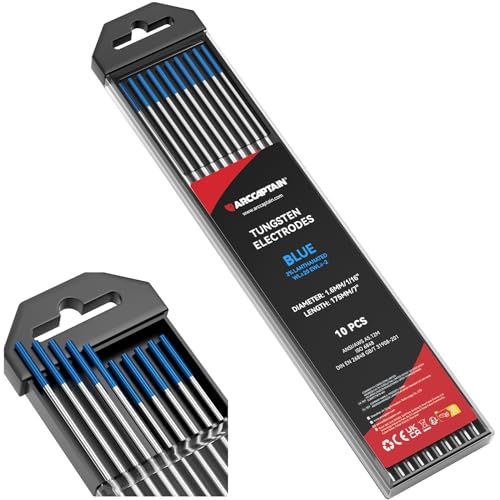
TOP QUALITY: This 10-pack of 2% Lanthanated tig tungsten electrodes 1/16"x7"(Blue, WL20/EWLa-2) adhere to Standard AWS A5.12M/A5.12:2009 and DIN EN 26848 GB/T 31908-201. All our tungsten has 100% traceability.
For DCEN Steel, Stainless, and Other Metals
- Tungsten preparation: Grind a clean point lengthwise on a wheel used only for tungsten, then lightly truncate the tip when recommended for the current.
- Shielding gas: 100% argon is a common starting gas. Helium or argon-helium blends may add heat for highly conductive or thick materials.
- Arc length: Keep the arc short and steady without touching the puddle.
- Reactive metals: Titanium and some nickel applications require especially thorough shielding and cleanliness.
- Stainless roots: Back purging may be required to prevent severe backside oxidation or sugaring.
For AC Aluminum and Magnesium
- Tungsten type: Use a tungsten alloy approved for AC operation. Ceriated and lanthanated electrodes are common choices on modern inverter machines.
- Tip shape: Modern inverter AC machines often work well with a pointed, slightly blunted, or truncated tip rather than a large ball.
- Legacy equipment: Older transformer machines and specific procedures may use a rounded or balled tip. Follow the machine and electrode instructions.
- Shielding gas: Argon is the normal starting gas. Argon-helium blends can add heat on thicker or highly conductive parts.
- Surface preparation: Remove oil before brushing away oxide. Do not rely on EP cleaning to burn through grease, paint, moisture, or heavy contamination.
Miller’s current guidance on choosing tungsten for AC TIG welding recommends modern rare-earth tungsten and a truncated point for many inverter applications rather than assuming that pure tungsten with a large ball is always best.
Keep filler rods clean and within the shielding-gas envelope when you add them. If the hot end repeatedly leaves the gas shield, it can oxidize before it returns to the puddle.
Troubleshooting AC and DC TIG Problems
If the weld looks wrong, do not blame only the AC/DC switch. Most TIG problems involve some combination of preparation, shielding, amperage, polarity, arc length, torch angle, filler technique, tungsten condition, or the work-return path.
| Problem | Likely Cause | Fix |
|---|---|---|
| Black soot or peppering on aluminum | Dirty material, poor gas coverage, wrong polarity, too little cleaning action, or an arc that is too long | Clean again, verify AC mode and balance, shorten the arc, check gas flow, and protect the weld from drafts. |
| Aluminum puddle will not wet out | Oxide remains, heat is too low, travel is too fast, or EP cleaning is insufficient | Clean with a dedicated brush, verify the balance display, and adjust cleaning or amperage in small steps. |
| Tungsten overheats on AC | Too much EP time, excessive amperage, undersized tungsten, incorrect tungsten alloy, or inadequate torch cooling | Increase EN percentage if that is how the machine is labeled, use the correct electrode size and alloy, and check torch limits. |
| Tungsten contaminates or burns back on DC | DCEP selected by mistake, contact with the puddle, poor gas coverage, or too much current for the electrode | Confirm DCEN, regrind the tungsten, inspect gas flow, and match the electrode diameter to the amperage. |
| Porosity | Contamination, gas leaks, drafts, moisture, excessive gas turbulence, or dirty filler | Clean the joint, inspect hoses and torch parts, correct the flow rate, block drafts, and keep filler inside the gas shield. |
| Arc wanders on steel | Contaminated or poorly ground tungsten, long arc, weak return path, or magnetic arc blow | Regrind the tungsten lengthwise, shorten the arc, move the work clamp closer, or demagnetize the part when required. |
| Heavy stainless heat tint or backside sugaring | Excessive heat, slow travel, poor shielding, or no back purge where one is required | Reduce average heat input, improve gas coverage, increase travel speed, and use a controlled back purge when the procedure requires it. |
Safety Checks Before TIG Welding
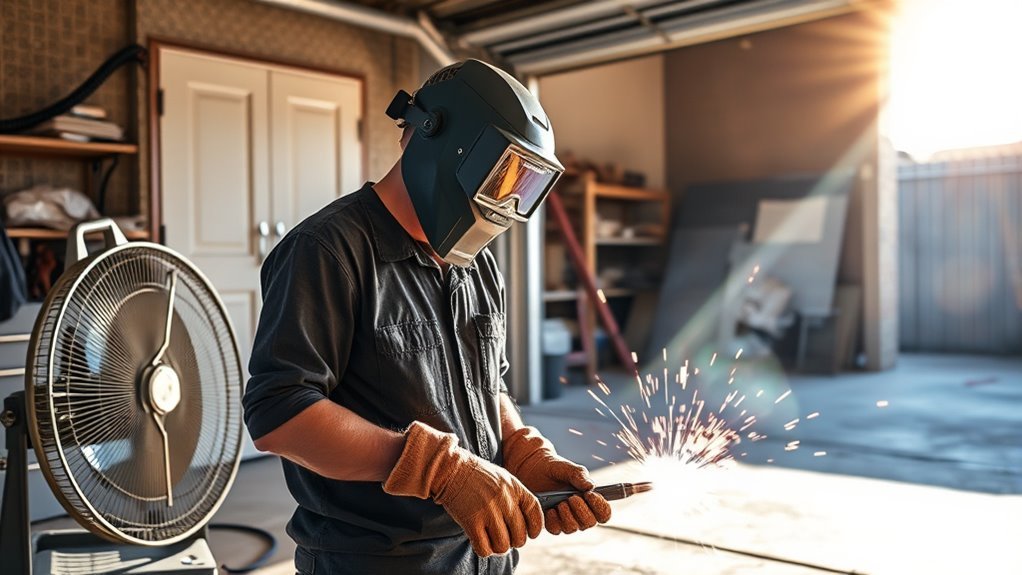
TIG welding may look clean, but it still exposes you and nearby workers to intense arc radiation, hot metal, electrical hazards, shielding gas, fumes, and fire. Use a suitable welding helmet, safety glasses, gloves, flame-resistant clothing, ventilation, and fire protection. Follow the machine manual and the hot-work rules for the location.
OSHA’s eye-protection table lists minimum protective shade 8 for GTAW below 150 amps and shade 10 from 150 to 500 amps. Begin with a shade that is too dark to see the weld zone clearly, then move lighter without going below the applicable minimum.
Warning: Never weld metal that is galvanized, plated, painted, oily, or chemically contaminated without identifying and controlling the hazard. Keep chlorinated brake cleaners, degreasers, and their vapors away from welding UV. Do not weld a used drum, tank, pipe, or closed hollow part unless it has been properly cleaned, isolated, vented, and controlled under a qualified hot-work procedure. Shielding gas can displace oxygen in confined spaces, so confined-space welding requires an approved ventilation, monitoring, and rescue plan.
Before you weld, confirm these basics:
- Use the correct current type and polarity for the metal and procedure.
- On DCEN equipment with separate terminals, connect the torch and work lead as directed by the manual.
- Clean the joint and filler rod with products approved for welding preparation.
- Never allow chlorinated-cleaner vapors to reach the welding area.
- Check shielding-gas type, flow, leaks, post-flow, and drafts.
- Use the correct tungsten alloy, diameter, and preparation.
- Attach the work clamp to clean metal as close to the weld as practical.
- Do not route welding current through chains, bearings, wire ropes, cranes, electronics, or unintended vehicle components.
- Keep gloves, clothing, equipment, and the work area dry to reduce electrical-shock risk.
- Remove or protect combustible materials and keep suitable fire-extinguishing equipment nearby.
- Use local exhaust or other ventilation suited to the metal, coating, filler, and work area.
- Wear proper eye, face, skin, hearing, and respiratory protection for the assessed hazard.
- For structural, pressure, aerospace, vehicle-frame, or code work, follow the approved WPS, qualification, and inspection requirements.
OSHA’s general welding requirements address fire prevention, ventilation, coatings, cleaning compounds, used containers, and confined spaces. Its arc-welding equipment standard covers installation, grounding, lead connections, operation, and maintenance.
Frequently Asked Questions
Is AC or DC better for TIG welding?
Neither is better for every job. AC is the normal choice for manual aluminum and magnesium TIG welding because it combines oxide-cleaning action with penetration. DCEN is the normal choice for steel, stainless steel, nickel alloys, titanium, copper alloys, and most metals that do not need AC cleaning.
Why is DCEN used for most TIG welding?
DCEN directs most of the useful arc heat into the workpiece and less into the tungsten. That supports penetration, a focused arc, and a pointed or truncated electrode. It works well on many metals that do not require the oxide-cleaning portion of an AC cycle.
What polarity is DCEN TIG?
DCEN means direct current electrode negative. On a machine with separate output terminals, the TIG torch normally connects to negative and the work lead connects to positive. Some machines set this internally when you select DC TIG, so always follow the connection diagram in the owner’s manual.
How do I tell if my TIG welder is AC or DC?
Check the front panel, manual, rating label, and published specifications. A DC-only TIG welder may show DC TIG, DCEN, or separate positive and negative terminals. An AC/DC TIG welder will include an AC mode and may also provide AC balance, AC frequency, and waveform controls.
Do I TIG weld aluminum on AC or DC?
Use AC for normal manual TIG welding on aluminum. AC provides surface-oxide cleaning and penetration during the same cycle. DCEN aluminum welding is possible in specialized, carefully prepared procedures, often with helium-rich shielding, but it is not the normal choice for beginner or general-shop aluminum work.
Can I weld steel with AC TIG?
You normally should not choose AC TIG for steel unless a qualified procedure specifically requires it. DCEN provides the stable arc, penetration, and tungsten life normally wanted for steel. If the arc wanders on magnetized steel, correct the tungsten, arc length, work-return path, or magnetism instead of switching currents at random.
Does a foot pedal change AC to DC?
No. A foot pedal or fingertip remote changes welding amperage within the limit set on the machine. It does not change current type, reverse polarity, or correct an improper AC-balance setting. Select AC, DCEN, or another approved mode before starting the arc.
Is an AC/DC TIG welder worth it?
An AC/DC TIG welder is worth considering if you want to weld both aluminum and steel. A DC-only TIG machine can be a practical choice for steel, stainless steel, and many other metals, but it limits normal aluminum work. For mixed repairs, fabrication, and training, AC/DC provides more flexibility.
Does a higher AC balance number mean more cleaning?
Not always. On a machine that displays EN percentage, a higher number normally means more penetration and less cleaning. On a machine that displays EP percentage or a cleaning value, a higher number normally means more cleaning and more tungsten heat. Check the owner’s manual before copying a balance number from another welder.
Which metals normally use AC TIG?
Aluminum and magnesium are the main metals normally welded with AC TIG in manual shop work because the EP portion of the cycle helps disrupt surface oxide. Steel, stainless steel, nickel alloys, titanium, copper, and many copper alloys normally use DCEN unless a qualified procedure specifies another mode.
Conclusion
AC and DC TIG welding are not competing shortcuts. They serve different metals and arc requirements. Use AC TIG when aluminum or magnesium needs surface-oxide cleaning along with controlled penetration. Use DCEN TIG for steel, stainless steel, nickel alloys, titanium, copper alloys, and most other TIG work that benefits from a focused arc and useful penetration.
The best results come from matching the current and polarity to the metal, then controlling preparation, tungsten alloy and shape, shielding gas, amperage, arc length, travel speed, filler technique, and safety. Before striking an arc, write down the base alloy, current type, polarity, balance-display convention, tungsten, shielding gas, and applicable WPS. If you regularly weld both aluminum and steel, an AC/DC machine with suitable balance, frequency, pulse, waveform, and remote-amperage controls provides the broadest flexibility.
Sources
- Miller Electric: Guide to TIG Welding Basics — TIG process fundamentals, material selection, DCEN setup, tungsten, shielding gas, and troubleshooting.
- Miller Electric: AC Balance Control for TIG Aluminum Welding — aluminum oxide, electrode-positive cleaning, electrode-negative penetration, and AC-balance effects.
- Miller Electric: Choosing Tungsten for AC TIG Welding — heat distribution, rare-earth tungsten, tip shape, and modern inverter guidance.
- American Welding Society: What Is GTAW Welding? — current type, DCEN use, process fundamentals, and common applications.
- TWI: Tungsten Inert Gas Welding — constant-current power sources, polarity, heat distribution, shielding gases, and tungsten behavior.
- OSHA 29 CFR 1910.252 — fire prevention, ventilation, hazardous coatings, cleaning compounds, used containers, and confined-space requirements.
- OSHA 29 CFR 1910.254 — arc-welding equipment installation, grounding, connections, operation, and maintenance.
- OSHA 29 CFR 1910.133 — eye and face protection requirements and minimum welding-filter shade guidance.