In exploring the advantages and disadvantages of plasma arc welding, you’ll find that this process offers remarkable precision and efficiency, making it a popular choice in specialized industries. However, it also presents challenges such as high initial costs and complex operational requirements. Understanding these pros and cons is essential for determining its suitability for your projects. With a focus on technical insights, let’s uncover what makes plasma arc welding both a valuable and demanding technology.
Overview of Plasma Arc Welding
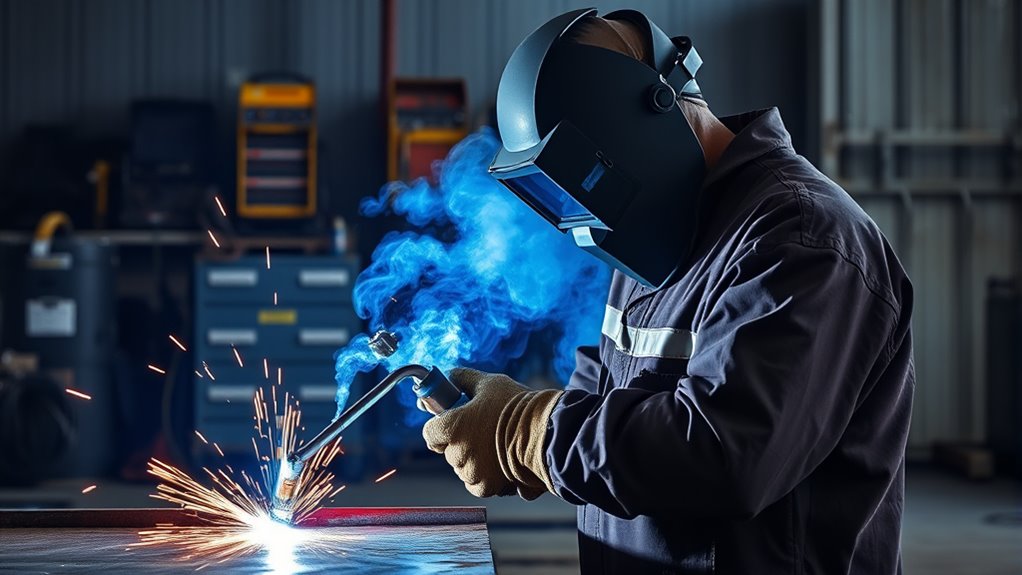
Plasma Arc Welding (PAW) is a sophisticated welding technique that uses a non-consumable tungsten electrode to generate a high-temperature plasma arc, reaching nearly 30,000 degrees Fahrenheit. This process is known for its distinct plasma characteristics, which provide precision and efficiency in metal joining.
PAW’s constricted arc enhances control and arc stability, leading to cleaner welds and reduced heat-affected zones, vital for maintaining material integrity.
Enhanced control and stability in PAW result in cleaner welds and minimal heat-affected zones.
You’ll find PAW particularly advantageous for welding thick materials, as it operates in keyhole mode to achieve deep penetration and high-speed welding in a single pass.
However, the complexity and cost of PAW equipment exceed those of conventional TIG welding, necessitating specialized training for operators.
Despite these challenges, PAW is indispensable in industries demanding high-integrity welds, such as aerospace, electronics, and medical devices, where precision and quality can’t be compromised.
Technical Basics of Plasma Welding
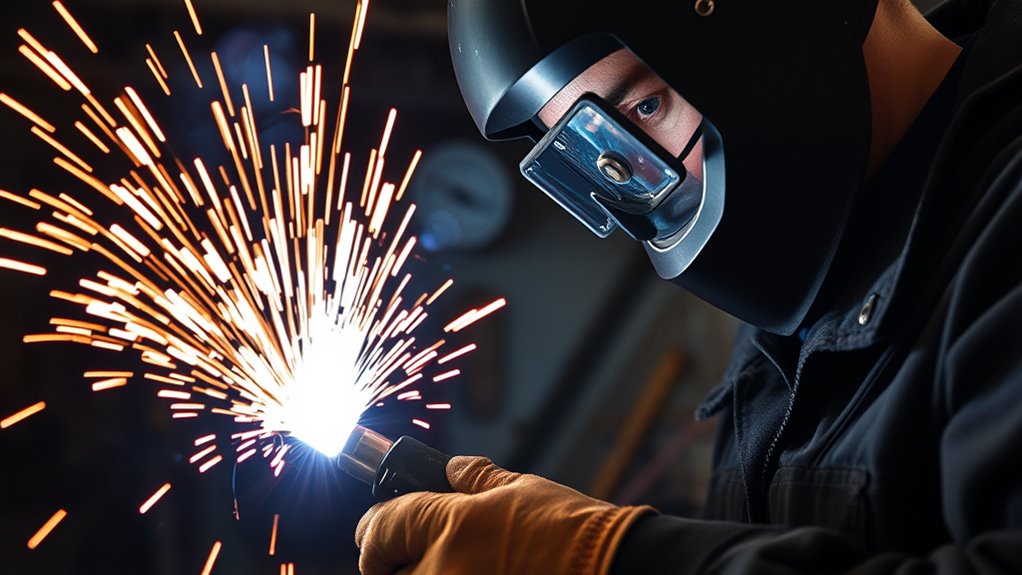
Although often perceived as complex, mastering the technical basics of Plasma Arc Welding (PAW) is essential for achieving ideal results in demanding applications. At the core, PAW employs a non-consumable tungsten electrode to generate a plasma arc reaching temperatures near 30,000 degrees Fahrenheit. This intense heat facilitates precise welding techniques across various materials.
The process operates in three modes: Microplasma, Medium current, and Keyhole plasma, offering versatility tailored to specific welding tasks.
Arc stability is a critical factor in PAW. A high-frequency current initiates a pilot arc, ensuring consistent starts and minimizing electrical interference. The constricted arc results in a columnar shape, enhancing arc stability by reducing arc length variation, which extends electrode life.
Additionally, the use of shielding gas is pivotal in maintaining an inert atmosphere around the weld pool, thereby improving weld integrity and surface quality by mitigating defects such as porosity and spatter.
Applications of Plasma Welding
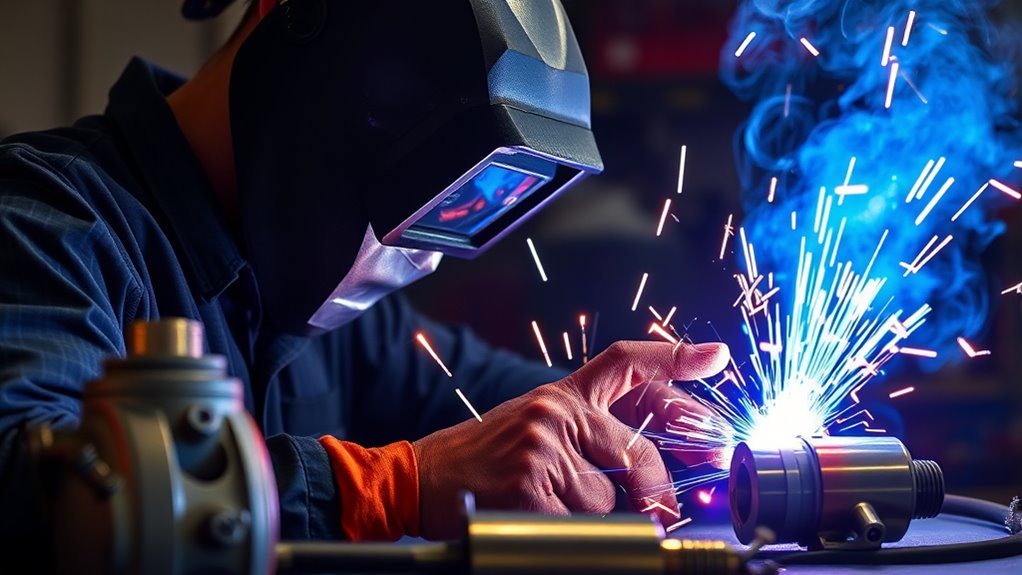
Understanding the technical basics of Plasma Arc Welding sets the stage for exploring its varied applications across industries. In automotive manufacturing, this technique is indispensable for creating robust steel tubes with efficient, single-pass welds. Its precision is a game-changer, especially when dealing with delicate electronic components requiring immaculate accuracy.
Plasma welding is pivotal in medical applications, where the integrity and cleanliness of sealed components are paramount. High-quality welds guarantee the safety and functionality of critical medical equipment and surgical instruments.
Here’s a quick overview of some key applications:
| Industry | Application |
|---|---|
| Automotive Manufacturing | Steel tubes, single-pass welds |
| Medical Applications | Sealed components, surgical instruments |
| Aerospace & Nuclear | Butt joints in thick materials |
Plasma welding’s capability to produce high-quality welds with minimal distortion is a boon for industries demanding precision and reliability.
Advantages of Plasma Arc Welding
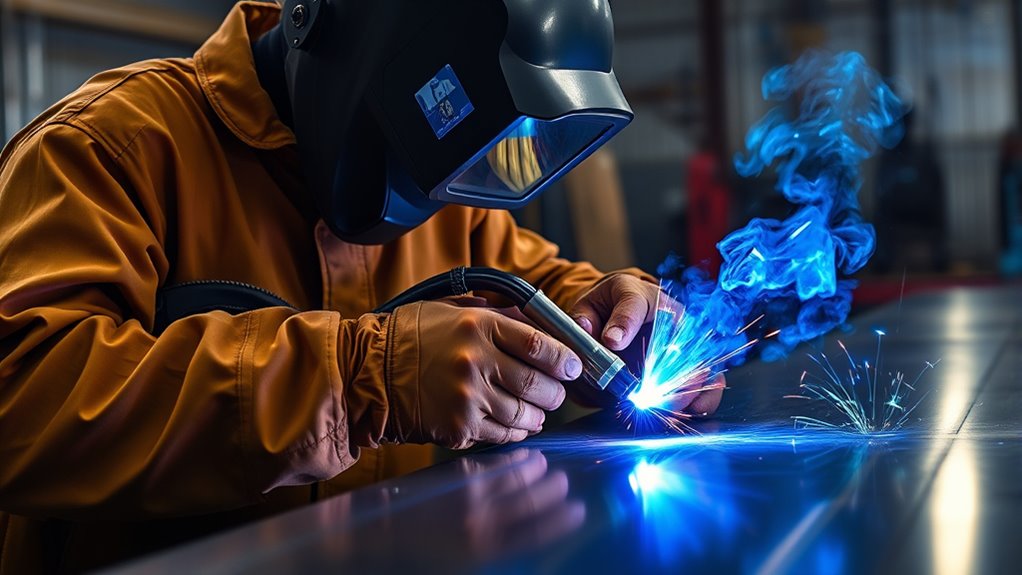
Harnessing the power of Plasma Arc Welding (PAW) offers numerous technical advantages that elevate welding processes across various industries. By providing superior arc stability and control, PAW considerably enhances weld quality, reducing defects and ensuring robust joins.
Effective heat management is another hallmark of this process, as it generates smaller heat affected zones (HAZ). This minimizes thermal distortion and cracking, vital when working with thin materials.
Generating smaller heat affected zones, Plasma Arc Welding minimizes thermal distortion and cracking, essential for thin material applications.
The high energy density of PAW translates into faster welding speeds, boosting productivity in manufacturing environments. Its concentrated arc enables strong penetration, making it particularly suitable for welding thick, non-ferrous metals.
Additionally, PAW’s precision welding capabilities make it indispensable for delicate applications in sectors where high-quality welds are paramount.
- Superior arc stability and control
- Smaller heat affected zones for better thermal management
- Faster welding speeds for increased productivity
- Strong penetration for thick materials
- Precision welding for delicate applications
Disadvantages of Plasma Arc Welding
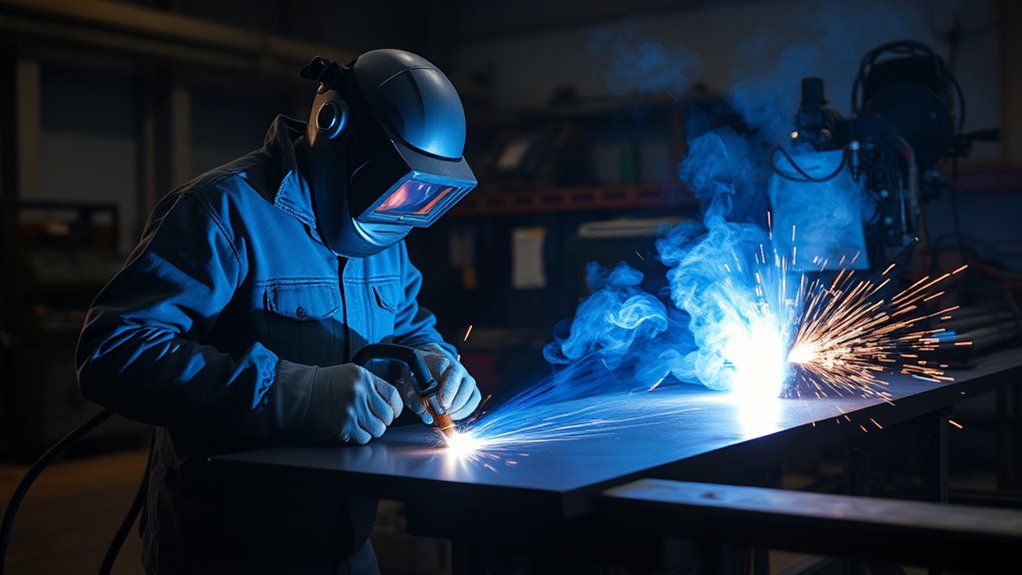
When considering Plasma Arc Welding, you’ll need to account for the high initial equipment costs and the complexity of maintaining specialized machinery.
Operators must undergo dedicated training to handle PAW equipment, which increases the skill requirements for your team.
Additionally, be aware of the noise and ultraviolet radiation emitted, necessitating stringent safety protocols to protect workers.
Equipment Costs and Complexity
Investing in Plasma Arc Welding (PAW) equipment involves significant costs, often surpassing those of traditional welding methods like TIG welding.
Despite its long-term equipment longevity and operational efficiency, the initial outlay is substantial due to the specialized power sources and precise gas flow controls required.
Additionally, the complexity of the equipment increases operational costs and necessitates frequent maintenance.
- High initial investment: PAW equipment’s advanced technology demands a hefty financial commitment.
- Complex power sources: Specialized components are essential for effective function.
- Precise gas flow controls: Essential for maintaining welding quality and efficiency.
- Ongoing maintenance expenses: Regular replacement of orifices and electrodes is necessary.
- Increased safety measures: High noise levels and radiation require protective equipment.
These factors contribute to the overall complexity and costliness of PAW.
Specialized Training Requirement
Despite the significant investment required for Plasma Arc Welding (PAW) equipment, its complexity extends beyond just financial considerations.
You’ll find that operator certification is paramount due to the intricate nature of PAW. Mastering PAW demands skill enhancement to proficiently navigate its different operating modes—microplasma, medium current, and keyhole plasma. Each mode requires precise parameter adjustments and a deep understanding of arc stability to achieve superior weld quality.
Training guarantees you can maintain and troubleshoot equipment, emphasizing the regular replacement of nozzles and electrodes for peak performance. Without adequate training, you risk increased operator errors and less-than-ideal outcomes, underscoring the critical need for developing a skilled workforce adept in PAW technology.
Investing in extensive training is essential.
Noise and Radiation Concerns
Although Plasma Arc Welding (PAW) boasts numerous advantages, it also poses significant challenges concerning noise and radiation exposure. The high-decibel levels, often exceeding 90 decibels, demand effective noise management strategies.
Meanwhile, the process emits substantial radiation, including UV and infrared light. As a welding operator, you must implement stringent radiation protection measures.
- Noise management: Utilize sound-dampening equipment and enforce hearing protection protocols.
- Radiation protection: Equip operators with appropriate face shields and protective clothing.
- Ventilation systems: Guarantee proper ventilation to mitigate harmful gas exposure.
- Safety protocols: Adhere to thorough safety guidelines to minimize risks.
- Continuous monitoring: Regularly track noise and radiation levels to guarantee compliance with industry standards.
Addressing these concerns is essential for maintaining a safe welding environment.
Operating Modes of Plasma Arc Welding
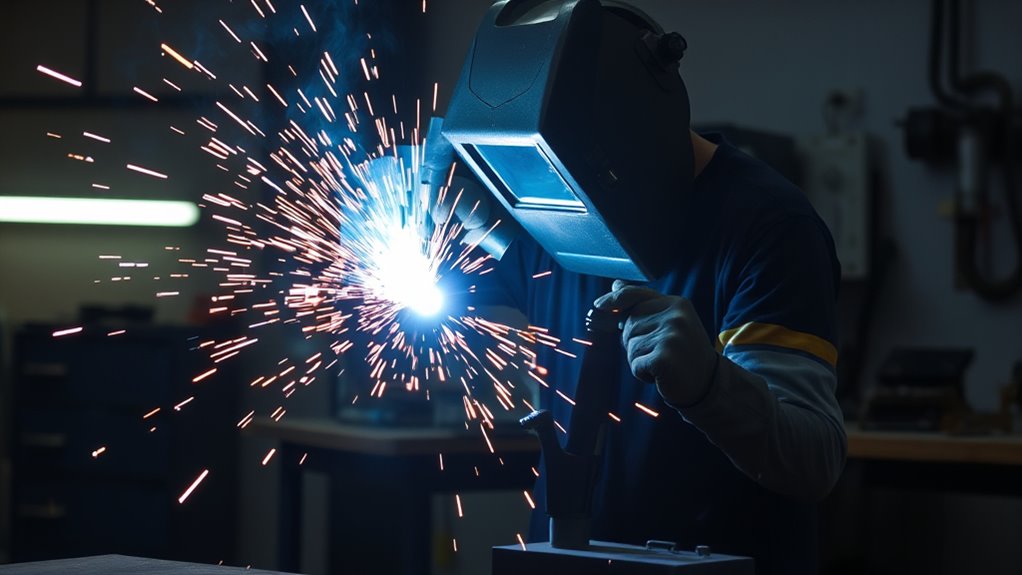
In Plasma Arc Welding, you’ll find that the Microplasma welding range, operating at currents below 20 amps, is ideal for thin materials, offering precise control with minimal heat distortion.
Conversely, the Keyhole Plasma technique, with currents exceeding 100 amps, is specialized for achieving full penetration in thick materials through a keyhole effect that allows molten metal to flow seamlessly.
Precise control of plasma gas flow is crucial in these modes to guarantee weld quality and prevent unintended cutting.
Microplasma Welding Range
Microplasma welding excels as a precise and versatile mode within plasma arc welding, operating efficiently at current levels between less than 0.1 amp and approximately 20 amps.
This process is perfect for applications requiring microplasma efficiency and precision welding, particularly on thin materials. You’ll find it maintains a stable arc, even amidst arc length variations of up to 20mm, guaranteeing consistent weld quality.
- Minimizes distortion: Ideal for thin sheets, as low as 0.1 mm.
- Concentrated arc: Produces cleaner, smoother welds.
- Reduces defects: Less porosity and spatter.
- Delicate applications: Perfect for electronics and medical devices.
- Stable performance: Reliable even with arc length changes.
Engaging microplasma welding guarantees superior outcomes for intricate and sensitive tasks.
Keyhole Plasma Technique
While microplasma welding is ideal for precision tasks on thin materials, the keyhole plasma technique steps up for heavier-duty applications requiring high current levels.
Operating typically above 100 amps, it enables full penetration of thick materials in a single pass, forming a molten keyhole that allows molten metal to flow seamlessly behind it. This results in a high depth-to-width ratio and minimized angular distortion—keyhole advantages that are invaluable in aerospace and nuclear industries.
However, effective control of plasma gas flow is essential to prevent unintentional cutting and maintain weld stability. Despite these keyhole limitations, this technique offers faster welding speeds and improved tolerance for joint gaps, enhancing overall process efficiency and accommodating minor misalignments with ease.
Comparison With Other Welding Processes
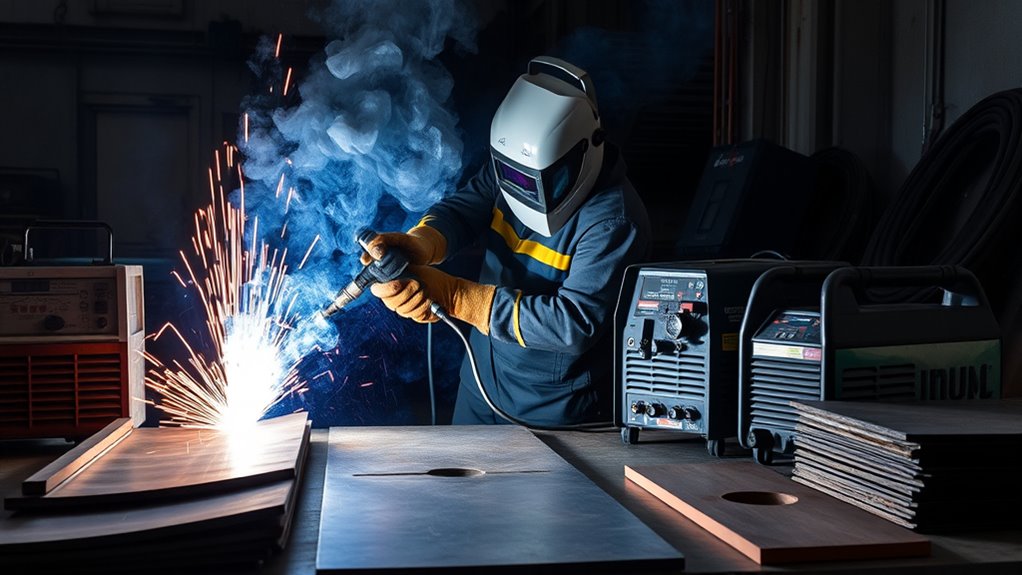
Although Plasma Arc Welding (PAW) may require more sophisticated and costly equipment than some other methods, its advantages in speed and versatility make it a compelling choice for high-volume applications.
PAW demonstrates superior welding efficiency and process versatility by offering faster speeds than Gas Tungsten Arc Welding (GTAW), making it ideal for large-scale production. Its ability to achieve full penetration in thick materials, akin to Electron Beam Welding (EBW), but at a lower capital cost, further underscores its efficiency.
- Enhanced Penetration: PAW provides better penetration and a narrower heat-affected zone than GTAW.
- Cost-Effectiveness: While pricier than GTAW, PAW is less costly than Laser Beam Welding (LBW) and better handles joint gaps.
- Filler-Free: Unlike GTAW, PAW can produce solid welds without filler material, enhancing precision.
- Keyhole Mode: Achieves full penetration in thick materials like EBW.
- Versatility: Effectively manages joint misalignments, increasing its application range.
Plasma Arc Welding and Industrial Applications
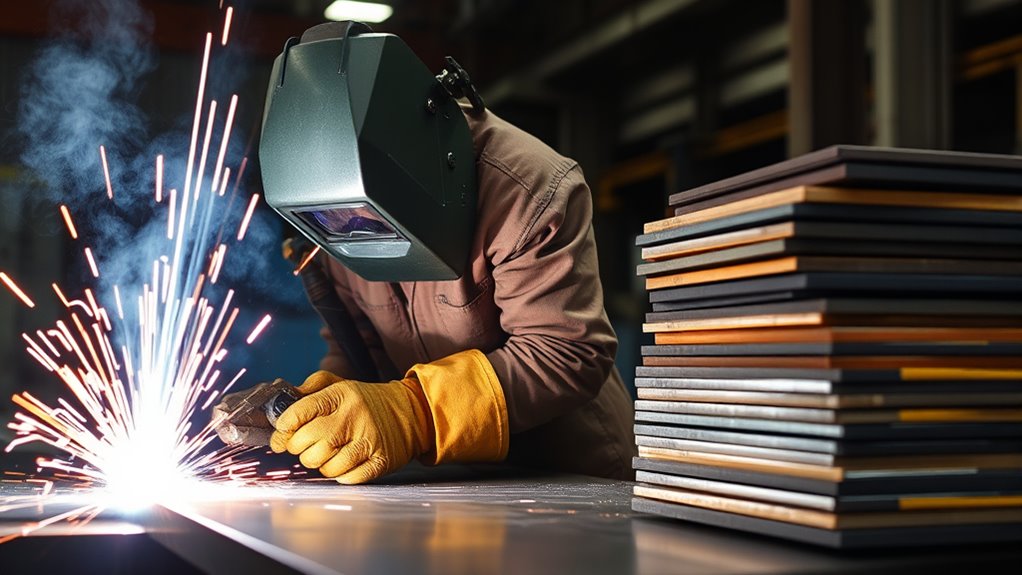
In industrial applications, Plasma Arc Welding (PAW) excels due to its unparalleled precision and adaptability across various sectors. This advanced welding technology is pivotal in the aerospace industry, where it joins high-strength materials like titanium alloys and stainless steel, ensuring structural integrity. In electronics, PAW’s precision minimizes heat input, preserving delicate components. The medical device sector benefits from PAW’s ability to produce contamination-free surgical instruments with high precision.
| Industry | Application |
|---|---|
| Aerospace | Structural components; titanium and stainless steel |
| Electronics | Tiny components; minimal heat distortion |
| Medical Devices | Surgical instruments; sealed components |
| Automotive | Steel tubes; strong joints, cost-efficient |
In automotive manufacturing, PAW creates robust steel tube joints efficiently, enhancing production speed. The nuclear sector leverages PAW for high-quality welds meeting critical safety standards. This welding technology is essential for industries requiring precise, reliable, and clean welds, demonstrating PAW’s unmatched industrial versatility.
Considerations for Plasma Arc Welding Implementation
When planning to implement Plasma Arc Welding (PAW), it’s vital to take into account the substantial initial investment required for specialized equipment. This investment can surpass costs associated with traditional methods like TIG welding. Conducting a thorough cost-benefit analysis is important to guarantee the long-term value of PAW implementation.
Operators must receive specialized training to proficiently handle PAW equipment and consistently deliver quality welds.
Keep in mind these significant considerations:
- Regular maintenance of consumable components like nozzles and electrodes to prevent downtime.
- High-purity shielding gases are mandatory for maintaining weld integrity and operational safety.
- Strict safety measures must address the production of harmful gases and radiation.
- Proper ventilation systems are vital to protect operators from hazardous emissions.
- Investment in safety equipment such as protective clothing and eyewear is non-negotiable to safeguard against potential risks.
Prioritize these factors to optimize your PAW implementation strategy.
Frequently Asked Questions
How Does Plasma Arc Welding Affect the Environment?
Plasma arc welding’s environmental impact involves emissions and energy use. You need efficient waste management to handle byproducts and reduce emissions. Implementing proper filtration and recycling systems can mitigate its ecological footprint, ensuring sustainable welding operations.
What Safety Measures Are Essential for Plasma Arc Welding?
Think of safety as your shield against the welding dragon’s fiery breath. Equip yourself with personal protective gear: helmets, gloves, and goggles. Maintain equipment diligently to prevent malfunctions. Your armor keeps you safe in the plasma battlefield.
Can Plasma Arc Welding Be Automated Effectively?
Yes, you can automate plasma arc welding effectively. Implementing advanced automation techniques enhances welding efficiency by maintaining consistent arc stability, precise heat control, and repeatable accuracy, ultimately reducing human error and increasing productivity in industrial applications.
What Is the Lifespan of Plasma Arc Welding Equipment?
The lifespan of plasma arc welding equipment depends on factors like maintenance and operational conditions. Regular maintenance extends equipment lifespan. Without it, components like torches and power sources may degrade faster, impacting performance and requiring more frequent replacements.
How Does Plasma Arc Welding Handle Different Metal Types?
“Different strokes for different folks” applies here. Plasma arc welding offers exceptional metal compatibility. You can employ various welding techniques to adapt to diverse metals, guaranteeing precise fusion and robust joints. Mastering this skill guarantees high-quality results.
Conclusion
In the world of welding, every rose has its thorn, and Plasma Arc Welding (PAW) is no exception. While it offers unparalleled precision, arc stability, and efficiency, its high initial costs and complexity shouldn’t be overlooked. With proper training and adherence to safety protocols, PAW can greatly enhance productivity. However, it’s vital to weigh these benefits against potential drawbacks to guarantee an informed decision. In the right hands, PAW can be a game-changer in precision welding applications.