Use amperage to control weld penetration, but do not treat one amp number as perfect for every weld. Too little heat leaves a tall bead, poor tie-in, and weak fusion. Too much heat widens the bead, increases distortion, and can burn through thin sheet metal. A practical starting point for steel is about 1 amp per 0.001 inch of thickness, so 1/8-inch steel starts near 125 amps, then you fine-tune for MIG, TIG, stick, joint fit-up, travel speed, and bead shape.
Quick Answer
Amperage affects weld penetration by changing heat input. Higher amperage usually drives the puddle deeper into the base metal, while lower amperage gives shallower fusion. Start with your welder’s chart or the 1 amp per 0.001 inch steel rule, then adjust on scrap until the bead is flat, even, and fully tied in.
Key Takeaways
- More amperage usually means deeper penetration, but voltage, wire speed, travel speed, polarity, stick-out, electrode size, and joint fit-up also change the result.
- Use 1 amp per 0.001 inch of steel as a starting point, not a final setting. Always confirm with your machine chart and a test bead.
- Thin sheet metal needs lower heat and faster control to prevent burn-through, warping, and a washed-out bead.
- Aluminum often needs more heat input than steel, but the exact increase depends on thickness, oxide cleaning, process, travel speed, and shielding gas.
At a Glance
| Time Required | 5–15 minutes to set up, run test beads, inspect, and fine-tune |
| Difficulty | Beginner to intermediate |
| Tools Needed | Welder, machine chart, scrap metal, clamps, wire brush or grinder, PPE, and correct filler wire or electrode |
| Cost | Usually $0–$20 in scrap, wire, electrodes, or gas used for practice beads |
Warning: Arc welding can injure your eyes, skin, lungs, and workspace if you skip safety steps. Wear a welding helmet with the correct shade, gloves, flame-resistant clothing, and respiratory protection when needed. Work with ventilation, keep a fire extinguisher nearby, and move or shield combustibles before welding. OSHA’s welding rules cover eye protection, ventilation, and fire prevention for hot work.
How Amperage Affects Welds
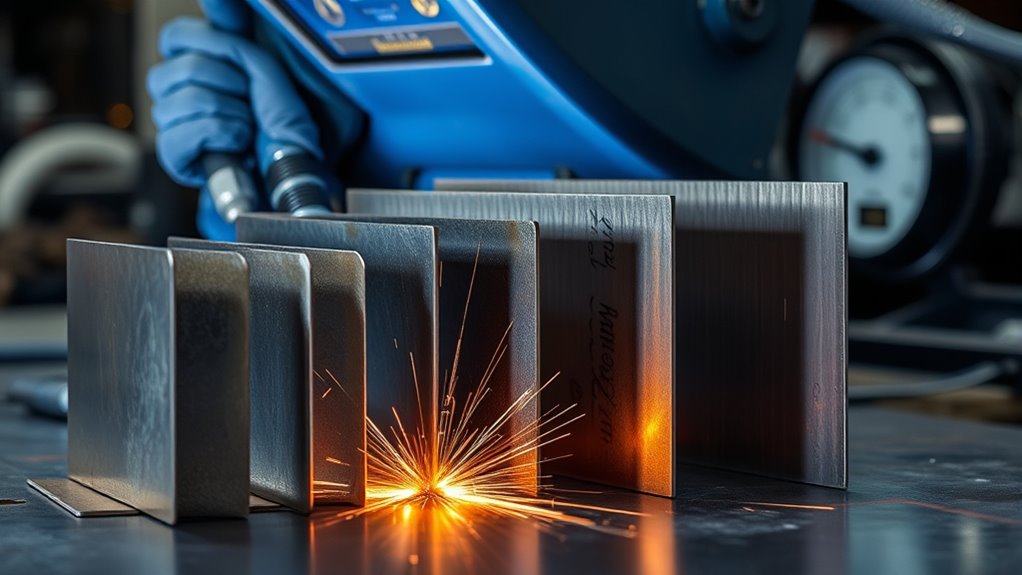
Amperage is one of the main controls for weld penetration. When you increase current, you usually add heat to the arc and drive deeper fusion into the base metal. That matters most on thicker material, beveled joints, and structural welds where a cold bead can sit on top without tying into the root.
In MIG welding, amperage is closely tied to wire feed speed. More wire feed generally raises current, while voltage controls arc length and bead shape. You need both in balance. Too little current leaves a high, ropey bead with poor penetration. Too much current can spread the bead, enlarge the heat-affected zone, and cause burn-through on thin panels.
Match amperage to metal thickness, then verify the setting by reading the bead, checking fusion, and making a test weld on scrap.
Amperage does not work alone. Travel speed, joint design, fit-up gaps, polarity, electrode size, stick-out, shielding gas, and base metal all affect penetration. That is why a chart gets you close, but your test bead tells you the truth.
For a starting reference, use your welder’s door chart or a manufacturer calculator such as the Miller MIG Solid-Cored Weld Setting Calculator, Miller TIG Welding Calculator, or Miller Stick Welding Calculator. You can also compare with the recommended amperage ranges for different electrodes and metal thicknesses.
Use the 1 Amp per .001 Rule
A simple way to estimate a starting point is the 1 amp per 0.001 inch rule for steel. If the steel is 0.125 inch thick, or 1/8 inch, the rough starting point is about 125 amps. If the steel is 0.060 inch thick, the rough starting point is about 60 amps.
This rule works best as a mental shortcut, not as a final answer. It is most useful when you need a quick steel baseline before checking your chart, running a test bead, and adjusting for the welding process.
| Steel Thickness | Rule-of-Thumb Starting Point | What to Watch |
| 22 gauge, about 0.030 in. | About 30 amps | Burn-through, warping, and gaps |
| 16 gauge, about 0.060 in. | About 60 amps | Fast travel and small puddle control |
| 1/8 in., 0.125 in. | About 125 amps | Full tie-in at the toes and root |
| 1/4 in., 0.250 in. | About 250 amps if using the rule | Beveling, preheat where appropriate, or multiple passes may be needed |
For aluminum, do not simply add a fixed number and start welding the final part. Aluminum pulls heat away quickly and has an oxide layer that must be removed. As a shop starting point, you may need about 15–25% more heat input than steel of similar thickness, but the right setting depends on the alloy, joint, process, and travel speed. Additionally, always consider the welding current along with voltage, travel speed, electrode size, and shielding gas.
Pro Tip: Adjust amperage in small steps. Move 5–10 amps at a time on thin material and 10–15 amps at a time on thicker stock, then run another short test bead before changing anything else.
Match Amperage to Metal Thickness
You should match amperage to material thickness, but thickness is only the first clue. A tight, clean butt joint may need less heat than a gapped joint. A beveled joint may need more heat at the root. A vertical or overhead weld may need lower heat and faster control so the puddle does not sag.
Products Worth Considering
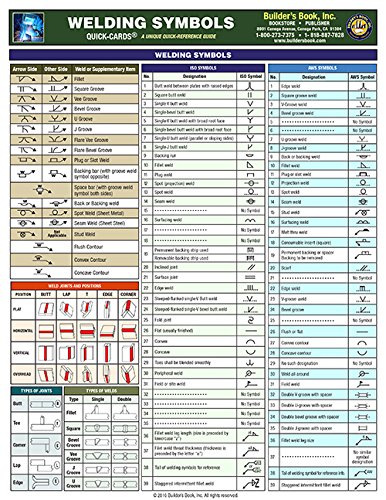

🧲 Sticks to Toolboxes & Welders – Heavy-duty magnetic welding chart adheres to metal surfaces like your welding table, toolbox, or wall for instant reference while working.

Richard Finch, Welder's Handbook: A Complete Guide to MIG, TIG, Arc & Oxyacetylene Welding, "Completely Revised and Updated Edition!" paperback
Thickness-to-Amperage Rule
Use the thickness-to-amperage rule to get close, then use bead shape to finish the setup. For steel, about 1 amp per 0.001 inch gives you a quick baseline. For 1/8-inch steel, that points to about 125 amps. For thin sheet, start lower and move up only if the puddle does not wet into both sides of the joint.
For thicker steel above 1/4 inch, do not depend on amperage alone. You may need a bevel, root opening, preheat if the material calls for it, or multiple passes. More amperage without joint prep can make a wide bead while still leaving poor root fusion.
- Steel: start near 1 amp per 0.001 inch, then fine-tune.
- Aluminum: clean the oxide, start with more heat input when needed, and watch puddle response.
- Thin sheet: reduce amperage, use short welds, and let the panel cool between passes.
- Thick plate: use proper joint prep instead of forcing one oversized pass.
Adjusting For Joint Type
Joint type changes the amperage target as much as thickness does. A butt joint needs enough heat to fuse the root. A lap joint may need careful torch angle so the top edge does not melt away before the bottom piece ties in. A T-joint or fillet weld often needs enough heat to wash into both plates.
On thin sheet metal, start low and move up only if the bead sits cold on the surface. If you weld 1/8-inch steel, about 125 amps is a useful steel baseline, while 22 gauge may need far less heat and a stitch-welding approach. Aluminum usually needs more heat input than steel, but the final setting still comes from the machine chart and your test bead.
Fit-up matters too. Tight joints need less heat than wide gaps. Wide gaps force you to slow down, bridge the puddle, or use backing. If you only raise amperage to fill a gap, you may burn the edges away before the weld ties in.
Set Amperage for MIG, TIG, and Stick
Set amperage based on the welding process, material thickness, filler or electrode size, and joint design. Each process responds differently to heat input, so use a process-specific chart whenever possible.
Set amperage by process, thickness, and filler size, then prove the setting with a short test bead before welding the final joint.
| Process | How Amperage Is Set | Main Check |
| MIG | Wire feed speed largely controls amperage; voltage shapes the arc and bead. | Listen for a steady arc and check that the bead wets into both sides. |
| TIG | Set peak amperage, then control heat with the pedal, torch travel, and filler timing. | Watch puddle width, edge tie-in, and tungsten condition. |
| Stick | Choose amperage from electrode type and diameter, then adjust for position and arc behavior. | Look for stable arc starts, proper slag behavior, and enough penetration. |
For MIG, use the machine chart first because wire diameter, wire type, gas mix, voltage, and wire speed matter. For TIG, the 1 amp per 0.001 inch steel rule is often a helpful starting point, but pedal control changes the actual heat during the weld. For stick, do not set amperage only by plate thickness. A 3/32-inch electrode and a 1/8-inch electrode need different current ranges, even on the same plate.
Use higher settings only when the joint, electrode, and machine call for them. Skilled welders adjust quickly, but they still verify penetration and bead shape. Understanding proper amperage settings is crucial for achieving strong welds and preventing defects.
Products Worth Considering

👑Poster gets 0.6-2,4cm more widely incase to protection.The new frameless wall art poster print is made of durable, hardwearing,dust and ash resistant canvas to ensure the...
Adjust for Aluminum, Joints, and Passes
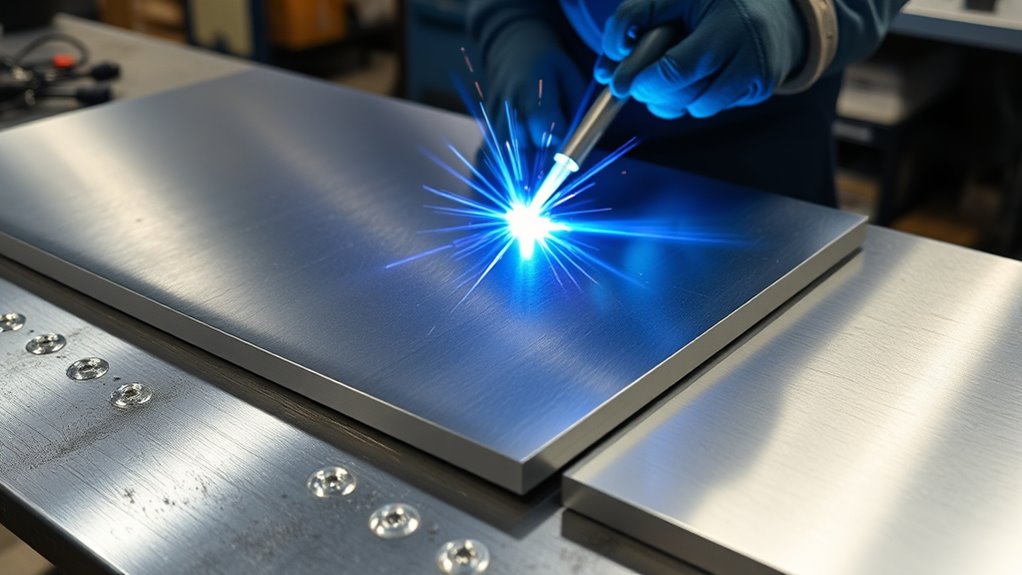
When you weld aluminum, raise heat input carefully so the puddle forms before the surface overheats. Aluminum conducts heat quickly, so it can feel cold at first and then suddenly become too fluid. Clean the oxide layer with a dedicated stainless wire brush or approved prep method before welding, and use the correct filler and shielding gas for the alloy.
Aluminum Amp Increase
As a starting point, aluminum may need about 15–25% more heat input than steel of similar thickness, but this is not a fixed rule. A 1/8-inch steel joint may start near 125 amps by the rule of thumb, while a similar aluminum joint may need a higher starting point, faster travel, or different gas and polarity settings depending on the process.
If the amperage is too low, you may see a cold, dull bead that does not flow into the edges. If the amperage is too high, the puddle may collapse, the bead may spread too wide, or the joint may distort. Watch for a smooth, shiny puddle that wets in without sinking away.
Joint And Pass Adjustments
Once you have a starting amperage for the base metal, adjust it for the joint and pass count. Butt joints usually need enough heat to reach the root. Lap joints need angle control so the top sheet does not burn back. T-joints and fillets need enough heat to tie into both plates without undercut.
With multiple-pass welds, the part gets hotter as you work. You may need to reduce amperage slightly on later passes, increase travel speed, or pause between passes to control distortion. Also be mindful of maximum fillet weld size so the finished joint has effective strength without unnecessary heat and buildup.
Note: If the metal keeps warping, the answer is not always lower amperage. You may need shorter welds, better clamping, cleaner fit-up, cooling time between passes, or a different weld sequence.
Read Weld Beads and Fine-Tune Heat
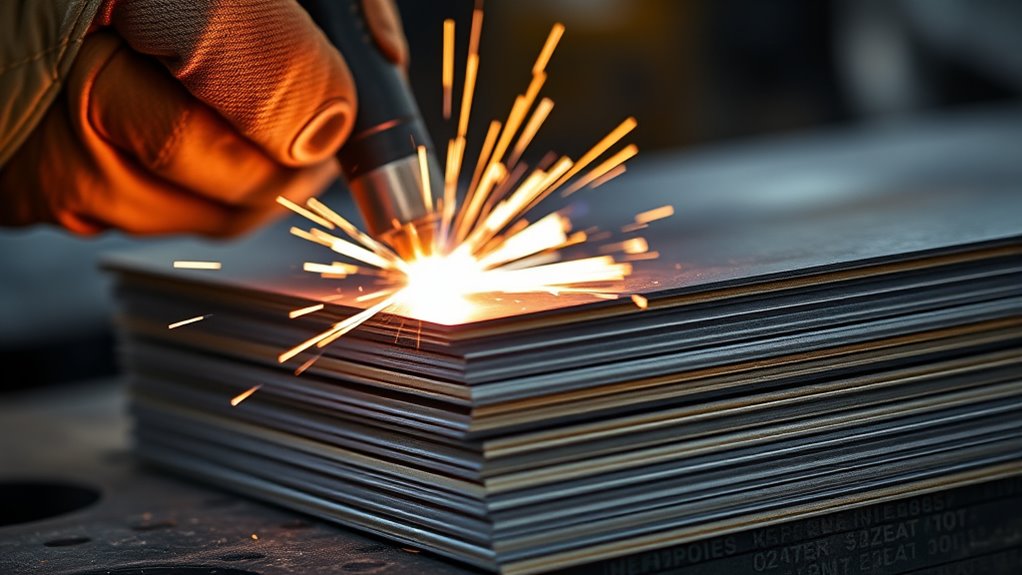
Watch the bead, and let it tell you how your settings are performing. A good weld bead should be even, tied into both sides, and consistent in width. It should not sit like a rope on top of the metal, and it should not look flat, overheated, or washed out.
| Bead Clue | Likely Cause | Fix |
| Tall, ropey bead | Too little heat or travel too fast | Raise amperage slightly or slow travel speed. |
| Wide, flat, washed-out bead | Too much heat or travel too slow | Lower amperage or move faster. |
| Spatter and harsh arc | Settings, stick-out, polarity, or gas problem | Check chart, polarity, gas flow, wire speed, and contact tip distance. |
| Undercut at bead toes | Too much heat, wrong angle, or travel too fast | Reduce heat, correct angle, and pause enough for edge fill. |
Keep your wire speed matched to amperage so the arc stays stable and bead width stays uniform. Remember that maintaining proper wire speed is essential for achieving optimal weld quality and preventing defects.
Fix Burn-Through, Spatter, and Weak Fusion
If your bead shows a defect, correct one or two variables at a time. Burn-through, spatter, and weak fusion often point to amperage, travel speed, fit-up, or shielding problems that are out of balance.
- Burn-through on thin sheet: lower amperage, move faster, use shorter stitch welds, improve fit-up, and let the metal cool between welds.
- Weak fusion or cold lap: raise amperage slightly, slow travel speed, clean the joint, and aim the arc at the root or thicker piece.
- Heavy spatter: check voltage, wire feed, stick-out, polarity, gas flow, and surface contamination before blaming amperage alone.
- Warping: reduce heat buildup with short welds, skip welding, clamps, backing bars, and cooling time.
On thin sheet, make small changes and test again. For 16-gauge steel, many setups start in a lower amperage range than 1/8-inch stock, but the right number depends on process, wire size, and machine. If spatter sprays from the puddle, reduce heat slightly and verify your gas mix, because welding machines cannot fix bad shielding alone.
When fusion looks weak on 1/8-inch steel, do not jump straight to a very high setting. Start near the chart or the 125-amp rule-of-thumb area, run a test bead, and raise amperage only until the bead ties in properly. For thicker joints, beveling or multiple passes may solve the problem better than one hot pass. Remember to maintain proper stick-out length for optimal arc stability when adjusting settings.
Dial In Amperage on Scrap Before the Final Weld
The safest way to find the right amperage is to test on scrap that matches your final metal. Use the same thickness, joint type, filler, electrode, shielding gas, and position whenever possible.
- Clean the metal. Remove paint, rust, oil, mill scale, oxide, and moisture from the weld area.
- Check the machine chart. Set the welder by material thickness, process, wire or electrode size, and gas.
- Run a short test bead. Weld 1–2 inches on scrap using the same angle and travel speed you plan to use.
- Inspect the bead. Look for tie-in, bead width, spatter, undercut, and burn-through.
- Adjust in small steps. Change amperage or wire feed a little, then test again.
- Break or cut a test if strength matters. A visual bead is helpful, but destructive testing on scrap gives better proof of fusion.
This process keeps you from guessing on the final part. It also helps you learn how your own welder responds, because two machines can feel different even when the numbers look similar.
Frequently Asked Questions
How do you weld two different thicknesses of metal?
Aim more heat at the thicker piece and let the puddle wash into the thinner piece. Start with the setting for the thinner metal, then increase only enough to tie into the thick side. Good fit-up, clean edges, short welds, and the right filler help prevent burn-through on the thin side.
How many amps do you need per thickness of metal?
For steel, a common starting point is about 1 amp per 0.001 inch of thickness, so 1/8-inch steel starts near 125 amps. This is not a universal setting. MIG, TIG, and stick all respond differently, so check your welder chart and test on scrap before welding the final joint.
Why do welders have health risks?
Welders can face fumes, ultraviolet and infrared radiation, burns, electric shock, noise, and ergonomic strain. Good ventilation, correct eye shade, gloves, flame-resistant clothing, hearing protection when needed, and safe hot-work practices reduce those risks.
What is the golden rule in welding amperage?
The common golden rule is to start around 1 amp per 0.001 inch of steel thickness, then adjust for process, joint prep, position, travel speed, filler, and bead shape. The real rule is simple: use the chart, test on scrap, and let the bead confirm the setting.
Does higher amperage always mean a stronger weld?
No. Higher amperage can improve penetration when the weld is too cold, but too much amperage can cause undercut, burn-through, distortion, excess spatter, and a wider heat-affected zone. A strong weld needs enough penetration without overheating the joint.
Should you change amperage or travel speed first?
Start by matching the machine chart, then adjust travel speed if the setting is close. If the bead is still too cold or too hot after steady travel, change amperage in small steps. Avoid changing amperage, travel speed, angle, and stick-out all at once because you will not know which change fixed the bead.
Conclusion
Amperage is the main heat control you use to shape penetration, but it works with travel speed, joint prep, filler size, polarity, shielding gas, and technique. Start with the chart or the 1 amp per 0.001 inch steel rule, then test on scrap and read the bead. If the puddle ties in smoothly without burn-through, undercut, or heavy spatter, you are close. When you adjust in small steps and confirm the result, you turn guesswork into a strong, repeatable weld.
Sources
- Miller MIG Solid-Cored Weld Setting Calculator — supports using process-specific MIG settings rather than one universal amperage number.
- Miller TIG Welding Calculator — supports checking TIG settings by material and thickness.
- Miller Stick Welding Calculator — supports setting stick amperage by electrode and material variables.
- OSHA 1910.252 Welding, Cutting, and Brazing — supports welding safety guidance for fire prevention, eye protection, ventilation, and hot-work precautions.
- OSHA 1910.133 Eye and Face Protection — supports filter shade and eye protection guidance for welding operations.