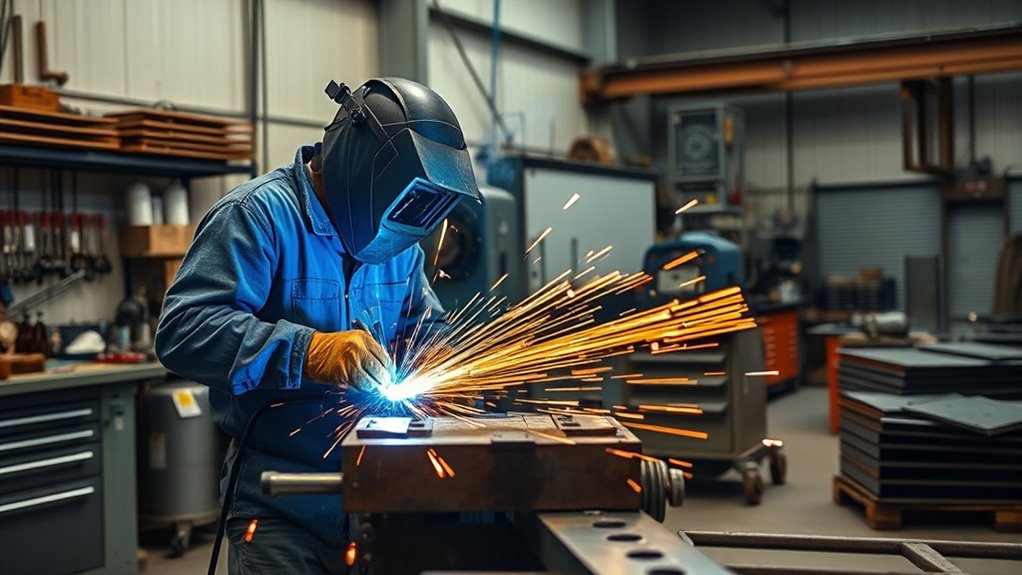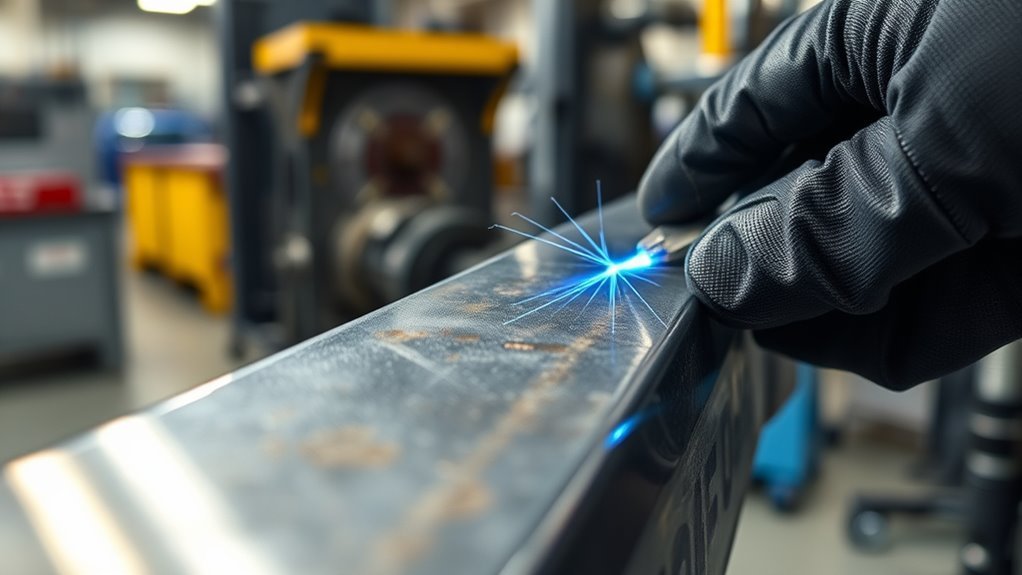
Fatigue resistance in automotive welds is the weld joint’s ability to survive repeated road loads, vibration, body twist, door slam loads, and crash-energy paths without starting or growing cracks. In spot welds, the danger zone is usually near the nugget edge, the sheet interface, or the weld toe area where local stress is highest. You improve fatigue life by controlling load path, nugget size, fit-up, sheet condition, weld spacing, and the approved welding procedure.
Quick Answer
Automotive spot weld fatigue happens when repeated loads create small cracks around the weld nugget or sheet surface. The best fixes are to reduce peel loading, spread force across enough welds, maintain proper nugget size, keep sheets tight and clean, and validate the joint with static and fatigue testing.
Key Takeaways
- Spot weld fatigue is driven by repeated local stress, not just the weld’s one-time static strength.
- Peel and bending loads are usually more damaging than balanced shear loading.
- Larger, consistent nuggets help, but weld layout, spacing, edge distance, fit-up, and sheet thickness also matter.
- Fatigue claims should be proven with service-like testing because static pull strength alone does not predict long-term durability.
- For vehicle structural work, follow OEM repair information, qualified weld procedures, and required safety rules.
At a Glance
| Time Required | Minutes for a design review, hours for static coupon tests, and days or weeks for full fatigue validation. |
| Difficulty | Intermediate for repair checks, advanced for engineering fatigue-life prediction. |
| Tools Needed | OEM weld schedule, spot welder settings, coupon samples, peel/chisel tools, calipers, microscope or macroetch setup, and fatigue test equipment when validation is required. |
| Cost | Low for visual and coupon checks, higher for laboratory fatigue testing, teardown analysis, and full component validation. |
What Is Spot Weld Fatigue?
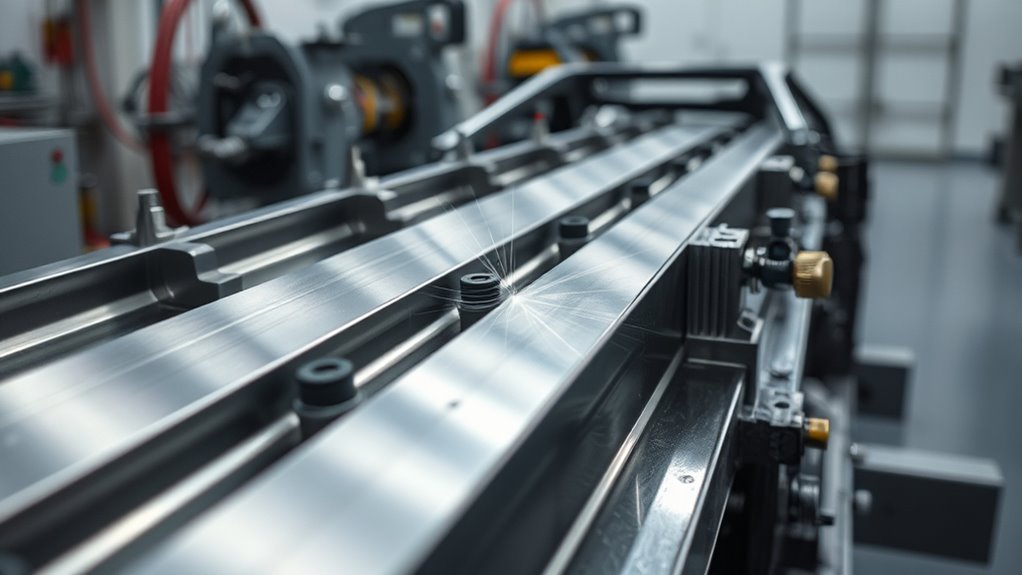
Spot weld fatigue is the slow damage process that starts when a weld sees repeated loading. A joint can pass a one-time pull test and still crack later if the service load repeats often enough or if the load path bends the sheet around the nugget.
In a resistance spot weld, the nugget joins overlapping sheets through heat and electrode force. The weld may look small, but the stress field around it is complex. The joint can see shear, tension, peel, and bending at the same time.
Fatigue cracks often begin where the stress range is highest. In lap joints, that point may be at the sheet interface near the nugget edge, at the surface around the indentation, or along a sharp transition caused by poor fit-up or weld geometry.
That is why fatigue resistance is not only a material property. It is a combined result of joint design, sheet thickness, nugget size, weld spacing, load direction, corrosion protection, and process control.
A strong spot weld is not automatically a durable spot weld. Fatigue life depends on how the load repeats, where the stress concentrates, and whether the weld was made consistently.
Why Spot Welds Fail Under Cyclic Loading
Under cyclic loading, small changes in stress repeat thousands or millions of times. Each cycle can open and close a tiny flaw. Over time, the flaw becomes a crack, and the crack grows until the joint fails by sheet tearing, nugget pull-out, plug failure, or separation at the interface.
Peel loading is especially hard on spot welds because it bends one sheet away from the other. That bending raises local stress near the nugget edge. A weld that performs well in balanced shear can perform poorly when the same joint is loaded in peel.
Stress concentration also explains why rough geometry hurts fatigue life. A sharp indentation, poor sheet contact, excessive expulsion, undersized nugget, edge tear, or misaligned flange can focus stress into a small area.
Larger and more consistent nuggets can reduce local stress, but size alone is not the full answer. If the weld pattern still forces one weld to carry most of the peel load, fatigue life can remain poor.
For non-spot welded details, the same idea applies: weld size and geometry affect stress concentration. For example, maximum fillet weld size is a separate design issue, but it shows why weld geometry must match the joint and plate thickness.
How Load Path Affects Fatigue Resistance
The load path is the route force takes through the joint. In spot weld fatigue design, your goal is to keep that force as even and direct as possible.
- Shear loading is usually more favorable because the sheets slide against each other and the nugget shares the load more evenly.
- Peel loading is more damaging because one sheet bends away from the other and raises stress at the nugget edge.
- Cross-tension loading pulls the sheets apart through the weld and often exposes weak nuggets, poor fusion, or brittle zones.
- Mixed loading is common in vehicle bodies because panels twist, vibrate, and flex through many directions.
You improve the load path by using enough welds, balancing the pattern, avoiding long unsupported flanges, keeping proper edge distance, and designing the joint so no single weld becomes the first point of rotation.
Pro Tip: When a spot weld keeps cracking, do not only ask whether the weld is strong enough. Ask whether the panel is bending the weld in peel. Changing the load path can help more than simply adding heat.
How Spot Weld Fatigue Is Measured
Spot weld fatigue is measured by cycling a specimen or component under a controlled load until a crack or defined failure occurs. The result is usually reported as load versus cycles to failure, often shown as an S-N curve.
For metallic specimens, ASTM E466 gives a standard practice for force-controlled constant-amplitude axial fatigue testing. It is useful for producing comparable fatigue data, but it does not replace full vehicle, component, or OEM-specific validation.
Because lap joints combine shear and bending, nominal stress alone can be misleading. Applied load, local stress range, failure mode, specimen geometry, sheet thickness, and weld nugget size all need to be recorded.
Understanding the broader common types of welding also helps because spot welding, arc welding, seam welding, and projection welding create different heat patterns, defects, and fatigue risks.
Load-Based Fatigue Ratings
Load-based fatigue ratings compare how long a spot welded joint lasts under a repeated force. This is more useful than quoting only static strength because fatigue damage depends on cycle count, load ratio, load direction, and specimen geometry.
A proper rating should include:
- sheet material and thickness;
- coating type and surface condition;
- weld nugget diameter and indentation;
- weld pitch, edge distance, and flange width;
- loading mode, such as shear, peel, or cross-tension;
- cycle count at failure;
- failure mode, such as pull-out, interfacial failure, or sheet crack.
Do not treat a static pull value as a safe fatigue value unless your design method or test plan clearly connects static data to the expected service load.
Local Stress Range
The local stress range is the stress swing at the most critical point near the weld. In spot welded lap joints, that critical point is often close to the nugget edge or sheet surface, not across the gross panel area.
Finite element analysis can help identify this high-stress region, but the model must represent the joint correctly. The sheet stack, weld diameter, flange stiffness, boundary conditions, and load direction all affect the result.
For practical shop work, you can think of local stress range this way: anything that bends, pries, dents, undercuts, misaligns, or overloads the weld area raises the stress range and lowers fatigue life.
Test Specimens and S-N Curves
An S-N curve plots load or stress range against cycles to failure. It helps you compare weld schedules, materials, or joint designs under the same test setup.
A basic validation plan may include static tensile-shear coupons, cross-tension or peel coupons, fatigue coupons, and teardown checks. For vehicle body work, coupon testing should match the actual sheet stack, coating, welder, electrode tips, squeeze time, current, weld time, hold time, and surface preparation.
Modern resistance spot welding quality checks may also use process signals such as dynamic resistance curves. Research on automotive RSW process data has shown that these signals can help identify groups of welds likely to share similar mechanical and metallurgical properties.
What Improves Fatigue Life in Spot Welds
Improving fatigue life in spot welds starts with lowering the load carried by each weld and reducing the stress concentration around the nugget.
The most useful improvements are:
- Use the correct weld schedule. Follow the OEM or engineering-approved current, time, force, and hold settings for the exact sheet stack.
- Control nugget size. A nugget that is too small lowers strength, while excessive heat can cause expulsion, indentation, or brittle structure.
- Keep the sheets tight. Poor fit-up increases bending and can create inconsistent nuggets.
- Improve load sharing. Add welds only where they reduce load per weld and do not create a stiff, crack-prone transition.
- Protect edge distance. Welds too close to the edge can tear the sheet and reduce fatigue life.
- Reduce peel. Use flanges, brackets, adhesives, or joint geometry that keeps load in shear where allowed by the design.
- Control corrosion. Rust, coating damage, and trapped moisture can accelerate crack growth around the weld.
| Fatigue Factor | Why It Matters | Best Practice |
| Nugget diameter | Undersized nuggets concentrate stress and fail early. | Confirm nugget size with peel, chisel, or macroetch checks as required. |
| Fit-up | Gaps raise bending load and cause inconsistent heat. | Clamp panels tightly before welding. |
| Weld spacing | Poor spacing can overload one weld or over-stiffen a flange. | Use the approved pitch and pattern. |
| Load path | Peel and prying loads shorten fatigue life. | Design the joint to share shear load evenly. |
Material choice also matters. Different metals for welding respond differently to heat, cooling, coatings, and post-weld corrosion protection, so do not apply one weld schedule to every alloy or sheet stack.
How Welding Procedure Triggers Cracks

A spot weld can become a fatigue problem before the vehicle ever sees the road. Poor fit-up, dirty surfaces, worn electrode tips, excessive current, low electrode force, short hold time, and bad access can all create weak or inconsistent nuggets.
For arc-welded vehicle details, wire-feed and setup stability also affect defect risk. If you are troubleshooting arc welding equipment, this guide on why a welder is not feeding wire explains one common process-control issue, although resistance spot welding uses a different joining method.
Weld Start and Current-Control Defects
In resistance spot welding, the current, force, and time must build the nugget without overheating the sheet. If the first part of the weld cycle is unstable, the result can be a small nugget, splash, expulsion, or surface damage.
| Procedure Factor | Fatigue Effect |
| Low electrode force | Can cause expulsion, surface damage, and inconsistent nuggets. |
| Excessive current or time | Can overheat the sheet and create indentation or brittle local structure. |
| Dirty or coated surfaces | Can change resistance and reduce consistency. |
| Worn electrode tips | Can change current density and nugget shape. |
| Poor fit-up | Can force the weld to work like a clamp instead of a load-sharing joint. |
Heat-Affected Zone Weakening
The heat-affected zone, or HAZ, is the area next to the weld that was heated enough to change its structure but not fully melted into the nugget. Depending on the material, the HAZ may soften, harden, lose ductility, or become more sensitive to cracking.
Advanced high-strength steel and aluminum alloys need special care because the wrong heat input can change strength and ductility around the weld. For example, research on resistance spot welded 6061-T6 aluminum found major strength and ductility changes across the weld regions.
The fix is not simply “more heat.” The correct fix is the approved weld schedule for that exact material stack, followed by destructive or nondestructive checks that confirm the weld is acceptable.
Residual Stress and Surface Cracks
Welding creates local heating and cooling. That uneven thermal cycle can leave residual stress around the weld area. Tensile residual stress is a concern because it can help small cracks open under repeated load.
Poor weld consistency can also add porosity, surface cracks, expulsion marks, or sharp geometry. These defects become stress raisers and make fatigue cracks easier to start.
To reduce that risk, control heat input, electrode force, current, weld time, surface preparation, and cooling conditions. After welding, restore coatings and corrosion protection where the repair procedure allows it.
Warning: Do not guess on structural vehicle welds. Follow OEM repair information, required weld locations, approved equipment, coupon testing, and personal safety rules. Resistance welding equipment can create pinch, spark, heat, electrical, and fume hazards.
Material and Design Factors in Automotive Bodies
Automotive spot weld fatigue changes with the sheet material and body design. Mild steel, high-strength steel, advanced high-strength steel, galvanized steel, and aluminum do not respond the same way to welding heat.
Key design factors include:
- Sheet thickness: thicker sheets can carry load differently, but they also need the correct weld energy and force.
- Material grade: stronger base metal does not automatically mean better welded fatigue life.
- Coatings: zinc coatings, primers, sealers, and corrosion protection can change weld behavior and must match the approved repair process.
- Stack-up: two-sheet, three-sheet, and mixed-thickness stacks need different settings and checks.
- Access: poor electrode access can create off-center welds or uneven pressure.
- Environment: moisture and corrosion can speed crack growth once coating protection is damaged.
Cut quality also matters when panels are trimmed or replaced. Clean edges reduce stress risers, while rough cuts, burrs, and heat damage can weaken the area around a repair. If plasma cutting is part of your workflow, this guide on whether a plasma cutter uses nitrogen explains one cutting-gas factor that can affect cut quality.
Inspection and Validation Checklist
Before you trust a spot welded joint for fatigue-sensitive service, check both the weld and the surrounding design.
- Confirm the weld schedule matches the sheet stack and material grade.
- Check electrode tip size, shape, alignment, cooling, and wear.
- Verify panel fit-up before welding.
- Inspect for expulsion, cracks, heavy indentation, burn-through, or edge tearing.
- Use peel, chisel, tensile-shear, or macroetch checks when required.
- Measure nugget diameter and compare it with the approved requirement.
- Record failure mode, not just maximum pull load.
- Check weld spacing and edge distance.
- Restore corrosion protection after inspection and repair.
- Use fatigue or component testing when the joint is new, critical, or changed from the original design.
Note: A spot weld that fails by a clean plug pull-out in a coupon test often suggests better fusion than a small interfacial failure, but the acceptable result still depends on the governing procedure and material stack.
Products Worth Considering

Durable HSS Construction: Our spot weld cutter set is made of HSS for better durability and wear resistance. The double-sided blades ensure long-term use and consistent performance, making it the ideal tool of choice for metal cutting

【Designed For Automotive Repair Work】Spot weld panel chisel Designed for automotive body repair work, precisely removes auto body spot welds and easily separates metal panels. It is suitable for a wide range of bodywork, include accident repairs, vehicle dismantling, door and fender replacement, and the separation of welds on frames and chassis, ensuring efficient performance to meet your needs.
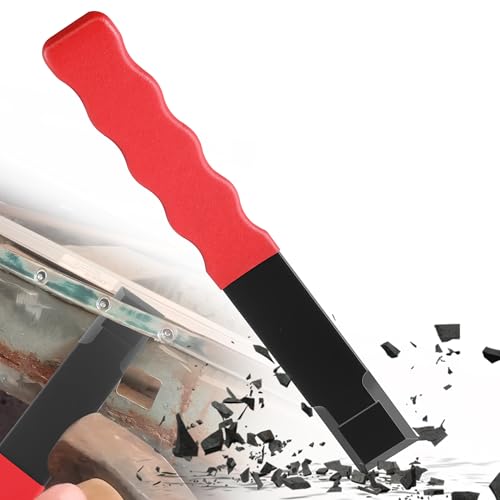
CAR PANEL REMOVAL TOOLS: This Spot Weld Chisel measures 9.8 x 1.2 inches, and the steel plate crowbar is designed for narrow spaces and can accurately reach hard to reach areas of the car body. Whether it is separating body panels, rear side panels, rocker arms, or other pressure welded parts, it can provide sufficient pressure to ensure efficient operation and meet the disassembly needs of multiple parts in car repair
Which Standards Guide Spot Weld Fatigue Design?
Spot weld fatigue design usually relies on a mix of OEM requirements, internal engineering standards, coupon testing, component testing, and recognized fatigue test practices. No single generic standard should be treated as a complete substitute for the vehicle maker’s structural repair or design procedure.
For laboratory fatigue testing of metallic specimens, ASTM E466 is a key reference because it covers force-controlled constant-amplitude axial fatigue tests. Use it as a test-method reference, not as proof that a full vehicle joint is validated.
For structural steel fatigue background, the European Commission’s Eurocode resource lists EN 1993-1-9 as the fatigue part of Eurocode 3. This is useful context for steel structures, but automotive spot welds still need automotive-specific procedures and validation.
For safety, OSHA 1910.255 covers resistance welding equipment requirements such as operator instruction, guarding, shields, grounding, and maintenance inspection.
If you follow the right procedure, document your weld settings, and verify the joint with realistic tests, you reduce uncertainty and improve fatigue resistance without relying on guesswork.
Frequently Asked Questions
What are the two basic parts of weld fatigue?
The two basic parts are crack initiation and crack growth. Initiation is when a tiny flaw starts near a stress raiser. Growth is when repeated loading extends that flaw until the weld or surrounding sheet can no longer carry the load.
What does 0.85 joint efficiency mean?
A 0.85 joint efficiency means the joint is treated as carrying 85% of the base material’s strength for the design case being considered. It is not automatically a fatigue rating. Fatigue still depends on repeated load, stress concentration, joint geometry, and test validation.
What is the best material for fatigue resistance in automotive welds?
There is no single best material for every welded joint. Mild steel, HSLA steel, AHSS, and aluminum can all work when the joint is designed and welded correctly. The best choice depends on load path, thickness, corrosion needs, repair method, and the approved weld schedule.
What are the four basic types of resistance welds?
The four common resistance welding types are spot welding, seam welding, projection welding, and flash welding. Each uses electrical resistance and pressure, but the weld shape, equipment, and inspection method differ.
Can I improve fatigue life by adding more spot welds?
Sometimes, but not always. Extra welds help only if they share load and reduce local stress. If added welds create a stiff transition, poor edge distance, or new peel load path, they can move the crack problem instead of solving it.
Is a static spot weld test enough to prove fatigue resistance?
No. Static tests are useful for checking nugget strength and failure mode, but fatigue resistance needs repeated-load data or a validated design method. A joint can pass a static test and still crack under service vibration or peel loading.
Conclusion
Automotive spot weld fatigue resistance depends on more than one strong weld. It depends on the full joint system: load path, nugget size, sheet thickness, material grade, weld spacing, edge distance, fit-up, surface condition, process control, inspection, and corrosion protection. To extend weld life, reduce peel loading, spread force across the pattern, use the approved weld schedule, and verify performance with the right static and fatigue tests. A careful weld made in the correct design will last longer than an overheated weld placed in the wrong load path.
Sources
- ASTM E466-21 — force-controlled constant-amplitude axial fatigue testing of metallic materials.
- European Commission JRC, Eurocode 3 — EN 1993 steel-structure design background, including EN 1993-1-9 fatigue.
- OSHA 1910.255 Resistance Welding — resistance welding safety, guarding, shields, grounding, and equipment inspection.
- Capezza et al., Functional clustering methods for resistance spot welding process data — automotive RSW quality assessment and dynamic resistance process data.
- Turnage et al., Resistance spot welded aluminum 6061-T6 joints — microstructure and mechanical property changes in spot welded aluminum.
- Zak and Weißenfels, Physics-informed neural networks in aluminum spot welding — nugget diameter as a key quality metric in resistance spot welding.