Disclosure: As an Amazon Associate, we earn from qualifying purchases. If you click a link on this page and make a purchase, we may receive a small commission at no extra cost to you.
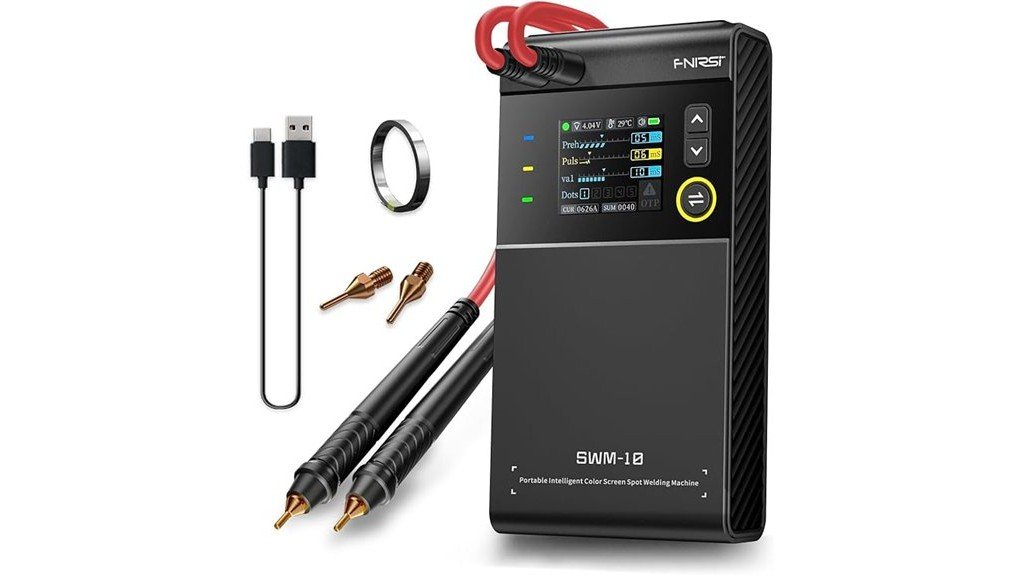
Small battery-pack repairs and thin nickel-strip welds need a tool that gives you control without taking over your whole bench. The FNRSI Battery Spot Welder is a compact, battery-powered spot welder built for light-duty work on thin conductive materials. It combines a 5000mAh lithium-ion battery, double pulse welding technology, and adjustable support for material thicknesses from 0.1MM to 0.25MM. This review helps you decide if its portability and simple controls fit your projects, or if you should step up to a larger bench-style welder.
Quick Verdict
Rating: 8/10, Recommended with caveats
Best For: DIY battery pack work, 18650 tab welding, nickel strips, and small thin-metal test welds.
Bottom Line: The FNRSI Battery Spot Welder is a practical pick if you want a portable spot welder for thin battery tabs and light workshop jobs. Its main limit is the 0.25MM thickness ceiling, so it is not the right tool for heavy sheet metal, structural repairs, or thick automotive work.
| Specification | Detail |
|---|---|
| Brand | FNRSI |
| Product type | Portable battery spot welder |
| Power source | Battery powered lithium-ion design |
| Battery capacity | 5000mAh |
| Welding thickness range | 0.1MM to 0.25MM |
| Welding technology | Double pulse welding |
| Supported materials | Iron, stainless steel, nickel strips, aluminum sheets, and 18650 battery packs |
| Display | 1.8-inch colorful LCD screen |
| Welding pen | Detachable brass head |
| Dimensions | 8.11 x 4.72 x 2.64 inches |
| Weight | 1.21 pounds |
| Extra function | Can also function as a power bank |
| Best use | Thin battery tabs, light DIY projects, and portable workshop use |
What Is the FNRSI Battery Spot Welder?
The FNRSI Battery Spot Welder is a small, rechargeable spot welder designed for thin welding tasks rather than heavy fabrication. Its main use case is joining thin conductive pieces, such as nickel strips on battery cells, small stainless parts, and light sheet material within its listed 0.1MM to 0.25MM range.
The 5000mAh battery is the core feature because it lets you work away from a wall outlet and carry the tool between benches, garages, or small work areas. The listed feature set also includes double pulse welding, a 1.8-inch LCD screen, and a detachable brass welding-pen head, which all make the tool easier to control and maintain.
Before You Buy: This is a thin-material spot welder with a stated 0.25MM upper thickness limit. Do not buy it for frame work, body-panel repair, thick sheet metal, or structural automotive welding.
Who Should Buy It?
Best For
- DIY users who weld thin nickel strips onto 18650 battery packs.
- Hobbyists who want a lightweight spot welder that stores easily.
- Small-workshop users who need adjustable settings for thin metals.
Skip If
- You need to weld material thicker than 0.25MM.
- You need a professional tool for structural, frame, or body-panel repairs.
- You want a plug-in bench welder for repeated high-volume production work.
Key Features and Benefits
Double Pulse Welding
The double pulse welding feature is meant to improve contact and help clean oxide layers before the weld is completed. For thin tabs and small strips, that can reduce spatter and give you a steadier weld when the surface is prepared correctly.
This does not remove the need for good setup. Dirty metal, weak pressure, poor contact, or the wrong thickness setting can still cause weak welds, even with double pulse support.
Adjustable Thickness Settings
The FNRSI welder supports thickness settings from 0.1MM to 0.25MM. That range makes sense for battery tabs and similar thin pieces, but it is narrow compared with larger shop equipment.
The practical benefit is control. You can start low, test on scrap material, and increase the setting only as needed. That helps avoid overheating thin strips or damaging battery cells during practice work.
Portable 5000mAh Battery
The 5000mAh battery gives the tool its biggest everyday advantage: portability. You can move it around a small garage or workbench without routing an extension cord or making space for a larger power unit.
The original article describes the battery as capable of thousands of welds on a single charge, but real battery life depends on weld strength, material type, charge level, and how long each session runs. Treat that claim as a best-case guide, not a fixed count for every project.
Design and Usability
The FNRSI Battery Spot Welder is compact at 8.11 x 4.72 x 2.64 inches and weighs 1.21 pounds. That size makes it easier to store in a drawer, tool bag, or battery-repair kit than a large bench unit.
The 1.8-inch colorful LCD screen gives you a quick view of welding status and battery voltage. For beginners, that display is useful because it makes the tool feel less like guesswork and more like a controlled setup.
The detachable brass head on the welding pen is another practical design detail. It can help with maintenance because the contact point is one of the parts that sees regular heat, pressure, and wear during spot welding.
Compatibility and Safety
This spot welder is listed for thin iron, stainless steel, nickel strips, aluminum sheets, and 18650 battery packs. Nickel strip welding is the most natural fit because many battery-pack projects use thin tabs that fall within the welder’s stated range.
Be careful with lithium-ion cells. Do not weld damaged, swollen, leaking, or unknown cells. Avoid short circuits, keep metal tools away from exposed terminals, and follow the product manual for charging, low-voltage warnings, over-temperature risks, and safe use.
For automotive work, keep expectations narrow. This tool may be useful for small electrical tab work or very thin non-structural pieces that match the listed thickness range, but it is not suitable for body panels, brackets, frames, suspension parts, or safety-critical repairs.
Pro Tip: Before welding a battery tab, test the same strip thickness on scrap material first. A good test weld should hold firmly without burning through, excessive sparking, or heavy discoloration.
How It Performs in Real Use
For 18650 Battery Pack Work
For 18650 battery projects, the FNRSI welder is best used with thin nickel strips that fit within the 0.1MM to 0.25MM range. Its portable battery design makes it useful when you need to make careful tab welds without setting up a full bench station.
For Small Sheet-Metal Tests
On thin stainless steel, iron, or aluminum sheet samples, the adjustable settings let you test different weld strengths. Aluminum can be harder to weld cleanly than nickel strip, so use scrap tests and expect some trial and error before moving to a finished piece.
For Portable Workspaces
The 1.21-pound weight helps if you move between a garage shelf, electronics bench, or small repair area. Since it is battery powered, it is easier to set down close to the workpiece without managing a heavy corded unit.
For Longer Sessions
The ergonomic shape and LCD screen help during longer sessions, but this is still a compact light-duty tool. Let the unit rest if it becomes warm, keep the contacts clean, and do not force it beyond the listed material thickness.
Setup Tips Before First Use
- Charge the welder fully: Start with a full battery so your test welds are consistent.
- Clean the metal first: Oil, oxidation, coating, and dirt can weaken spot welds.
- Match the thickness setting: Stay within the 0.1MM to 0.25MM range and test before welding the final part.
- Use steady pressure: Poor contact between the welding tips and material can cause sparks or weak welds.
- Watch heat buildup: Stop if the tool, tabs, or battery cells become too hot.
Customer Feedback and Buyer Notes
The original article described buyer feedback as generally positive, with users pointing to portability, adjustable settings, and the double pulse feature as the main strengths. Because Amazon ratings and review totals can change, check the current product page before using live review numbers as part of your buying decision.
The most useful feedback theme is the same as the product’s main design goal: it suits small, thin-material jobs better than heavy shop work. Buyers who understand that limit are more likely to be satisfied with the tool.
Pros and Cons
Pros
- 5000mAh battery supports portable use without a wall outlet.
- Adjustable 0.1MM to 0.25MM range fits thin battery tabs and strips.
- Double pulse welding can improve stability on prepared surfaces.
- 1.8-inch LCD screen shows key welding and battery information.
- Compact 1.21-pound build is easy to store and carry.
Cons
- Not suitable for materials thicker than 0.25MM.
- Not a replacement for a full-size bench welder or automotive repair welder.
- Good results may require scrap testing, clean metal, and careful pressure.
Is It Worth the Price?
The FNRSI Battery Spot Welder is worth considering if you need a small tool for thin battery tabs, nickel strips, and light hobby welding. Its value comes from the mix of portable battery power, adjustable output, and a display that gives you more feedback than a bare-bones mini welder.
It is not the best fit if you need a shop-grade machine for thick metal or frequent production work. For the right buyer, it is a strong value for the price because it solves a specific problem without requiring a large bench setup.
How It Compares to Alternatives
Compared with larger plug-in bench spot welders, the FNRSI Battery Spot Welder is easier to carry, store, and use in small spaces. The tradeoff is power and duty cycle, since larger machines are usually better for repeated welding and thicker materials.
Compared with very basic handheld mini welders, the FNRSI model gives you more buyer-useful features, including a 5000mAh battery, LCD screen, adjustable thickness support, and double pulse welding. It makes the most sense if you want portability but still want settings and status feedback.
Frequently Asked Questions
Can the FNRSI Battery Spot Welder weld 18650 battery packs?
Yes, the listed compatibility includes 18650 battery packs. Use proper nickel strips, keep the material within the 0.1MM to 0.25MM range, and follow safe battery-handling practices.
What material thickness can it weld?
Its stated adjustable welding range is 0.1MM to 0.25MM. If your material is thicker than 0.25MM, choose a more powerful spot welder instead.
Can it be used for automotive repairs?
Only for very small, low-stress, thin-material tasks that match the stated thickness range. It is not suitable for auto body panels, frames, brackets, suspension parts, or any safety-critical repair.
Does the 5000mAh battery last for every project?
Battery life depends on weld strength, material type, charge level, and session length. Start fully charged and recharge when the display or manual guidance indicates low battery.
Can it weld aluminum and stainless steel?
The listed material support includes aluminum sheets and stainless steel. In practice, these materials can require cleaner prep and more testing than nickel strips, so use scrap pieces before welding the final part.
What common mistakes should you avoid?
Do not weld dirty metal, exceed the 0.25MM limit, use weak contact pressure, or weld damaged battery cells. Also avoid starting on your final part before testing the same material on scrap.
Can replacement parts be purchased separately?
The welding pen uses a detachable brass head, which is helpful for maintenance. Check the current Amazon listing or seller details for replacement-part availability before you buy.
Does it work as a power bank?
Yes, the listed feature set says the welder can also function as a power bank. Treat that as a helpful backup feature, not the main reason to buy it.
The Bottom Line
The FNRSI Battery Spot Welder is a solid choice if you need a compact, battery-powered tool for thin nickel strips, 18650 battery tabs, and small light-duty welds. Skip it if your work involves thick metal, structural repairs, or repeated high-volume welding. Its main strength is portable control, while its main limitation is the 0.25MM material ceiling.