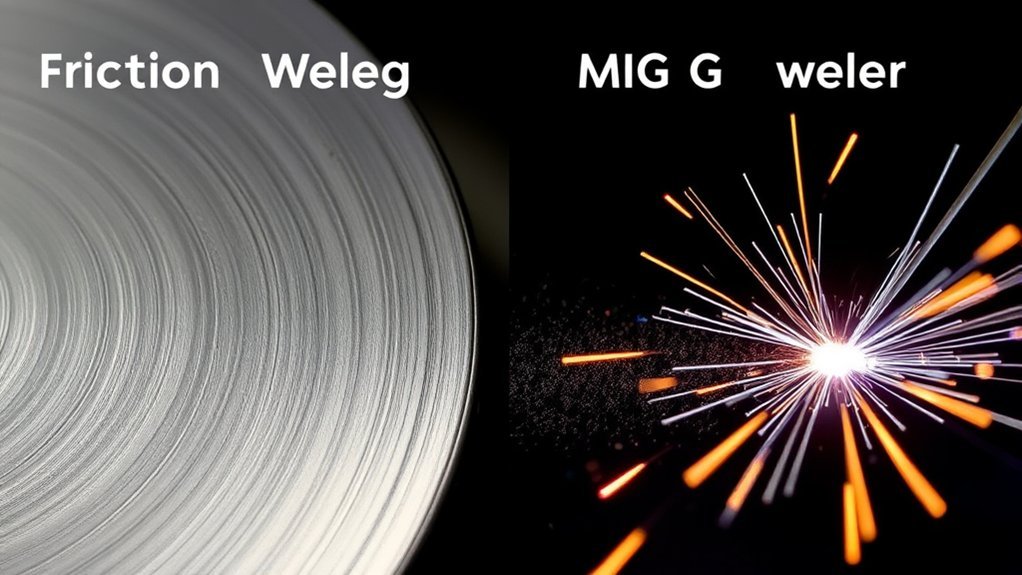
Friction welding and MIG welding can both create strong metal joints, but they are built for different jobs. Friction welding is usually best for repeatable production parts where low distortion and consistent joint quality matter. MIG welding is usually better for fabrication, repair, sheet metal, frames, brackets, and general shop work because it is flexible and widely available.
Quick Answer
Choose friction welding when you need repeatable, low-distortion joints in compatible production parts, especially shafts, rods, tubes, or dissimilar metals. Choose MIG welding when you need a practical, flexible arc process for fabrication, repair, thin to medium steel, aluminum, stainless steel, and work that does not fit a specialized friction welding machine.
Key Takeaways
- Friction welding is a solid-state process, so the base metals soften and bond without fully melting at the joint.
- MIG welding, also called GMAW, uses an electric arc, a continuously fed wire electrode, and shielding gas to make a molten weld pool.
- Friction welding often gives lower distortion and excellent repeatability, but it needs specialized machines and suitable part shapes.
- MIG welding is easier to access, easier to adapt, and better for many repair and fabrication jobs, but it needs good gas coverage, clean metal, and proper settings.
Friction Welding vs MIG Welding: The Core Difference
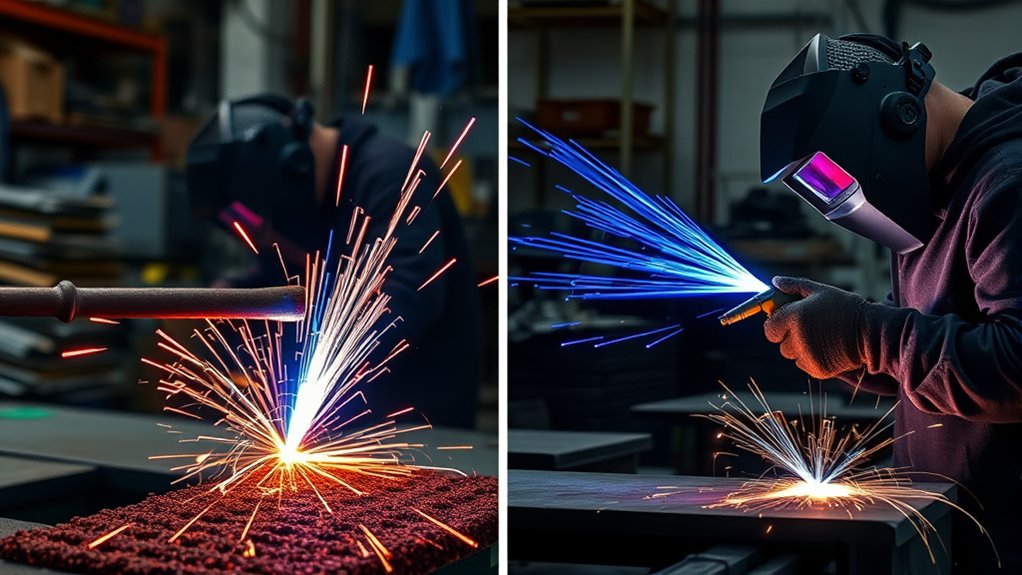
Friction welding joins workpieces with mechanical motion, pressure, and heat generated by friction. The material stays in a solid-state condition, which means the joint forms without the base metal fully melting. That is why friction welding can reduce many defects linked to fusion welding, such as pores and solidification cracking, when the machine, tooling, and parameters are correct.
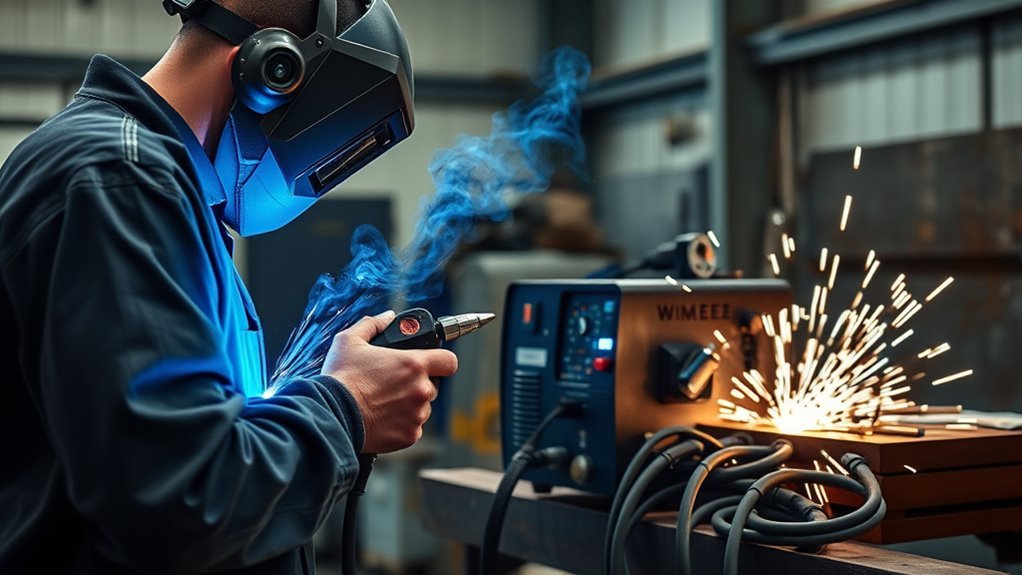
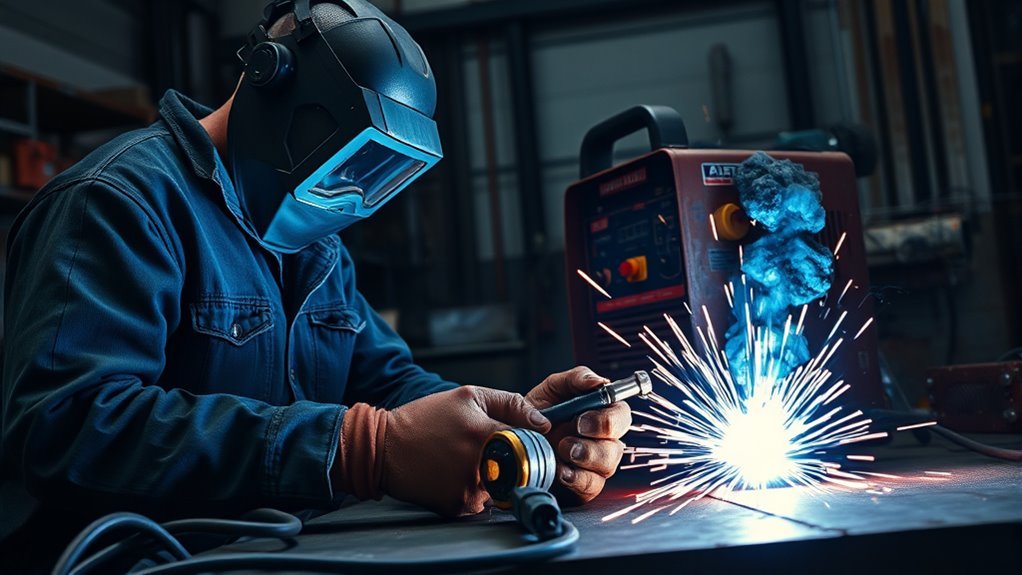
MIG welding is a fusion welding process. It uses an electric arc between a continuously fed wire electrode and the workpiece. The arc melts the wire and the base metal, while shielding gas protects the molten weld pool from air. Because MIG equipment is common and flexible, it is one of the most practical choices for shops, repair work, automotive fabrication, structural brackets, and many thin to medium material jobs.
Pro Tip: Start your choice with part shape and production volume. If the part can be clamped and rotated, oscillated, or stirred in a controlled machine, friction welding may be a strong candidate. If the joint is irregular, large, one-off, or field-repaired, MIG is usually more practical.
Friction Welding and MIG Welding Comparison Table
| Factor | Friction Welding | MIG Welding |
| Process Type | Solid-state joining | Fusion arc welding |
| Heat Source | Mechanical friction plus pressure | Electric arc |
| Filler Metal | Usually not required | Wire electrode acts as filler |
| Shielding Gas | Usually not required | Required for standard gas-shielded MIG |
| Best Fit | Repeat production, shafts, rods, tubes, similar or compatible dissimilar metals | Fabrication, repair, sheet metal, frames, brackets, general shop work |
| Main Limitation | Specialized equipment, clamping, and suitable geometry | Gas coverage, spatter, heat distortion, and operator technique |
How Friction Welding Works
In friction welding, two parts are forced together while one part rotates, oscillates, or is moved by a rotating tool. The rubbing action creates heat at the interface. Once the metal softens, pressure forges the parts together and pushes oxides or surface contaminants away from the bond line.
The key point is that the joint forms below the melting point of the base metal. That gives friction welding several benefits:
- Smaller heat-affected zone: Less melting means less thermal damage around the joint.
- Low distortion: Parts are less likely to warp compared with high-heat fusion welding.
- No filler wire or shielding gas in most applications: This can reduce consumable costs.
- High repeatability: Once the machine settings are qualified, the process can repeat the same cycle very consistently.
Common Types of Friction Welding
“Friction welding” is a family of processes, not just one method. The most common types include:
- Rotary friction welding: One round part spins against another under axial force. It is common for shafts, rods, tubes, valves, and drive components.
- Linear friction welding: One part moves back and forth under pressure. It is useful for non-round parts and high-performance components.
- Friction stir welding: A rotating non-consumable tool travels along the joint, softening and mixing the material. It is widely associated with aluminum structures.
- Friction stir spot welding: A spot-weld version used in lap joints, especially in sheet and lightweight manufacturing.
How MIG Welding Works
MIG welding, or gas metal arc welding, uses a welding gun that feeds wire into the joint. When the wire touches the work area, an electric arc forms. The arc melts the wire and the base metal, creating a weld pool that cools into a solid joint.
Shielding gas protects the molten weld pool from oxygen, nitrogen, and moisture in the air. Poor gas coverage, dirty metal, incorrect stickout, or wrong settings can lead to porosity, spatter, lack of fusion, or weak welds.
MIG Transfer Modes Matter
MIG welding performance depends heavily on the transfer mode and settings. In simple terms:
- Short-circuit MIG is common for thinner materials, auto body work, and lower heat input.
- Spray transfer can produce smooth, high-deposition welds on thicker material, but it needs enough amperage and the right shielding gas.
- Pulsed spray gives better control over heat and spatter, making it useful for aluminum, stainless steel, and out-of-position work when the equipment supports it.
Material Suitability: When to Choose Each Process
Choose friction welding when the parts fit the machine and the process can be qualified for the material combination. It is especially useful for repeatable production parts, similar metals, and some dissimilar-metal combinations that are difficult to weld with a fusion process.
Choose MIG welding when you need flexibility. MIG can handle many common shop metals, including mild steel, stainless steel, and aluminum, as long as you use the right wire, shielding gas, polarity, machine settings, and cleaning method.
Note: Dissimilar-metal welding is not automatic with either process. Friction welding can help with some combinations, but brittle intermetallic compounds, different melting points, and strength requirements still need engineering review and testing.
Products Worth Considering
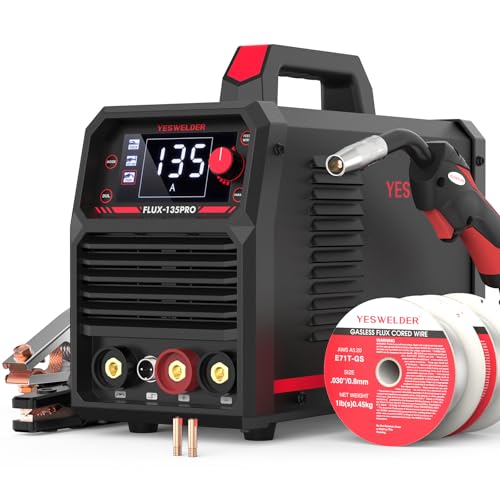
READY OUT OF THE BOX: Start welding immediately! It masterfully handles Gasless Flux Core MIG, Stick, and Lift TIG (Extra Lift TIG torch required). This budget-friendly 3-in-1 machine includes extra E71T-GS .030''&.035'' flux core wires, known for its smooth arc and high feedability. Say goodbye to heavy shielding gas cylinders—perfect for outdoor, windy, or all-position welding.

MULTIFUNCTIONAL: A 4-in-1 welder, capable of Flux Core MIG/Gas MIG/ Stick/Lift TIG (need to purchase extra tig lift torch). This unit caters to a wide range of welding applications and meets your various welding needs.

7-IN-1 MULTI-PROCESS WELDER: Integrates Pulse MIG, Standard MIG, Gasless Flux Core, Lift TIG, and MMA Stick welding in one unit. Also supports using a spool gun (Lift TIG torch and spool gun sold separately). The MIG welder supports 2T/4T/SPOT modes as well. Perfectly meets the needs of household DIY, garage repair, workshop fabrication, and light industrial welding—one machine covers all daily welding tasks.
Joint Quality, Strength, and Defects
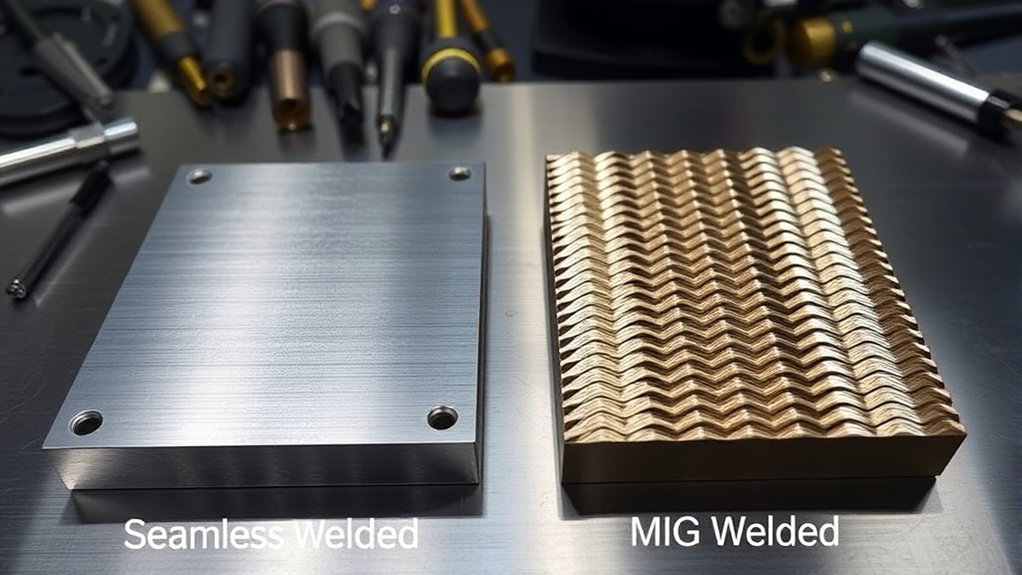
Friction welding can produce very strong and consistent joints because it avoids full melting at the joint. This helps reduce solidification defects, limits distortion, and can preserve more of the base material properties near the weld.
MIG welding can also produce strong code-quality welds when the joint is designed correctly and the procedure is qualified. The main difference is that MIG creates a molten pool, so its quality depends heavily on travel speed, voltage, wire feed speed, shielding gas, surface preparation, technique, and cooling rate.
Common Friction Welding Defects
Friction welding is not defect-proof. Poor setup can still cause problems such as weak bonding, excessive flash, poor alignment, incomplete bonding at the interface, or cracking in sensitive materials. The fix is usually better part preparation, parameter control, clamping, and inspection.
Common MIG Welding Defects
MIG welding problems often include porosity, undercut, lack of fusion, burn-through, excessive spatter, and distortion. These usually come from dirty material, poor gas coverage, incorrect settings, poor travel angle, excessive stickout, or welding too hot or too cold for the joint.
Heat-Affected Zone and Distortion
The heat-affected zone, or HAZ, is the area beside the weld where heat changes the metal without fully melting it. A smaller HAZ usually means less distortion and less change to the base metal.
Friction welding usually creates a smaller and more controlled HAZ than MIG welding because the process uses localized frictional heating and pressure rather than an open arc and molten weld pool. That makes it useful for parts where straightness, roundness, fatigue life, or dimensional control matter.
MIG welding usually creates a larger HAZ because it melts the base metal and filler wire. This does not make MIG “bad,” but it does mean you need to control heat input. Use proper settings, tack spacing, joint fit-up, travel speed, and cooling practices to reduce warping and strength loss.
Cycle Time and Production Efficiency
Friction welding can be extremely fast once the machine is set up. Many production cycles are measured in seconds, and automation can make the process highly repeatable. That is why it is common in manufacturing environments where the same joint is made many times.
MIG welding is often more efficient for one-off jobs, repair work, and large assemblies because setup is simpler and the welder can move around the part. For thick sections, MIG may still require multiple passes, cleaning between passes, and distortion control, which adds time.
The practical answer is simple: friction welding often wins in repeat production, while MIG often wins in flexible fabrication.
Cost Implications of Each Method
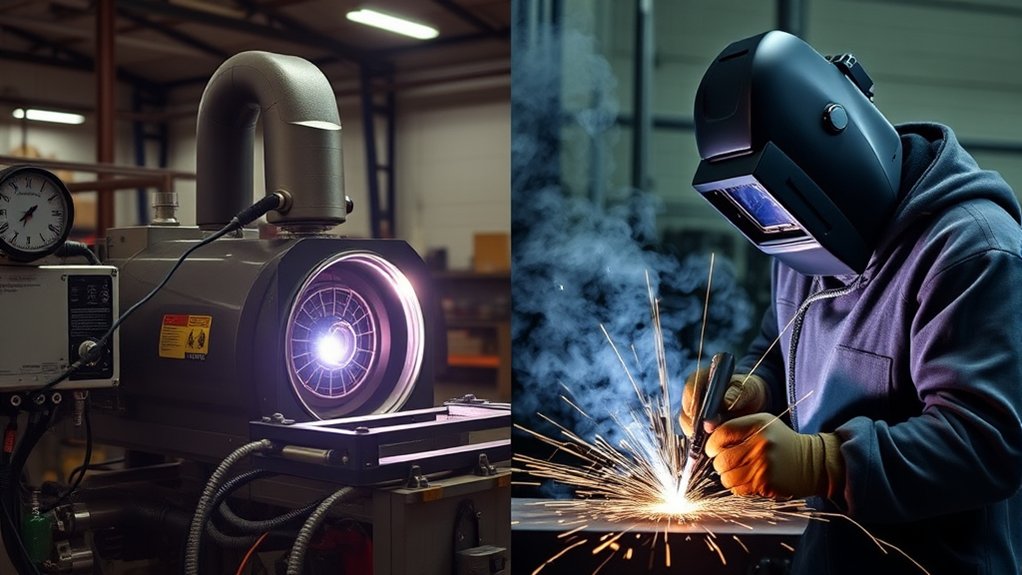
Friction welding has a higher entry cost because it needs specialized equipment, fixturing, controls, and engineering setup. That cost can make sense when you are producing the same part in volume, reducing consumables, cutting cycle time, and lowering rework.
MIG welding has a lower entry cost and is easier to add to a shop. You need a MIG welder, wire, shielding gas, PPE, clamps, cleaning tools, and the right electrical setup. Ongoing costs include wire, contact tips, nozzles, gas, electricity, anti-spatter products, and labor.
| Cost Factor | Friction Welding | MIG Welding |
| Equipment Cost | High | Low to moderate |
| Consumables | Low in many applications | Wire, gas, tips, nozzles |
| Labor | Lower per part after automation | Depends on skill and weld length |
| Best Value | High-volume repeat parts | Small shops, repairs, fabrication |
Safety Considerations
Warning: Welding can expose you to metal fumes, ultraviolet radiation, burns, eye injury, electrical shock, fire hazards, and crushing hazards. Use proper PPE, ventilation, fire prevention, machine guarding, and trained procedures before welding or operating welding equipment.
MIG welding creates an open arc, bright UV radiation, hot spatter, fumes, and fire risk. Use a proper welding helmet, gloves, flame-resistant clothing, respiratory controls when needed, and good ventilation. Keep flammables away from the work area and follow your shop’s fire-watch rules.
Friction welding removes many arc-related hazards, but it adds machine hazards. Rotating parts, hydraulic force, pinch points, hot flash, and clamping loads can cause serious injury. Use guards, lockout procedures, trained operators, and approved fixtures.
Inspection and Quality Control
Both processes need inspection. A weld is not good just because the process is known for strength. The right checks depend on the part, code, and risk level.
- Visual inspection: Look for undercut, cracks, porosity, poor bead shape, excessive flash, misalignment, or surface defects.
- Procedure control: Record settings such as pressure, rotation, time, voltage, wire feed speed, travel speed, gas flow, and pre-cleaning steps.
- Destructive testing: Bend, tensile, macro-etch, and hardness testing can confirm procedure strength during qualification.
- Nondestructive testing: Ultrasonic, radiographic, dye penetrant, or magnetic particle testing may be needed for critical parts.
Which Process Should You Choose?
Choose friction welding if you need high repeatability, low distortion, short automated cycles, and strong joints in parts that fit the equipment. It is often the better choice for shafts, tubes, axles, valve parts, rods, and production components where the same weld is repeated many times.
Choose MIG welding if you need versatility, lower equipment cost, easy access, and the ability to weld different joint shapes in a shop or repair setting. It is often the better choice for body panels, brackets, farm repairs, frames, gates, trailers, and general fabrication.
For critical parts, do not choose by process name alone. Choose by material, joint design, code requirements, inspection method, and test results.
Products Worth Considering
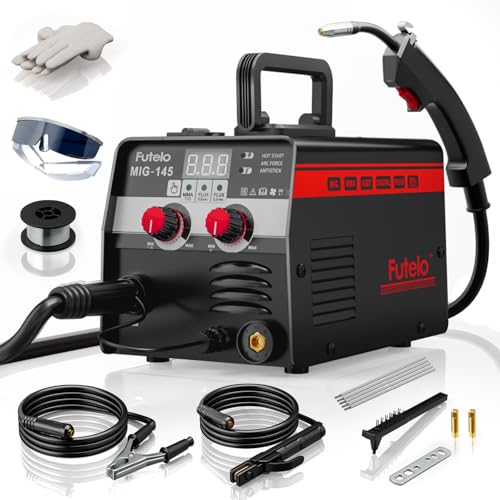
【3-IN-1 WELDER】Compact 3 in 1 welder combines MIG welder, Stick, and Lift TIG welding machine functions to tackle a wide range of welding tasks. With 30–145A output and support for carbon and stainless steel (1–5mm), it’s ideal for home DIY, repairs, and outdoor metal work. (NOTE: TIG torch not included—please purchase separately)

POWERFUL 6-IN-1 MIG WELDER: The multi-process welding machine that included Gas/Solid Wire MIG(GMAW), Gasless Flux Core MIG(FCAW), Stick/MMA, Spot welding, Lift TIG, spool gun connector optional (tig gun and spool gun not included). Suitable for all kinds of welding requirements .023”/.030”/.035” solid wire, .030”/.035” flux core wire, .035”/.040” aluminum wire. (.023”, .040” rollers need to buy separately)

LARGE LED DIGITAL DISPLAY: The advanced digital display ensures crystal-clear visibilityeven in low-light environments, allowing welders to monitor parameters effortlessly. Its intuitive interface simplifies setup, it is easy to use with this welder machine.
Frequently Asked Questions
What are the advantages of friction welding?
Friction welding offers low distortion, strong repeatability, a smaller heat-affected zone, and little or no need for filler metal or shielding gas in many applications. It can also help join some similar and dissimilar metals that are difficult to weld with fusion processes.
What are the 4 types of welding?
A simple way to group major welding processes is arc welding, resistance welding, solid-state welding, and energy-beam welding. MIG welding is an arc welding process. Friction welding is a solid-state welding process.
What is the golden rule in welding?
The golden rule is to match the process, material, joint design, filler or machine parameters, and safety controls to the job. Clean material, correct fit-up, controlled heat, and proper inspection matter more than using a popular process.
Does NASA use friction welding?
Yes. NASA-related aerospace manufacturing has used friction stir welding, which is a solid-state friction welding variant, for major aluminum structures. That does not mean every NASA weld uses friction welding, but it shows why the process is valued where strength, weight, and repeatability matter.
Is friction welding stronger than MIG welding?
It can be, but not always. Friction welding can produce very strong joints with low distortion, but strength depends on the material, machine settings, part geometry, and testing. A properly qualified MIG weld can also meet demanding strength requirements.
Conclusion
Friction welding and MIG welding are not direct substitutes in every job. Friction welding is the better fit for controlled production parts that need repeatability, low distortion, and strong solid-state bonding. MIG welding is the better fit for flexible fabrication, repairs, and many common shop projects.
If your part geometry, budget, and production volume support specialized equipment, friction welding may offer cleaner and more repeatable results. If you need access, versatility, and lower startup cost, MIG welding is usually the practical choice.
Sources
- TWI: What is Friction Welding? — solid-state mechanism, no melting, process types, filler-free operation, and friction welding advantages.
- OSHA: Welding, Cutting, and Brazing — general welding safety standards and resources.
- OSHA: Welding Hazards and Solutions — welding hazards including fumes, UV radiation, burns, eye damage, electrical shock, and PPE considerations.
- NIOSH: Welding and Manganese — welding fume health and exposure-control context.
- TWI: What is Friction Stir Welding? — friction stir welding process background and applications.