You might not realize it, but insulating your garage door can notably enhance your home’s energy efficiency. By focusing on critical elements like R-values and material selection, you can reduce energy costs and improve thermal performance. With the right tools and materials, such as the Owens Corning Garage Door Insulation Kit, you’ll have what you need for a secure and effective installation. Curious about the process and its impact on your home?
Understanding Insulation and R-Values
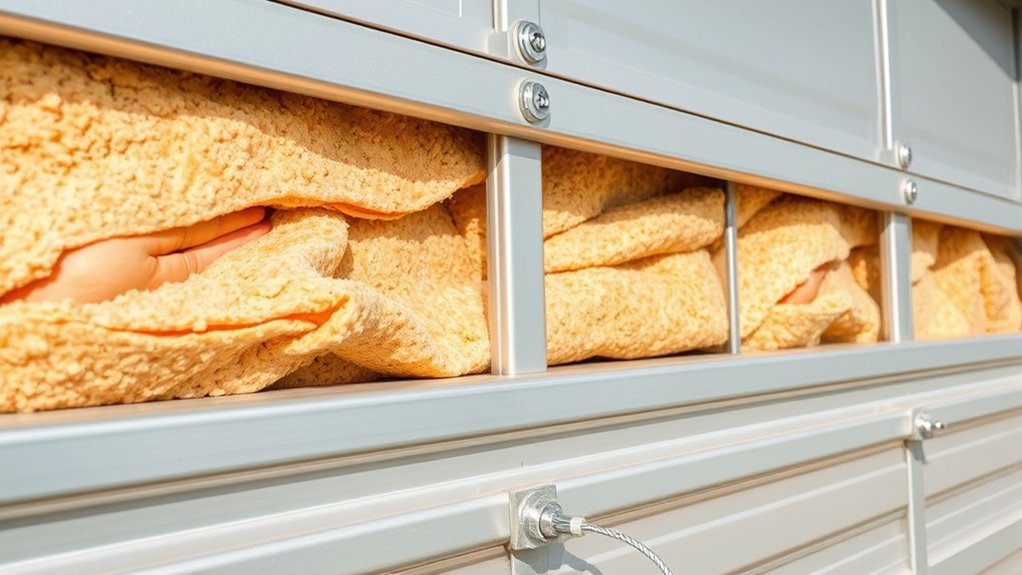
When you’re considering garage door insulation, understanding R-values is crucial for making an informed decision. Insulation benefits are primarily gauged by the R-value, which measures heat resistance. Higher R-values signify superior insulation effectiveness.
For instance, with an R5 rating, Owens Corning FOAMULAR NGX 150 offers substantial thermal performance improvement over uninsulated metal garage doors, which are prone to heat conduction.
Comparing R-values, an R7.5 insulation option provides even better heat resistance than R5. However, be prepared for a steeper price, as it costs double—$50 per sheet—and presents installation challenges.
Double-walled garage doors also deliver enhanced insulation by trapping non-moving air, a critical factor in R-value comparison.
Keep in mind, the effectiveness of insulation is compromised if door seals aren’t properly maintained. Gaps allow heat transfer, undermining even the highest R-value insulation.
Therefore, verify seals are intact to optimize insulation performance.
Tools and Materials Needed for Installation
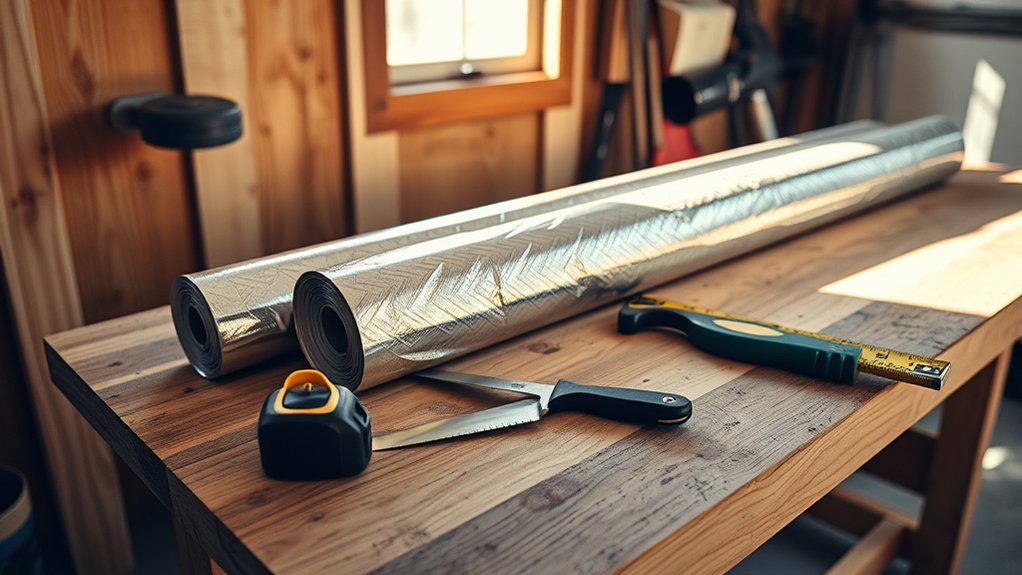
To effectively install the Owens Corning Garage Door Insulation Kit, you’ll need basic tools like a tape measure, utility knife, straight edge, and marker.
Opt for 9 sheets of foam for ideal insulation if you choose rigid foam board instead of the kit, and consider using a Ryobi circular saw for precise cuts.
To seal gaps efficiently around the door frame and jambs, budget for 2-3 cans of Great Stuff foam, each essential for enhancing the insulation’s effectiveness.
Essential Household Tools
While commencing the installation of the Owens Corning Garage Door Insulation Kit, it’s vital to gather a set of common household tools to guarantee a smooth process.
Start with a tape measure, utility knife, straight edge, and marker. Make sure your utility knife is sharp and well-maintained—dull blades can lead to inaccurate cuts. For tool storage, keep everything organized in a toolkit to prevent misplacement during the project.
When cutting foam board, make multiple passes with the utility knife for clean edges. A table saw offers rapid, uniform cuts if available. You’ll also need 2-3 cans of Great Stuff foam for sealing small gaps around the door frame and between the jamb and wall.
Proper measurement and cutting techniques are essential to avoid rework and make certain a successful installation.
Insulation Material Options
Having gathered the necessary tools, let’s focus on selecting the right insulation materials for your garage door. The Owens Corning Garage Door Insulation Kit is a robust choice, featuring fiberglass insulation panels with a durable vinyl facing and an R8 value, enhancing thermal performance over bare metal doors.
For thorough coverage, consider these options:
- Foam Panels: Use 9 sheets, each costing about $24, to effectively insulate a standard double garage door. This type guarantees significant energy savings.
- Great Stuff Foam: At approximately $6 per can, it’s perfect for sealing gaps, further boosting insulation efficiency.
- Precision Cutting Tools: Employ a box cutter utility knife and a lightweight Ryobi circular saw for precise cuts, ensuring a clean and snug fit.
These insulation types maximize energy savings and enhance your garage’s thermal efficiency.
Step-by-Step Installation Process
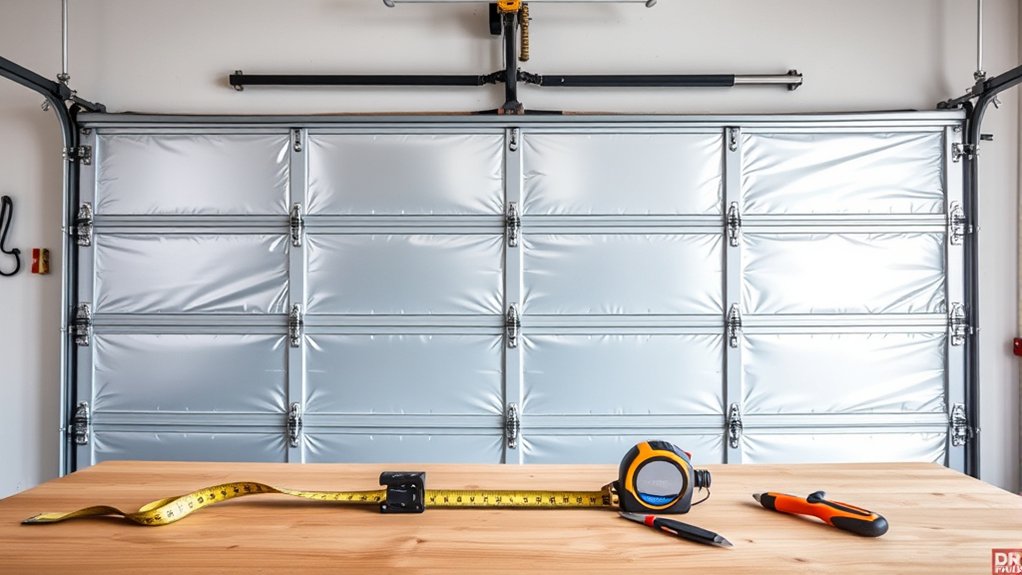
To begin the insulation process, guarantee you have the essential tools, including a sharp utility knife and a straight edge for precise cutting.
When cutting foam panels, make multiple passes with the knife for clean edges, and use a box cutter for better control.
Properly position the foam panels within the door tracks, using notches to fit around components seamlessly.
Essential Tools Needed
When preparing to insulate your garage door, whether you’re using the Owens Corning Garage Door Insulation Kit or rigid foam board, make sure you’ve gathered essential tools to streamline the process. You’ll face installation challenges, so having the right tools boosts insulation effectiveness.
Start with common household tools: a tape measure, utility knife, straight edge, and marker. These are critical for accurate measurements and cuts.
Consider a few more specialized items:
- Box cutter utility knife: Ideal for precise cuts in foam panels.
- Lightweight Ryobi circular saw: Effective for cutting larger foam pieces.
- Great Stuff foam (2-3 cans): Seals small gaps around the door frame and between the jamb and wall, enhancing insulation.
Proper tool selection guarantees uniform panel cuts, minimizing waste and rework.
Precision and efficiency are key to a successful installation.
Panel Cutting Tips
Armed with the right tools, it’s time to focus on cutting the foam panels for your garage door insulation project.
Begin with precise cutting techniques using a sharp utility knife and a straight edge. Make multiple passes to accommodate the material’s thickness, guaranteeing clean edges. For larger panels, a lightweight circular saw offers efficient and precise cuts.
Measure and cut all foam panels simultaneously for uniformity, minimizing waste and guaranteeing consistent panel sizes. Consider creating notches in the foam around door components for a snug fit.
Adjust panel dimensions to fit properly within door tracks; misaligned brackets might need bending for proper installation. This attention to detail guarantees your panels are perfectly prepped for the next steps in your insulation project.
Foam Positioning Techniques
Before you begin positioning your foam panels, verify you’ve measured accurately to achieve a snug fit within the door frame. This guarantees effective insulation and avoids gaps.
Employ these installation techniques for ideal foam placement:
- Cut Precise Notches: Use a sharp utility knife to create notches for the door’s hardware, ensuring the foam fits seamlessly around hinges and brackets without compromising insulation integrity.
- Seal Gaps Around the Frame: Apply spray foam to seal gaps between the door framing and the surrounding wall for enhanced insulation. Trim excess carefully, maintaining a smooth surface that doesn’t interfere with door movement.
- Adjust Brackets: Check and adjust door brackets if necessary. Proper alignment secures foam panels, keeping them in place during operation.
These steps guarantee a professional finish and improved thermal efficiency.
Common Pitfalls and How to Avoid Them
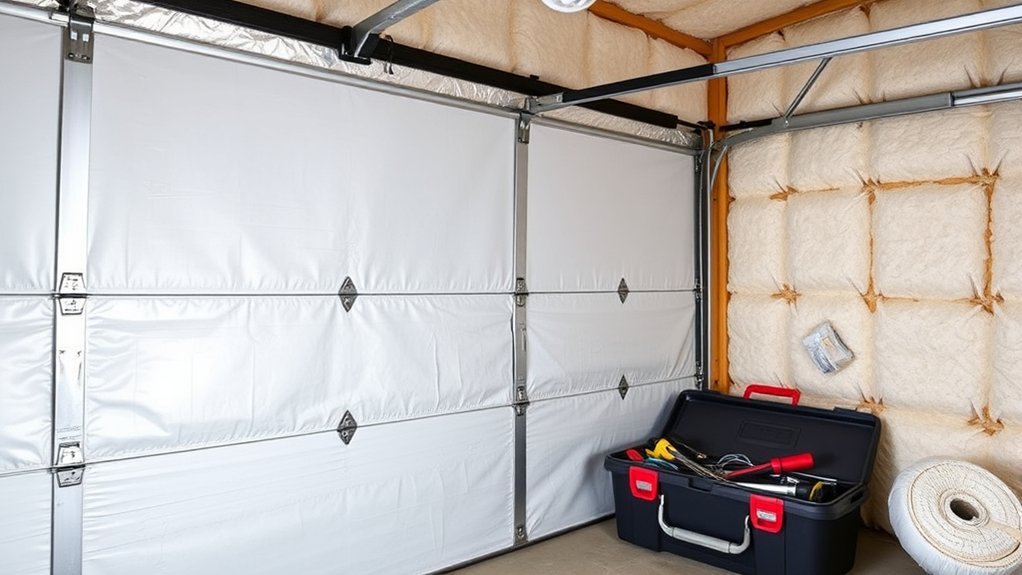
As you begin insulating your garage door, understanding potential pitfalls is vital to achieving the best results. Start by taking safety precautions and becoming familiar with insulation techniques. Removing components without knowing their functions can lead to operational issues. Study the door mechanics to avoid these problems.
Improper tension adjustments can cause significant issues, so consult a garage mechanic after installation. Cutting notches in foam panels can simplify the process and reduce errors. Verify that brackets are square and correctly aligned; bending may be necessary for a proper panel fit. Testing door seals for gaps is essential, as proper sealing enhances insulation effectiveness.
Here’s a quick guide:
| Pitfall | Solution | Benefit |
|---|---|---|
| Unfamiliar with door mechanics | Study before starting | Prevent operational issues |
| Improper tension adjustment | Consult mechanic after installation | Guarantee door functions smoothly |
| Misaligned brackets | Adjust to fit correctly | Secure insulation fit |
| Gaps in door seals | Test and seal properly | Maximize insulation efficiency |
Cost Analysis and Budget Considerations

When planning to insulate your garage door, a thorough cost analysis is essential to balance quality and budget. A detailed budget breakdown reveals that materials like the Owens Corning Garage Door Insulation Kit cost about $216, while Great Stuff foam for sealing adds $12 to $18.
For a more budget-friendly option, reflect on R5 insulation at $25 per sheet, which avoids the complexity and higher cost of R7.5 insulation.
Here are critical factors to keep in mind for cost savings:
- Material Selection: Choose R5 insulation for affordability without compromising on effectiveness.
- Sealing Efficiency: Use 2-3 cans of Great Stuff foam at $6 each to guarantee proper sealing.
- Cutting Precision: Avoid initial mistakes in cutting panels to prevent increased costs and project delays.
Evaluating the Benefits of Insulated Garage Doors
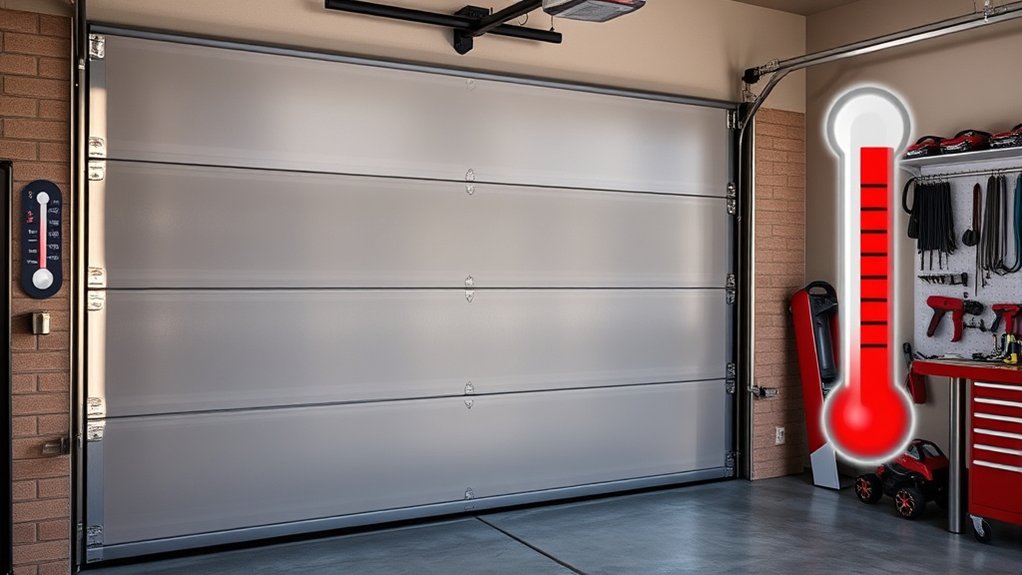
Insulated garage doors offer numerous advantages that can greatly enhance the functionality and comfort of your home. By boosting energy efficiency, these doors minimize heat loss, especially essential through the ceiling and door seals. Achieving an R-value of R8 with products like the Owens Corning Garage Door Insulation Kit notably improves thermal performance compared to uninsulated metal doors. In addition, an insulated garage door can reduce perceived noise levels by up to 20%, creating a quieter environment.
Here’s a quick overview:
| Feature | Benefit | Impact |
|---|---|---|
| R-value of R8 | Thermal Performance | Energy Efficiency |
| Noise Reduction | 20% Noise Decrease | Quieter Environment |
| Easy Installation | DIY Friendly | Cost-Effective |
| Cleanable Vinyl Surface | Low Maintenance | Durable and Manageable |
Installation is straightforward, requiring only common household tools, making it accessible for DIY enthusiasts. Maintenance is simple, as the vinyl surface can be cleaned with mild detergent.
Frequently Asked Questions
How Does Insulation Impact Garage Door Noise Reduction?
You might think insulation is just for warmth, but it greatly enhances noise control by absorbing sound waves and providing effective vibration dampening. This leads to a quieter operation, reducing unwanted noise from your garage door’s movement.
Can Insulation Affect Garage Door Opener Performance?
Yes, insulation can affect garage door opener performance. Consider insulation types and opener compatibility to guarantee smooth operation. Denser materials might strain the opener, so choose compatible insulation to maintain efficiency and avoid potential motor or gear issues.
What Are the Environmental Benefits of Garage Door Insulation?
A penny saved is a penny earned. By using garage door insulation, you improve energy efficiency and reduce your carbon footprint. Opt for eco-friendly materials to further enhance these environmental benefits, contributing to a greener planet.
Is Professional Installation Necessary for Garage Door Insulation?
You don’t always need professional installation for garage door insulation. Using proper installation techniques and selecting suitable insulation materials, you can achieve great results. However, professionals guarantee accuracy, especially for complex installations or where precision is critical.
How Do Weather Conditions Affect Insulation Effectiveness?
You’ll swear it’s as if weather conditions conspire against your efforts! Temperature fluctuations can create thermal bridges, while sky-high humidity levels can turn insulation into a sponge, drastically affecting its effectiveness. Monitor and adjust for ideal results.
Conclusion
You’ve gained a grasp on garage door insulation, with its remarkable R-value reducing relentless heat loss. Equipped with essential equipment, you’ve executed a seamless setup, sidestepping standard snags. By smartly spending, you’ll save substantially, sealing in comfort and cutting costs. The benefits of an insulated garage door are undeniably distinct: decreased drafts, diminished noise, and decreased maintenance. So, secure your sanctuary with strategic insulation, and savor the superior satisfaction of a snug, serene space.