Choosing MIG wire for auto body repair starts with identifying the metal, checking the vehicle maker’s repair procedure, and matching the wire diameter, shielding gas, polarity, and heat input to the joint. The shop terms “hard wire” and “soft wire” can be useful shorthand, but they do not replace the wire classification or the OEM-approved joining method.
Quick Answer
For nonstructural mild-steel body panels, start with 0.023- or 0.024-inch ER70S-6 solid wire, C25 shielding gas, and the polarity listed by the wire or welder—normally DCEP. Use larger or specialty wire only when the metal thickness, alloy, equipment, and vehicle maker’s repair procedure call for it.
Key Takeaways
- 0.023- or 0.024-inch ER70S-6 solid wire is a reliable starting point for thin, nonstructural mild-steel body panels.
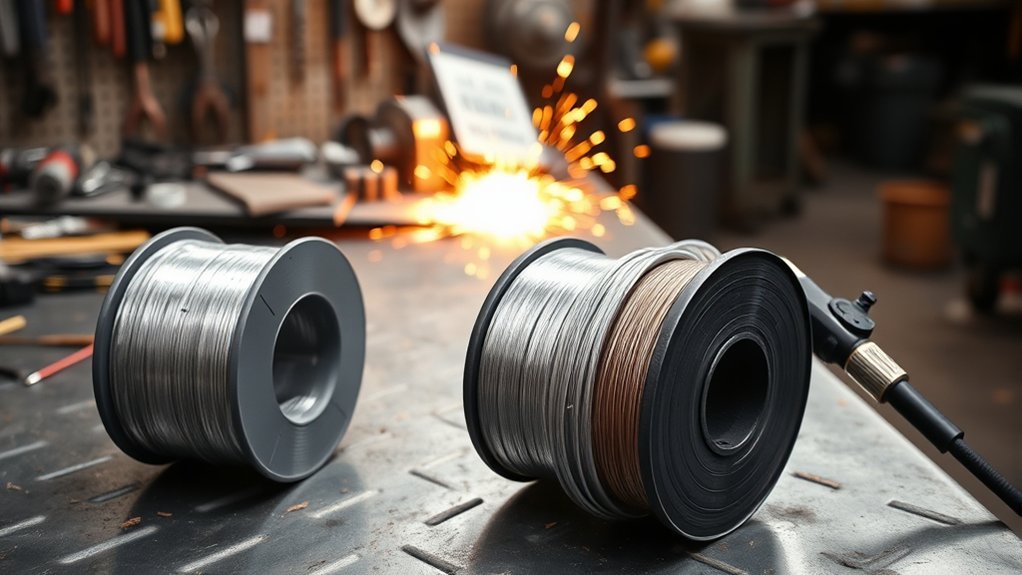
- “Hard wire” usually means solid steel MIG wire. “Soft wire” commonly refers to aluminum or silicon bronze, not a strict ER70S-2-versus-ER70S-6 choice.
- Use 75% argon/25% CO₂ shielding gas for common short-circuit GMAW repairs on automotive steel unless the OEM procedure specifies something else.
- Wire size alone does not control distortion. Tight fit-up, short tacks, skip welding, natural cooling time, and verified machine settings matter just as much.
- Structural steel, high-strength steel, aluminum, galvanized assemblies, silicon-bronze joints, hybrids, and EVs require material-specific equipment and vehicle-maker instructions.
At a Glance
| Time Required | About 15-30 minutes to identify the wire, configure the machine, and make test coupons; the vehicle repair itself may take hours or longer |
| Difficulty | Moderate for cosmetic mild-steel patches; advanced or professional-level for structural, high-strength, aluminum, hybrid, or EV repairs |
| Tools Needed | Compatible MIG welder, correct wire and contact tip, shielding gas and regulator, PPE, clamps, grinder or sander, copper backing bar where appropriate, and same-thickness test coupons |
| Cost | Usually low for a small spool of steel wire; gas, PPE, specialty guns, corrosion protection, and professional repair information can add substantially more |
Choosing the Right MIG Wire for Auto Body Repair
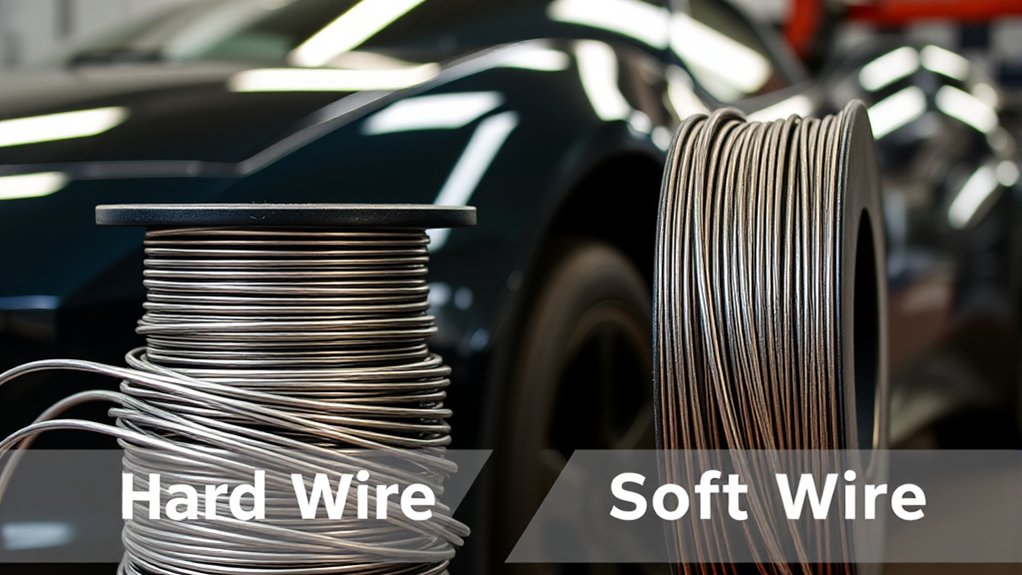
Start with the base metal and the vehicle-specific repair information. Older exterior panels are often mild steel, while newer vehicles may combine mild steel, high-strength steel, ultra-high-strength steel, aluminum, galvanized coatings, adhesives, and factory corrosion protection in one assembly. Before welding, confirm the panel material, model year, joint location, approved attachment method, and any limits on heat or sectioning in the OEM body repair manual.
For common nonstructural mild-steel body panels, 0.023- or 0.024-inch ER70S-6 solid MIG wire is a practical starting point. Miller’s automotive guidance lists 0.023-0.024-inch wire for body panels and material up to 1/16 inch, while larger wire suits thicker material. A MIG setup must match wire size, metal thickness, gas, voltage, and wire-feed speed, so the door chart or machine manual should be the first settings reference.
Note: In shop language, “hard wire” usually means solid steel MIG wire. “Soft wire” often means aluminum or silicon bronze because those wires need gentler feeding. It does not mean hardfacing wire, and it is not a formal rule that separates ER70S-2 from ER70S-6.
Products Worth Considering

ER70S-6 MIG WIRE: It's the most common wire of the copper-coated mild steel GMAW (MIG) wires for single or multiple pass welding.

Do Your Best Work ... Color all your clients impressed with the precision and arc control of the ER70S-6 solid MIG welder wire. You'll love the low splatter whether you're performing single or multi-pass welds. Great for T-joints, butt welds & lap welds.
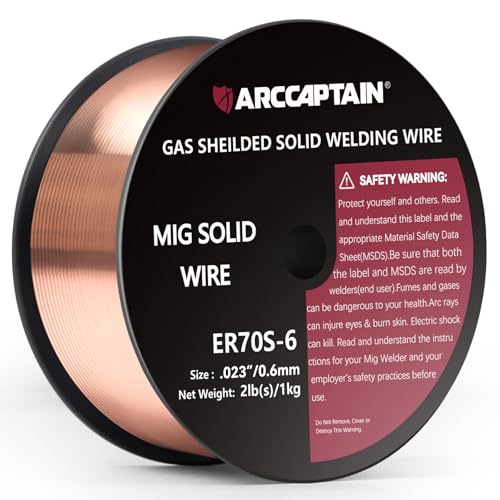
High-quality: ARCCAPTAIN's ER70S-6 mig welding wire .023" meets industry standards(Net Weight: 2lbs), ensuring consistent performance, superior strength. With its smooth feeding and stable welding parameters, you can achieve optimal penetration, high deposition rates, and exceptional overall welding performance.
What ER70S-6 Wire Is—and What It Is Not
ER70S-6 is a solid carbon-steel filler wire commonly used on mild steel. Its manganese and silicon deoxidizers improve wetting and help the weld handle light surface oxidation or mill scale better than some lower-deoxidizer classifications. That extra tolerance is not permission to weld over paint, oil, undercoating, heavy rust, seam sealer, or thick zinc residue. The joint still needs clean, sound metal.
ER70S-6 is also not automatically correct for every vehicle repair. Some OEM procedures permit or specify another steel wire, resistance spot welding, MIG brazing, rivet bonding, adhesive bonding, or a combination of methods. The approved procedure takes priority over a general wire chart.
Best Starting Wire by Auto Body Job
| Repair Type | Best Starting Wire | Why and Main Limit |
| Thin, nonstructural mild-steel patch panel | 0.023- or 0.024-inch ER70S-6 solid wire | Good low-end control for short-circuit tacks; confirm the machine supports the diameter |
| Thicker brackets, tabs, floors, or reinforcements | 0.030-inch ER70S-6, or the OEM-specified steel wire | Deposits filler faster but may be less forgiving where thick and thin pieces meet |
| OEM repair that specifies ER70S-3 or another classification | Use the exact approved classification and diameter | Vehicle-maker requirements override a general ER70S-6 recommendation |
| Outdoor or heavier fabrication where finish is secondary | Flux-cored wire only when the wire data sheet and repair allow it | Handles drafts better but usually adds slag, smoke, spatter, and cleanup; it is rarely the easiest choice for visible thin panels |
| Approved aluminum panel repair | Aluminum filler matched to the base alloy and OEM procedure | Requires 100% argon in common MIG applications plus compatible drive rolls, liner, contact tip, and usually a spool gun or push-pull gun |
| Approved MIG-brazed steel joint | OEM-specified silicon-bronze wire, commonly CuSi3/ERCuSi-A | Lower-heat brazing process; not a universal substitute for fusion welding |
| Stainless component | Stainless filler matched to the alloy and service conditions | Needs a compatible gas and contamination-controlled setup; mild-steel wire is not a substitute |
Why Solid Hard Wire Works Well on Mild-Steel Body Panels
Solid MIG wire, often called hard wire, is a strong fit for mild-steel body work because it feeds smoothly through a standard steel liner, produces no slag, and gives a controllable short-circuit arc when paired with shielding gas. ER70S-6 is popular because it is widely available and offers useful deoxidizing performance for repair steel.
Clean metal still matters. Remove grease and oil before grinding so abrasives do not spread contamination. Then expose clean metal only where the joint and work clamp require it. Do not blindly strip zinc, adhesives, or coatings from a modern panel; follow the OEM procedure and the product maker’s instructions, control fumes at the source, and plan how the corrosion protection will be restored after welding.
For common steel GMAW collision work, pair solid wire with 75% argon/25% CO₂ shielding gas, also called C25. Compared with straight CO₂, C25 commonly gives a smoother arc, less spatter, and better bead appearance on thin steel. Use DCEP for solid wire unless the welder, wire label, or OEM procedure states otherwise. Many self-shielded flux-cored wires use the opposite polarity, so always verify before striking an arc. For coating-specific preparation and fume concerns, see this guide to MIG welding galvanized steel.
Pro Tip: Install a contact tip and drive-roll groove that match the wire diameter, then tune the welder on a coupon made from the same type, thickness, coating condition, and joint design as the repair. A setting that sounds good on thick scrap may still burn through the vehicle panel.
The correct wire is the one that matches the base metal, joint, OEM procedure, gas, polarity, and machine—not simply the spool labeled “hard” or “soft.”
When Soft Wire Helps in Auto Body Work
Soft wire is useful when the material and approved process require it. Aluminum wire is soft enough to buckle or birdnest when pushed through a long standard gun cable. A compatible spool gun or push-pull system shortens or controls the feed path, while the correct U-groove drive rolls, liner, tip, and light drive pressure help prevent shaving and feed damage.
Silicon bronze is also softer than steel wire and is used for MIG brazing where the OEM procedure approves it. MIG brazing melts the filler without fully melting the steel base metal, which can reduce heat damage near galvanized coatings. It normally uses 100% argon and a soft-wire feed setup. Because it is a brazing process rather than a standard steel fusion weld, it must not be substituted into a structural joint just to reduce warping.
For ordinary mild-steel patch panels, do not choose a spool only because someone calls it soft. Small-diameter solid steel wire is usually the key. If your machine supports it, 0.023- or 0.024-inch ER70S-6 provides more low-end control than larger wire on thin sheet.
If you switch materials, change the complete setup. Aluminum and stainless work may require different filler, gas, liner, drive rolls, contact tips, cleaning tools, and gun systems. A dedicated stainless liner can help avoid iron contamination when welding stainless, but it is not needed for an ordinary mild-steel body patch.
Hard Wire vs. Soft Wire: Practical Differences
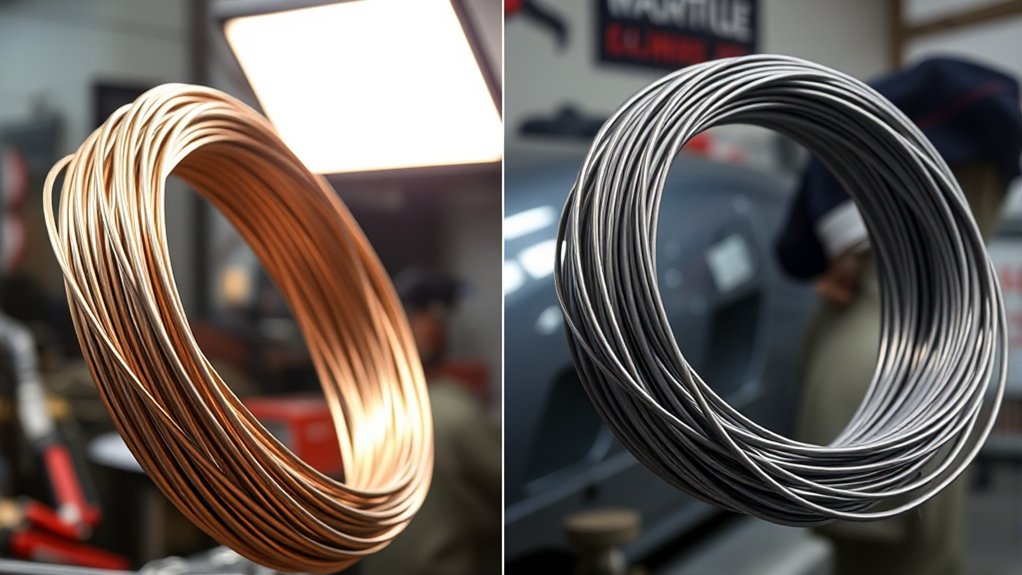
The useful difference is not that one wire is always stronger or cleaner. The key differences are the filler alloy, stiffness, feed system, shielding gas, polarity, and approved joint type. Solid steel wire feeds well through a standard liner. Aluminum and silicon bronze need a cleaner, lower-friction path and more careful drive pressure.
| Wire Type | Typical Gas and Polarity | Best Use and Main Watch-Out |
| Solid steel hard wire | Commonly C25 and DCEP | Mild-steel patches, plug welds, and brackets; needs clean metal and reliable gas coverage |
| Self-shielded flux-cored wire | No external gas; polarity varies by wire and is often DCEN | Outdoor or heavier work; slag, smoke, spatter, and common wire diameters make thin cosmetic panels harder to control |
| Aluminum soft wire | Commonly 100% argon and DCEP | Approved aluminum repairs; wrong filler alloy or feed setup can cause weak welds, burnback, and birdnesting |
| Silicon-bronze soft wire | Commonly 100% argon; use the approved machine program and polarity | MIG brazing where the OEM allows it; not a direct replacement for structural steel welding |
If the goal is a clean cosmetic repair on thin mild steel, solid wire with gas usually beats self-shielded flux core. If the goal is a structural collision repair, wire selection must follow the vehicle maker’s procedure. The wrong process can reduce joint performance, damage high-strength steel, overheat nearby electronics, or remove factory corrosion protection.
Products Worth Considering
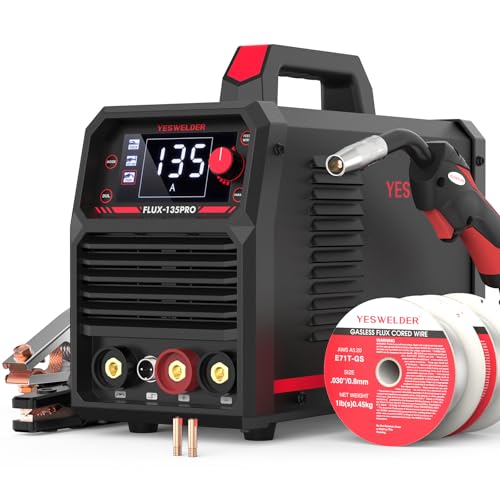
READY OUT OF THE BOX: Start welding immediately! It masterfully handles Gasless Flux Core MIG, Stick, and Lift TIG (Extra Lift TIG torch required). This budget-friendly 3-in-1 machine includes extra E71T-GS .030''&.035'' flux core wires, known for its smooth arc and high feedability. Say goodbye to heavy shielding gas cylinders—perfect for outdoor, windy, or all-position welding.

【LOW SPATTER & EASY CLEANUP】Minimal Spatter, Flawless Beads: Experience exceptionally low spatter and minimal post-weld cleanup. This ER70S-6 solid wire allows you to achieve smooth, visually appealing beads with ease, saving both time and grinding effort on your metal fabrication.
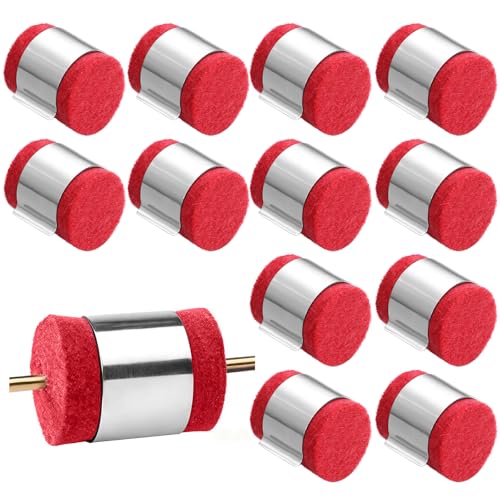
Steady Material: crafted from felt and metal, our welding wire cleaner pads promise steadiness; Specifically designed for rigorous environments like welding workshops, these pads withstand heavy usage and maintain their shape and efficiency over time; This product cleans wires and reduces scorching by 50%, ensuring smooth feeding of poorly cast, spiral, rusted, or excessively long wire feed bushings
How to Choose and Set Up MIG Wire Step by Step
1. Identify the Vehicle, Panel, and Base Metal
Record the model year and exact repair location, then consult the vehicle-specific body repair manual. Confirm whether the part is mild steel, high-strength steel, ultra-high-strength steel, stainless, or aluminum. Also check whether the joint must be plug welded, butt welded, spot welded, MIG brazed, rivet bonded, adhesively bonded, or replaced only at a factory seam.
2. Select the Approved Wire Classification and Diameter
For a nonstructural mild-steel patch, start with 0.023- or 0.024-inch ER70S-6 when the welder supports it. Move to 0.030-inch only when the material, machine chart, and joint call for more deposition. For an OEM structural repair, use the exact filler classification and diameter in the procedure, even when it differs from the general recommendation.
3. Configure the Feed Path, Gas, and Polarity
Match the contact tip, drive-roll groove, and liner to the wire. Connect C25 gas for common steel GMAW and set the flow according to the regulator, nozzle, environment, and machine manual. Use DCEP for ordinary solid steel wire unless instructed otherwise. When changing to flux-cored, aluminum, stainless, or silicon bronze, verify every setup item again.
4. Make and Test a Representative Coupon
Use scrap of the same material thickness and duplicate the planned joint, gap, access, and welding position. Tune voltage and wire speed on the coupon, inspect penetration and fusion, and destructively test a sample when the OEM or shop procedure requires it. Do not use the vehicle as the first test piece.
Best Practices for Auto Body Welding With Hard and Soft Wire
Good auto body welding depends on controlled heat, vehicle protection, and verified fit-up. Even the right spool will fail if the panel is misidentified, the gap is too wide, the machine is configured incorrectly, or a long bead overheats the sheet metal.
1. Protect the Vehicle Before Welding
Follow the OEM shutdown procedure before disconnecting power. For conventional vehicles, that may include saving required data, performing a pre-repair scan, disconnecting and isolating both battery cables, and waiting for restraint-system capacitors to discharge. On a hybrid or EV, the high-voltage system must be disabled and verified safe by a qualified person following the vehicle maker’s instructions.
Place the work clamp on clean metal as close as practical to the weld and, when possible, on the same panel so the current path stays short. Move or protect wiring, sensors, modules, fuel and brake lines, trim, glass, sound-deadening material, foams, seam sealers, and adhesives near the heat zone.
2. Clean and Fit the Metal First
Remove grease and oil before sanding. Clean paint, rust, primer, seam sealer, undercoating, and zinc only as far as needed for the approved joint and work-clamp contact. Keep the patch gap tight and consistent. Wide gaps force you to add more filler, which increases heat and burn-through risk.
3. Match Wire, Gas, and Settings
Start with 0.023- or 0.024-inch solid wire for a thin mild-steel panel and C25 gas. Set voltage and wire-feed speed from the welder’s chart, then fine-tune on scrap. Keep the nozzle clean and the stickout short and steady. Miller lists about 3/8 inch as a typical MIG stickout, but the correct value can change with the wire, joint, and machine.
4. Use Tack, Stitch, and Skip Welding
Do not run one long bead across a body panel unless the approved procedure specifically calls for it. Place a short tack, move to a distant area, and let the panel cool naturally before returning. This spreads heat over time and helps reduce distortion. A clean copper backing bar can support the puddle and absorb heat on accessible nonstructural gaps, but it does not replace correct fit-up or an OEM-approved joint.
5. Inspect and Test Before Grinding Flat
Look for pinholes, lack of fusion, undercut, burn-through, cracks, and incomplete plug-weld fill before grinding. Make any required destructive test welds on coupons. When dressing the finished weld, remove only the raised weld metal. Grinding below the surrounding panel surface thins and weakens the base metal.
6. Restore Corrosion Protection
After the joint passes inspection, restore epoxy primer, seam sealer, cavity wax, weld-through primer, adhesive, and topcoat only where the vehicle maker and product instructions call for them. Protect the back side and closed cavities, not just the visible face. Heat-damaged zinc and coatings will not protect the repair unless the corrosion system is rebuilt.
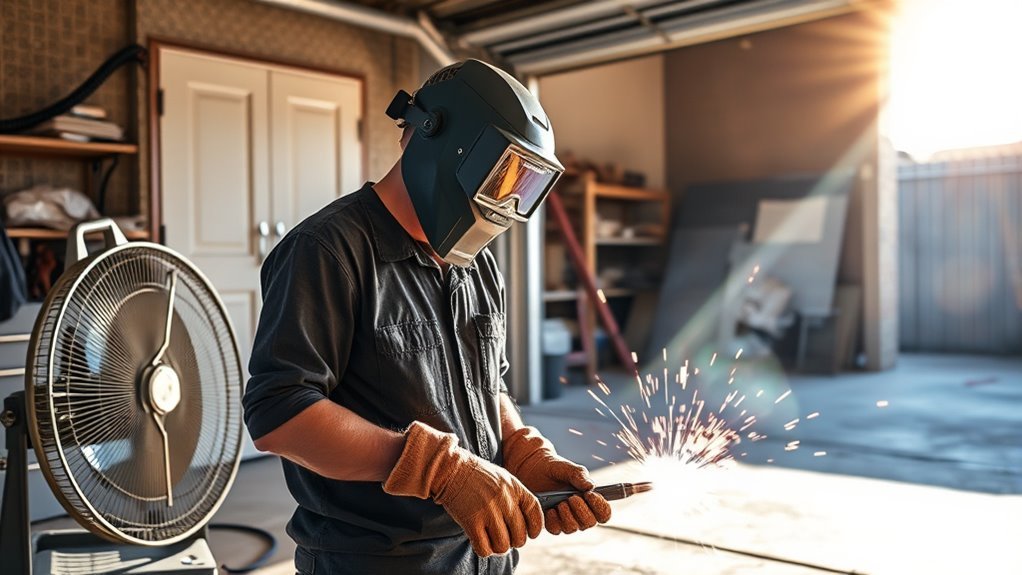
Warning: Welding is hot work and can ignite hidden foam, seam sealer, fuel vapor, trim, or undercoating. Wear a welding helmet, safety glasses, gloves, protective clothing, and hearing protection; remove or shield combustibles; keep suitable fire protection ready; use local fume extraction; and inspect both sides and nearby cavities during and after welding. Do not weld until battery, SRS, fuel-system, and high-voltage precautions are complete.
Porosity often comes from contamination, poor gas coverage, drafts, excessive stickout, leaks, or incorrect settings. If pores keep appearing, stop and correct the cause instead of grinding and welding over them. This guide on MIG welding problems and solutions covers additional defect patterns.
Wire speed and voltage matter as much as wire type. If the wire repeatedly stubs into the panel, the feed may be too fast for the voltage, the voltage may be too low, or the feed path may be obstructed. If the arc is harsh and the panel blows through, the combination may be too hot, the gap may be too wide, or the tack duration may be too long. Use a wire speed and voltage chart only as a starting point, then verify on a matching coupon.
Troubleshooting MIG Wire Problems on Auto Body Panels
| Problem | Likely Cause | Fix |
| Burn-through | Too much heat, oversized wire, wide gap, long tack, or poor access angle | Use smaller approved wire, reduce heat or tack time, tighten fit-up, skip around the panel, and use copper backing where suitable |
| Porosity | Dirty metal, gas leak, empty cylinder, clogged nozzle, draft, or excessive stickout | Clean the joint, check the full gas path, clean the nozzle, block drafts without trapping fumes, and shorten stickout |
| Heavy spatter | Wrong voltage-to-wire-speed balance, incorrect polarity, dirty tip, weak gas coverage, or straight CO₂ | Confirm polarity, tune on scrap, replace damaged consumables, verify gas coverage, and use C25 when appropriate |
| Birdnesting | Blocked liner or tip, excess drive pressure, excess spool drag, wrong drive roll, or a soft-wire feed mismatch | Clear the feed path, match the tip and rolls, reduce pressure and drag, keep the cable straight, or use the correct spool or push-pull gun |
| Wire stubbing into the panel | Wire speed too high, voltage too low, long stickout, or inconsistent feeding | Recheck the machine chart, make small setting changes, shorten stickout, and inspect the liner and drive system |
| Weak or inconsistent weld | Wrong filler, lack of fusion, contamination, poor work-clamp path, incorrect joint, or overgrinding | Stop, verify the material and OEM procedure, remake test coupons, correct the joint and settings, and inspect before finishing |
When to Stop and Use a Collision-Repair Professional
Do not treat a structural or safety-system repair like a cosmetic rust patch. Use a qualified collision-repair professional when the weld is on a frame rail, pillar, rocker reinforcement, roof rail, suspension mounting area, seat-belt or airbag mounting area, battery enclosure, high-voltage component, or any steel whose strength and repairability are unknown. The same rule applies when the OEM procedure requires squeeze-type resistance spot welding, pulse MIG brazing, rivet bonding, controlled heat limits, pre- or post-repair scanning, or destructive weld testing that you cannot perform.
Frequently Asked Questions
What MIG wire is best for auto body?
For most nonstructural mild-steel body panels, start with 0.023- or 0.024-inch ER70S-6 solid wire and 75% argon/25% CO₂ shielding gas. Confirm that your welder supports the wire size and that the vehicle maker does not specify a different filler or joining method.
What is the best wire for automotive welding?
The best wire depends on the metal and repair procedure. ER70S-6 is a common default for mild steel. Aluminum needs an alloy-matched aluminum filler and compatible feed system. Stainless needs a matching stainless filler. Silicon bronze should be used only for OEM-approved MIG-brazed joints.
What welding process is best for an auto body?
Short-circuit GMAW with small solid wire is common for mild-steel patch panels. Modern collision repairs may instead require resistance spot welding, pulse MIG brazing, TIG, rivet bonding, adhesive bonding, or a combination. Use the vehicle-specific body repair manual for structural work.
What is the golden rule in welding?
Make the weld safe and structurally correct before making it look smooth. Identify the metal, use the approved filler and process, protect the vehicle, control heat, inspect the joint, and avoid grinding into the base metal.
Is flux-cored wire good for auto body panels?
It can join some steel, but it is usually not the easiest choice for visible thin panels. Common self-shielded wires add slag, smoke, spatter, and cleanup, and their available diameters can be harder to control. Solid wire with shielding gas is normally cleaner for cosmetic mild-steel patches.
Should I use 0.023 or 0.030 wire for auto body welding?
Use 0.023- or 0.024-inch wire for most thin, nonstructural body panels when your machine supports it. Use 0.030-inch wire for thicker material or when the welder and OEM procedure call for it. Test the exact joint on matching scrap before welding the vehicle.
What polarity should I use for auto body MIG welding?
Ordinary solid steel MIG wire with shielding gas normally uses DCEP, meaning the gun is positive. Many self-shielded flux-cored wires use DCEN, but not every cored wire is the same. Follow the wire label and welder manual whenever you change processes.
Can I use silicon bronze instead of steel MIG wire?
Only when the vehicle maker approves MIG brazing at that joint. Silicon bronze joins at lower heat and can reduce damage near galvanized steel, but it is not a universal structural substitute for ER70S-series steel wire.
Conclusion
For a typical nonstructural mild-steel body patch, start with 0.023- or 0.024-inch ER70S-6 solid MIG wire, C25 shielding gas, clean metal, tight fit-up, verified polarity, and short tack or skip welds. Use specialty soft-feeding wire only when the base metal and repair procedure require it. The spool matters, but material identification, OEM instructions, vehicle protection, test welds, heat control, inspection, and corrosion restoration decide whether the repair is safe and durable.
Sources
- MillerWelds — MIG Basics for Automotive Welding Repair — supports automotive wire-size ranges, ER70S classifications, C25 shielding gas, and thin-metal technique
- MillerWelds — MIG Welding Tips and Techniques — supports DCEP use, typical stickout, material cleaning, machine charts, and gas setup
- I-CAR — What Shielding Gas Do I Need? — supports C25 gas for steel collision repair and 100% argon for aluminum and silicon-bronze work
- I-CAR — Battery Disconnect and Welding Precautions — supports short work-clamp paths, battery isolation, high-voltage disconnects, and electronic-component protection
- I-CAR — MIG Brazing: What Is It, Why Should I Use It? — supports OEM-only MIG brazing, silicon-bronze feed requirements, 100% argon, and lower-heat joining
- OSHA 29 CFR 1910.252 — Welding, Cutting, and Brazing — supports fire prevention, eye protection, hot-work safety, and precautions around containers and cavities