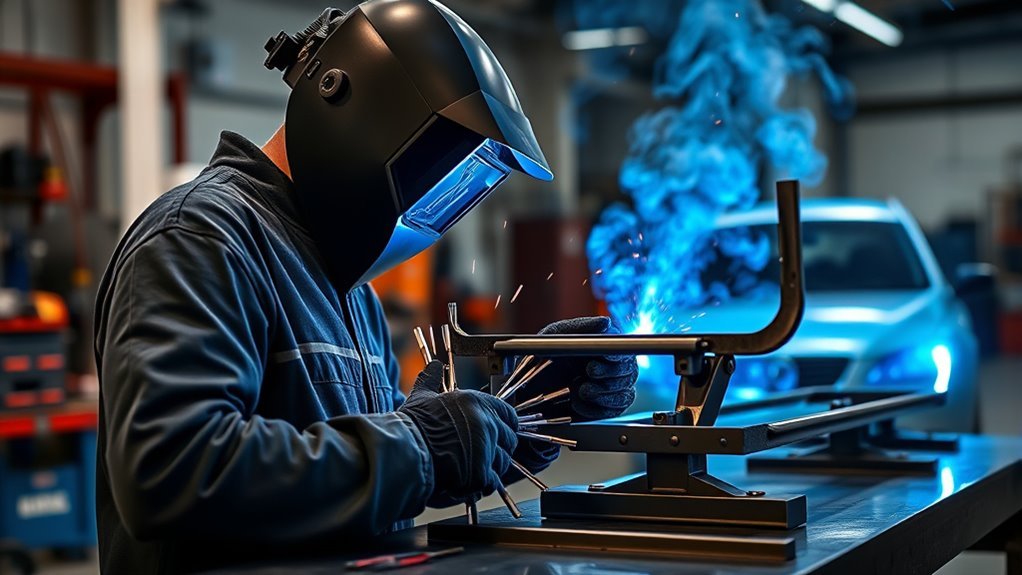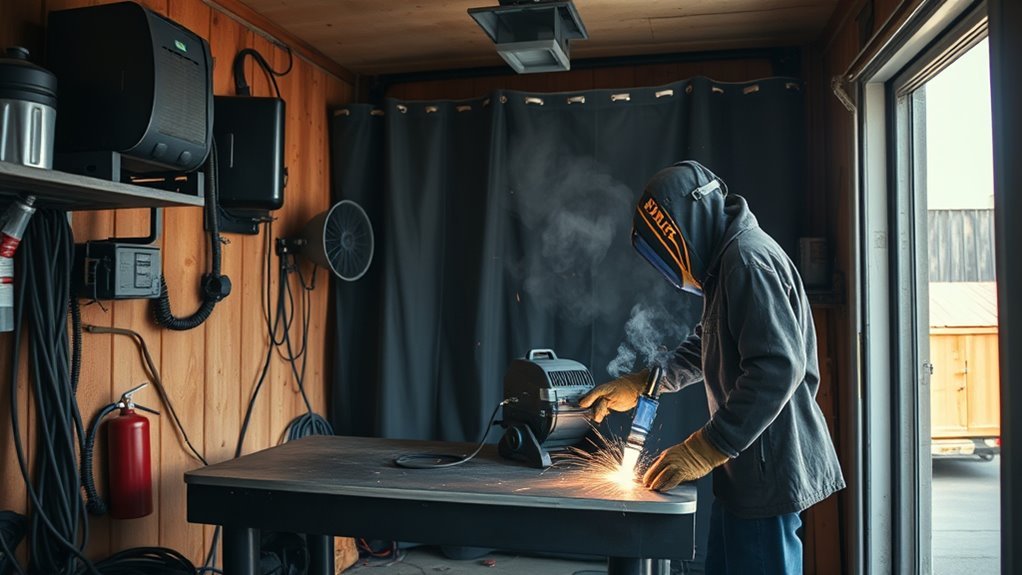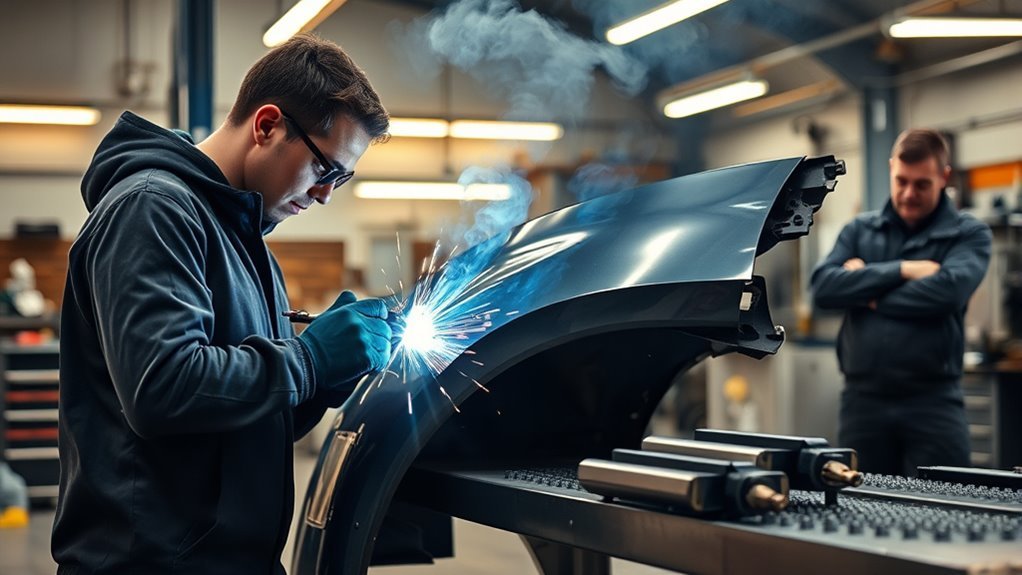
You can learn the basics of auto body welding in a few months if you follow a focused plan, practice several times a week, and start with thin sheet metal skills instead of jumping straight into major repairs. A structured short course may teach the fundamentals in about 10 to 18 weeks, but becoming job-ready usually takes more supervised shop time, better safety habits, and steady practice on real panel fit-up, tacking, plug welds, and stitch welding.
Quick Answer
Most beginners can learn basic auto body welding in about 10 to 18 weeks through a focused class or several months of regular practice. Expect longer for job-ready work. Clean, safe panel repairs require heat control, fit-up, tacking, plug welds, grinding, and supervised practice before you work on structural parts.
Key Takeaways
- A short course can teach the basics quickly, but safe, clean repairs take repeated hands-on practice.
- Start with MIG welding on scrap sheet metal before moving to patch panels or vehicle work.
- Heat control matters more than speed because thin auto body panels warp and burn through easily.
- Use proper PPE, ventilation, fire prevention, and manufacturer repair information before welding on a vehicle.
- Job-ready skill means you can make consistent welds, inspect your work, and follow shop safety procedures without guessing.
At a Glance
| Time Required | Basic skills: about 10 to 18 weeks in a focused class; job-ready repairs: several additional months of practice and shop feedback |
| Difficulty | Moderate to hard because thin panels require careful heat control and fit-up |
| Tools Needed | MIG welder, welding helmet, gloves, jacket, clamps, grinder, wire brush, backing bar, fire extinguisher, scrap sheet metal |
| Cost | Varies widely: DIY gear can cost hundreds to several thousand dollars; classes depend on school, length, and materials |
How Long Does Auto Body Welding Take?
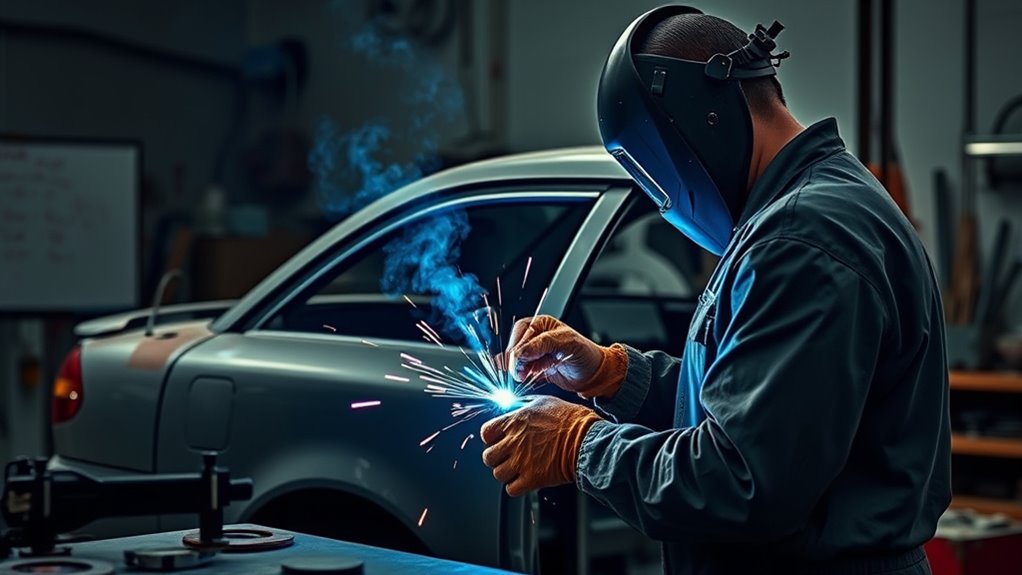
How long does auto body welding take? For most beginners, the basic learning curve is measured in months, not days. If you join a structured class and practice often, you can build a working foundation in about 10 to 18 weeks. That usually means learning shop safety, machine setup, bead control, panel preparation, tacking, stitch welding, and basic patch-panel work.
That timeline does not mean you are ready to weld every part of a car. Auto body work uses thin steel, coated panels, aluminum parts, and sometimes high-strength structural materials. Each material needs the right process, settings, and repair method. The U.S. Bureau of Labor Statistics notes that welders often need technical training and on-the-job training, so a short class should be seen as the start of skill-building, not the finish line.
A realistic timeline looks like this:
| Goal | Typical Time | What You Should Be Able to Do |
| Basic awareness | 1 to 3 weeks | Understand PPE, machine controls, metal prep, and simple beads on scrap |
| Beginner repair practice | 4 to 10 weeks | Make tacks, plug welds, lap joints, and small patch-panel welds on scrap panels |
| Solid basic skill | 10 to 18 weeks | Control heat, reduce burn-through, grind cleanly, and inspect simple welds |
| Job-ready shop work | Several months or more | Follow repair procedures, work safely, fit panels accurately, and handle basic repairs under supervision |
If you train daily, you will progress faster than someone who only practices on weekends. Most courses mix classroom theory with hands-on training, helping you understand why settings, shielding gas, travel speed, and panel fit-up matter. When you’re learning how to weld, you’ll usually start with MIG welding because it is common in collision and sheet metal work. If you plan to weld coated steel, review the safety precautions before you practice.
Career expectations should also stay realistic. According to BLS, the 2024 median pay was $51,000 for welders, cutters, solderers, and brazers, while the 2024 median pay for automotive body and related repairers was $51,680. Pay varies by location, employer, certifications, overtime, and the type of repair work you can perform.
What You Need to Start Auto Body Welding
Before you start auto body welding, make sure you have the basics in place: the right safety gear, a suitable welder, clean practice metal, and a safe work area. You do not need to master every welding process on day one, but you do need to understand what can hurt you and what can damage the vehicle.
Learn safety first, practice on scrap second, and touch real vehicle panels only after your welds are consistent.
You’ll need a welding machine, usually a MIG welder for beginner auto body practice, plus gloves, a welding helmet, protective clothing, hearing protection, and safety glasses. OSHA requires helmets or hand shields during arc welding and arc cutting, with proper eye protection for helpers and nearby workers.
You also need cutting, shaping, and cleaning tools. Keep a grinder, wire brush, clamps, panel magnets, backing bar, and measuring tools nearby. Clean metal matters. Rust, paint, seam sealer, oil, undercoating, and galvanizing can contaminate welds and create hazardous fumes.
Warning: Do not weld on fuel tanks, near fuel lines, close to batteries, beside interior insulation, or on safety-critical structural parts unless you are trained, the area is prepared, and you are following the vehicle manufacturer’s repair procedure. Keep a fire extinguisher nearby and inspect for smoldering materials after welding.
You also need to know your automotive body materials. Mild steel, high-strength steel, galvanized steel, and aluminum behave differently. Steel and aluminum do not use the same settings or prep. Some modern structural parts should not be repaired by guesswork because heat can change the metal’s strength.
Solid metalworking skills help you cut, fit, and repair parts with control, while blueprint reading and repair information help you follow the correct sequence. Understanding protective clothing is also essential because sparks, hot metal, UV radiation, and grinding debris are part of the work.
Products Worth Considering
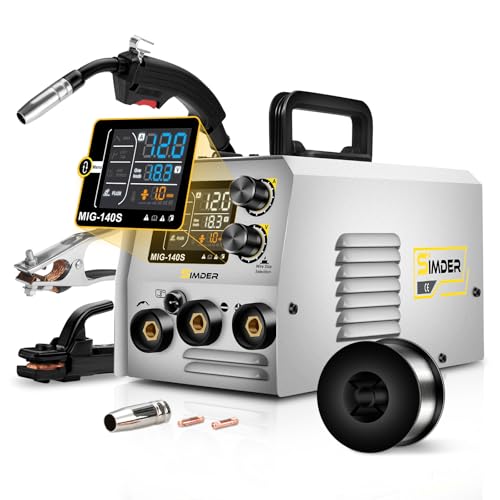
THREE-PROCESS WELDING STATION BUILT FOR FIRST-TIME USERS - Flux Core MIG, Lift TIG and Stick in one machine, so you can find the process that fits your projects without buying three separate welders. Runs on a standard 110V household outlet or 220V for heavier work - no electrician, no special wiring. Welds carbon steel, low-alloy steel, stainless steel, titanium, copper and cast iron
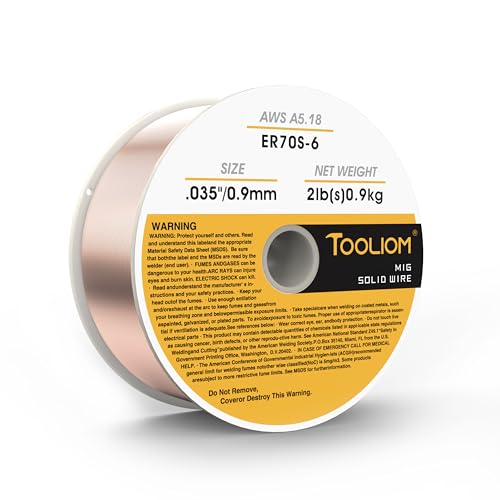
High-quality:Tooliom's .035" ER70S-6 MIG Welding Wire (2lb spool) meets all industry standards for consistent strength and performance. Enjoy smooth feeding, stable arcs, optimal penetration, and high deposition rates—everything you need for exceptional welds

Package Includes: 10ft mig gun + 1pcs nozzle +1pcs diffuser + 6 tips (.023", .030", .035" - two of each size). This mig gun uses the same consumables as the Tweco Mini/#1. 21-50 nozzle, 35-50 diffuser, 11-series contact tip.
First Auto Body Welding Skills to Learn
Start with MIG welding, since it is the most common and forgiving process for many beginner auto body repairs. Your first goal is not speed. Your first goal is control.
Build these skills in order:
- Safety setup: Put on PPE, clear combustibles, check ventilation, and keep the work area dry.
- Machine setup: Learn wire size, voltage, wire feed speed, polarity, and shielding gas basics.
- Metal prep: Remove paint, rust, coatings, seam sealer, and oil from the weld area.
- Fit-up: Cut patches cleanly and keep gaps small so you do not fill poor fitment with excess weld.
- Tack welding: Place small, controlled tacks to hold panels without overheating them.
- Stitch welding: Move around the panel and let it cool to reduce warping.
- Plug welds: Practice filling drilled holes to mimic spot-weld replacement where the repair procedure allows it.
- Grinding and finishing: Grind carefully without thinning the panel or hiding weak welds.
- Inspection: Look for burn-through, porosity, lack of fusion, cracks, and panel distortion.
Practice safety practices every time. Check your machine, your ground clamp, your gas flow, and your surroundings before you strike an arc. Then drill basic techniques like tacking and stitch welding until you can place small, consistent welds without warping the panel.
Pro Tip: Cut old body panels or buy scrap sheet metal close to automotive thickness. Practice on the same type and thickness of metal before you repair an actual vehicle panel.
Once you’re steady, work on panel replacement by cutting, shaping, clamping, and welding new sections into place. These skills remove guesswork and build the foundation for better repairs.
How Welding Classes Speed Up Progress
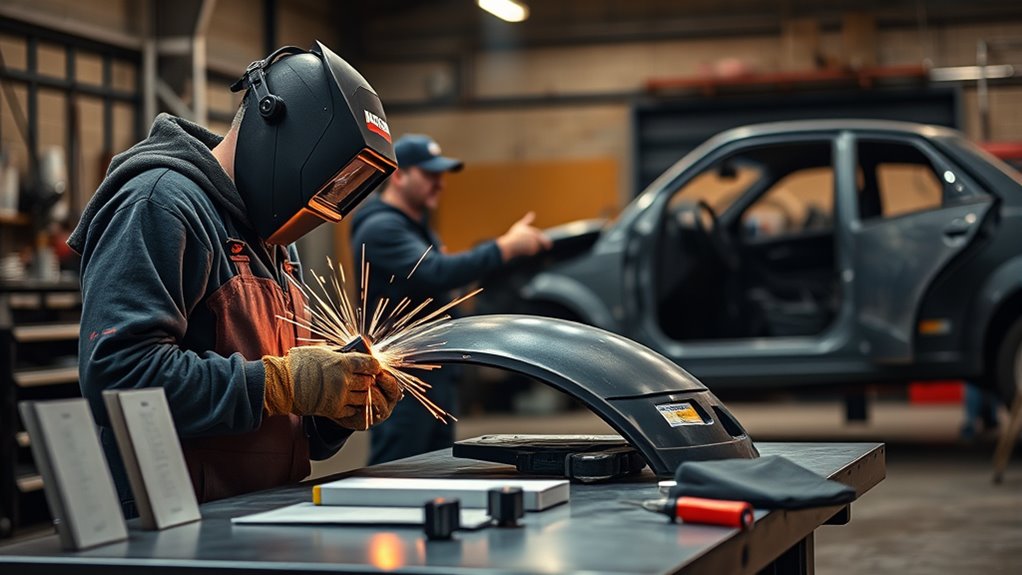
If you want to learn faster, welding classes can shorten the path from basic practice to repair-ready skill. A class gives you scheduled repetition, safer supervision, and feedback before bad habits become normal.
Most short programs focus on core skills first: safety, machine setup, metal prep, bead control, tacks, joint types, and inspection. Instructors can watch your work, correct mistakes, and explain why a weld failed. That matters because many beginner welds look acceptable on the surface but have poor fusion, too much heat, or hidden contamination.
Classes also help you connect theory with practice. You learn why shielding gas problems cause porosity, why travel speed changes bead shape, and why poor fit-up makes thin metal harder to weld. Understanding shielding gas problems can significantly improve your results and speed up your learning curve.
The BLS automotive body and glass repairer profile notes that most employers prefer candidates who have completed training, and that industry certification is becoming increasingly important. A class will not replace shop experience, but it can help you reach that first shop opportunity with fewer gaps.
Tools and Practice That Improve Sheet Metal Welds
A few essential tools can make sheet metal welding much easier and more accurate. When you choose a MIG welder, you get fast, controllable welding that suits many thin steel panels when it is set correctly.
Start with solid preparation. Clean the metal, remove rust, and expose bright steel so your welds can bond well. Use welding clamps to hold panels steady, keep alignment true, and limit warping while you work.
A backing bar can support the joint from behind, absorb extra heat, and help you build stronger welds with better control. If you move into aluminum work, do not assume your steel setup will work. Aluminum needs the right wire, process, cleanliness, and settings. Review guidance on aluminum flux wire before experimenting with aluminum components.
Use scrap metal for practice. That is where you learn heat, movement, spacing, and cooling time without risking a customer car or your own project vehicle. A good practice session should include:
- Ten straight beads on scrap to warm up.
- Ten tack welds spaced apart to control heat.
- Five lap joints to practice penetration and edge control.
- Five plug welds to practice filling without piling up excess metal.
- One small patch-panel exercise with cutting, clamping, welding, grinding, and inspection.
These tools and habits give you more control, better results, and confidence. With each practice session, you sharpen your welding skills and move closer to clean, strong welds on sheet metal.
Products Worth Considering
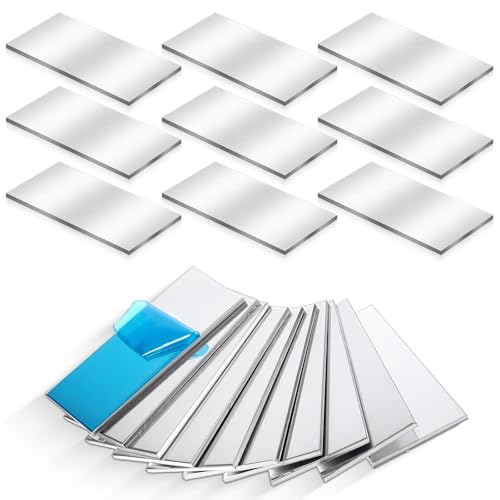
Detailed Dimensions with Ample Quantity: Our package includes 20 pieces of aluminum sheet welding kit, each crafted to precise dimensions of 2 x 4 inches (5 x 10 cm) with a thickness of 1/8 inches (3 mm). These plates are perfect for tasks demanding precision, such as laser cutting and professional welding, delivering consistent results every time.

Perfect gift for any Stick Welding, MIG Welding, TIG Welding, Plasma Arc Welding, Electron Beam Welding, Laser Welding or Gas Welding you know. Men or Women. Heck, even grab one for the little boys or girls in your life.
Why Auto Body Welding Is Hard to Master
Auto body welding is hard to master because you are not just joining metal. You are controlling heat, fitment, strength, corrosion protection, and finish all at once. Thin sheet metal punishes mistakes fast. Too much heat can warp a panel or burn through it. Poor prep can cause porosity. Poor fit-up can turn a simple patch into a messy repair.
You also need learning across different processes like MIG, TIG, resistance spot welding, and sometimes brazing, depending on the vehicle and repair procedure. To achieve quality results, you must also understand when TIG settings matter, especially if you move beyond basic steel panel repair into stainless or specialty work. Review TIG welding settings before trying advanced TIG projects.
| Challenge | Why It Matters |
| Welding method choice | Each metal, panel, and repair procedure may require a different approach |
| Thin sheet metal | Heat control must stay precise to prevent warping and burn-through |
| Coatings and contamination | Paint, rust, zinc, oil, seam sealer, and undercoating can weaken welds and create fumes |
| Blueprints and repair procedures | Fitment, weld location, and repair sequence affect safety and final alignment |
| Finishing work | Grinding too much can thin the panel, while poor corrosion protection can lead to future rust |
True mastery takes time because you are building muscle memory and hand-eye coordination through repeated work. You also need related skills like metal shaping, measuring, grinding, corrosion protection, and panel alignment.
Safety Mistakes That Slow Beginners Down
Safety is not separate from learning. It is part of learning. Welding exposes you to hot metal, sparks, fumes, intense light, electrical hazards, and fire risk. The OSHA welding, cutting, and brazing page lists standards, hazards, and solutions for welding work, and OSHA’s general welding requirements cover fire prevention, PPE, ventilation, and first aid.
Common beginner safety mistakes include:
- Welding near carpet, insulation, paper, fuel residue, or undercoating.
- Skipping eye protection for helpers or bystanders.
- Practicing in a closed garage without enough ventilation.
- Welding coated or galvanized metal without understanding fume hazards.
- Grinding without eye, face, and hearing protection.
- Welding on modern structural parts without OEM repair information.
Note: OSHA requires welding and cutting areas to be made fire safe. Where practical, combustibles should be moved at least 35 feet away or protected with suitable fire-resistant covers or shields.
Ventilation also matters. OSHA requires local exhaust or general ventilation systems to keep toxic fumes, gases, or dust below allowable concentrations. If you are practicing at home, do not treat a small fan as a complete fume-control plan. Work in a safe, well-ventilated area and use the right respiratory protection when the material or coating requires it.
How Practice Improves Sheet Metal Welding
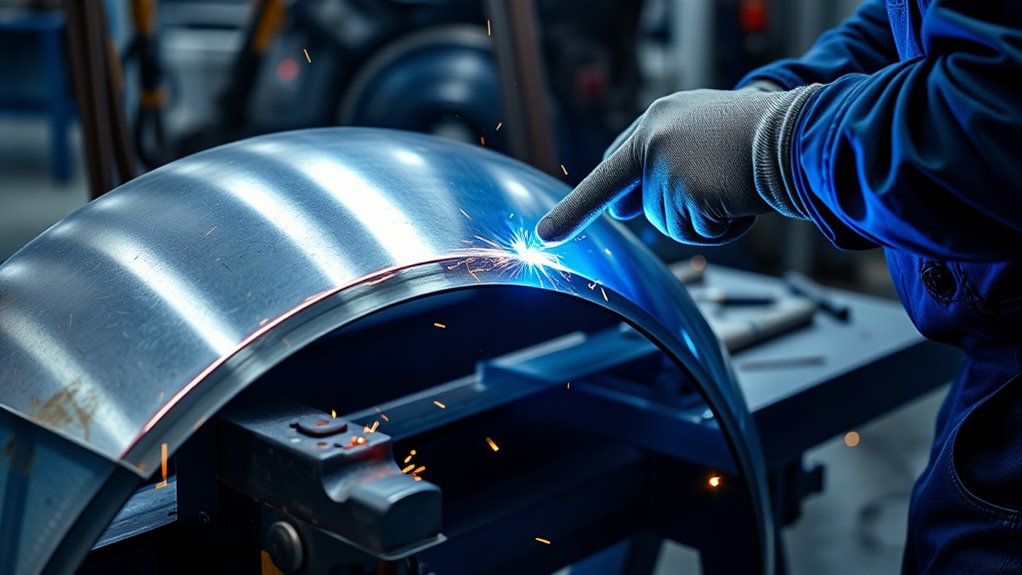
Practice is where sheet metal welding starts to click. You build muscle memory, tighten your control, and learn to make clean joins without overthinking every move.
When you spend consistent practice time on MIG and TIG, you sharpen the necessary skills for automotive sheet metal and get better at judging heat, speed, and fit-up. Hands-on projects, like vehicle restorations, push you to work through real-world thickness changes and material challenges, so you adapt faster.
A good practice plan should include both repetition and inspection. Do not only ask, “Did it stick?” Ask better questions:
- Did the weld fuse both pieces?
- Did I overheat the panel?
- Did the panel move or warp?
- Is there porosity, cracking, or undercut?
- Did I grind too much metal away?
- Would this pass a shop supervisor’s inspection?
A good welding program should expose you to different types of welding and let students be evaluated on precision, consistency, and problem-solving. You can also use YouTube tutorials and welding forums to support what you do in the booth, but do not treat online tips as a replacement for safe hands-on instruction. Flux core welding techniques can also help you understand wire-feed welding behavior, especially when you compare flux-core practice with gas-shielded MIG practice.
That mix of repetition and feedback builds confidence, which supports better repairs and future job placement.
When You’re Ready for Real Auto Body Repairs
You’re ready for real auto body repairs when you can make clean, consistent welds, follow safety steps without hesitation, and handle basic metal shaping with confidence. At that point, you can start on shop-grade repairs like rust patches and simple panel replacements under controlled conditions. Each job should test your skill and show you where you still need more practice. Mastering flux core welding techniques can also help you understand different welding challenges, though gas-shielded MIG is often preferred for cleaner thin-panel work when conditions allow it.
Skill Readiness
Before you tackle real auto body repairs, make sure you’ve completed structured welding training or built enough supervised hands-on experience to work with confidence.
Your training should cover MIG welding, panel fabrication, metal prep, joint design, plug welds, stitch welds, grinding, corrosion protection, and inspection. Expect foundational learning to take 10 to 18 weeks in a focused program, but do not rush your job-ready progress.
Aim for at least 100 hours of purposeful hands-on practice as a practical benchmark, not a formal rule. Use that time to weld scrap coupons, test fit patch panels, repair non-structural practice pieces, and review your mistakes. When you can weld cleanly, fit panels accurately, and choose the right approach without hesitation, you’re ready to move toward real repairs with supervision.
Shop-Grade Repairs
When your basic welding skills feel steady, it is time to apply them to shop-grade repairs. At this stage, you may use MIG and TIG welding techniques with more confidence, but you still rely on strong foundational skills.
If you’ve completed accredited training programs, especially vehicle restoration or collision repair training, you’ll handle panels, brackets, and supports more accurately. Keep studying metal behavior, repair sequences, corrosion protection, and safety standards because real auto body work demands more than sparks.
Follow manufacturer repair procedures closely. Modern vehicles may use high-strength steel, aluminum, adhesives, rivets, and squeeze-type resistance spot welds. Not every part should be repaired with a basic MIG welder. With steady repetition and shop feedback, you’ll cut the learning curve and move from practice pieces to repairs that restore vehicles with strength and precision.
When You Are Not Ready Yet
You are not ready for real vehicle repairs if your welds are inconsistent, you frequently burn through panels, you do not understand your machine settings, or you cannot explain why a weld failed. You are also not ready to weld structural parts if you have not checked the repair procedure or do not understand the material you are welding.
That does not mean you should stop. It means you should go back to scrap panels, slow down, and practice one skill at a time. Better practice now prevents expensive repairs later.
Frequently Asked Questions
How hard is it to weld a car body?
Welding a car body is challenging because the metal is thin and easy to warp. You need clean metal, good fit-up, correct settings, short tacks, cooling time, and proper safety habits. It is learnable, but it takes steady practice before your repairs look clean and hold properly.
Can you make $100,000 as a welder?
Yes, some welders can reach $100,000, but it is not typical for entry-level auto body welding. Higher earnings usually come from specialized industries, overtime, travel work, advanced certifications, inspection roles, or management. For context, BLS reported 2024 median pay of $51,000 for welders, cutters, solderers, and brazers.
What is the highest paying job in auto body?
The highest-paying path in auto body is not always a basic technician role. Pay can rise with advanced collision repair skills, aluminum repair, structural repair training, estimating, shop management, certifications, and experience. Location, employer type, and commission or flat-rate systems can also change earnings.
Is 40 too old to learn welding?
No, 40 is not too old to learn welding. Many adults start later because they want a trade skill, career change, or restoration hobby. The main requirements are patience, safety discipline, hand control, and enough practice time to build muscle memory.
Can I teach myself auto body welding?
You can teach yourself basic welding practice on scrap metal, but a class or mentor is safer and faster. Auto body welding involves fire risk, fumes, panel warping, and structural repair concerns, so supervised feedback helps you avoid unsafe habits and hidden weld defects.
Do I need certification for auto body welding?
Certification depends on the employer, repair type, and location. Many shops value formal collision repair training, welding qualification, and manufacturer-specific procedures. Even when certification is not legally required, documented training can help prove that you understand safe repair methods.
Conclusion
So, how long does it take you to learn auto body welding? You can learn the basics in a few months with focused practice, and a 10- to 18-week class can give you a strong starting point. Real confidence takes longer because clean auto body repairs require heat control, careful fit-up, safe work habits, and repeated practice on thin sheet metal. Start with scrap, learn MIG fundamentals, protect yourself from fumes and fire, and move to real repairs only when your welds are consistent and your process is safe.
Sources
- U.S. Bureau of Labor Statistics: Welders, Cutters, Solderers, and Brazers — training, duties, pay, job outlook, and workplace hazards.
- U.S. Bureau of Labor Statistics: Automotive Body and Glass Repairers — auto body training expectations, pay, and job outlook.
- OSHA: Welding, Cutting, and Brazing — welding hazards, standards, and safety resources.
- OSHA 29 CFR 1910.252: General Welding Requirements — fire prevention, PPE, ventilation, and first-aid requirements.