Automotive welds can last for many years, but there is no single lifespan that fits every repair. A factory spot weld or a properly duplicated structural weld can last as long as the surrounding metal when it is protected from corrosion. A rust-repair weld may need attention much sooner if moisture, road salt, or poor backside coating reaches the joint.
Quick Answer
Automotive welds can last the life of the vehicle when the metal is clean, the repair follows the correct procedure, and the backside is sealed against corrosion. Rust-repair welds often last 5 to 10 years in good conditions, but they can fail sooner in salted, wet, or poorly protected areas.
Key Takeaways
- A good weld is not the only thing that matters. The surrounding metal, primer, seam sealer, cavity wax, and drainage decide how long the repair survives.
- Road salt and trapped moisture are the biggest enemies of automotive welds, especially on rocker panels, wheel arches, floors, subframes, and pinch welds.
- Structural welds should follow the vehicle maker’s repair procedure. Do not guess on frame rails, pillars, rocker reinforcements, seatbelt mounts, or suspension points.
- Inspect weld repairs at least twice a year, and more often if you drive in a Salt Belt state or on wet, muddy, or coastal roads.
At a Glance
| Time Required | 15 to 30 minutes for a basic visual inspection |
| Difficulty | Easy for inspection, professional level for structural repair |
| Tools Needed | Flashlight, inspection mirror, gloves, plastic trim tool, magnet, camera, and safety glasses |
| Cost | Basic inspection is usually free if you do it yourself. Professional inspection or repair estimates vary by shop, vehicle, and damage location. |
Expected Lifespan of Automotive Welds
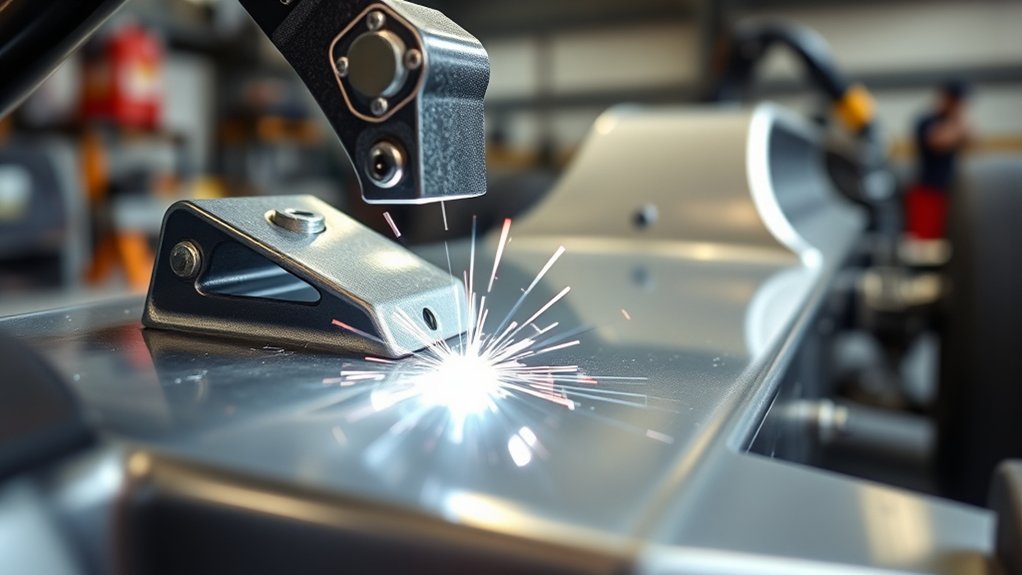
The expected lifespan of automotive welds depends on the repair type, the base metal, the welding process, and how well the area is sealed after the weld cools. A clean weld on solid metal can last decades. A weld placed over thinning, pitted, or poorly cleaned metal may fail much sooner, even if the bead looks neat from the outside.
| Weld or Repair Type | Typical Service Life | What Usually Shortens It |
|---|---|---|
| Factory spot welds and original body welds | Often the life of the vehicle if corrosion protection stays intact | Crash damage, broken seam sealer, trapped salt, and coating failure |
| OEM-approved collision repair welds | Can last as long as the surrounding panel when done correctly | Wrong weld location, wrong heat input, missing corrosion protection, or ignored repair procedures |
| Rust patch welds on rockers, floors, wheel arches, or tailgates | Often 5 to 10 years when sealed well, less in harsh salt or wet use | Moisture behind the patch, uncoated backside, pinholes, lap seams packed with salt, and poor drainage |
| Exhaust, hanger, or bracket welds | Varies widely because heat and vibration are constant | Thin metal, vibration, heat cycling, road spray, and poor fit-up before welding |
For rust repair, the weld bead is rarely the first part to fail. The common failure point is the seam around it. Salt water creeps into a lap joint, behind a patch, or under cracked seam sealer. Once rust starts behind the repair, the outer surface may look fine until bubbling, staining, or soft metal appears.
Note: A neat weld bead does not prove the repair is safe. Weld strength depends on metal thickness, penetration, heat control, joint design, and the condition of the surrounding structure.
What Are Automotive Welds and Their Importance?
Automotive welds join metal parts so the vehicle can carry loads, absorb vibration, and maintain its shape. You will find welds in body panels, rocker assemblies, floors, brackets, exhaust parts, frame sections, subframes, and crash structures. Some are cosmetic or nonstructural. Others are part of the vehicle’s safety cage.
The most common automotive joining methods include resistance spot welding, plug welding, MIG welding, TIG welding, brazing, and adhesive-bonded weld combinations. MIG and TIG are useful in many repair settings, but the correct process depends on the vehicle, metal type, location, and manufacturer procedure.
Properly executed automotive welds help preserve structural integrity, reduce the chance of panel separation, and keep repairs from opening up under vibration. Poorly executed welds can create hard spots, burn-through, weak penetration, or corrosion traps. If aluminum components are involved, understanding limits around processes such as weld aluminum with flux core matters because not every welding process is suitable for every automotive material.
Warning: Do not treat structural vehicle welding as a basic DIY job. Frame rails, pillars, rocker reinforcements, seatbelt mounts, suspension mounts, and airbag-related structures should be repaired only with the correct OEM procedure and proper training.
Key Factors Impacting Weld Durability
When evaluating weld durability, look beyond the weld bead. The strongest repair is a system: clean metal, correct joint design, controlled heat, proper filler, good penetration, sealed seams, protected backside, and continued maintenance.
Material Quality Considerations
Material quality has a direct effect on weld life. Welding onto thin, rusty, oily, or pitted metal reduces the chance of a strong repair. Solid steel, clean aluminum, and correctly matched patch panels give the weld a better foundation. Patch panels should match the original thickness and shape as closely as practical so the repair does not create a weak transition point.
Material type also affects heat control. Thicker steel needs enough heat for fusion, while thin sheet metal can warp or burn through quickly. Advanced high-strength steels, boron steel, aluminum, and coated panels may require special repair methods. In some areas, the right fix may be replacement, bonding, sectioning, or a factory-style spot weld rather than a freehand bead.
Environmental Exposure Effects
Environmental exposure often decides how long a welded repair survives. Road salt, coastal air, trapped mud, and standing water speed up corrosion. The U.S. Environmental Protection Agency notes that rock salt can have corrosive effects on cars, trucks, bridges, and roads, which is why welded seams in wheel wells, rocker panels, lower doors, and floors need extra protection. EPA road salt information
Daily driving also adds vibration, flex, impact from debris, and temperature changes. A weld on an exhaust hanger sees different stress than a rocker-panel patch. A floor repair in a dry climate has a different life expectancy than the same repair in a winter road-salt area.
Workmanship and Heat Control
Workmanship is just as important as material quality. A durable weld needs clean metal, good fit-up, correct wire or filler, proper shielding gas, enough penetration, and controlled cooling. Too little heat can cause lack of fusion. Too much heat can warp thin panels, burn away coatings, or weaken nearby metal.
Surface preparation matters before the weld starts. Paint, seam sealer, rust, oil, undercoating, and zinc coating can contaminate the weld and create harmful fumes. OSHA explains that welding fumes can contain harmful metal and gas by-products, and weld surfaces should be cleaned of coatings that could create toxic exposure. OSHA welding fume fact sheet
Proper preheat temperature is also important for some materials, although most automotive sheet-metal work focuses more on controlled heat input, short welds, and cooling time to limit warping.
Common Welding Techniques in Automotive Repair
In automotive repair, the right welding technique depends on the part being repaired. MIG welding is common for steel body repair because it is fast, versatile, and practical for patch panels and plug welds. TIG welding gives more control and a cleaner finish, especially on certain aluminum or custom-fabrication jobs, but it is slower and more skill-dependent.
Resistance spot welding is widely used in factory body assembly and collision repair when the correct equipment and access are available. Plug welding is often used to duplicate spot weld locations where resistance spot-welding access is limited. Lap welding can be strong, but it can also create a corrosion trap if the seam is not sealed on both sides. Butt welding can reduce overlap corrosion but requires better fit-up and more skill to avoid warping.
Stick welding is useful for heavier steel and outdoor work, but it is usually not the best choice for thin automotive sheet metal. The best welding process selection comes from the repair location, metal type, thickness, access, and manufacturer guidance.
Pro Tip: Ask the shop how it protects the backside of the weld. Primer on the visible side is not enough if the hidden side of the seam is bare metal.
Products Worth Considering

Heavy-Duty HSS Spot Weld Cutter : Made from premium High-Speed Steel (HSS) with cutting edge hardness up to 63–66 HRC, this spot weld cutter delivers exceptional durability, sharpness, and strong penetration power for fast and efficient metal cutting

Spot Weld Cutter Kit: It is easy to replace when the cutter blades begin to dull. The spot weld removal tool kit includes 2 complete spot weld cutters, 11 replacement 3/8" double-sided cutter blades, 2 replacement center pins, and a storage case

Durable HSS Construction: Our spot weld cutter set is made of HSS for better durability and wear resistance. The double-sided blades ensure long-term use and consistent performance, making it the ideal tool of choice for metal cutting
Maintenance Tips to Prolong Weld Life
To prolong the life of your automotive welds, focus on inspection, cleaning, drainage, and corrosion protection. The goal is simple: keep salt and moisture away from the seam, especially on the hidden side of the repair.
Clean and Protect After Winter Driving
If you drive on salted roads, wash the underbody after winter storms and again at the end of the season. Pay close attention to rocker panels, wheel wells, floor seams, pinch welds, rear quarters, and repaired areas. Do not blast directly into loose seam sealer or damaged undercoating with extreme pressure because that can force water behind weak coatings.
After cleaning and drying, use products designed for automotive corrosion protection. Good options include epoxy primer, weld-through primer where appropriate, seam sealer, cavity wax, and rust-inhibiting coatings. For repaired rust holes, a zinc-rich primer can help when used in the right place, but it is not a substitute for clean metal and sealed seams.
Inspect Welds on a Schedule
Regular inspections help you catch rust before it spreads under a repair. Use a flashlight and inspection mirror. Look for swelling seam sealer, orange staining, bubbling paint, cracks, pinholes, water stains, and soft metal around the weld.
| Inspection Task | Frequency | What to Check |
|---|---|---|
| Visual check for rust | Every 3 months, or monthly in road-salt areas | Bubbling paint, orange staining, cracks, lifted seam sealer, and pinholes |
| Drainage check | After heavy rain, mud, or winter driving | Blocked drain holes, trapped mud, wet carpet, and standing water in cavities |
| Coating touch-up | At least once a year | Cracked undercoating, exposed primer, scraped metal, and missing cavity wax |
Protective Coatings Usage
After welds are rust-free and clean, protective coatings help extend their life. Epoxy primer, seam sealer, paint, cavity wax, and underbody coatings each serve a different purpose. Primer helps seal bare metal. Seam sealer closes joints. Paint and topcoats protect visible surfaces. Cavity wax creeps into hidden seams and helps protect the backside of repairs.
Do not apply thick undercoating over active rust or wet metal. That can trap moisture and hide the problem. Clean the area first, repair any weak metal, then seal it with products meant for automotive corrosion protection.
The weld bead may be strong, but the repair will only last if the seam around it stays dry, sealed, and protected from salt.
How to Identify Weak or Failing Welds
You can spot many early warning signs before a weld fully fails. Start by inspecting the area around the repair, not just the bead. Cracks, gaps, rust bubbles, flaking seam sealer, water stains, or metal that flexes under light pressure are all signs that the repair needs closer attention.
- Cracks or gaps: May point to poor fusion, fatigue, or movement between panels.
- Rust staining: Often means corrosion is forming behind paint, seam sealer, or a patch.
- Bubbling paint: Usually means corrosion has started under the surface.
- Warped or oil-canned sheet metal: Can come from too much heat during welding.
- Loose seam sealer: Lets water enter the joint and attack the backside.
- Soft surrounding metal: Means the weld may still be attached to metal that is too weak to hold.
A light tap with a plastic tool can sometimes reveal loose filler, delamination, or weak surrounding metal, but it is not a true weld-strength test. If the repair is structural, ask a qualified shop to inspect it. Proper fillet weld sizing, joint design, and material thickness all affect whether the repair is safe.
Warning: Stop driving and get a professional inspection if you see separation near suspension mounts, frame rails, subframes, seatbelt anchors, steering components, brake-line mounts, or major rocker and pillar structures.
Choosing a Quality Welding Service
When you choose a welding or collision-repair service, ask more than “Can you weld it?” A quality shop should explain the repair method, metal preparation, corrosion protection, and inspection steps. For structural collision work, the shop should use the correct vehicle-maker repair information and the right welding equipment for the material.
Ask these questions before approving the repair:
- Will this repair follow the OEM procedure for my vehicle?
- Is this part mild steel, high-strength steel, boron steel, aluminum, or coated steel?
- Will you use MIG, TIG, resistance spot welding, plug welds, brazing, bonding, or replacement?
- How will you protect the backside of the weld after the repair?
- Will you apply seam sealer, cavity wax, primer, and topcoat where needed?
- Can you show the repair area before it is covered with coating?
- What warranty applies to workmanship and corrosion protection?
Experience matters, especially if you drive in salted winter conditions. A shop that understands rust-proofing techniques, drainage paths, and correct amperage settings is more likely to produce a lasting repair. Correct amperage helps create fusion without overheating the surrounding metal, but amperage is only one part of the full repair process.
Products Worth Considering

Highly Durable Design: The shell of stud welder kit is made of high-quality ABS body, has good stability under high temperature conditions, withstand temperature of 93-118℃, and the movement is pure copper electrode. This welder stud kit is wear-resistant, strong and sturdy.

【Usability】: This spot welding drill is mainly used for the removal of welded joints on the bodywork, as well as high-precision drilling operations for fixed-point positioning. Due to its good positioning function, the depth of drilling can be easily adjusted to meet different repair needs.

5 Minute Quick Start Spot Welder: We use a wide voltage input of 100-240V and an adapter of 15amp high current for fast charging Connect the spot welding machine to the power supply using our adapter, and quickly reach the spot welding mark within 5 minutes (the display screen shows OK for spot welding), which can be used anywhere in the world
Frequently Asked Questions
Can automotive welds last the life of the car?
Yes, automotive welds can last the life of the car when they are made on solid metal, use the correct process, and receive proper corrosion protection. Factory welds and correctly performed collision-repair welds often last as long as the surrounding structure. Rust patches are less predictable because hidden moisture can attack the backside of the repair.
Why do rust-repair welds fail sooner than factory welds?
Rust-repair welds often fail sooner because the surrounding metal has already been weakened. If the repair overlaps old pitted metal or the backside is not sealed, salt and moisture can creep into the seam and restart corrosion from the inside out.
How many times can a weld be re-welded?
A weld can sometimes be repaired more than once, but repeated grinding and heating can thin the metal, widen the heat-affected area, and reduce repair quality. Before re-welding, the technician should remove failed weld metal, inspect the base metal, and decide whether replacement is safer than another weld pass.
How much does weld work on a car cost?
The cost depends on the part, access, labor rate, paint work, rust spread, and whether the repair is structural. A small nonstructural bracket repair may be modest, while rocker, floor, frame, or collision sectioning work can require cutting, fitting, welding, sealing, painting, and corrosion protection. Always ask for a written estimate that separates welding, materials, refinishing, and rust protection.
What is the most reliable welding brand?
For automotive weld lifespan, the technician’s procedure matters more than the logo on the welder. Reliable equipment from brands such as Miller, Lincoln Electric, ESAB, Hobart, and similar professional suppliers can produce good welds, but only when the settings, material prep, shielding gas, fit-up, and corrosion protection are correct.
Why do welders age so fast?
Welding is physically demanding and can expose workers to heat, bright arc light, fumes, gases, and awkward work positions. It is better to describe this as occupational wear and exposure risk rather than simple aging. OSHA and CDC/NIOSH recommend ventilation, surface cleaning, proper positioning, and respiratory protection when needed to reduce welding-fume exposure.
Conclusion
The longevity of automotive welds depends on workmanship, metal quality, repair location, corrosion protection, and the environment the vehicle lives in. A well-made weld on clean, solid metal can last as long as the vehicle, but a rust patch can fail early if the backside is left bare or the seam traps moisture. Inspect welded repairs regularly, keep salt and mud out of seams, protect bare metal with the right coatings, and use a qualified repair service for structural work. That is the best way to keep your vehicle’s welded repairs safe, strong, and reliable.
Sources
- OSHA: Controlling Hazardous Fume and Gases during Welding — supports welding-fume hazards, cleaning coated surfaces, ventilation, and respiratory protection guidance.
- CDC/NIOSH: Welding Fumes and Manganese — supports current occupational exposure and manganese-fume health context.
- U.S. EPA: Winter is Coming! And with it, tons of salt on our roads — supports road-salt corrosion risk for vehicles and infrastructure.