Shielding gas prices vary by supplier, cylinder size, ownership plan, and location, so there is no dependable national refill price. The most useful number is your cost per cubic foot, followed by your cost per hour of gas-on time. This guide shows you how to compare quotes, choose the right MIG gas, estimate cylinder life, and reduce waste without sacrificing weld quality.
Quick Answer
MIG welding gas cost depends on the gas, cylinder capacity, and local refill or exchange fee. Divide the gas price by cylinder capacity to find cost per cubic foot, then multiply by your gas use: flow rate in CFH × gas-on time in hours.
Key Takeaways
- Pure CO₂ is usually the lowest-cost shielding option for mild steel, while C25 gives a smoother arc and less spatter.
- Pure argon is the normal choice for aluminum MIG. Stainless gas depends on the machine, wire, transfer mode, and weld procedure.
- Use gas-on time, not total shop time, when estimating consumption.
- Set flow while gas is moving through the gun, and follow the welder or wire manufacturer’s recommendation rather than one universal CFH number.
- Compare cylinder ownership, rental, exchange, delivery, and service fees before choosing a supplier.
At a Glance
| Time Required | About 10 to 15 minutes after you have a supplier quote |
| Difficulty | Easy |
| Tools Needed | Calculator, cylinder capacity, local refill or exchange quote, and expected flow rate |
| Cost | Free to calculate; gas and cylinder charges vary locally |
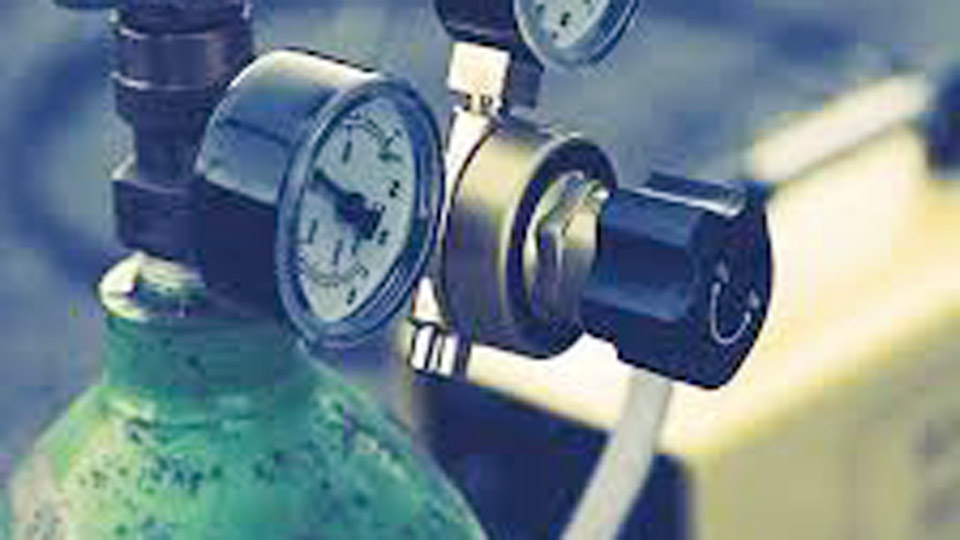
Image by American Torch Tip
What MIG Welding Gas Cost Actually Includes
A shielding-gas quote can mean several different things. One supplier may quote only the gas contents, while another may include an exchange charge, cylinder rental, delivery, or account fees. Before comparing prices, ask what the quote covers.
- Cylinder purchase or deposit: The one-time cost to own or enter an exchange program.
- Refill or exchange: The charge for replacing an empty cylinder with a full one or refilling your cylinder.
- Rental or lease: A monthly, annual, or long-term cylinder fee.
- Delivery and service fees: These may include route, handling, hazardous-material, or account charges.
- Taxes: Local taxes may apply to the gas, cylinder, or service.
Pro Tip: Ask every supplier for the out-the-door price for the same gas, same cylinder capacity, and same refill or exchange method. That is the only fair comparison.
Why MIG Welding Gas Matters
Shielding gas protects the molten weld pool from atmospheric contamination. It also affects arc behavior, spatter, bead shape, penetration, transfer mode, and cleanup. Poor coverage can cause porosity and oxidation, but gas choice is only one part of weld quality. Joint preparation, wire selection, polarity, voltage, wire speed, travel angle, and technique still matter.
I learned that distinction the hard way. Early in my welding work, I used pure CO₂ on a steel gate and blamed the gas when the weld showed pinholes. Pure CO₂ is a valid mild-steel shielding gas. The real problem was a weak setup that included poor coverage and inconsistent technique. The lesson was not to buy the most expensive gas. It was to match the gas to the process and verify the full setup.
Miller’s current shielding-gas guidance lists C25 and pure CO₂ for mild steel, pure argon for aluminum, and several machine-dependent options for stainless steel.
MIG Welding Gas Types and Best Uses
No single gas is best for every metal or transfer mode. Use the wire data sheet, welder manual, and qualified welding procedure when the weld is structural, code-regulated, or safety-critical.
| Gas | Common Use | Typical Starting Window | Main Trade-Off |
|---|---|---|---|
| 75% argon / 25% CO₂ (C25) | Short-circuit mild-steel MIG | Often around 20 to 30 CFH; some current guidance specifies 25 to 35 CFH | Smoother arc and less spatter than pure CO₂, but usually costs more |
| 100% CO₂ | Mild and carbon steel | Follow the welder and regulator instructions; many setups operate in a similar general range to C25 | Usually economical with deeper penetration, but a harsher arc and more spatter |
| 100% argon | Aluminum MIG and silicon-bronze MIG brazing | Commonly about 20 to 35 CFH, depending on the machine and process | Clean, stable aluminum arc; do not use CO₂ blends on aluminum |
| 98% argon / 2% CO₂ or O₂ | Selected stainless spray or pulsed applications; some machines also support short circuit | Follow the machine, wire, and procedure specification | Lower reactive-gas content helps protect stainless properties |
| 90% helium / 7.5% argon / 2.5% CO₂ | Traditional short-circuit stainless setups | Often needs more flow than argon-rich gas; follow the procedure | Good puddle wetting, but helium-rich gas is usually expensive |
Products Worth Considering
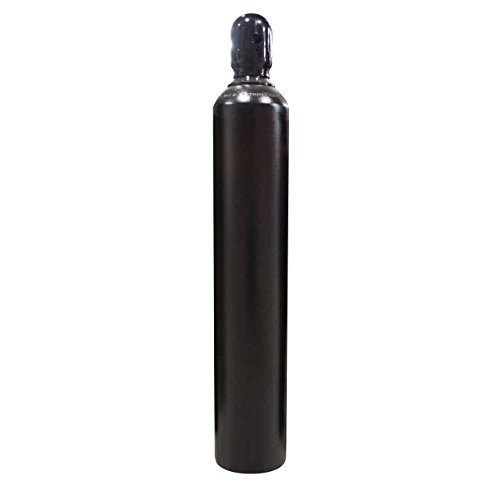
All HP cylinders come with a 10 year hydrotest date stamped.

All HP cylinders come with a 10 year hydrotest date stamped.

Compatible with CGA-580 tanks: Easily attach this Gas Pressure Regulator/Flowmeter to your Argon, Helium, and CO2 tanks with its CGA-580 inlet connector
Argon/CO₂ Mix (C25)
C25 is a common choice for mild-steel short-circuit MIG. It produces a stable arc, good bead profile, and less spatter than pure CO₂. It is a practical choice for body panels, light fabrication, and general shop work.
Pure CO₂
Pure CO₂ is usually the lowest-cost shielding option for mild steel. It can provide strong penetration, but it normally creates more spatter and a less stable arc than C25. It also requires a CO₂-compatible regulator or flowmeter and the correct cylinder connection.
CO₂ cylinders are commonly sold by weight rather than by compressed-gas capacity. As a rough budgeting conversion, 1 pound of CO₂ produces about 8.7 standard cubic feet of gas, so a 20-pound cylinder contains roughly 174 to 175 scf. The exact conversion changes slightly with the standard temperature and pressure used.
Pure Argon
Pure argon is the normal shielding gas for aluminum MIG. It supports spray and pulsed-spray transfer and also works for aluminum TIG, which can make one cylinder useful for both processes. Argon is not a good general-purpose choice for solid-wire mild-steel MIG because it can produce an unstable arc and poor fusion characteristics.
Stainless Steel Mixes
Stainless steel needs more care than a one-line gas rule suggests. A traditional short-circuit setup may use 90% helium, 7.5% argon, and 2.5% CO₂. Some modern machines are programmed for 98% argon and 2% CO₂, while spray transfer commonly uses a high-argon blend with a small amount of CO₂ or oxygen. Check the machine program, filler-wire data sheet, and weld procedure. Lincoln Electric’s stainless MIG guide explains how transfer mode changes the gas choice.
Helium and Argon/Helium Blends
Helium increases heat input and can help on thick aluminum or other high-conductivity metals. Because helium is light and usually expensive, helium-rich blends may need higher flow and careful draft control. Confirm local availability before planning a large job around a specialty mix.
How to Compare Local MIG Gas Prices
Call at least two welding-gas suppliers and record the same details for each quote:
- Gas and blend: C25, pure CO₂, pure argon, stainless tri-mix, or another specified mix.
- Cylinder capacity: For example, 40, 80, 125, 250, or 300 scf. CO₂ may be listed by pounds.
- Transaction type: New cylinder purchase, customer-owned refill, exchange, rental, or lease.
- All fees: Delivery, handling, rental, account, testing, or exchange fees.
- Exchange rules: Ask whether the supplier accepts your cylinder brand, ownership markings, test date, and size.
- Availability: A cheaper gas is not helpful if the supplier cannot exchange that size when you need it.
Bigger cylinders often reduce cost per cubic foot and supplier trips, but not always. A large cylinder may bring higher rental fees, limited exchange options, harder transport, or more storage demands. Compare the total annual cost, not only the refill price.
How to Calculate MIG Welding Gas Cost
Use gas-on time for the best estimate. Arc time is a close shortcut on a basic MIG machine, but gas may also flow during purge, preflow, postflow, trigger testing, and troubleshooting.
- Find cylinder capacity: Use the rated capacity in scf, or convert a CO₂ cylinder’s pounds to an approximate gas volume.
- Get the full refill or exchange price: Include transaction fees that apply each time.
- Calculate cost per cubic foot:
Cost per scf = Full gas price ÷ Cylinder capacity. - Choose the expected flow: Use the machine or wire recommendation and set it while gas is flowing.
- Estimate gas-on time: Convert minutes to hours by dividing by 60.
- Calculate gas used:
Gas used (scf) = Flow (CFH) × Gas-on time (hours). - Calculate job cost:
Gas cost = Gas used × Cost per scf.
Worked Example
Suppose an 80 scf C25 exchange costs $100 after applicable exchange charges. The gas costs $100 ÷ 80 = $1.25 per scf. If the job uses 30 minutes of gas-on time at 20 CFH, it consumes 20 × 0.5 = 10 scf. Estimated gas cost is 10 × $1.25 = $12.50.
You can also calculate operating cost directly:
Gas cost per hour = Flow (CFH) × Cost per scfGas cost per minute = Gas cost per hour ÷ 60
At 20 CFH, the system uses about 1 cubic foot of shielding gas every 3 minutes that gas is flowing.
Note: A planning estimate will not match the cylinder perfectly. Purging, starts, postflow, leaks, regulator surge, temperature, and unusable residual gas can increase real consumption.
How Long a MIG Gas Cylinder Lasts
The theoretical formula is Cylinder capacity ÷ Flow rate = Continuous gas-on hours. The table below shows ideal runtime before real-world losses.
| Cylinder Capacity | At 20 CFH | At 25 CFH | At 30 CFH |
|---|---|---|---|
| 40 scf | 2.0 hours | 1.6 hours | 1.3 hours |
| 80 scf | 4.0 hours | 3.2 hours | 2.7 hours |
| 125 scf | 6.25 hours | 5.0 hours | 4.2 hours |
| 250 scf | 12.5 hours | 10.0 hours | 8.3 hours |
Shop time will be much longer than these numbers because you are not welding nonstop. A four-hour theoretical gas-on capacity may cover many short hobby sessions.
How to Set Gas Flow Correctly
Flow settings vary by machine, nozzle size, wire, transfer mode, gas density, and air movement. Current manufacturer guidance is not identical across every welder, which is why a fixed universal number is misleading.
- Secure the correct cylinder and install the regulator or flowmeter specified for that gas.
- Open the cylinder valve slowly while standing to the side of the regulator.
- Disable wire feeding if your machine allows it, then pull the trigger so gas flows through the gun.
- Adjust the flow while gas is moving. A static reading can be misleading.
- Clean spatter from the nozzle and check that the diffuser, O-rings, gun connection, and hose are in good condition.
- Run a test bead on matching scrap and inspect for porosity and unstable arc behavior.
A Miller owner manual example instructs the operator to set flow while gas is moving and warns that CO₂ and argon/mixed-gas systems may require different regulator hardware.
Warning: Do not solve wind-related porosity by turning the flow excessively high. High flow can create turbulence, waste gas, and pull surrounding air into the shielding stream.
Tips to Save Money on MIG Welding Gas
Choose the Right Cylinder Size
A larger cylinder often lowers cost per cubic foot and reduces exchange trips. Balance that benefit against transport weight, storage space, rental terms, and local exchange availability.
Fix Leaks Before Raising Flow
Check the cylinder connection, regulator, hose, machine inlet, gun seating, diffuser, and O-rings. Use a gas-compatible leak-detection solution, or mild soapy water if the equipment maker permits it. Never use a flame to look for a leak.
Keep the Nozzle Clean
Spatter can block or distort gas coverage. Clean the nozzle, replace damaged consumables, and keep the contact-tip-to-work distance within the range recommended for your process.
Use the Minimum Effective Flow
Start with the machine or wire recommendation, test on scrap, and change the setting in small steps. More gas does not automatically improve shielding.
Close the Cylinder After Use
Close the valve when work is finished. Release downstream pressure according to the equipment manual, back out the regulator adjusting screw when required, and store the system safely.
Consider Self-Shielded Wire Outdoors
Wind can strip shielding gas away from the arc. Use a safe wind block when practical. For genuinely windy field work, self-shielded flux-cored wire or stick welding is often more reliable than gas-shielded MIG.
Common Problems and Fixes
| Symptom | Likely Cause | Fix |
|---|---|---|
| Porosity even at high CFH | Turbulence, wind, a leak, blocked nozzle, wrong gun port, or excessive gun distance | Return to the recommended flow, block drafts, clean the nozzle, and check the complete gas path |
| Cylinder empties unusually fast | Leak, purge habit, gas left on, excessive flow, or inaccurate flow reading | Leak-test connections, set flow with gas moving, close the cylinder after use, and check flow at the gun |
| Good flowmeter reading but poor coverage | Gun not fully seated, damaged O-ring, blocked diffuser, or leak inside the machine or gun | Inspect the gun connection and consumables; use a nozzle-end flow tester if available |
| Dirty or oxidized aluminum weld | CO₂-containing gas, poor cleaning, air leak, or draft | Use pure argon or the specified argon/helium blend, clean the material, and restore gas coverage |
| Stainless weld has poor bead shape or excessive oxidation | Wrong gas for the transfer mode or machine program | Use the gas listed by the machine, filler-wire manufacturer, or welding procedure |
Safety Considerations for MIG Welding Gas
Warning: Argon, helium, and CO₂ can displace oxygen and cause suffocation, especially in confined or enclosed spaces. Outdoor work does not automatically provide enough ventilation for welding fumes.
- Secure cylinders upright: Use a chain, strap, or approved cylinder cart so the cylinder cannot fall.
- Protect the valve: Close the valve after use. Install the protective cap and remove the regulator before transport when required by the cylinder and carrier instructions.
- Keep cylinders away from damage: Protect them from sparks, hot slag, heat, electrical circuits, impacts, and unauthorized handling.
- Use the correct regulator and connection: In the United States, many argon and argon-mix cylinders use CGA-580, while CO₂ commonly uses CGA-320. Confirm the cylinder label and equipment manual. Do not force mismatched fittings.
- Ventilate the work area: Use local exhaust or general ventilation that keeps fumes out of your breathing zone. Do not enter a confined space without the required training, testing, ventilation, and rescue controls.
- Wear welding PPE: Use the correct helmet shade, safety glasses, flame-resistant clothing, gloves, and hearing protection as the job requires.
- Do not use a damaged cylinder: Stop using any cylinder, valve, regulator, or hose that leaks or shows damage. Contact the supplier.
OSHA’s cylinder-handling rules require secure handling and upright storage in covered construction work, while OSHA’s welding fume fact sheet warns that shielding gases can displace oxygen and that adequate ventilation is still necessary.
MIG Welding Gas for Different Applications
Products Worth Considering
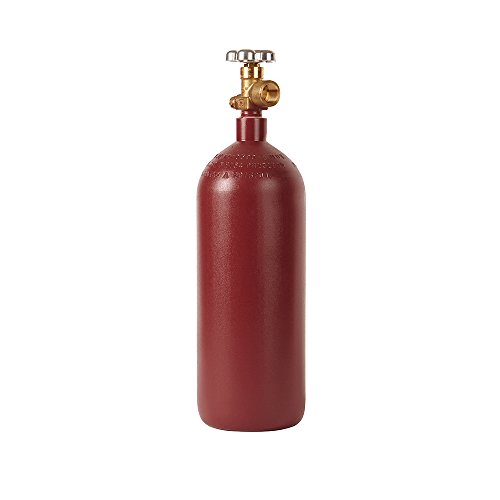
20 CU FT ARGON CYLINDER - Compact steel argon tank perfect for TIG welding, MIG welding, and hobby/small shop fabrication. 2015 PSI service pressure. Ultra-portable with 5.25" diameter x 18" height, 13.67 lb tare weight. Ideal for mobile welders, small shops, automotive repair, and DIY metalworking projects

All HP cylinders come with a 10 year hydrotest date stamped.

60 CU FT ARGON CAPACITY - Mid-size cylinder for welding, metal fabrication, and more. Balances generous capacity with portability at 29 lbs for professional welders, fabrication shops, and mobile repair
Automotive Repair
C25 is a common choice for mild-steel body panels and general automotive fabrication because it provides a stable short-circuit arc with relatively low spatter. Match wire diameter and machine settings to the panel thickness, and do not treat gas choice as a substitute for heat control.
Fabrication Shops
For carbon steel, shops may use C25, pure CO₂, or a higher-argon blend selected for spray or pulsed transfer. Stainless work should follow the wire data sheet or welding procedure because gas choice affects transfer behavior and corrosion performance.
Aluminum Projects
Use pure argon for most aluminum MIG work. Thick sections may use an argon/helium blend when the procedure calls for more heat input. Keep the base metal clean, use the correct liner or spool-gun setup, and protect the arc from drafts.
Heavy Machinery and Outdoor Repair
Pure CO₂ or an argon/CO₂ blend can suit heavy carbon-steel work, depending on the wire and transfer mode. In wind, use proper shielding from air movement or switch to a process designed for outdoor conditions. Do not increase gas flow without checking for turbulence and coverage problems.
Conclusion
Understanding MIG welding gas cost starts with an apples-to-apples supplier quote. Separate the cylinder cost from the refill or exchange cost, calculate dollars per cubic foot, and multiply that figure by actual gas-on time. Then control the variables that waste gas: leaks, dirty nozzles, excessive flow, drafts, and poor cylinder habits.
The cheapest gas is not always the lowest-cost choice for the finished job. Choose the gas that matches the metal, transfer mode, machine, wire, and required weld quality. Test on scrap, follow the manufacturer or welding procedure, and keep a simple log of cylinder size, price, CFH, and gas-on time.
Frequently Asked Questions
What is the cheapest shielding gas for MIG welding?
Pure CO₂ is usually the lowest-cost shielding option for mild steel. It normally creates more spatter and a harsher arc than C25, so compare the gas savings with cleanup time and the result your machine produces.
How long does an 80 cubic foot MIG gas cylinder last?
Theoretical gas-on time is 4 hours at 20 CFH, 3.2 hours at 25 CFH, or about 2.7 hours at 30 CFH. Actual life is shorter because of purging, starts, postflow, leaks, and residual gas.
Can I use the same gas for every MIG project?
No. Mild steel commonly uses C25 or pure CO₂. Aluminum normally uses pure argon. Stainless steel may use a helium tri-mix or a high-argon blend, depending on the machine and transfer mode.
Can I use 100% argon to MIG weld mild steel?
Pure argon is not a good general-purpose shielding gas for solid-wire mild-steel MIG. It can produce an unstable arc and poor fusion characteristics. Use C25, pure CO₂, or another steel blend specified by the wire and machine manufacturer.
How do I know whether my gas flow is correct?
Set the flow while gas is moving through the gun. Begin with the welder or wire recommendation, then test on matching scrap. If porosity remains, check for wind, leaks, blocked consumables, excessive gun distance, and the wrong gas before raising flow.
Is it better to buy, rent, or lease a MIG gas cylinder?
Ownership can work well for occasional or regular hobby use when local suppliers accept the cylinder. Rental or lease programs can suit shops that need large cylinders, frequent exchanges, testing support, or several gas types. Compare the total annual cost and exchange rules.
Can I MIG weld outdoors with shielding gas?
You can weld outdoors only when you can keep wind from disturbing the shielding envelope. Use a safe wind block and verify coverage. In persistent wind, self-shielded flux-cored wire or stick welding is usually more dependable.
Sources
- Miller Electric: What Type of Gas Is Best for MIG Welding? — gas selection, flow guidance, wind control, and troubleshooting.
- Lincoln Electric: MIG Welding Stainless Steel — stainless transfer modes and shielding-gas choices.
- Miller Electric: Millermatic 141 Owner’s Manual — setting flow while gas is moving and regulator compatibility.
- OSHA 29 CFR 1926.350 — compressed-cylinder movement, securing, storage, and valve protection.
- OSHA: Controlling Hazardous Fume and Gases During Welding — ventilation, fume exposure, and oxygen-displacement hazards.
- Air Products Gas Converter — industrial-gas weight and volume conversions.