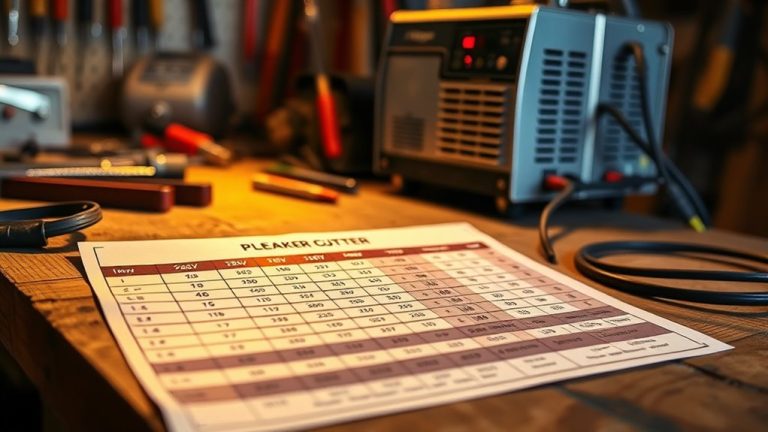
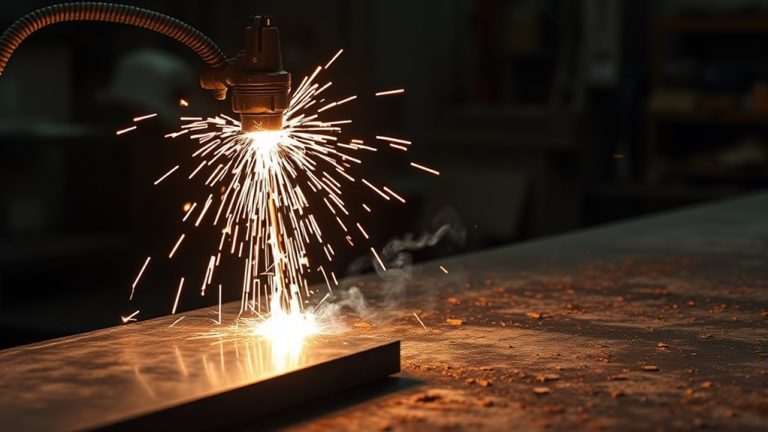
Imagine the power of a small sun harnessed in your workshop with a plasma cutter. To achieve this, you need to understand its power requirements—watts, amps, and breakers. A mismatch could lead to inefficient cuts or even damage. With models varying from 30 to 75 amps and voltage needs between 120V to three-phase 480V, choosing the right setup is key. But what does your specific plasma cutter demand to operate at peak efficiency?
What Are Plasma Cutter Power Requirements?
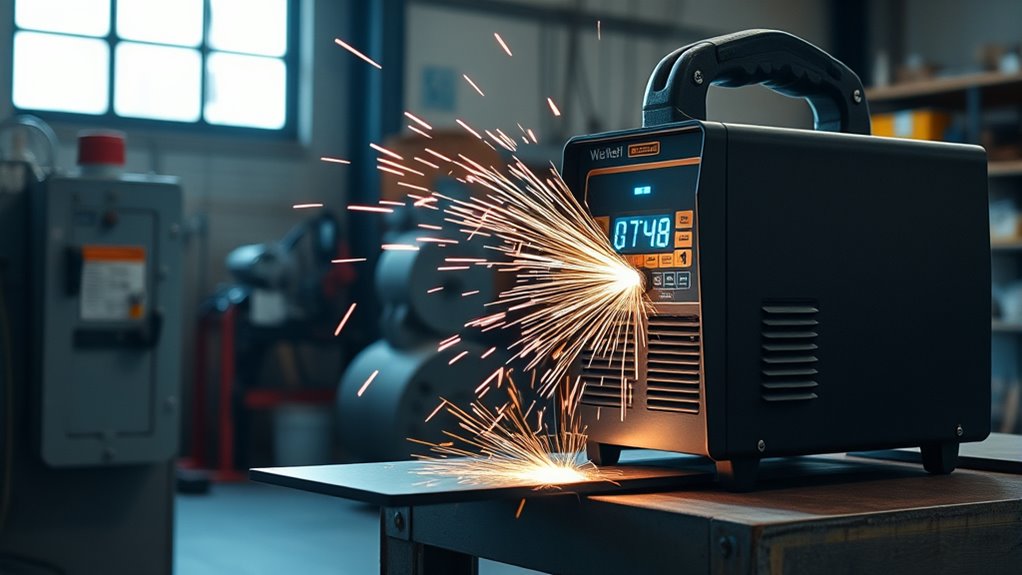
When setting up a plasma cutter, you need to understand the electrical demands these machines require. Plasma cutters vary greatly in their power needs, affecting both power efficiency and your electrical setup.
Smaller models operate on 120V or 240V, making them suitable for standard residential or small workshop settings. These units typically draw 15-30 amps of input power and work with single-phase electrical supply.
However, larger industrial plasma cutters demand a more robust electrical framework, often requiring a three-phase power supply (208V or 480V) and a 40-60 amp circuit breaker to handle their higher input power demands. These heavy-duty units can have cutting output capacities ranging from 75-200 amps, though they typically draw 40-80 amps of input power.
Industrial plasma cutters require three-phase power (208V-480V) and 40-60 amp breakers to handle their electrical input demands.
Calculating the total power consumption involves multiplying input amperage by voltage to get wattage. For example, a 50-amp plasma cutter running on 240V draws 12,000 watts (240V × 50A = 12,000W). This metric helps you match your plasma cutter to your available power capacity.
For optimal performance, confirm that your workshop can support these power requirements, thereby maximizing the plasma cutter’s efficiency and cutting capabilities.
Why Circuit Breaker Ratings Matter
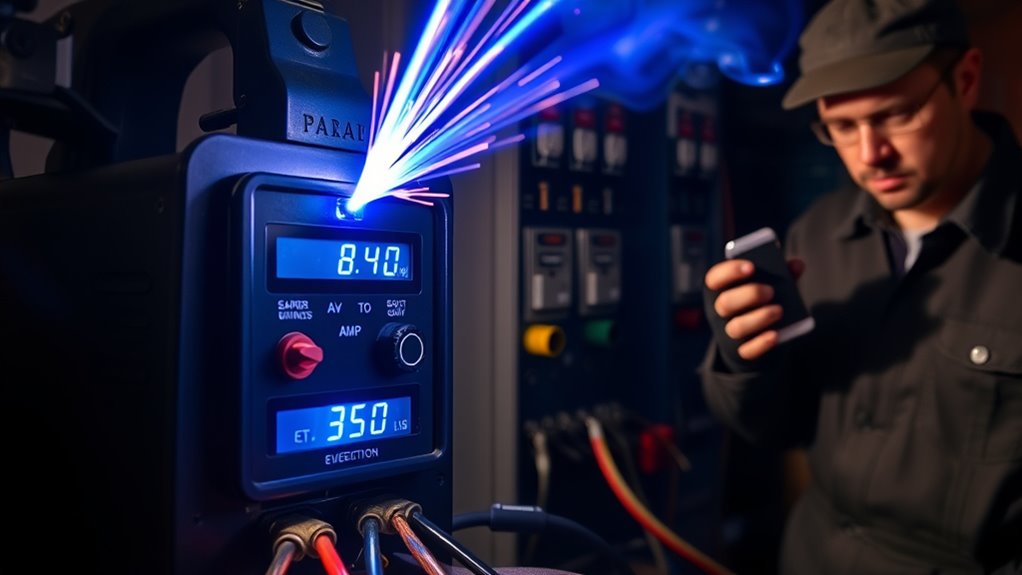
Choosing the correct circuit breaker rating is critical for safe and efficient operation of your plasma cutter. These machines demand substantial power, frequently requiring circuit protection beyond standard 15 or 20-amp breakers. You’ll need a 30-amp, 40-amp, or 60-amp breaker depending on your cutter’s input requirements.
Here’s the key principle: According to the National Electrical Code (NEC), continuous loads should not exceed 80% of the breaker’s rating. This means a 50-amp breaker should only be loaded to 40 amps for continuous use. For a plasma cutter that draws 50 amps at full power, you’d actually need a 60-amp breaker (50A ÷ 0.8 = 62.5A, round up to 60A).
Proper breaker ratings prevent overheating and nuisance tripping. While plasma cutters can draw significant power—a 50-amp unit pulls about 12,000 watts (50A × 240V)—they don’t run continuously, so the 80% rule provides necessary safety margin.
Installing the right breaker type not only protects your equipment but also manages power consumption efficiently. By selecting appropriate circuit protection, you enhance safety and ensure reliable plasma cutter performance.
How to Calculate Voltage and Amperage Requirements
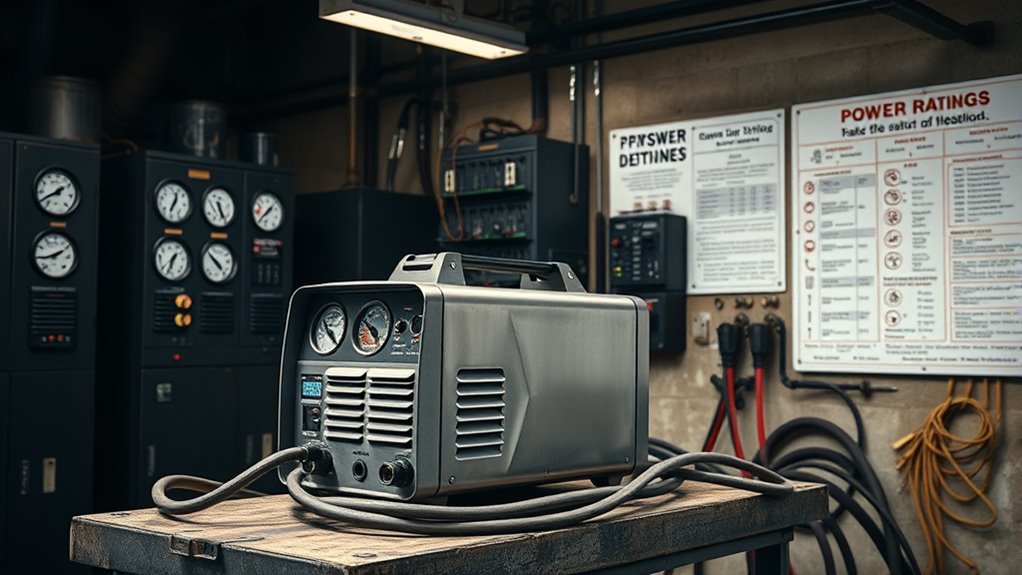
How do you determine if your electrical system can handle your plasma cutter? Start by checking the voltage and amperage specifications on the machine’s data plate. Smaller plasma cutters typically use 120V or 240V single-phase power. Larger models might need three-phase power (208V-480V) and a 40-60 amp breaker. Making sure your setup meets these demands is vital for safe operation.
Check your plasma cutter’s data plate for exact voltage and amperage specifications before installation.
To verify your power supply meets the requirements:
- Match Your Breaker to Load: A 50-amp circuit breaker can safely handle continuous loads up to 40 amps (80% rule). For a 50-amp cutter, install a 60-amp breaker.
- Consider Material Thickness: Thicker materials like 5/8″ steel increase amperage draw significantly. A 50-amp cutter may draw 40-45 amps when cutting at maximum capacity.
- Upgrade When Necessary: To prevent nuisance tripping and maintain safety, consider upgrading your electrical panel or installing dedicated circuits for high-powered cutters.
Choosing the Right Plasma Cutter for Your Workshop
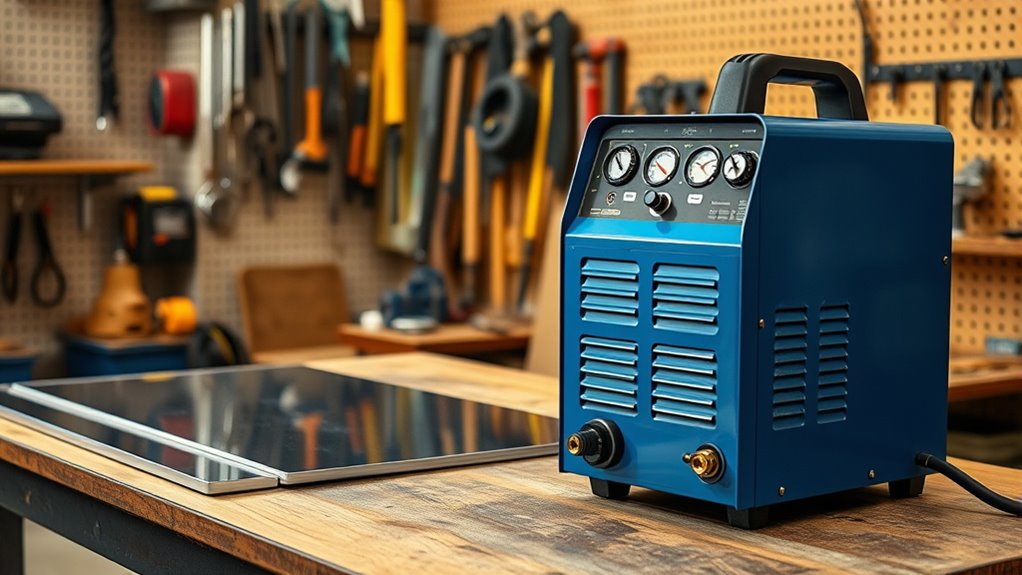
Selecting the right plasma cutter for your workshop directly impacts efficiency and prevents electrical problems. The right choice balances power efficiency with your actual cutting needs without overloading circuits.
Start by analyzing which plasma cutter type suits your workspace. Smaller 30-amp models typically operate on 120V or 240V, perfect for light-duty tasks and sheet metal work. Heavy-duty 50-75 amp cutters might need 240V single-phase or 208V three-phase power with 40-60 amp breakers.
Match the cutter to the maximum metal thickness you regularly cut. For occasional 3/8 inch steel cutting, a 40-amp cutter works well. If you regularly cut 1/2 to 3/4 inch steel, a 50-60 amp cutter delivers the necessary performance.
Verify your electrical system capacity before purchasing. High-amperage cutters need circuit breakers rated well above standard 15 or 20 amps. Check your main panel to confirm available capacity.
Consider the duty cycle rating—the percentage of a 10-minute period the machine can operate before needing to cool down. Models with higher duty cycles (60-80%) sustain longer operation without overheating.
Finally, assess portability needs—compact 30-40 amp models are easier to move, but larger 50-75 amp machines deliver more power and cutting capacity. Balance these factors based on your specific workshop requirements.
Impact of Power Consumption on Electricity Bills
When operating a plasma cutter, you’ll notice its power consumption can impact your electricity bills, though not as drastically as you might think.
To manage these costs effectively, implement smart energy management strategies, such as monitoring duty cycles and optimizing usage patterns. Understanding actual runtime costs helps you budget appropriately.
Understanding Power Usage Costs
While plasma cutters consume substantial power when operating, calculating the actual cost helps put consumption in perspective. A typical 50-amp plasma cutter drawing 12,000 watts (50A × 240V) costs about $1.44 per hour of runtime at $0.12 per kWh (12kW × $0.12 = $1.44/hour).
Key factors affecting your energy costs:
- Actual Runtime: Most cutting jobs involve short bursts. A typical project might use 15-20 minutes of actual arc-on time.
- Duty Cycle Limits: A 60% duty cycle means the machine runs 6 minutes per 10-minute period, naturally limiting consumption.
- Standby Power: Modern inverter-based cutters use minimal power when idle, typically 50-200 watts.
For perspective: running a 50-amp plasma cutter for typical hobby use (2-3 hours per week) costs roughly $18-27 per month—comparable to running a window air conditioner.
Efficient Energy Management Tips
Managing the power consumption of plasma cutters helps control electricity expenses. Focus on energy efficiency to achieve cost savings.
When operating on a 50-amp circuit at 240V, your cutter draws maximum power only during active cutting. The machine’s internal efficiency (typically 85-90% for modern inverter models) affects actual power draw.
To enhance energy efficiency, connect your plasma cutter to dedicated outlets with appropriate circuit ratings. This prevents voltage drops that reduce efficiency and increase power consumption. Avoid running other high-draw equipment on the same circuit during cutting operations.
Modern plasma cutters with inverter technology are significantly more efficient than older transformer-based models, converting power more effectively and reducing overall electricity costs by 20-30%.
Upgrading Electrical Systems for Plasma Cutter Use
To run your plasma cutter efficiently, you need to assess your circuit breaker capacity since these machines often require 30-amp, 40-amp, or 60-amp breakers depending on the model.
Installing dedicated outlets is necessary to accommodate the high power demands, preventing nuisance tripping and maintaining safe operation.
For optimal performance, consult with a licensed electrician to evaluate your current electrical infrastructure and make necessary upgrades.
Circuit Breaker Capacity Requirements
When upgrading electrical systems for plasma cutter use, selecting the correct circuit breaker capacity is critical for safe and efficient operation. Plasma cutters typically demand more than standard 15 or 20-amp household breakers, usually requiring 30-amp, 40-amp, 50-amp, or 60-amp breakers depending on the model.
Choosing the right circuit breaker involves applying the 80% continuous load rule. For example, a 40-amp plasma cutter needs a 50-amp breaker (40A ÷ 0.8 = 50A). A 50-amp cutter requires a 60-amp breaker to operate safely without nuisance tripping.
- Evaluate Workshop Capacity: Check your main electrical panel to confirm available amperage and open breaker slots.
- Select Proper Breakers: Match breaker capacity to your cutter’s maximum input current plus 25% safety margin.
- Consult a Licensed Electrician: Ensure compliance with local electrical codes and NEC requirements for proper installation.
Upgrading may also involve installing heavier gauge wiring (6 AWG or 8 AWG copper) to safely handle the high amperage without voltage drop or overheating.
Dedicated Outlet Installation
Installing a dedicated outlet for your plasma cutter ensures it operates efficiently and safely without interference from other equipment.
Begin the installation by consulting a licensed electrician to assess your workshop’s current electrical capacity. Plasma cutters often require a circuit breaker rated at 30, 40, 50, or 60 amps, well beyond standard 15 or 20-amp household outlets.
Upgrading involves installing heavier gauge wiring—typically 8 AWG copper for 40-amp circuits or 6 AWG for 50-amp circuits—especially for 240V systems that need to handle high amperage. The outlet type matters too: NEMA 6-50R receptacles are common for 50-amp 240V circuits.
A dedicated outlet prevents voltage drops that reduce cutting performance and efficiency. When multiple devices share a circuit, the plasma cutter may not receive stable power, causing poor cut quality and potential equipment damage.
Plan for future needs during installation. If you might upgrade to a larger plasma cutter later, install slightly oversized wiring and breakers now. This foresight prevents costly rewiring and guarantees your electrical system accommodates growth.
Safety Considerations for High-Power Equipment
Given the significant power requirements of plasma cutters, maintaining safety during operation is paramount. You need to consider several critical factors, especially when dealing with equipment that can draw 40-60 amps of input power at 240V.
Always verify your circuit breaker matches your plasma cutter’s power requirements with proper 80% safety margin.
First, make sure your circuit breakers are rated adequately. For a 50-amp plasma cutter, install a 60-amp breaker to handle the load safely and prevent nuisance tripping (following the 80% continuous load rule).
Using proper safety equipment is also critical. Plasma cutters generate over 100 decibels of noise during operation, so wear effective hearing protection such as ear plugs or ear muffs rated for industrial noise. Additionally, proper ventilation and respiratory protection are mandatory to prevent inhalation of metal fumes and particles produced during cutting.
Key safety measures:
- Wear hearing protection rated for 100+ decibels to prevent hearing damage from prolonged exposure.
- Provide adequate ventilation or use fume extraction systems to remove harmful metal fumes, especially in enclosed spaces.
- Install circuit breakers rated 25% higher than the cutter’s maximum draw (80% rule) for safe continuous operation.
Comparing Plasma Cutter Models and Their Power Needs
Selecting the right plasma cutter model involves comparing each unit’s power requirements and cutting capabilities. When evaluating modern plasma cutters, consider current models like the Hypertherm Powermax 30 AIR and Powermax 45 XP.
The Powermax 30 AIR operates efficiently on both 120V and 240V with input current ranging from 20-26 amps depending on voltage, making it power-efficient for lighter tasks. It cuts cleanly through materials up to 3/8 inch and severs up to 1/2 inch.
In contrast, the Powermax 45 XP, drawing up to 40 amps input current, suits more demanding applications. It requires a 50-amp breaker for safe operation and cuts up to 5/8 inch cleanly (severs 7/8 inch). When operating at maximum capacity on thicker materials, it approaches its full rated input current.
Understanding power efficiency involves calculating total power consumption—multiply input amperage by voltage. For example, a 40-amp cutter at 240V consumes 9,600 watts (40A × 240V). Higher amperage ratings enable faster cutting speeds and better performance on thicker metals.
Select a model that aligns with your specific cutting needs by evaluating power requirements and confirming your electrical setup supports the machine’s input current demands. Modern inverter-based models offer better efficiency (85-90%) compared to older transformer designs, reducing operating costs.
Tips for Efficient Plasma Cutter Operation
After selecting the right plasma cutter model for your needs, maximizing operational efficiency becomes the next priority.
Understanding proper cutting techniques and material selection is key. Adjust the amperage based on material thickness—higher amp settings enable faster cuts on thick steel, while lower settings work better for intricate shapes or thin materials. Always verify your electrical infrastructure supports the power demand. A typical 50-amp plasma cutter draws about 12,000 watts at full capacity (50A × 240V). Installing a 60-amp circuit breaker provides the necessary safety margin following the 80% continuous load rule.
Match your amperage settings to material thickness and ensure proper electrical capacity for consistent cutting performance.
Monitor the duty cycle carefully—this rating indicates how long the cutter can operate before requiring a cooldown period. A 60% duty cycle means the machine can run 6 minutes out of every 10 minutes at maximum output to prevent overheating. Running within this limit extends equipment life and maintains cut quality.
Additional operational tips:
- Verify Circuit Capacity: Confirm your breaker and wiring match the cutter’s requirements. Upgrade to dedicated circuits if sharing causes voltage drops.
- Optimize Amperage Settings: Use the minimum amperage needed for your material thickness to reduce power consumption and extend consumable life.
- Respect Duty Cycle Limits: Allow proper cooldown periods between heavy cutting sessions to prevent thermal shutdown and equipment damage.
Frequently Asked Questions
Can Plasma Cutters Operate on Solar Power Systems?
Yes, you can operate plasma cutters on solar power systems if your setup meets the wattage and amperage requirements. A 50-amp cutter needs about 12,000 watts (50A × 240V), so your solar inverter must handle this peak load plus provide adequate surge capacity. Size your battery bank and inverter to match your cutter’s maximum draw for reliable off-grid operation.
What Is the Noise Level of a Plasma Cutter?
A plasma cutter’s noise level ranges from 85 to 120 decibels depending on amperage, material thickness, and cutting settings. You should comply with OSHA sound regulations by using hearing protection rated for industrial noise exposure. Regularly monitor noise levels, especially in enclosed workshops, and always wear ear protection during operation to prevent hearing damage.
How Do Environmental Factors Affect Plasma Cutter Performance?
Temperature fluctuations and humidity levels directly impact plasma cutter performance. Maintain stable environmental conditions because high humidity (above 80%) can cause arc instability and inconsistent cuts, while extreme temperatures (below 40°F or above 104°F) may affect internal component efficiency. This leads to inconsistent cutting quality and increased consumable wear, requiring more frequent maintenance and parts replacement.
Are There Portable Plasma Cutter Options for Remote Locations?
Yes, portable plasma cutter options exist for remote locations. Compact 30-40 amp models weighing 20-40 pounds offer excellent portability while delivering clean cuts on materials up to 1/2 inch thick. Some models operate on both 120V and 240V power, and battery-powered inverter generators (3,500+ watts) can power these units in off-grid locations, providing flexibility for field repairs and remote fabrication work.
What Maintenance Is Required for Optimal Plasma Cutter Efficiency?
For maximum plasma cutter efficiency, replace air filters monthly and clean the torch body weekly to prevent debris buildup. Inspect electrodes and nozzles for wear every 20-30 hours of cutting time—replace them when worn to maintain cut quality. Check air pressure regularly (typically 60-80 PSI) and inspect hoses for leaks. Clean or replace the air filter on your compressor to ensure dry, clean air supply. These preventive steps reduce malfunctions and maintain optimal performance.
Conclusion
When choosing a plasma cutter, you need to carefully consider power requirements to match your electrical system capacity. Understanding the difference between input power draw (typically 15-60 amps) and cutting output capacity (30-200 amps) is critical. For example, a 50-amp plasma cutter drawing 12,000 watts requires a 60-amp breaker following the 80% continuous load rule.
This knowledge highlights the importance of verifying your electrical system can handle these demands. Evaluating your workshop’s voltage, amperage capacity, and available breaker slots is necessary for safe operation and preventing electrical problems. By understanding these technical requirements, you can make informed decisions about which plasma cutter fits your needs, ensuring efficient operation while avoiding potential hazards, equipment damage, or unexpected electrical upgrade costs.