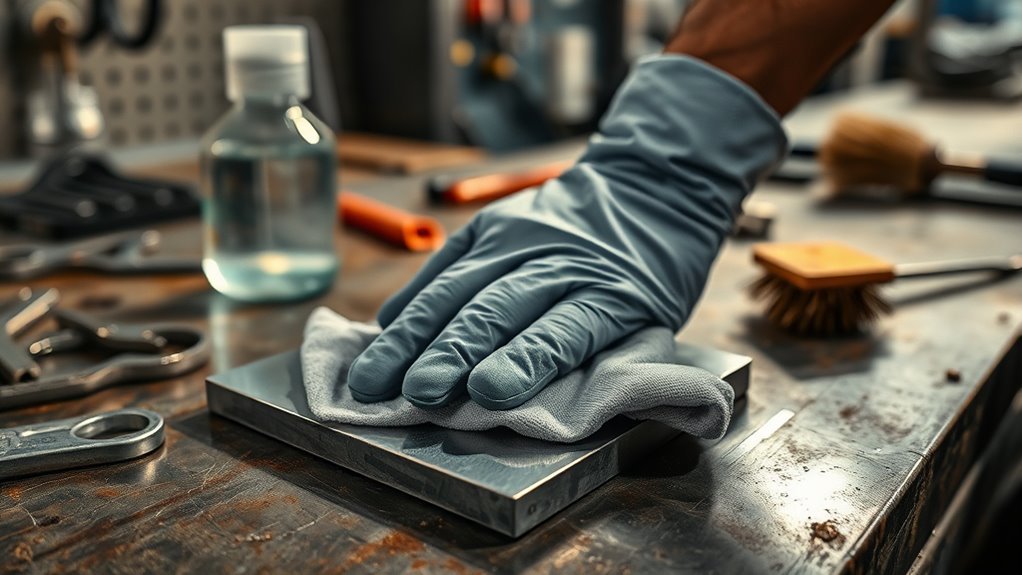
Dirty metal can turn a sound welding setup into a porous, unstable, or poorly fused joint. Before you weld, identify the base metal and any coating, remove oil and grease, clear rust, paint, mill scale, or oxide as the procedure requires, inspect the joint, and let every cleaner evaporate completely.
Quick Answer
Clean metal before welding by degreasing it first with a compatible, residue-free cleaner and fresh lint-free rags. Then remove rust, paint, mill scale, or oxide with a dedicated brush or abrasive. Inspect the joint, make a final clean wipe if needed, and wait until the part is fully dry before striking an arc.
Key Takeaways
- Identify the metal and coating before choosing a solvent, brush, abrasive, or ventilation method.
- Degrease before grinding or brushing so you do not drive oil into scratches or spread it across the joint.
- Never use chlorinated brake cleaner or another chlorinated solvent around welding arcs or hot work.
- Use dedicated tools for aluminum and stainless steel to reduce cross-contamination.
- Do not casually weld over cracks, deep pits, unknown coatings, or questionable repairs. Follow the applicable welding procedure or get qualified help.
At a Glance
| Time Required | About 5 to 30 minutes for a small joint; heavily coated, corroded, or damaged parts can take longer |
| Difficulty | Easy for clean, bare metal; moderate when coatings, heavy scale, corrosion, or defects are present |
| Tools Needed | Compatible cleaner, lint-free rags, dedicated brush or abrasive, inspection light, and suitable PPE |
| Cost | Usually low if you already own the tools; consumable cost varies with the cleaner, rags, and abrasives used |
What’s in This Article
- Why Clean Metal Before Welding
- Identify the Metal and Coating First
- What You’ll Need Before Cleaning Metal
- Estimated Time for Metal Cleaning
- Remove Grease, Oil, and Solvent Film
- Choose the Right Degreasing Solvent
- Scrub Off Rust, Paint, and Mill Scale
- Prepare Different Metals for Welding
- Remove Aluminum Oxide Before Welding
- Wipe Metal Dry Before Welding
- Check for Cracks, Gaps, and Pitting
- Avoid Common Metal-Cleaning Mistakes
- Gather the Right Tools and PPE
- Step-by-Step Cleaning Process
- Troubleshoot Contamination After Cleaning
- Frequently Asked Questions
- Sources
- Conclusion
Why Clean Metal Before Welding
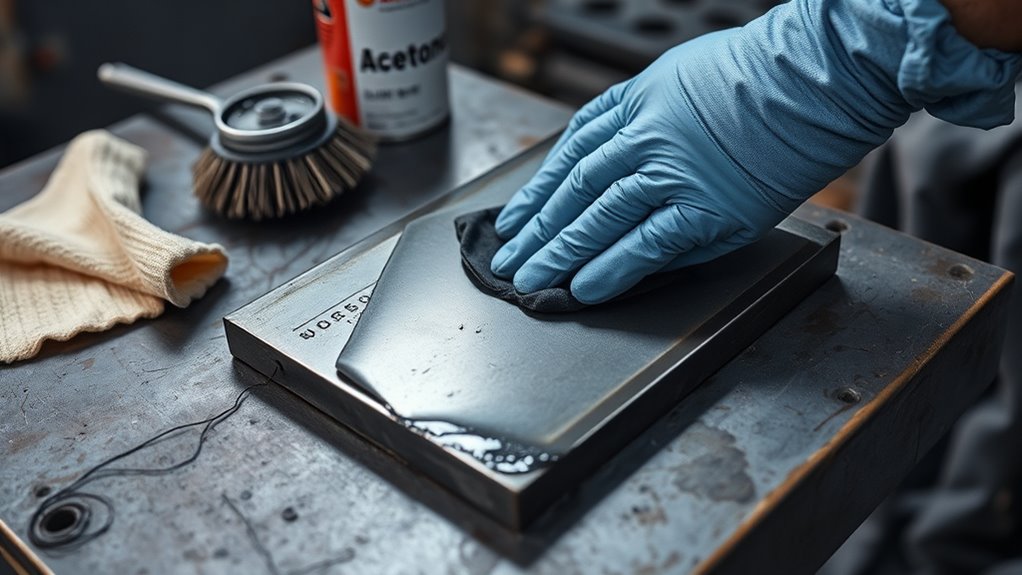
Oil, grease, moisture, paint, rust, oxide, and heavy scale can interfere with the arc and weld pool. Depending on the process and contaminant, they can contribute to porosity, lack of fusion, unstable arc behavior, excessive spatter, inclusions, or toxic fumes.
Lincoln Electric recommends removing excessive scale, rust, moisture, paint, oil, and grease to reduce porosity and support proper travel speed. Cleaning does not guarantee deeper penetration, but it gives your selected process, settings, and technique a more consistent surface to work on.
Good preparation also reduces rework. You are less likely to stop and grind out a porous bead, chase contamination along a seam, or clean heavy residue after welding.
In practical terms, prep is part of welding, not a separate cosmetic task. Clean beyond the bead line because heat can draw nearby residue into the weld zone. The exact width depends on the process, joint design, and welding procedure.
If the finished part will later be coated, proper cleaning can also support paint adhesion on prepared galvanized metal.
A clean joint cannot correct the wrong filler metal, poor fit-up, bad settings, or weak technique, but contamination can undermine an otherwise correct weld.
Identify the Metal and Coating First
Before opening a solvent or fitting an abrasive wheel, identify the base metal and anything on its surface. Mild steel, stainless steel, aluminum, galvanized steel, plated parts, and painted parts do not all need the same preparation.
- Bare carbon steel: Check for oil, rust, mill scale, moisture, and shop primer.
- Stainless steel: Prevent carbon steel contamination by using dedicated stainless-compatible brushes and abrasives.
- Aluminum: Remove oil first, then remove the oxide layer with tools reserved for aluminum.
- Galvanized or plated metal: Identify the coating and control fume exposure before hot work.
- Painted metal: Identify the paint when possible. Old or industrial coatings may contain lead, cadmium, chromium compounds, or other hazardous ingredients.
Warning: Do not grind, heat, or weld an unknown coating as though it were ordinary paint. Review the product label or safety data sheet and use the ventilation, respiratory protection, and work controls required for that material. OSHA notes that coatings and solvent residue can create toxic exposure during welding.
OSHA requires specific controls for welding on zinc-bearing, lead-bearing, cadmium-bearing, chromium-bearing, and other hazardous materials. Review OSHA’s general welding requirements and your workplace procedure before working on coated or plated metal.
What You’ll Need Before Cleaning Metal
Gather your supplies before you start so the cleaned joint does not sit exposed while you search for another tool. Keep clean tools and rags separate from dirty ones.
- A residue-free cleaner that is compatible with the base metal and approved by its label or safety data sheet
- Clean, lint-free rags, ideally enough for a two-rag cleaning method
- A dedicated wire brush, nonwoven abrasive, sandpaper, flap disc, grinding wheel, carbide burr, or blasting method suited to the metal
- A stainless steel wire brush reserved only for aluminum when cleaning aluminum oxide
- A dedicated stainless-compatible brush or abrasive for stainless steel
- A bright inspection light and, when needed, a straightedge or magnifier
- Chemical-resistant gloves selected for the cleaner, safety glasses or goggles, hearing protection for power tools, and welding PPE for the later hot work
- Local exhaust or other ventilation appropriate for the solvent, dust, coating, and welding process
Store cleaners in labeled, closed containers away from heat and ignition sources. Do not assume welding gloves provide chemical protection. Check the cleaner’s safety data sheet for compatible glove material and exposure controls.
Estimated Time for Metal Cleaning
Light degreasing and brushing may take about 5 to 10 minutes for a small joint. Heavy rust, paint, mill scale, adhesive, corrosion, or damaged metal can take 20 to 30 minutes or longer, depending on the part, access, and approved tool.
Treat these numbers as planning ranges, not a deadline. Drying, inspection, and safe coating removal take as long as they take. The surface should look clean, feel dry, and show no visible film before you weld.
Remove Grease, Oil, and Solvent Film
Degrease before using a brush, sander, or grinder. Abrading oily metal can spread contamination, load the abrasive, and push residue into scratches.
Use a Two-Rag Degreasing Method
- Dampen a clean lint-free rag with a compatible cleaner. Do not soak the entire part or pour solvent across the bench.
- Wipe a small section while the cleaner is still wet so the rag lifts the dissolved oil.
- Immediately wipe that section with a second clean, dry rag.
- Turn to a fresh section of each rag often. Replace either rag when it looks dirty.
- Repeat until the dry rag no longer picks up visible residue.
For heavy buildup, an approved aqueous or alkaline cleaner may work better than repeated solvent wiping. Follow its dilution, temperature, rinse, and disposal instructions. Rinse when the label requires it, then dry the part completely.
Household rust-removal methods can leave water, acid, or salt behind. If you use a method such as removing rust with vinegar, rinse or neutralize it as directed, mechanically clean the joint, and dry it fully before welding.
Check for Cleaner Film
A cleaner can dissolve oil without actually removing it if you let the dirty liquid dry on the part. Look across the surface under good light. Smears, rainbow-like film, lint, fingerprints, or oily marks mean you should wipe it again with clean materials.
Do not touch the prepared joint with bare hands. Skin oil can recontaminate the surface, especially on aluminum and stainless steel. Handle the part outside the weld zone or wear clean gloves that are suitable for the task.
Choose the Right Degreasing Solvent
The best cleaner is compatible with the metal, removes the actual contaminant, leaves no harmful residue, and can be used safely under the product label and safety data sheet.
Products Worth Considering
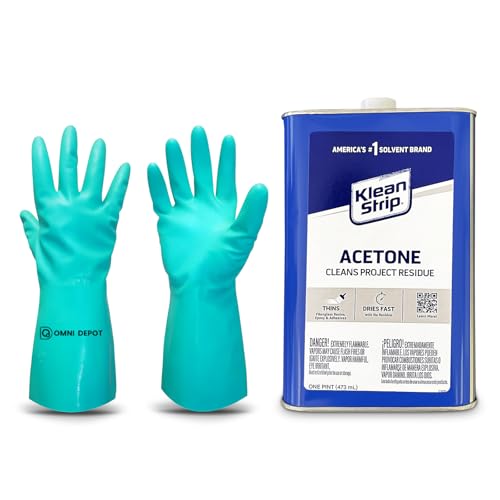
💪 Industrial-Grade Acetone Solvent Heavy-duty formula effectively removes paint, adhesives, epoxy resin, varnish, and tough buildup, delivering fast and professional-level cleaning results.

🧪 High-Strength Pure Acetone Performance – Delivers powerful solvent action for demanding cleaning and preparation tasks. Designed for users who need a reliable solution where standard cleaners are not effective.

Compact & Convenient Sprayer: Perfectly sized 2.3 fl oz bottle with an easy-to-use sprayer - toss it in your bag, stash it in your toolkit, or keep it on hand at your nail station
Acetone
Acetone is commonly used on bare metal because it dissolves many oils and evaporates quickly. It is also highly flammable and can irritate the eyes, skin, nose, and throat. The NIOSH Pocket Guide for acetone lists a 0°F flash point and identifies inhalation and skin or eye contact as exposure routes. Keep it away from sparks, arcs, flames, hot metal, and other ignition sources.
MEK and Stronger Solvents
MEK, also called 2-butanone, can remove stubborn oil but should not be treated as the automatic next step. It is a Class IB flammable liquid and can irritate the eyes, skin, nose, and respiratory system. Use it only when the product instructions, your workplace procedure, ventilation, storage, and PPE controls support its use. See the NIOSH Pocket Guide for MEK.
Aqueous and Commercial Degreasers
Water-based and alkaline cleaners can work well for heavy shop soil or parts washing. Some require rinsing, neutralizing, or heated drying. A product labeled “degreaser” is not automatically suitable for welding preparation, so check whether it leaves corrosion inhibitors, soaps, silicone, wax, or another residue.
Warning: Never use chlorinated brake cleaner, trichloroethylene, perchloroethylene, or another chlorinated solvent where its vapor can reach welding or hot work. OSHA requires chlorinated-solvent degreasing to be separated from welding atmospheres and requires prepared surfaces to be thoroughly dry.
When in doubt, choose a cleaner recommended by the metal, filler, equipment, or procedure manufacturer and follow the safety data sheet. Do not mix cleaners.
Scrub Off Rust, Paint, and Mill Scale
After degreasing, remove solid surface layers from the weld area. Use the least aggressive method that reaches sound, clean metal without thinning the part, gouging the joint, or embedding contamination.
- Light rust: Use a clean wire brush, nonwoven abrasive, or sandpaper.
- Heavy rust or scale: Use an appropriate grinder, flap disc, needle scaler, blasting method, or other approved tool.
- Mill scale: Remove it where the process or procedure requires bright metal, especially at the joint and work-clamp location.
- Paint and primer: Remove enough coating from the weld and heat-affected area to prevent contamination and fume exposure, following the coating’s safety requirements.
- Adhesive, sealant, or marker: Remove it with a compatible method, then re-clean the area.
Do not rely on a chemical stripper unless you have identified the coating and confirmed the stripper is compatible with the alloy. Remove all stripper residue before welding. Mechanical paint removal can also create hazardous dust, so control the dust and wear the protection required by the coating and tool.
For process-specific technique after the surface is clean, see these flux-core welding tips for beginners. If the part will be painted later, this guide to preparing rusted metal for coating can help with the finishing stage.
Prepare Different Metals for Welding
| Metal or Surface | Recommended Preparation | Main Caution |
| Mild steel | Degrease, then remove loose rust, paint, moisture, and scale as required by the process | Do not grind unknown paint without checking its hazards |
| Stainless steel | Use clean, dedicated stainless-compatible brushes and abrasives; wipe with a compatible cleaner | Carbon steel tools can transfer iron and promote surface rust |
| Aluminum | Remove oil first, then brush away oxide with a clean stainless brush reserved for aluminum; weld promptly | Dirty tools can embed foreign material or spread oil |
| Galvanized or plated steel | Identify the coating, follow the approved procedure, and use required ventilation and exposure controls | Heating zinc and other coatings can produce hazardous fumes |
| Cast iron | Remove oil from pores as thoroughly as practical and follow a cast-iron repair procedure for preheat, filler, and cooling | Old castings may release oil during heating and require repeated cleaning |
Cast iron repairs need more than surface cleaning. Review the process, filler, and temperature-control requirements before attempting flux-core welding on cast iron.
Remove Aluminum Oxide Before Welding
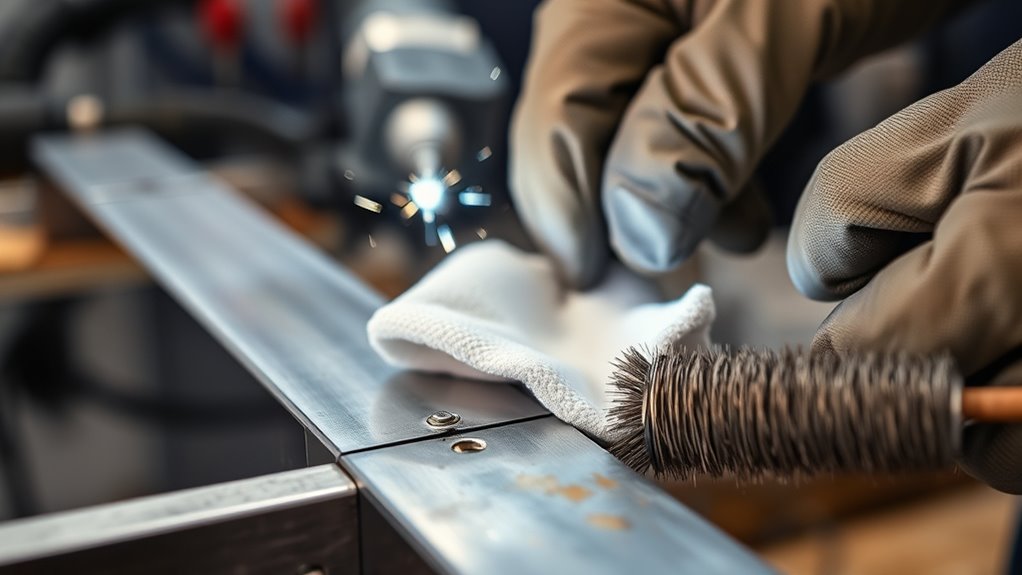
Aluminum quickly forms a hard oxide layer. That layer melts at a much higher temperature than the aluminum beneath it and can interfere with a clean weld if it is not managed correctly.
Clean aluminum in this order:
- Remove oil, grease, adhesive, and shop dirt with a compatible cleaner and clean rags.
- Use a clean stainless steel wire brush or another aluminum-approved abrasive to remove oxide from the joint and nearby weld zone.
- Keep the brush dedicated to aluminum. Do not use a brush that has touched carbon steel, stainless steel, or oily parts.
- Brush with controlled pressure until the surface looks clean and uniform. Avoid excessive grinding that smears or gouges the soft base metal.
- Keep the joint clean and weld promptly so dust, fingerprints, and fresh oxide do not build up again.
Miller recommends manual cleaning before relying on AC balance and notes that acetone and wire brushing can remove debris and oxidation before TIG welding aluminum.
Pro Tip: Label dedicated brushes and abrasives by metal type. A simple “AL,” “SS,” or “CS” mark helps prevent cross-contamination in a shared shop.
Wipe Metal Dry Before Welding
After mechanical cleaning, remove loose dust with a clean method that will not add oil or moisture. If a final solvent wipe is needed, use a fresh lint-free rag and a cleaner that is compatible with the metal and your procedure.
Let the cleaner evaporate completely. Do not judge dryness only by smell, and do not strike an arc while liquid, visible film, or concentrated vapor remains nearby. Close and move the solvent container away from the hot-work area.
Do not use oxygen to blow off the part, ventilate the area, or clean clothing. OSHA states that oxygen must not be used for ventilation or work-area cleaning. Use clean, dry shop air only when your procedure allows it and the air supply is free of oil and water.
Make the final wipe shortly before welding, then protect the joint from airborne dust and fingerprints. After cleaning, set the machine for the actual joint and electrode rather than expecting preparation to compensate for incorrect settings. This stick welding amperage chart can help with the next setup step.
Check for Cracks, Gaps, and Pitting
Cleaning exposes the real condition of the joint. Inspect the full weld path under bright light before you tack or weld.
Spot Surface Defects
- Cracks: Mark both visible ends and check whether the crack continues beyond what you can see.
- Gaps or poor fit-up: Compare the joint with the drawing, welding procedure, or allowable root opening.
- Pitting: Determine whether corrosion has reduced the part below an acceptable thickness.
- Laminations or gouges: Stop if the defect extends into the base metal or changes the joint geometry.
A magnifier can help with surface inspection, but it does not replace dye penetrant, magnetic-particle testing, ultrasonic testing, or another required inspection method.
Inspect the Weld Path and Fit-Up
Trace both sides of the joint, the root, tack locations, edges, and the work-clamp area. Confirm that the joint is aligned and that cleaning has not rounded an edge, widened the root opening, or thinned the material.
Small depressions can trap residue, and wide or uneven gaps can change heat input and filler requirements. On structural, pressure, vehicle, lifting, or safety-critical parts, use the approved drawing and welding procedure rather than guessing at acceptable fit-up.
Repair Cracks and Pits Correctly
Do not simply cover a crack or deep pit with weld metal. A crack usually must be removed to sound metal by an approved grinding, machining, or gouging method, then inspected before rewelding. The repair may also require a qualified welding procedure, preheat, controlled filler metal, or post-weld inspection.
Corrosion pits may be blended out only when enough sound thickness remains and the repair procedure allows it. If the part is badly thinned, distorted, or cracked, replacement may be safer than repair.
Note: Cleaning reveals defects; it does not determine whether a damaged part is safe to weld. Critical repairs should be evaluated by a qualified welding professional or engineer.
Trapped contamination can contribute to porosity and other discontinuities. This guide explains one visible symptom sometimes linked to gas and slag behavior: worm tracks in flux-core welding.
Avoid Common Metal-Cleaning Mistakes
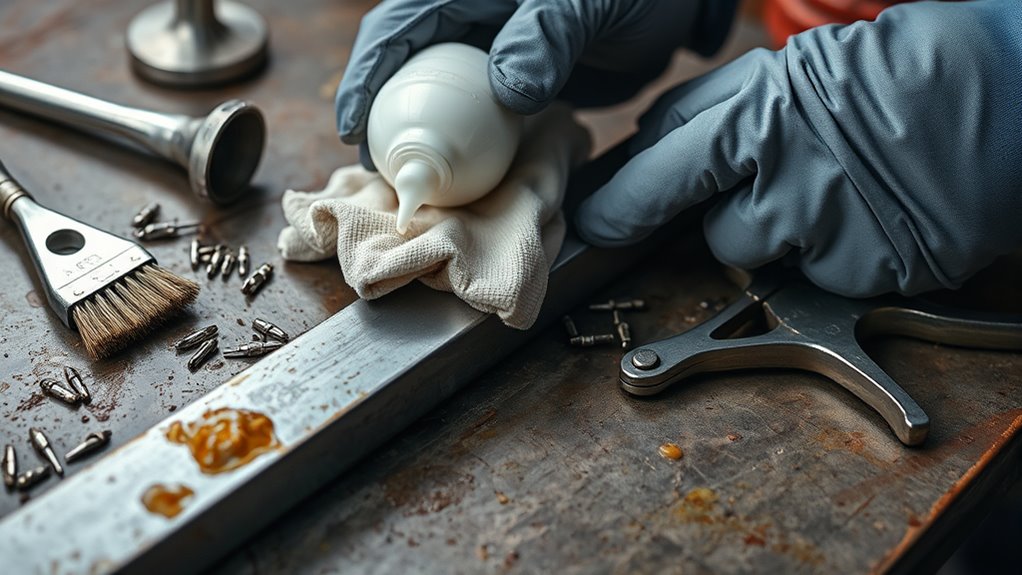
- Using chlorinated brake cleaner: Chlorinated solvent vapor can decompose around welding arcs and create extremely toxic gases.
- Grinding before degreasing: This spreads oil and loads the abrasive.
- Using one dirty rag: It moves dissolved contamination instead of removing it.
- Sharing brushes between metals: Carbon steel particles can contaminate stainless steel or aluminum.
- Welding over unknown paint or plating: The coating may create toxic fumes or hazardous dust during removal.
- Leaving water-based cleaner behind: Soap, inhibitor, moisture, or rinse residue can remain on the joint.
- Touching the joint after cleaning: Fingerprints can add oil back to the surface.
- Assuming every process needs mirror-bright metal: Follow the welding procedure. Some electrodes tolerate limited contamination better than others, but known hazards and heavy contamination still require control.
- Using a contaminated work clamp area: Paint, scale, or rust under the clamp can cause an unstable electrical connection.
A thorough cleaning process can prevent several common MIG welding problems, but cleaning should be paired with correct gas flow, polarity, settings, stickout, and travel technique.
Gather the Right Tools and PPE
Match protection to both stages of the job: chemical or abrasive cleaning first, then welding. One pair of gloves or one respirator is not automatically suitable for every hazard.
- For solvents: Use splash-resistant eye protection, gloves compatible with the cleaner, ventilation required by the label, and closed containers.
- For grinding or brushing: Wear safety glasses, a face shield when appropriate, hearing protection, and clothing that covers exposed skin. Use the tool guard and the correct rated abrasive.
- For dust or fumes: Use local exhaust whenever practical. Respirators must be selected for the actual contaminant and used under the applicable fit-testing, medical-evaluation, and training requirements.
- For welding: Use a welding helmet with the correct shade, flame-resistant clothing, welding gloves, and any additional protection required by the process and material.
Work in a well-ventilated area, but do not assume an open door or outdoor location always provides enough control. OSHA recommends local exhaust close to the fume source when needed to keep welding fume out of the breathing zone.
Inspect abrasives before use and store them correctly. Proper cutoff-wheel and grinding-wheel storage helps reduce damage before the next preparation job.
Products Worth Considering

𝐏𝐫𝐨𝐟𝐞𝐬𝐬𝐢𝐨𝐧𝐚𝐥-𝐆𝐫𝐚𝐝𝐞 𝐋𝐞𝐧𝐬 𝐂𝐨𝐚𝐭𝐢𝐧𝐠: Compared to standard safety glasses, our premium coating delivers superior performance: impact-resistant, scratch-resistant, and acid/alkali-resistant on the outside, with an advanced anti-fog treatment on the inside to maintain clear vision in changing temperature and humidity conditions. Durable and easy to clean – simply rinse with water and wipe dry.

Premium Goatskin Leather: Crafted from high-quality goatskin leather, these gloves offer a superior combination of flexibility and durability. The soft leather provides excellent dexterity while ensuring long-lasting wear.
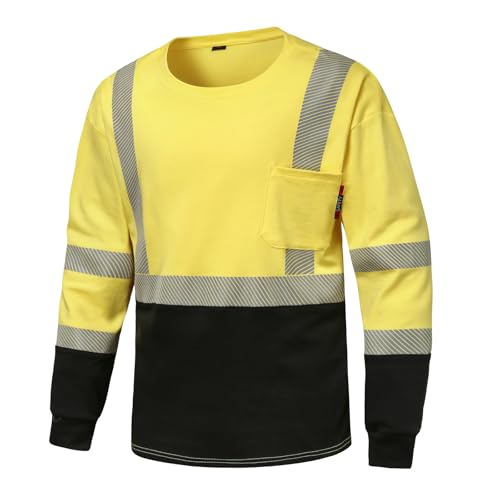
Premium 6 oz FR Cotton Fabric: This FR shirts Crafted with a high visibility twill reflective stripe design and is knit from 6 oz. of 100% fire resistant cotton to ensure breathability and durability while meeting strict safety standards.
Step-by-Step Cleaning Process
- Identify the base metal and coating. Confirm whether the part is bare, painted, galvanized, plated, oily, rusty, or oxidized.
- Review hazards and instructions. Check the cleaner label, safety data sheet, welding procedure, and coating information.
- Set up ventilation and PPE. Control solvent vapor, abrasive dust, and later welding fume before you begin.
- Inspect the joint. Look for cracks, gaps, pitting, thin areas, poor fit-up, and hidden seams that may hold fluid.
- Degrease first. Use a compatible cleaner and the two-rag method to lift oil instead of spreading it.
- Remove solid contamination. Brush, sand, grind, machine, or blast away rust, paint, mill scale, or oxide as the procedure requires.
- Clean the work-clamp location. Expose a sound contact point near the weld without damaging the part.
- Repair or reject defects correctly. Follow the approved repair method for cracks, pits, or unacceptable fit-up.
- Make a final clean pass. Remove loose dust and any remaining film without touching the joint with bare hands.
- Let the part dry fully. Move solvent containers and contaminated rags away from the hot-work area.
- Weld promptly. Protect the clean joint from dust, moisture, and handling until you strike the arc.
Pro Tip: Prepare a small clean tray or covered container for fresh rags and dedicated brushes. Keeping clean tools off the welding table prevents a surprising amount of recontamination.
Troubleshoot Contamination After Cleaning
If the arc or bead still suggests contamination, stop instead of welding over the problem. Let the area cool safely, then check the likely source.
- Visible pores or pinholes: Recheck oil, moisture, paint, gas coverage, filler condition, and joint cleanliness.
- Unstable arc or erratic starting: Inspect the work-clamp contact, rust or scale at the joint, settings, and consumable condition.
- Excessive soot on aluminum: Recheck oxide removal, shielding gas, torch angle, flow, and filler cleanliness.
- Heavy spatter: Confirm polarity, voltage or amperage, wire feed, arc length, and surface contamination.
- Contamination keeps bleeding from a casting or seam: Stop and use a repair procedure designed for porous or oil-soaked material. Repeated heating may draw more contamination out.
Grind out a defective weld only when the part, procedure, and repair plan allow it. Re-clean the exposed area before rewelding.
Frequently Asked Questions
How do you degrease metal before welding?
Identify the metal and contaminant, then wipe a small area with a compatible residue-free cleaner and a fresh lint-free rag. Follow immediately with a second clean, dry rag. Change rag sections often, avoid touching the cleaned joint, and let the part dry completely before welding.
What is the most common way to clean and prepare a joint for welding?
A common sequence is to inspect the joint, degrease it, mechanically remove rust, paint, scale, or oxide, check fit-up and defects, make a final clean pass, and wait until the area is dry. The exact method depends on the metal, coating, process, and welding procedure.
Is acetone good for cleaning metal before welding?
Acetone is commonly used on compatible bare metals because it dissolves many oils and evaporates quickly. It is highly flammable, so use it with proper ventilation and compatible PPE, keep it away from ignition sources, close the container, and allow the part to dry fully before hot work.
Can you use brake cleaner before welding?
Do not use chlorinated brake cleaner around welding or hot work. Chlorinated solvent vapor can break down under arc radiation and heat into highly toxic gases. Even a non-chlorinated product must be checked for flammability, residue, metal compatibility, ventilation, and drying instructions before use.
What do welders use to clean metal?
Welders use compatible solvents or aqueous cleaners, lint-free rags, dedicated wire brushes, nonwoven abrasives, sandpaper, flap discs, grinders, carbide burrs, or blasting equipment. The correct choice depends on the base metal, coating, contamination, joint design, and approved procedure.
Should you clean metal before every weld?
Inspect and prepare the weld area before every weld. Fresh, clean bare metal may need only a light wipe or brush, while oily, painted, rusty, scaled, or oxidized metal needs more work. Re-clean the joint whenever it is handled, stored, or exposed after preparation.
Do you clean aluminum before or after wire brushing?
Remove oil and grease first, then remove aluminum oxide with a clean stainless steel brush reserved for aluminum. This order keeps the brush from spreading oil or pushing it into the surface. If dust remains, use a clean method that does not reintroduce contamination, then weld promptly.
Safety Disclaimer: This article is for general information and does not replace a welding procedure specification, equipment manual, safety data sheet, exposure assessment, or professional advice. Follow the cleaner and coating instructions, applicable regulations, and your workplace hot-work procedure.
Sources
- OSHA 29 CFR 1910.252, General Requirements for Welding, Cutting, and Brazing — cleaning compounds, chlorinated solvents, ventilation, and coated-metal requirements
- OSHA 29 CFR 1926.353, Ventilation and Protection in Welding, Cutting, and Heating — chlorinated-solvent separation, drying, and ventilation controls
- OSHA, Controlling Hazardous Fume and Gases During Welding — coating removal, hazard communication, work positioning, and local exhaust
- NIOSH Pocket Guide to Chemical Hazards: Acetone — flammability, exposure routes, symptoms, and protection information
- NIOSH Pocket Guide to Chemical Hazards: 2-Butanone (MEK) — flammability, exposure limits, symptoms, and protection information
- Miller, AC Balance Control for TIG Aluminum Welding — manual cleaning, acetone, brushing, and aluminum oxide preparation
Conclusion
Clean metal gives your welding process a consistent surface and reduces avoidable contamination. Start by identifying the metal and coating, degrease before abrasion, remove rust, paint, scale, or oxide with dedicated tools, inspect the joint, and let all cleaner evaporate before hot work.
Keep chlorinated solvents away from welding, control coating dust and fumes, and do not hide cracks or deep corrosion under filler metal. A few careful preparation steps can improve arc stability, reduce porosity and rework, and make the finished joint easier to inspect.