You might not realize that achieving perfectly straight cuts with a plasma cutter involves more than just a steady hand. It’s essential to prepare your work area meticulously, ensuring safety and precision. By using the right guide and adjusting your equipment settings to suit the metal’s thickness, you can greatly enhance accuracy. But there’s more to it—specific techniques and post-cutting procedures await you, promising to refine your cutting skills.
Quick Answer
- Prepare a stable, fireproof work area; secure metal and ensure ventilation.
- Set up equipment with secure cables and clean, dry air at 60-100 PSI.
- Adjust amperage and mode for metal thickness using cut charts.
- Use guides like metal straightedges or MDF, offset for torch width.
- Hold torch at 90 degrees, move at steady speed; practice on scrap.
Preparing Your Work Area for Plasma Cutting

To guarantee a safe and efficient plasma cutting session, begin by preparing your work area meticulously. Choose a stable, flat work surface that’s fireproof to support the metal piece and prevent accidents from sparks or hot debris.
Clear away any flammable materials. Organize your workspace to be clutter-free. This promotes a secure environment.
Ensure the metal is secured using clamps. This prevents movement and inaccuracies in your cuts. Proper ventilation dissipates harmful fumes, especially with toxin-releasing materials.
Keep all necessary tools and safety equipment within reach. Equip yourself with personal protective equipment (PPE) such as gloves and goggles to shield against potential hazards. See the OSHA welding safety factsheet for more details.
Setting Up the Plasma Cutter Equipment

To set up your plasma cutter correctly, start by placing it on a stable, flat surface to secure all cable and hose connections. This prevents any unwanted movement.
Connect the external air compressor to the plasma cutter. Activate the high-pressure air flow by adjusting the lever. This ensures a consistent air supply.
Before switching on the plasma cutter, confirm it’s off and plugged into a suitable power source. This prevents electrical hazards.
Proper Cable Connections
When setting up your plasma cutter equipment, proper cable connections are essential for safe and efficient operation. Start with the plasma cutter powered off for safety. Securely plug the torch and work lead into the power supply for a stable connection.
Attach the work lead clamp to a safe part of the metal work surface, away from potential hazards. Connect the gas hose firmly to the back of the system to avoid air leaks. Double-check all connections for stability before powering on.
Here’s a quick reference table to guide you:
| Task | Action | Importance |
|---|---|---|
| Power Off | Ensure device is off | Prevents electrical risk |
| Secure Connections | Tighten all plugs | Maintains connection stability |
| Verify Setup | Check all connections | Guarantees cable safety |
Follow these steps to set up your cables right.
Securing Air Supply
With your cable connections in place, set up a reliable air supply next. This helps your plasma cutter operate at peak performance.
Connect the cutter to a clean, dry air compressor. This prevents moisture from affecting the plasma stream and cut quality. Set the air pressure to the manufacturer’s specs, typically 60 to 100 PSI, for consistent plasma flow.
Activate the lever on the compressor for high-pressure air flow. Confirm sufficient air supply before cutting. Check all hose connections for leaks or damage.
Maintain the air supply regularly. Inspect for pressure adjustments and flow issues. This avoids interruptions and supports precise, straight cuts.
Adjusting the Plasma Cutter Settings

Before you make clean and straight cuts with a plasma cutter, adjust the settings precisely. Start by making amperage adjustments based on the metal’s thickness. Refer to the manufacturer’s recommended cut charts for best results, such as Hypertherm cut charts.
Select the right cutting modes for the metal type and finish. Proper settings help avoid wasted materials and flawed cuts.
- Adjust amperage: Match settings to metal thickness.
- Choose cutting mode: Fit the material type and finish needs.
- Set air pressure: Follow specs to prevent slag buildup.
Check the torch nozzle for cleanliness. Ensure consumables are installed right for a consistent plasma stream.
Practice on scrap metal to build skills. This improves your familiarity and accuracy.
Choosing and Using the Right Guide for Straight Cuts

When selecting a guide for straight cuts with a plasma cutter, use materials like MDF or Corian. They resist high temperatures and won’t affect tool performance.
Offset your guide from the cutting line to account for the torch head’s width. This ensures precise alignment.
Practice with guides like metal straightedges or ceramic pieces. This improves your cutting accuracy and efficiency.
Selecting Effective Guide Materials
To achieve straight cuts with a plasma cutter, pick the right guide material. Your choice affects accuracy, efficiency, and torch tip longevity.
Consider these options:
- Conductive Materials: Metal straightedges like angle bars or square tubing guide the cutter well. They minimize torch tip wear due to conductivity.
- Non-Conductive Materials: Wood or MDF avoid electrical interference and are easy on the plasma tip.
- Durable Alternatives: Corian or solid surface materials handle heat without melting, unlike plastics.
Practice with different materials to find the right offset for your torch. This builds precision.
Techniques for Precise Alignment
Precision in plasma cutting depends on good alignment techniques with guides. Start with a metal straightedge like an angle bar or square tubing. Drag your torch along it for straight cuts.
Use a drag tip for consistent contact with the guide. It accounts for torch head size. Non-conductive guides like wood or MDF cut electrical interference and heat damage.
Try heat-resistant materials like Corian or conduit strut. Practice with various guides to sharpen your skills.
Executing the Plasma Cut With Precision

Mastering precision cutting with a plasma cutter takes practice. Hold the torch at a 90-degree angle to the workpiece for straight cuts with clean edges.
Achieving clean, straight cuts with a plasma cutter hinges on maintaining a perfect 90-degree torch angle.
Use the pilot feature to start the cutting arc. Guide the torch steadily at a consistent cutting speed. This avoids incomplete cuts or overheating.
Follow these tips:
- Torch Angle: Keep it at 90 degrees for clean cuts through the material.
- Cutting Speed: Adjust to prevent burning or jagged edges.
- Practice: Use scrap metal to refine technique for straight lines and shapes.
Adjust the guide or offset if needed for torch head size. This keeps cuts precise.
Post-Cutting Procedures and Equipment Maintenance

After finishing cuts, follow post-cutting procedures for safety and equipment life. First, turn off the plasma cutter right away to avoid accidents. Disconnect the ground clamp to remove electrical hazards when handling cut material.
Turn off the air supply by setting the lever perpendicular. This prevents leaks.
For equipment longevity, wind up the plasma gun line, air line, and ground line neatly. This avoids tangles.
Inspect the torch nozzle and consumables for wear and debris. Clean them regularly for best performance and longer life.
Tips for Improving Cutting Accuracy and Efficiency
With your plasma cutter maintained and powered down, work on cutting accuracy and efficiency.
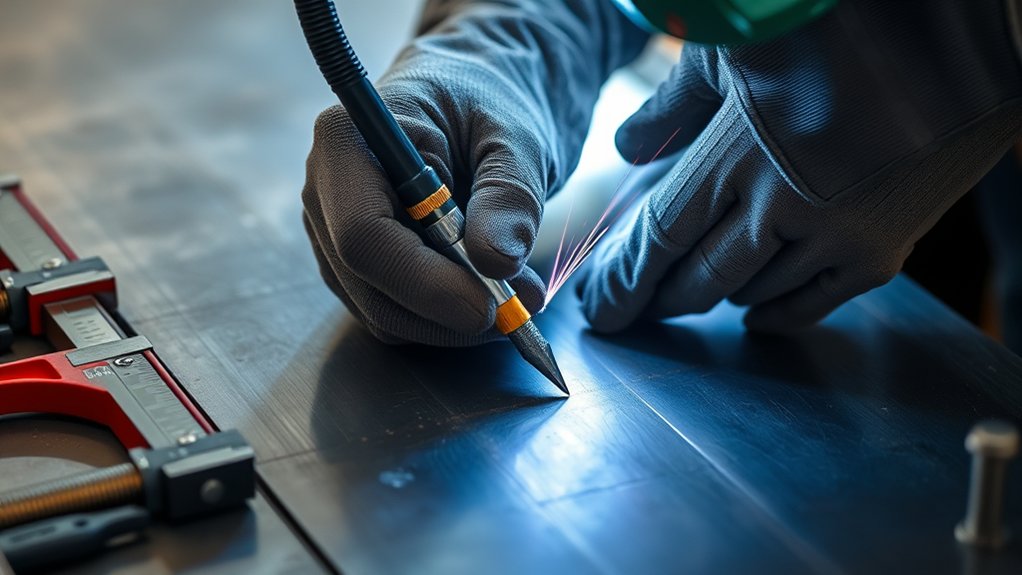
Clamp a straight edge or guide like an angle bar or square tubing to the workpiece. This steadies your path for straight lines.
Clamp a straight edge or guide to your workpiece to stabilize your cutting path for straight lines.
Use a drag tip. It lets the torch glide along the guide with less interference for clean, precise cuts.
Refine technique by adjusting torch angle and distance. A 90-degree angle reduces uneven edges.
Test guide materials like non-conductive wood or Corian for heat resistance.
- Ensure straight lines: Use a straight edge or guide.
- Reduce interference: Use a drag tip for clean cuts.
- Enhance precision: Keep a 90-degree torch angle.
Frequently Asked Questions
Can a Plasma Cutter Be Used on Non-Metallic Materials?
You can’t use a plasma cutter on non-metallic materials. Try alternatives like laser cutters or water jets for precise cuts on other materials.
How Can I Prevent Warping While Cutting Thin Metal Sheets?
Adjust speed and amperage for the metal thickness. Move consistently and support the sheet well to avoid warping.
What Personal Protective Equipment Is Necessary for Plasma Cutting?
Wear gloves, a welding helmet with the right shade, fire-resistant clothing, and steel-toed boots. Good gear lets you focus on the work.
How Do I Know if My Air Compressor Is Compatible With the Plasma Cutter?
Check the plasma cutter specs for required pressure. Ensure your compressor meets or exceeds it. Smooth operation confirms compatibility.
What Are the Common Troubleshooting Steps for a Plasma Cutter Not Igniting?
Check power supply and connections. Verify air pressure and inspect consumables for wear. Clean the torch tip to fix ignition issues.
Conclusion
You’ve learned to cut metal precisely with your plasma cutter. The arc slices through steel for a smooth edge. Sparks fade, leaving a sense of accomplishment. Maintain your gear, and your cuts stay true. Practice makes each one better.