To soundproof a garage workshop, seal air gaps first, add mass and a separate layer to the walls and door, absorb echo inside with noncombustible insulation, and isolate loud tools from the floor and bench. The garage door and small gaps usually leak the most sound.
A welding shop adds two limits that ordinary garage soundproofing guides skip: sparks can ignite many sound-dampening materials, and sealing the room tight can trap fume. This guide shows the order that works, which materials are safe near an arc, and how to protect your hearing while you work.

What Makes Noise in a Welding Garage
Arc welding itself is not usually the loudest job. Most of the noise comes from the work around it:
- Grinding and cutting: angle grinders and cutoff saws produce loud, high-pitched noise that carries through walls. See our guide to angle grinder noise hazards.
- Hammering and chipping: slag chipping, straightening, and bench work send vibration into the floor and walls.
- Air compressors: the motor and pump cycle on and off and shake whatever they sit on.
- Fans and extractors: necessary for fume control, but they add steady noise.
- The garage door: a thin door and loose seals let noise out and neighbors hear it.
Soundproofing Basics: Seal, Add Mass, Decouple, Absorb
Soundproofing works on four ideas. Use them in this order, because the cheap steps do the most.
| Step | What It Does | Garage Examples |
|---|---|---|
| 1. Seal gaps | Stops airborne sound leaking through cracks | Door-bottom seal, weatherstripping, acoustic sealant around outlets and penetrations |
| 2. Add mass | Blocks sound passing through a surface | Extra drywall layer, denser door, mass-loaded vinyl where it is safe from sparks |
| 3. Decouple and damp | Stops vibration travelling through framing | Resilient channel or separate framing, isolation pads under tools, rubber mats |
| 4. Absorb | Reduces echo and reverberation inside the room | Mineral wool in wall cavities, noncombustible panels away from the welding area |
Absorption alone does not stop noise leaving the garage; it mainly makes the room sound less harsh. To keep sound from reaching neighbors, you need sealing and mass as well.
Fire and Ventilation Limits for a Welding Shop
Read this before you buy materials. Welding and grinding sparks can ignite or melt many sound-control products.
- Avoid acoustic foam near the work area. Foam panels are usually combustible. Do not hang them within spark range of welding, cutting, or grinding.
- Prefer noncombustible insulation. Mineral wool is commonly used because it does not burn, but check the product data sheet and avoid paper or foil facings near sparks.
- Check mass-loaded vinyl and sealants. Confirm each product’s fire rating and keep combustible layers behind a noncombustible surface such as drywall or sheet steel.
- Check fire-rated walls and ceilings. If the garage shares a wall or ceiling with living space, building codes may require a specific fire-rated assembly. Do not remove or thin it, and check local code before changing it.
- Keep ventilation working. A sealed garage can trap welding fume. Keep fume extraction and make-up air paths open, and do not seal in fuel-burning appliances such as a water heater or furnace.
- Let compressors breathe. If you build an enclosure, give the compressor enough airflow and access for maintenance.
For safe workshop layout and fume control, see our garage welding workshop setup guide.
Materials Compared for Welding Garages
| Material | Main Job | Welding-Shop Caution |
|---|---|---|
| Mineral wool batts | Absorb sound in wall and ceiling cavities; noncombustible | Wear gloves, eye protection, and a dust mask when handling; keep it dry |
| Extra drywall layer | Adds mass to walls and ceiling | Fire-rated drywall suits garage walls; follow local code |
| Mass-loaded vinyl | Adds flexible mass to walls or door panels | Combustible; cover with drywall or keep away from sparks |
| Weatherstripping and door sweeps | Seal air gaps around doors | Check heat rating if near the welding area |
| Rubber mats and isolation pads | Reduce vibration under benches, anvils, and compressors | Keep mats away from hot slag and sparks |
| Acoustic foam panels | Reduce echo in the room | Flammable; use only well away from welding and grinding |
| Heavy door curtain or blanket | Adds a removable barrier on a door or opening | Use a flame-resistant welding blanket near hot work |
Products Worth Considering

6lb/ft^3 Rockwool ProRox SL960 Mineral Wool - 5 sheets of strong, rigid stone wool insulation

【Removable Panels】- The Fiberglass acoustic panels come with mental template and nails for you to hang in the ceiling or wall, it will be much stable, No worry about falling off. Besides It's removable .
How to Soundproof Garage Walls
If your wall studs are exposed, fill each cavity with mineral wool, fitted snugly but not compressed, because crushed insulation loses its absorbing effect. Then add drywall. A second drywall layer adds mass, and a damping compound between layers or resilient channel under the board helps stop vibration passing through the framing.
If the walls are already finished, seal the gaps and consider adding a layer of drywall over the existing surface. Seal around outlets, switch boxes, and pipe or conduit penetrations with acoustic sealant, and use fire-rated materials where code requires them.
Soundproof the Ceiling
Noise from the garage can travel into rooms above or next to it. Fill the joist bays with mineral wool and add drywall, using resilient channel if you can afford the ceiling height. If the ceiling is also the fire separation between the garage and living space, keep the required fire-rated assembly intact and check with your local building department before you change it.
Soundproof the Garage Door and Windows
The garage door is often the weakest point because it is thin, has panel gaps, and leaks around the edges. Start with a good bottom seal and perimeter weatherstripping. An insulated door or an insulation kit adds some mass and also helps with temperature; see our garage door insulation guide for options. For windows, use a tight seal, and if they are not needed for light or ventilation, consider a removable insert or a heavy curtain you can take down while welding.
Control Floor Vibration
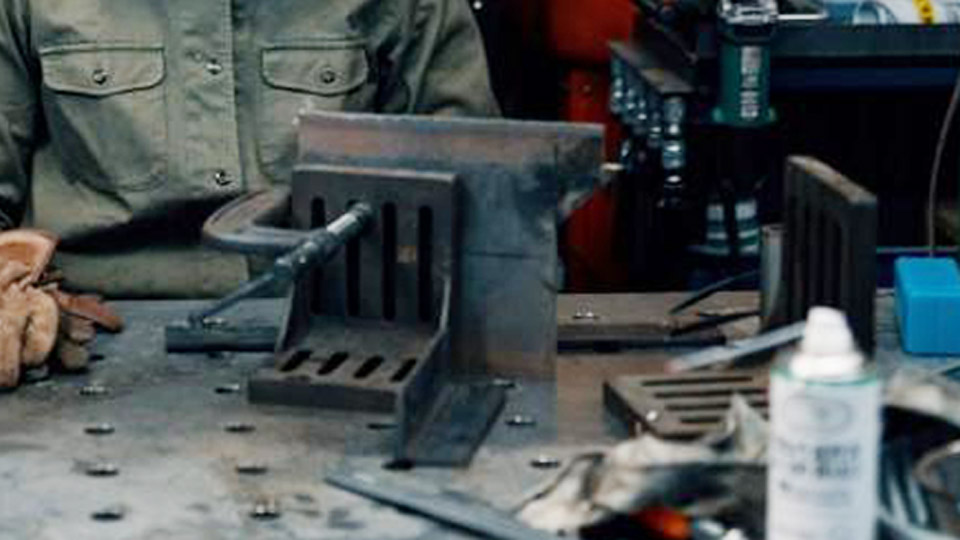
Vibration travels through concrete into the walls and neighboring spaces. Put heavy rubber mats or isolation pads under the compressor, the bench, and any anvil or vise that gets hammered. Do not put rubber under a welding table that must stay rigid and level; use leveling feet on a firm base instead.
Step-by-Step Plan to Soundproof a Garage Workshop
- Identify the loudest sources. Listen from outside while someone grinds, hammers, and runs the compressor.
- Seal gaps. Weatherstrip the door, seal the garage-door perimeter, and fill cracks and penetrations.
- Treat the garage door and any windows. These usually leak more than the walls.
- Isolate the noisy tools. Mount the compressor on pads, move it away from shared walls, and add mats under hammered work.
- Add insulation in the wall and ceiling cavities. Use noncombustible mineral wool and keep to local fire code.
- Add mass. Install extra drywall or another dense layer on the walls or ceiling that face your neighbors.
- Reduce echo. Add noncombustible absorbers on walls away from the welding and grinding area.
- Recheck ventilation and fire safety. Confirm that fume extraction works and nothing combustible is in spark range.
Protect Your Hearing While You Work
Soundproofing helps neighbors, but it does not replace hearing protection for you. NIOSH recommends limiting exposure to 85 A-weighted decibels (dBA) averaged over an eight-hour workday, and defines hazardous noise as 85 dBA or higher. Wear earplugs or earmuffs when grinding, cutting, or hammering, and use them under your welding helmet when needed. Check the protector’s noise reduction rating, and have your hearing tested if you work in loud conditions often.
Common Soundproofing Mistakes
| Mistake | Why It Fails | Better Approach |
|---|---|---|
| Only hanging foam panels | Foam absorbs echo but does not block sound, and it can burn | Seal gaps and add mass first; use noncombustible absorbers |
| Compressing insulation into the cavity | Crushed insulation absorbs less sound | Fit it snugly without packing it tight |
| Ignoring small gaps | Air leaks carry sound straight through | Seal around doors, outlets, and penetrations |
| Sealing the shop with no ventilation | Traps welding fume and combustion gases | Keep extraction and make-up air paths open |
| Using combustible materials near the arc | Sparks can start a fire | Keep combustibles out of spark range or behind noncombustible surfaces |
| Changing a fire-rated wall without checking code | May break fire separation | Check local code before altering shared walls and ceilings |
For layout and safety planning, see how to set up a welder in your garage, and for a work surface that will not wobble and amplify noise, see how to build a custom welding table.
Frequently Asked Questions
What materials work best to soundproof a garage workshop?
Combine sealing, mass, and absorption: acoustic sealant and weatherstripping for gaps, an extra layer of drywall for mass, and mineral wool in the cavities. Avoid acoustic foam near sparks because it is usually flammable.
How much does it cost to soundproof a garage workshop?
It depends on the size of the garage and how much you treat. Sealing gaps and improving the door are the cheapest steps, while added drywall, resilient channel, and insulation across all walls and the ceiling cost more. Get current material prices locally before you budget.
Can I soundproof my garage without losing space?
Yes. Seal gaps, add door seals, hang a removable blanket on the door, and put pads under tools. These steps take almost no floor space. Adding drywall layers reduces interior space only by the thickness of the board.
What is the quickest way to reduce workshop noise?
Seal the door gaps, close the garage door while you work, move the compressor away from shared walls and put it on isolation pads, and wear hearing protection. These steps work in an afternoon.
Do I need a professional to soundproof my garage?
Not always. Sealing, weatherstripping, and insulation are DIY jobs. Call a licensed contractor or electrician for wiring changes, structural work, or changes to a fire-rated wall or ceiling, and follow local building codes.
Conclusion
Start with sealing and the garage door, isolate the loudest tools, then add insulation and mass where it helps most. Choose noncombustible materials near the welding area, keep ventilation open, and wear hearing protection while you work.