Back when I started welding in tight spots on job sites, I didn’t always have the luxury of a full setup—no fancy machines, and definitely no foot pedal. The first time I had to TIG weld without a foot pedal, I was working on a thin stainless bracket, and trust me, controlling heat without cooking the metal felt impossible at first. But that challenge taught me a lot about torch control, joint prep, and how critical it is to dial in your machine before striking an arc.
Whether you’re switching from MIG to TIG, welding different metal thicknesses, or trying to keep a clean bead on stainless without warping it, learning to weld pedal-free is a game-changer. It’s not just about making it work—it’s about maintaining arc control, penetration, and weld quality with minimal tools. If you’re wondering how to master TIG without the foot pedal crutch, stick around—I’ll walk you through real-world techniques that actually work.
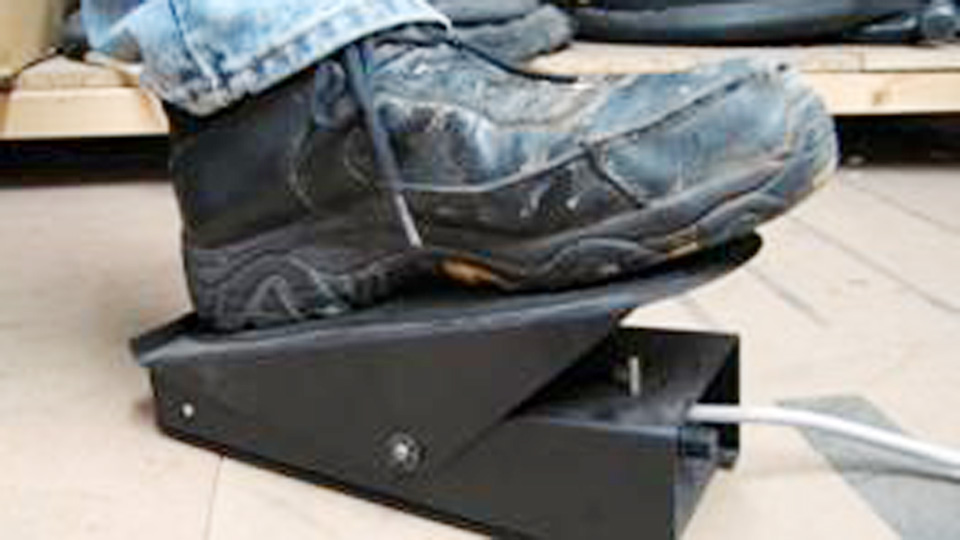
Photo by r-techwelding
Why TIG Welding Without a Foot Pedal Matters
TIG welding is the gold standard for precision, producing clean, strong welds on metals like aluminum, stainless steel, and mild steel. The foot pedal lets you adjust amperage on the fly, preventing burn-through on thin materials or ensuring penetration on thicker ones. But foot pedals are expensive ($200-$500), bulky, and impractical in tight spaces like under a car or on a ladder. Learning to TIG weld without one opens up the process to DIYers on a budget, hobbyists with basic setups, or pros in challenging environments.
I once had to weld a stainless steel pipe in a brewery’s cramped equipment room—no room for a foot pedal. Using a torch-mounted control, I got the job done without compromising quality. Skipping the pedal can also save you from tripping hazards or equipment costs while still delivering welds that pass inspection. But it takes practice and the right setup to maintain control and avoid mistakes like overheating or weak fusion.
Understanding TIG Welding Basics
TIG (Gas Tungsten Arc Welding) uses a non-consumable tungsten electrode to create an arc, shielded by argon or helium gas, to melt the base metal and a filler rod (if needed). The foot pedal typically controls amperage, letting you dial down heat for thin metals or ramp it up for thicker ones. Without a pedal, you rely on alternative controls like torch switches, dials, or machine settings to manage heat.
The challenge? Without variable amperage control, you must be precise with your technique—arc length, travel speed, and filler application—to avoid burning through or under-welding. I’ve messed up a few aluminum welds early on by not adjusting my technique for fixed amperage, but with practice, you can achieve pro-level results.
Alternatives to a Foot Pedal for TIG Welding
If you don’t have a foot pedal, don’t worry—there are solid alternatives. Here’s how I’ve made it work in real-world scenarios, with pros and cons for each method.
Torch-Mounted Amperage Control
Many modern TIG welders come with a torch that has a built-in switch or dial to adjust amperage. This lets you control heat directly from the torch, keeping both hands free and eliminating the need for a pedal.
How It Works: The torch has a trigger, slider, or dial that adjusts amperage within a preset range. Some models, like the Lincoln Precision TIG, offer a fingertip control for fine adjustments.
When to Use It: Ideal for fieldwork or tight spaces where a pedal won’t fit, like welding under a vehicle or on scaffolding. I used a torch-mounted control to weld aluminum brackets in a boat’s engine bay—no room for a pedal, but the welds were clean.
Pros: Portable, intuitive, no extra equipment needed.
Cons: Less precise than a foot pedal, can be tricky to adjust while welding.
Practical Tip: Set your welder’s max amperage slightly below what you need (e.g., 70 amps for 1/16” aluminum) to avoid burn-through, then fine-tune with the torch control.
Mistake to Avoid: Don’t fiddle with the control mid-weld—it can disrupt your arc. Practice adjusting on scrap metal first.
Scratch Start TIG
Scratch start TIG is the simplest and cheapest method, often found on older or budget welders. You strike the arc by scratching the tungsten against the metal, like starting a match, and weld at a fixed amperage.
How It Works: The welder is set to a single amperage (e.g., 80 amps for 1/8” steel), and you control heat by adjusting arc length and travel speed. No additional controls are needed.
When to Use It: Great for DIYers with basic TIG welders or for thick steel where precise heat control isn’t critical. I used scratch start to weld a steel trailer frame when I couldn’t afford a pedal early in my career.
Pros: No extra cost, simple setup, works with basic machines.
Cons: Limited control, harder to weld thin metals without burning through.
Practical Tip: Keep a short arc (1/16”) and move quickly to control heat. For 1/8” steel, set 80-100 amps with DCEN polarity and ER70S-2 filler.
Mistake to Avoid: Don’t use scratch start on thin aluminum—it’s too easy to burn through. Stick to thicker materials or practice extensively.
Lift Arc TIG
Lift arc TIG is a step up from scratch start, available on many mid-range welders. You start the arc by touching the tungsten to the metal and lifting it, maintaining a fixed or preset amperage.
How It Works: The welder senses contact and initiates a low-current arc, ramping up as you lift the tungsten. You control heat through technique, not a pedal.
When to Use It: Good for hobbyists or pros welding steel or stainless in a shop setting. I’ve used lift arc to weld stainless exhaust pipes when my pedal broke mid-job.
Pros: Cleaner arc start than scratch start, no pedal needed, affordable.
Cons: Still less control than a pedal, not ideal for very thin metals.
Practical Tip: Set amperage conservatively (e.g., 60-80 amps for 1/16” stainless) and use a 1/16” tungsten with pure argon at 15-20 CFH.
Mistake to Avoid: Don’t drag the tungsten after lifting—it contaminates the electrode, causing a rough arc.
Fixed Amperage with Pulse Settings
Some TIG welders let you use pulse settings to mimic the heat control of a foot pedal. Pulsing alternates high and low amperage, reducing overall heat input.
How It Works: The welder cycles between a peak amperage (for penetration) and a background amperage (to cool the weld pool), controlled by the machine’s settings.
When to Use It: Excellent for thin metals like aluminum or stainless, where heat control is critical. I used pulsing to weld a thin aluminum fuel tank without a pedal, avoiding burn-through.
Pros: Great for thin materials, no external controls needed, precise.
Cons: Requires a welder with pulse capability, setup can be complex.
Practical Tip: For 1/16” aluminum, set peak amperage at 80 amps, background at 30%, pulse frequency at 1-2 Hz, and 50% pulse time. Use AC polarity and ER4043 filler.
Mistake to Avoid: Don’t set the pulse frequency too high—it can make the weld pool hard to control. Start low and adjust.
Comparing TIG Welding Methods Without a Foot Pedal
Here’s a table to help you choose the best method, based on my experience.
| Method | Best For | Pros | Cons | Cost |
|---|---|---|---|---|
| Torch-Mounted Control | Fieldwork, tight spaces | Portable, intuitive | Less precise than pedal | $0 (if included with welder) |
| Scratch Start | Budget setups, thick steel | Cheap, simple | Hard to control on thin metals | $0 (basic welder feature) |
| Lift Arc | Shop welding, steel/stainless | Clean arc start, affordable | Limited heat control | $0-$200 (welder upgrade) |
| Pulse Settings | Thin metals, aluminum | Precise, good for thin materials | Complex setup, needs advanced welder | $500-$2,000 (welder) |
When to Choose Each: Torch-mounted controls are great for portability, scratch start for budget setups, lift arc for cleaner starts, and pulsing for thin metals. Match the method to your welder and project.
Step-by-Step Guide to TIG Welding Without a Foot Pedal
Here’s a guide for TIG welding 1/8” mild steel using lift arc, a common setup for hobbyists and pros without a pedal. Adjust for other methods or materials as needed.
Step 1: Assess the Project
Identify the metal (e.g., mild steel), thickness (1/8”), and joint type (e.g., butt joint). Choose a filler rod like ER70S-2 and a 1/16” tungsten electrode (2% lanthanated). I always check the metal’s condition—rust or oil can ruin the weld.
Step 2: Prep the Metal
Clean the metal with a wire brush or grinder to remove rust, paint, or oil. For a butt joint, ensure a tight fit-up with no gaps. I once welded steel with leftover grease, and the arc sputtered—clean thoroughly with acetone or a degreaser.
Pro Tip: Bevel edges for thicker metals (1/4” or more) to improve penetration.
Step 3: Set Up Your Welder
Set your TIG welder to DCEN polarity, 80-100 amps for 1/8” steel, and pure argon shielding gas at 15-20 CFH. Sharpen the tungsten to a point (like a pencil) for a stable arc. Test on scrap steel to ensure the arc starts cleanly.
Mistake to Avoid: Don’t set amperage too high—it can burn through or create excessive spatter. Start low and adjust up.
Step 4: Start the Arc (Lift Arc Method)
Touch the tungsten lightly to the metal, then lift it about 1/16” to start the arc. Hold a short arc length (1/16”) to maintain stability. If the arc wanders, your tungsten is contaminated—regrind it.
Practical Tip: Practice the lift motion on scrap to avoid sticking the tungsten, which can ruin the electrode.
Step 5: Weld the Joint
Tack weld the pieces to hold alignment, then run a steady bead along the joint. Dip the filler rod into the leading edge of the weld pool, keeping a consistent rhythm. Move at a steady pace (about 1-2 inches per second) to avoid overheating. I aim for a small, uniform bead for strength and aesthetics.
Mistake to Avoid: Don’t linger too long in one spot—it causes burn-through or warping. I ruined a thin steel sheet by moving too slowly once.
Step 6: Inspect and Clean
Check the weld for uniformity, no cracks, or porosity. A good steel weld should be smooth and silver-gray. Grind down any spatter with a 120-grit flap disc if needed. For critical jobs, test with dye penetrant to ensure no defects.
Pro Tip: If welding aluminum, use AC polarity, ER4043 filler, and a 100-120 amp setting for 1/8” thickness.
Practical Tips for Success
Here are some tips I’ve learned from years of TIG welding:
Practice Arc Control: Without a pedal, arc length is your main heat control. Keep it short (1/16”) for thin metals and slightly longer (1/8”) for thicker ones.
Use Pulsing for Thin Metals: If your welder has pulse settings, use them for aluminum or stainless to reduce heat input (e.g., 1 Hz, 50% background).
Sharpen Tungsten Properly: Grind lengthwise to a point for DCEN (steel/stainless) or a slight ball for AC (aluminum). A dull tungsten causes an unstable arc.
Clean Thoroughly: Use a dedicated stainless steel brush for aluminum or stainless to avoid contamination. I once got iron particles in an aluminum weld—total mess.
Test on Scrap: Always practice your settings and technique on the same material before starting the actual job.
Safety Considerations
TIG welding is safe with proper precautions, but risks are real:
Eye Protection: Use a welding helmet with shade 10-12 to prevent arc flash. I got a mild burn early on from glancing at the arc—never again.
Fumes: Weld in a well-ventilated area or use a fume extractor, especially for stainless or galvanized steel. Chromium fumes can be toxic.
Fire Safety: Keep a fire extinguisher nearby. Sparks can ignite rags or debris. I had a close call with a stray spark starting a small fire.
Gloves and Clothing: Wear flame-resistant gloves and a leather jacket to avoid burns. Thin gloves once let a spark burn my hand—stick with heavy-duty gear.
Electrical Safety: Ensure your welder is grounded, and avoid wet surfaces to prevent shocks.
Real-World Applications in the USA
TIG welding without a foot pedal is used in various settings:
Automotive: Welding stainless exhausts or aluminum radiators in tight engine bays where a pedal won’t fit. I welded a stainless header with a torch control in a cramped shop.
Marine: Repairing aluminum boat hulls or stainless railings, often in outdoor or confined spaces. Lift arc worked great for a stainless deck fitting I fixed.
DIY: Fixing steel lawnmower frames or aluminum bike parts with budget welders. I used scratch start to repair a steel gate early on.
Industrial: Welding stainless pipes in breweries or chemical plants, often requiring ASME-compliant welds. Torch controls saved me on a tight job site.
Hobbyist Projects: Building custom sculptures or furniture. I welded a steel table frame with lift arc for a clean, decorative bead.
For students, mastering TIG without a pedal builds skills for certifications like AWS D17.1, opening doors to aerospace or piping jobs.
Conclusion
Learning how to TIG weld without a foot pedal gives you the flexibility to tackle precision welds in any situation—whether you’re on a budget, in a tight space, or just don’t have a pedal. With torch-mounted controls, scratch start, lift arc, or pulse settings, you can achieve clean, strong welds on steel, aluminum, or stainless.
You now know how to prep your metal, set up your welder, and adjust your technique to avoid burn-through or weak fusion. Whether you’re a DIYer fixing a bike frame, a hobbyist crafting a sculpture, or a pro meeting industry standards, you’re ready to weld with confidence.
FAQ
Can you TIG weld without a foot pedal?
Yes, you can use torch-mounted controls, scratch start, lift arc, or pulse settings to TIG weld without a pedal. Each method requires practice to control heat through technique.
What’s the best method for TIG welding aluminum without a foot pedal?
Pulse settings or torch-mounted controls work best for aluminum, as they help manage heat on thin material. Use AC polarity, ER4043 filler, and 80-120 amps for 1/8” thickness.
Is scratch start TIG welding safe?
Yes, if you follow safety precautions—use a helmet (shade 10-12), ventilate fumes, and ensure proper grounding. It’s less precise but safe for basic steel welds.
How do I avoid burn-through without a foot pedal?
Keep a short arc (1/16”), move quickly, and set amperage low (e.g., 60-80 amps for 1/16” steel). Pulse settings or torch controls help manage heat on thin metals.
Can I use a TIG welder without a pedal for professional work?
Yes, torch-mounted controls or lift arc can produce professional welds that meet standards like AWS D17.1, especially in tight spaces or with pulse settings for thin materials.