When I first got my hands on a Lincoln MIG welder, I quickly realized it wasn’t just about plugging in the machine and pulling the trigger. Using a MIG setup the right way makes all the difference between clean, strong welds and a pile of spatter. The process is straightforward once you know the basics: choosing the right wire and shielding gas for your metal type, setting the proper voltage and wire feed speed based on material thickness, and prepping your joint so the arc has a clean surface to bite into.
Lincoln machines are designed to be beginner-friendly, but things like polarity, gas flow, and electrode stickout can still trip you up if you rush through the setup. Learning how to dial in your welder properly not only improves weld quality but also saves you time, gas, and consumables. In this guide, I’ll walk you through step-by-step how to set up, adjust, and weld effectively with a Lincoln MIG—so you can focus on laying down smooth beads with confidence.
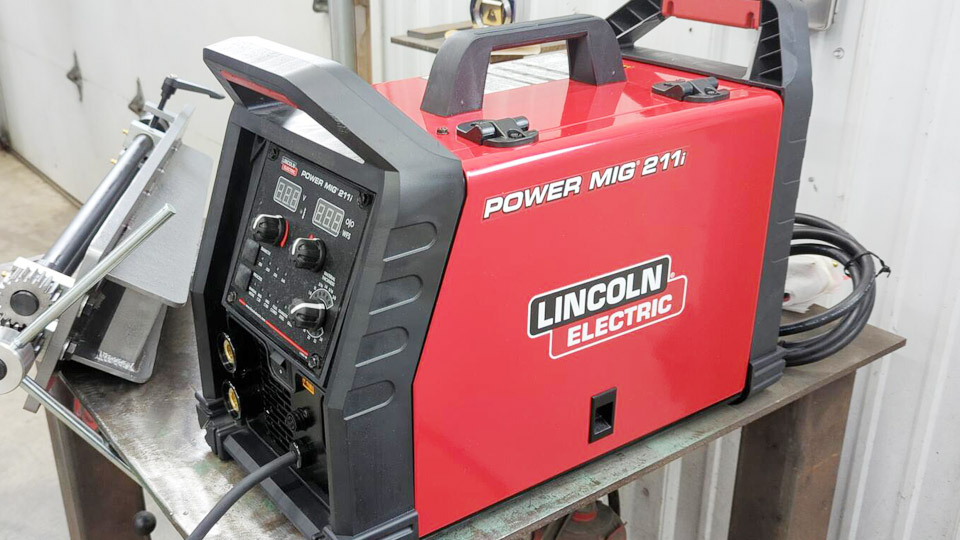
Image by eddieabbondanz
Why Choose a Lincoln MIG Welder?
Lincoln MIG welders are a staple in shops across the USA for a reason. Their machines, like the POWER MIG series, are built tough, with features like dual voltage inputs and intuitive controls that suit everyone from DIYers to industrial fabricators.
I’ve used models like the POWER MIG 210 MP for everything from thin sheet metal to heavy plate, and the reliability is unmatched. These welders shine in automotive repair, construction, and even small-scale manufacturing, offering a balance of portability and power.
What makes Lincoln stand out? Their machines are designed with user-friendly interfaces, like digital displays for voltage and wire speed, which take the guesswork out of settings. Plus, they’re versatile enough to handle MIG, stick, and TIG processes on some models, so you’re not locked into one method.
For students or hobbyists, this means you can grow your skills without needing a new machine. For pros, it’s about efficiency and consistent welds that meet industry standards like those from the American Welding Society.
One tip I learned early: always check the machine’s duty cycle. A buddy of mine burned out a cheaper welder by pushing it too hard. Lincoln’s duty cycles are solid, but knowing your machine’s limits prevents overheating and keeps your welds clean.
Safety First: Protecting Yourself and Your Workspace
Welding is empowering, but it’s not without risks. The arc from a MIG welder is brighter than the sun, and the heat can ignite anything flammable nearby. Before you even plug in your Lincoln MIG welder, set up your workspace right. I learned this the hard way when a stray spark caught a rag in my shop—thankfully, I had a fire extinguisher handy.
Start with personal protective equipment (PPE). A quality auto-darkening helmet (shade 10-13 for MIG) is non-negotiable to protect your eyes from arc flash. I prefer Lincoln’s Viking series helmets for comfort during long sessions.
Add flame-resistant gloves, a welding jacket, and steel-toe boots. For fumes, especially with galvanized steel, use a respirator or ensure your shop has strong ventilation—think industrial fans or a fume extractor.
Your workspace needs attention too. Clear away flammable materials like wood, paper, or solvents. I keep a fire extinguisher and a bucket of sand nearby, just in case. Ground your welder properly to avoid electric shocks, and inspect cables for frays. The American National Standards Institute (ANSI) Z49.1 standard emphasizes these precautions, and I’ve seen how they prevent accidents in busy shops.
Common mistake? Skimping on ventilation. Fumes from welding, especially on coated metals, can make you dizzy or worse. Open doors, use fans, or invest in a fume extractor if you’re welding indoors regularly.
Setting Up Your Lincoln MIG Welder
Setting up a Lincoln MIG welder is straightforward, but small mistakes can ruin your welds. Let’s break it down step-by-step, assuming you’re using a model like the POWER MIG 140C or 210 MP.
First, check your power source. Most Lincoln MIG welders offer 120V or 230V options. For home shops, 120V is fine for thin materials, but switch to 230V for thicker stock to avoid underpowered welds. Plug in and ground the machine to a clean, stable surface—bare metal, not painted.
Next, install the wire spool. Lincoln welders typically use 0.025” or 0.035” solid wire for steel. For aluminum, you’ll need a spool gun and 0.035” aluminum wire. Thread the wire through the drive rollers and into the gun, ensuring it’s snug but not pinched. I once spent an hour troubleshooting a “bad weld” only to realize the wire wasn’t feeding smoothly—check the tension on the drive rollers.
Choose your shielding gas. For steel, a 75/25 argon/CO2 mix is standard for clean welds with minimal spatter. Pure CO2 works but creates more spatter. For aluminum, use 100% argon. Connect the gas cylinder securely, set the regulator to 15-20 cubic feet per hour (CFH), and check for leaks with soapy water. No bubbles, no problems.
Finally, attach the ground clamp to your workpiece or a clean metal table. A weak ground can cause erratic arcs, so scrape off rust or paint first. Power on the machine, set initial voltage and wire speed (more on that later), and you’re ready to test the arc.
Keep a spare contact tip and nozzle handy. Spatter builds up fast, and a clogged tip can ruin your day.
Selecting the Right Wire and Gas for Your Project
Choosing the right wire and gas is like picking the right tool for a job—it’s half the battle. Lincoln MIG welders handle a range of materials, but your wire and gas combo depends on what you’re welding.
For mild steel, ER70S-6 wire (0.025” or 0.035”) is my go-to. It’s forgiving, handles dirty metal well, and gives smooth beads. For thinner steel (under 1/8”), use 0.025” wire to avoid burn-through. For thicker plate, 0.035” offers better penetration. I’ve welded everything from car panels to trailer frames with ER70S-6 and a 75/25 argon/CO2 mix—clean results every time.
For stainless steel, ER308L or ER316L wire works best, paired with a tri-mix gas (helium/argon/CO2). Stainless is trickier; too much heat warps it, so start with lower settings and practice on scrap. I once botched a stainless exhaust repair by rushing—slow and steady wins here.
Aluminum welding needs a spool gun for precise wire feeding. Use ER4043 or ER5356 wire with 100% argon. Clean the aluminum thoroughly with a stainless steel brush to remove oxide—skipping this step is a common rookie mistake that leads to porous welds.
Flux-cored wire (like Lincoln’s InnerShield) is an option for outdoor work since it doesn’t need shielding gas. It’s great for windy job sites but produces more spatter and slag. I use it for quick repairs on farm equipment when dragging a gas cylinder isn’t practical.
Here’s a quick comparison table for clarity:
| Material | Wire Type | Gas Type | Best For |
|---|---|---|---|
| Mild Steel | ER70S-6 | 75/25 Argon/CO2 | General fabrication, auto |
| Stainless Steel | ER308L/ER316L | Tri-mix (He/Ar/CO2) | Exhausts, food-grade welds |
| Aluminum | ER4043/ER5356 | 100% Argon | Marine, aerospace, art |
| Flux-Cored | InnerShield | None | Outdoor, dirty metal |
Don’t mix wire and gas types without checking compatibility. Using CO2 with aluminum wire, for instance, will give you a mess of a weld.
Dialing In Your Machine Settings
Getting the settings right on your Lincoln MIG welder is where the magic happens. Too much voltage, and you’ll burn through; too little, and your weld won’t penetrate. Lincoln’s machines often include a chart inside the door for recommended settings, but here’s how I approach it.
For mild steel, start with the chart’s suggested voltage and wire speed for your material thickness. For example, welding 1/8” steel with 0.035” ER70S-6 wire might call for 18-20 volts and a wire speed of 200-250 inches per minute (IPM). Strike a test bead on scrap metal. If it’s too “cold” (bead sits on top, no penetration), increase voltage slightly. If it’s too “hot” (burn-through or excessive spatter), lower it.
For aluminum, use a spool gun and start with higher voltage (20-24 volts) and faster wire speed (300-400 IPM) since aluminum conducts heat differently. Stainless steel needs lower voltage to avoid warping—try 16-18 volts for thin sheets.
A trick I learned: listen to the arc. A smooth, bacon-sizzle sound means you’re in the sweet spot. Crackling or popping? Adjust voltage or wire speed until it hums. Also, keep your stickout (distance from contact tip to workpiece) at about 3/8” for consistent results.
Common error: Ignoring polarity. MIG welding usually requires DC electrode positive (DCEP), but check your machine’s manual. I once set up a flux-cored job with the wrong polarity and spent an hour cleaning up spatter.
Preparing Your Workpiece Like a Pro
Prep work separates good welds from great ones. I’ve seen too many beginners skip this step, only to end up with weak, porous welds. Here’s how to prep like a pro.
Clean the metal thoroughly. For steel, grind off rust, paint, or oil with a wire wheel or flap disc. For aluminum, use a dedicated stainless steel brush to remove the oxide layer. I keep separate brushes for each metal to avoid cross-contamination. A clean surface ensures better arc stability and stronger welds.
For joints, bevel edges on thicker material (over 1/4”) to improve penetration. A 30-degree bevel works well for V-groove welds. Clamp or tack weld pieces to keep them aligned—movement during welding can ruin your bead.
If you’re welding thin metal, watch your heat. I once burned through a car fender because I didn’t lower the voltage enough. Use stitch welding (short bursts with pauses) to control heat input on thin stock.
Degrease with acetone or alcohol before welding. Even fingerprints can cause porosity in aluminum or stainless welds.
Mastering MIG Welding Techniques
Technique is where your welds go from functional to beautiful. With a Lincoln MIG welder, you’ve got the tools, but it’s your hands that make the difference. Here’s how to lay a solid bead.
Hold the gun at a 10-15 degree angle from vertical, pushing or pulling depending on the job. For steel, I prefer pushing for a flatter bead and better visibility. For aluminum, pulling can give deeper penetration. Keep a consistent stickout (3/8”) and move steadily—too slow, and you’ll pile up metal; too fast, and you’ll get a weak weld.
Practice the “C” or “e” motion for wider beads on fillet welds. It weaves the arc slightly, filling the joint evenly. I spent hours practicing this on scrap to get the rhythm down. For vertical welds, use a slight uphill push to control the puddle.
Rushing the weld. I’ve seen students whip the gun too fast, leaving a stringy bead. Slow down, watch the puddle, and let the arc do the work.
Troubleshooting Common MIG Welding Issues
Even with a Lincoln MIG welder, things can go wrong. Here’s how to fix the most common issues I’ve run into.
Porous Welds: Tiny holes in the bead usually mean contamination or bad gas flow. Check your gas regulator (15-20 CFH is ideal) and clean the metal again. I once had porosity from a leaky gas hose—always check connections.
Excessive Spatter: Too much voltage or wrong polarity can cause spatter. Lower the voltage or check your machine’s polarity. Anti-spatter spray helps, but don’t rely on it to fix bad settings.
Burn-Through: This happens on thin metal with too much heat. Lower voltage, increase wire speed, or use stitch welding. I keep a piece of copper as a heat sink for tricky spots.
Wire Feeding Issues: If the wire stutters or jams, check the drive roller tension or look for a clogged contact tip. I carry a small wire cutter to trim kinked wire on the spot.
Advanced Tips for Specific Applications
Once you’ve got the basics, you can tackle specialized jobs. Here are some insights for common Lincoln MIG welder applications.
Automotive Repairs: For body panels, use 0.025” wire and low voltage to avoid burn-through. Stitch weld to control heat. I fixed a rusty truck bed with short, overlapping beads and plenty of patience.
Aluminum Fabrication: A spool gun is a game-changer for aluminum. Use 100% argon and clean the metal obsessively. For marine projects, ER5356 wire resists corrosion better than ER4043.
Heavy Fabrication: For thick steel (1/4” and up), increase voltage and wire speed, and use a multi-pass technique. I welded a trailer hitch with three passes, grinding between each for a smooth finish.
Outdoor Welding: Flux-cored wire shines here. No gas means no worries about wind, but clean the slag thoroughly. I used InnerShield wire to repair a gate in a windy field—worked like a charm.
Maintenance and Care for Your Lincoln MIG Welder
Your Lincoln MIG welder is an investment, so treat it right. After every session, clean the nozzle and contact tip to remove spatter. I use a wire brush and nozzle dip to keep things smooth. Check the drive rollers for wear and replace them if they’re grooved.
Store the machine in a dry, dust-free spot. I learned this after leaving my welder in a damp garage—corrosion on the wire spool was a pain to fix. Change the liner in the gun every few months if you weld regularly; a worn liner causes feeding issues.
Finally, inspect gas hoses and regulators for leaks. A small leak can waste expensive gas and mess up your welds. I check mine monthly with soapy water.
Conclusion: Weld with Confidence
Using a Lincoln MIG welder is about more than just joining metal—it’s about precision, safety, and pride in your work. From setting up your machine to choosing the right wire and mastering techniques, you’re now equipped to tackle projects with confidence.
Whether you’re a DIYer fixing a lawnmower, a student learning the trade, or a pro building a bridge, these steps will help you produce strong, clean welds. The key is practice, patience, and attention to detail.
FAQ
What’s the best shielding gas for MIG welding with a Lincoln welder?
For mild steel, a 75/25 argon/CO2 mix gives clean welds with minimal spatter. For aluminum, use 100% argon with a spool gun. Stainless steel works best with a tri-mix (helium/argon/CO2). Always match the gas to your wire and material.
Can I weld aluminum with a Lincoln MIG welder?
Yes, but you’ll need a spool gun for precise wire feeding. Use ER4043 or ER5356 wire with 100% argon gas. Clean the aluminum thoroughly and adjust settings to avoid burn-through.
How do I avoid burn-through on thin metal?
Lower your voltage and increase wire speed to reduce heat. Use stitch welding (short bursts) and keep a copper heat sink nearby. Practice on scrap to find the sweet spot.
What’s the difference between MIG and flux-cored welding?
MIG uses a solid wire with shielding gas for clean welds indoors. Flux-cored uses a tubular wire with flux inside, ideal for outdoor welding without gas but with more spatter and slag.
How often should I clean my Lincoln MIG welder?
Clean the nozzle and contact tip after every session to remove spatter. Check drive rollers and liners monthly, and inspect gas hoses for leaks. Regular maintenance keeps your welds consistent.