Welding aluminum with flux core was one of those challenges that caught me off guard in the shop. I was used to running clean beads on stainless with TIG or dialing in MIG for thicker steel, but aluminum is a whole different animal.
The biggest confusion most welders run into is whether you can even weld aluminum with flux core wire, and if so, how to handle joint prep, heat control, and filler selection without blowing through thin metal or ending up with a weak, porous weld. Unlike steel, aluminum dissipates heat fast, which makes arc control tricky and mistakes expensive.
Getting it right matters because bad welds on aluminum can lead to cracks, failed parts, and wasted material — especially in fabrication, automotive, or repair work. In this guide, I’ll break down the real-world methods, settings, and tricks I’ve learned for how to weld aluminum with flux core so you can avoid the headaches and get stronger, cleaner welds every time.
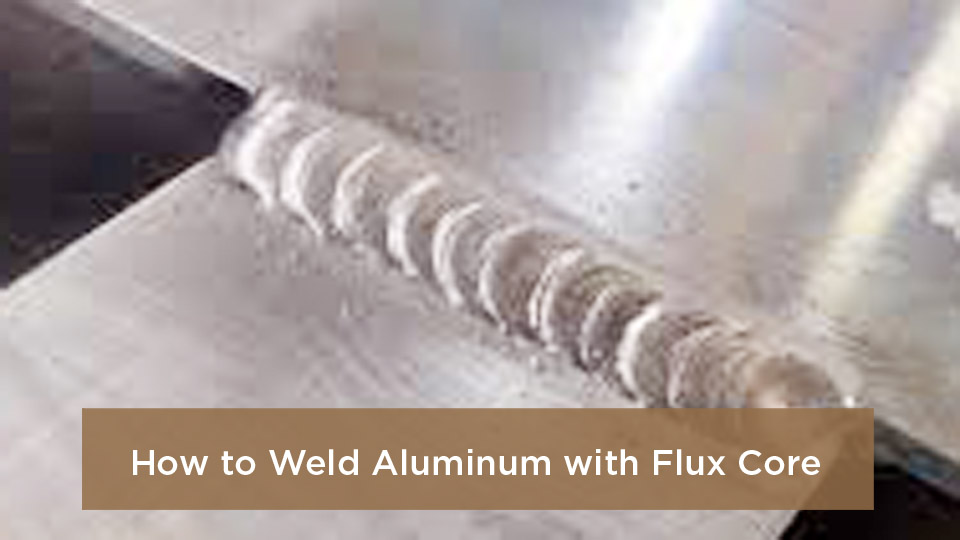
Image by reddit
Can You Weld Aluminum with Flux Core Wire?
Look, straight up: yes, you can weld aluminum with flux core wire, but it’s not the first choice most of us reach for. Flux core arc welding, or FCAW, shines on steel because that flux inside the wire shields the weld from air and spits out a gas that keeps things clean.
Aluminum? It’s a different beast. That shiny metal loves to form an oxide layer faster than you can say “pass the wire brush,” and its low melting point means heat flies out quicker than a spark from a bad ground.
I once tried fluxing up some 1/8-inch aluminum sheets for a buddy’s trailer side panel. Standard steel flux core? Forget it—it just bubbled and spat like a bad campfire. Switched to a specialized aluminum flux wire, and boom, we got penetration without the porosity nightmare. The key is using wire designed for aluminum, not your everyday E71T-1 stuff. It has extra cleaning agents in the flux to eat through that oxide and protect the puddle.
When to use it? Outdoor jobs where wind kills your shielding gas, or if you’re stuck with a basic MIG setup and need something portable. Why bother? Cost efficiency— no gas tanks to lug around—and it handles thicker stock well, like 1/4-inch plates for structural bits. Just don’t expect mirror-finish beads; it’s more about function than flash.
Pros: Tough welds in windy spots, forgiving on dirty prep if the flux is right.
Cons: More cleanup from slag, potential for inclusions if you’re not vigilant.
Bottom line, if your project’s non-critical—like hobby frames or repairs—flux core gets the job done without breaking the bank.
What Equipment Do You Need for Flux Core Aluminum Welding?
Gear up like you’re heading into a storm, because skimping here turns a good weld into a weak link. Start with your welder: a MIG machine pushing at least 200 amps, DC output. Flux core runs on DCEP polarity usually, but for aluminum, flip to DCEN for better oxide cleaning—check your manual, as brands like Miller or Lincoln vary.
The star of the show? A spool gun. Aluminum wire’s soft as butter; it bird-nests in a standard liner faster than you can curse. I learned that the hard way on a dock repair—jammed wire mid-bead, and I was picking flux out of the drive rolls for an hour.
Get a push-pull setup if you can swing it, like the Bernard ones from Hobart. Load .035- or .045-inch aluminum flux core wire—look for ER4043 or ER5356 cored variants from Lincoln Electric or ESAB.
Don’t forget prep tools: stainless steel wire brush (no carbon steel, it’ll contaminate), angle grinder with flap discs, and degreaser like acetone. For the weld: auto-darkening helmet (shade 10-12), leather gloves, and a respirator—those fluxes kick up fumes that linger.
| Equipment | Why It Matters | US Brand Recs | Cost Range |
|---|---|---|---|
| MIG Welder (200A+) | Handles heat without warping thin stock | Miller Multimatic 215, Lincoln Power MIG 210 | $800–$1,500 |
| Spool Gun | Feeds soft wire smoothly | Bernard S-Gun, Airco Gold Series | $200–$400 |
| Flux Core Wire (.035″) | Oxide-penetrating flux for clean fusion | Lincoln Innershield NR-211-MP, Hobart Alumaweld | $20–$50/spool |
| Wire Brush/Grinder | Removes oxide for strong bonds | DeWalt 4.5″ grinder, Pferd stainless brush | $50–$150 |
| PPE Kit | Shields from UV, sparks, fumes | 3M Speedglas helmet, Tillman gloves | $100–$300 |
With this kit, you’re shop-ready. Pro tip: Always test on scrap—aluminum’s conductivity means settings that work on 6061 might torch 5052.
How to Prepare Aluminum for Flux Core Welding
Prep is 80% of the battle, trust me. Skip it, and your weld’s as brittle as overcooked spaghetti. Aluminum grabs dirt, oil, and that tenacious oxide like a magnet—left unchecked, it traps gases and cracks under stress.
First, degrease: Wipe with acetone or a citrus-based cleaner on a lint-free rag. I hit a snag once on some cast aluminum brackets—machine oil from the mill caused porosity like Swiss cheese. Let it evaporate fully; no shortcuts.
Next, mechanical clean: Scrub with a dedicated stainless brush in one direction, then perpendicular—like crosshatching a fillet. For thicker oxide, grind lightly with 80-grit flaps. Aim for a satin finish; shiny is suspicious.
Joint prep: Bevel edges for V-grooves on butt joints over 1/8-inch thick—30-45 degrees per side. Clamp tight to fight distortion; aluminum expands like crazy when hot.
Why this matters? AWS D1.2 codes for structural aluminum demand clean joints for integrity—sloppy prep fails inspections and your project’s lifespan.
Practical know-how: Work in a dust-free spot. If it’s humid (hello, Midwest summers), store pieces wrapped to dodge fresh oxide. Takes 10 minutes, saves hours of rework.
Step-by-Step Guide: How to Weld Aluminum Using Flux Core
This is for flat position on 1/8-inch 6061; scale up amps for thicker.
Setup the Machine: Polarity to DCEN. Voltage 22-26V, wire speed 200-300 IPM—start low, dial in on scrap. Tension loose to avoid bird-nesting.
Load the Wire: Thread the aluminum flux core through the spool gun. Trim the tip square; set stickout to 1/2-inch.
Position the Work: Clamp pieces with 1/16-inch gap. Ground clamp clean and close—aluminum’s conductivity demands it.
Strike the Arc: Trigger on, approach at 15-degree push angle. Dip the gun into the joint like stirring gravy—slow weave, 1/2-inch wide.
Build the Bead: Travel speed 10-15 IPM. Watch the puddle: golden, not red-hot. Pause at starts/ends for tie-ins.
Cool and Clean: Let air-cool—no quenching. Chip slag, brush residue. Grind high spots for flatness.
I pulled this off on a custom bike rack last summer—started too fast, got stringy beads. Slowed down, added weave, and it held 500 pounds no sweat. For multi-pass, feather edges and layer 1/16-inch thick.
Settings tweak: For 1/4-inch, bump to 28V/350 IPM. Always back-purge if it’s a tube—prevents inside oxidation.
Best Flux Core Wires for Aluminum Welding
Wire choice is your weld’s backbone. Not all flux cores play nice with aluminum; you need ones with deoxidizers like silicon or magnesium to fight that layer.
Top pick: ER4043 flux cored—versatile for 5xxx/6xxx series, flows like water. Great for trailers or boats. ER5356 cored for higher strength on marine grades—holds corrosion better.
| Wire Type | Alloy Compatibility | Diameter | Best For | Drawbacks |
|---|---|---|---|---|
| ER4043 Flux Cored | 6061, 6063 | .035″ | General fab, repairs | Softer puddle, needs practice |
| ER5356 Flux Cored | 5052, 5083 | .045″ | Marine, structural | Higher cost, stiffer feed |
| E71T-GS Alum Variant | Mixed alloys | .030″ | DIY thin stock | More spatter on dirty prep |
From experience, ER4043 saved a shop deadline on some storm shutters—welded clean, no cracks after a month outdoors. Match filler to base: same family avoids galvanic corrosion. Store wire in a dry box; moisture kills flux.
Common Mistakes When Welding Aluminum with Flux Core and How to Fix Them
We’ve all botched a bead—me included. Burned through a fuel tank patch early on because I cranked amps too high. Here’s the usual suspects.
Mistake 1: Skipping Oxide Removal
Fix: Double-brush every time. That gray film? It’s your enemy—leads to lack of fusion. Anecdote: A student’s first run looked solid, but it popped under torque test. Extra scrub, and it passed.
Mistake 2: Wrong Polarity or Settings
Fix: DCEN, low voltage start. Too hot? Porosity city. Dial back 2V, test arc length.
Mistake 3: No Spool Gun
Fix: Invest or borrow—standard feeders chew wire. I jury-rigged once with lube; worked okay but messy.
Mistake 4: Rushing Travel Speed
Fix: Steady 12 IPM. Fast = cold laps; slow = blow-through. Practice on flat bar.
Mistake 5: Ignoring Slag Cleanup
Fix: Chip and brush between passes. Leftover flux corrodes faster than a salted road.
These fixes align with shop practices—save time, dodge failures. Remember, aluminum hates impatience.
Safety Tips for Flux Core Aluminum Welding
Safety isn’t a checkbox; it’s what keeps you welding tomorrow. Flux fumes from aluminum wires carry hexavalent chromium—nasty stuff, so vent like crazy. I got lightheaded in a closed garage once; now I crack doors and use a shop fan religiously.
PPE basics: Full-coverage jacket, no synthetics—they melt. Respirator with organic cartridges for vapors. Helmet shade 11; sparks bounce wild on aluminum.
Fire watch: Have a Class D extinguisher handy—water spreads molten metal. Ground everything; shocks sneak up on wet floors.
US regs? OSHA 1910.252 mandates ventilation at 10 CFM per square foot. For codes, AWS D1.2 stresses fume extraction in enclosed spaces.
Pro know-how: Hydrate—sweat flies in that heat. And eye wash station? Non-negotiable after grinding.
Alternatives to Flux Core for Welding Aluminum
Flux core’s handy, but if it’s fighting you, pivot. TIG’s my go-to for precision—like aerospace parts—using AC to break oxide, pure argon shield. Slow, but beads like jewelry.
MIG with gas: Spool gun plus 100% argon for speed on frames. Cleaner than flux, less slag.
Brazing rods: No welder? Alumiweld with a MAP torch joins fittings quick—great for HVAC repairs. Not full fusion, but strong for non-structural.
Riveting: Old-school reliable for panels—pop rivets hold vibration better than a shaky weld.
| Method | Pros | Cons | When to Use |
|---|---|---|---|
| TIG | Precise, clean | Slow, skilled | Thin sheets, art |
| MIG Gas | Fast, versatile | Needs gas | Production runs |
| Brazing | Portable, easy | Lower strength | Repairs, hobby |
| Riveting | No heat distortion | Mechanical only | Frames, enclosures |
I switched to TIG for a boat hull—flux core couldn’t touch the integrity. Choose based on your rig and deadline.
Welding Aluminum with Flux Core in Different Positions
Flat’s easy, but real jobs go vertical. For horizontal: Weave wider, 20-degree drag angle—fights sag on pipes.
Vertical up: Short arc, stack beads thin. Downhill’s faster but shallower penetration—good for sheets.
Overhead: Whip motion, low amps to drop less metal. I overheaded a trailer roof once—too much weave, drips everywhere. Tighten your grip, keep it crisp.
Technique tweak: All positions need consistent speed; aluminum warps if you linger. Practice transitions on angle iron.
Wrapping It Up: Your Path to Solid Aluminum Welds
Welding aluminum with flux core isn’t a fairy tale; it’s a tool in your kit when done smart. Key takeaways? Prep ruthless, gear specialized, and practice patient. You’re now armed to tackle that trailer, boat, or shop project without second-guessing. Walk into your next weld confident—you’ve got the know-how for welds that last, saving time and headaches in the real world.
After cleanup, hit the bead with a zinc-rich primer. Fends off corrosion like a champ, especially in salty air.
FAQs
What Polarity Should I Use for Flux Core Aluminum Welding?
Go DCEN—direct current electrode negative. It cleans the oxide better than DCEP, giving deeper penetration without the burn-through. Flip your leads and test on scrap to confirm.
Is Flux Core Wire Good for Thin Aluminum Sheets?
Not ideal under 1/16-inch; heat sinks too fast, risking holes. Stick to .035-inch wire at 18-20V, or switch to TIG for control. For hobby thin stuff, braze instead.
How Do I Avoid Porosity in Flux Core Aluminum Welds?
Clean like your paycheck depends on it—oxide and moisture are culprits. Use dry wire, vent fumes, and back-purge tubes. If it pops, grind out and redo with fresh flux.
Can Beginners Weld Aluminum with Flux Core?
Absolutely, but start simple. It’s forgiving outdoors, but grab a spool gun and practice flat beads first. I botched plenty before nailing it—patience pays.
What’s the Difference Between Flux Core and MIG for Aluminum?
Flux core skips gas for wind-proof portability but leaves more slag. MIG with argon runs cleaner and faster on indoors jobs. Flux for thick/outdoor; MIG for pretty and precise.