Welding thin metal with flux core can be one of the trickiest jobs in the shop. It’s that moment when you’re trying to run a smooth bead, but the sheet starts to warp, or worse — you blow right through it. Many welders think simply turning down the amperage will solve the problem, but there’s more to it than that.
Things like joint prep, arc control, wire feed speed, and metal thickness all play a big role in keeping your welds clean and strong. Compared to MIG or TIG welding, flux core runs hotter and demands a steadier hand, especially when working on thin-gauge steel or stainless.
Mastering it matters — not just for better weld quality and structural strength, but also for saving time, filler wire, and frustration. Stick around, because I’m about to walk you through some battle-tested tips that make welding thin metal with flux core a whole lot easier.
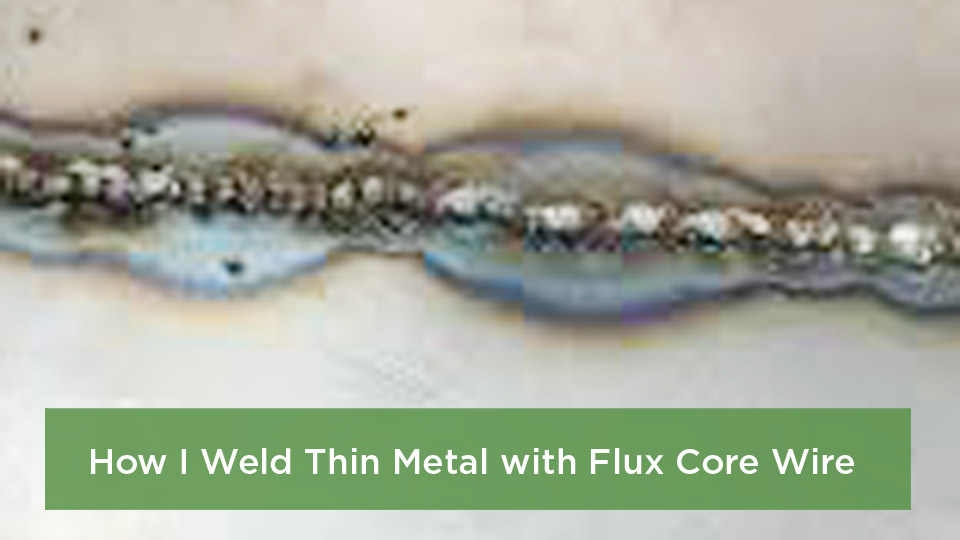
Image by metal.fabrication.tips
What Is Flux Core Welding and Why Use It on Thin Metal
Flux core welding, or FCAW, uses a tubular wire filled with flux that melts to shield the weld pool—no external gas required for self-shielded types. It’s like having a built-in protector that handles impurities and atmospheric contaminants, making it forgiving on mildly dirty surfaces.
For thin metal, this process shines in outdoor or windy shops where MIG gas would blow away, but it’s trickier because the flux generates more heat and spatter compared to solid wire MIG.
Why bother with it here? Well, in real-world scenarios like patching a truck fender or fixing trailer siding, flux core penetrates well without fancy setups. It works on mild steel sheets down to 18-22 gauge if you control the heat, offering good fusion for structural-ish repairs.
But it’s not ideal for super cosmetic work; the slag needs chipping, and spatter cleanup adds time. Use it when portability and wind resistance matter more than a pristine bead—think farm repairs or garage projects.
From my experience, I once flux-cored a thin exhaust pipe on a jobsite—windy day, no gas bottle—and it held up fine after some practice. The key is understanding the flux creates slag for protection but amps up the heat, so thin stock needs technique tweaks.
Choosing the Right Flux Core Wire for Thin Metal
Picking wire is crucial; go wrong and you’ll fight burn-through or poor arc stability. For thin metal, stick to 0.030-inch diameter self-shielded flux core like E71T-GS or E71T-11—it’s finer, melts cooler, and suits gauges from 20 to 14 without overwhelming the material. Thicker 0.035-inch works for slightly beefier sheets but risks holes on the thinnest stuff.
Self-shielded wires are best for no-gas setups, generating their own gas from the flux core. Avoid gas-shielded for thin work unless you’re indoors; they need extra shielding and can complicate things. Brands like Hobart Fabshield 21B run stable on low amps, reducing spatter—I’ve swapped to it after cheap wire popped on thin tubing.
Practical know-how: Match wire to your machine’s voltage output. For 120V hobby welders, 0.030-inch keeps amps low (around 80-100A for 20-gauge). Store wire dry to avoid porosity from moisture—I’ve ruined spools by leaving them in the humid shop. Test on scrap; if it birds-nests or stubs, check drive rolls—use knurled ones for flux core’s softer tube.
| Wire Diameter | Best For | Pros | Cons |
|---|---|---|---|
| 0.030-inch | 20-14 gauge thin sheets | Lower heat, less burn-through, stable arc on low-power machines | Less penetration for joints needing fusion |
| 0.035-inch | 18 gauge and up | Better for slight thickness buildup, more flux for shielding | Higher heat risk on very thin metal, more spatter |
Essential Equipment for Flux Core Welding Thin Metal
You don’t need a high-end rig, but the right setup prevents frustration. A basic MIG/flux core welder like a 140A 120V unit handles thin metal fine—I’ve used Harbor Freight mods for years. Key: DCEN polarity (electrode negative)—flip it from MIG default or the arc won’t stabilize.
Gear up with a good helmet (auto-darkening for spatter-heavy flux), leather jacket, gloves, and a respirator—fumes from flux are nasty, especially on galvanized thin stuff. Use a gasless tip on the gun, and knurled drive rolls to grip the tubular wire without flattening it.
Safety first: Flux core throws hot spatter like fireworks, so cover nearby flammables and work in ventilated spaces. For thin metal, add a heat sink like copper backing bar behind joints—it sucks heat away, preventing warp. Common mistake: Skipping prep tools like angle grinders for cleaning—rust causes porosity.
Preparing Thin Metal for Flux Core Welding
Prep is non-negotiable; thin metal warps or contaminates easy. Grind or wire-brush to bare metal—remove paint, rust, oil—especially on auto sheets where galvanizing fumes are toxic. I once skipped this on a fender patch and got pinholes everywhere.
For joints, butt or lap thin pieces tightly—no gaps over material thickness, or you’ll bridge with filler but risk voids. Clamp securely; use magnets or vice grips. For curved sheets like car panels, tack in multiple spots to hold shape.
Tip: Practice on identical scrap—measure gauge with a caliper. Clean between passes, chip slag fully—trapped flux weakens integrity. In humid shops, dry the area to avoid moisture-induced cracks.
Step-by-Step Guide to Welding Thin Metal with Flux Core
Start with safety gear on, workspace clear. Set machine to DCEN, low voltage (14-16V for 20-gauge), wire speed 3-5 on 10-scale for 0.030 wire—test arc sound: steady sizzle, not popping.
- Tack weld: Short bursts (1/2-second pulls) every inch, skipping around to distribute heat—no continuous bead yet. Let cool between tacks.
- Stitch weld: Drag gun at 45-degree angle, 10-15 degree push/pull, 3/8-1/2 inch stickout. Move fast to avoid pooling—aim for bird-bite pattern on thin stuff.
- Chip slag after each pass, inspect for holes. Backstep if needed: Weld short segments, overlapping previous cools.
- For buildup, multiple passes on thicker joints, grinding between if slag traps.
I remember my first thin sheet: Too slow, burned holes. Fixed by faster travel and lower settings—now it’s routine for trailer patches.
Machine Settings for Thin Metal Flux Core Welding
Settings vary by machine, but for 120V on 20-gauge: Voltage 14-16V, wire speed 100-150 IPM for 0.030 wire—listen for smooth hum. Too high voltage pops; too low lacks fusion.
For 18-gauge, bump to 16-18V. Use manufacturer charts, but test: Arc should wet in without digging holes. Polarity DCEN is must—reverse causes stubbing.
On a windy site, I dialed low on a Lincoln 140—steady arc on thin tubing. Pro tip: Longer stickout (3/4 inch) cools the wire, reducing heat input.
Common Mistakes When Welding Thin Metal with Flux Core and How to Fix Them
Burn-through tops the list—too much heat melts holes. Fix: Lower voltage, faster travel, stitch instead of continuous. I blew through a panel early on; learned to tack and cool.
Porosity from dirt or moisture: Clean rigorously, store wire dry. Wrong polarity: Arc sputters—switch to DCEN.
Spatter overload: Use anti-spatter spray, adjust for steady arc. Undercut from high speed: Slow slightly, weave minimally—flux core hates wide weaves. Ground poorly: Clean clamp spot for consistent power.
Safety Considerations for Flux Core on Thin Metal
Flux core amps up risks: Intense UV, spatter burns, toxic fumes from flux and galvanizing. Wear full leather, respirator—fumes cause dizziness. Ventilate; outdoors helps but watch wind scattering spatter.
Thin metal warps fast—secure clamps prevent slips leading to shocks. Fire watch: Sparks fly far, cover flammables. Ground to bare metal avoids arcs jumping.
Pro insight: On galvanized thin sheets, grind coating off—zinc vapors are nasty. Always chip slag hot to avoid cracks.
Pros and Cons of Flux Core vs MIG for Thin Metal
Flux core pros: No gas, wind-proof, penetrates dirty metal—great for field repairs on thin auto panels. Cons: More spatter, slag cleanup, hotter for thin stock risking holes—MIG’s cleaner for cosmetics.
MIG edges on thin metal with solid wire/gas for less heat, smoother beads, but needs calm air and costs more upfront. Flux core suits DIYers on budget; MIG for shop precision.
| Aspect | Flux Core | MIG |
|---|---|---|
| Heat Control | Hotter, burn risk | Cooler, better for thin |
| Portability | High, no gas | Needs tank |
| Cleanup | Slag/spatter heavy | Minimal |
| Cost | Wire only | Gas + wire |
Real-World Applications and Tips from the Shop
Flux core on thin metal fits auto body patches, exhaust repairs, trailer siding—anywhere gasless wins. I’ve fixed rocker panels on old trucks; tacks hold, stitches seal.
Tip: For vertical thin joints, drag up with slight weave—gravity helps puddle control. On galvanized, preheat minimally or grind—fumes are rough. Always backstep to minimize distortion.
Conclusion
Mastering how to weld thin metal with flux core boils down to prep, low heat, and practice—choose 0.030 wire, stitch tacks, clean religiously for strong, safe joints. You’re now equipped to tackle those tricky repairs without fear, knowing the pitfalls and fixes.
Go forth confidently; your next project will be tougher than the last. Use a copper chill bar behind thin joints—it dissipates heat like magic, saving warped panels.
FAQs
Can You Weld Thin Sheet Metal with Flux Core?
Yes, but it’s challenging on gauges under 20—use low settings, stitch technique, and clean metal to avoid burn-through. Better for repairs than cosmetics.
What Wire Size for Thin Metal Flux Core?
0.030-inch self-shielded like E71T-11 works best—finer for less heat on 18-22 gauge sheets.
How to Avoid Burn-Through on Thin Metal?
Lower voltage (14-16V), fast travel, short stitches, and heat sinks—practice on scrap to dial in.
Is Flux Core Stronger Than MIG for Thin Metal?
Both can be strong if done right, but MIG offers cleaner fusion on thin stock; flux core penetrates better on dirty surfaces but needs slag removal.
Safety Tips for Flux Core on Thin Galvanized Metal?
Grind off zinc coating to avoid toxic fumes, use respirator, ventilate—flux amplifies hazards.