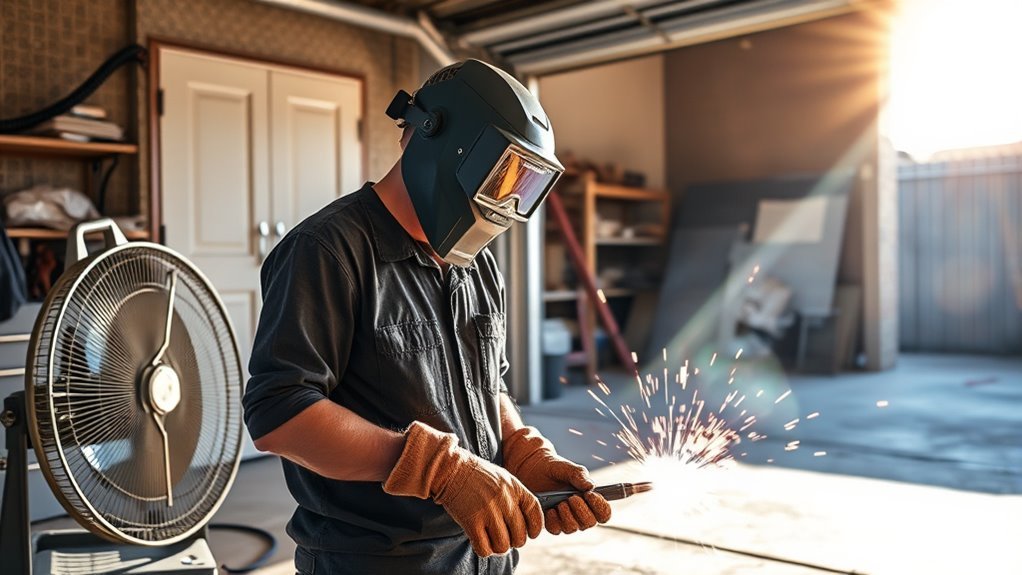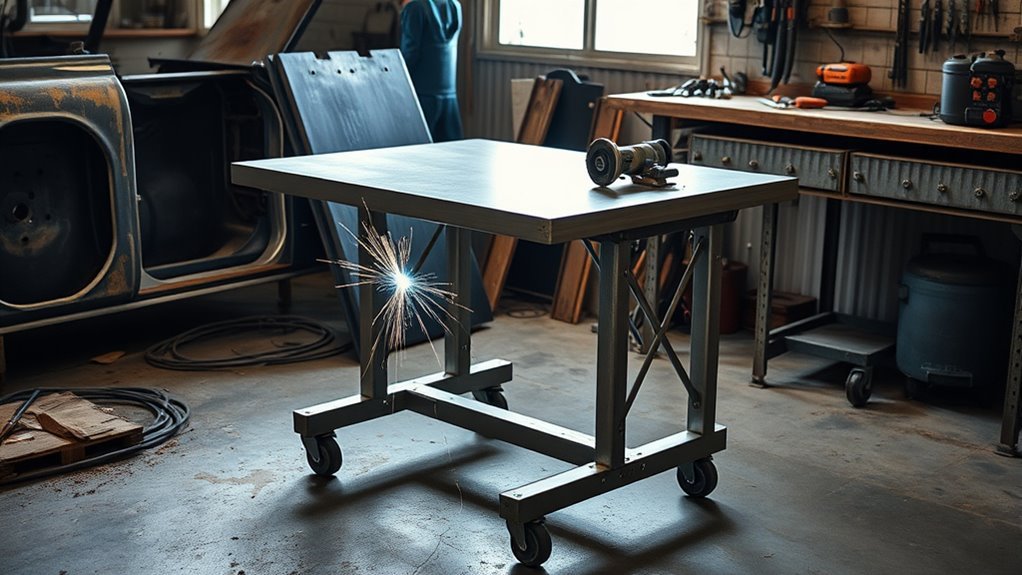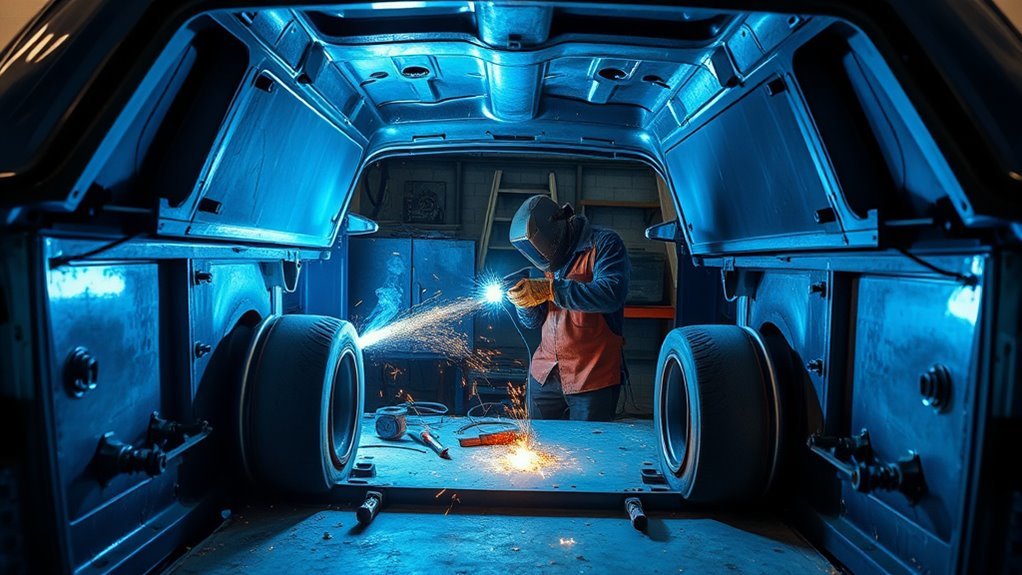
Welding wheel tubs in a car is a sheet-metal repair job that needs careful measuring, safe hot-work setup, and slow heat control. Start by leveling and bracing the body, then cut out only the rusted wheel tub metal. Test-fit the replacement patch, clamp it tight, tack it in stages, finish the welds in short bursts, and protect the repair from rust before checking tire clearance.
Quick Answer
To weld wheel tubs, brace the car level, remove trim and fire hazards, cut out the rusted tub section, clean both panels to bare metal, clamp the patch in place, tack weld around the perimeter, then stitch weld slowly to control heat. Finish by grinding, seam sealing, priming, and checking tire clearance through full suspension travel.
Key Takeaways
- Support the car on stands, level the body, and brace nearby panels before cutting the wheel tub.
- Remove paint, rust, undercoating, seam sealer, zinc coating, fuel vapors, and other fire or fume hazards before welding.
- Use short tack and stitch welds, moving around the patch so heat does not warp the quarter panel or tub.
- After welding, grind only as much as needed, seal both sides, prime the metal, and add cavity wax where moisture can collect.
- Always cycle the suspension with the wheel and tire installed before calling the repair finished.
At a Glance
| Time Required | 1 to 2 full days for one side, depending on rust, fitment, and finishing work |
| Difficulty | Advanced DIY or professional body repair |
| Tools Needed | MIG welder, clamps, Clecos or screws, cut-off wheel or reciprocating saw, grinder, body hammer, measuring tools, welding helmet, gloves, respirator, jack stands, seam sealer, primer |
| Cost | Usually $100 to $500+ for patch panels, consumables, primer, seam sealer, and rust protection, not including labor |
Warning: Do not weld near fuel lines, brake lines, wiring, old undercoating, insulation, seam sealer, or loose interior materials until the area is cleaned, shielded, and inspected. Keep a fire extinguisher nearby, use a fire watch, and check the back side of the panel often during and after welding.
Prep the Car for Wheel Tub Welding
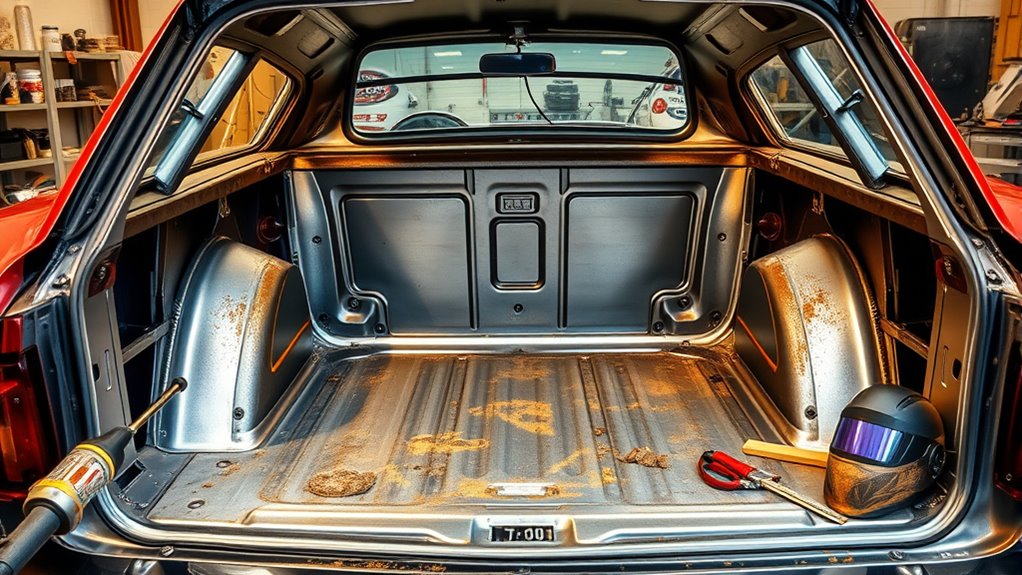
Before you strike an arc, make sure the car is supported on solid jack stands, leveled side to side, and braced so the body stays square during the wheel tub install. Never rely on a hydraulic jack alone. You need a stable baseline before cutting, because a twisted shell can lock in bad door, trunk, and quarter-panel gaps.
Disconnect the battery, remove nearby carpet and trim, and inspect both sides of the work area. Look for fuel lines, brake lines, wiring, seam sealer, old undercoating, insulation, and hidden debris. OSHA hot-work guidance calls for moving fire hazards when possible, guarding hazards that cannot be moved, and keeping fire extinguishing equipment ready during welding and cutting.
Pre-fit every nearby sheet-metal panel, including the wheel tub, quarter panel, trunk extension, and wheel lip area. Check that the doors and trunk lid still open, close, and latch correctly. Use zip screws, Clecos, or temporary clamps to hold gaps where you need control, then measure, adjust, and recheck until the fit is consistent.
Confirm the tub depth into the body gives the tire clearance you want without crowding suspension travel, frame rails, shock mounts, or body structure. Run a full pre-weld inspection now so you can catch interference, mismatch, or alignment drift before heat makes the repair harder. Wear proper protective clothing, including a welding helmet with the correct shade, safety glasses, leather gloves, flame-resistant sleeves or jacket, and hearing protection.
Note: Welding fumes can contain metal particles, and coated or galvanized metal can create extra fume hazards. Grind the weld zone to clean bare steel, ventilate the area, and use respiratory protection when ventilation alone is not enough.
Choose the Right Welder and Supplies
For most automotive wheel tub patches, a MIG welder with solid wire and shielding gas is the most practical choice. It is fast, easy to control, and well suited to thin mild-steel sheet metal when the settings are dialed in. TIG can also work if you need very fine control, but it is slower and less forgiving when access is tight. Stick welding is usually too hot and messy for thin wheel tub sheet metal.
Use clean mild-steel wire that matches the panel thickness, usually a small-diameter wire for thin body panels. Set voltage and wire speed on scrap metal that matches the tub thickness before touching the car. The test weld should sit flat, fuse both pieces, and show heat marks without blowing holes through the sheet metal.
- MIG welder with shielding gas for clean sheet-metal welds
- Cut-off wheel, air saw, or small reciprocating saw for controlled cuts
- Clecos, locking pliers, panel clamps, or self-tapping screws for fit-up
- Angle grinder, flap disc, wire wheel, and sanding discs for cleanup
- Copper backing spoon for small gaps or burn-through repair
- Epoxy primer, seam sealer, cavity wax, and paint for corrosion protection
Pro Tip: Before cutting the car, weld two scrap coupons from the same patch-panel thickness. Bend or pry the sample after it cools. If the weld tears away from one side, adjust your settings and clean the joint again.
Products Worth Considering

PRE-CUT WELDING COUPONS: 2 x 4 in mild steel plates are sized for bead practice, TIG, MIG, stick, gas welding, and small fabrication work without cutting sheet stock.

Includes 2 pre-cut steel sheets that detach into 24 parts—weld them to build 2 hollow cubes and 2 dice.

Perfect gift for any Stick Welding, MIG Welding, TIG Welding, Plasma Arc Welding, Electron Beam Welding, Laser Welding or Gas Welding you know. Men or Women. Heck, even grab one for the little boys or girls in your life.
Cut Out the Rusted Wheel Tub
Mark your cut lines along the wheel lip corner and the wheel-tub-to-quarter seam so you can remove the rusted section without disturbing adjacent metal. Stay close to the damaged area, but leave enough clean metal for a strong weld joint.
Use a small reciprocating saw, cut-off wheel, or air saw in tight areas. Cut only the damaged outer tub unless the inner tub or brace is also rusted. Keep the original quarter panel intact whenever possible so it can guide the replacement patch.
Preserve the remaining alignment points, then check the patch fit against the structure before you weld. Remove paint, primer, seam sealer, undercoating, and zinc residue from the weld zone. If you are working around galvanized steel, remove the coating from the weld area and control fumes before welding. This helps reduce contamination and supports a stronger weld. For more detail, see this guide on how to remove zinc residues before welding.
Products Worth Considering

Extended Battery Life for Long Projects: With 2 x 4.0Ah batteries, you'll enjoy extended usage time. The fast-charging feature means you're always ready to go, minimizing downtime. This reciprocating saw cordless ensures you can complete your projects without interruptions.

👍【POWERFUL BRUSHLESS MOTOR WITH 3500 SPM CUTTING SPEED】 SOARFLY upgraded reciprocating saw features a robust brushless motor delivering up to 3500 strokes per minute, effortlessly cutting through various materials with exceptional speed and precision.

[High Speed Cutting]: The cordless reciprocating Saw is equipped with a high power pure copper motor that reaches speeds up to 3500 SPM, providing powerful and superior cutting performance to meet various needs. FULLYEA reciprocating saw cordless is a versatile must-have for any workshop
Mark Cut Lines
Start by locating every rusted section of the wheel tub. Use a marker, tape, or scribe to lay out precise cut lines along the wheel lip corner and any factory seam you need to separate. Double-check the marks against the quarter panel seam, trunk floor, frame rail, and existing tub reference points.
You are preserving the car’s geometry, so every line matters. Keep the layout tight to the corrosion boundary and avoid cutting away clean steel just to make the hole larger. A small reciprocating saw gives you control as you trace the line without drifting into sound material.
Mark the seam where the wheel tub meets the quarter panel so you can free the patch cleanly later. Label any reference marks with tape or a paint pen. This setup helps you cut once, cut accurately, and protect the surrounding structure.
Remove Damaged Metal
With the cut lines laid out, remove the damaged wheel tub metal by following the wheel lip corner and cutting only the rusted outer section. Keep your hands, wiring, fuel lines, brake lines, and suspension parts clear of the blade path.
Use a small reciprocating saw where access is tight, and keep your cuts controlled so you do not disturb sound sheet metal. If the metal is thin or pitted beyond the cut line, trim back to solid steel before fitting the patch.
Work along the wheel-tub-to-quarter seam with care, since that joint helps define the tub’s position when you fit the replacement. Hold the original quarter panel in place as your visual guide while you free the bad material.
Cut cleanly and deliberately. Rough edges create extra grinding, wider gaps, and weaker fit-up. When the rusted wheel tub section comes out, deburr the edge and test the opening against the new patch panel.
Preserve Alignment Points
As you cut out the rusted wheel tub, keep alignment points intact so the replacement fits correctly. Do not remove factory flanges, brackets, or reference edges unless they are damaged and included in your patch plan.
Make precise cuts along the wheel lip corner and remove only the rust-damaged outer section. Use a small reciprocating saw in tight spaces so you can control the cut without nicking the quarter panel.
- Mark the cut line before you start.
- Follow the wheel lip corner exactly.
- Keep the seam clean and easy to inspect.
- Check fitment against the quarter panel often.
- Take diagonal measurements before and after cutting.
That discipline helps the new patch panel sit where the factory metal sat, which protects tire clearance, trunk fit, and quarter-panel shape.
Fit the New Wheel Tub Patch
Position the new donor wheel tub patch over the original panel and align it carefully with the existing structure. Use the quarter panel as your reference and match the wheel tub lip so the patch follows the factory line without twist or distortion.
Check the edges, contours, and overlap points before you commit to welding. A butt weld can give a cleaner finish but needs a tighter gap. A lap weld can be easier to control but must be sealed well so moisture cannot sit between panels. Plug welds may be needed where the replacement overlaps a factory flange.
Once the fit looks right, secure the patch with Cleco pins, locking clamps, or small self-tapping screws. Recheck the layout with the quarter panel in place. The patch should sit flush, the wheel opening should look even, and the tub should not pull the quarter panel inward.
Do not rush this step. A precise fit now gives you control later and keeps the repair honest. When the patch sits true, clean all weld areas to bright metal. For more help with beginner-friendly weld control, review these flux-core welding tips, but use solid wire and shielding gas for cleaner automotive sheet-metal work whenever possible.
Brace and Clamp the Quarter Panel
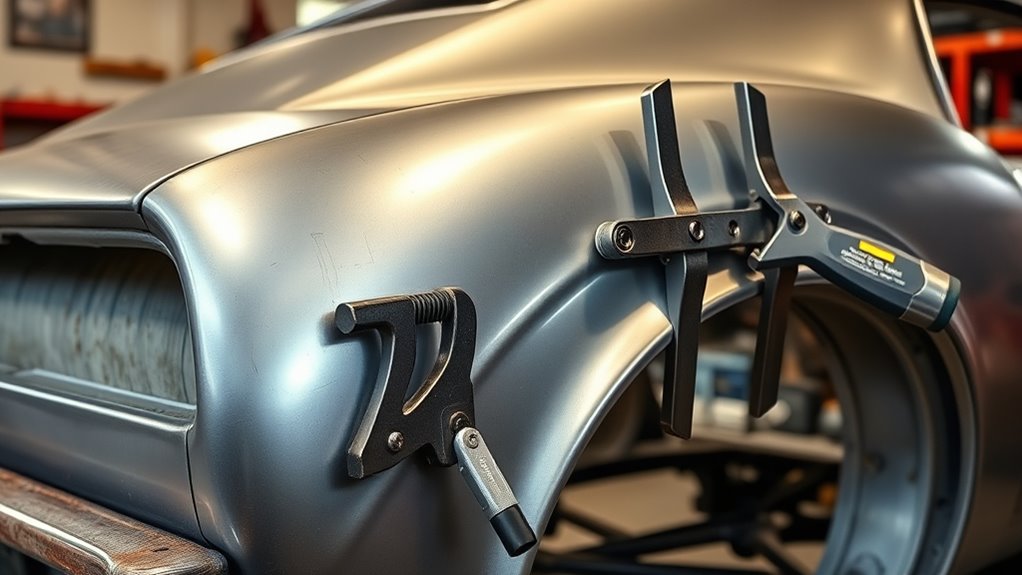
Clamp the quarter panel back in place and jig it so it is level, square, and locked to the body before you weld. Use stout clamps to hold the quarter panel tight, and verify every reference point so the unibody or body shell stays true. Pre-fit with zip screws first to confirm the gaps, then recheck the panel against your marks before you add heat.
- Clamp at multiple points to stop panel shift.
- Check level, square, and body alignment.
- Use reference points to preserve geometry.
- Confirm the quarter panel sits flush.
- Check the trunk gap and wheel opening shape.
Bracing keeps the shell from drifting while you work, and it gives you the control you need to build a clean, accurate repair. Also follow basic spark and fire-risk prevention steps when grinding or welding near old seam sealer and undercoating.
If the quarter panel moves, the wheel tub fit changes. Lock the panel down first, then tack the patch.
If the quarter panel moves, stop and correct it before continuing. A small shift at the weld seam can become a visible gap problem at the wheel opening.
Tack Weld the Patch for Alignment
Tack weld the patch at evenly spaced points around the perimeter, using clamps to keep it locked in alignment with the original wheel tub. Each tack should fuse both panels without building a tall lump on the surface. To avoid issues like lack of penetration, use clean metal, proper fit-up, and welder settings tested on scrap before completing full welds.
Let the tacks cool, then check panel fitment against the quarter panel before moving on. If the edge lifts, the gap opens, or the patch pulls out of line, cut the bad tack and correct the fit now.
Tack Weld Alignment Points
With the patch panel aligned to your reference points, secure it with clamps and place a few tack welds around the perimeter to lock its position. Start with widely spaced tacks rather than welding one area solid.
Use tack weld alignment points to hold the panel while you work, keeping the joint true and the metal from shifting. Place tacks opposite each other, then move to a different area so heat does not build in one spot.
- Clamp tightly at each anchor point.
- Place tacks opposite each other.
- Space welds to control heat.
- Keep the patch flush to the tub.
- Cool the panel naturally between passes.
These tack welds preserve alignment between the new panel and the existing wheel tub. If a gap opens, adjust the patch now, not after the seam is fully welded.
Check Panel Fitment
Before you add more welds, position the quarter panel and check how the new patch sits against it. The patch should follow the tub shape, hold the wheel lip line, and leave an even gap along the edge.
Clamp or use Cleco pins, then add small self-tapping screws if you need finer control. Check that the quarter panel sits flush against the patch and that the gap stays even along every edge.
Make sure the fit preserves the tub’s shape and structural lines. When the alignment looks right, add more tack welds at intervals to lock the patch without trapping distortion.
Recheck the seam after each round of tacks. Heat can move thin sheet metal quickly, so keep the fit tight, consistent, and true before final welding.
Fully Weld the Wheel Tub Layers
Clamp the wheel tub firmly in place, then build from the tack welds with short stitch welds. Do not run one long bead on thin automotive sheet metal. Long beads can warp the tub, pull the quarter panel, and create extra grinding.
Weld in short sections, then move to another area while the first section cools. Let each new weld tie into the last without overheating the panel. If you positioned a donor part over the original metal, use small self-tapping screws only as temporary holders, then remove them and weld or plug-weld those holes as you progress.
- Keep clamps tight to stop shift.
- Verify quarter-panel alignment as you weld.
- Weld in short sections to control heat.
- Confirm the weld fuses both layers.
- Inspect the back side of the seam where access allows.
Move deliberately and let each weld cool before stacking more heat into the same area. If you see burn-through, stop and lower heat, increase travel control, or use a copper backing spoon behind the gap. If the weld sits on top without fusion, clean the metal again and adjust your settings.
Note: Keep grinding discs, wire wheels, and clamps clean. Rust, primer, undercoating, zinc, and old seam sealer can contaminate a sheet-metal weld and make porosity more likely.
Grind, Seal, and Protect the Repair
After the welds cool, grind the seam only as much as needed. Use a flap disc or small grinder with light pressure, and avoid thinning the surrounding sheet metal. A slightly visible but strong seam is better than a thin, overheated panel.
Inspect the weld for pinholes, missed spots, poor fusion, and sharp edges. Shine a light from the back side if you can. Any pinhole can let moisture into the repair, so fix small defects before primer or seam sealer goes on.
Clean the repair with the correct wax and grease remover for your paint system. Then apply epoxy primer or another compatible corrosion-resistant primer to bare steel. Seal the seams on both sides where possible, then topcoat and apply cavity wax inside closed areas so moisture cannot sit behind the patch.
- Grind welds lightly without thinning the panel.
- Check for pinholes before sealing.
- Prime bare steel before seam sealer if your product system calls for it.
- Seal lap joints and plug-weld areas completely.
- Add cavity wax after paint or primer has cured as directed.
Check Tire Clearance and Suspension Travel
Once the wheel tubs are welded solid, verify that the new clearance works in motion. Do not rely on a static measurement with the car hanging on jack stands.
Install the wheel and tire you plan to run, then jack the suspension through full compression and full extension. If the axle or suspension moves side to side, simulate that movement too. Measure tire clearance at the front, rear, top, and inner side of the tub.
Around 1 inch of clearance is a useful conservative target for many street cars, but it is not a universal rule. Tire section width, wheel offset, axle movement, body roll, sidewall flex, and suspension type all affect the final number. If you are fitting very wide tires, you need hard measurements through the full travel range.
Check the tub’s vertical alignment against the axle centerline. A crooked install can steal room and stress the structure. If you are short on space, a mini-tub kit can add meaningful extra room, often around a couple of inches depending on the car and kit, but you still need to measure the final tire package.
This final check protects the car, the tires, and the weld repair. Use the same heat-control habits you used during welding, especially if you need to adjust or add metal near a finished section. These heat control techniques can help prevent burn-through on thin automotive panels.
Troubleshooting Wheel Tub Welding Problems
Small problems are easier to fix before the seam is fully welded. Stop and correct the cause instead of covering it with more weld.
| Problem | Likely Cause | Fix |
| Patch keeps moving | Not enough clamps or tacks placed too close together | Add clamps, tack opposite sides, and recheck the quarter panel before welding more |
| Burn-through | Too much heat, wide gap, or thin rust-pitted metal | Trim to clean metal, lower heat, use copper backing, and weld in shorter bursts |
| Weld sits on top | Poor cleaning, low heat, or poor ground clamp contact | Clean to bare steel, improve the ground, and test settings on scrap |
| Quarter panel warps | Too much heat in one area | Stop welding, let the panel cool, then continue with spaced stitch welds |
| Tire rubs after welding | Tub not centered, tire too wide, or wheel offset is wrong | Cycle suspension, mark contact points, and correct fit before paint and final assembly |
Frequently Asked Questions
What kind of welder do I need to weld wheel tubs on a car?
A MIG welder with solid wire and shielding gas is the best practical choice for most wheel tub patches. Use settings matched to the panel thickness and test on scrap first. TIG can work for skilled welders, but stick welding is usually too hot for thin body panels.
Can you use a stick welder for auto body wheel tubs?
You usually should not use a stick welder for wheel tubs or other thin auto body panels. Stick welding puts in too much heat, leaves slag, and makes burn-through more likely. MIG or TIG gives better control on thin sheet metal.
Should wheel tub patches be butt welded or lap welded?
Either can work. A butt weld gives a cleaner finish and avoids a moisture-trapping overlap, but it needs a tight gap and more skill. A lap weld is easier to fit, but it must be fully sealed and protected so rust does not start between the layers.
How do I stop a wheel tub from warping while welding?
Use tight fit-up, many small tacks, and short stitch welds. Move around the patch instead of welding one area solid. Let the metal cool naturally between welds, and avoid grinding too aggressively after welding.
What kind of welding is used for car frames?
MIG welding is common for many automotive frame and chassis repairs because it is fast and strong when done with proper fit-up, cleaning, penetration, and procedure. Structural frame repairs are safety-critical, so follow the vehicle repair manual and use a qualified welder when the repair affects crash or suspension loads.
What is the best welding for alloy wheels?
Alloy wheel repair is a separate safety-critical job. TIG welding is often used for aluminum wheel repair because it gives fine heat control, but not every cracked or damaged wheel should be welded. Have alloy wheels inspected and repaired by a qualified wheel repair specialist, or replace the wheel if the damage affects safety.
Conclusion
Welding wheel tubs correctly gives your classic muscle car the clearance it needs without sacrificing strength. The key is not just making the patch stick. You need a level body, clean metal, safe hot-work setup, tight fit-up, controlled tack welding, and proper corrosion protection after the welds cool. If you brace the shell, weld in stages, seal the repair, and cycle the suspension before final paint, you can fit wider rubber with far more confidence.
Sources
- OSHA 1910.252 – Welding, Cutting, and Brazing General Requirements – supports fire prevention, guards, fire extinguishers, fire watch, and arc welding eye protection.
- OSHA 1910.133 – Eye and Face Protection – supports using eye and face protection and selecting filter lenses by welding process and amperage.
- OSHA 1910.134 – Respiratory Protection – supports ventilation and engineering controls before respirator use when feasible.
- CDC/NIOSH – Welding Fumes and Manganese – supports welding fume, metal exposure, manganese, and confined-space fume cautions.