Imagine wielding a lightsaber from a sci-fi universe, but instead, it’s a plasma cutter slicing through metal with precision and ease. Plasma cutting uses a superheated plasma jet to cut conductive metals, reaching temperatures up to 40,000°F. Safety is essential; always wear PPE, maintain a dry workspace, and properly ground your equipment. As you adjust amperage for material thickness, the perfect cut awaits your skillful touch. Curious about mastering this powerful tool?
Understanding Plasma and the Cutting Process

When you explore the intricacies of plasma cutting, you’ll discover that plasma is the fourth state of matter, formed by ionizing gas until it becomes electrically conductive. Understanding plasma characteristics is essential, as the process relies on creating a plasma jet capable of reaching temperatures up to 40,000°F. This is achieved by applying high-voltage electricity to compressed gas, initiating gas ionization.
The resulting plasma arc is powerful enough to cut through various conductive metals with precision and efficiency.
For effective plasma cutting, you need to manage several factors. Ensuring proper gas ionization helps maintain a stable plasma arc. Adjust settings like amperage and torch-to-work distance to optimize cut quality.
Always attach the ground clamp to the workpiece to complete the electrical circuit. This attention to detail not only enhances the cutting process but also underscores the importance of safety in handling high temperatures and electricity.
Key Components of a Plasma Cutting System
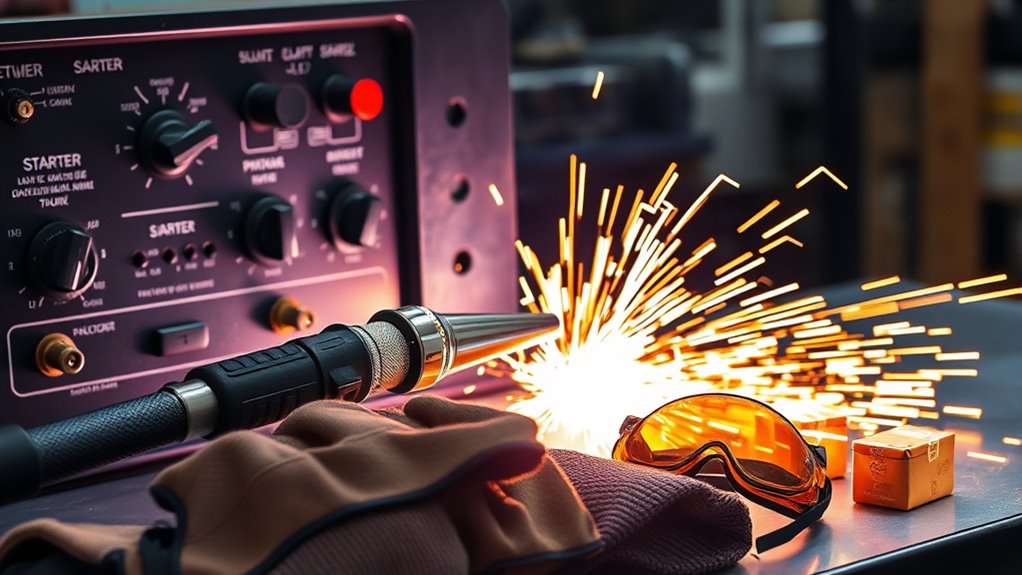
When you’re working with a plasma cutting system, understanding its key components is essential for safe and efficient operation.
The power supply plays an important role by converting AC line voltage into a higher DC voltage, necessary for generating the plasma arc.
Additionally, the arc starting console and the intricate design of the plasma torch, including the electrode, swirl ring, and nozzle, work together to initiate and sustain the high-temperature plasma jet required for precise cutting.
Power Supply Essentials
The power supply in a plasma cutting system is the backbone of its operation, converting standard AC line voltage into a much higher DC voltage to sustain the cutting arc.
This power conversion is vital, as it takes the typical 110-240VAC input and transforms it into 200-400 VDC. Such voltage regulation guarantees the arc remains stable and efficient for cutting.
To maintain safety and performance, regularly inspect the power supply for signs of wear or damage. Ascertain that proper ventilation is in place to prevent overheating.
Also, verify that all connections are secure to avoid electrical hazards. By prioritizing these power supply essentials, you can optimize your plasma cutter’s functionality and guarantee a safer cutting environment.
Arc Starting Console
A essential component of any plasma cutting system, the Arc Starting Console plays a pivotal role in initiating the plasma arc.
It generates high-frequency AC voltage—around 5,000 VAC at 2 MHz—to ignite the arc without direct contact with the workpiece, showcasing the high frequency advantages. This method efficiently overcomes surface impurities, ensuring a clean cut.
You’ll find it critical for starting a pilot arc, which stabilizes the plasma and enhances cutting performance. The console also manages gas flow and pressure, ensuring proper ionization before reaching the plasma torch.
The power supply converts AC line voltage to a higher DC voltage, typically between 200 and 400 VDC, necessary for effective cutting.
Mastering arc ignition methods boosts both efficiency and safety in operation.
Plasma Torch Components
Understanding the Arc Starting Console‘s role paves the way for exploring the intricacies of plasma torch components.
The torch assembly is the heart of your plasma cutting system, where several key components work in harmony to achieve efficient cuts. Essential elements include:
- Electrode: Initiates the arc, facilitating the shift from high-frequency voltage to cutting current.
- Nozzle types: Constrict the gas flow, forming a precise, high-temperature plasma jet tailored to cutting requirements.
- Swirl ring: Creates a swirling vortex of gas for stable and efficient plasma jet operation.
- Power supply: Converts AC line voltage to DC, providing 200-400 VDC necessary for cutting.
Prioritize safety by ensuring each component is properly maintained and compatible with your system.
Understanding these elements enhances your cutting precision and efficiency.
Essential Safety Measures for Plasma Cutting

To guarantee your safety during plasma cutting, always wear appropriate PPE, including shaded lens glasses, gloves, and a face shield to guard against sparks and harmful radiation.
Make sure your work area is dry and clear of flammable materials, and verify that your plasma cutter is properly grounded with a secure ground clamp to prevent electric shock.
Follow the manufacturer’s guidelines and use a drag shield extension to stabilize the torch, guaranteeing precise cuts and minimizing risks.
Proper Protective Equipment
When engaging in plasma cutting, ensuring your safety starts with wearing the right protective equipment. Adhering to safety standards is vital, and you’ll need protective gear to shield against sparks and UV radiation.
For eye protection, follow ANSI and AWS guidelines by using at least a shade 8 lens. Don’t skimp on quality for your protective gear.
- Eye Protection: Use a welding helmet or shaded lens glasses, minimum shade 8.
- Hand Protection: Wear leather gloves, ensuring they’re heat-resistant and reinforced.
- Body Protection: A bib or jacket is essential to guard against sparks.
- Clothing: Cover non-fire-resistant materials with appropriate gear to avoid burns.
Always check your personal protective equipment (PPE) for good condition before starting.
Electrical Safety Precautions
With proper protective equipment in place, focus shifts to understanding electrical safety precautions, another critical aspect of plasma cutting.
First, always wear leather gloves, a suitable welding helmet, and non-conductive footwear to safeguard against electrical hazards.
Verify your work area is dry, as moisture can increase the risk of electric shock. Keep a safe distance from high-voltage components, and secure the ground clamp to the workpiece for shock prevention.
Regularly inspect your plasma cutter for frayed wires or damaged parts to maintain ideal electrical safety.
Follow local electrical codes and the manufacturer’s guidelines to verify all operations align with safety regulations, minimizing the risk of electrical hazards.
Prioritizing these measures guarantees a safer plasma cutting experience.
Workspace Safety Practices
Why is workspace safety paramount for plasma cutting? The intense heat and sparks generated demand utmost caution to prevent accidents.
Proper workspace organization keeps hazards at bay and guarantees you’re prepared for any situation. Fire prevention, essential in this setting, requires eliminating flammable materials.
Here’s what you need to do:
- Wear Appropriate PPE: Use shaded lens glasses (shade 8 minimum), gloves, and non-flammable clothing for protection.
- Eliminate Flammable Materials: Keep your workspace dry and clear of anything that could ignite.
- Stand on Non-Conductive Surfaces: This prevents electrical shocks from the high voltage output of the plasma cutter.
- Guarantee Proper Ventilation: Avoid harmful fume buildup by maintaining adequate airflow.
Following these guidelines keeps your workspace safe and compliant.
Evaluating Plasma Cutter Features and Capabilities
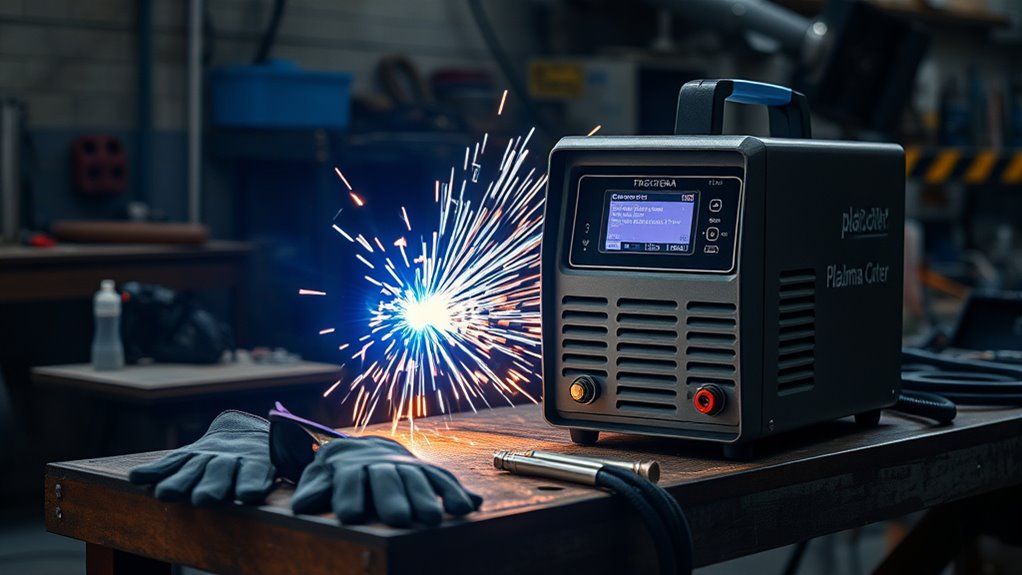
How do you guarantee you’re selecting the right plasma cutter for your needs? Start by examining the maximum cut thickness and amperage. Make sure they meet your specific requirements, especially if you’re working with materials like ½” mild steel.
Check the duty cycle, which tells you how long the machine can run before cooling down. A higher duty cycle means fewer interruptions during extended projects.
Consider the start types; high-frequency start models might interfere with sensitive electronics, so if that’s a concern, opt for blowback start models.
Evaluate the power input. Handheld models usually need 110-120VAC, but higher-power systems require 220-240VAC circuits.
Finally, don’t overlook consumable costs. Consumables like electrodes and nozzles can greatly affect your long-term expenses. Make sure they’re readily available and cost-effective to keep your operations smooth and economical.
Choosing the Right Plasma Cutter for Your Needs

Selecting the right plasma cutter can seem challenging, but focusing on key features will streamline your decision.
Choosing the ideal plasma cutter involves honing in on essential features to simplify your selection process.
Start by evaluating your cutting applications and material compatibility. The maximum cut thickness is vital; small systems handle up to ½”, while industrial models exceed 1”. This guarantees the cutter meets your project’s demands.
Pay attention to the amperage, as higher amperage means better performance on thicker materials and enhances cut quality and speed.
Consider the following aspects:
- Duty Cycle: A higher duty cycle is essential for continuous operations without frequent cooling breaks.
- Portability: Choose a lightweight model (under 40 pounds) with dual power options (110V/220V) for versatile job site use.
- Consumables: Check the availability and cost of items like electrodes and nozzles, impacting long-term expenses.
- Material Compatibility: Confirm the cutter can efficiently handle the materials you plan to work with.
Prioritize these factors for a reliable and efficient plasma cutting experience.
Setting Up and Operating a Plasma Cutter

When setting up a plasma cutter, it’s important to guarantee a clean and dry air supply is connected, meeting the minimum requirements of 80 psi pressure and 3.5 scfm flow capacity. This guarantees consistent performance and prevents damage to the cutter.
Begin your setup checklist by securely attaching the ground clamp to the workpiece, completing the necessary electrical circuit for effective operation.
Adjust the amperage settings to match the material thickness; higher amperage delivers more heat and faster cutting speeds. For ideal cutting techniques, maintain a proper torch-to-work distance, typically between 1/8 inch and 1/4 inch above the workpiece. This standoff guarantees a clean cut.
When you’re ready to operate, press the trigger to initiate the arc. Position the torch at a 60-degree angle from horizontal for efficient cutting.
Safety is paramount, so always wear appropriate protective gear and follow manufacturer guidelines.
Tips for Improving Plasma Cutting Technique
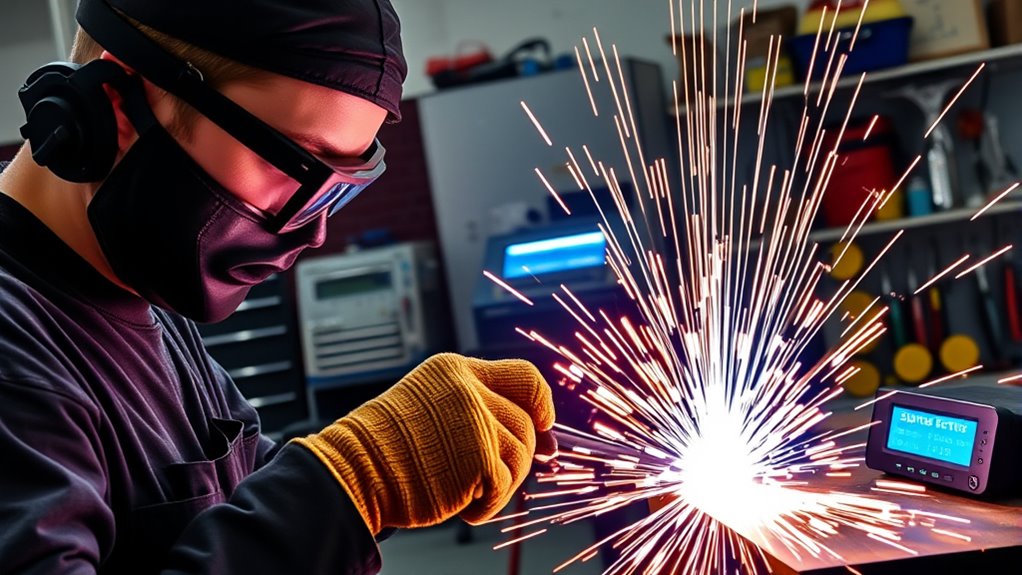
Enhancing your plasma cutting technique involves mastering several key strategies to guarantee precision and safety. Start by practicing on scrap metal to refine your cutting techniques. This helps you gain confidence in making straight cuts and managing angles effectively.
Adjust your cutting speed according to the material thickness; slower speeds generally yield cleaner results, while faster speeds might cause rough edges.
- Maintain a consistent torch-to-work distance (standoff) of about 1/8 inch for ideal cut quality.
- Pay attention to the molten metal’s behavior; it should fall away at about a 20-degree angle for efficient removal.
- Regularly inspect and replace consumables like nozzles and electrodes to maintain high-quality cuts and consistent performance.
- Always adapt your approach based on the material you’re working with to achieve the best results.
Frequently Asked Questions
How Do Maintenance Routines Affect Plasma Cutter Lifespan?
Regular maintenance schedules greatly enhance your equipment’s longevity. By ensuring all components are clean, calibrated, and functioning efficiently, you prevent unexpected failures and extend your plasma cutter’s lifespan. Prioritize safety and attention to detail during each maintenance session.
Can Plasma Cutting Be Used Underwater?
You can absolutely use plasma cutting underwater, turning the ocean into your workshop! This technique enhances plasma efficiency, but make certain you follow strict safety protocols and use specialized equipment for successful underwater applications without compromising safety.
What Are Common Plasma Cutter Troubleshooting Steps?
When facing plasma cutter issues, check connections, inspect consumables, and verify air pressure. Confirm the ground clamp’s secure and cables aren’t damaged. Clean the torch and examine the electrode. Regular maintenance simplifies troubleshooting techniques and boosts safety.
How Does Plasma Cutting Compare to Laser Cutting?
Plasma cutting and laser cutting are like apples and oranges. You’ll find plasma advantages in cutting thicker metals faster and cheaper, while laser disadvantages include higher costs. Always prioritize safety by wearing appropriate gear and following guidelines.
Are There Environmental Impacts of Plasma Cutting?
Yes, plasma cutting impacts the environment. You must prioritize fume extraction to minimize air pollution. Additionally, efficient material use reduces waste. Proper disposal and recycling processes will help mitigate negative effects, promoting safer, environmentally-friendly operations.
Conclusion
Think of plasma cutting as wielding a lightning bolt with precision. You’ve learned how to harness this powerful tool safely and effectively. Remember, safety is your shield—always wear the right PPE, keep your workspace dry, and ground your cutter. Adjust settings carefully based on your material, and maintain that perfect torch distance. By practicing on scrap metal, you’ll refine your skills and cut like a pro. With these fundamentals, you’re ready to tackle any metal masterpiece confidently.