Diving into plasma cutting involves understanding key components like torches and their settings. You’ll need to master the standoff distance and amperage adjustments to cut through varying metal thicknesses effectively. It’s vital to prioritize safety by donning proper gear and guaranteeing your workspace is well-ventilated. Familiarity with essential maintenance, including replacing electrodes and nozzles, will enhance cutting precision and extend your equipment’s lifespan. So, how do you guarantee seamless cuts and prolong your cutter’s life?
Understanding Plasma Cutting Technology
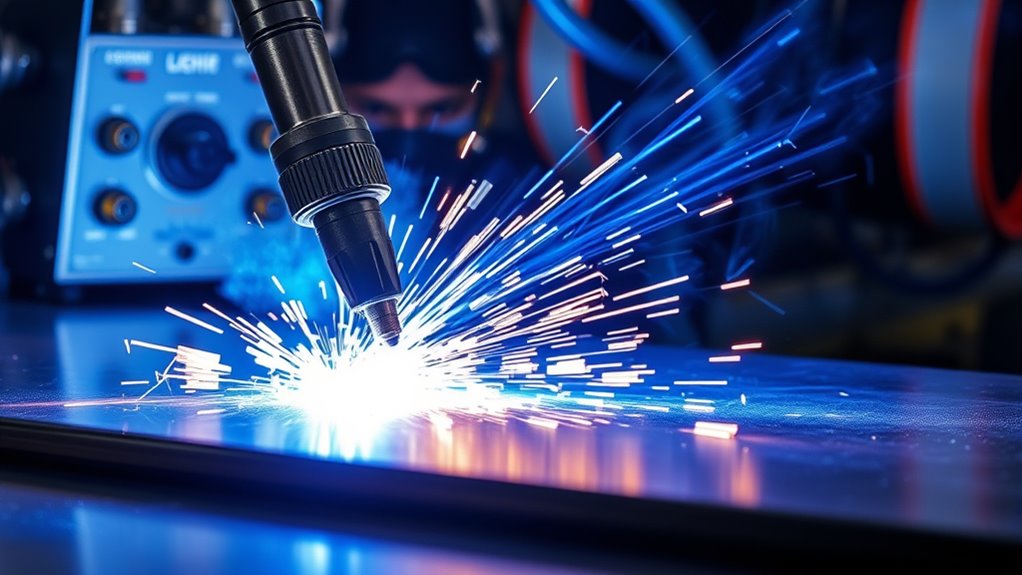
Plasma cutting technology is a marvel of precision and efficiency, utilizing an electric arc combined with compressed gas to create a high-velocity jet of ionized gas, known as plasma. This process, grounded in plasma physics, allows you to cut through various conductive metals such as steel, aluminum, and copper.
The plasma reaches temperatures up to 30,000°F, enabling precise, clean cuts with minimal slag. By understanding how to adjust the amperage, you can enhance cutting efficiency according to the metal’s thickness, with higher amperage necessary for thicker materials.
Reaching temperatures of 30,000°F, plasma allows for precise cuts and enhanced efficiency by adjusting the amperage.
The benefits don’t stop at precision. Plasma cutting is cost-effective and environmentally friendly, generating less scrap and waste than traditional methods.
It’s versatile across numerous applications, from metal fabrication to automotive repair. Mastering this technology involves grasping the behavior of ionized gas and leveraging its properties for peak cutting performance, making it an indispensable tool in modern metalworking.
Essential Tools and Equipment for Beginners
To harness the powerful capabilities of plasma cutting technology, equipping yourself with the right tools and equipment is fundamental.
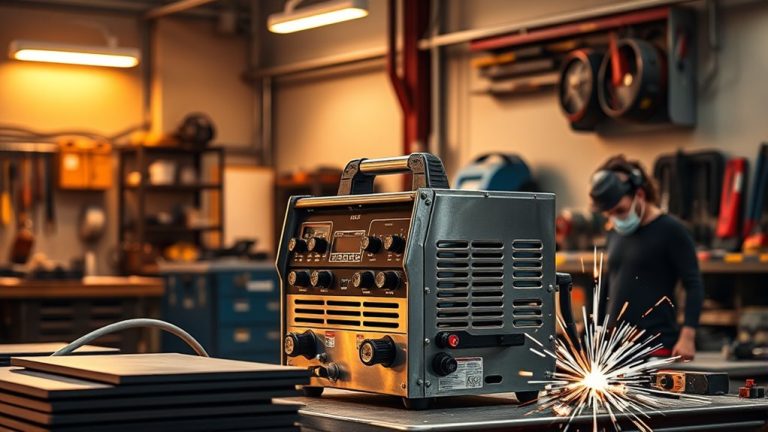
At the core of plasma cutter basics is a reliable power supply, requiring either a 110V or 220V connection. This guarantees that your plasma cutter operates smoothly and efficiently.
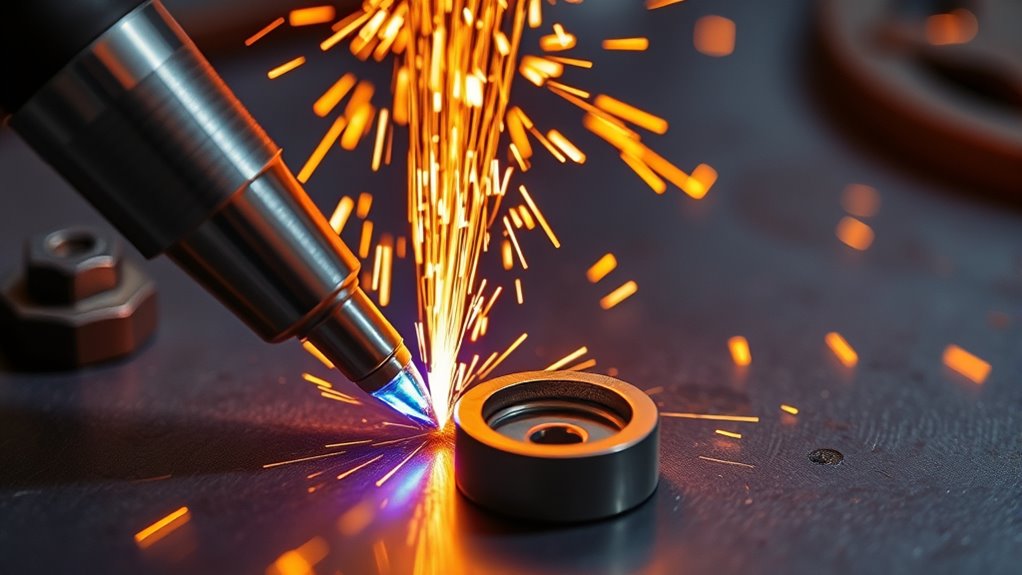
Compressed air is equally vital, with some machines offering built-in compressors for added convenience. Maintaining the plasma arc requires consumables like electrodes and nozzles. Regular electrode maintenance is critical for consistent cutting quality; replace them as needed to avoid performance issues.
Safety is paramount, so proper protective gear, including gloves, safety glasses, and a welding helmet, is non-negotiable. This equipment shields you from the intense light and molten metal inherent in plasma cutting.
While a clean, grounded workspace is essential, focus first on understanding these tools and their functions. This foundational knowledge will pave the way for more advanced techniques.
Setting Up Your Workspace for Optimal Results
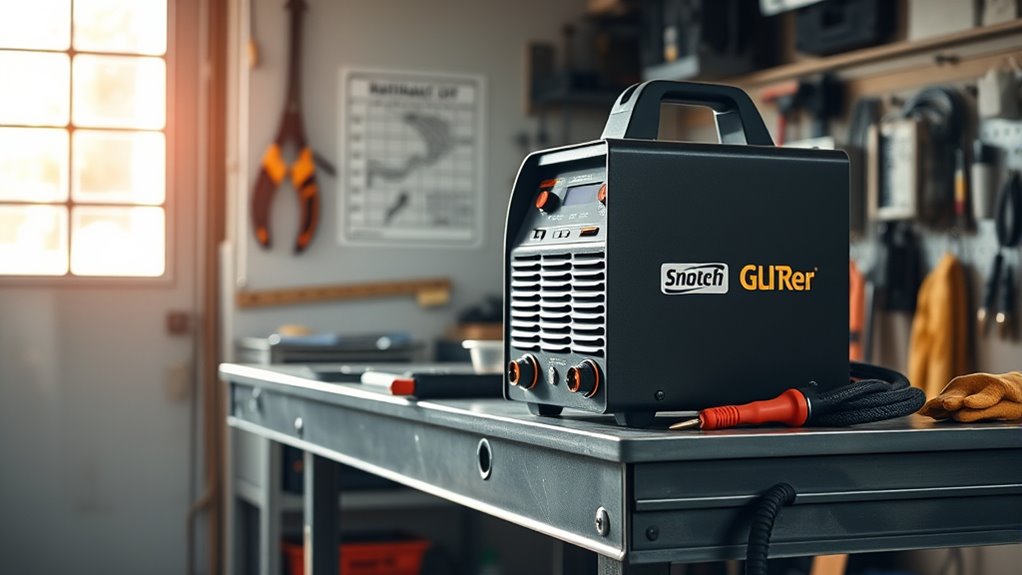
To achieve ideal plasma cutting results, prioritize setting up a well-ventilated workspace to efficiently dissipate toxic fumes.
Guarantee your work surface is clean and properly grounded, as this minimizes electrical hazards and enhances cutting precision.
Equip yourself with essential safety gear to protect against potential sparks and maintain a fire extinguisher within arm’s reach for immediate response to any flammable incidents.
Essential Safety Gear
Before you commence on a plasma cutting project, wearing the right safety gear is essential to protect yourself from potential hazards. Conduct a risk assessment to determine the specific personal protective equipment needed.
Start with flame-resistant clothing to shield against sparks and molten metal. Safety glasses and a welding helmet with an appropriate shade protect your eyes from bright light and flying debris. Confirm regular inspections of your gear to maintain its integrity and effectiveness.
Set up your workspace on a clean, stable surface to minimize movement risks during cutting. Have a fire extinguisher within reach to quickly address any fire emergencies.
This thorough approach safeguards you against common plasma cutting dangers, confirming a safe and efficient working environment.
Proper Ventilation Setup
Even though it’s easy to overlook, ensuring proper ventilation in your workspace is essential for plasma cutting.
Ventilation systems are vital in preventing hazardous fume and fine metal particle accumulation. Employ exhaust fans or dedicated fume extraction units to maintain a steady airflow, dispersing smoke and providing fresh air.
Position your cutting area near open windows or outdoor access points to enhance natural airflow. This setup minimizes the risk of fume inhalation, safeguarding your health.
Regularly inspect ventilation ducts for blockages to sustain ideal air circulation. In confined spaces or when ventilation is insufficient, use respiratory protection to further mitigate inhalation hazards.
Grounded Surface Preparation
When setting up your workspace for plasma cutting, a few vital steps guarantee ideal results and safety.
First, make sure your workspace is clean and free of debris to prevent hazards. Secure a non-flammable table or bench to support your metal workpiece, providing stability during the cutting process.
Connect a ground clamp to the workpiece, establishing a grounded surface. This step is essential for maintaining a stable arc and preventing electrical shock.
Adequate lighting is important for visibility, enhancing precision and reducing errors. Additionally, make sure good ventilation to disperse fumes and fine metal particles generated during cutting.
These measures not only protect your health but also optimize cutting efficiency and accuracy, making your plasma cutting operations both safe and effective.
Techniques for Achieving Clean and Precise Cuts
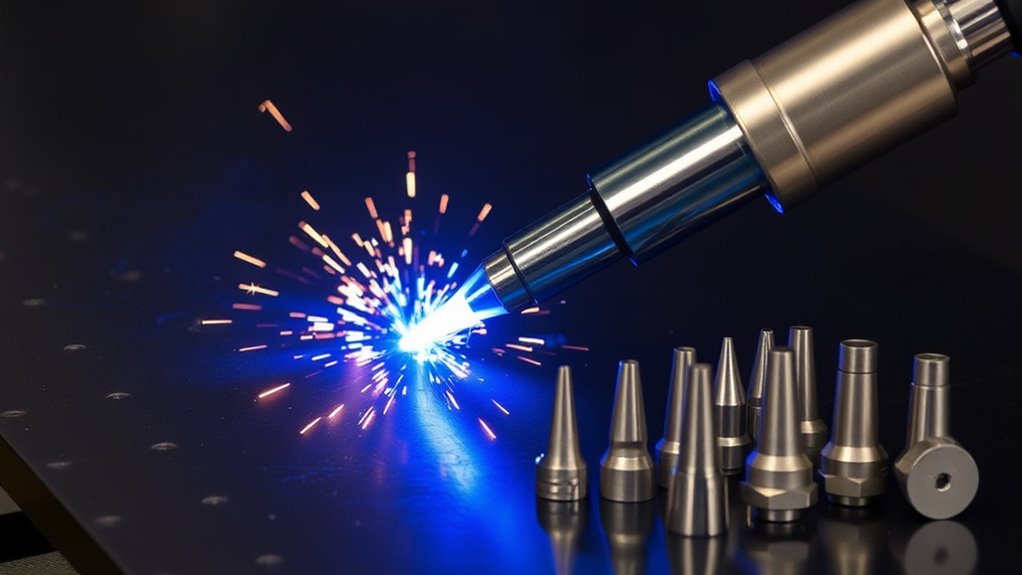
To achieve clean and precise cuts with plasma cutting, it’s crucial to maintain a consistent standoff distance from the workpiece, typically around 1/8 inch. This prevents torch dragging, ensuring smoother cuts.
Adjust your cutting speed and torch angle to the material’s thickness; incorrect settings can lead to jagged edges or excess dross. For thicker metals, increase the amperage setting to maintain peak performance.
Ensure adequate air pressure to sustain a steady plasma arc; insufficient pressure compromises cut quality and increases slag.
Practice smooth, controlled torch movements—cutting too fast disrupts arc stability, while slow movements create rough edges.
Utilize a guide or straightedge for longer sections, maintaining precision throughout the cut. This tool helps achieve straight cuts, particularly beneficial for novices.
Safety Measures and Protective Gear
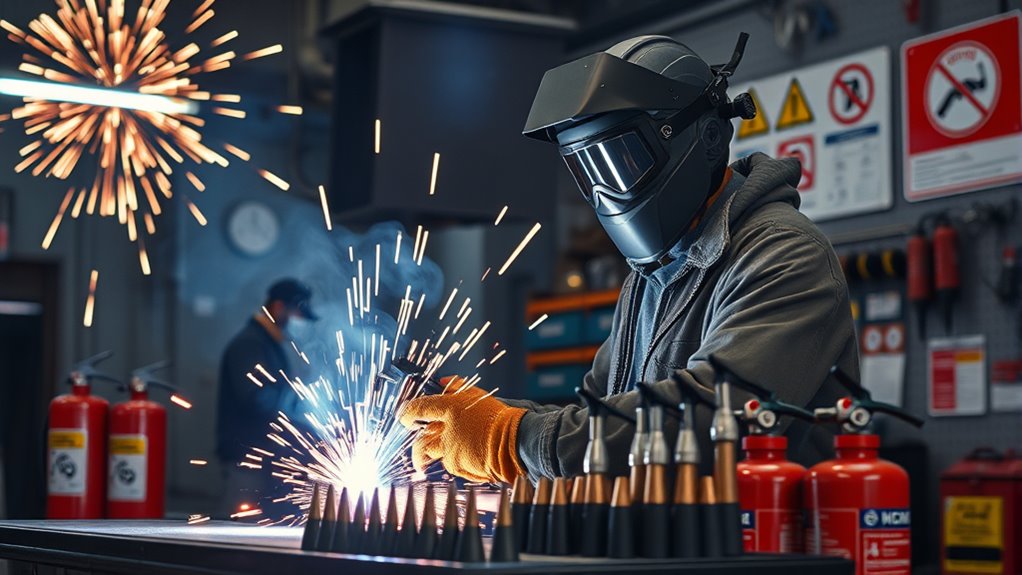
While mastering techniques for precise cuts is fundamental, prioritizing safety measures and protective gear secures a safe plasma cutting environment.
Begin by donning a welding helmet equipped with a plasma-cutting shade. This guarantees your eyes are shielded from the intense arc light and errant sparks. Protective eyewear is non-negotiable to prevent retinal damage.
Complement your safety attire with flame-resistant gloves. These gloves protect your hands from the intense heat and molten metal, allowing you to handle the torch and materials confidently.
Fire-resistant clothing, such as jackets and pants, is essential to safeguard against potential burns and flying debris.
Additionally, always use hearing protection to reduce exposure to the high-decibel noise levels typical in plasma cutting.
Confirming your workspace is well-ventilated is critical for minimizing inhalation of toxic fumes and fine metal particles.
Maintaining and Troubleshooting Your Equipment
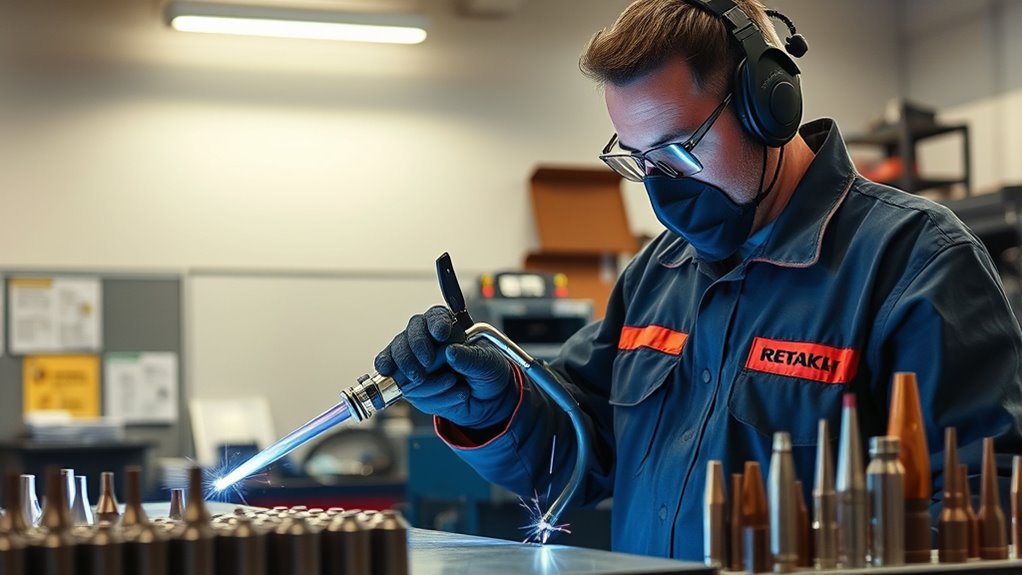
Even though mastering the art of plasma cutting is vital, maintaining and troubleshooting your equipment guarantees consistent performance and longevity. Start by developing a maintenance checklist, focusing on significant consumables like electrodes and nozzles. Regular inspection and replacement prevent erratic arcs and assure peak performance.
Always verify that the workpiece is clean, free of rust, paint, or oil, to improve conductivity and cut quality.
Utilize troubleshooting techniques to address issues like poor arc stability or cut quality. Check your air pressure settings—insufficient pressure often leads to unsatisfactory results. Confirm the ground clamp is securely attached to the workpiece, avoiding interruptions during cutting sessions.
Adhering to manufacturer guidelines for routine maintenance and troubleshooting is vital; this extends your equipment’s lifespan and enhances efficiency.
Exploring Different Types of Plasma Cutting Applications
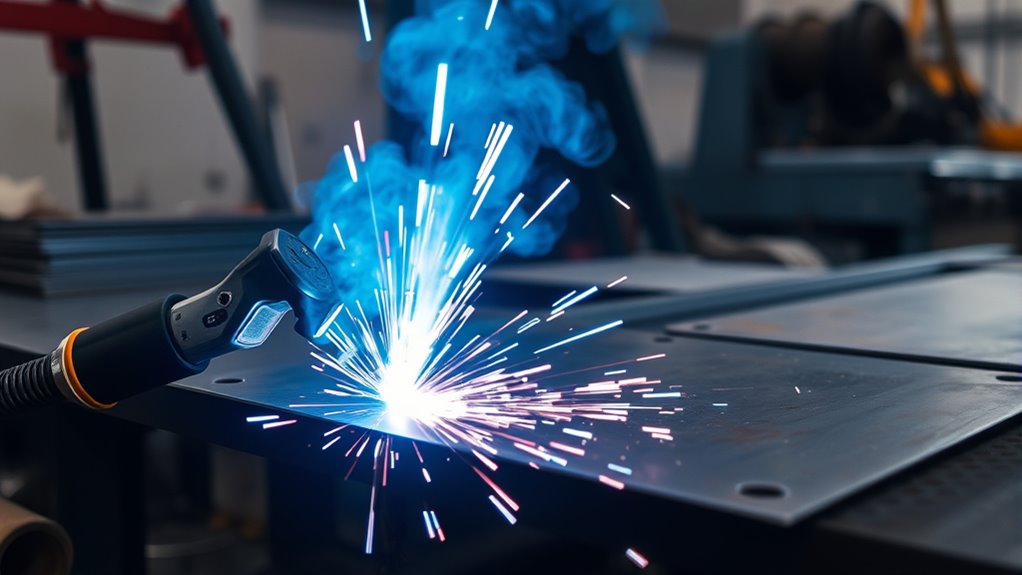
A well-maintained plasma cutter isn’t just reliable; it opens the door to a wide range of applications across various industries. In construction and manufacturing, its precision makes it invaluable for tasks like plate cutting. You can shape flat metal sheets, including steel and aluminum, with minimal slag, ensuring clean edges and high-quality finishes.
This is especially true when using CNC plasma cutting, which automates the process for unparalleled accuracy.
Tank cutting, on the other hand, requires a more cautious approach due to the presence of flammable gases. Strict safety protocols are essential when cutting through the robust exteriors of storage tanks.
The versatility of plasma cutting technology extends beyond simple cuts, allowing you to tackle intricate shapes and complex projects efficiently. Whether hand-guided or automated, plasma cutting enhances the fabrication process, making it a staple in industries that demand precision and versatility from their metalworking tools.
Tips for Enhancing Efficiency and Performance
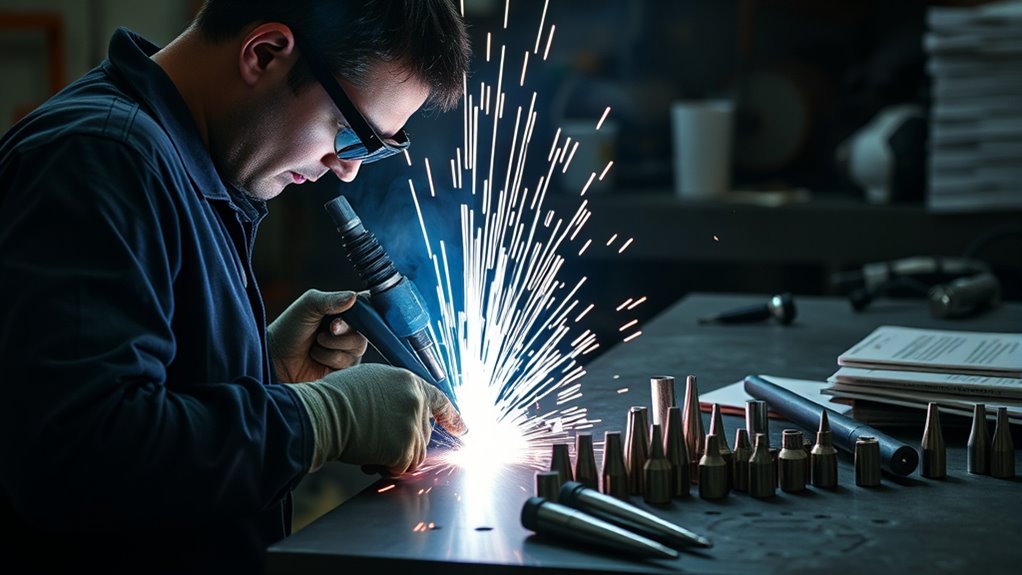
To enhance the efficiency and performance of your plasma cutter, it’s important to focus on key operational adjustments and maintenance practices.
Start by making precise amperage adjustments based on the metal’s thickness. For thicker materials, increase amperage to achieve efficient cutting, while lower settings are better for thin sheets to minimize slag.
Consistent air pressure is critical; it stabilizes the plasma arc, ensuring cleaner cuts with less dross buildup. Regularly monitor and maintain your equipment’s air pressure settings for ideal performance.
Stabilize the plasma arc with consistent air pressure for cleaner cuts and less dross buildup.
Incorporate the drag cutting technique for thin materials to enhance control and stability, improving cut quality.
Always inspect consumables like electrodes and nozzles; replacing worn parts is crucial for maintaining consistent cutting performance.
Using a guide or straightedge can greatly improve precision, keeping cuts straight and reducing rework.
With these focused adjustments and maintenance practices, you’ll maximize your plasma cutter’s efficiency and performance.
Frequently Asked Questions
How Do Plasma Cutting and Laser Cutting Differ in Terms of Precision?
You’ll notice laser cutting offers superior precision due to its focused light beam, ideal for intricate applications. Plasma cutting, while slightly less precise, excels in cutting thicker materials with speed, making it suitable for varied applications.
Can I Use a Plasma Cutter on Painted or Coated Surfaces?
Yes, you can use a plasma cutter on painted or coated surfaces. However, for best results, guarantee proper surface preparation by removing paint. Paint removal enhances cutting quality, prevents contamination, and maintains equipment performance.
What Are the Environmental Impacts of Plasma Cutting?
Plasma cutting impacts air quality by releasing fumes and particulates. You should guarantee proper ventilation and filtration. Waste management involves handling metal scraps responsibly and recycling whenever possible to minimize environmental footprints and resource depletion.
How Do I Properly Dispose of Plasma Cutting Consumables?
To properly dispose of plasma cutting consumables, prioritize recycling consumables like copper and brass. Guarantee safe disposal of non-recyclables by following local hazardous waste guidelines. Always separate materials to minimize environmental impact and guarantee compliance with regulations.
Are There Any Specific Certifications Needed to Operate a Plasma Cutter?
Imagine learning to drive a race car; you’d need specialized training. Similarly, operating a plasma cutter doesn’t require specific certifications, but safety training is essential. Mastering safety protocols guarantees you’re skilled and reduces workplace hazards.
Conclusion
Mastering plasma cutting isn’t as overwhelming as it seems. By understanding torch operations, prioritizing safety, and maintaining equipment, you’ll achieve clean, precise cuts. Some may worry about the complexity of settings like amperage adjustments, but these nuances become intuitive with practice. Remember, maintaining a consistent standoff distance and regularly replacing consumables isn’t just about prolonging tool life—it’s essential for precision. With time and diligence, you’ll harness plasma cutting’s full potential, transforming raw metal into refined art.