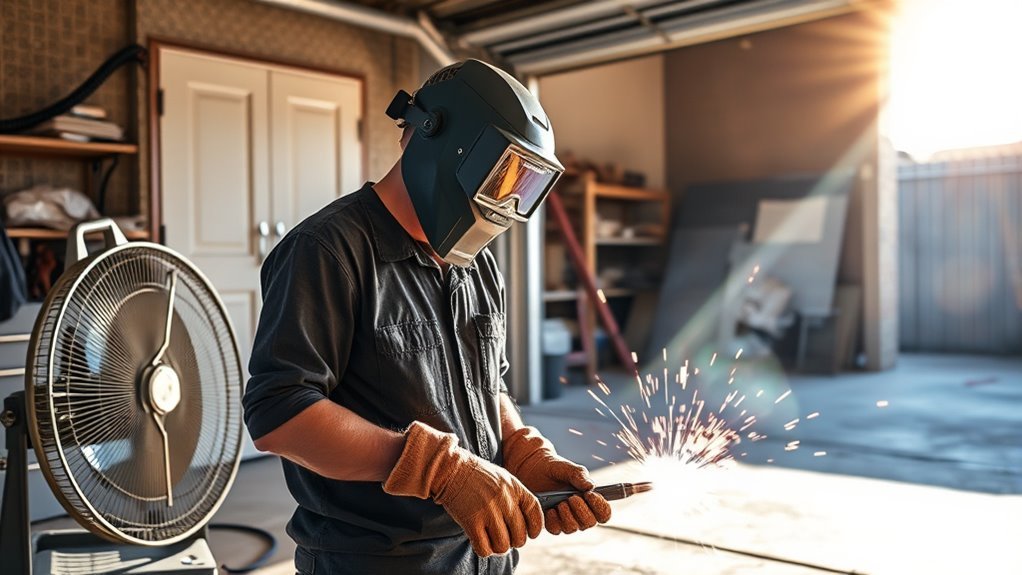
Choosing between a welding respirator and ventilation is not really an either-or decision. In most welding setups, local exhaust ventilation or fume extraction should come first because it captures fumes near the arc before they spread. A properly selected respirator then adds personal protection when ventilation is not enough, when the material is hazardous, or when the work area is tight, enclosed, or hard to control.
Quick Answer
For most welding jobs, ventilation and fume extraction protect better as the first line of defense because they remove fumes from the work area. A welding respirator protects only the person wearing it, so use it as backup or required PPE when exposure, materials, or confined spaces demand more protection.
Key Takeaways
- Use source capture first: A fume extractor or local exhaust system controls welding fumes before they reach your breathing zone.
- Do not rely on a respirator alone: Respirators protect the wearer, but they do not clean the air for helpers or other workers nearby.
- Material matters: Stainless steel, galvanized metal, lead paint, cadmium coatings, and beryllium can require stricter controls.
- Fit is critical: A tight-fitting respirator needs the right size, seal checks, fit testing, clean filters, and a face seal free of interfering facial hair.
- Layer protection when needed: The safest setup often combines fume extraction, clean replacement air, good work positioning, and a properly selected respirator.
At a Glance
| Best First Control | Local exhaust ventilation or a fume extractor placed close to the welding arc. |
| Backup Protection | A NIOSH-approved welding respirator selected for the fume, gas, and exposure level. |
| Main Safety Checks | Airflow direction, hood position, filter condition, material hazards, respirator fit, and clean replacement air. |
| Highest-Risk Jobs | Confined spaces, stainless steel, galvanized metal, painted or coated metal, lead, cadmium, beryllium, and long weld runs. |
Understanding the Importance of Welding Fume Protection
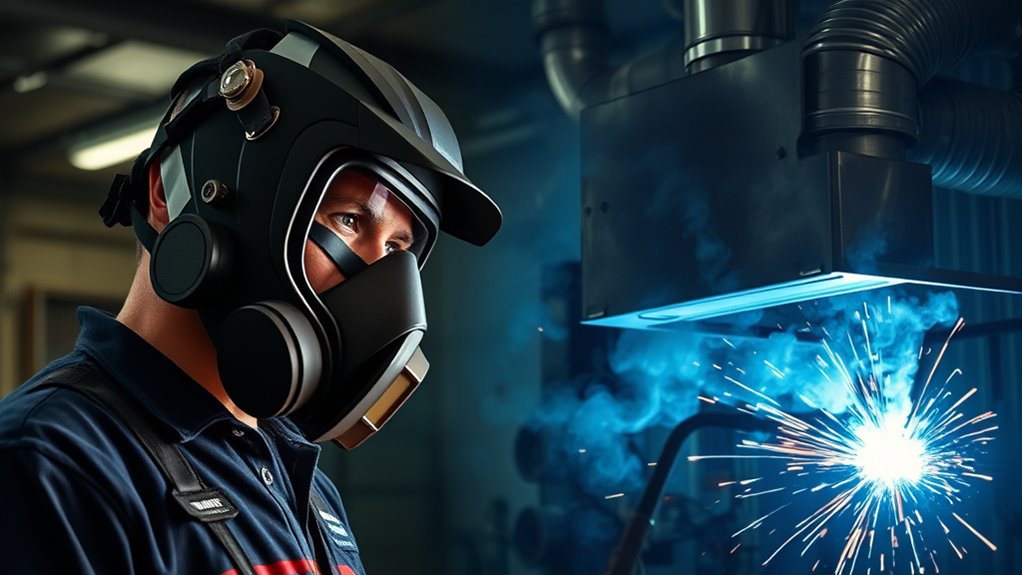
When you weld, the heat from the arc can create a mix of metal fumes and gases. The exact hazard depends on the base metal, filler metal, coating, flux, shielding gas, ventilation, and how close your face is to the plume. The CDC/NIOSH welding fume guidance notes that welding fumes are made of metals and that most fumes contain some manganese.
Good welding fume protection should follow the NIOSH hierarchy of controls. That means you should control the hazard as close to the source as possible before relying on personal protective equipment. In simple terms, move the fume away from your face before it gets into your lungs.
That is why fume extractors and local exhaust ventilation are often the better starting point. They pull contaminated air away from the weld area and help protect you, helpers, and anyone else working nearby. A respirator is still important when exposure remains too high, when the job creates heavy fumes, or when you are welding in a space where ventilation is hard to control.
Good protection also includes the basics: keep your head out of the plume, position the work so fumes rise away from your face, check airflow before welding, and use proper safety gear for cutting and welding work.
Warning: A respirator does not add oxygen and does not make a confined space safe. Confined-space welding needs a proper hazard assessment, clean replacement air, rescue planning, and ventilation that prevents toxic buildup or oxygen deficiency.
How Welding Fumes Affect Health and Safety
Welding fumes can irritate your eyes, throat, and lungs in the short term. Heavy exposure can also trigger metal fume fever, which can feel like the flu. Over time, poor fume control can raise the risk of more serious lung and nervous system problems, especially when metals such as manganese, chromium, nickel, lead, or cadmium are involved.
The risk is not the same for every weld. Mild steel in an open shop is different from stainless steel in a tight corner or galvanized metal in a garage. IARC has classified welding fumes as carcinogenic to humans, and its Volume 118 evaluation states that welding fumes cause lung cancer. That makes source control, ventilation, and respirator selection more than a comfort issue.
Exposure can also rise fast when you weld inside a vehicle body, tank, trailer, small garage bay, or any spot where the plume cannot move away. Proper ventilation helps dilute and remove contaminated air, but local exhaust near the arc is usually more effective than simply opening a door or running a fan behind you.
The safest welding setup controls fumes before they reach your breathing zone, then uses respiratory protection when ventilation alone cannot keep exposure low enough.
Ventilation vs. Respirator: Which Should Come First?
Ventilation should usually come first because it controls the air, not just the person. A respirator protects only the wearer. If you are welding near another worker, a respirator on your face does nothing for that person. A fume extractor, hood, downdraft table, or extraction gun can reduce the fume cloud for everyone in the area.
There are two common types of ventilation:
- General ventilation: Moves fresh air through the room and helps dilute fumes. Examples include wall exhaust fans, roof exhaust, open bay doors, and supply air systems.
- Local exhaust ventilation: Captures fumes close to the arc before they spread. Examples include portable fume extractors, flexible extraction arms, extraction welding guns, and downdraft benches.
Local exhaust is usually the stronger choice for welding fumes because it works at the source. OSHA’s welding standard requires mechanical ventilation for many welding and cutting operations, and it has extra requirements for specific metals and coatings such as lead, cadmium, beryllium, mercury, zinc-bearing materials, and stainless steel cutting. You can review those requirements in OSHA 29 CFR 1910.252.
Note: A box fan blowing across the weld is not the same as a fume extractor. It may push fumes away from you, but it can also push them toward another worker or disturb shielding gas if it is too strong.
Fume Extraction Systems: Mechanism and Benefits
Fume extraction systems capture welding fumes near the arc using airflow, ducting, hoods, extraction arms, or filtered mobile units. The goal is to pull the plume away before it crosses your face. This is called source capture.
Fume extraction gives you three main benefits:
- Better source control: The system removes fumes close to the weld instead of waiting for them to spread through the room.
- Cleaner shared air: The system helps protect nearby workers, not just the person doing the welding.
- More consistent protection: A properly placed hood or extraction arm can keep working during long welds, tack welding, grinding, and repeated shop tasks.
NIOSH’s Engineering Controls Database describes local exhaust systems used for welding operations and reports that ventilation reduced measured total welding fume concentrations in an evaluated setup. Results vary by equipment, placement, airflow, weld process, and maintenance, so do not assume any extractor works well just because it is turned on.
To get better capture, place the hood or extraction arm close enough to pull the smoke away without blocking your view or affecting shielding gas. Watch the smoke. If the plume still rises past your helmet, the hood is too far away, aimed poorly, or not pulling enough air.
Filters also need attention. Replace or clean them based on the equipment manual, loading, damage, airflow loss, or harder breathing resistance through the unit. Systems with activated carbon filters can help with some odors, but particulate filters and the right airflow matter most for metal fumes.
Respirators: Types, Uses, and Features
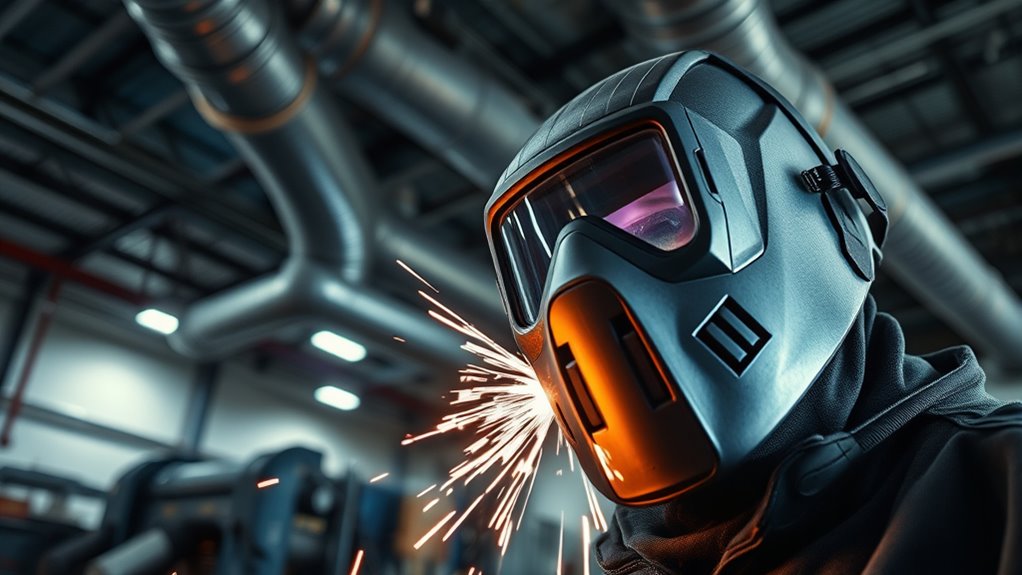
Respirators protect the person wearing them by filtering contaminated air before it is inhaled. They are useful when ventilation is not enough, when you are welding in a difficult position, when fumes rise directly into your breathing zone, or when the job involves higher-risk materials.
Common welding respirator options include:
- Disposable filtering facepiece respirators: Lightweight and simple, but they must be NIOSH-approved, properly fitted, and compatible with your welding helmet.
- Half-face elastomeric respirators: Reusable masks that can take replaceable filters or cartridges. They often fit under many welding hoods.
- Full-face respirators: Add eye and face seal protection, but may not work with every welding hood or face shield setup.
- Powered air-purifying respirators (PAPRs): Use a blower to push filtered air into a hood or helmet. They can be more comfortable for long work, but they cost more and require battery, filter, and airflow checks.
For welding particles, many welders use P100 particulate filtration when it matches the hazard assessment and respirator manufacturer’s instructions. The P100 particulate filter setup can be useful for metal fume particles, but gases and vapors may need different cartridges. Always match the respirator to the metal, coating, process, and safety data sheet.
If respirators are required in a workplace, OSHA’s respiratory protection standard requires a written program, medical evaluation, training, proper selection, maintenance, and fit testing for tight-fitting facepieces. You can review the full standard in OSHA 29 CFR 1910.134.
Pro Tip: Do a seal check every time you put on a tight-fitting respirator. If you have facial hair between the seal and your skin, the mask may leak even if the filter itself is excellent.
How Do Fume Extractors Stack Up Against Respirators?
Fume extractors and respirators solve different problems. A fume extractor controls the air around the work. A respirator controls what one person breathes. The best choice depends on the job, but ventilation usually comes first because it reduces the hazard before it reaches people.
| Protection Method | Best Strength | Main Limit |
|---|---|---|
| Fume Extractor / Local Exhaust | Captures fumes near the arc and helps protect everyone nearby. | Works poorly if the hood is too far away, airflow is weak, filters are loaded, or cross-drafts pull fumes past your face. |
| General Ventilation | Improves room air and supplies replacement air. | May not keep the plume out of your breathing zone during close welding. |
| Half-Face or Full-Face Respirator | Protects the wearer when correctly selected, fitted, and maintained. | Does not remove fumes from the shop and can leak if the fit is poor. |
| PAPR Welding Helmet | Adds filtered airflow and comfort for longer jobs. | Requires battery, airflow, filter, and helmet checks before use. |
In a low-fume, well-ventilated open area, source capture may be enough after a proper exposure assessment. In a small shop, inside a car body, or near hazardous coatings, you may need both extraction and respiratory protection. For high-risk metals or unknown coatings, stop and identify the material before welding.
Products Worth Considering

Powerful & Energy-Efficient: Equipped with a high-performance 585W AC motor, it delivers outstanding ventilation performance, achieving an airflow volume of 3198CFM. Quickly and thoroughly eliminate smoke, odors, and hot air.

Fume-Free Workspace in Minutes: The KQZ B1 Fume Extractor equips a high-efficiency centrifugal motor with 168 m³/h airflow. Strong instant suction captures fumes and fine particles. H13 HEPA filter with coal-based activated carbon delivers full purification for a safer working environment
Powerful & Energy-Efficient: Equipped with a high-performance 585W AC motor, it delivers outstanding ventilation performance, achieving an airflow volume of 3198CFM. Quickly and thoroughly eliminate smoke, odors, and hot air.
Choosing the Right Protection: Fume Extractors vs. Respirators for Different Scenarios
Selecting the right protection starts with the job, not the tool. Ask what you are welding, where the plume goes, who else is nearby, and whether the material has paint, oil, zinc, chrome, nickel, lead, cadmium, or other coatings.
| Scenario | Better Starting Point | When to Add a Respirator |
|---|---|---|
| Open garage welding on clean mild steel | Local exhaust plus fresh replacement air | Add one if smoke still crosses your face or the weld time is long. |
| Production welding or repeated welds | Fixed local exhaust, extraction gun, or downdraft table | Add one if monitoring or safety review shows exposure is still too high. |
| Stainless steel welding or cutting | Strong local exhaust and process control | Often needed because chromium and nickel compounds can be hazardous. |
| Galvanized or zinc-coated metal | Remove coating where possible and use local exhaust | Use respiratory protection when required by the hazard assessment or exposure level. |
| Lead, cadmium, beryllium, mercury, or unknown coatings | Stop and identify the coating first | Special controls, local exhaust, and specific respirators may be required. |
| Confined space or inside a vehicle body | Confined-space safety plan and clean ventilation | Respirator may be required, but it is not a substitute for safe air and rescue planning. |
If fume extraction is not practical, a respirator may become your immediate backup. Still, treat that as the backup plan, not the whole plan. Use proper ventilation and PPE setup checks before the first arc strike.
Products Worth Considering

Fits easily under most welding helmets

HIGH PERFORMANCE: The solder fume extractor is equipped with a high performance fan with double ball bearing design, which has a service life of up to 50,000 hours, does not produce high temperature problems, low noise.
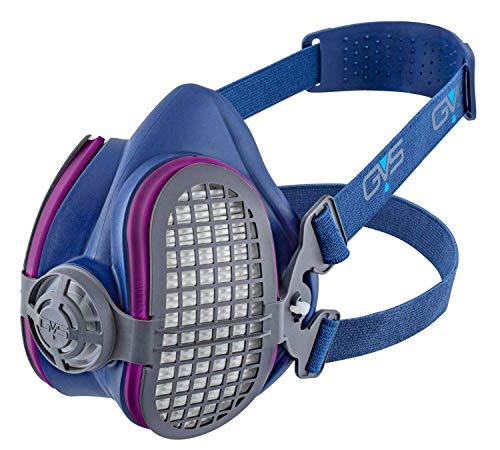
This mask is recommended for dust and fumes containing substances such as micro-organisms, marble, gypsum, titanium oxide, soapstone, rock wool, wood, detergents, textile fibres, spices, salt, animal feeds, etc.. Protects against dust that can cause lung disease. In particular, protects against coal, silica, cotton, iron ore, graphite, kaolin, zinc, aluminium dusts. Protects against harmful dusts such as asbestos, bauxite, coal, silica, iron, and against toxic dusts.
Effective Strategies for Integrating Fume Extractors and Respirators
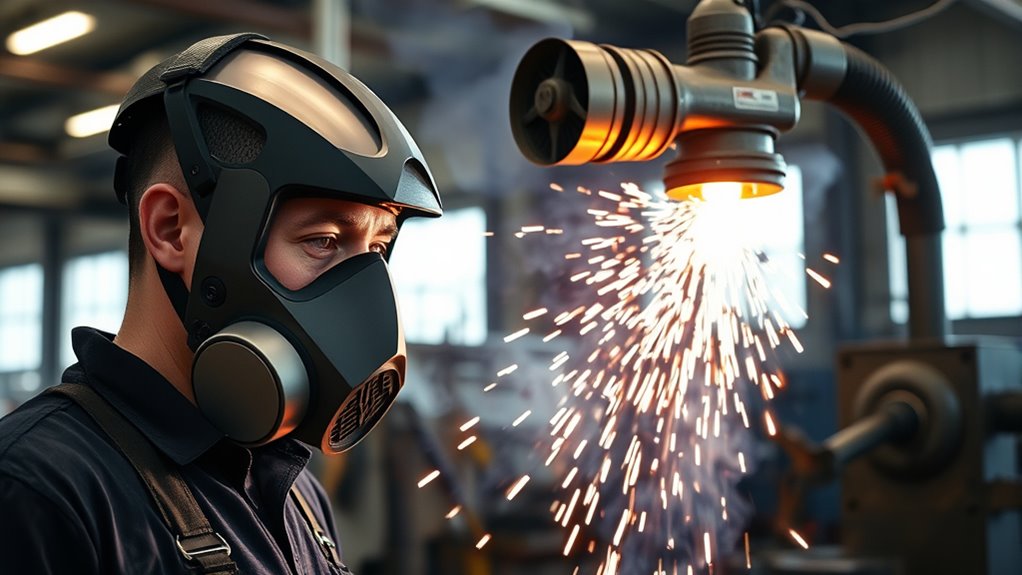
The safest approach is layered. Use fume extraction to control the plume, general ventilation to supply clean replacement air, and a respirator when the hazard assessment or job conditions require one. This combination reduces exposure routes instead of depending on one piece of equipment.
Before welding, run through this setup check:
- Identify the metal and coating. Check the material, paint, plating, filler wire, flux, and safety data sheet.
- Place the extractor close to the plume. The hood should pull fumes away from your breathing zone without disturbing shielding gas.
- Confirm airflow direction. Smoke should move toward the hood, not past your face.
- Protect nearby workers. Do not push fumes toward helpers, other bays, or open walkways.
- Check filters and ducts. Loaded filters, crushed hoses, and clogged prefilters reduce capture.
- Choose the right respirator if needed. Match the filter or cartridge to the hazard, not just to the word “welding.”
- Do a seal check. A tight-fitting respirator must seal to your face every time.
Training matters too. Workers should know how to position extraction arms, when to change filters, how to inspect respirators, and what symptoms may signal overexposure. Do not ignore headaches, metal taste, chest tightness, dizziness, fever-like symptoms, or unusual shortness of breath after welding around toxic fumes.
Complementary Protection Approaches
Fume extraction and respirators work best when each has a clear job. The extractor reduces the amount of contaminant in the air. The respirator reduces what you personally breathe if some exposure remains. Together, they give you a stronger margin of safety than either one alone.
- Use local exhaust for the plume: Capture fumes as close to the weld as practical.
- Use general ventilation for the room: Supply clean air and prevent buildup in the shop.
- Use respiratory protection for the worker: Add it when exposure, material, space, or work duration calls for it.
- Use administrative controls: Limit access, rotate tasks only when appropriate, and schedule high-fume work away from others.
Effective Implementation Strategies
Start with source capture. If you are using a portable extractor, position it before welding and adjust it as the weld moves. If you are welding long seams, stop and reposition the hood instead of letting the plume drift into your helmet.
For respirators, follow the manufacturer’s instructions and workplace respiratory protection program. Tight-fitting respirators need the correct size, fit testing, seal checks, cleaning, storage, and filter replacement. If you change respirator make, model, style, or size, you need a new fit test under OSHA’s respiratory protection rule.
For mobile work, keep a simple kit ready: the right respirator, spare filters, prefilters if used, extractor parts, inspection tags, and a way to verify airflow. If your setup cannot keep fumes away from your breathing zone, pause and improve the control before continuing.
Common Mistakes That Reduce Welding Fume Protection
Even good equipment can fail if it is used poorly. Watch for these mistakes:
- Putting the extraction hood too far away: If the smoke rises past your helmet, the system is not capturing well.
- Blowing air across the arc: Strong side drafts can push fumes into your face and may disturb shielding gas.
- Using the wrong filter: A particulate filter does not automatically protect against gases and vapors.
- Welding unknown coatings: Paint, plating, oil, and cleaners can create extra hazards when heated.
- Skipping fit checks: A respirator that leaks around the face can give a false sense of safety.
- Ignoring nearby workers: Your respirator does not protect anyone else in the shop.
Frequently Asked Questions
Why do some welders not wear respirators?
Some welders skip respirators because they feel hot, bulky, or hard to fit under a welding hood. Others assume shop ventilation is enough. That can be risky. If fumes still reach your breathing zone, or if the material creates higher-risk fumes, a properly selected and fitted respirator may be needed.
What is the best protection for welding fumes?
The best protection is a layered setup: reduce the hazard where possible, use local exhaust ventilation near the arc, keep your head out of the plume, supply clean replacement air, and add a properly selected respirator when exposure or job conditions require it.
What is the golden rule for welding fume safety?
Keep welding fumes out of your breathing zone. Use source capture first, keep your face out of the plume, avoid welding unknown coatings, and use the right respirator when ventilation alone is not enough.
Will a respirator protect against welding fumes?
Yes, a respirator can protect against welding fumes when it is NIOSH-approved, matched to the hazard, fitted correctly, sealed to your face, and maintained. It does not remove fumes from the room, and it may not protect against gases or vapors unless the right cartridges are used.
Is a fume extractor enough for welding?
A fume extractor may be enough for some lower-risk jobs if it captures the plume well and exposure stays within safe limits. It may not be enough for stainless steel, coated metals, long welds, tight spaces, or situations where fumes still pass your face.
Can I weld in a closed garage with only a respirator?
No. A respirator alone is not a safe plan for a closed garage. You still need ventilation that removes fumes and supplies clean air. If fumes build up in the space, they can affect you, helpers, and anyone who enters the area later.
Conclusion
For welding fume protection, ventilation and fume extraction should usually come before a respirator. They control fumes at the source and help clean the shared air. A respirator is still valuable, and sometimes required, when ventilation is not enough or when the job involves confined spaces, stainless steel, galvanized metal, or hazardous coatings.
The strongest setup is layered: identify the material, capture fumes close to the arc, keep clean air moving, protect nearby workers, and wear the right respirator when the exposure calls for it. In welding, safety is not about choosing one tool. It is about building a system that keeps fumes out of your lungs.
Sources
- OSHA 29 CFR 1910.252, Welding, Cutting, and Brazing — ventilation, confined-space, and material-specific welding requirements.
- OSHA 29 CFR 1910.134, Respiratory Protection — respirator program, fit testing, seal checks, training, and maintenance requirements.
- CDC/NIOSH Welding Fumes and Manganese — welding fume composition, manganese exposure, health effects, and confined-space exposure concerns.
- NIOSH Engineering Controls Database: Welding Operations — local exhaust ventilation and fume-control examples for welding operations.
- NIOSH Hierarchy of Controls — why engineering controls are preferred before relying on PPE alone.
- IARC Monographs Volume 118: Welding, Molybdenum Trioxide, and Indium Tin Oxide — carcinogenicity evaluation for welding fumes.