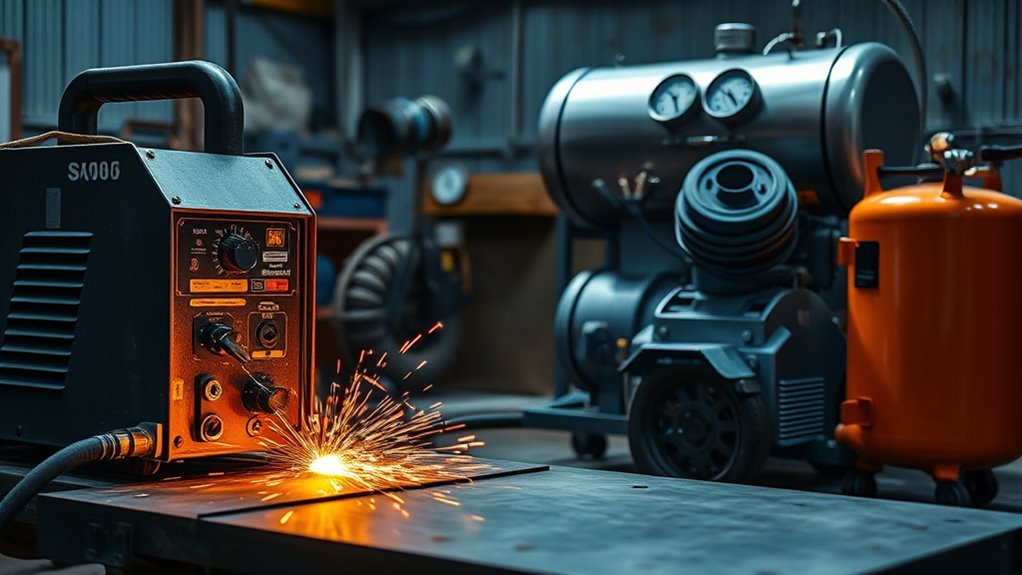
You need an air compressor that can deliver your plasma cutter’s required airflow at the pressure listed in the cutter manual. Tank size helps smooth short bursts, but it does not replace real compressor output. For most small shop plasma cutters, start by checking the required SCFM or CFM at PSI, then choose a compressor with extra reserve, clean dry air, and a tank sized for the length of cuts you plan to make.
Quick Answer
For light plasma cutting, choose a compressor that meets the cutter’s required SCFM or CFM at the listed PSI, then add 50% to 100% reserve. Many home setups work best with about 6 to 10 CFM at 90 PSI and a 20 to 60 gallon tank, depending on cut length.
Key Takeaways
- Size the compressor by delivered CFM or SCFM at PSI, not by tank gallons alone.
- Use the plasma cutter manual as the final spec because different 30, 40, and 50 amp machines can need different airflow.
- A 20 to 30 gallon tank can handle short cuts, while 60 gallons or more is better for long passes and frequent cutting.
- Clean, dry air protects the torch, improves arc stability, and helps consumables last longer.
- Use a regulator, water separator, dryer, short hose, full-flow fittings, and regular tank draining to prevent pressure drop.
At a Glance
| Best Starting Point | Match the cutter’s required CFM or SCFM at the listed PSI, then choose 1.5x to 2x airflow reserve. |
| Typical Home Range | About 6 to 10 CFM at 90 PSI for many light to medium handheld plasma cutters. |
| Tank Size | 20 to 30 gallons for short cuts; 60 gallons or more for longer, repeated, or shop use. |
| Air Quality | Use a water separator, drain the tank, and add a dryer or desiccant filter when humidity is high. |
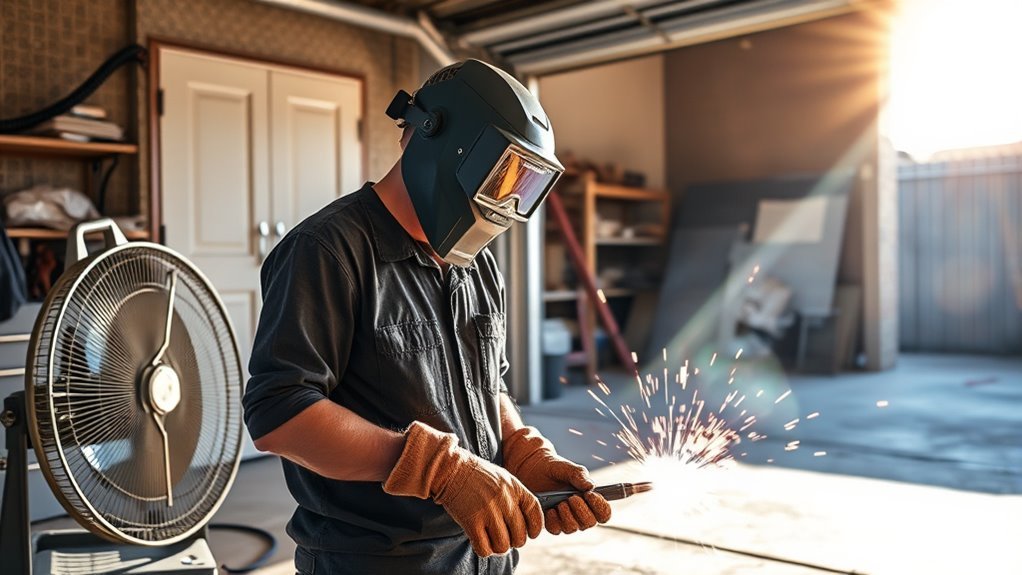
Warning: Plasma cutting is hot work. Wear proper eye and face protection, gloves, nonflammable clothing, and hearing protection. Keep sparks away from fuel, solvents, dust, and paint. Do not cut in a confined or poorly ventilated area unless you have the right ventilation, atmospheric testing, and fire controls in place.
What CFM Does a Plasma Cutter Need?
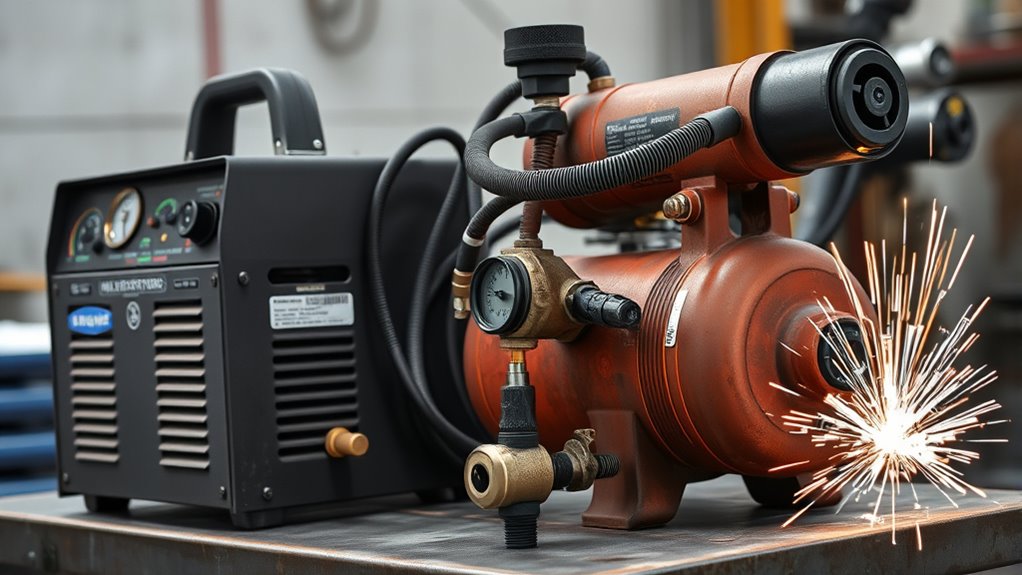
You need enough airflow to keep the plasma arc stable while the torch is cutting. The most important number is the plasma cutter’s required CFM or SCFM at a specific PSI. Do not size the compressor by horsepower, tank size, or a vague “max PSI” number on the tank.
A smaller plasma cutter may need only about 4 to 5 CFM at 90 PSI. Many 40 to 50 amp units need more, often around 6 to 8 CFM, and longer or heavier cuts are easier with a compressor that can deliver closer to 10 CFM at 90 to 100 PSI. Always check your machine’s manual because torch design, amperage, and cut thickness change the air demand.
As a practical rule, choose a compressor rated at 1.5 to 2 times the cutter’s listed airflow demand. If your cutter needs 6 CFM, a compressor that delivers 9 to 12 CFM at the required pressure gives you breathing room. That margin helps prevent pressure sag, rough edges, short duty cycles, and extra wear on the compressor and plasma cutter.
If your airflow falls short, the torch may sputter, the arc may wander, and the cut edge may get rough. You may also need to stop often while the compressor recovers. Airflow stability matters alongside electrical supply, so confirm your proper breaker selection before you blame the compressor for every cutting problem.
Note: CFM and SCFM are airflow ratings. PSI is pressure. Tank gallons are stored air volume. You need all three to work together, but they are not the same thing.
How to Size an Air Compressor for a Plasma Cutter
Use this simple method before you buy or connect a compressor:
- Find the cutter’s air requirement. Look for “air consumption,” “required flow,” “SCFM,” or “CFM” in the plasma cutter manual or data plate.
- Match the pressure rating. Compare compressor output at the same pressure, usually 90 PSI or another pressure listed by the cutter maker.
- Add reserve. Choose 1.5x to 2x the required airflow if you want cleaner cuts, fewer pauses, and less compressor strain.
For example, if your cutter requires 5 CFM at 90 PSI, a compressor rated for 7.5 to 10 CFM at 90 PSI is a better choice than one that barely meets the minimum. If you often cut thick steel, expanded metal, long lines, or CNC parts, size even more generously.
| Plasma Cutter Use | Compressor Guidance | Best For |
|---|---|---|
| Small 20 to 30 amp cutter | Meet the manual’s CFM at PSI; many setups need roughly 4 to 6 CFM at 90 PSI | Sheet metal, brackets, short cuts |
| 40 to 50 amp handheld cutter | Often works best around 6 to 10 CFM at 90 PSI, depending on model | Garage and fabrication work |
| Long cuts or frequent use | Choose 1.5x to 2x rated cutter demand with a larger tank | Cleaner edges and fewer pauses |
| Industrial or CNC cutting | Use the machine maker’s continuous-air specification and dedicated drying system | Repeated production cuts |
Products Worth Considering

6.3 Gallon Air Compressor: Our 1450W oil-free motor drives the compressor up to a speed of 3500 r/min and 3.35 CFM@ 90PSI air delivery. It is ideal for supporting a variety of pneumatic and air tools, such as nail gun, impact wrench, spray gun, pneumatic screwdriver, best for tire inflation, auto repair, spray painting, woodwork nailing, etc.

Built to Last: The 13-gallon large-capacity tank paired with a 2HP motor delivers fast air buildup in under 3 minutes. The reinforced, leak-proof valve system ensures stable output, easily handling high-intensity and long-duration tasks

ULTRA-QUIET OPERATION: The Metabo HPT Quiet Air Compressor operates at only 59 dB, so quiet that a normal conversation can take place while the compressor is cycling. The barely noticeable sound ensures a peaceful work environment.
What PSI Does a Plasma Cutter Need?
Plasma cutters usually need a steady air supply within the pressure range listed by the manufacturer. Many portable machines use inlet air around 90 PSI, while the torch may regulate cutting pressure lower inside the machine. Larger systems may call for higher inlet pressure.
That is why you should not guess. If your manual says the plasma cutter needs 5 CFM at 90 PSI, the compressor must deliver that airflow while holding 90 PSI. A compressor that advertises 150 max PSI but only delivers 3 CFM at 90 PSI will still fall short.
Use a pressure regulator if your machine does not regulate air automatically. Set the air pressure to the cutter’s specification, then test while air is flowing, not only while the system is sitting still. Static pressure can look fine until the torch starts drawing air.
Stable pressure helps the arc stay consistent, improves edge quality, and protects the torch. It also works together with correct power input, especially because operating at higher voltage can improve plasma cutter performance on thicker material when the machine supports it.
How Big Should Your Plasma Cutter Air Tank Be?
You’ll usually want a 20 to 30 gallon tank for light to moderate plasma cutting and 60 gallons or more for longer, repeated, or shop-level cutting. A larger tank gives the compressor more stored air to draw from, which reduces pressure cycling and recovery pauses.
Tank size still has a limit. It does not create more CFM. If the pump cannot refill the tank as fast as the plasma cutter uses air, pressure will drop during long cuts. That is why compressor output matters more than tank gallons.
If you already own a smaller compressor, an auxiliary tank can help with short bursts, but it will not fix a weak pump for sustained cutting. Also confirm the compressor and plasma cutter can be powered safely together. Your setup must handle the required total power needs if you use a generator or shared circuit.
Tank Size Basics
The tank acts as a buffer between the compressor pump and the plasma cutter. A 20 to 30 gallon tank often works for short, occasional cuts because the compressor has time to recover between passes.
A 60 gallon tank is better when you cut longer lines, work on thicker plate, or use the plasma cutter often. The larger air reserve keeps pressure steadier and reduces how often the pump starts and stops.
Drain the tank often. OSHA’s air receiver standard requires a drain at the lowest point of the receiver and frequent draining to prevent excessive liquid buildup. A wet tank sends moisture down the line, which can hurt cut quality and shorten consumable life.
Short Vs Long Cuts
For short plasma cuts, a smaller tank can usually keep up if the compressor output matches the cutter’s airflow requirement. You can make a cut, pause, reposition, and let the compressor recover.
| Cut Type | Tank Guidance |
|---|---|
| Short cuts | 20 gallons can work when compressor CFM meets the cutter’s spec |
| Medium shop cuts | 30 to 60 gallons gives steadier pressure and fewer recovery pauses |
| Long or repeated cuts | 60 gallons or more is safer, especially with high-CFM cutters |
| CNC or production cutting | Use a dedicated compressor and air dryer sized for continuous demand |
For long cuts, choose a compressor that can hold both airflow and pressure while the torch is running. Plasma cutting is air-hungry, and a compressor that looks fine for short bursts can fall behind during a long pass.
Auxiliary Tank Benefits
Adding an auxiliary tank can give your plasma cutter a larger air reserve, which helps with short or medium cuts. It can reduce pressure drop during demand spikes and slow down compressor cycling.
An auxiliary tank is most useful when your compressor is close to the cutter’s required airflow but needs more stored volume. It is less useful when the compressor pump is far below the required CFM. In that case, the extra tank only delays the pressure drop.
Use full-flow fittings, rated hoses, and proper safety valves. Do not use an old, damaged, rusty, or unknown tank. Compressed air storage must be treated as pressure equipment, not as a casual add-on.
Can a Small Compressor Run a Plasma Cutter?
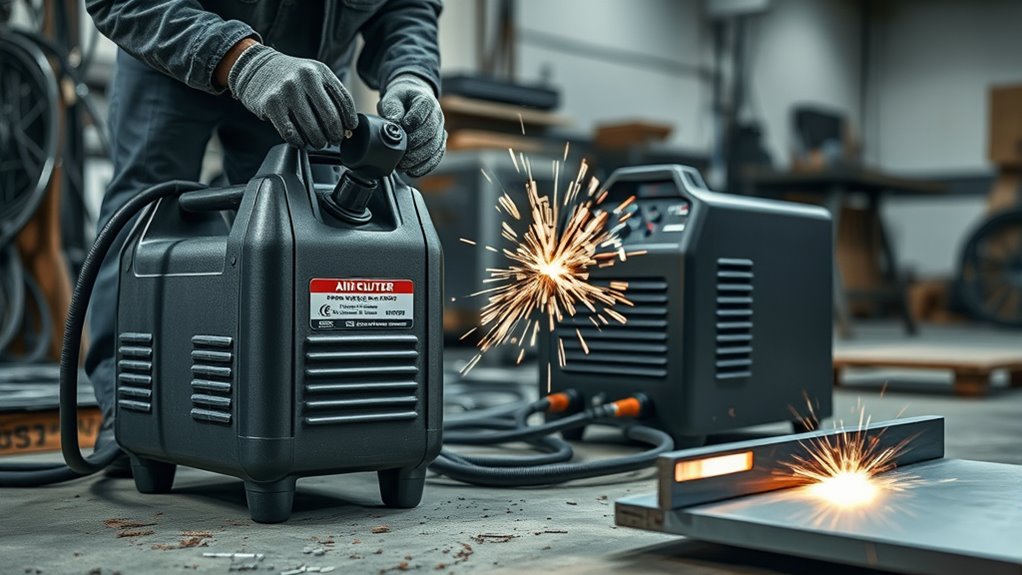
A small compressor can run a plasma cutter only if it meets the cutter’s minimum airflow at the required pressure. Many pancake and small portable compressors do not deliver enough CFM at 90 PSI for steady plasma cutting.
You may get away with very short, thin-material cuts if the tank is full and the compressor recovers between passes. But once you cut longer lines, thicker steel, or several parts in a row, a low-CFM compressor will fall behind.
When airflow drops, the arc can become unstable, the cut can get rough, and the machine may struggle to maintain its duty cycle. You also need to consider torch gas pressure needs, because the wrong tip, worn consumables, or restricted air supply can all cause poor cutting performance.
Minimum CFM Needs
The minimum CFM number is the lowest airflow the machine needs to run under normal conditions. It is not the best number for smooth work. If your cutter requires 5 CFM, a 5 CFM compressor may run at the edge of its ability.
For cleaner operation, size above the minimum. A 1.5x reserve is a good start for short shop work. A 2x reserve is better for long cuts, thicker material, or repeated use.
Tank Size Limits
Tank size affects how long your plasma cutter can run before pressure drops, but it will not repair an undersized compressor. A 6 gallon tank with a low-CFM pump can empty fast during cutting. A bigger tank buys time, but the pump still has to refill it.
If the compressor runs constantly, gets hot, or cannot rebuild pressure before the next cut, it is too small for the work. You can reduce demand by making shorter cuts, using lower amperage when appropriate, and pausing between passes, but the better fix is a compressor with higher delivered airflow.
Short Cut Use
For short cuts, a small compressor may be acceptable when all three conditions are true:
- The compressor meets the cutter’s minimum CFM or SCFM at the required PSI.
- You are cutting thin material with short trigger time.
- You let the compressor recover between cuts.
If you want fewer pauses, cleaner edges, and less frustration, choose a compressor with extra output instead of working at the minimum.
What Compressor CFM Rating Is Enough?
The right compressor CFM rating is the one that meets your plasma cutter’s manual at the required pressure and still gives you reserve. For many garage users, that means looking for a compressor that can deliver roughly 6 to 10 CFM at 90 PSI, then matching that to the exact cutter.
| Setup | CFM Target |
|---|---|
| Small plasma cutter | Use the manual; many need about 4 to 6 CFM at 90 PSI |
| 40 to 50 amp plasma cutter | Often best with about 6 to 10 CFM at 90 PSI, depending on model |
| Long, continuous cuts | Choose 1.5x to 2x the cutter’s rated airflow demand |
| High-demand projects | Use a larger compressor, larger tank, or dedicated shop air system |
If you push longer cuts, the compressor must recover while the torch is still drawing air. Bigger machines need more air, and a bigger tank helps only when the compressor pump can keep up. A machine with a true 100% duty cycle still needs enough air to match that continuous electrical performance.
A plasma cutter does not care how large the tank looks. It cares whether clean, dry air reaches the torch at the required flow and pressure while you are cutting.
Products Worth Considering

[55A 110V/220V Cutting Power]: The SILATU STC550P plasma cutter delivers up to 55A of cutting power with advanced IGBT inverter technology. Use 110V at 15-40A for home garage and lighter-duty jobs, or switch to 220V at 15-55A for thicker metal and more demanding projects. Maximum cutting capacity reaches 1/2" (12mm) at 110V/40A and 7/10" (18mm) at 220V/55A under recommended air pressure (Note: For circuit protection, this machine must be used with 40A circuit breaker)

CUTTING THICKNESS UP TO 20MM: Featuring a brand-new MCU technology upgrade, the plasma cutter machine has a high degree of internal integration, combining full digitalization for more precise control of cutting parameters such as current and voltage. This results in better cutting effects and improved stability. Cutting thickness: Quality 12mm (1/2"), maximum 20mm (3/4").

BUILT-IN AIR COMPRESSOR: With this plasma cutter machine, you're ready to cut as soon as you connect it to a power source, no additional air compressor needed. Designed for effortless outdoor work, it also offers compatibility with external compressors for versatile use
Why Clean, Dry Air Matters for Plasma Cutting?
Clean, dry air is just as important as CFM because moisture and contaminants can ruin cut quality and wear out consumables fast. Your plasma cutter uses compressed gas to form and control the plasma arc, so dirty or wet air can make the arc less stable.
If moisture enters the air stream, you may see arc sputter, rough edges, extra dross, and faster electrode or nozzle wear. Oil from an oil-lubricated compressor can also contaminate the line. Dust, rust, and pipe scale can restrict flow or damage the torch.
Use at least a water separator near the compressor outlet. In humid shops, add a desiccant dryer, refrigerated dryer, or final filter closer to the plasma cutter. Drain the compressor tank often, especially after long cutting sessions.
Pro Tip: Put the main water separator near the compressor and a final filter or dryer closer to the plasma cutter. That gives warm compressed air time to cool, which helps moisture drop out before it reaches the torch.
Treat air quality as a cutting setting. Good air helps protect cut quality, reduce consumable costs, and keep the machine working efficiently. Safety matters too, so make sure the cutter is grounded correctly and follow the PPE guidance in your proper grounding of plasma cutting machines checklist.
What Setup Gives You the Steadiest Cut?
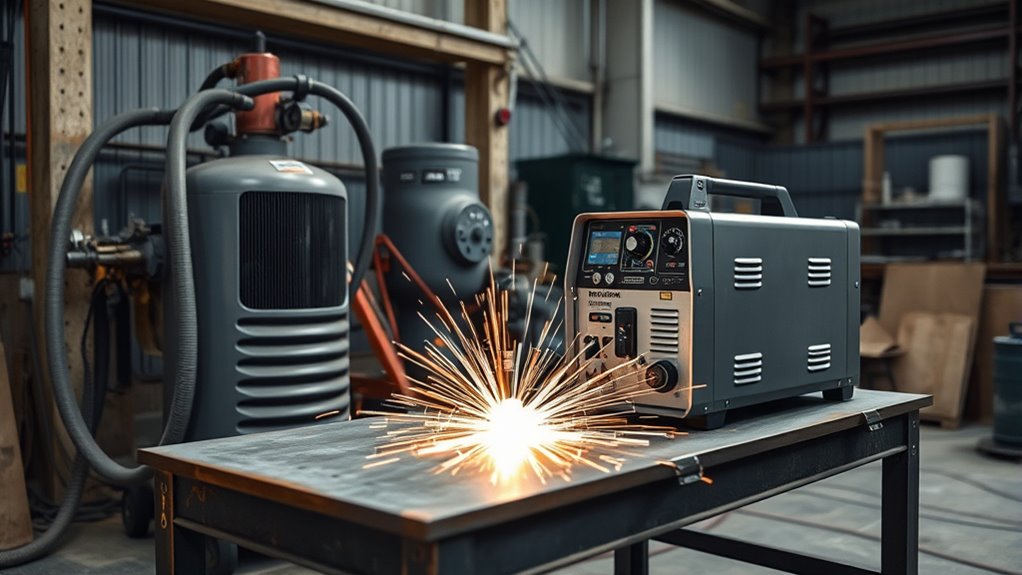
The steadiest plasma cut comes from the full air path, not just the compressor. Start with a compressor that can deliver enough CFM at the required PSI. Then make sure the tank, regulator, filters, hose, and fittings do not choke the flow.
Use a pressure regulator between the compressor and the cutter if the machine does not handle regulation internally. Check pressure while the torch is flowing air. A gauge reading before the trigger is pulled can be misleading.
Use short, wide hoses when possible. A long narrow hose, small quick-connect fitting, clogged filter, or kinked line can cause pressure drop even when the compressor is large enough. Full-flow couplers are often a cheap upgrade for plasma cutting.
Add an auxiliary air tank only after you confirm the compressor pump is close enough to the cutter’s demand. If the compressor is far below the needed CFM, the better fix is a larger compressor.
Keep consumables fresh. Worn electrodes, damaged nozzles, and incorrect tips can mimic air problems. Regularly checking consumable wear signs will help you separate torch wear from compressor trouble.
Air Compressor Safety for Plasma Cutting
Plasma cutting adds heat, sparks, compressed air, electricity, and fumes to the same job. Take time to set up safely before you cut.
- Wear the right shade lens. OSHA lists minimum protective shades for plasma arc cutting based on current range, starting at shade 8 for light plasma arc cutting where the arc is visible.
- Drain the air receiver. Water in the tank can travel downstream and can also damage the receiver over time.
- Check gauges and safety valves. A compressed air receiver should have a visible pressure gauge and working safety valve.
- Control sparks. Clear flammable materials before cutting and keep a fire extinguisher nearby.
- Ventilate the area. Do not plasma cut in confined spaces, tanks, or enclosed areas without proper atmospheric controls.
If you work in a professional shop, follow OSHA rules, your employer’s hot-work program, and the plasma cutter manufacturer’s manual. If you work at home, the same safety logic still applies.
Troubleshooting Air Supply Problems
If the plasma cutter cuts poorly, do not assume the machine is bad. Check the air system first.
| Symptom | Likely Air-Supply Cause | Fix |
|---|---|---|
| Arc sputters or drops out | Low flowing pressure or undersized compressor | Check pressure while air is flowing; use a higher-CFM compressor if needed |
| Rough edge and heavy dross | Wet air, wrong pressure, worn consumables, or slow travel speed | Drain tank, service filters, set correct pressure, and inspect consumables |
| Compressor runs constantly | Pump output is too close to or below cutter demand | Pause between cuts or upgrade to more delivered CFM |
| Good pressure at compressor, poor cut at torch | Pressure drop through hose, couplers, or clogged filters | Use shorter, larger hose and full-flow fittings; replace filters |
Frequently Asked Questions
How big of an air compressor do I need to run a plasma cutter?
Choose a compressor that meets the plasma cutter’s required CFM or SCFM at the listed PSI, then add 50% to 100% reserve. For many home and small shop cutters, about 6 to 10 CFM at 90 PSI with a 20 to 60 gallon tank is a practical range.
How much air pressure does it take to run a plasma cutter?
Many plasma cutters use inlet air around 90 PSI, but the correct number is the pressure listed in your manual. Some machines regulate torch pressure internally. Check pressure while air is flowing because static pressure can look higher than actual cutting pressure.
How many CFM are needed for a plasma cutter?
Small plasma cutters may need about 4 to 6 CFM, while many 40 to 50 amp machines work better with about 6 to 10 CFM at 90 PSI. Long cuts and higher amperage need more reserve. Always use the cutter manual as the final requirement.
Can you run a plasma cutter off a small air compressor?
Yes, but only for short cuts if the compressor meets the cutter’s minimum airflow at the required PSI. A small compressor with a low CFM rating may cut thin material briefly, but it will usually struggle with long cuts, thick steel, or repeated use.
Does a bigger tank make up for low CFM?
No. A bigger tank stores more air, so it can help with short bursts, but it does not increase compressor output. If the pump cannot replace air as fast as the plasma cutter uses it, pressure will still drop during longer cuts.
Do I need an air dryer for plasma cutting?
You should at least use a water separator and drain the compressor tank often. In humid shops or for frequent cutting, add a desiccant or refrigerated dryer. Dry air helps reduce arc instability, rough edges, and consumable wear.
Conclusion
The right air compressor size for a plasma cutter depends on airflow first, pressure second, and tank size third. Match the cutter’s required CFM or SCFM at the listed PSI, then choose a compressor with 1.5x to 2x reserve if you want cleaner cuts and fewer pauses. A 20 to 30 gallon tank can work for short jobs, while 60 gallons or more is better for long or repeated cuts.
Do not let a large tank or high max PSI rating fool you. The compressor must deliver enough air while the torch is cutting. Add clean, dry air, full-flow fittings, a good regulator, and proper safety gear, and your plasma cutter will be much easier to control.
Sources
- OSHA 1910.133 Eye and Face Protection — backs plasma arc cutting eye-protection shade guidance.
- OSHA 1910.169 Air Receivers — backs compressor tank draining, gauges, and safety-valve guidance.
- OSHA 1910.146 Permit-Required Confined Spaces — backs confined-space ventilation and atmospheric hazard warnings.
- Welding Journal: Cutting and Shield Gases Pressure Effects on Plasma Cutting Quality — backs the importance of gas pressure and cutting parameters for cut quality.
- Plasma Cutting Technical Overview — general background on compressed gas, plasma arc cutting, and cut-quality variables.