Lotos Plasma Cutter Amp Requirements for 120V and 240V
What’s in This Article
- Understanding Voltage and Amp Requirements
- Comparing Duty Cycles Across Models
- Performance Impacts of Voltage Variations
- Efficiency in Heavy-Duty Tasks
- Operational Periods and Cutting Capabilities
- Importance of Duty Cycle in Metal Cutting
- Advantages of Dual Voltage Plasma Cutters
- Choosing the Right Model for Your Needs
- Frequently Asked Questions
A Lotos plasma cutter can feel strong or weak based on the outlet you use. The same cutter may handle light work on 120V, then cut faster and cleaner on 240V. This guide explains how voltage, amperage, duty cycle, and model choice affect your cut quality.
Quick Answer
Most dual-voltage Lotos plasma cutters run on 120V for lighter jobs and 240V for stronger cutting. A 240V setup usually gives you more usable amperage, better speed, and cleaner cuts on thicker metal. Always match the breaker, plug, air supply, and model manual before you cut.
Key Takeaways
- Use 120V for lighter cutting when your work area lacks a 240V outlet.
- Use 240V when you need higher output, cleaner cuts, and better performance on thicker metal.
- Check the duty cycle before long cuts, since it controls how long you can cut before cooling.
- Match your cutter to your material thickness, power source, breaker, and air supply.
- Follow the model manual and local electrical rules before using high-amperage settings.
Understanding Voltage and Amp Requirements
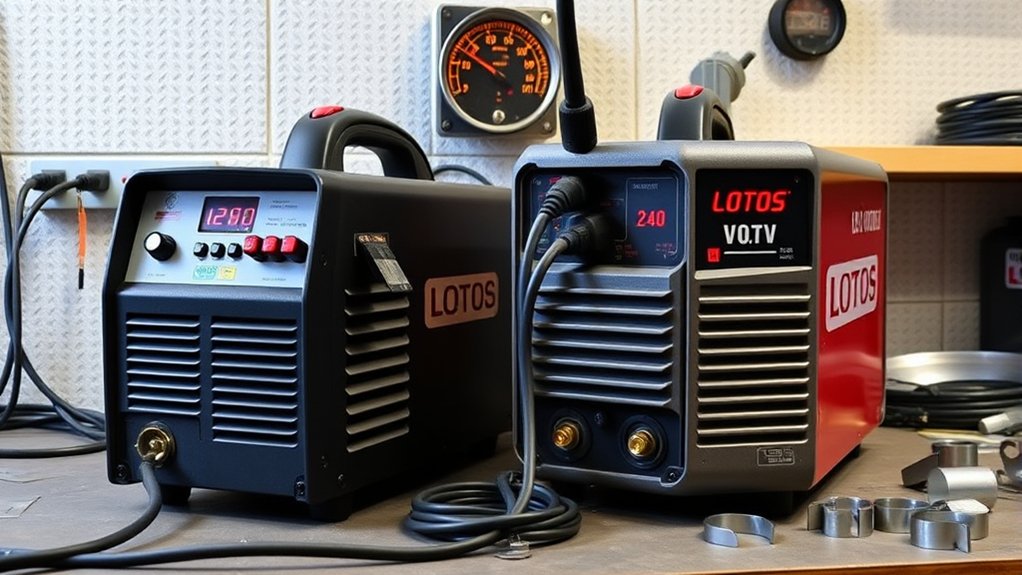
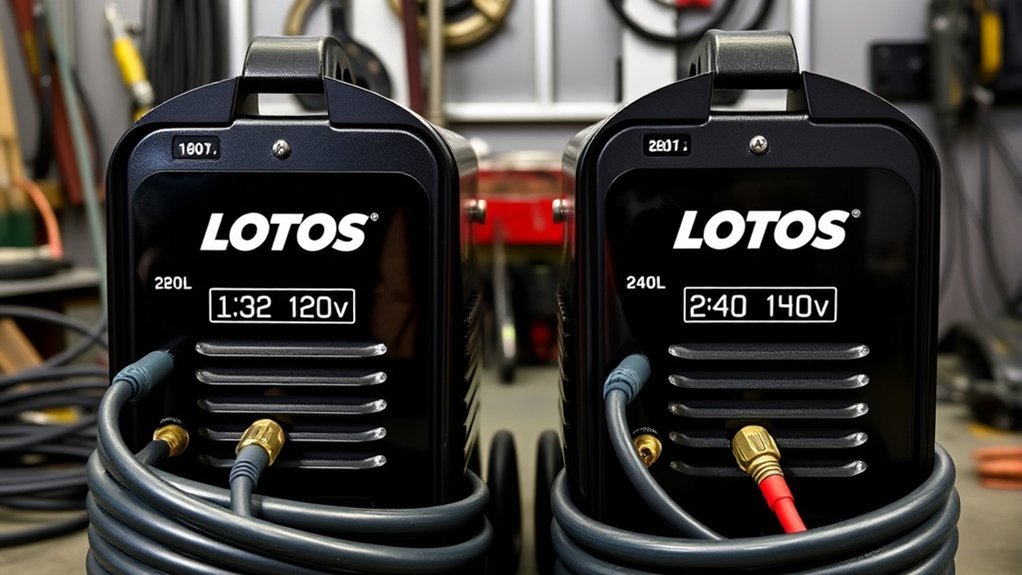
When you use a Lotos plasma cutter, voltage and amperage control how much cutting power you can use. Many Lotos models support dual voltage compatibility, so you can run them on 120V or 240V power. This helps you work in garages, small shops, and job sites with different outlet setups.
The Lotos LTP5000D can run on 110/120V or 220/240V, depending on your setup. On 240V, it can deliver stronger cutting output and handle thicker material than it usually can on a basic 120V circuit. The listed clean cut capacity for this class of model is commonly up to 5/8 inch, but your real cut quality depends on material, air pressure, consumables, and technique.
For higher-output use on 240V, you need the right electrical circuit. Many setups require a high-amperage dedicated breaker, and some manuals specify a 50 amp breaker for maximum performance. Always check your exact model label and manual before you size the circuit.
Warning: Do not guess on breaker size or wiring, because an undersized circuit can overheat and create a fire risk.
Higher-output models, such as the LTP6000, offer more cutting power for thicker material. A 60 amp class cutter can handle more demanding metalwork than a smaller unit when you pair it with the right power source and air supply.
Comparing Duty Cycles Across Models
When you choose a Lotos plasma cutter, the duty cycle matters as much as the amp rating. The duty cycle tells you how long you can cut in a 10-minute period before the machine needs cooling time.
A higher duty cycle helps you make longer cuts with fewer stops. This matters when you cut sheet metal, repair panels, fabricate brackets, or process many pieces in one session.
Duty Cycle Variations
A duty cycle can change by model, amperage, and input voltage. For example, a cutter may run longer at lower amperage and need more cooling when you push it near full output.
The LOTOS LTP5000D is often listed with a 60% duty cycle at lower output on 120V and strong output on 240V. The LOTOS LTP6000 can provide more amperage, but its duty cycle can vary based on voltage and setting. Check the rating plate for your exact unit because model versions can differ.
Use these points when you compare models:
- LTP5000D: A good fit for common shop work and medium metal thickness.
- LTP6000: A better fit when you need more output for thicker material.
- LTP7000: A stronger option for heavy work when you have the right 220V setup.
- Duty cycle: A key limit for long cuts and repeat cuts.
Efficiency in Continuous Cuts
Continuous cutting depends on heat control. If you push a cutter past its duty cycle, the unit may shut down or lose cutting quality until it cools.
The Lotos LTP5000D works well for many medium-duty jobs when you use the right voltage and amperage. It gives you better results when your work matches its rated output instead of forcing the cutter through material that exceeds its capacity.
For harder jobs, a higher-output model can help. The LTP6000 and LTP7000 give you more cutting power, but they also need a stronger electrical setup and steady clean air.
Impact on Performance
The duty cycle affects how fast you finish a job. A short duty cycle can slow your workflow because you must stop and let the cutter cool.
Match the duty cycle to your work style. If you make short cuts, a lower duty cycle may not bother you. If you cut long lines or thick plate, choose a model that can handle longer run time.
Consider these points before you buy:
- Material thickness: Thicker metal needs more amperage and more heat control.
- Cut length: Long cuts need a higher duty cycle than short trim cuts.
- Power source: A 240V circuit often gives you better performance than 120V.
- Air supply: Weak or wet air can hurt cut quality even with enough amperage.
Performance Impacts of Voltage Variations
Voltage changes how much practical cutting power your plasma cutter can deliver. A 120V outlet can help with light work, but 240V usually gives you better speed, cleaner edges, and more control on thicker metal.
You also need the right circuit for the voltage you plan to use. A cutter may support 240V, but it still needs the correct plug, breaker, wiring, and grounding.
Impact on Cutting Efficiency
Switching from 120V to 240V can improve cutting efficiency. The cutter can use more power with less strain, so the arc stays more stable during harder cuts.
On a model like the Lotos LTP5000D, 240V operation supports the higher output range. That higher output helps you cut thicker steel with better edge quality than a low-power 120V setup.
Higher voltage can help you get these results:
- Cleaner edges: The arc can stay steadier on thicker metal.
- Better speed: You can move the torch with more confidence.
- Less strain: The cutter does not have to work as hard near its limit.
Voltage and Duty Cycle
The right voltage setting can improve both output and duty cycle performance. Dual-voltage models give you more flexibility, but each voltage range has limits.
At 120V, you should treat the cutter as a light-duty or medium-duty tool. At 240V, the same cutter can often reach higher amperage and hold a stronger cut.
This difference matters most when you cut thick steel or make long cuts. If you need cleaner 5/8 inch cuts, a proper 240V setup gives you a better chance of success.
Power Source Compatibility
Dual voltage capability helps you use one cutter in more places. You can connect to 120V where 240V is not available, then switch to 240V when you need more cutting power.
Some models may include automatic voltage recognition, while others may need a specific plug or setup. Check your manual before you connect the machine to a new outlet.
Review these compatibility factors before you cut:
- Higher voltage: 240V helps with thicker materials and longer cuts.
- Breaker needs: High-output use may require a dedicated 50 amp circuit.
- Outlet type: Your plug, adapter, and wiring must match the cutter’s rating.
- Grounding: A poor ground can cause arc problems and safety risks.
Efficiency in Heavy-Duty Tasks
For heavy-duty tasks, Lotos plasma cutters like the LTP5000D and LTP6000 give you strong flexibility. They can handle different jobs when you pair the right model with the right power source.
The LTP5000D can handle many common shop cuts on 240V. It can make clean cuts through material up to about 5/8 inch under suitable conditions and sever thicker material when cut quality matters less.
The LTP6000 offers more output for demanding work. Its 60 amp class rating makes it a better option when you cut thicker steel more often.
Heavy-duty work also needs the right air supply. Dry, clean, steady air helps the arc stay stable and protects the consumables from early wear.
Pro tip: If your cuts look rough at the right amperage, check air pressure and consumables before blaming the cutter.
When you plan long cuts, watch the duty cycle. Even a strong cutter needs cooling time when you run it near maximum output.
Operational Periods and Cutting Capabilities
With dual voltage capability, Lotos plasma cutters give you more control over where and how you cut. You can use 120V for lighter work and 240V when you need stronger output.
On 120V, the LTP5000D fits moderate cutting tasks. This setup works best for thinner material, short cuts, and repair work where you do not need full output.
On 240V, the LTP5000D can reach higher amperage and cut thicker material. This makes it a better choice for heavier brackets, plate, and longer cuts.
The LTP6000 increases your cutting range with a higher output class. It works better when you often need to cut material around the upper end of the LTP5000D range.
Use this quick guide:
- 120V operation: Best for light to moderate cuts and easier portability.
- 240V operation: Best for higher output and cleaner cuts on thicker material.
- LTP6000: Better for frequent thicker cuts when your circuit supports it.
- Breaker setup: Check the manual before you use high-amperage settings.
Importance of Duty Cycle in Metal Cutting
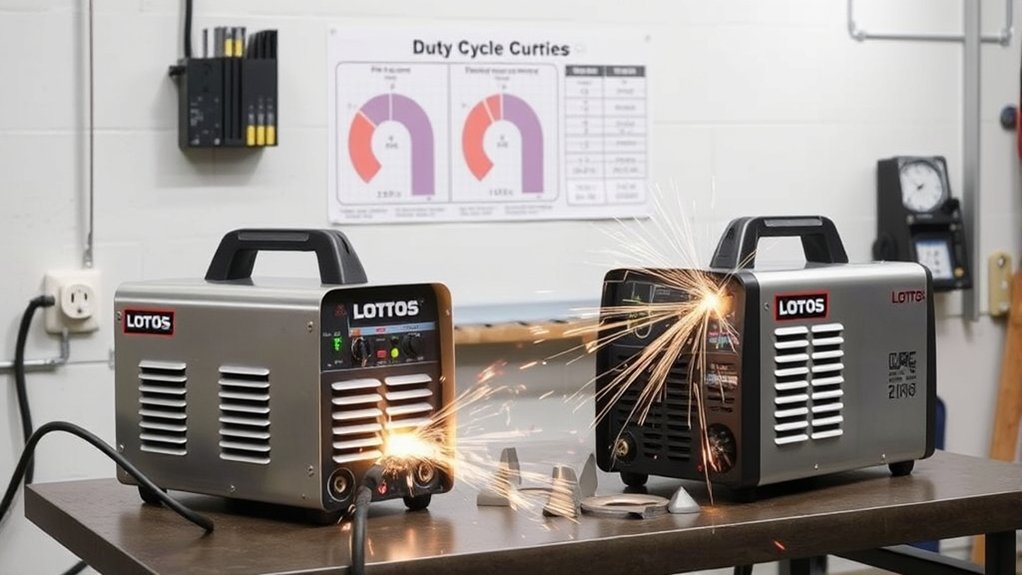
The duty cycle tells you how long your plasma cutter can run before it needs a break. Most duty cycle ratings use a 10-minute window.
For example, a 60% duty cycle means you can cut for 6 minutes and cool for 4 minutes. A 35% duty cycle means you can cut for 3.5 minutes and cool for 6.5 minutes.
This number affects your work pace. If you cut many parts in a row, a higher duty cycle can save time and reduce frustration.
Do not choose a cutter by amperage alone. Amperage tells you cutting strength, while duty cycle tells you how long you can use that strength.
Advantages of Dual Voltage Plasma Cutters
Dual voltage plasma cutters give you more flexibility than single-voltage machines. A model like the Lotos LTP5000D can work with both 120V and 240V power sources.
Dual voltage support lets you use 120V for lighter work and 240V when you need stronger cutting performance.
This flexibility helps when you work in different locations. You can use a normal 120V outlet for small jobs, then move to a 240V shop circuit for thicker metal.
Running on 240V can increase usable amperage and improve cut quality. It can also help the machine work with less strain during heavy cuts.
Main benefits include:
- Flexibility: Use the cutter in more work areas.
- Portability: Handle light jobs where only 120V is available.
- Performance: Use 240V for stronger output and thicker metal.
- Better workflow: Match the power setup to the job instead of forcing one setup.
Products Worth Considering
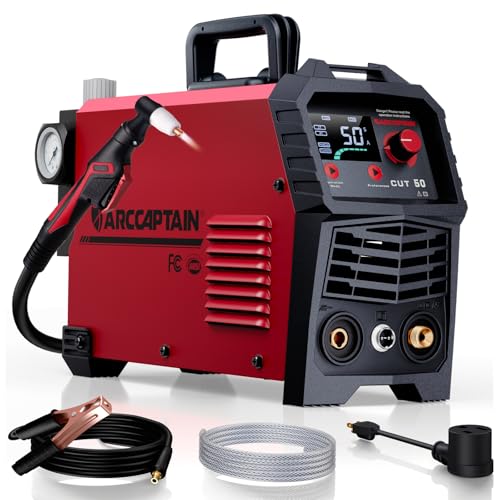
【Powerful Cutting Ability】Switch effortlessly between 110V and 220V for home or workshop use. Achieve professional 1/2" clean cuts on steel, aluminum, and copper with advanced LGBT technology. Perfect for DIY projects and heavy-duty tasks. Recommended maximum cutting thickness: 12mm @ 35A / 110V / 55 PSl; 18mm @ 50A / 220V / 75 PSI. Note: Requires compressed air (compressor sold separately).

【Non-Touch Pilot Arc Function】The plasma cutter features a high frequency non-touch arc starting mode. It allows for cutting steel surfaces with dirt, rust or coatings. The torch head does not need to touch the metal plate, reducing energy consumption, minimizing electrode burning, and extending service life. NOTE: DO NOT power on until the screen turns off and the fan stops working!

[75A Plasma Cutting Performance]: The STC750P plasma cutter machine delivers powerful cuts with advanced IGBT inverter technology and high-frequency pilot arc. Supporting 110V/220V dual voltage, it offers 15-45A at 110V for home garage projects and up to 75A at 220V for professional metal fabrication. Clean cuts up to 5/8" (16mm) and maximum severance thickness up to 1" (25mm) at 75A/70 PSI on 220V with reduced slag and less post-cut grinding
Choosing the Right Model for Your Needs
Choose your Lotos plasma cutter based on the metal thickness you cut most often. Also check your available outlet, breaker size, air compressor, and how long you need to cut at one time.
The Lotos LTP5000D is a practical choice for many home garages and small shops. The LTP6000 fits users who need more output for thicker materials. The LTP7000 suits heavier jobs when your power setup can support it.
| Model | Maximum Output | Best Fit | Typical Cutting Range |
|---|---|---|---|
| LTP5000D | 50 amps | Home shops and medium work | Up to about 5/8 inch clean cut |
| LTP6000 | 60 amps | More frequent thick cuts | Up to about 3/4 inch clean cut |
| LTP7000 | 70 amps | Heavy-duty cutting | Thicker materials with proper setup |
Pick the LTP5000D if you need a flexible dual-voltage cutter for mixed light and medium work. Pick the LTP6000 or LTP7000 if you often cut thick material and already have the right 240V circuit.
Products Worth Considering
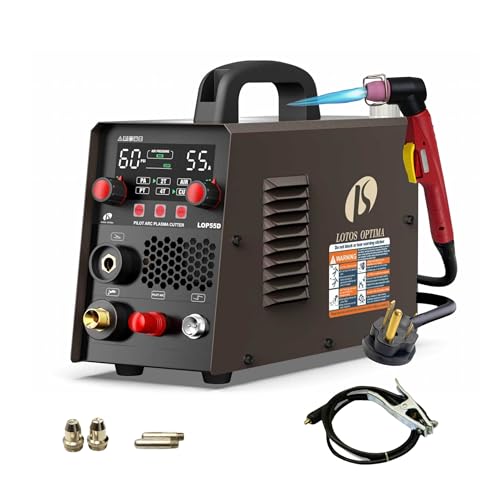
55A Heavy-Duty Cutting Power (Shop/DIY): Robust IGBT inverter delivers up to 1/2" (13 mm) clean cut and 3/4" (19 mm) sever cut on steel, stainless, aluminum, and copper with exceptionally smooth edges and less dross.
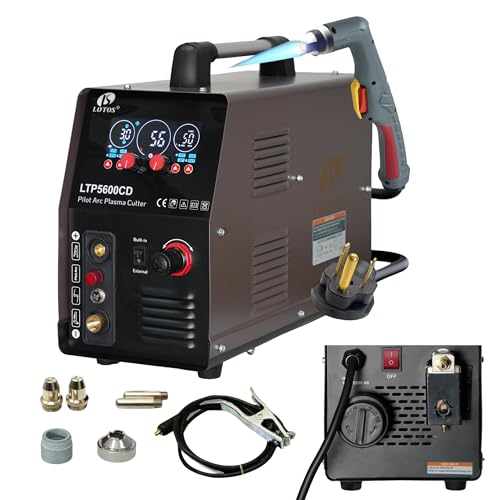
Drag-Cut Tracking for Shaky Hands (HVAC/Art): Rest and glide the torch nozzle directly on thin sheet metal templates or straightedges. Erases hand fatigue while ensuring exceptionally straight lines and smooth curves for custom ducts, stencils, and signmaking.

Drag-Cut Control & Faster Speed (HVAC/Art): Smooth touch-and-go tracking on thin sheet metal enables straighter lines and cleaner curves for custom ducts, stencils, and signmaking. Cuts up to 20% faster to maximize workshop productivity.
Frequently Asked Questions
What Maintenance Is Required for Lotos Plasma Cutters?
Inspect the nozzle, electrode, torch, ground clamp, and air filter before regular use. Clean the torch area, replace worn consumables, and keep the air supply dry so your cutter holds a stable arc.
Are There Compatible Accessories for Lotos Plasma Cutters?
Yes, many Lotos plasma cutters use replaceable tips, electrodes, nozzles, shields, and torch parts. Match accessories to your exact model number because similar parts may not fit every torch.
Can Lotos Plasma Cutters Be Used for Non-Metal Materials?
No, a plasma cutter needs an electrically conductive material to complete the cutting process. Use it on suitable metals, and choose another tool for wood, plastic, glass, or other non-conductive materials.
How Do I Troubleshoot Common Issues With Lotos Plasma Cutters?
Start with the simple checks first. Confirm power, ground connection, air pressure, dry air, clean consumables, and the correct amperage setting for your material.
What Safety Precautions Should Be Taken When Using Lotos Plasma Cutters?
Wear eye protection, gloves, flame-resistant clothing, and hearing protection when needed. Keep sparks away from fuel, paint, rags, and other flammable materials, and make sure your workspace has good ventilation.
Is 120V Enough for a Lotos Plasma Cutter?
120V can work for lighter cuts and small repair jobs. Use 240V when you need higher output, cleaner cuts, and better results on thicker metal.
Do I Need a 50 Amp Breaker for a Lotos Plasma Cutter?
Some high-output 240V setups may require a 50 amp breaker, but the exact requirement depends on your model and wiring. Check your manual and ask a qualified electrician if you are not sure.
Safety Disclaimer: This article is for informational purposes only and does not replace your product manual, electrical code, or professional safety advice. Ask a qualified electrician or welding professional before you change wiring, breaker size, or high-amperage equipment setup.
Conclusion
The right Lotos plasma cutter depends on your metal thickness, power source, and cutting time. Use 120V for lighter work and 240V when you need stronger output and cleaner cuts. Check the duty cycle before long cuts, and confirm your circuit can support the model you choose. When you match the cutter to your real shop setup, you get safer operation and better cutting results.