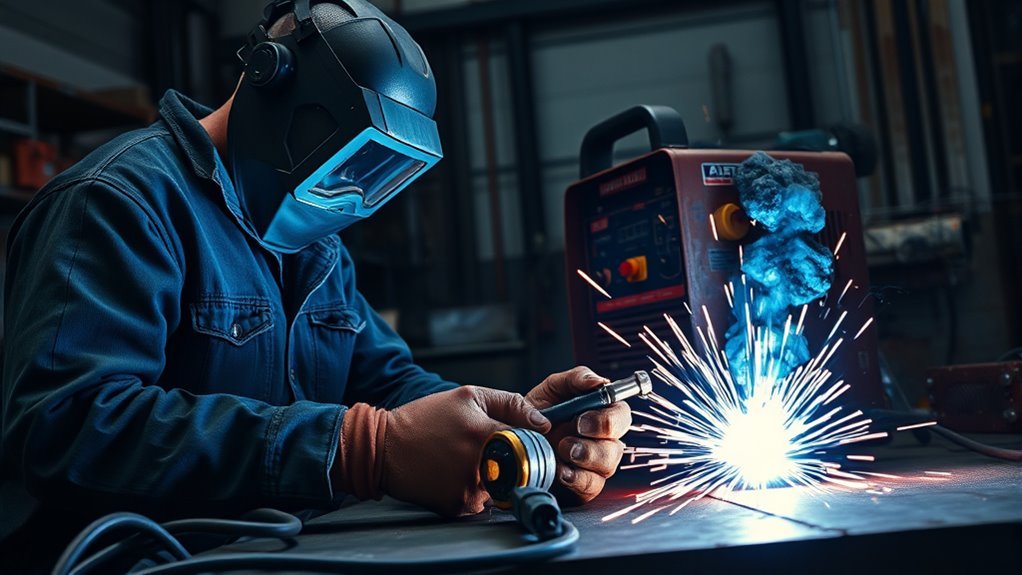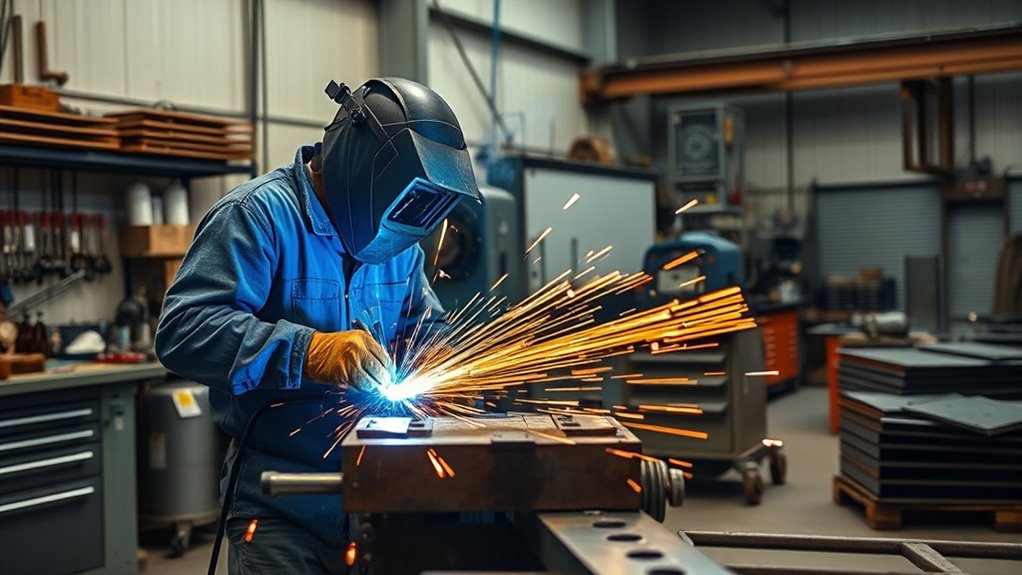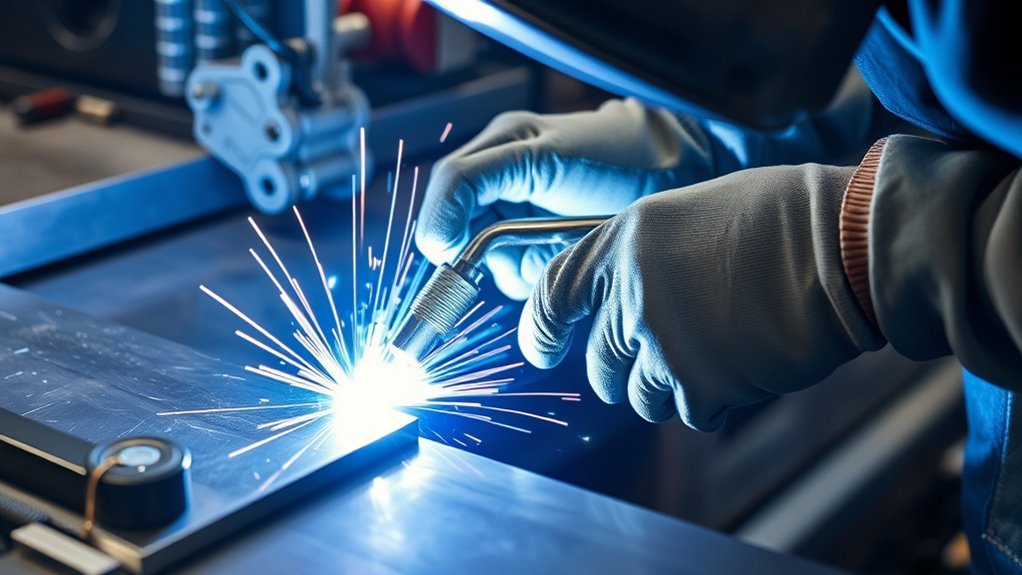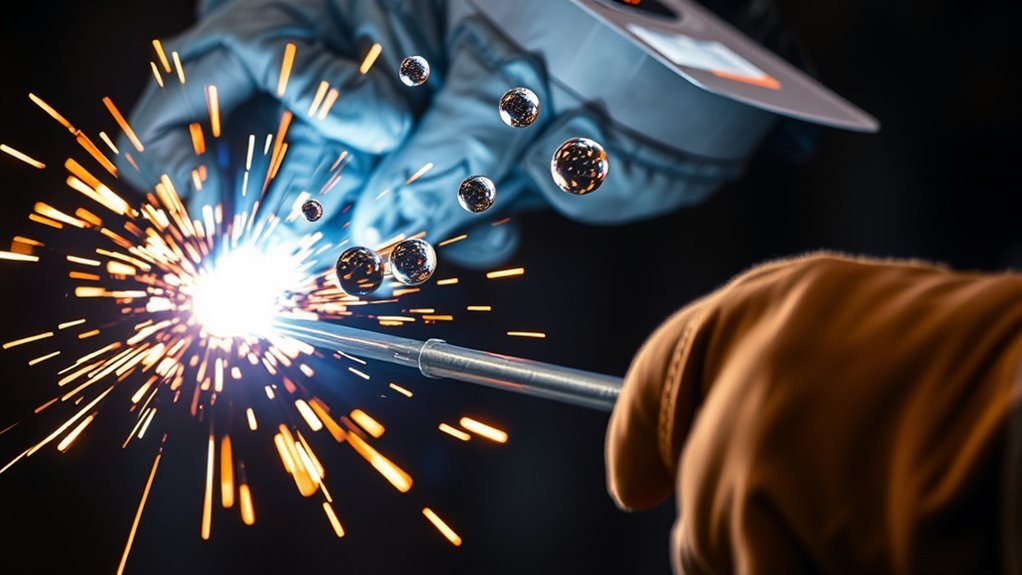
Globular transfer in MIG welding, also called GMAW globular transfer, is a high-heat metal transfer mode where large drops of molten wire break off and fall into the weld pool. It can be useful on thicker carbon steel in flat or horizontal work, but it is not the cleanest mode. The main trade-off is simple: you get strong deposition and penetration, along with more spatter and more cleanup.
Quick Answer
Globular transfer in MIG welding happens when molten filler wire forms large droplets that detach irregularly into the weld pool. It is most practical for thicker carbon steel, 100% CO₂ or high-CO₂ shielding gas, and flat or horizontal welds where speed and penetration matter more than appearance.
Key Takeaways
- Globular transfer uses large molten droplets, so it runs hotter and rougher than short-circuit MIG.
- It works best on thicker carbon steel in flat or horizontal positions, not thin sheet metal or overhead welds.
- 100% CO₂ lowers gas cost and supports deep penetration, but it also increases spatter compared with argon-rich blends.
- Pulsed-spray or short-circuit transfer is usually better when you need cleaner beads, lower heat, or out-of-position control.
At a Glance
| Time Required | 5 to 10 minutes to set up and run a test bead before welding the actual joint |
| Difficulty | Intermediate, because the puddle is hotter and the spatter level is higher |
| Tools Needed | CV MIG/GMAW welder, solid wire, shielding gas, regulator, clean test coupons, clamps, wire brush or grinder, PPE, and ventilation |
| Cost | Usually low if you already have a MIG setup; 100% CO₂ is often cheaper than argon-rich shielding gas |
What Is Globular Transfer in MIG Welding?
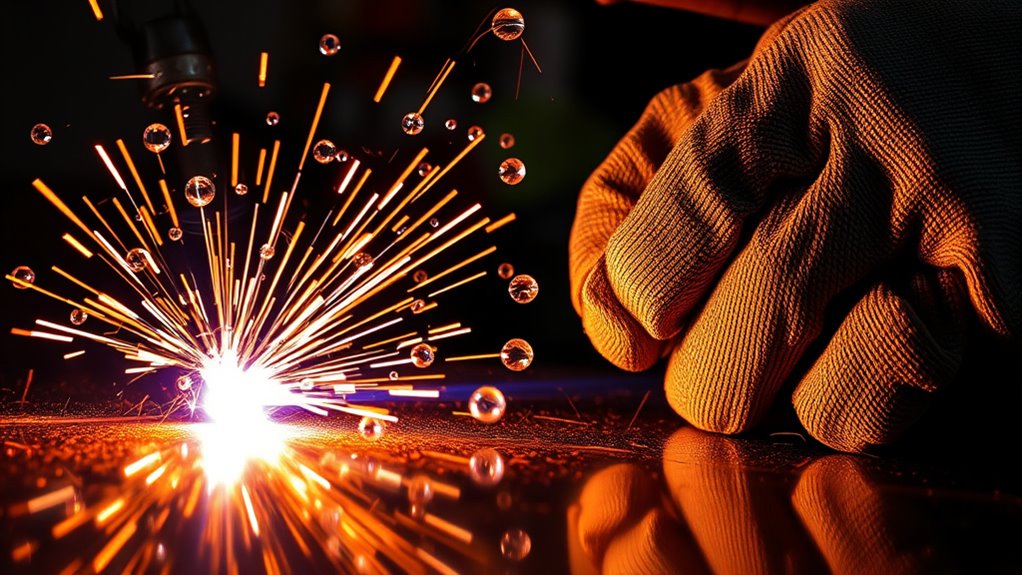
Globular transfer is a MIG welding transfer mode where the wire melts into large droplets before the metal crosses the arc. Instead of a smooth stream of tiny droplets, the molten metal forms a ball on the end of the wire, then drops into the weld pool by gravity, arc force, or a brief short circuit.
The droplet can be larger than the wire diameter, which is why the arc feels rougher than spray transfer. You may hear popping, see larger sparks, and notice more BB-like spatter around the weld. That is normal for this transfer mode, but it also means you need better cleanup and closer attention to technique.
Globular transfer sits between short-circuit transfer and spray transfer. It uses more heat than short-circuit MIG, but it does not have the fine, steady metal stream of spray transfer. It is most common with carbon steel, solid wire, direct-current electrode positive polarity, and 100% CO₂ or a high-CO₂ shielding gas.
Warning: MIG welding creates intense light, heat, spatter, fumes, and fire risk. Wear proper welding PPE, keep combustibles away, use ventilation or fume extraction, and never weld coated or galvanized metal until you understand the fume hazards and preparation steps.
How Does Globular Transfer Compare to Other MIG Transfer Modes?
Globular transfer is not the best choice for every MIG weld. It is a useful middle zone when you need more heat and deposition than short-circuit transfer, but you do not have the gas mix, machine, or settings needed for clean spray or pulsed-spray transfer.
| Transfer Mode | Best Use | Main Limitation |
| Short-circuit | Thin steel, sheet metal, small welds, and lower heat input | Can lack fusion on thick joints if settings are too cold |
| Globular | Thicker carbon steel in flat or horizontal positions | High spatter, rougher bead appearance, and harder puddle control |
| Spray | Clean, high-deposition welds on thicker metal with argon-rich gas | Conventional spray is often limited to flat or horizontal welds |
| Pulsed-spray | Cleaner welds, better heat control, and more positional flexibility | Requires a capable pulsed MIG machine and the right gas mix |
Compared with short-circuit transfer, globular transfer runs hotter and deposits more metal. Compared with spray transfer, it is rougher and dirtier. Compared with pulsed-spray, it is simpler and cheaper to run, but less controlled.
If your main problem is spatter, first confirm that your voltage and wire speed are in a workable range for your wire size, base metal, and shielding gas. A small change in voltage or wire feed speed can move the arc from harsh popping to a more usable globular transfer.
Advantages of Globular Transfer in MIG Welding
Globular transfer is not the prettiest MIG mode, but it has real advantages in the right job. It can help when you are welding heavier carbon steel, filling larger joints, or working in a shop where gas cost matters.
- Good penetration: The higher heat input can help tie into thicker steel better than a cold short-circuit setting.
- Useful deposition rate: More wire can be melted into the joint than with many low-heat short-circuit settings.
- Lower shielding gas cost: 100% CO₂ is often cheaper than argon-rich blends, which can matter in high-volume fabrication.
- Simple machine requirements: You do not need a pulsed MIG machine to run globular transfer.
- Practical for rough fabrication: It can work well where strength, speed, and cost matter more than a polished bead appearance.
Globular transfer is especially useful on mild steel brackets, frames, agricultural repairs, structural pieces, and general fabrication where the weld will be cleaned, ground, painted, or hidden. When you are working with 100% CO2 gas, expect deeper penetration than many argon-heavy short-circuit setups, but also expect more spatter.
Pro Tip: Run a test bead on scrap from the same material before welding the part. If the bead is too tall, ropey, or surrounded by heavy spatter, adjust before you commit to the final joint.
Key Limitations of Globular Transfer in MIG Welding
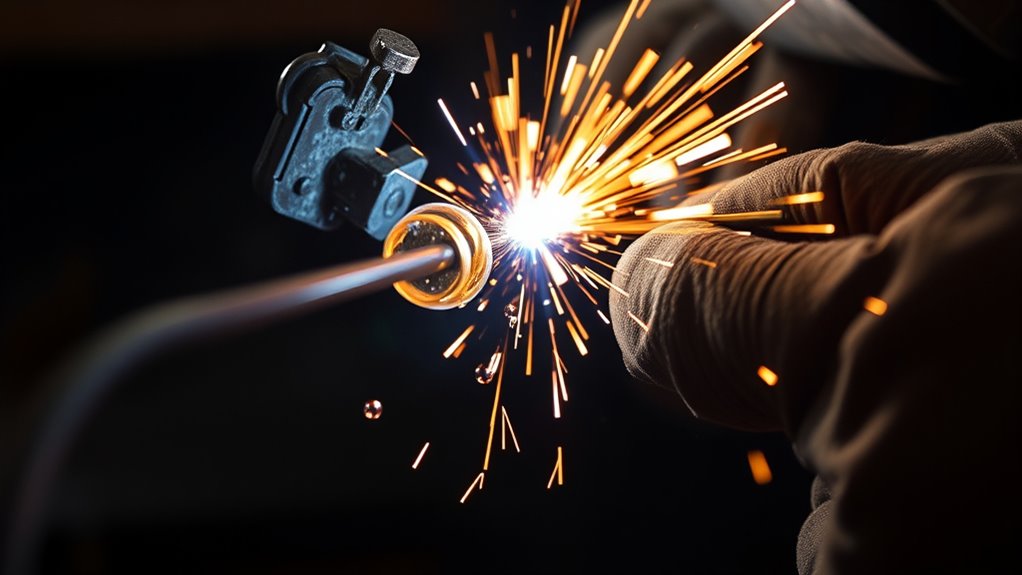
The main weakness of globular transfer is control. Large droplets do not cross the arc as smoothly as spray transfer, so the weld can look rough and the puddle can feel jumpy. That does not always mean the weld is weak, but it does mean your settings and cleanup matter.
- More spatter: Spatter sticks to the nozzle, workpiece, table, and nearby parts.
- Rougher appearance: The bead can look uneven compared with spray or pulsed-spray transfer.
- Limited positions: The hotter, larger puddle is harder to manage vertical or overhead.
- Not ideal for thin metal: Thin sheet can warp or burn through when heat input is too high.
- Less suitable for cosmetic welds: If appearance matters, short-circuit, spray, pulsed-spray, TIG, or a cleaner gas mix may be better.
- Material limits: Aluminum and stainless steel often need tighter gas, cleanliness, and heat control than globular transfer provides.
Do not blame every MIG problem on globular transfer. Poor fit-up, dirty steel, rust, paint, wrong polarity, bad gas flow, excessive stickout, and worn contact tips can all create spatter issues that look worse than the transfer mode itself.
Ideal Use Cases for Globular Transfer in MIG Welding
Globular transfer makes the most sense when the job can tolerate heat and cleanup. It is usually a shop-friendly choice, not a delicate sheet-metal choice.
Use Globular Transfer When
- You are welding carbon steel around 1/8 inch thick or thicker.
- The joint is flat or horizontal.
- You are using 100% CO₂ or a high-CO₂ shielding gas.
- The weld will be cleaned, ground, coated, or hidden after welding.
- You care more about penetration, fill speed, and cost than bead cosmetics.
Avoid Globular Transfer When
- You are welding automotive sheet metal, thin panels, or heat-sensitive parts.
- The weld is vertical or overhead and the puddle wants to sag.
- You need a clean cosmetic bead with minimal spatter.
- You are welding stainless steel or aluminum and have access to spray, pulsed-spray, TIG, or a qualified procedure.
- The metal is galvanized, painted, oily, or coated and has not been safely cleaned.
For thin automotive panels, a lower-heat short-circuit setup is usually safer than globular transfer. Understanding the limits of different welding processes helps you avoid burn-through, warping, and excess grinding.
How to Set Up Globular Transfer
There is no single “globular setting” that works on every machine. The right setting depends on wire diameter, base metal thickness, shielding gas, stickout, and joint design. Use your welder chart or wire manufacturer guidance as the starting point, then test and adjust.
- Start with clean carbon steel. Remove paint, rust, oil, mill scale where needed, and any coating that can create fumes.
- Use solid MIG wire with the correct polarity. Most solid-wire GMAW uses direct-current electrode positive, often marked DCEP or reverse polarity.
- Select a suitable gas. 100% CO₂ commonly produces globular transfer on mild steel and gives deep penetration, but it also increases spatter.
- Set voltage and wire feed in the medium-to-high range. If the wire is stubbing into the plate, voltage may be too low. If the arc is wide and violent, voltage may be too high.
- Keep stickout consistent. A long, wandering stickout can make the arc harsher and increase spatter.
- Use a steady travel speed. Moving too slowly overheats the puddle. Moving too fast can create a narrow, underfilled bead.
- Run a test bead. Check penetration, bead shape, spatter, and whether the puddle stays controllable.
Note: If your machine has a pulsed MIG mode and you need cleaner welds, test pulsed-spray before settling on globular transfer. It often gives smoother metal transfer with less spatter.
Products Worth Considering

APPLICATION: The ARCCAPTAIN gas pressure regulator can be used with argon, helium, and carbon dioxide gas tanks.

CGA580 Inlet Connection: Welding gas regulators connects easily to argon and Co2 tanks, note that a CGA-320 adapter is required for use with Co2 cylinders. This product comes standard with the CGA-580 connector only

WIDE APPLICATION: It easily connects to Argon, Helium, and Argon/CO₂ mixed gas tanks via the CGA-580 inlet nut. No additional adapters are required. Featuring superior airtight and leak-proof performance, it achieves stable and sealed gas supply with minimal gas loss. This regulator is ideal for MIG/TIG welding, chemical processing, general industrial use, and electronics industry applications.
How to Recognize Globular Transfer
You can usually recognize globular transfer by how it sounds, looks, and feels. It is not as soft as short-circuit MIG and not as smooth as spray transfer.
- Sound: Irregular popping or crackling rather than a steady hiss.
- Arc: Large bright droplets appear to fall into the puddle.
- Puddle: Hotter, wider, and harder to hold on edges or out of position.
- Bead: Heavier build with a rougher surface than spray transfer.
- Spatter: More BB-like spatter around the weld and inside the nozzle.
If the wire repeatedly jams into the plate, you may be too cold or feeding too much wire for the voltage. If the weld is violently spitting, undercutting, or leaving heavy spatter, your voltage, stickout, gas flow, travel speed, or work angle may need correction.
How to Reduce Spatter in Globular Transfer
You will not eliminate all spatter in globular transfer, especially with 100% CO₂, but you can reduce it enough to make the weld easier to clean.
- Clean the joint first. Oil, paint, rust, zinc, and mill scale can make the arc unstable and increase fumes.
- Check gas flow. Too little gas can cause porosity, while too much can create turbulence that pulls air into the weld zone.
- Trim stickout. Keep the contact tip-to-work distance steady and within the range recommended for your setup.
- Fine-tune voltage. A small voltage increase can smooth a stubbing arc, but too much voltage can widen the arc and add spatter.
- Match wire feed to the puddle. Too much wire feed for the voltage can make the wire crash into the weld pool.
- Keep the nozzle clean. Spatter buildup inside the nozzle disrupts shielding gas coverage.
- Use anti-spatter where appropriate. Apply it around the joint or nozzle, but do not contaminate the weld area.
Products Worth Considering

𝗛𝗘𝗔𝗩𝗬 𝗗𝗨𝗧𝗬 𝗦𝗢𝗟𝗩𝗘𝗡𝗧 𝗕𝗔𝗦𝗘𝗗 𝗔𝗡𝗧𝗜-𝗦𝗣𝗔𝗧𝗧𝗘𝗥: Akfix A90 Anti Spatter Spray provides robust protection against welding spatter, ensuring your workspace remains clean and efficient.

2-Pack (32 oz total) – Double the protection for professional welding operations.
Superior Anti-Spatter Protection: Effectively prevents spatter adhesion during TIG, MIG, shielded welding, and robotic welding, reducing post-weld cleanup. Ideal for steel, iron, aluminum alloys, and other metals.
Safety Notes for Globular Transfer
Globular transfer often runs hot and throws more spatter, so basic MIG safety is not optional. Wear a welding helmet with the correct shade, flame-resistant clothing, gloves, hearing protection when needed, and safety glasses under the hood.
Fume control is just as important as eye and skin protection. OSHA notes that welding fumes can contain harmful metals and gases, and recommends cleaning surfaces, positioning yourself out of the plume, using ventilation, and using respiratory protection when controls do not reduce exposure enough.
Be extra careful with galvanized steel. Zinc coatings can create hazardous fumes when welded. If you are welding galvanized material, review proper preparation and ventilation before starting. The same applies to paint, solvents, plated parts, and unknown coatings. Your existing guide on zinc fumes is a good place to review the added risks before you weld.
Never weld in a confined space without proper training, monitoring, ventilation, and an approved procedure. Shielding gases such as argon, helium, and carbon dioxide can displace oxygen, and carbon monoxide can also form during hot work.
Frequently Asked Questions
When should you use globular transfer?
Use globular transfer when welding thicker carbon steel in flat or horizontal positions, especially when you are using 100% CO₂ and can accept more spatter. It is best for practical fabrication work where penetration and cost matter more than a smooth cosmetic finish.
What is one disadvantage of globular transfer?
The biggest disadvantage is spatter. Large molten droplets detach irregularly, so the arc is rougher and the weld area needs more cleanup than it would with spray or pulsed-spray transfer.
What are the four types of metal transfer in MIG welding?
The common MIG/GMAW transfer modes are short-circuit, globular, spray, and pulsed-spray. Short-circuit is common for thinner metal, globular is hotter and spatter-prone, spray is smoother on thicker work with argon-rich gas, and pulsed-spray uses controlled current pulses for cleaner transfer.
How do you get globular transfer?
Use a solid-wire MIG setup on carbon steel with DCEP polarity, 100% CO₂ or a high-CO₂ shielding gas, and medium-to-higher voltage and wire feed settings for the material thickness. Always confirm on scrap first because exact settings vary by welder, wire size, gas, and joint design.
Is globular transfer stronger than short-circuit MIG?
It can provide more heat and penetration than a low-heat short-circuit setting, but strength depends on the full procedure, including joint prep, fit-up, wire, gas, settings, technique, and inspection. A poorly controlled globular weld can still have defects.
Is globular transfer good for sheet metal?
No. Globular transfer is usually too hot and messy for sheet metal. For automotive panels and thin stock, use a lower-heat short-circuit MIG setup, make short welds, and control heat to avoid warping and burn-through.
Conclusion
Globular transfer in MIG welding is useful, but it is not a universal upgrade. Use it when you are welding thicker carbon steel, working flat or horizontal, and can accept more spatter in exchange for penetration, fill speed, and lower shielding gas cost. Avoid it when the job needs low heat, clean appearance, or strong out-of-position puddle control.
For best results, treat globular transfer as a controlled compromise. Start with clean metal, use the correct polarity and shielding gas, test your settings on scrap, and adjust voltage, wire feed speed, stickout, and travel speed until the bead is sound enough for the job.
Sources
- OSHA: Controlling Hazardous Fume and Gases during Welding — welding fume hazards, coatings, ventilation, and respiratory protection.
- OSHA: Welding, Cutting, and Brazing — welding safety standards, hazards, and related resources.
- CDC/NIOSH: Welding Fumes and Manganese — welding fume composition, manganese exposure, and health concerns.
- Gas Metal Arc Welding Overview — general GMAW transfer-mode definitions and comparison references.