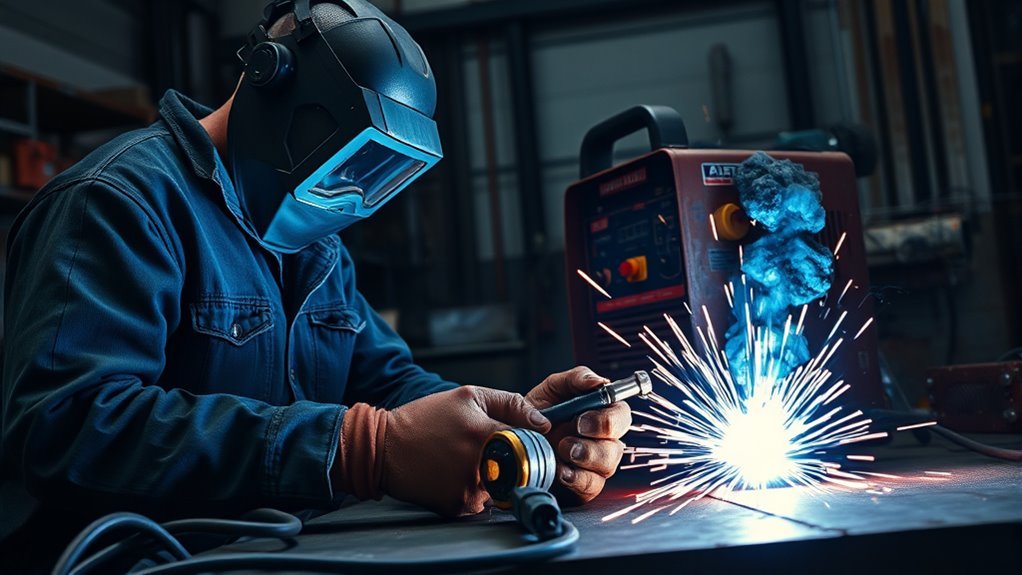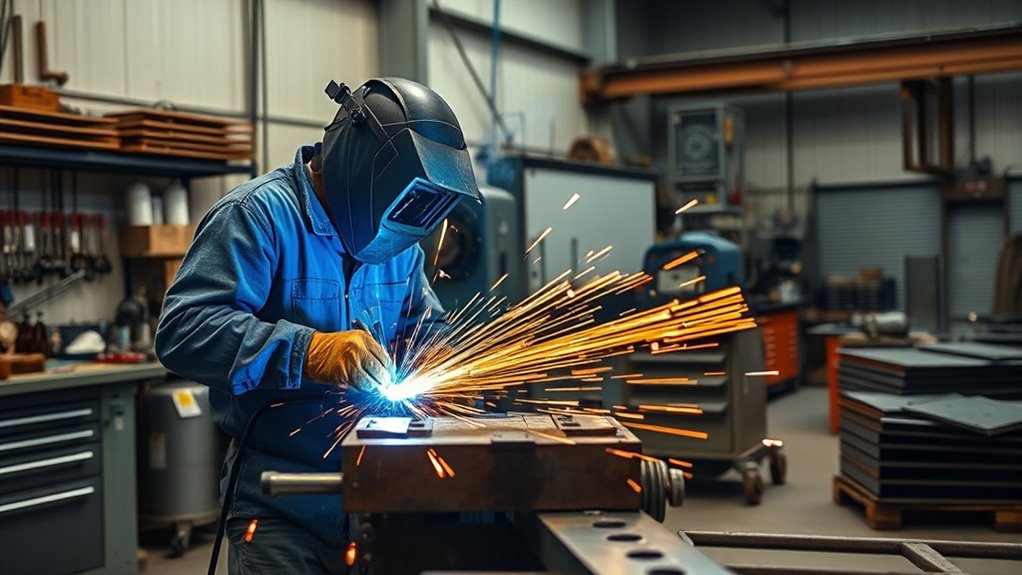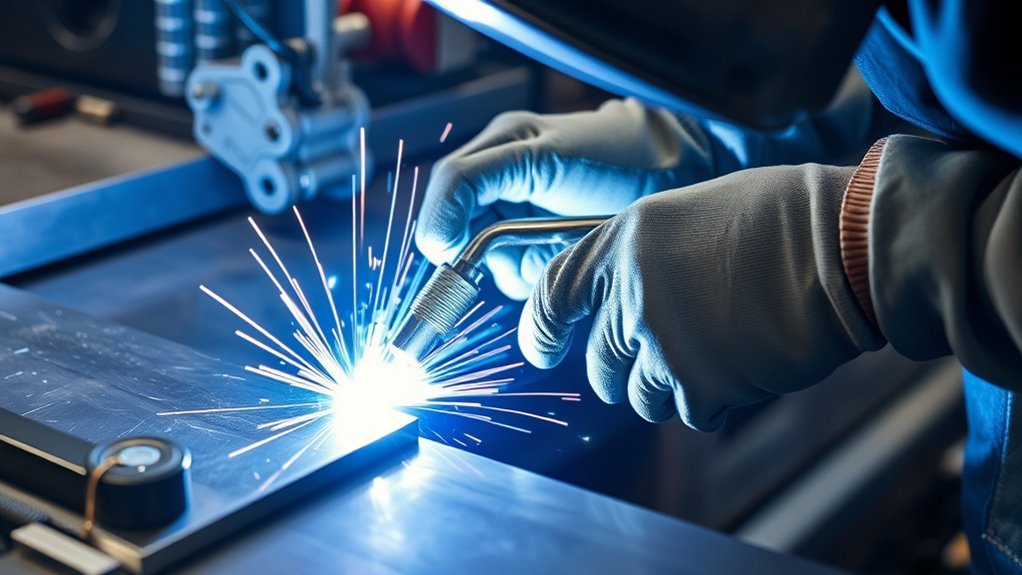
Spray transfer in MIG welding can give you cleaner welds, deeper penetration, and faster metal deposition when your setup supports it. This method works best on thicker metal in flat or horizontal positions, using enough voltage, wire speed, and argon-rich shielding gas to create a stable spray of tiny molten droplets. You need the right machine, wire, gas mix, and technique before spray transfer will work well.
What’s in This Article
- Understanding the Basics of Spray Transfer
- Common Applications of Spray Transfer Welding
- Advantages of Using Spray Transfer in MIG Welding
- When to Choose Spray Transfer Over Other Welding Methods?
- Required Equipment for Spray Transfer Welding
- Best Settings for Spray Transfer
- Overcoming Challenges in Spray Transfer Welding
- Effective Techniques for Mastering Spray Transfer Welding
- Spray Transfer Quick Reference
- The Future of Spray Transfer in Welding
- Frequently Asked Questions
- Conclusion
Quick Answer
Spray transfer is a MIG welding transfer mode that sends tiny molten droplets across the arc into the weld pool. It works best on thicker metal, usually in flat or horizontal positions, with higher voltage, high wire feed speed, and argon-rich shielding gas. You should choose it when you need strong welds, low spatter, and fast deposition.
Key Takeaways
- Spray transfer works best on thicker metal where deep penetration and high deposition matter.
- You need a capable MIG welder, larger wire, and argon-rich shielding gas for stable results.
- Flat and horizontal welds suit spray transfer better than vertical or overhead welds.
- Pulsed spray transfer can help control heat when you need better puddle control.
- Correct voltage, wire speed, travel speed, and contact-tip distance help reduce defects.
Understanding the Basics of Spray Transfer
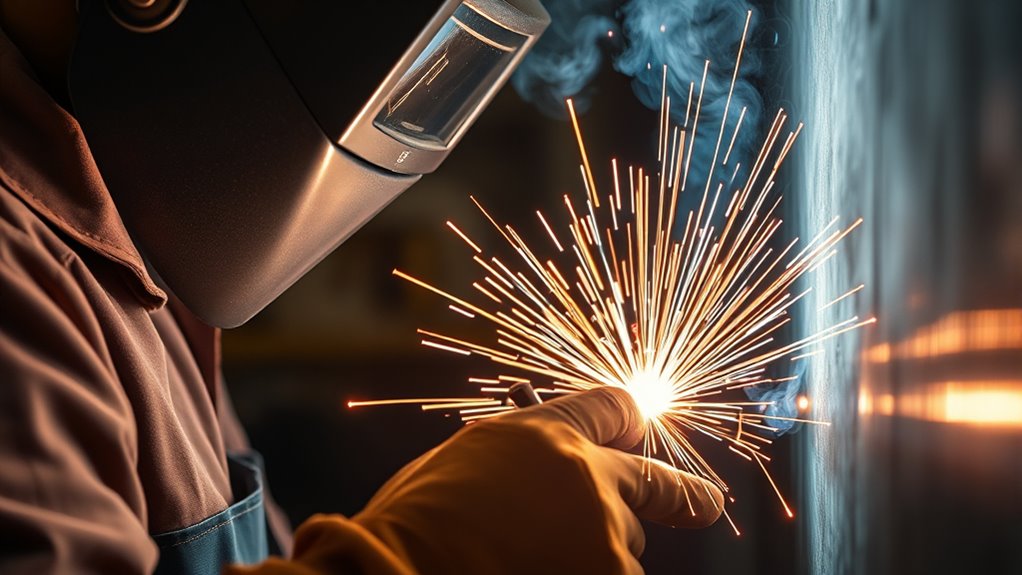
When you use metal inert gas (MIG) welding, spray transfer describes how molten wire moves across the arc. The wire does not touch the weld pool in short bursts. Instead, it forms a steady stream of fine droplets.
This transfer mode usually needs higher voltage than short-circuit welding. Many setups use voltage around 27 volts or higher, but the exact setting depends on wire size, gas mix, and base metal.
You’ll notice that spray transfer can improve penetration and raise deposition rates. That helps you make strong welds on thicker material, often around 2mm and above.
To keep the arc stable, you need high wire feed speed and a power source with enough amperage. A machine near the 200 to 250 amp range gives you more room to tune the arc. Proper gas flow rates also help prevent porosity and poor shielding.
Warning: Spray transfer creates a hot, fluid weld pool, so it does not suit most overhead welding.
Understanding these basics helps you decide when spray transfer fits your project. It also helps you avoid using it on metal that is too thin for the heat input.
Common Applications of Spray Transfer Welding
Spray transfer welding works well in industrial jobs that need strong, clean welds on thicker material. It gives you deep penetration and high deposition rates when the joint sits in a flat or horizontal position.
Common applications include:
- Manufacturing: Welds large surfaces where speed and bead quality matter.
- Construction: Supports butt welds and fillet welds on suitable structural parts.
- Automotive work: Helps with thicker brackets, frames, and fabrication parts.
- Shipbuilding: Supports strong joints on heavier marine components.
- Heavy fabrication: Handles high-amperage work where production speed matters.
This method also helps when your work area uses equipment with dual voltage capability. The added flexibility can help you match the machine to different shop tasks.
Advantages of Using Spray Transfer in MIG Welding
Spray transfer offers clear benefits when your setup matches the job. You can deposit filler metal faster, reduce spatter, and create a smoother bead on suitable material.
This transfer mode also supports strong fusion on thicker sections. That makes it useful when weld strength and speed both matter.
You still need the right specific voltage and wire speed settings. Poor settings can quickly cause undercut, burn-through, or an unstable arc.
High Deposition Rates
Spray transfer can place more weld metal into the joint in less time. That makes it valuable for production work and long welds on thicker sections.
Key benefits include:
- Handles thicker materials, often around 2mm and above.
- Supports faster welding speeds when heat input stays controlled.
- Works well with larger wire sizes, such as 1.0mm or thicker.
- Creates a smooth, stable arc when you tune the machine correctly.
- Reduces cleanup when the gas, wire, and settings match the job.
Minimal Spatter Production
Spray transfer can cut spatter because the wire crosses the arc as fine droplets. That gives you a cleaner bead than globular transfer in many applications.
A stable arc also gives you better puddle control. Less spatter means less grinding, less cleanup, and a cleaner work area.
You’ll often see settings near 27 volts and high wire feed speed used as a starting point. Some setups also start around 600 inches per minute, but you must adjust for wire size, material, and machine output.
High-quality welding wire and argon-rich gas help reduce spatter. A common mix for carbon steel spray transfer uses about 80% argon and 20% carbon dioxide.
When to Choose Spray Transfer Over Other Welding Methods?
You should choose spray transfer when the joint needs heat, penetration, and speed. It fits production work better than light sheet metal repair.
Use spray transfer when your project involves:
- Thicker materials: Choose it for metals around 2mm and above.
- Flat or horizontal welding: Use it where the puddle can stay controlled.
- Low spatter needs: Pick it when cleanup time matters.
- Better penetration: Use it when the joint needs deeper fusion.
- Consistent quality: Choose it for repeat production welds.
If your project matches these points, spray transfer may outperform short-circuit MIG welding. But it can add too much heat to thin metal, especially when you can’t control the puddle. Maintaining proper gas flow rates remains crucial for stable spray transfer.
Products Worth Considering

Gel eliminates erratic operation with a film that will not clog orifices and threads on MIG nozzles and contact tips

𝗛𝗘𝗔𝗩𝗬 𝗗𝗨𝗧𝗬 𝗦𝗢𝗟𝗩𝗘𝗡𝗧 𝗕𝗔𝗦𝗘𝗗 𝗔𝗡𝗧𝗜-𝗦𝗣𝗔𝗧𝗧𝗘𝗥: Akfix A90 Anti Spatter Spray provides robust protection against welding spatter, ensuring your workspace remains clean and efficient.

The blades cut away the built up spatter helping prolong the nozzle life, and reduces the chances of wire sticking.
Required Equipment for Spray Transfer Welding
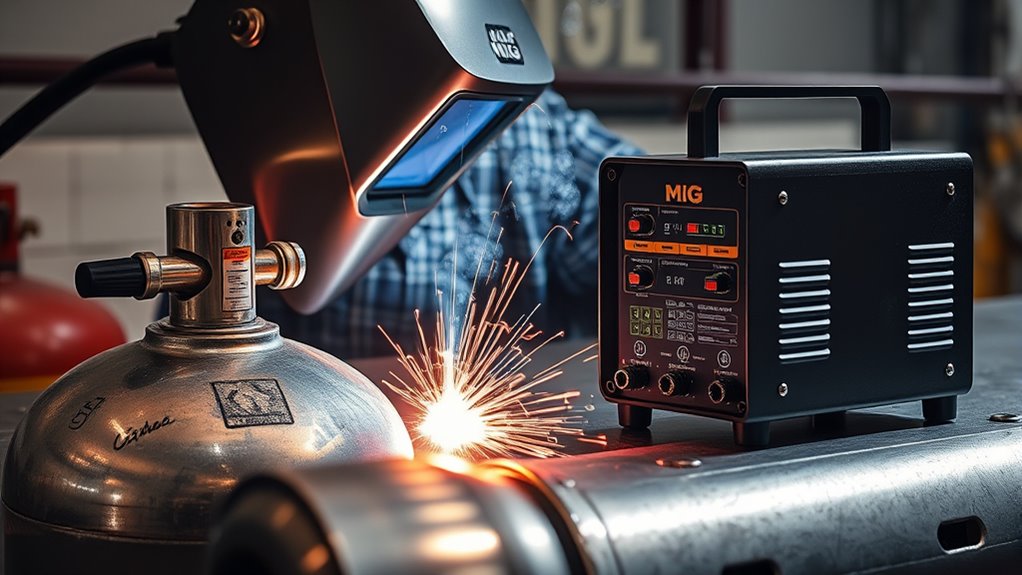
Effective spray transfer welding needs equipment that can hold a stable arc at higher output. A small entry-level MIG welder may not provide enough voltage, amperage, or duty cycle.
| Equipment | Purpose |
|---|---|
| High-Amperage Power Source | Delivers enough current for stable spray transfer. |
| Adjustable Voltage Settings | Lets you tune the arc for the wire, gas, and metal. |
| Welding Wire (1.0mm or thicker) | Supports steady melting and fine droplet transfer. |
| Quality Wire Feeder | Keeps wire feed steady and helps prevent arc instability. |
| Argon-Rich Shielding Gas | Protects the weld pool and supports spray transfer. |
Choosing the right equipment helps you get clean welds and fewer defects. You should also check polarity settings before welding, since the wrong setup can ruin arc stability.
Products Worth Considering

6-IN-1 Multifunctional Welder Machine: This 6-in-1 multi welder supports FLUX MIG, GAS MIG, PLASMA CUTTING, HF TIG, and STICK,SPOT welding, provide a comprehensive solution for a wide range of welding and cutting tasks, suitable for both home DIY and industrial projects.

STAYS LOCKED UNDER VIBRATION. The screw-lock design lets you adjust and secure the clamp with a simple twist. Once tightened, it holds firmly – even when you're hammering or moving the workpiece. No unexpected pop-offs. No interrupted welds

3-in-1 Multi-Process Welder: The BILT HARD 135Amp MIG 110V welding equipment offers 3 modes: Flux Core MIG, Lift TIG (TIG torch Not Included in the machine), Stick welding, and supports 2T/4T/Spot trigger modes adapt to quick fixes, long seams, or spot welding, ensuring high-quality and reliable results in any manufacturing process.
Best Settings for Spray Transfer
Spray transfer settings depend on your machine, metal thickness, joint design, wire size, and gas mixture. Treat the settings below as starting points, then fine-tune them on scrap metal.
- Voltage: Start near 27 volts for many spray transfer setups.
- Welding wire: Use 1.0mm or larger wire when your machine supports it.
- Wire feed speed: Start around 600 inches per minute, then adjust for bead shape.
- Gas mixture: Use an argon-rich mix, often 80% argon and 20% carbon dioxide.
- Travel speed: Move fast enough to prevent excess heat and a wide bead.
- Contact-tip distance: Keep a steady contact-tip-to-work distance near 0.5 inches.
Clean metal also matters. Proper surface preparation helps reduce porosity, contamination, and poor fusion.
Pro tip: Make short test welds before the final pass so you can tune voltage and wire speed.
Overcoming Challenges in Spray Transfer Welding
Spray transfer can create excellent welds, but it also brings heat, puddle control, and filler selection challenges. You need to adjust your setup before these issues create defects.
Focus on heat control first. Then check your welding position, torch angle, wire type, and base metal compatibility.
Using a multi-pass strategy can also help when one hot pass would add too much heat. This approach can improve weld integrity and reduce distortion on some joints.
Addressing High Heat Issues
High heat input can warp metal, widen the bead, and increase burn-through risk. Careful control of voltage and wire feed speed can help you avoid these problems.
Use these steps to manage heat:
- Set voltage near your machine’s spray transfer range, then adjust slowly.
- Use pulsed spray transfer when you need lower heat input and better control.
- Keep contact-tip-to-work distance near 0.5 inches when the setup allows it.
- Watch the weld puddle for signs of overheating or sagging.
- Adjust travel speed quickly when the bead becomes too wide.
Managing Vertical Position Challenges
Vertical welding makes spray transfer harder because gravity pulls on the fluid puddle. Standard spray transfer usually works better in flat and horizontal positions.
Pulsed-spray transfer can help when you must weld out of position. It lowers average heat input while still giving you a controlled transfer.
Use a slower, steady travel speed and a controlled torch angle. You may also need to reduce heat input to lower the risk of sagging or burn-through.
Selecting Suitable Filler Materials
Filler wire affects arc stability, penetration, and weld strength. You should match the wire to the base metal and joint requirements.
- Use wire diameters of 1.0mm or larger when spray transfer requires it.
- Choose ER70S-6 wire for many carbon steel applications.
- Match filler wire to the base metal to reduce cracking risk.
- Use alloy-specific filler wire for aluminum, such as 4047 or 5356.
- Keep wire feed steady and use argon-rich gas to reduce spatter.
Effective Techniques for Mastering Spray Transfer Welding
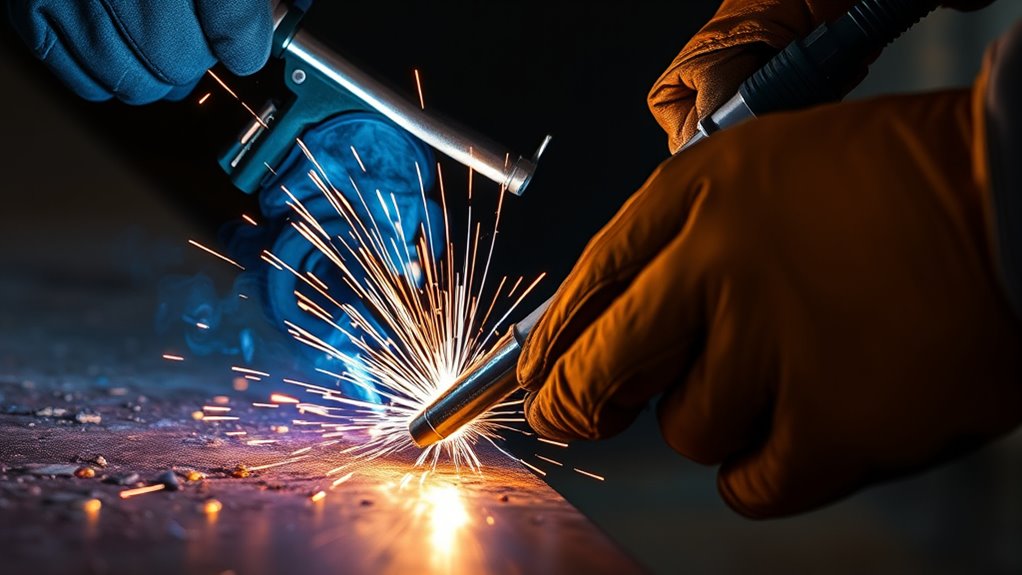
To master spray transfer welding, focus on a stable arc, steady movement, and clean base metal. Small changes in voltage, wire feed speed, or torch angle can change the bead fast.
Start by setting the machine within a suitable spray transfer range. Use a wire size your welder can feed smoothly, often 1.0mm or thicker.
Maintain a stable voltage range and use 1.0mm or thicker wire when your machine supports spray transfer.
Gas composition also matters. Use a shielding gas mixture with high argon content to support spray transfer. This differs from the common 75/25 argon and CO2 mix often used for standard MIG welding on mild steel.
Use a steady push technique with a torch angle around 10 to 15 degrees. This helps you see the puddle and guide the bead with better control.
Balance voltage and wire feed speed until the bead looks smooth and the arc sounds steady. If the bead becomes too wide or flat, reduce heat input or increase travel speed.
Spray Transfer Quick Reference
Use this quick reference when you need to decide whether spray transfer fits your weld. It gives you the main points without replacing a test weld.
- Main advantage: Spray transfer gives deep penetration and high deposition on thicker metal.
- Main drawback: It does not suit most vertical or overhead welding with standard spray transfer.
- Typical voltage need: Many setups need about 27 volts or higher.
- Best material thickness: Thicker material, often 2mm and above, works best.
- Common gas mix: An 80% argon and 20% carbon dioxide mix often works well.
- Fillet weld sizing: Proper fillet weld size helps the joint match the required strength.
The Future of Spray Transfer in Welding
Spray transfer keeps improving as welding machines, filler wires, and control systems improve. You can expect better arc control, cleaner welds, and more consistent results in production work.
Automation, pulsed spray transfer, and smarter power sources can help you reduce defects. Learning related processes, such as flux core welding, can also help you choose the right method for each job.
Advancements in Technology
New welding technology can make spray transfer easier to control. Better machines can track arc behavior and help reduce common defects.
You may see improvements such as:
- Automation and robotics: Automated systems can improve repeatability on production welds.
- Smart welding controls: Real-time feedback can help stabilize the welding process.
- Inverter power sources: Modern power sources can improve voltage control and efficiency.
- Improved welding wires: New wire designs can reduce spatter and improve bead quality.
- Cleaner practices: Better process control can reduce wasted wire and rework.
These changes can help spray transfer stay useful in demanding welding applications.
Enhanced Material Compatibility
Improved wire technology and better gas mixtures can help spray transfer work across more materials. Higher argon content often improves arc stability and reduces spatter.
Pulsed spray transfer also helps with heat control. It can reduce distortion risk while still supporting good deposition rates.
As jobs become more complex, you’ll need better control over heat and puddle shape. The right machine settings help you handle different joint designs and material thicknesses.
Sustainable Practices in Welding
Welding shops can reduce waste by improving setup, training, and process control. Spray transfer can support that goal when it lowers spatter, rework, and cleanup time.
Useful practices include:
- Use stable gas coverage to prevent wasted welds and porosity.
- Choose pulsed spray transfer when lower heat input can reduce distortion.
- Use automated systems where repeatability reduces scrap and rework.
- Select filler wire that matches the base metal and job requirements.
- Keep machines maintained so they feed wire and control voltage well.
These practices can improve weld quality while reducing wasted material.
Frequently Asked Questions
Can Any MIG Welder Do Spray Transfer?
No, not every MIG welder can perform spray transfer. You need a machine with enough voltage, amperage, duty cycle, and wire feed control. You also need the right shielding gas and wire size.
How Does Spray Transfer MIG Work?
Spray transfer MIG works by sending fine molten droplets from the wire across the arc. The wire does not repeatedly touch the weld pool like short-circuit transfer. This creates a smooth arc with strong penetration on suitable material.
What Is the Best Gas for MIG Spray Transfer?
For MIG spray transfer, you should use an argon-rich shielding gas. A common mix for carbon steel is 80% argon and 20% carbon dioxide. Your final choice should match the base metal, wire, and weld requirements.
What Is the Difference Between Short Circuit Transfer and Spray Transfer in MIG Welding?
Short-circuit transfer uses lower heat and works well on thinner metal. Spray transfer uses higher heat and sends fine droplets across the arc. It suits thicker metal when you need cleaner welds and higher deposition.
Can You Use Spray Transfer on Thin Sheet Metal?
Spray transfer usually adds too much heat for thin sheet metal. You may face burn-through, warping, or a wide bead. Short-circuit MIG welding often works better for thin material.
Conclusion
Spray transfer gives you fast, clean MIG welds when you use it on the right material and position. You’ll get the best results on thicker metal with a capable welder, argon-rich gas, and well-matched wire settings. Start with test welds, then adjust voltage, wire speed, and travel speed until the bead looks stable. Once you control the heat and puddle, spray transfer can help you produce stronger and cleaner welds with less cleanup.