Short-circuit transfer is the low-heat MIG welding mode you use when you need controlled welds on sheet metal, thin plate, auto body panels, small brackets, and out-of-position joints. The wire repeatedly touches the weld pool, shorts, melts off, and restarts the arc. That fast cycle keeps heat input lower than spray transfer, but it still needs the right wire, gas, voltage, wire feed speed, stickout, and travel speed to avoid cold lap, porosity, burn-through, and excess spatter.
Quick Answer
Short-circuit transfer in MIG welding is a low-voltage, low-heat GMAW mode where the wire briefly touches the weld pool many times per second. It is best for thin steel, sheet metal, tack welds, root passes, and vertical or overhead work, but it can lack fusion on thicker joints if settings are too cold.
Key Takeaways
- Short-circuit transfer is a low-heat MIG/GMAW transfer mode that gives you strong puddle control on thin steel.
- It works well for sheet metal, auto body work, small repairs, tacks, root passes, vertical welds, and overhead welds.
- It is not the best choice for heavy plate unless the joint is prepared well and the procedure is proven, because cold lap and lack of fusion are common risks.
- Good results depend on matching wire size, voltage, wire feed speed, shielding gas, polarity, stickout, and travel speed.
- Use ventilation, PPE, fire control, and source capture for fumes, especially when welding coated, painted, stainless, or galvanized metal.
At a Glance
| Time Required | 10-20 minutes to set up and test on scrap before welding the real part |
| Difficulty | Beginner to intermediate, depending on position and material thickness |
| Tools Needed | MIG welder, solid wire, shielding gas, clean contact tip, nozzle, clamps, wire brush or grinder, PPE, and scrap test coupons |
| Cost | No special machine cost if your MIG welder supports solid-wire short-circuit settings; you mainly use wire, gas, and consumables |
Understanding the Basics of Short-Circuit Transfer
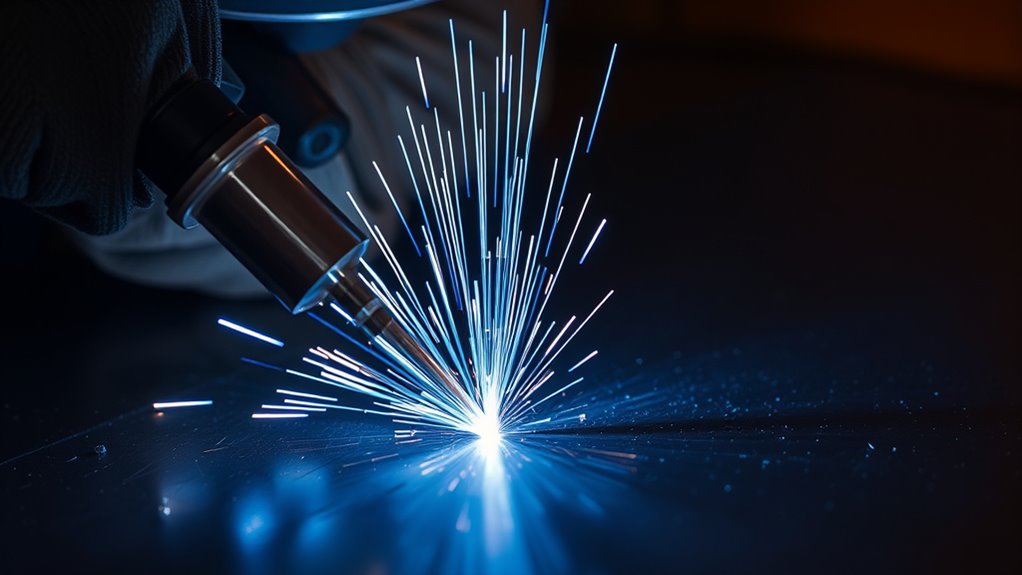
Short-circuit transfer is one of the main metal-transfer modes in Gas Metal Arc Welding (GMAW), which most welders call MIG welding when using a wire feeder and shielding gas. In this mode, the wire does not spray across the arc. Instead, it touches the weld pool, creates a short circuit, melts off, and repeats that cycle quickly.
That repeated shorting action gives you low heat input and a small, fast-freezing weld pool. This is why short-circuit transfer is useful on thin steel, automotive sheet metal, small repairs, tack welds, and out-of-position work where a large fluid puddle would sag or burn through.
The trade-off is penetration. Because the puddle freezes quickly, settings that are too cold can leave lack of fusion, also called cold lap. That defect can look acceptable on the surface but fail under load. For thicker steel, spray transfer, pulsed-spray transfer, flux-cored wire, beveling, multiple passes, or a qualified welding procedure may be a better choice.
Warning: Do not judge a short-circuit weld by sound and appearance alone. A smooth bead can still have poor fusion if voltage, wire feed speed, travel speed, joint prep, or stickout is wrong. Test on scrap, inspect the bead, and follow your welder chart or welding procedure when strength matters.
How Short-Circuit Transfer Works in MIG Welding
In short-circuit MIG welding, the machine feeds wire through the gun while shielding gas protects the arc and weld pool. The wire touches the workpiece or molten puddle, current rises, the wire tip melts, the molten droplet transfers, and the arc reignites. This cycle repeats many times per second, often described in welding references as around 100 cycles per second.
You hear this as a steady crackling sound, often compared to bacon frying. A smooth, even crackle usually means the voltage and wire feed speed are close. Harsh popping, stubbing, or loud snapping means something is off.
The key variables are voltage, wire feed speed, wire diameter, shielding gas, contact-tip-to-work distance, polarity, and travel speed. You can learn more about related gas flow problems in MIG welding, but always use your specific machine chart as the starting point.
Defining Features of Short-Circuit Transfer in MIG Welding
Short-circuit transfer has a few traits that separate it from globular, spray, and pulsed-spray transfer:
- Low heat input: Helpful for thin steel and joints that distort easily.
- Small weld pool: Easier to control in vertical and overhead positions.
- Lower deposition rate: Slower than spray transfer or some flux-cored processes.
- More forgiving for beginners: Easier puddle control when settings are close.
- Fusion risk on thick metal: Too little heat can leave weak weld toes or cold lap.
- Distinct sound: A steady crackle helps you hear arc stability, but it does not replace inspection.
Most solid-wire short-circuit steel setups use DCEP polarity, meaning electrode positive, but you should confirm this on the wire label and machine chart. Flux-cored wires can differ, so do not assume the same polarity when switching processes.
Short-Circuit Transfer Settings That Matter
There is no single perfect setting because machines, wire brands, gas mixes, joint designs, and steel thicknesses vary. Use the chart inside your welder door first, then fine-tune on scrap that matches the real workpiece.
| Setting | Good Starting Point | What to Watch |
| Wire size | .023 in for thin sheet; .030 in for general light fabrication; .035 in for thicker small projects | Oversized wire can make thin metal harder to control. |
| Voltage | Often in the mid-to-high teens or low 20s for many steel short-circuit setups | Too low causes stubbing and cold lap; too high causes spatter and a harsh arc. |
| Wire feed speed | Set from the welder chart, then adjust in small steps | Too slow makes an unstable arc; too fast can push the gun back and create spatter. |
| Shielding gas | 75/25 argon/CO2 is common for mild steel short-circuit MIG | Pure CO2 can penetrate more but usually creates more spatter and a hotter arc. |
| Stickout / CTWD | Keep it short and consistent; many light steel setups start around 3/8 to 1/2 in | Too long cools the arc and weakens shielding; too short can cause burnback. |
| Travel speed | Move fast enough to avoid burn-through, but slow enough to wet both toes | Too fast creates a narrow ropey bead; too slow overheats thin metal. |
For a deeper look at how voltage and wire feed speed work together, use a dedicated MIG wire speed and voltage chart as a companion, not as a replacement for your machine manual.
Note: A short-circuit setting that looks good on 16-gauge steel can be too cold for 1/8-inch or 3/16-inch steel. If the joint must carry load, make practice welds, cut and etch if possible, and check for fusion at the toes and root.
Products Worth Considering

ER308L WIRE: A low-carbon stainless steel wire engineered to minimize intergranular carbide precipitation. This enhances corrosion resistance without the need for stabilizers, making it ideal for critical applications.

High Quality & Reliable Welds: VEVOR 0.035" 10 lbs ER70S-6 solid MIG welding wire contains higher levels of manganese and silicon deoxidizers, delivering strong, consistent welds on mild carbon steel—even when working with oily or lightly rusted steel

High Quality & Reliable Welds: VEVOR 0.03" 10 lbs ER70S-6 solid MIG welding wire contains higher levels of manganese and silicon deoxidizers, delivering strong, consistent welds on mild carbon steel—even when working with oily or lightly rusted steel
Advantages of Using Short-Circuit Transfer

Short-circuit transfer is popular because it gives you a good mix of control, speed, and accessibility. It does not need the higher amperage, high argon content, or flat-position limits often associated with spray transfer.
- Less burn-through on thin metal: The low-heat arc helps protect sheet metal and small parts.
- Better out-of-position control: The small puddle freezes quickly, which helps on vertical and overhead welds.
- Lower cleanup than globular transfer: When tuned correctly, it produces less spatter than globular transfer.
- Beginner-friendly arc behavior: A stable crackle and small puddle make it easier to learn than hotter transfer modes.
- Useful for repair work: It works well for tacks, patches, lap joints, and thin fillet welds.
Short-circuit transfer is not the hottest or fastest MIG mode. Its value is control: lower heat, a smaller puddle, and better handling on thin or awkwardly positioned work.
When to Use Short-Circuit Transfer and When to Avoid It
Use short-circuit transfer when your main problem is heat control. It is a strong choice for thin mild steel, automotive panels, light brackets, small home-shop projects, tack welding, and root passes where you need to keep the puddle small.
Avoid relying on it as your first choice for heavy plate, high-deposition production welds, or structural joints unless the procedure is proven. The low heat that helps thin sheet can work against you on thick steel. If the bead sits high, fails to wet into the toes, or looks ropey, you may be moving too fast, running too cold, holding too long a stickout, or using the wrong joint prep.
For aluminum, standard short-circuit MIG is usually more difficult because aluminum wire is soft and aluminum needs enough heat and cleanliness to avoid lack of fusion. Many aluminum MIG applications favor spray transfer, pulsed-spray transfer, a spool gun, or a push-pull gun, depending on the machine and material.
How to Apply Short-Circuit Transfer in Real-World Scenarios
Use this practical setup process before welding the final part:
- Clean the joint. Remove paint, rust, oil, zinc coating, mill scale, and moisture from the weld area. Clean metal improves arc stability and reduces porosity. For more basics, review these weld-prep tips for beginners.
- Choose the wire size. Use smaller wire for thin metal and larger wire only when the material and machine call for it.
- Set polarity correctly. Solid-wire MIG on steel commonly uses DCEP, but confirm on the wire label and welder chart. Flux-cored wires may require different polarity.
- Set gas flow and check coverage. Use the correct gas mix for the metal and process. Avoid drafts that blow shielding gas away.
- Use the machine chart. Start with the recommended voltage and wire feed speed for your wire size and material thickness.
- Make a test weld on matching scrap. Listen for a steady crackle and inspect for toe wet-in, profile, porosity, undercut, and burn-through.
- Adjust one variable at a time. Change voltage or wire feed speed in small steps so you know what fixed the problem.
- Weld in short sections on thin sheet. Skip around, use tack spacing, and let the panel cool to reduce warping.
Pro Tip: On thin sheet metal, use a series of short tacks or stitch welds instead of one long bead. This limits heat buildup and helps prevent warping, especially on auto body panels.
Troubleshoot Short-Circuit Transfer Issues Effectively
Most short-circuit MIG problems come from one of five areas: wire feed, voltage, stickout, gas coverage, or dirty metal. Use the table below to narrow the cause before changing too many settings at once.
| Problem | Likely Cause | Fix |
| Wire stubs into the plate | Voltage too low, wire feed too high, or stickout too short | Increase voltage slightly or reduce wire feed speed in small steps. |
| Excess spatter | Voltage too high or low, long stickout, dirty tip, poor gas mix, or wrong polarity | Clean the nozzle and tip, confirm polarity, shorten stickout, and fine-tune voltage. |
| Burn-through | Too much heat, slow travel, wide gap, or wire too large | Lower heat, move slightly faster, reduce gap, or use smaller wire and stitch welding. |
| Porosity | Dirty metal, low gas flow, drafts, nozzle blockage, or excessive stickout | Clean the joint, block wind, check gas, and clean the nozzle. |
| Ropey bead with poor toe wet-in | Travel too fast, voltage too low, or joint too thick for the setting | Slow slightly, increase voltage within the recommended range, or prep the joint better. |
| Wire burns back into the tip | Wire feed too slow, voltage too high, or tip worn | Increase wire feed slightly, reduce voltage, and replace the contact tip if needed. |
Also check your shielding gas composition. A 75/25 argon/CO2 mix is a common choice for mild steel short-circuit MIG because it gives a smoother arc and less spatter than straight CO2 in many light-fabrication setups. If you switch to self-shielded wire because gas shielding is impractical outdoors, remember that you are moving into flux-cored welding, not the same solid-wire MIG setup. This guide on whether flux-core welding requires gas explains that difference.
Tips to Get the Most Out of Your Short-Circuit Transfer Settings
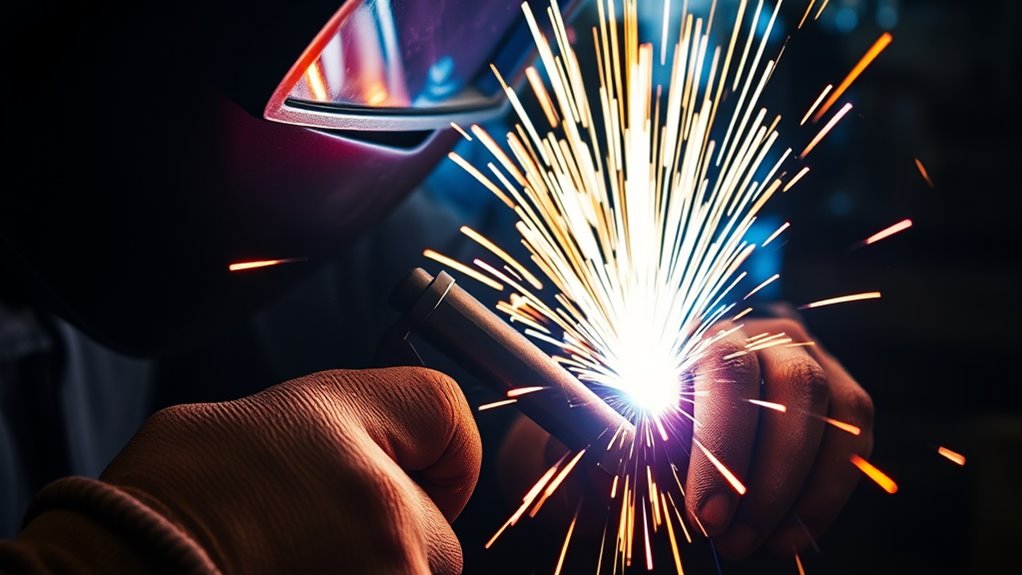
To get cleaner short-circuit MIG welds, focus on consistency before chasing perfect numbers.
- Keep your stickout steady. A changing stickout changes current and heat.
- Clean the contact tip and nozzle often. Spatter buildup affects gas coverage and arc stability.
- Use a slight push angle on thin sheet. This can help flatten the bead and reduce burn-through.
- Use small welds on thin panels. Tack, skip, cool, and return instead of overheating one area.
- Watch the toes of the bead. If they do not wash into the base metal, you may be too cold or moving too fast.
- Check fit-up. Short-circuit transfer is forgiving, but big gaps in thin metal still cause burn-through.
Amperage is tied closely to wire feed speed in MIG welding, so avoid thinking of voltage and amps as separate, fixed knobs. If you are comparing processes, this stick welding amperage chart can help explain why different welding processes use settings differently.
Short-Circuit vs Other MIG Transfer Modes
Short-circuit transfer makes more sense when you compare it with the other common GMAW transfer modes.
| Transfer Mode | Best For | Main Limitation |
| Short-circuit | Thin steel, sheet metal, repairs, tacks, vertical and overhead welds | Can lack fusion on thicker material if too cold |
| Globular | Some higher-heat steel work, often with CO2 | More spatter and rougher bead appearance |
| Spray | Thicker material, high deposition, flat and horizontal welds | Higher heat, usually not ideal for thin sheet or overhead work |
| Pulsed-spray | Better control on many metals with lower average heat than spray | Requires a machine with pulsed capability and correct gas |
Products Worth Considering

High-quality: ARCCAPTAIN's ER70S-6 mig welding wire .030" meets industry standards(Net Weight: 10lbs), ensuring consistent performance, superior strength. With its smooth feeding and stable welding parameters, you can achieve optimal penetration, high deposition rates, and exceptional overall welding performance.
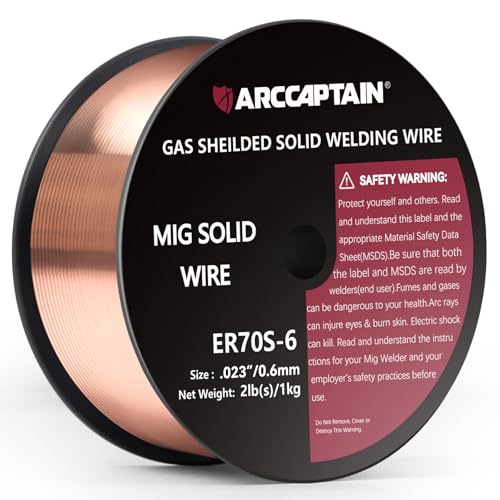
High-quality: ARCCAPTAIN's ER70S-6 mig welding wire .023" meets industry standards(Net Weight: 2lbs), ensuring consistent performance, superior strength. With its smooth feeding and stable welding parameters, you can achieve optimal penetration, high deposition rates, and exceptional overall welding performance.

ER70S-6 MIG WIRE: It's the most common wire of the copper-coated mild steel GMAW (MIG) wires for single or multiple pass welding.
Safety Notes for Short-Circuit MIG Welding
Short-circuit transfer may be lower heat than spray transfer, but it is still arc welding. You still face ultraviolet radiation, hot metal, sparks, electrical hazards, fumes, shielding gas hazards, and fire risk. OSHA’s welding, cutting, and brazing guidance is a useful starting point for workplace safety requirements and hazard awareness.
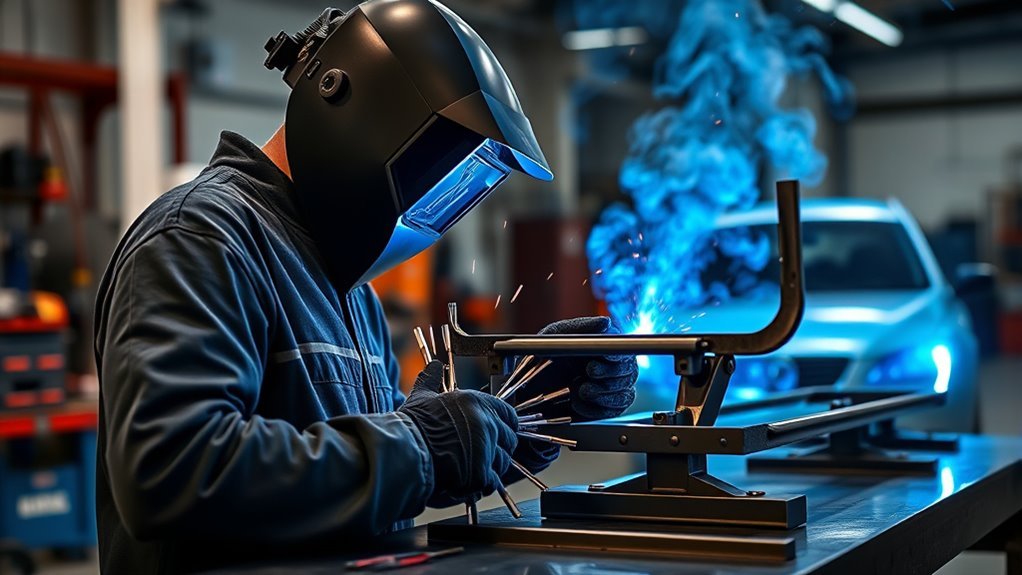
- Wear proper PPE: Use a welding helmet with the right shade, safety glasses, gloves, flame-resistant clothing, and closed footwear.
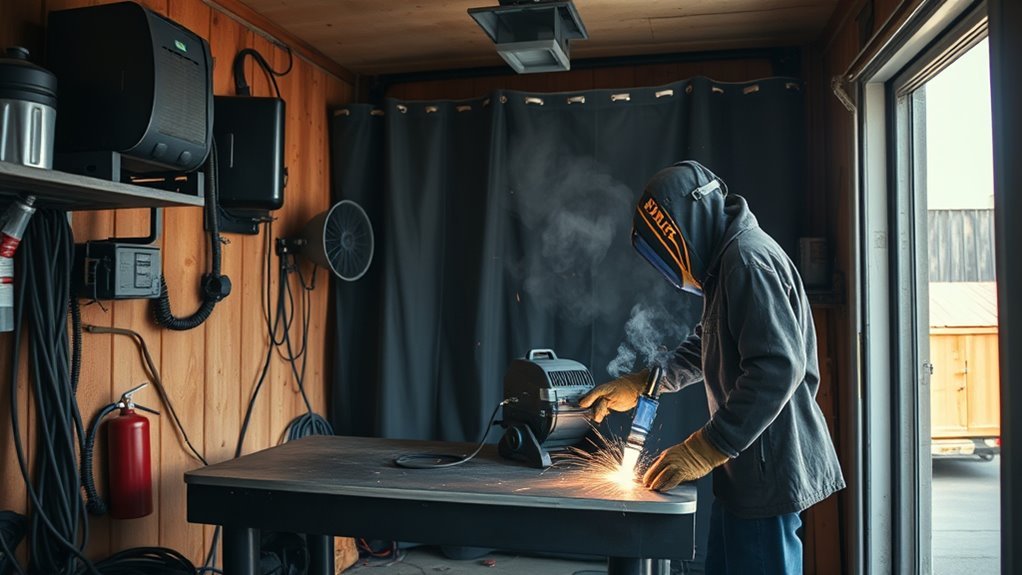
- Control fumes: Use local exhaust, fume extraction, or good ventilation. Do not weld coated, painted, stainless, or galvanized metal without understanding the fume risk.
- Prevent fires: Clear flammables, protect nearby surfaces, and keep a suitable fire extinguisher close.
- Protect others: Use welding curtains so nearby people are not exposed to arc flash.
- Check cylinders and gas lines: Secure cylinders and inspect hoses, fittings, and flow before welding.
If you are welding galvanized steel, review the specific welding challenges with galvanized steel before you start. Zinc fumes can be hazardous, and the coating can also cause porosity and unstable welds.
Frequently Asked Questions
What position is short-circuiting transfer best for?
Short-circuiting transfer works well in flat, horizontal, vertical, and overhead positions because the puddle is small and freezes quickly. It is especially useful for vertical and overhead welds where a hotter spray-transfer puddle would be harder to control.
Is short-circuit MIG good for beginners?
Yes. Short-circuit transfer is one of the easiest MIG modes to learn because the puddle is smaller and the heat is easier to manage. Beginners still need clean metal, correct polarity, steady stickout, and test welds before welding the final part.
What is short-circuit transfer in welding?
Short-circuit transfer is a MIG/GMAW metal-transfer mode where the wire touches the weld pool, creates a short circuit, melts off, and restarts the arc many times per second. This creates a lower-heat arc that is useful for thin material and controlled welds.
What are the 4 types of metal transfer in MIG welding?
The common MIG/GMAW transfer modes are short-circuit, globular, spray, and pulsed-spray. Short-circuit uses the lowest heat and best out-of-position control, while spray and pulsed-spray are often used when you need smoother transfer or higher deposition on suitable material.
Why does short-circuit MIG create spatter?
Spatter usually comes from voltage and wire feed speed being out of balance, too much stickout, a dirty nozzle, poor gas coverage, wrong polarity, or contaminated metal. Clean the gun and joint first, then adjust one setting at a time.
Is short-circuit transfer safe for welding galvanized metal?
It can be done only with the right precautions, but galvanized metal adds fume and porosity risks. Remove coating from the weld area when appropriate, use strong ventilation or fume extraction, wear the right PPE, and follow workplace safety rules before welding coated steel.
Conclusion
Short-circuit transfer is one of the most useful MIG welding modes when you need low heat, puddle control, and clean results on thin steel. It is ideal for sheet metal, repair work, tacks, and out-of-position welds, but it is not a cure-all. On thicker joints, the same low heat that prevents burn-through can cause lack of fusion. Start with your welder chart, keep the metal clean, maintain steady stickout, tune voltage and wire feed speed on scrap, and inspect the weld before trusting it.
Sources
- Miller Electric, Guidelines For Gas Metal Arc Welding (GMAW) – supports GMAW setup, process variables, and transfer-mode fundamentals.
- Lincoln Electric, Gas Metal Arc Welding Guidelines – supports wire, gas, and operating guidance for solid-wire GMAW.
- OSHA, Welding, Cutting, and Brazing – supports welding safety, standards, and hazard awareness.
- American Welding Society Welding Journal, Fume Formation Rates in Gas Metal Arc Welding – supports the need for welding-fume awareness and ventilation controls.
- ESAB MIG Welding Handbook – supports general MIG/GMAW process and shielding gas background.