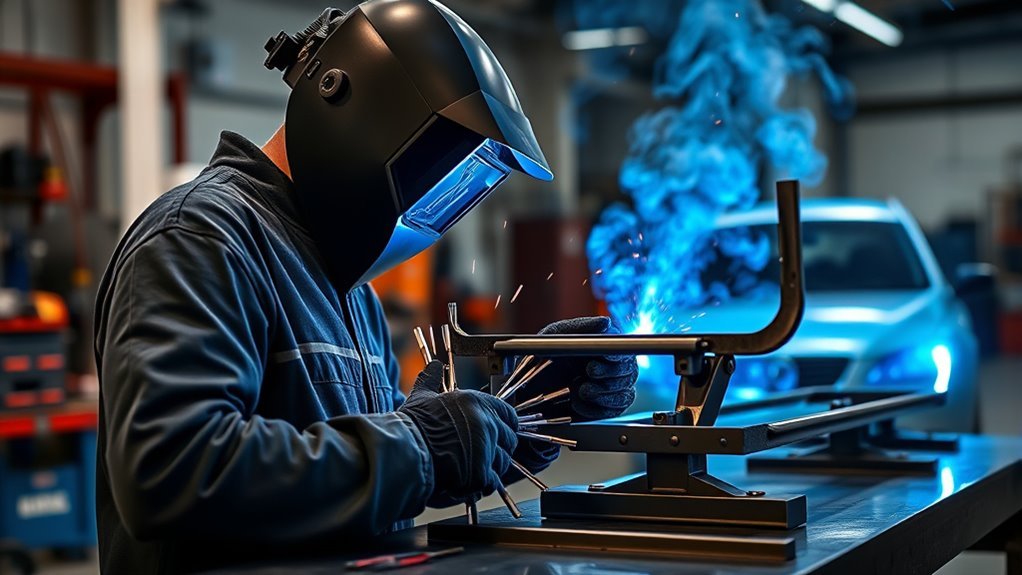
Spot welds do quiet work in a car body, but weak ones can affect panel fit, crash strength, and repair quality. This process joins thin metal sheets with electric current, pressure, and copper alloy electrodes, so manufacturers can build strong bodies fast. You’ll learn what spot welding is, where cars use it, which metals work best, and how to make stronger welds.
Quick Answer
Spot welding joins overlapping car metal sheets by clamping them between copper alloy electrodes and sending high electric current through the joint. The heat forms a small fused area called a weld nugget. Automakers use it because it is fast, repeatable, and well suited to thin steel body panels.
Key Takeaways
- Spot welding joins thin overlapping car panels without filler metal.
- Low-carbon steel gives the most consistent automotive spot welds.
- Clean metal, steady pressure, and correct current help form strong weld nuggets.
- Spot welds add structure, but they do not seal joints against water.
- Good repair work should match the original weld locations and spacing.
What Is Spot Welding?

Spot welding is a resistance welding process that joins overlapping metal sheets by clamping them between copper alloy electrodes and sending a strong electric current through the contact point.
The current meets resistance at the joint, which creates heat and forms a small fused area called a weld nugget. The metal fuses without filler material, so the joint stays clean and compact.
Spot welding creates a localized weld nugget through resistance heat, joining thin metal sheets without filler.
Among common welding techniques, spot welding stands out for speed, repeatability, and control on thin sheet metal. It works especially well on low-carbon steel and many stainless steel sheets, often in automotive sheet thicknesses near or below about 3 mm.
You’ll see it in automated production because machines can repeat the same pressure, current, and timing across many welds. For you, that means less waste, faster assembly, and a direct path to durable car body joints. Understanding flux core welding can also help you compare spot welding with other shop and repair methods.
How Spot Welding Works in Cars
In car manufacturing, copper alloy electrodes clamp overlapping metal sheets and deliver a high electrical current under pressure. The resistance at the sheet interface creates heat, which forms a weld nugget in a short cycle.
You control the process by setting current, weld time, electrode force, and tip condition. No filler metal is needed because the base metal melts, fuses, and solidifies at the joint.
- Clamp the sheets tightly.
- Send current through the contact point.
- Let resistance heat form the nugget.
- Hold pressure while the weld cools.
- Release the electrodes and inspect the joint.
Automation makes this method consistent, and many car bodies use a large number of spot welds across panels and structural sections. It works best on thin metal, so manufacturers can build lighter structures while keeping strong attachment points. Understanding surface preparation also helps you see why clean metal matters for weld strength and durability.
Where Spot Welding Is Used on Cars
Across a car body, you’ll find spot welds joining door panels, roof structures, floor sections, quarter panels, and frame or unibody components. These areas often use thin sheets that overlap and need fast, repeatable strength.
Robots in production place welds at planned spacing, which helps each body shell keep its shape. That precision supports fit, crash performance, and long-term structural integrity.
In repair work, you’ll use spot welding to replace damaged panels and restore factory-level attachment points. When you match the original weld pattern, you help protect safety and keep the structure working as designed. Achieving consistent strength through controlled welding technique is essential for lasting panel repairs.
What Car Metals You Can Spot Weld
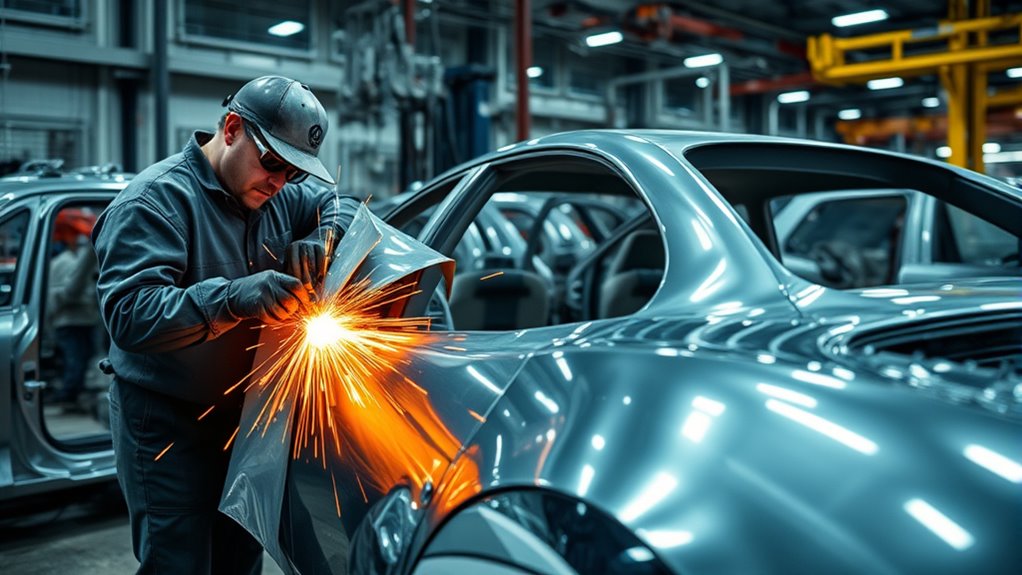
Low-carbon steel is the easiest car metal to spot weld because its electrical and thermal behavior helps heat form at the joint. It gives reliable results on thin automotive sheet when you use the right pressure, current, and weld time.
In practice, you can spot weld these metals:
- Low-carbon steel: use it as the most common baseline for body panels.
- Stainless steel: adjust settings because alloy content changes heat flow and nugget formation.
- Aluminum: use higher current and very clean surfaces because aluminum conducts heat and electricity well.
- Some copper alloys: weld only with strict surface cleaning and the right settings.
You should match current, pressure, and time to the metal’s electrical resistance and heat flow. Clean surfaces matter too, just as cleaning aluminum helps reduce defects in other welding processes.
That control helps you avoid weak fusion and build clean, repeatable automotive welds.
Spot Welding Pros and Cons for Car Panels
You can use spot welding to join car panels quickly because each weld cycle takes only a short time. That speed supports high-volume assembly and repeatable repair work.
Spot welding creates strong joints without filler metal, but it has limits. It works best on accessible, conductive sheet metals, and it does not create a sealed seam by itself.
In repair and restoration work, you need to watch electrode alignment, panel fit, and weld access closely. Poor setup can weaken the panel structure. Proper welding technique helps protect the integrity of each joint.
Speed and Efficiency
Spot welding is fast, which makes it well suited to high-volume automotive production lines. Robots can place many welds across a body shell with steady timing and pressure.
- You cut cycle time during panel assembly.
- You keep heat focused, so distortion stays low.
- You get consistent welds from automated systems.
- You reduce filler, fasteners, and extra handling.
For thin car panels, spot welding gives fast and repeatable manufacturing. Its main limit is material access, because electrodes must reach both sides of the joint.
Joint Strength Limits
Spot welding is strong when the weld nugget forms correctly, but it has clear joint strength limits. Strength depends on sheet thickness, metal type, surface condition, electrode force, weld time, and current.
You’ll get reliable performance when you match material compatibility and create a nugget suited to the sheet thickness. Thin panels usually work best, while thick or poorly fitted sheets can raise the risk of weak fusion, expulsion, or metal tearing.
In a good destructive test, the surrounding sheet often tears before the weld nugget fails. That result suggests the weld is stronger than the nearby sheet metal.
Note: A spot weld adds structure, but it does not seal out water unless you also use seam sealer or adhesive.
Repair and Restoration Use
In repair and restoration work, spot welding helps you rejoin car panels with strong, clean joints and no filler metal. It can help preserve the vehicle’s original structure when you match factory weld locations.
You can use spot welding in panel replacement when the metal is thin, clean, and properly aligned.
- Clean the mating surfaces to bare metal.
- Clamp the panels so they sit flush.
- Set current, pressure, and time for the metal thickness.
- Make test welds before welding the vehicle panel.
- Inspect the finished welds for strength and consistency.
If you miss alignment or weld through coatings, you can create weak welds that threaten repair quality. For practical repairs, precision matters.
Spot Welding vs. Other Car Joining Methods
When you compare spot welding with adhesive bonding, mechanical fasteners, and metal inert gas (MIG) or tungsten inert gas (TIG) welding, you can see why automakers favor it for many body joints.
Spot welding creates fast, immediate joints with low consumable use and minimal added weight. It also limits heat to small areas, which can reduce panel distortion.
It still has limits. Spot welding only works on conductive metals, and it needs access from both sides of the joint. Other joining methods matter when you need sealed seams, dissimilar-material bonding, or different structural performance. It may also avoid some issues linked to MIG welding problems, depending on the repair and material.
Products Worth Considering

Highly Durable Design: The shell of stud welder kit is made of high-quality ABS body, has good stability under high temperature conditions, withstand temperature of 93-118℃, and the movement is pure copper electrode. This welder stud kit is wear-resistant, strong and sturdy.

Small-scale Spot Welding:The dent puller machine has small welding spots and can prevent damage to the anti-rust paint on the other side of the panel. Besides, the welding is stable and firm.

【Designed For Automotive Repair Work】Spot weld panel chisel Designed for automotive body repair work, precisely removes auto body spot welds and easily separates metal panels. It is suitable for a wide range of bodywork, include accident repairs, vehicle dismantling, door and fender replacement, and the separation of welds on frames and chassis, ensuring efficient performance to meet your needs.
Spot Welding Advantages
Spot welding offers a major manufacturing advantage in car production because it joins metal quickly while delivering reliable joints for many chassis and body panels.
You get several practical benefits:
- Fast cycle times that support high-volume output.
- Focused heat that helps reduce distortion.
- Automation that keeps weld spacing and timing consistent.
- No filler or extra fasteners, which helps reduce weight.
You can trust this process for many thin body structures when the setup matches the metal and joint design. It helps manufacturers build lighter, cleaner assemblies with fewer manual steps.
Alternative Joining Methods
Spot welding is a standard choice for joining thin steel sheets in vehicle body assembly, but it is not the only option. You’ll also see adhesives, rivets, bolts, self-piercing rivets, clinching, laser welding, MIG welding, and TIG welding.
Adhesive bonding can seal joints against water and help join some dissimilar materials, but it needs correct surface prep and cure control. Mechanical fasteners give easy assembly and removal, but they add weight and may need holes.
When you need thicker sections, long seams, or dissimilar metals, laser welding, MIG welding, TIG welding, or fasteners may fit better. Choose the method that matches the design, access, material, production rate, and service needs.
How to Make Stronger Spot Welds
To make spot welds stronger, start with tight sheet alignment. Even small gaps can reduce fusion and create inconsistent joints.
Tight sheet alignment matters most because small gaps weaken fusion and make spot welds inconsistent.
Then focus on electrode care. Clean and dress the electrode tips often so contamination does not reduce current transfer.
- Set the sheets with no visible gap.
- Clean rust, paint, oil, scale, and coatings from the weld area.
- Apply enough electrode force for contact and penetration.
- Set current and weld time for the metal type and thickness.
- Keep electrode tips clean, aligned, and correctly shaped.
- Test sample welds before welding the final panel.
You are not chasing brute force. You are controlling heat, pressure, time, and surface condition so each weld bonds cleanly and predictably. Sizing welds for the metal thickness, much like planning maximum fillet weld size, can also improve joint performance.
Warning: Do not spot weld over paint, heavy rust, or seam sealer because contamination can weaken the weld.
Products Worth Considering

Spiral design: Features a durable spiral design specifically engineered for effective residue removal, ensuring thorough cleaning and superior welding performance.
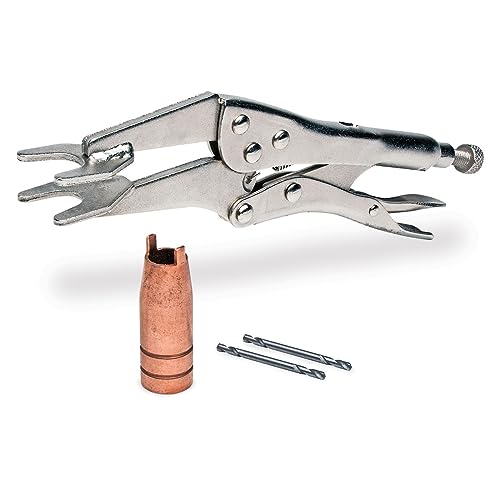
Duplicate full-penetration OE spot welds from one side with your existing MIG welder
How to Check Spot Weld Quality
You can check spot weld quality with visual inspection, test coupons, and destructive tests when the job allows them. Look for even weld marks, proper spacing, no burn-through, and no signs of heavy expulsion.
A peel test or chisel test can show whether the nugget formed well, but you should only use destructive checks on test pieces or approved repair areas. For vehicle repairs, follow the manufacturer’s repair manual because modern body steels may need special weld settings.
Pro tip: Make test welds on matching scrap metal before you weld a replacement car panel.
Frequently Asked Questions
Can Spot Welding Be Used on Cars?
Yes, you can use spot welding on cars when the panels and repair procedure allow it. It works well for many thin steel body panels and factory-style panel replacements.
What Are the Common Problems With Spot Welders?
Common problems include inconsistent welds, overheated electrodes, poor cooling, voltage changes, dirty surfaces, and weak clamping pressure. You can prevent many issues by cleaning the metal, dressing electrode tips, checking alignment, and testing welds first.
What Is Spot Welding in Simple Words?
Spot welding joins two metal sheets by squeezing them together and sending electric current through one small spot. The heat melts the metal at that spot and forms a strong nugget when it cools.
Can You Spot Weld Over Paint?
No. Paint blocks clean metal contact and can burn into the weld area, which may create a weak joint. Grind or clean the weld area to bare metal before you weld.
Do Spot Welds Need Seam Sealer on Cars?
Many automotive joints need seam sealer after welding because spot welds do not create a continuous waterproof seam. Follow the repair manual and apply corrosion protection where the manufacturer requires it.
Conclusion
Spot welding gives a car body much of its hidden strength by joining thin panels with focused heat and pressure. If you repair or inspect a vehicle, match the original weld pattern and keep every joint clean, aligned, and properly tested. Strong spot welds help panels fit better and support the structure under road stress. Treat each weld as a small part of the car’s safety system, and your results will be stronger and more reliable.