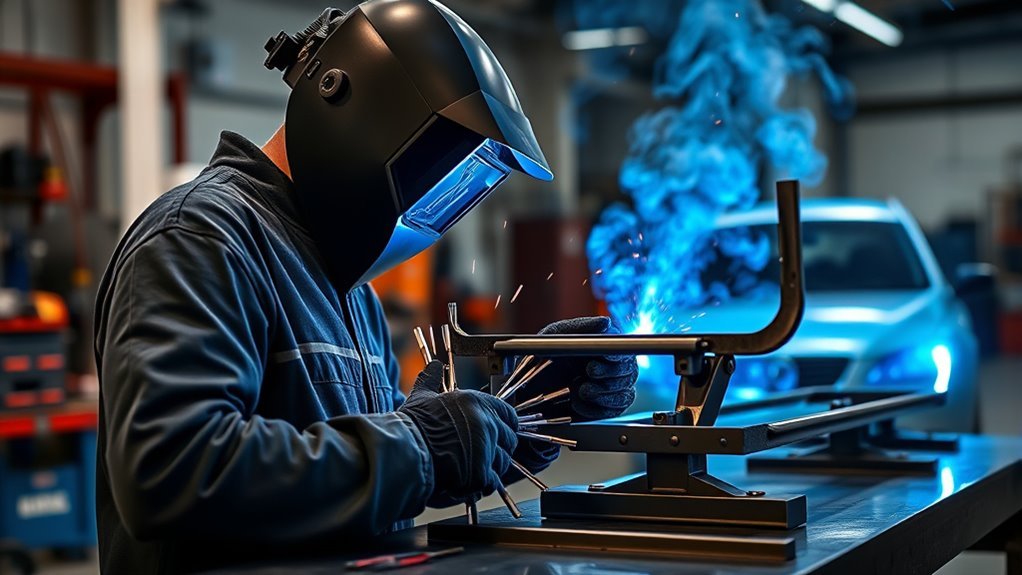
When a weld gap is too big in auto body repair, do not try to fill the whole opening with weld alone. First, improve the fit of the patch, clamp the panel tight, and add a clean filler strip if the opening is still wider than the metal can support. Use short tack welds, move around the seam, let the panel cool, then grind, seal, prime, and protect the back side from rust.
Quick Answer
For a large auto body weld gap, recut or refit the patch first. If the gap is still open, bridge it with clean matching-gauge sheet metal, not random wire or coat hangers. Tack the filler in place, stitch the seam in short bursts, cool between welds, then seal and prime the repair.
Key Takeaways
- A tight patch fit is stronger than trying to bridge a wide open gap with weld bead.
- Use clean, bare, matching-gauge sheet steel for filler strips on steel panels.
- Short tack welds and skip welding help reduce heat, shrinkage, and panel warping.
- Copper backing can help control burn-through, but it does not replace proper fit-up.
- Structural parts need OEM repair procedures or a qualified collision repair technician.
At a Glance
| Time Required | 1 to 4 hours for a small patch, longer if the panel must be recut, shaped, or refinished |
| Difficulty | Moderate for non-structural sheet metal; advanced for structural or high-strength steel areas |
| Tools Needed | MIG or TIG welder, clamps, body hammer, snips or cutoff wheel, grinder, copper backing, welding helmet, gloves, respirator, primer, seam sealer |
| Cost | About $20 to $100 in consumables if you already own welding and safety gear |
Warning: Do not guess on frame rails, pillars, rocker reinforcements, suspension mounts, seatbelt mounts, or airbag-related structures. These areas may use high-strength steel or special repair procedures. Follow the vehicle maker’s repair information or use a qualified collision repair technician.
How to Tell When a Weld Gap Is Too Big
A weld gap is too big when the arc wants to blow through the edge, the puddle falls away, or the bead piles up without tying into both sides. On thin auto body steel, the best repair is usually a tight butt joint or a small, even gap. Large, uneven gaps make heat control harder and raise the risk of pinholes, porosity, shrinkage, and warped panels.
| Gap Size | What It Means | Best Fix |
|---|---|---|
| Hairline to about 1/32 inch | Good fit for most thin sheet-metal butt repairs | Tack, skip around, and cool between welds |
| About 1/32 to 1/16 inch | Usually manageable if the edges are clean and supported | Use copper backing, tight tacks, and short stitches |
| About 1/16 to 1/8 inch | Borderline on thin body panels | Refit the patch or add a clean filler strip before welding |
| Over 1/8 inch | Too large to bridge with weld bead alone | Recut the panel, remake the patch, or weld in matching metal |
How to Address Large Weld Gaps
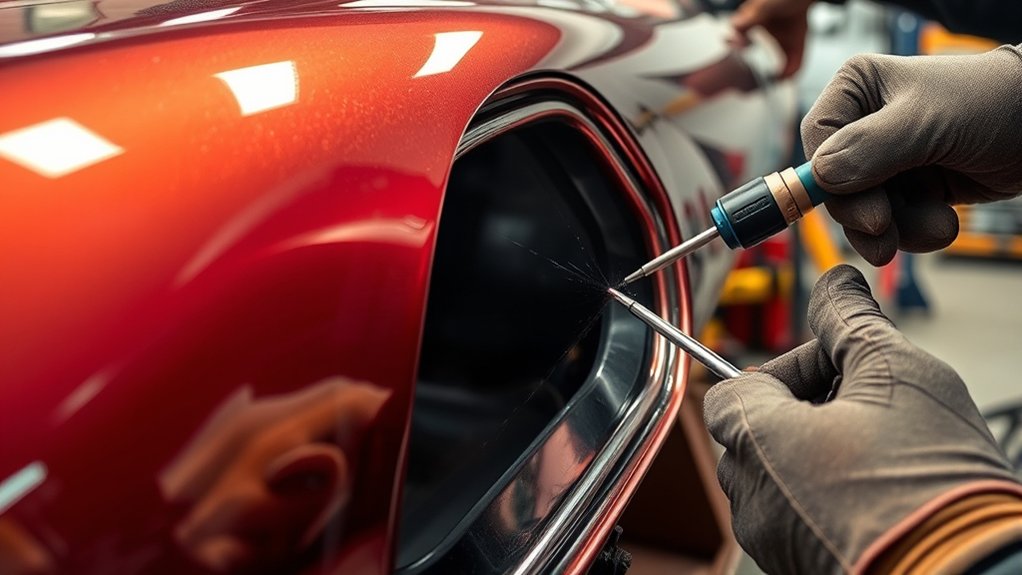
Start by fixing the fit, not by adding more weld. Hold the patch in place with clamps or magnets and check whether the edges meet evenly. If one side is high, low, or curved away from the other, trim and shape the patch until the gap is consistent. A small even gap is easier to weld than a wide gap that changes size every few inches.
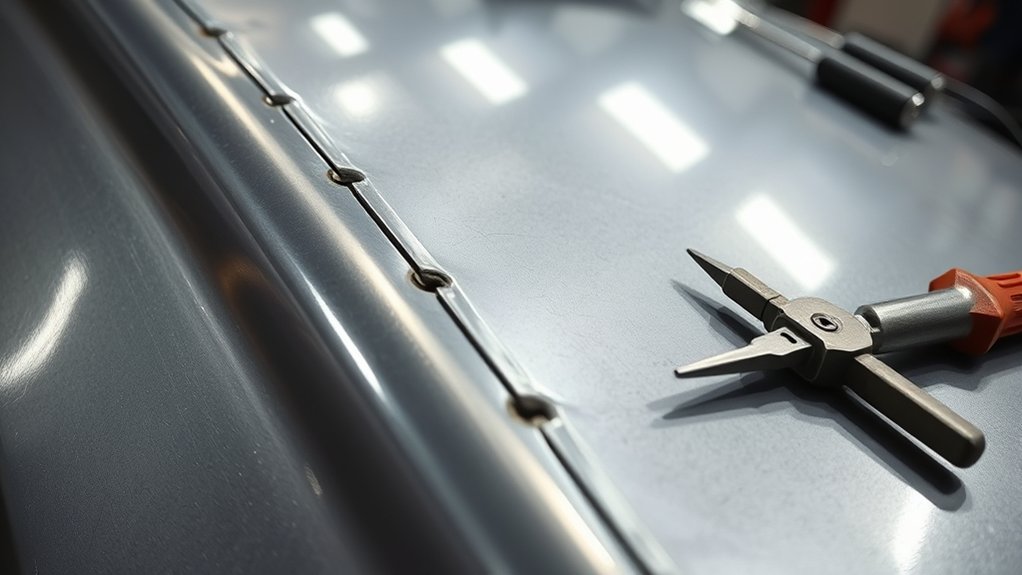
If the opening is still too wide, use a filler strip cut from clean sheet metal that matches the panel thickness. The strip should fit inside the gap without forcing the surrounding panel out of shape. Tack it at several points, confirm that the panel is still aligned, then weld in short bursts.
Copper backing can help when you are welding thin steel. Place the copper behind the joint where it can support the puddle and draw away some heat. The weld will not fuse to the copper, so it can help reduce burn-through. It is only a heat-control aid, though. It is not a substitute for a correct patch fit.
Pro Tip: If you can see daylight through a long uneven gap, stop and refit the patch. Ten extra minutes with snips, a file, and clamps can save an hour of grinding, pinhole repair, and panel straightening later.
Safety and Prep Before Welding Auto Body Gaps
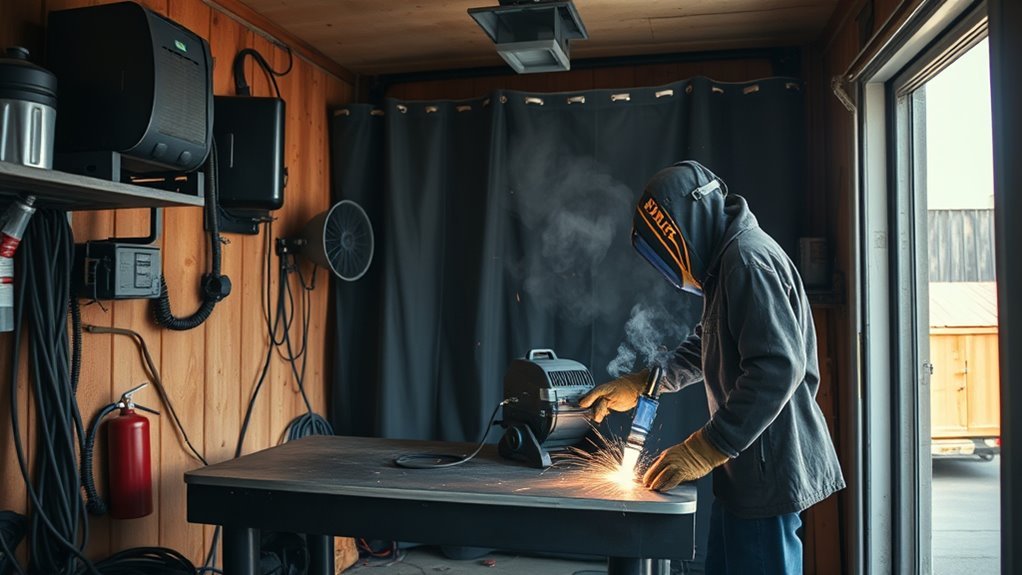
Auto body welding creates heat, sparks, ultraviolet light, fumes, and gases. OSHA’s welding, cutting, and brazing safety guidance covers hazards such as fumes, burns, eye injury, electric shock, and fire risk. Before welding, wear a proper welding helmet, gloves, fire-resistant clothing, hearing protection, and respiratory protection when ventilation is not enough.
Remove paint, primer, undercoating, seam sealer, adhesives, oil, and solvent residue from the weld area. OSHA’s welding fume guidance also notes that coatings and residues can create toxic exposure during welding. Keep a fire extinguisher nearby, protect glass and trim from sparks, and check the back side of the panel for insulation, wiring, fuel lines, sound deadener, and carpet.
Disconnect or protect sensitive electrical components according to the vehicle maker’s service information. After welding, stay in the area long enough to confirm that no hidden insulation, seam sealer, or undercoating is smoldering behind the panel.
Key Tools and Materials for Effective Gap Repairs
For most thin steel body panels, a MIG welder with adjustable voltage and wire speed is the most practical choice. Use the machine’s door chart as a starting point, then test on scrap metal that matches the panel thickness. A 0.023 or 0.024 inch solid wire is commonly used for thin sheet steel, but the correct setting depends on your welder, wire, gas, and material thickness. Miller’s MIG welding guidance for mild steel is a useful reference for basic setup and technique.
You will also need clean filler strips, clamps, copper backing, a cutoff wheel or snips, a grinder, a flap disc, and a body hammer or dolly. For corrosion protection, have epoxy primer or another approved automotive primer, seam sealer, cavity wax where needed, and matching paint or topcoat.
Do not use coat hangers, rusty scrap, galvanized scraps, painted scraps, or unknown wire as filler. Use clean, bare steel that is compatible with the panel. Unknown metals and coatings can contaminate the weld, create fumes, or leave a weak repair.
Products Worth Considering

Gel eliminates erratic operation with a film that will not clog orifices and threads on MIG nozzles and contact tips

The blades cut away the built up spatter helping prolong the nozzle life, and reduces the chances of wire sticking.

High-Quality Construction: Our welding pliers, also known as MIG pliers or welpers, are made from premium steel, polished to a smooth finish, and precision processed to ensure sturdiness and durability for extended use.It is reliable welding tools
Practical Steps for Filling Large Weld Gaps
The safest way to fill a large gap is to turn it into a small gap before you weld. Work slowly, check the fit often, and do not chase a bad gap with longer weld beads. Long beads put too much heat into thin panels and can cause the metal to shrink, pull, and warp.
Step 1: Clean and Fit the Panel
Grind both sides of the joint to clean bare metal. Remove coatings at least far enough from the weld area to avoid contamination and fumes. Clamp the patch in place and check the gap along the full seam. Trim high spots and reshape low spots until the panel sits flat and the gap is even.
Step 2: Add a Matching Filler Strip if Needed
For a gap that remains too wide, cut a narrow filler strip from matching-gauge sheet metal. Fit the strip so it sits flush with the panel surface. If the strip is too proud, it will take extra grinding and may thin the surrounding metal. If it sits too low, you will need too much weld and filler later.
Step 3: Tack the Gap Before Stitch Welding
Place small tack welds every few inches to lock the joint. Then add more tacks between them, moving around the panel instead of welding in one direction. This spreads the heat and reduces shrinkage in one spot. Let the metal cool between rounds.
Step 4: Use Short Stitches, Not Long Beads
Once the gap is supported, connect the tacks with very short welds. A quick trigger pull is usually better than holding the arc in one place. Jump to a different area after each stitch. The panel should never get so hot that you cannot briefly touch nearby metal with a gloved hand.
Step 5: Inspect Both Sides Before Grinding
Before grinding, check the front and back of the weld. Look for pinholes, black soot, missed edges, or areas that did not fuse. Fix these small defects now. Grinding too early can hide weak spots and make the metal too thin for a clean repair.
MIG vs. TIG: Which Welding Method to Choose?
MIG welding is the most common choice for steel auto body patch work because it is fast, available, and forgiving when the settings are right. It is useful for tack welding, skip welding, and filling small supported gaps. It still needs clean metal, good shielding gas coverage, and proper fit-up.
TIG welding gives more control over the puddle and filler rod. It can create clean welds on thin metal, but it is slower and demands a tighter fit, cleaner metal, and better hand control. Miller’s tungsten electrode guide is a good starting point for TIG setup details.
If the patch fit is poor, neither MIG nor TIG will make the repair right by itself. Recut the patch, add a filler strip, or replace the bad section before welding. Choose MIG for practical steel panel repair and TIG when precision matters and you have the skill and access to control the heat.
Products Worth Considering

Highly Durable Design: The shell of stud welder kit is made of high-quality ABS body, has good stability under high temperature conditions, withstand temperature of 93-118℃, and the movement is pure copper electrode. This welder stud kit is wear-resistant, strong and sturdy.

Package Includes: 10ft mig gun + 1pcs nozzle +1pcs diffuser + 6 tips (.023", .030", .035" - two of each size). This mig gun uses the same consumables as the Tweco Mini/#1. 21-50 nozzle, 35-50 diffuser, 11-series contact tip.
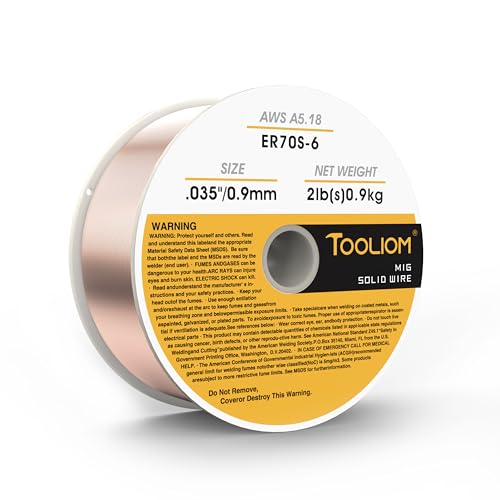
High-quality:Tooliom's .035" ER70S-6 MIG Welding Wire (2lb spool) meets all industry standards for consistent strength and performance. Enjoy smooth feeding, stable arcs, optimal penetration, and high deposition rates—everything you need for exceptional welds
How to Manage Heat to Prevent Warping
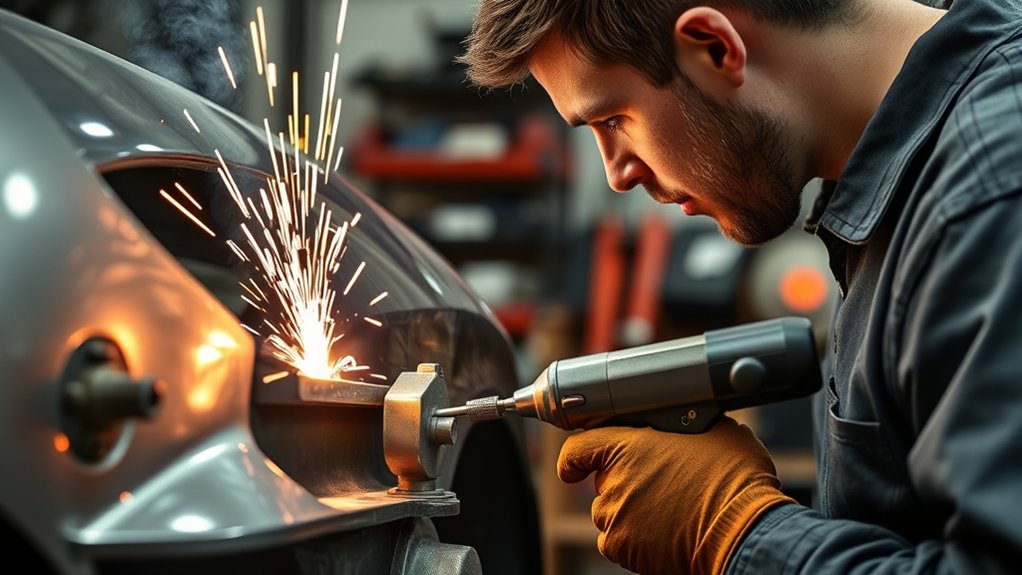
Heat control is the difference between a flat repair and a wavy panel. Thin auto body steel moves fast when it gets hot. Use the tack-and-move method: tack one area, move to another area, and let the first spot cool. Keep the welds short and avoid long continuous beads.
Use copper backing where you can reach the back side. Keep the arc focused on both edges of the joint, not just the filler strip. If the edge starts to melt away, stop and let the panel cool. Do not turn up the heat just to jump a gap. Fix the gap first.
Air cooling is usually enough. Avoid quenching hot sheet metal with water unless you know the repair method allows it, because rapid cooling can add stress and distortion. Patient cooling, skip welding, and good fit-up work better.
Note: A cool panel is easier to finish. If the metal is too hot to control with your gloved hand nearby, pause before adding more weld.
Common Problems When Welding Large Gaps
Large gaps create predictable problems. Use the symptoms below to decide what to fix before adding more weld.
| Problem | Likely Cause | Fix |
|---|---|---|
| Burn-through | Gap too wide, heat too high, or travel too slow | Add copper backing, lower heat, use shorter tacks, or refit the patch |
| Porosity or black soot | Dirty metal, poor gas coverage, paint, seam sealer, or oil contamination | Clean to bare metal, check gas flow, block drafts, and re-weld the defect |
| Panel warping | Too much heat in one area | Skip around, cool between welds, and avoid long beads |
| Weld bead sitting on top | Not enough fusion or poor edge contact | Improve fit-up, clean the edge, and adjust settings on scrap first |
| Cracked body filler later | Weak weld, pinholes, flexing panel, or filler applied too thick | Repair the weld first, metal-finish the panel, then use thin filler coats |
Final Touches for a Polished Look
After welding, grind only what you need to make the repair flush. A flap disc gives more control than an aggressive hard grinding wheel. Keep the grinder moving and avoid thinning the surrounding sheet metal. Stop often and inspect the seam under good light.
Grinding and Smoothing Welds
Grind the weld bead in stages. Start with light pressure, then switch to a finer abrasive as the bead gets close to flush. Do not grind the weld until it disappears below the panel surface. If you find pinholes, stop grinding and repair them with small tacks before continuing.
Inspecting for Flaws
Look for missed areas, pinholes, undercut edges, and backside gaps. A bright light behind the panel can reveal small holes. Any open pinhole can let moisture reach the back side of the repair and start rust under the paint.
Applying Final Coatings
Clean the repair area after grinding. Apply automotive primer according to the product instructions, then seam sealer where the factory seam needs it. Use cavity wax or internal panel protection on the back side when access allows. Finish with body filler only after the weld is sound, then sand, prime, paint, and clear coat as needed.
A weld gap repair is only finished when both sides are protected. A smooth front side with bare, burned metal on the back side can still rust from the inside out.
Learning From Mistakes: Community Tips and Experiences
Most weld-gap problems start before the welder is turned on. The patch is trimmed too small, the panel is not clamped tight, or the welder is set by guesswork instead of scrap testing. Use mistakes as feedback, but do not keep welding over a bad fit.
- Practice on scrap metal that matches the panel thickness.
- Make the patch slightly oversized, then trim slowly until it fits.
- Tack opposite ends first so the patch cannot walk out of place.
- Use filler strips for wide gaps instead of piling up weld bead.
- Let the panel cool between tacks.
- Inspect the back side before applying filler or primer.
Frequently Asked Questions
What happens if your arc gap becomes too big?
If the arc gap is too big, the arc becomes harder to control. You may get spatter, poor penetration, porosity, or burn-through on thin panels. Keep the gun angle steady, use short tacks, and practice on scrap until the puddle ties into both sides of the joint.
What should you do when the gap is too big for seam sealer or caulk?
Do not use household caulk to replace missing metal. Automotive seam sealer is for sealing a finished joint, not for making a weak panel strong. If the gap is structural or open through the panel, weld in matching metal first, then seal and coat the repair after it is solid.
How large of a gap can you weld on auto body sheet metal?
Small, even gaps are best. A gap up to about 1/16 inch may be manageable with clean edges, copper backing, and short tacks. A gap near 1/8 inch usually needs a filler strip or better patch fit. Anything larger should usually be recut or patched with matching sheet metal.
Can you use body filler over a large weld gap?
Body filler should smooth minor surface imperfections after the metal repair is complete. It should not bridge a large open gap or hide a weak weld. If the seam flexes, has pinholes, or is not fully welded where it needs to be, the filler can crack and moisture can enter.
Is MIG or TIG better for filling big gaps?
MIG is usually faster and easier for steel auto body patches. TIG gives better puddle control but needs cleaner metal and tighter fit-up. For a truly big gap, the better fix is not choosing a hotter process. The better fix is to refit the patch or add matching metal before welding.
Conclusion
Large weld gaps in auto body repair are best fixed with better fit-up, not more heat. Trim the patch carefully, use matching-gauge filler strips when needed, tack the joint in stages, and control heat with short welds and cooling time. After the seam is solid, grind lightly, inspect for pinholes, and restore corrosion protection on both sides. That process gives you a cleaner repair, less warping, and a panel that is ready for long-term finishing.
Sources
- OSHA Welding, Cutting, and Brazing — welding safety hazards and workplace safety guidance
- OSHA Controlling Hazardous Fume and Gases during Welding — fumes, gases, coating removal, ventilation, and respiratory protection
- Miller MIG Welding: The Basics for Mild Steel — MIG setup and technique guidance for mild steel
- Miller Selection and Preparation Guide for Tungsten Electrodes — TIG electrode selection and preparation basics