Choosing the wrong welding process can weaken a repair, warp thin panels, or create extra cleanup. Arc welding helps you repair automotive parts with strong metal bonds when you match the process to the material, joint, and work area. This guide explains where MIG, TIG, stick, FCAW, SAW, and PAW fit in auto repair so you can choose with more confidence.
Quick Answer
Arc welding in auto repair uses an electric arc to melt and join metal parts. Metal inert gas welding (MIG) works best for most body panels and general steel repairs. Gas tungsten arc welding (TIG) gives you more control on thin or aluminum parts, while shielded metal arc welding (SMAW), often called stick welding, suits thicker outdoor repairs.
Key Takeaways
- Choose MIG for most thin automotive steel and general body work.
- Choose TIG when you need clean welds, tight heat control, or aluminum repair.
- Choose stick or flux-cored welding for thicker parts, outdoor work, or less-clean metal.
- Match the process to the metal, joint access, thickness, and finish you need.
- Use proper safety gear because arc welding creates intense light, heat, fumes, and sparks.
What Is Arc Welding in Auto Repair?
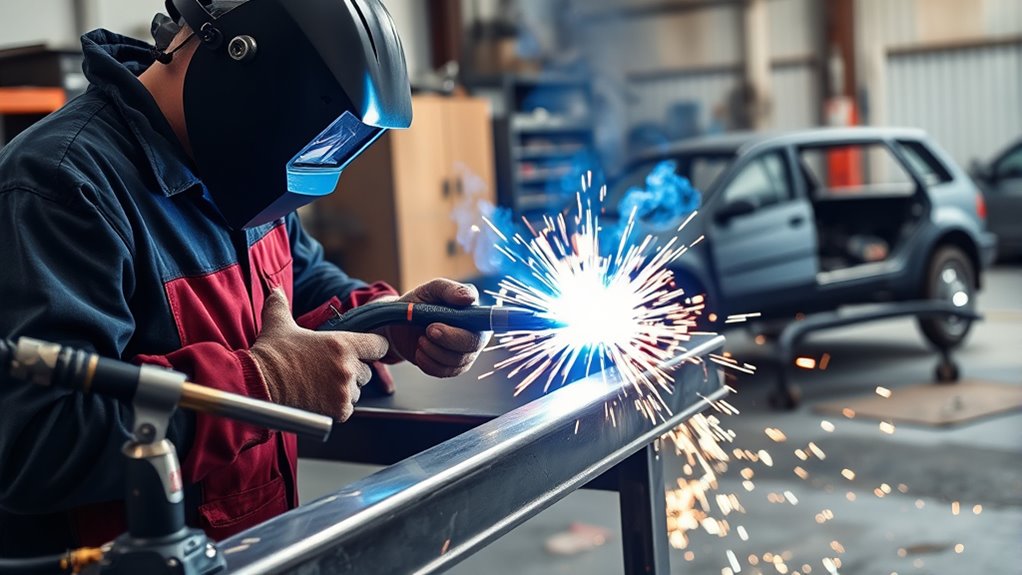
Arc welding in auto repair joins vehicle components by using an electric arc to create high heat. That heat melts the base metal and filler material, then the weld cools into a strong metallurgical bond.
Arc welding uses intense electric heat to fuse metal cleanly, creating strong, precise repairs in auto body work.
You use this process when damaged panels, brackets, or structural sections need repair without weakening the vehicle. The arc puts heat where you need it, so you can control weld depth and finish with care.
Match the method and equipment to the repair, the metal, and the strength the joint needs. Wear a welding helmet, gloves, flame-resistant clothing, and eye protection to help guard against arc rays, heat, sparks, and molten metal.
Warning: Never weld near fuel, batteries, trim, upholstery, or sealed containers unless you have cleared the area and controlled fire risk.
Understanding flux core welding techniques can also improve your repair options. Sound arc welding supports crashworthiness because strong welds help preserve structural integrity.
Which Welding Types Do Auto Shops Use Most?
In most auto shops, you’ll see metal inert gas welding (MIG) more than any other arc process. It works fast, handles many steel and aluminum repairs, and gives you steady control on common body and structural jobs.
MIG works well for body panels, brackets, and many general repairs because the wire feed keeps the weld moving. MIG transfer modes also let you adjust heat and weld behavior for different metal thicknesses.
Gas tungsten arc welding (TIG) comes next when you need exact heat control, a clean bead, or a strong joint on thin metal. Shops also use spot welding for overlapping sheet metal, flux-cored arc welding (FCAW) for outdoor or less-clean work, and robotic welding where repeatable production matters.
MIG, TIG, and Stick Welding for Car Repairs
When you’re repairing a car, MIG, TIG, and stick welding each serve a different purpose. Your best choice depends on metal thickness, joint access, and the finish quality you need.
- MIG: Use it for thin automotive steel, fast welds, and broad repair work.
- TIG: Use it for thin parts, aluminum, stainless steel, and clean, high-control welds.
- Stick: Use it for thicker steel, outdoor repairs, and jobs where shielding gas is hard to use.
You’ll work slower with TIG, but you gain close control over heat and filler metal. Stick welding creates more spatter, yet it lets you weld thicker parts in rougher conditions.
Choose the process that fits the job, and you’ll make safer, stronger repairs with less rework. Stainless steel welding can also suit automotive components that face heat, moisture, or road exposure.
Products Worth Considering

Crafted with precision, our steel plates are laser-cut, offering unparalleled edge smoothness and dimensional accuracy compared to stamped and sheared parts.

Fun and Functional Dachshund Design: turn practice into art! This welding practice kit lets you craft a charming 3D dachshund (sausage dog) sculpture; Once completed, it serves as an ideal desk decor piece or handmade gift, ideal for Father's Day, birthdays, and holiday gifting for welding enthusiasts and dog lovers alike

🎲Superior Processing: Our steel plates are all laser-cut, providing edge and overall flatness that is unmatched by other stamped and sheared components.
When FCAW, SAW, and PAW Make Sense
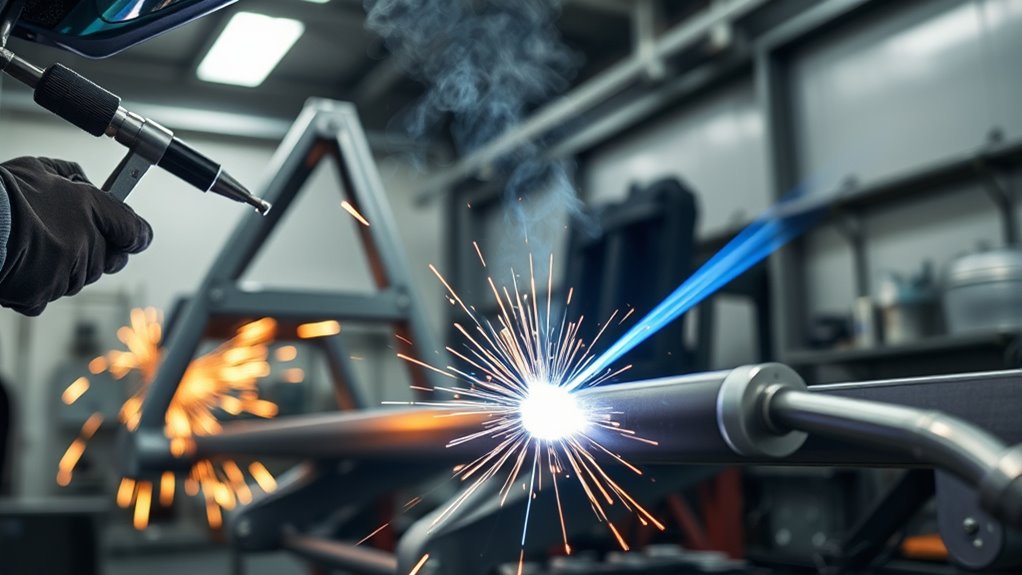
Flux-cored arc welding (FCAW), submerged arc welding (SAW), and plasma arc welding (PAW) fit more specific automotive jobs. You’ll choose them based on access, material thickness, speed, and weld quality.
Use FCAW when you need outdoor welding on thicker, dirty, or rusty parts. It can run with or without shielding gas, depending on the wire, and it lays down weld metal quickly.
Use FCAW outdoors on dirty or rusty parts; it welds with or without gas and deposits metal fast.
High deposition rates make FCAW useful for fast repairs and portable work. Choose SAW for thick steel frames, chassis parts, and shop-based structural assemblies where deep penetration matters.
Reach for PAW when you need precision on thin or intricate parts. It requires specialized equipment and skill, but it gives you tight control on detailed joints.
Products Worth Considering

E71T-GS FLUX CORE WIRE: This self-shielding, AWS E71T-GS flux-cored wire excels due to its advanced core design, delivering exceptional arc stabilization and high feedability for effortless welding. The core also incorporates powerful deoxidizing agents, ensuring clean, reliable welds even when welding through light rust or mill scale.

E71T-GS FLUX CORE WIRE: This self-shielding, AWS E71T-GS flux-cored wire excels due to its advanced core design, delivering exceptional arc stabilization and high feedability for effortless welding. The core also incorporates powerful deoxidizing agents, ensuring clean, reliable welds even when welding through light rust or mill scale.

All position flux core MIG wire for mild steel that is a self Shielded and works well on rusty, dirty and painted Material
How to Choose the Best Welding Process for Your Repair
Choosing the right welding process starts with the material, thickness, joint type, and access. You also need to think about heat control, cleanup, and the strength the repair must carry.
- Pick MIG for sheet metal, most body panels, and many everyday steel repairs.
- Pick TIG when you need precision on aluminum, stainless steel, or thin parts.
- Pick FCAW for thicker, dirty, rusty, or outdoor work, especially when speed matters.
- Pick SMAW when you need portable, heavy-duty repair capability.
Use welding material selection to match the process to the job. Then inspect the joint to make sure the weld has enough penetration, fit, and support for the repair.
You’re not locked into one method. Match the process to the metal, the joint, and the work area, and you’ll work with more control and fewer compromises.
Pro tip: Practice on scrap metal with the same thickness before you weld a visible or structural car part.
For aluminum, use the right process, filler, and setup for the alloy. Specialized aluminum flux wire may apply to certain flux-core jobs, but TIG and MIG often give you better control on automotive aluminum.
Common Auto Welding Mistakes to Avoid
Many weak automotive welds come from poor prep, excess heat, or the wrong process. Clean the metal, remove coatings near the weld area, and clamp the joint before you strike an arc.
Don’t rush thin sheet metal. Too much heat can warp panels, burn through the metal, or leave a weld that looks good but lacks strength.
Check the manufacturer repair information before you weld structural sections. Some modern vehicle steels need specific procedures, and the wrong heat can reduce their strength.
Frequently Asked Questions
What Are the Three Types of Arc Welding?
Three common arc welding types in auto repair are shielded metal arc welding (SMAW), gas metal arc welding (GMAW or MIG), and gas tungsten arc welding (GTAW or TIG). You’ll match each process to repair speed, heat control, and material type.
Is MIG or TIG better for car body work?
MIG works better for most car body work because it’s faster and easier to control on thin steel panels. TIG works better when you need a cleaner weld, more heat control, or aluminum repair.
Can you stick weld a car frame?
You can stick weld some thicker steel frame repairs, but you need the right rod, settings, prep, and repair procedure. Check the vehicle maker’s repair guidance before welding structural parts.
What welding process is best for aluminum car parts?
TIG and MIG work best for most aluminum car parts. TIG gives you the most control on thin or detailed parts, while MIG can work faster on larger aluminum sections.
Conclusion
The best arc welding process is the one that fits the metal, joint, thickness, and repair goal. Use MIG for speed, TIG for control, and stick or FCAW when conditions make gas-shielded welding harder.
Before you weld, clean the area, choose the right filler, and test your settings on scrap. A careful process gives you stronger welds, cleaner results, and fewer repairs to redo.
References
- Welding, Cutting, and Brazing — Occupational Safety and Health Administration
- Welding Process and Safety Resources — American Welding Society
- Collision Repair Training and Welding Guidance — I-CAR