Consumable and non-consumable electrodes do the same first job: they carry welding current and help create the arc. The key difference is what happens next. A consumable electrode melts into the joint as filler metal. A non-consumable electrode holds the arc but is not intended to become part of the finished weld.
Quick Answer
Consumable electrodes melt and supply filler metal in stick, MIG, flux-cored, and submerged arc welding. Non-consumable electrodes, normally tungsten in TIG and plasma arc welding, carry the arc while filler is added separately when needed. Consumable systems favor speed; non-consumable systems favor precise heat and puddle control.
Key Takeaways
- Consumable electrodes melt into the weld and serve as filler metal in SMAW, GMAW, FCAW, and SAW.
- Non-consumable electrodes create the arc without serving as the main filler. TIG and plasma arc welding normally use tungsten.
- Consumable processes generally offer faster deposition, while TIG gives the operator separate control over the arc and filler metal.
- Only self-shielded flux-cored wire is designed to work without external shielding gas. Gas-shielded FCAW still needs protection from wind.
- Electrode choice must match the base metal, joint, position, current, polarity, shielding, required strength, and approved welding procedure.
Consumable vs. Non-Consumable Electrodes: Quick Comparison
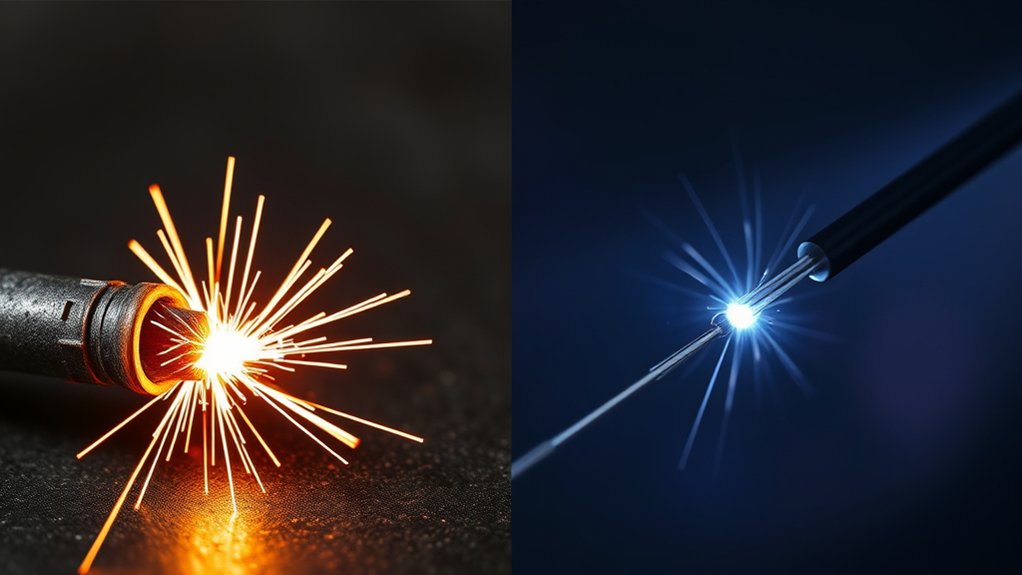
A consumable welding electrode melts as the weld progresses and becomes part of the deposited weld metal. A non-consumable welding electrode conducts current and maintains the arc. It can slowly erode, overheat, oxidize, or become contaminated, but it is not intended to supply the main weld deposit.
| Feature | Consumable Electrode | Non-Consumable Electrode |
| What happens to it? | It melts and becomes deposited weld metal. | It carries the arc and should remain separate from the weld deposit. |
| Common processes | SMAW, GMAW/MIG, FCAW, and SAW | GTAW/TIG and plasma arc welding |
| Filler metal | Built into the rod, solid wire, tubular wire, or strip electrode. | Added separately as rod or wire when the joint needs filler. |
| Shielding | May come from flux, external gas, or granular flux, depending on the process. | TIG and plasma welding normally use externally supplied shielding gas. |
| Deposition speed | Usually higher, especially with continuously fed wire. | Usually lower in manual TIG because the arc and filler are controlled separately. |
| Operator control | Filler delivery is tied to rod consumption or wire-feed speed. | The operator can adjust heat and filler addition independently. |
| Cleanup | Varies by process. Stick, FCAW, and SAW can leave slag; GMAW can create spatter. | TIG produces no flux slag and normally creates little spatter when the setup is correct. |
| Common uses | Repair, structural fabrication, production, field work, and thicker material. | Thin metal, stainless steel, aluminum, tubing, root passes, and precision fabrication. |
| Main tradeoff | Faster filler deposition, but rods or wire are continuously used and cleanup may increase. | More precise control, but manual work is often slower and demands more coordination. |
Electrode vs. Filler Metal: Are They the Same?
An electrode is part of the electrical welding circuit. It carries current to the arc. Filler metal is added metal that helps fill the joint and forms part of the finished weld.
In stick, MIG, flux-cored, and submerged arc welding, the electrode is also filler metal. In TIG welding, the tungsten is the electrode, while a separate rod or wire supplies filler. TIG can also be used without filler when the joint edges can be fused directly. This is called an autogenous weld.
Note: A TIG filler rod is a welding consumable, but it is not the electrode because it is not normally connected to the welding circuit.
How Consumable Welding Electrodes Work
A consumable electrode melts while the arc heats the joint. Droplets or molten metal transfer from the electrode into the weld pool. The deposited metal then cools with the melted base metal to form the weld bead.
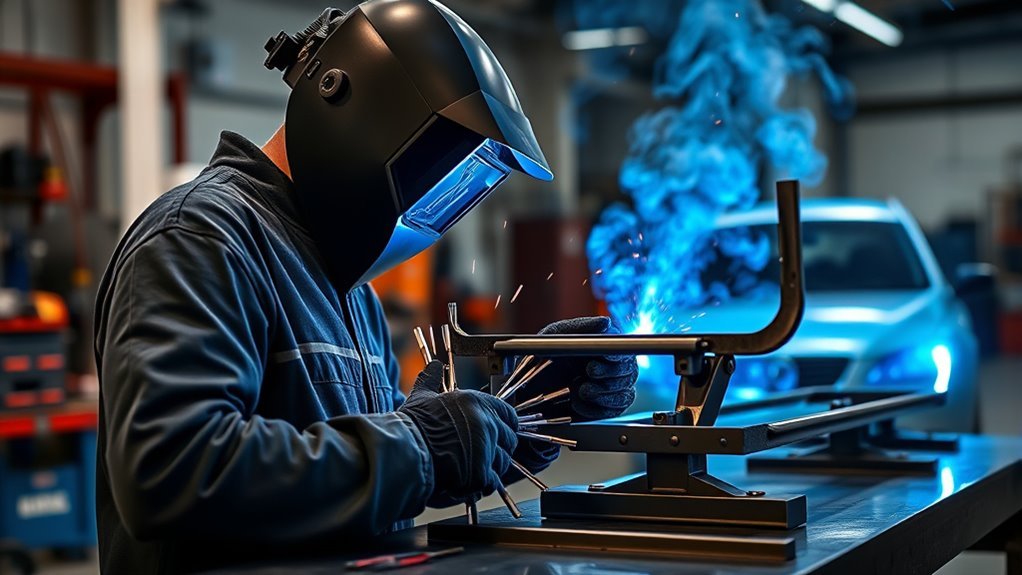
In stick welding, the metal core supplies filler while the coating produces shielding gases and slag. In MIG welding, a continuously fed solid wire acts as both the electrode and filler. Flux-cored welding uses tubular wire containing fluxing ingredients. Submerged arc welding feeds wire beneath a blanket of granular flux.
Common examples include E6010 and E7018 stick electrodes, ER70S-6 solid wire, flux-cored wire, and submerged arc wire. Selection depends on the base metal, required deposit chemistry, strength, welding position, current, polarity, shielding, and applicable welding procedure.
For common carbon-steel SMAW classifications, the letter E means electrode. In E6010, “60” represents a minimum deposited-weld-metal tensile strength of 60,000 psi, and “1” indicates all-position use. In E7018, “70” represents 70,000 psi and “1” also indicates all-position use. The final digit or digits identify coating and current characteristics. Use the complete manufacturer data sheet rather than choosing a rod from tensile strength alone. Lincoln Electric provides a concise AWS electrode-classification overview.
Note: A stick electrode’s coating matters as much as its metal core. Cracked, chipped, contaminated, overdried, or moisture-damaged coatings can cause poor arc behavior, porosity, slag problems, and hydrogen-related cracking.
Key Applications of Consumable Electrodes in Welding
Consumable electrodes are practical when a job needs steady filler deposition. They are common in construction, general fabrication, automotive work, farm repair, shipbuilding, heavy-equipment repair, structural steel, and pipe welding.
- SMAW / stick welding: Uses a flux-coated rod that supplies filler metal and shielding. Portable equipment and tolerance for outdoor conditions make it useful for field repair, maintenance, and structural work.
- GMAW / MIG welding: Uses continuously fed solid wire and external shielding gas. It supports fast, repeatable welds on clean material in shops, manufacturing, and automotive fabrication.
- Self-shielded FCAW / FCAW-S: Uses tubular wire that develops its shielding without a separate gas cylinder. It is commonly selected for field work and windy locations when the exact wire is approved for the application.
- Gas-shielded FCAW / FCAW-G: Uses tubular wire plus external shielding gas. It can provide high deposition and good mechanical properties, but wind can disturb the gas shield. Use wind screens or move the work to a controlled area when required.
- SAW / submerged arc welding: Uses one or more consumable electrodes beneath granular flux. It is mainly used for long, repetitive welds on heavy sections in mechanized or automated production.
Consumable systems can deposit metal quickly, but rods, wire, contact tips, flux, and shielding supplies create ongoing costs. Stick, flux-cored, and submerged arc processes also require slag removal between passes where applicable.
For beginner wire and machine setup guidance, see these flux core welding tips.
How Non-Consumable Electrodes Work
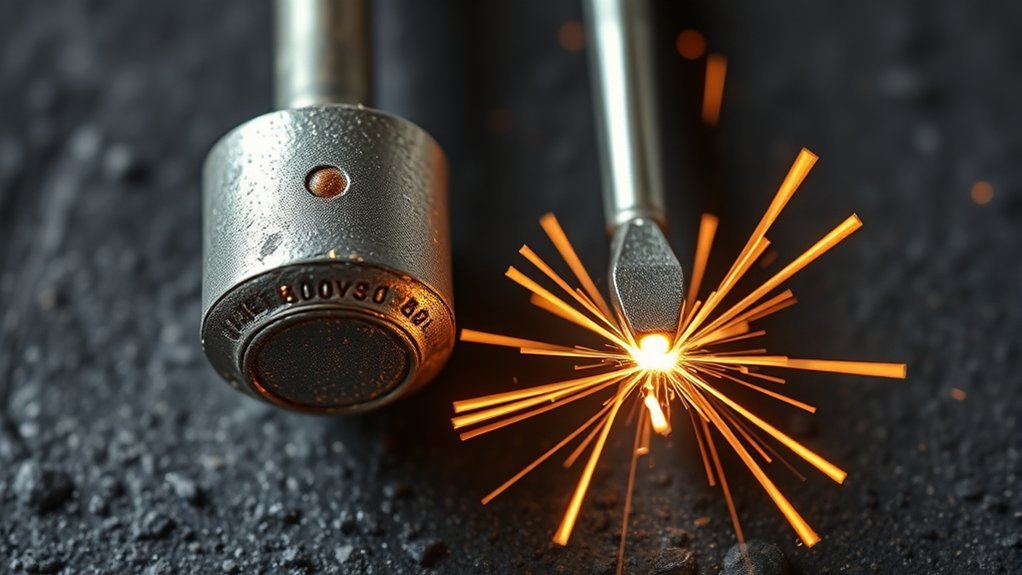
A non-consumable electrode carries current and maintains the welding arc without serving as the main filler. TIG and plasma arc welding normally use tungsten because it can tolerate high operating temperatures and maintain a concentrated arc when the setup is correct.
In TIG welding, the arc melts the joint edges. The operator may fuse those edges without filler or feed a separate filler rod into the weld pool. Separate filler control makes it possible to adjust bead size and heat input independently.
For alloy-matching guidance, use this TIG welding filler rod selection chart as a starting point, then confirm the choice against the applicable code, welding procedure, and filler-metal manufacturer data.
“Non-consumable” does not mean permanent. A tungsten electrode can erode, split, oxidize, or become contaminated. Common causes include excessive current, incorrect polarity, poor shielding, inadequate post-flow, touching the puddle, and using the wrong electrode diameter or preparation.
Tungsten Electrode Types and Preparation
Tungsten type, diameter, tip shape, current, and polarity must work together. Always follow the welding-machine manual and tungsten manufacturer’s recommendations. Common choices include:
- Lanthanated tungsten: A common modern choice for AC and DC TIG. It offers reliable starting and arc stability across a wide amperage range.
- Ceriated tungsten: Often used for low- and medium-current work where easy starts and restarts are important.
- Zirconiated tungsten: Commonly associated with AC welding and resistance to contamination when used within its rated range.
- Pure tungsten: Historically used for AC TIG with older transformer machines. Many modern inverter setups perform better with an alloyed tungsten specified by the machine manufacturer.
- Thoriated tungsten: Historically common for DC TIG, but thorium is slightly radioactive. Grinding can create contaminated dust, and handling and disposal can involve additional requirements. Review the product safety data sheet and consider a suitable non-thoriated alternative when the procedure allows it.
Miller’s current tungsten selection guide explains common color codes, current uses, and the shift toward lanthanated and ceriated electrodes for modern equipment.
Warning: Do not treat thoriated tungsten grinding dust like ordinary shop dust. Follow the electrode safety data sheet, use suitable dust collection and respiratory controls, prevent cross-contamination, and comply with local disposal requirements.
Prepare tungsten with clean equipment intended for that task. Grind marks should normally run lengthwise rather than around the electrode because circular scratches can contribute to arc wander. Remove contaminated material before reshaping the point, and never grind tungsten on a wheel loaded with steel, aluminum, or unknown metal dust.
Why You Should Consider Non-Consumable Electrodes
Non-consumable electrodes are useful when appearance, heat control, and weld-pool control matter more than maximum deposition speed. TIG is commonly chosen for stainless steel, aluminum, chromoly, thin sheet, sanitary tubing, motorsports fabrication, precision repair, and clean root passes.
The operator can establish the puddle before adding filler and can stop adding filler without extinguishing the arc. This helps on thin edges, small joints, dissimilar thicknesses, and work where excess reinforcement would be difficult to remove.
Using high-quality tungsten electrodes can improve consistency, but electrode quality cannot correct the wrong polarity, poor shielding, inadequate cleaning, or an unsuitable tungsten size.
Pro Tip: Choose TIG when precise heat and filler control justify the slower pace. Choose MIG, stick, self-shielded flux core, or gas-shielded flux core when production rate, field capability, portability, or deposition speed has greater value.
Choosing the Right Electrode: Key Factors
Start with the joint requirements, not the package label. Match the process, electrode, and filler metal to the base metal, thickness, welding position, joint design, current, polarity, shielding, service conditions, and required mechanical properties.
- Base metal: Carbon steel, stainless steel, cast iron, aluminum, nickel alloys, and other metals require compatible deposit chemistry and procedures.
- Material condition: Identify plating, paint, galvanizing, corrosion, oil, moisture, and previous repairs before selecting a process.
- Thickness: Thin sheet needs controlled heat input. Thick plate may require beveling, preheat, multiple passes, or a higher-deposition process.
- Welding position: Verify that the exact rod or wire classification is approved for flat, horizontal, vertical, or overhead welding as required.
- Joint design: Fit-up, root opening, bevel angle, backing, access, and fillet weld sizing affect penetration and electrode access.
- Required strength and toughness: Do not select filler from tensile strength alone. Impact toughness, ductility, corrosion resistance, service temperature, and hydrogen control may also matter.
- Current and polarity: Confirm whether the consumable uses AC, DCEP, DCEN, or more than one option. Use the manufacturer’s data sheet and machine manual. This stick welding amperage chart provides general starting ranges, not a substitute for product instructions.
- Shielding: MIG and TIG need external shielding gas. FCAW may be self-shielded or gas-shielded. Stick uses electrode coating, and SAW uses granular flux.
- Environment: Wind, rain, humidity, confined spaces, combustible materials, poor access, and contaminated surfaces can change the safest process.
- Procedure requirements: Structural, pressure, pipe, lifting, roll-cage, or other critical welds may require a qualified welding procedure, specified consumables, welder qualification, and inspection.
Products Worth Considering

E7018 Welding Rod: Diameter: 3/32''; Length: 14"; Weight: 5 lb.

【Versatile Welding Rod】The E6013 welding rod 3/32'' is a versatile low-carbon steel electrode that works with both AC and DC welding currents. It delivers excellent results even with low-voltage AC machines, making it ideal for a wide range of welding applications. These welding rods are suitable for both beginners and professionals.

Product Introduction: E6013 welding rod is suitable for both AC and DC applications and can be used for all position welding
Electrode Selection by Welding Process
- Stick welding / SMAW: Uses consumable coated electrodes. Select the complete classification by base metal, position, required properties, current, polarity, and procedure.
- MIG welding / GMAW: Uses continuously fed consumable solid wire with external shielding gas. It is efficient for clean material and repeatable shop fabrication.
- Self-shielded flux-cored welding / FCAW-S: Uses consumable tubular wire without external shielding gas. It is suited to many field applications, but the wire must be approved for the joint and position.
- Gas-shielded flux-cored welding / FCAW-G: Uses consumable tubular wire plus external gas. It can provide high deposition and good weld properties in controlled conditions.
- Submerged arc welding / SAW: Uses consumable wire or strip beneath granular flux. It suits long seams, heavy sections, and mechanized production.
- TIG welding / GTAW: Uses a non-consumable tungsten electrode and shielding gas. Filler is optional and added separately.
- Plasma arc welding / PAW: Normally uses a non-consumable tungsten electrode with a constricted arc. It is common in specialized, precise, or automated applications.
Products Worth Considering

[High-temperature resistant cable, safe and durable]: Specifically designed for welding workers, the 25mm² cable adopts an integrated design of copper-clad aluminum cable to ensure stable current transmission, reduce voltage fluctuations during the welding process, and improve operational efficiency. It is resistant to high temperatures, aging, flexibility and stretching, which can prevent wire damage caused by long-term use. Suitable for high-intensity environments such as construction sites and work areas.


Common Sizes and Angles: This grinding head supports multiple electrode sizes: 0.040", 1/16", 3/32", and 1/8" (1.0mm, 1.6mm, 2.4mm, 3.2mm), and offers specific angles of 15∘, 22.5∘, and 30∘. It's designed for welding beginners, professionals, and hobbyists who want high-quality welds.
Which Electrode Type Should You Choose?
| Job Priority | Likely Starting Point | Why |
| Fast shop fabrication | Consumable GMAW or FCAW-G | Continuous wire supports steady deposition and fewer electrode changes. |
| Portable field repair | Consumable SMAW or FCAW-S | These processes do not depend on an external shielding-gas envelope. |
| Thin sheet or small precision joint | Non-consumable GTAW | Heat and filler can be controlled separately. |
| Clean stainless or aluminum fabrication | GTAW or a suitable consumable-wire process | The best choice depends on thickness, appearance, production rate, and procedure requirements. |
| Long heavy industrial seams | Consumable SAW | Mechanized wire and flux systems support high deposition on suitable joints. |
| Code-regulated or life-safety weld | The process and consumable specified by the approved procedure | Personal preference does not replace engineering, code, qualification, or inspection requirements. |
How Electrode Choice Affects Weld Quality
Electrode choice affects arc behavior, bead shape, penetration, deposition chemistry, mechanical properties, appearance, and defect risk. A suitable electrode helps the weld pool fuse into the joint while maintaining the shielding and deposit properties required by the procedure.
With consumable electrodes, the classification, diameter, wire type, amperage, voltage, polarity, travel speed, and stickout all affect metal transfer and fusion. Poor combinations can contribute to cracking, undercut, lack of fusion, slag inclusion, porosity, or excessive spatter.
With non-consumable electrodes, tungsten type, size, preparation, polarity, shielding, arc length, and filler selection affect arc stability and weld cleanliness. Touching the tungsten to the puddle can introduce tungsten or other contamination and may require the damaged section to be removed and reground.
The best electrode is not simply the one that lasts longest or deposits metal fastest. It is the electrode that matches the process, base metal, position, service conditions, heat input, and required weld properties.
Safety and Storage Checks Before You Weld
Electrode selection is also a safety decision. Welding can expose workers to metal fumes, gases, ultraviolet radiation, heat, sparks, fire, burns, and electrical hazards. Exposure changes with the process, base metal, filler metal, coating, work location, air movement, ventilation, and operator position. Review OSHA’s Welding, Cutting, and Brazing guidance before planning hot work.
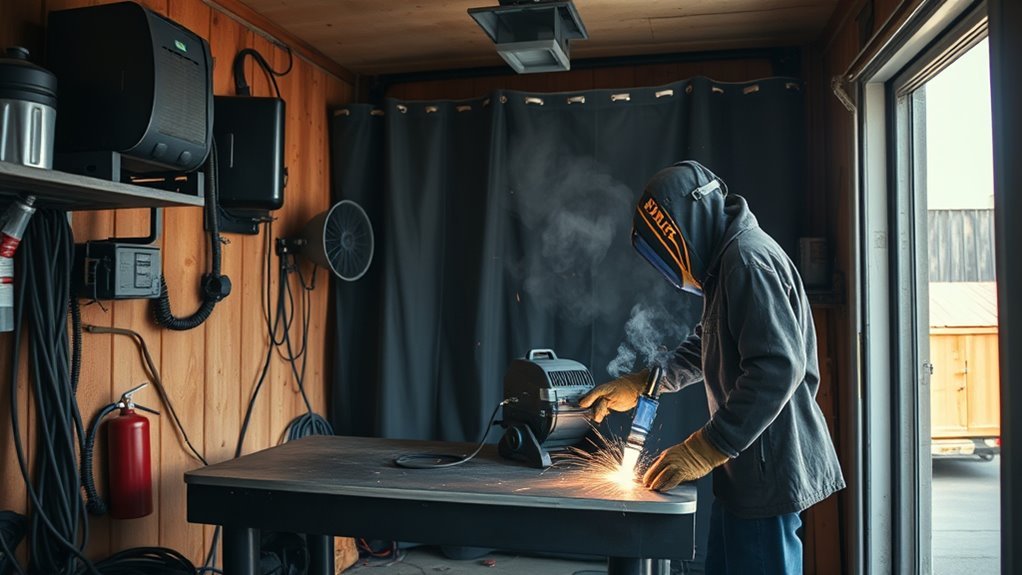
Warning: Do not weld in a confined or enclosed space without the required permit, atmospheric evaluation, ventilation, fire controls, rescue provisions, and respiratory protection. Never use oxygen as ventilation. Outdoor or open-shop welding does not automatically provide safe fume control.
- Identify coatings and plating: Determine whether the metal contains zinc, lead, cadmium, chromium, mercury, paint, preservative coatings, or other hazardous materials. Review safety data and the applicable exposure requirements before cleaning or welding.
- Keep chlorinated solvents away: Do not weld where vapors from chlorinated degreasers or cleaners can reach the arc or ultraviolet radiation from gas-shielded welding.
- Clean the joint safely: Remove oil, grease, moisture, rust, paint, plating, and solvent residue using a method that controls the dust, fumes, fire risk, and waste created by removal.
- Keep stick electrodes dry: Store each classification according to its manufacturer instructions. Low-hydrogen electrodes can absorb moisture and may require controlled storage, holding, or approved redrying.
- Do not guess at redrying: Some coatings can be damaged by incorrect heating. Follow the exact consumable manufacturer’s temperature, time, exposure, and redrying limits.
- Inspect consumables: Reject rods with damaged, contaminated, or unsuitable coatings. Check wire for rust, dirt, moisture, and feeding damage.
- Control fumes at the source: Use local exhaust ventilation and keep the extraction inlet close enough to capture the plume without disturbing shielding gas.
- Stay out of the plume: Position your head and body so fumes move away from your breathing zone. Respiratory protection may be required when ventilation and work practices do not reduce exposure adequately.
- Wear complete PPE: Use a suitable welding helmet and shade, safety glasses, welding gloves, flame-resistant clothing, proper footwear, and hearing protection where needed.
- Protect nearby people: Use screens, barriers, fire watches, and access controls to protect others from arc radiation, sparks, fumes, and hot material.
- Follow the approved procedure: Critical work may require a welding procedure specification, specified filler metal, welder qualification, preheat, interpass control, and inspection.
OSHA’s Controlling Hazardous Fume and Gases during Welding fact sheet explains common exposure factors, ventilation methods, breathing-zone positioning, and respiratory-protection considerations.
Common Electrode Problems and Fixes
- Porosity: Check for wind, gas leaks, incorrect flow, blocked nozzles, excessive stickout, damp consumables, moisture, oil, coatings, and contaminated base or filler metal.
- Slag inclusion: Clean between passes, use a suitable work angle, avoid trapping slag at sidewalls, and confirm that travel speed and joint access allow slag to rise.
- Unstable stick arc: Verify amperage, polarity, arc length, cable connections, work-clamp contact, coating condition, and electrode compatibility with the power source.
- Unstable TIG arc: Check polarity, tungsten type, diameter, point preparation, arc length, shielding, contamination, and the weld-circuit connections.
- Tungsten contamination: Stop welding, remove the contaminated section, regrind with clean equipment, restore gas coverage, and avoid touching the puddle or filler.
- Tungsten overheating or splitting: Reduce current or use the correct larger diameter, verify polarity and AC balance, and confirm adequate shielding and post-flow.
- Cracking: Check filler compatibility, hydrogen control, preheat, interpass temperature, cooling rate, restraint, joint design, and the required welding procedure.
- Excessive spatter: Correct voltage, wire-feed speed, polarity, contact-tip-to-work distance, gas mix, transfer mode, and surface preparation.
- Wire-feeding problems: Inspect the drive-roll type and pressure, liner, contact tip, spool tension, wire condition, and gun-cable routing.
- Repeated defects: Stop changing settings at random. Record the consumable, polarity, gas, settings, joint condition, and technique so the true cause can be isolated.
Frequently Asked Questions
What is the difference between a consumable and non-consumable electrode?
A consumable electrode melts and supplies deposited weld metal. A non-consumable electrode carries the arc but is not intended to provide the main filler. Stick, MIG, flux-cored, and submerged arc welding use consumable electrodes. TIG and plasma arc welding normally use non-consumable tungsten.
What are examples of non-consumable electrodes in welding?
The most common modern examples are tungsten electrodes used in TIG/GTAW and plasma arc welding. Tungsten may be lanthanated, ceriated, zirconiated, pure, thoriated, or another approved alloy. Match its type and diameter to the machine, current, polarity, amperage, and procedure.
Which welding processes use consumable electrodes?
SMAW or stick welding, GMAW or MIG welding, FCAW or flux-cored welding, and SAW or submerged arc welding use consumable electrodes. The electrode may be a coated rod, solid wire, tubular wire, metal-cored wire, strip, or submerged arc wire.
Which welder uses a non-consumable electrode?
A TIG welder, also called a GTAW welder, uses a non-consumable tungsten electrode. The tungsten creates the arc, while filler is added separately when needed. Plasma arc welding also normally uses a non-consumable tungsten electrode.
Is TIG filler rod an electrode?
No. TIG filler rod is a consumable filler metal, but the tungsten is the electrode connected to the welding circuit. The filler rod is fed separately into the weld pool and does not normally carry the welding current.
Does a non-consumable electrode ever wear out?
Yes. “Non-consumable” means the electrode is not intended to become filler metal. Tungsten still erodes and can be damaged by excessive current, poor shielding, oxidation, incorrect polarity, repeated grinding, or contact with the weld pool.
Can every flux-cored electrode be used outdoors?
No. Self-shielded FCAW wire does not need external shielding gas and is commonly used for field work. Gas-shielded FCAW still depends on an external gas envelope, so wind can cause loss of shielding and porosity unless suitable protection is provided.
Is TIG always better than MIG or stick welding?
No. TIG is useful for precision, controlled heat, and clean appearance. MIG, flux-cored, submerged arc, and stick welding can be better for production speed, field repairs, portability, or thick material. The correct process depends on the joint and its service requirements.
Conclusion
The difference between consumable and non-consumable electrodes is how the process supplies filler metal. A consumable electrode carries the arc and melts into the weld. A non-consumable electrode carries the arc while filler is controlled separately or omitted.
Consumable electrodes suit many repair, structural, fabrication, and production jobs because they deposit metal efficiently. Non-consumable tungsten gives TIG and plasma welding precise arc control for thin, clean, or demanding joints.
Choose the electrode only after confirming the process, base metal, joint, position, shielding, current, polarity, service conditions, and required weld properties. Then support that choice with clean material, correct storage, safe ventilation, complete PPE, and the approved procedure for the work.
Sources
- OSHA: Controlling Hazardous Fume and Gases during Welding — process classifications, fume sources, ventilation, coatings, positioning, and respiratory controls.
- OSHA 29 CFR 1910.252: General Welding Requirements — confined-space ventilation, hazardous metals, cleaning compounds, and respiratory protection requirements.
- Lincoln Electric: AWS Classifications — interpretation of common SMAW electrode classifications such as E6010 and E7018.
- Lincoln Electric: FCAW Cored Wires Overview — differences between self-shielded and gas-shielded flux-cored electrodes.
- Lincoln Electric: Storing and Redrying Electrodes — moisture control, storage, holding, and manufacturer-specific redrying guidance.
- Miller: Tungsten Types, Selection, and Use — modern tungsten choices, color codes, performance, and thoriated-tungsten safety considerations.