Duty cycle limits tell you how long you can weld within a 10-minute span before your machine needs cooling time. In auto body work, that rating affects repair speed, panel heat control, bead consistency, and equipment life. If you exceed the rating, the welder may overheat, shut down, or deliver unstable output that hurts weld quality. Match the amperage to the repair, track arc-on time, and use cooling breaks as part of the job instead of treating them as lost time.
Quick Answer
Welder duty cycle is the percentage of a 10-minute period you can weld at a stated amperage before the machine must cool. A 40% duty cycle means 4 minutes of arc time and 6 minutes of rest. In auto body welding, respecting that limit helps prevent thermal shutdowns, unstable arcs, and overheated panels.
Key Takeaways
- Duty cycle is tied to a specific amperage, so a welder may have one rating at 140 amps and a much lower rating at 200 amps.
- Only count arc-on time, not the time spent fitting panels, brushing welds, or adjusting clamps.
- Higher amperage, blocked airflow, hot shop conditions, weak input power, and dirty vents can shorten usable welding time.
- Auto body panels usually need short, spaced welds to control distortion, even when the welder has a high duty cycle.
- If the thermal overload light comes on, stop welding and let the fan cool the machine instead of forcing another pass.
At a Glance
| Time Required | 2-5 minutes to read the rating and plan work/rest cycles before welding |
| Difficulty | Beginner-friendly math, but requires attention during actual welding |
| Tools Needed | Welder rating plate or manual, timer, PPE, clean power source, and clear airflow around the machine |
| Cost | No extra cost unless you need better ventilation, longer cooling time, or a higher-capacity welder |
What Duty Cycle Means in Auto Body Welding

In auto body welding, duty cycle is the percentage of a 10-minute period that you can weld at a stated output before the machine needs to cool. You use this rating to judge how long your welding machine can run before heat builds beyond its safe operating range.
If your MIG welder has a 40% duty cycle at 180 amps, you can weld for 4 minutes, then let it rest for 6 minutes. That limit is not a defect. It is the operating boundary that helps protect the machine from thermal stress and keeps output more stable.
A 40% duty cycle means 4 minutes of arc-on welding time, followed by 6 minutes of cooling time within the same 10-minute cycle.
A higher duty cycle, such as 60% to 100%, lets you weld longer with fewer pauses. That matters when you are doing repeated plug welds, longer structural seams, or shop work where the welder runs often throughout the day.
On thin body panels, though, a higher duty cycle does not mean you should run one long bead. You may still need short, spaced welds to reduce warping and burn-through. Understanding flux core welding can also help you adjust technique when shielding conditions, wire type, or outdoor work affect heat and arc control.
Why Duty Cycle Matters for Repairs
Duty cycle matters because it sets the safe pace for your repair. When you weld past the rating, the machine can overheat, the arc may become unstable, and thermal overload protection may shut the welder down. That interruption can slow the job, but the bigger concern is poor heat control on thin automotive metal.
| Rating | Arc-On Time | Cooling Time |
|---|---|---|
| 60% @ stated amps | 6 min | 4 min |
| 40% @ stated amps | 4 min | 6 min |
| 30% @ stated amps | 3 min | 7 min |
| Lower amperage setting | Usually longer | Usually shorter |
| Blocked airflow or hot shop | May shrink | May increase |
You will keep repair flow tighter when you match amperage settings to the task and respect cooling periods. MIG welders can benefit from higher duty-cycle capacity during repeated repairs, but the rating is only useful if you read it at the amperage you are actually using. Understanding welding current helps you control heat input and reduce the chance of overheating the machine or the panel.
Warning: Do not use duty cycle as permission to run long beads on thin body panels. The machine may handle the arc time, but the panel can still warp, oil-can, or burn through if heat is concentrated in one spot.
How to Calculate Welder Duty Cycle
To calculate welder duty cycle, divide the actual arc-on time by a 10-minute cycle and multiply by 100:
Duty Cycle (%) = (Actual Arc-On Time / 10) × 100
Count only the time the arc is active. Do not count time spent lining up a patch panel, changing clamps, brushing a weld, or waiting with the trigger released.
If you weld for 4.5 minutes at 180 amps within a 10-minute span, the duty cycle is 45%. That means the machine needs the remaining 5.5 minutes to cool before you start the next full 10-minute cycle at the same load.
To find safe runtime from a published rating, reverse the formula:
Maximum arc-on time = duty cycle percentage divided by 100, then multiplied by 10 minutes.
Maximum Operating Time = (Duty Cycle % / 100) × 10
A 30% rating at 220 amps means 3 minutes of welding, then 7 minutes off. A 70% rating means 7 minutes of welding, then 3 minutes off. Higher amperage usually shortens duty cycle, while lower amperage usually extends it. The exact change depends on the welder’s design, cooling system, input power, and manufacturer rating.
When you calculate correctly, you control heat, protect the machine, and keep your repair process efficient. It also helps you spot whether a performance issue is a duty-cycle problem or a separate fault. If the machine will not hold a stable arc even within its rating, review the importance of MIG welder functionality before assuming the duty cycle is the only cause.
How to Read the Duty Cycle Rating
Always read the rating exactly as written on the machine label, specification sheet, or manual. Duty cycle is not a single number that applies at every setting. It is tied to output.
- Example: 20% at 200 amps means 2 minutes welding and 8 minutes cooling at 200 amps.
- Example: 60% at 140 amps means 6 minutes welding and 4 minutes cooling at 140 amps.
- Example: 100% at a lower amperage means the machine can run continuously at that lower rated output under the stated test conditions.
If you lower amperage for thin sheet metal, your usable runtime often improves. If you turn the machine up for thicker brackets, plug welds, or frame-adjacent work, your allowed arc time usually drops.
Note: A duty-cycle rating is usually tested under controlled conditions. Real shop conditions, such as a hot bay, dust inside the welder, poor airflow, or low input voltage, can reduce your practical margin.
Duty Cycle Needs for MIG, TIG, and Stick
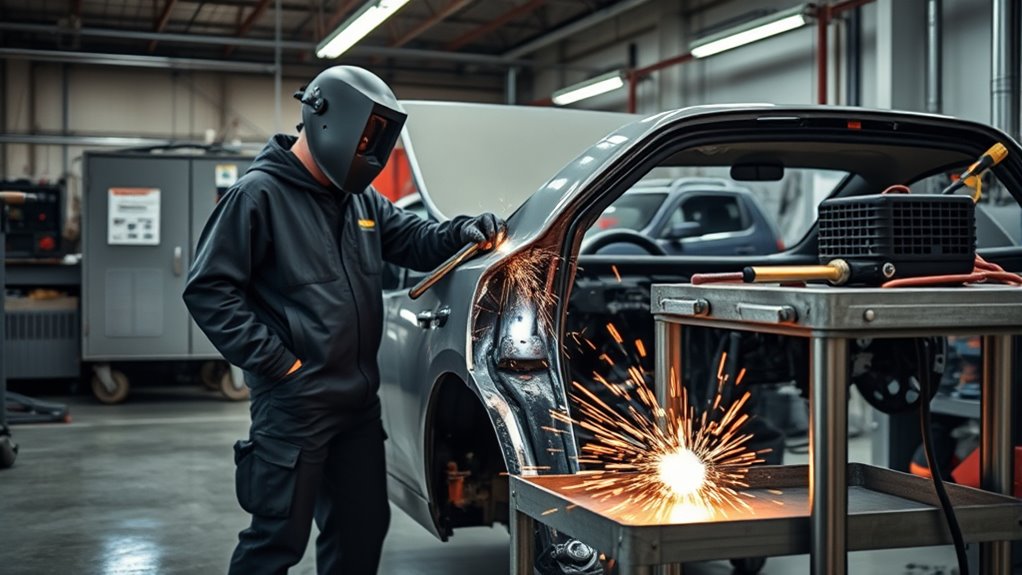
Different welding processes stress a machine in different ways. MIG can place steady demand on the power source because the wire feed allows repeated welds with short reset time. TIG may run longer at lower amperage, especially on thin material, but higher TIG amperage still lowers duty cycle. Stick welding often happens in bursts because you stop to replace electrodes and chip slag, yet heavy stick work can still overload a small machine if you ignore its rating. Maintaining proper duty cycles helps avoid overheating and keeps welding output more consistent.
Products Worth Considering

【Super Mini & Easy Carry】WINBEGIN ARC125 stick welder is engineered with super mini size, portable, grab easily and exquisite. Dimension: 9"×13.5"×3.5", weight only 5.0 lbs. Comes with adjustable shoulder strap for hands-free carrying. Perfect for high-altitude work, scaffolding, or tight job sites. This mini welder fits in any truck or toolbox.

【Saker Portable Welder with Advanced IGBT Inverter】Our Saker portable welder integrates cutting - edge IGBT inverter technology, This 110V welder ensures stable current and powerful welding performance. It effectively minimizes damage to carbon steel and iron while boosting overall efficiency and reliability. Designed for easy arc initiation and minimal spatter, it delivers smooth welds. Even beginners can achieve clean seams with our automatic current adjustment.

💪200A POWER & PORTABLE DESIGN: Weld metals up to 1/4" thick (0.06-0.2") including stainless steel, alloy steel, carbon steel, and copper. Compact size (8.6x4.1x5.5") and ultra-lightweight (5 lbs) with shoulder strap make it easy to carry for jobs anywhere – high altitude, indoors, or outdoors. Enjoy extended welding sessions without overheating, backed by a solid 60% duty cycle for professional results.
MIG Duty Cycle Demands
MIG welding often benefits from a higher duty cycle because it is fast, repeatable, and commonly used for plug welds, patch panels, brackets, and longer shop sessions. A machine with only 20-30% duty cycle at the amperage you need may be fine for small repairs, but it can slow you down during repeated work.
For auto body panels, the goal is not to run one long bead. You usually control heat with tacks, stitch welds, skip spacing, and cooling pauses. A higher duty cycle gives the machine more capacity, but panel heat still has to be managed separately.
Use the machine’s duty cycle ratings to match the setting to the task, keep heat in check, and avoid downtime. That lets you work with cleaner seams, steadier output, and fewer forced stops.
TIG and Stick Needs
TIG welding can have long arc-on time at lower amperage, which is one reason a high duty-cycle TIG machine is useful for careful thin-metal work. However, the rating still drops as amperage rises. If you move from thin sheet metal to thicker tabs or aluminum, watch the duty-cycle rating more closely.
Stick welding usually works in shorter bursts because each electrode has a natural stop point. Many smaller stick welders have modest duty-cycle ratings at high amperage, but the process itself gives you built-in pauses when you change rods, chip slag, or reposition the work.
In both TIG and stick welding, choose the setting that matches the metal, joint thickness, and arc time. A controlled pause is better than a thermal shutdown in the middle of a repair.
What Lowers Duty Cycle on the Job
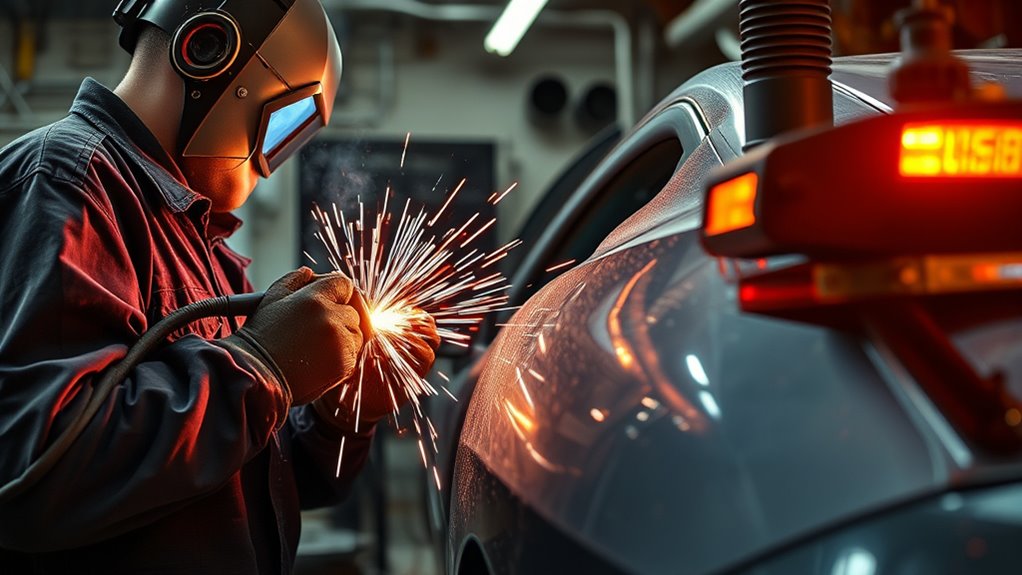
Your duty cycle drops when you run higher amperage because the welder generates more heat and needs longer cooling intervals. Thicker material, repeated welds, high voltage settings, and long arc time all raise thermal load.
Hot ambient conditions make that worse by reducing the machine’s cooling margin. Dusty vents, blocked fan paths, unstable input power, and undersized extension cords can also make the welder work harder than expected. Although gas pressure needs are a different issue on plasma cutting equipment, the same shop principle applies: poor setup makes heat and performance problems more likely.
Higher Amperage Use
Higher amperage settings reduce duty cycle because they create more heat inside the welder. At a machine’s higher output range, cooling time becomes a hard constraint.
For example, a welder rated 30% at 200 amps can weld for 3 minutes and needs 7 minutes to cool in each 10-minute cycle. That may be acceptable for a few plug welds, but it can feel slow during a long repair session.
The tradeoff matters when you join thicker brackets or reinforcement areas where higher amperage may be necessary. If you push close to the machine’s limit, thermal overload becomes more likely and weld quality may suffer from unstable output or rushed technique.
Heat and Environment
Heat and site conditions can cut practical duty-cycle margin just as quickly as amperage settings. Elevated ambient temperature, direct sunlight, poor airflow, and a cramped corner of the shop can all make it harder for the welder to shed heat.
- High heat raises internal component temperature and shortens cooling margin.
- Blocked vents or dust buildup trap heat inside the case.
- Confined spaces and direct sunlight increase thermal load and require tighter planning.
You also need to watch material thickness and power stability. Thicker panels push amperage up, while weak generator or outlet voltage can increase strain on the machine. Manage placement, airflow, and scheduling to protect performance and reduce avoidable shutdowns.
Dirty Vents and Weak Input Power
A welder cannot cool properly if the fan path is packed with grinding dust or the case is pushed against a wall. Keep the intake and exhaust areas open, and blow dust out only according to the manufacturer’s instructions.
Input power matters too. Long, undersized extension cords can cause voltage drop. That may lead to poor arc behavior, extra heat, and nuisance shutdowns. Use the outlet, breaker, cord size, and generator capacity recommended for your machine.
How to Spot Duty Cycle Limits
When a welder approaches its duty-cycle limit, you may see the machine lose consistency before it shuts down completely. Watch for declining arc stability, reduced output, or a fan that runs hard while the case feels hot. Odd sounds, vibration, or a thermal warning light mean the machine needs a break. Always include proper equipment inspections in your shop routine so small problems do not turn into failures.
| Signal | Likely Meaning | What to Do |
|---|---|---|
| Arc flicker | Output is becoming unstable | Pause and check settings, ground, wire feed, and heat |
| Hot case or loud fan | Thermal load is high | Let the fan run and improve airflow |
| Thermal light or auto shut-off | Thermal protection has engaged | Stop welding until the machine resets |
If the arc becomes unstable, pause before quality drops. Many welders protect themselves with automatic shut-off, but you should not wait for it. You gain control by reading the machine’s behavior early, then breaking before the repair suffers.
What Duty Cycle Rating Fits Auto Body Work
A duty cycle rating of at least 40% at the amperage you actually use is a practical baseline for many auto body work tasks, especially panel repair that uses frequent short welds. For heavier shop use, a higher rating gives you more margin.
- For small patch panels and tack work, a modest duty cycle may be enough because arc-on time is short.
- For repeated MIG plug welds or longer seams, choose 60% or higher at the output you expect to use.
- For all-day repair bay work, a 60-80% machine at common shop amperage gives you more steady output and fewer forced cooling breaks.
You should match the machine to the task, not the marketing number. A higher duty cycle lets you work with less interruption, while still respecting the limits of your equipment. Understanding duty cycle across shop equipment can also help you compare machines more realistically.
That control matters when you are shaping clean repairs on automotive materials and aiming for reliable, repeatable results.
Auto Body Duty Cycle Planning Example
Suppose you are welding a small patch panel with a MIG welder rated 40% at your chosen setting. You have 4 minutes of arc-on time in each 10-minute cycle. That does not mean you should weld for 4 straight minutes on the panel. Instead, use the rating to plan a controlled rhythm.
- Make a few short tack welds spaced apart.
- Stop and let the panel cool while you inspect fitment.
- Brush or clean the weld area during the machine’s cooling time.
- Move to another section instead of stacking heat in one spot.
- Return only after the panel and machine have had time to cool.
This method protects both the welder and the sheet metal. The machine stays within its duty cycle, and the panel is less likely to warp.
Pro Tip: Use cooling breaks for useful tasks: test-fit the next piece, check panel alignment, brush the weld, inspect the backside, or move clamps. That keeps the job moving without overheating the welder.
How to Prevent Overheating and Extend Duty Cycle
To prevent overheating and preserve duty cycle, manage amperage, cooling time, airflow, and thermal load together.
Keep amperage within spec because higher output cuts duty cycle fast and raises overheating risk. If you can weld safely at a lower setting without sacrificing penetration, you often gain more usable runtime.
Schedule cooling breaks before the case gets hot. At a 30% rating, three minutes of arc time should be followed by seven minutes off. Use shorter welds and intermittent passes to reduce heat concentration and keep the torch stable.
Clean the welder, vents, and fan paths so airflow stays unrestricted. Dust traps heat and weakens cooling. You should also factor in environmental factors: heat, direct sun, and poor airflow push the machine harder. On equipment that uses compressed air, make sure you meet the correct air pressure requirements so the tool is not fighting preventable heat or performance problems.
When you control these variables, you extend practical duty-cycle margin, avoid shutdowns, and weld with better consistency.
Safety and Setup Checks Before You Weld
Duty cycle protects the machine, but it does not replace welding safety. Before auto body welding, clear fire hazards, protect nearby surfaces from sparks, and keep suitable extinguishing equipment ready. OSHA’s welding, cutting, and brazing requirements cover fire prevention, eye protection, and ventilation expectations for workplace welding.
Use a welding helmet or hand shield for arc welding, wear gloves and flame-resistant clothing, and protect nearby helpers or bystanders. Welding fumes can contain metals and gases, and NIOSH notes that welding fume exposure varies based on wire, rods, flux, base metal, and work conditions. Confined spaces can increase exposure, so do not weld in poorly ventilated areas without the right controls.
Warning: If a thermal overload shuts the welder down, do not bypass protection, block the fan, or keep pulling the trigger. Leave the machine powered as directed by the manual so the fan can cool it, then restart only after the warning clears.
Frequently Asked Questions
What is a duty cycle and how does it affect welding?
A duty cycle tells you how long you can weld within a 10-minute period at a stated amperage before the welder needs cooling time. It affects repair speed, heat management, arc stability, equipment life, and weld consistency.
How long can you weld with a 60% duty cycle?
You can weld for 6 minutes in every 10-minute cycle at the amperage tied to that 60% rating. The remaining 4 minutes are cooling time. If you raise amperage above that rated point, the safe runtime may be shorter.
What does 70% duty cycle mean?
A 70% duty cycle means the welder can run for 7 minutes and should cool for 3 minutes in each 10-minute cycle at the stated output. It gives more working time than a 30% or 40% rating, but it still has a limit.
What does a 60% duty cycle mean?
A 60% duty cycle means 6 minutes of welding and 4 minutes of cooling in a 10-minute span. Always check the amperage next to the rating, because 60% at 140 amps is not the same workload as 60% at 220 amps.
Does lower amperage increase duty cycle?
Usually, yes. Lower amperage creates less heat inside the welder, so the machine can often run longer before it needs cooling time. Check your welder’s manual or rating plate because each model has its own output curve.
What happens if you exceed the welder duty cycle?
The welder may overheat, trigger a thermal warning, shut down, or produce unstable output. Repeatedly exceeding the rating can shorten equipment life and cause inconsistent welds. Stop welding, let the fan cool the machine, and resume only after it resets.
Conclusion
When you match your welder’s duty cycle to the job, you keep your repair rhythm steady and your welds cleaner. You avoid thermal shutdowns, protect the torch and power source, and preserve metal integrity. In auto body work, that means less warping, fewer interruptions, and better control on thin panels. Read the rating at the amperage you plan to use, track arc-on time, and let the machine cool before heat turns into a flaw.
Sources
- ZENA Welding Systems: Welder duty cycle FAQ — supports the 10-minute duty-cycle concept and weld/rest timing.
- OSHA 1910.252: Welding, Cutting, and Brazing General Requirements — supports fire prevention, eye protection, and ventilation safety points.
- CDC/NIOSH: Welding Fumes and Manganese — supports welding fume exposure and confined-space caution.