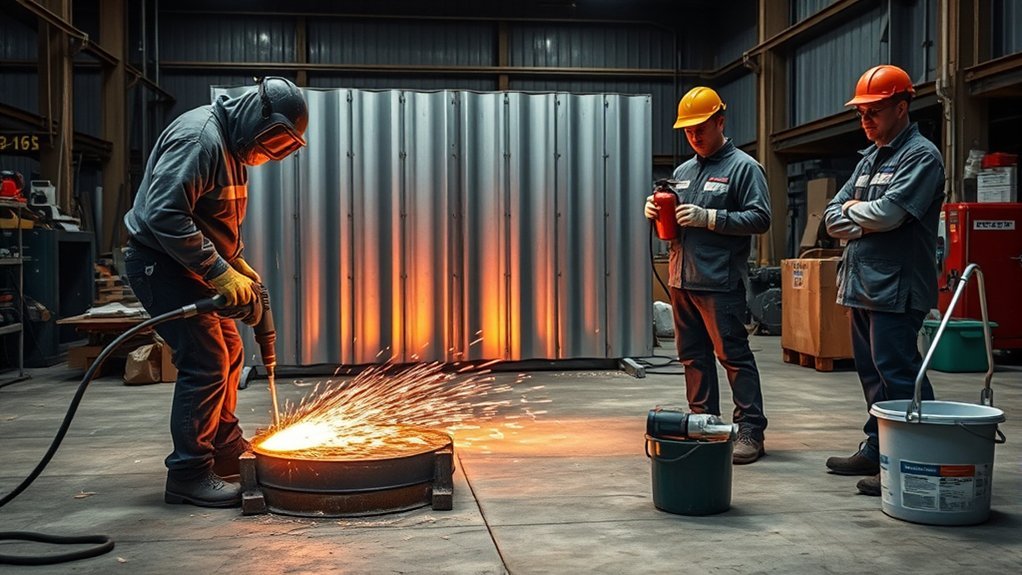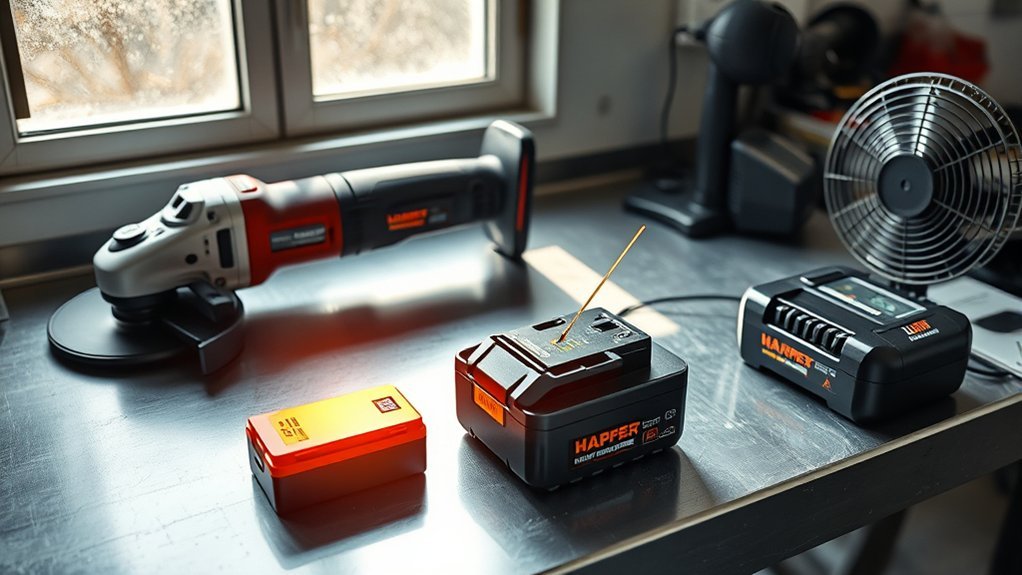
Heat is one of the fastest ways to weaken cordless angle grinder batteries. A hot pack may run for less time, charge more slowly, shut the tool down, or become unsafe if it is damaged, overcharged, or used past the limits in the manual. You can protect the battery by working in shorter cycles, keeping packs out of direct sun, using the correct charger, and letting a hot battery cool naturally before charging or reuse.
Quick Answer
Heat reduces cordless angle grinder battery runtime, speeds up long-term capacity loss, and can trigger thermal protection or thermal runaway in damaged lithium-ion packs. Store batteries in a cool, dry place, keep them shaded during work, stop using packs that feel too hot, and never charge a hot, swollen, leaking, or damaged battery.
Key Takeaways
- A storage target around room temperature, about 59°F to 77°F, is ideal, but your battery manual sets the exact charging and use limits.
- Stop using a pack if it is too hot to touch, swollen, cracked, leaking, smoking, melting, or giving abnormal charger or fuel-gauge signals.
- Cool a hot battery with time and room-temperature airflow only. Do not use ice, water, a freezer, or rapid temperature changes.
- Use original manufacturer batteries and chargers because cordless tool packs rely on brand-specific battery-management controls.
- Angle grinder sparks can start fires, so keep hot work away from rags, dust, fuel, solvents, dry grass, and other flammable material.
At a Glance
| Time Required | 30 seconds for a quick heat check; 30 to 60 minutes for a safe cool-down if the pack is hot. |
| Difficulty | Easy, but damaged lithium-ion batteries require caution and proper recycling. |
| Tools Needed | Clean dry cloth, shaded work area, room-temperature fan if needed, original charger, and a safe battery storage case. |
| Cost | Usually $0 for prevention; replacement cost depends on battery voltage, amp-hour rating, and brand. |
How Heat Affects Battery Performance
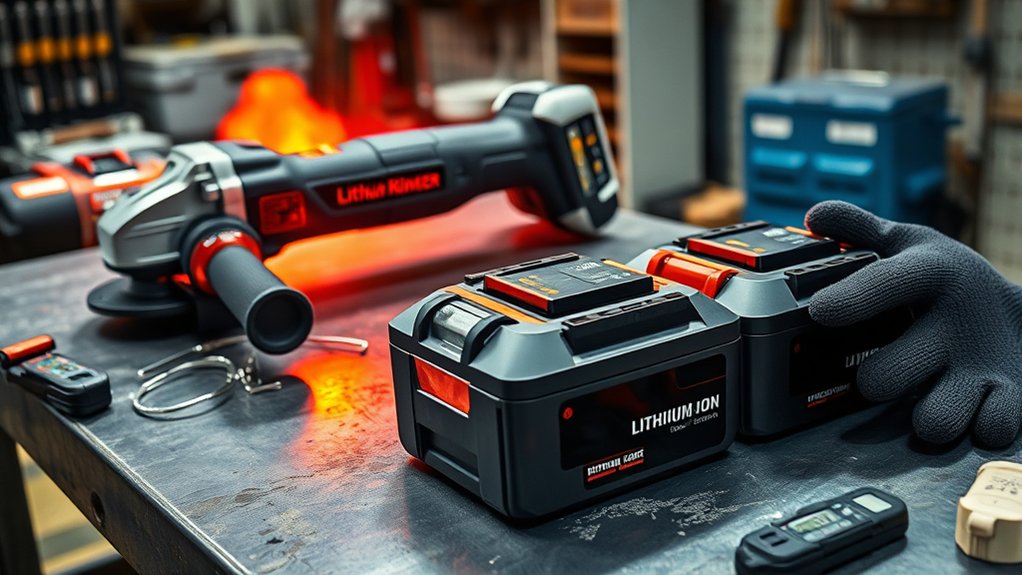
Most cordless angle grinders use lithium-ion battery packs. These packs work well because they store a lot of energy in a small case, but heat puts stress on the cells and the electronics inside the pack. High heat can increase internal resistance, reduce runtime, slow charging, and cause the tool or charger to shut down to protect the battery.
A good storage target is a cool room-temperature space, roughly 15°C to 25°C (59°F to 77°F). That target is not the same as every brand’s charging limit. Some manuals allow a wider range, while others warn against charging below about 40°F or above about 105°F. Always follow the battery, charger, and tool manual for your exact system.
Manufacturer warnings also show why hot storage matters. Milwaukee states that permanent capacity loss can result if lithium-ion packs are stored for long periods at high temperatures over 49°C. DEWALT advises users to store and charge batteries in a cool, dry place, avoid liquids and extreme temperatures, and stop using packs with visible damage or cracks. You can read more in the Milwaukee lithium-ion battery instructions and DEWALT battery safety guidance.
Warning: Do not use, charge, or store a battery that is swollen, cracked, leaking, smoking, melting, hissing, or too hot to touch. Move away from the pack if it shows signs of thermal runaway, and follow local emergency and recycling guidance.
Identifying Signs of Overheating in Batteries
You can often spot battery heat trouble before the pack fails. Pay attention to how the battery feels, how the grinder runs, and how the charger responds. A pack that simply feels warm after hard grinding may be normal. A pack that feels painfully hot, looks deformed, smells odd, leaks, smokes, or keeps shutting down is not normal.
Common Overheating Indicators
Common warning signs include swelling, a distorted case, cracked plastic, melted areas, liquid leakage, smoke, a chemical smell, unusual fuel-gauge flashing, or a charger that refuses to charge the pack. You may also notice sudden runtime loss, repeated tool shutdowns, or weak grinder performance even after a full charge.
The OSHA lithium-ion battery safety fact sheet explains that thermal runaway can involve rising battery temperature, gas or vapor venting, smoke, fire, explosions, and hazardous chemical byproducts. Treat these signs as a safety issue, not just a performance problem.
Preventive Measures To Take
Use these steps to reduce heat buildup and extend battery life:
- Keep the pack shaded: Do not leave batteries on hot concrete, inside a vehicle, on a metal bench in the sun, or near a heater.
- Use shorter grinding cycles: Heavy cutting and grinding draw high current. Pause between passes so the grinder and pack can shed heat.
- Rotate spare batteries: Swapping between two packs is better than forcing one hot pack through nonstop work.
- Use the correct wheel: A dull, wrong, oversized, or binding disc increases load and battery heat.
- Keep vents clear: Dust and debris around tool vents trap heat. Clean the grinder exterior with the battery removed.
- Use original system parts: Use the battery and charger recommended by the tool maker. The Power Tool Institute notes that power-tool battery systems use brand-specific controls for functions such as temperature, energy flow, and cell balance.
Pro Tip: If the grinder shuts down during a hard cut, do not keep pulling the trigger. Remove the pack, check the disc and workpiece for binding, and let the battery cool before restarting.
Safe Use of Grinders in Hot Weather
Hot weather makes cordless grinder batteries work harder. The pack starts warmer, the motor heats faster, and the charger may delay charging until the cells cool. Plan the job so the battery is not exposed to heat before the work even begins.
Start by storing charged packs indoors or in a shaded case until you need them. Set up your cutting or grinding area out of direct sun when possible. If you are working outside, place spare packs on a clean, dry, nonconductive surface rather than on hot metal, asphalt, or concrete.
During use, listen and feel for changes. Slower wheel speed, repeated shutdowns, or a pack that becomes too hot to hold are signs to stop. Remove the battery from the tool and let it cool in open air. Do not put a hot battery straight onto the charger unless your manual says the charger is designed to manage that condition.
Hot weather also raises fire risk around grinding sparks. OSHA’s angle grinder guidance warns that grinders generate sparks and that the work area should be clear of debris and flammable materials. Keep oil-soaked rags, solvents, fuel, sawdust, dry grass, cardboard, and combustible dust away from the grinding zone. See OSHA’s angle grinder safety talk for more grinder safety basics.
Products Worth Considering

【Cordless Use/High Capacity Battery】Cordless angle grinder runs on 16.8V lithium battery, cordless design eliminates the hassle of tangled cables, easy to carry, can be...
Cooling Techniques for Overheated Batteries
If a cordless angle grinder battery overheats, the safest first step is to stop using it. Cooling should be slow, dry, and controlled. Never try to force a rapid temperature drop with ice, water, a freezer, a refrigerator, or compressed air that can blow grit or moisture into the pack.
Natural Cooling Methods
Use this safe cool-down method for a battery that is hot but not smoking, leaking, swelling, or burning:
- Turn the grinder off and wait for the wheel to stop completely.
- Remove the battery from the tool.
- Set the pack on a clean, dry, nonflammable or nonconductive surface.
- Keep it away from paper, rags, fuel, solvents, dust, and other combustibles.
- Let it cool at room temperature for at least 30 minutes, longer if it still feels hot.
- Inspect the case, contacts, and charger behavior before using it again.
If the pack is smoking, melting, leaking, hissing, sparking, or on fire, do not handle it. Move people away from the area and follow emergency procedures. The Fire Safety Research Institute notes that lithium-ion battery incidents can involve overheating, fires, explosions, flammable gas release, and other hazards. Its lithium-ion battery guide explains these risks in more detail.
Active Cooling Options That Are Safe
Active cooling should not mean forcing cold onto the battery. Safe active cooling means gentle airflow and smarter work habits. A room-temperature fan can help move warm air away from a pack sitting in a safe location. A charger with hot/cold pack delay can also protect the pack by waiting until the temperature is inside the allowed charging range.
| Cooling Method | Safe Use | Avoid |
|---|---|---|
| Room-temperature airflow | Place the battery in shade with open air around it. | Do not blow dust, water, or shop debris into the contacts. |
| Fan at a safe distance | Use a fan to move room-temperature air across the pack. | Do not use ice, freezer air, or wet towels. |
| Battery rotation | Switch to a second pack while the first cools naturally. | Do not force one pack through repeated shutdowns. |
| Charger delay | Let the charger delay charging if the pack is too hot or too cold. | Do not bypass, jump-start, or modify the charger. |
Storage Solutions for Maintaining Optimal Battery Temperature
Good storage protects battery capacity and reduces fire risk. Keep cordless angle grinder batteries in a cool, dry, clean place away from moisture, direct sunlight, heaters, metal shavings, and loose metal objects. Do not leave packs in a hot vehicle or a closed metal shed during summer.
Use these storage habits:
- Store batteries indoors when possible: A dry room-temperature cabinet is better than a garage shelf that swings from freezing cold to extreme heat.
- Keep contacts protected: Do not toss batteries into a drawer with screws, nails, keys, or coins. Metal objects can bridge the terminals and cause a short.
- Remove packs from tools for long storage: This reduces accidental startup and keeps the battery away from tool heat, dust, and vibration.
- Follow your brand’s charge guidance: Some manuals recommend a partial charge for storage, while others recommend charging before long storage. Use your battery manual as the final rule.
- Check stored packs monthly: Look for cracks, swelling, leakage, odd smell, corrosion, or unusual warmth.
Note: Do not put old or damaged lithium-ion batteries in household trash or regular recycling bins. Tape the terminals and take the pack to a proper battery recycling or hazardous waste location according to local rules.
Which Battery Types Handle Heat Best?
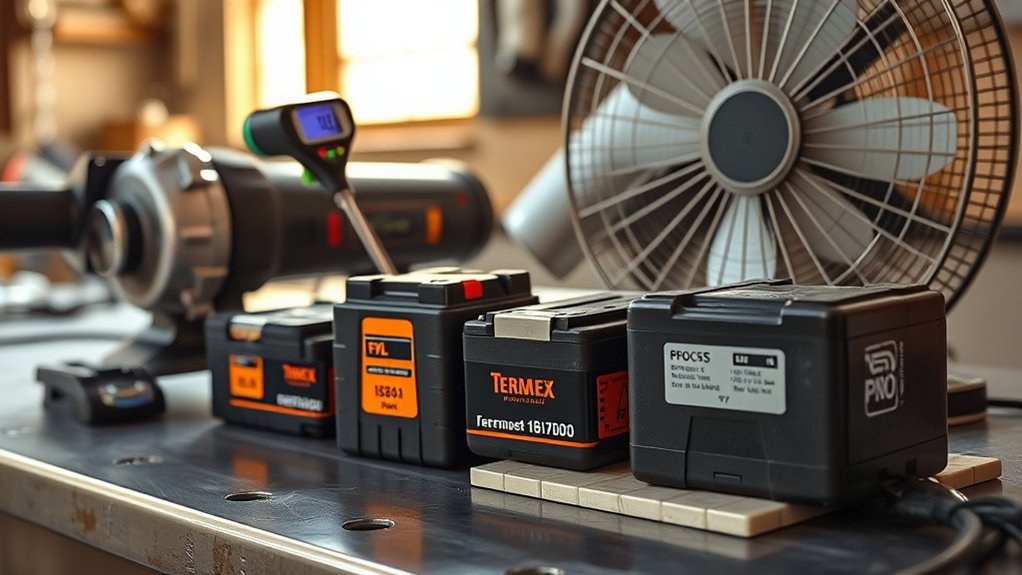
For cordless angle grinders, the useful question is not usually lead-acid versus lithium-ion. Modern cordless grinders are built around lithium-ion packs. The real difference is pack quality, cell design, battery-management electronics, charger compatibility, and whether the pack is damaged or counterfeit.
| Battery Option | Heat Handling | Best Use |
|---|---|---|
| OEM lithium-ion pack | Best choice when used within the manual’s limits. | Normal cordless grinder work. |
| High-output OEM lithium-ion pack | Often handles heavy current better because the pack is designed for high-demand tools. | Long cuts, grinding welds, and heavy-duty work. |
| Old NiCd or NiMH pack | Older technology with less runtime and less common support. | Only older tools designed for that battery type. |
| Aftermarket or mismatched pack | Higher risk if the pack lacks proper communication, testing, or protection. | Avoid unless the tool maker specifically approves it. |
The safest battery is the correct pack for your grinder and charger, not the pack with the biggest number printed on the label. A large pack can still overheat if the disc binds, the tool vents are clogged, the pack is damaged, or the charger is not compatible.
Products Worth Considering

Electronic Clutch for Kickback Protection

Automatic Speed Change technology adjusts speed and torque during operation for optimum performance

How to Monitor and Maintain Battery Health Over Time
Battery health changes slowly, so compare the pack against its own normal behavior. A healthy battery should charge predictably, run the grinder with steady power, and cool down after use. A weak or heat-damaged battery may lose runtime quickly, trigger shutdowns, take longer than usual to charge, or show abnormal lights on the charger.
Use this battery health checklist:
- Track runtime: If a pack that once handled several cuts now dies after one or two, it may be worn or heat damaged.
- Watch charger signals: A hot/cold delay is normal on many chargers. Repeated error lights on the same pack are not.
- Inspect the case: Look for swelling, cracks, punctures, melted plastic, or contact damage.
- Clean contacts carefully: Use a clean dry cloth. Do not use solvents, oil, or water on the battery pack.
- Stop after hard drops: Do not keep using a pack that has taken a sharp blow or shows physical damage.
- Recycle bad packs: Replace packs that leak, swell, smoke, melt, or no longer hold a useful charge.
A cordless grinder battery that repeatedly shuts down from heat is giving you a warning. Let it cool, reduce the load, check the wheel, and replace the pack if the warning signs continue.
Battery Care Questions Before You Work
Before grinding in hot weather, ask four quick questions. Is the battery cool before the job starts? Is the wheel sharp, correct, and rated for the grinder speed? Is the work area free of flammable material? Is there a spare battery available so one pack does not carry the whole workload?
If the answer to any question is no, fix that issue before you start. Heat problems often come from stacking small risks: a hot day, a dull wheel, a long cut, a dusty grinder, and a battery that was already warm from charging. Removing even one of those risks helps the pack last longer.
Frequently Asked Questions
Can an angle grinder overheat?
Yes. The motor, wheel, gearbox, and battery can all overheat, especially during long cuts, heavy grinding, binding, or hot-weather work. If the grinder slows, shuts down, smells hot, or the battery feels too hot to hold, stop and let the tool and pack cool.
What are the key safety precautions when using an angle grinder?
Wear eye and hearing protection, gloves, natural-fiber or flame-resistant clothing, and respiratory protection when dust or fumes are present. Use the guard and side handle, hold the grinder with two hands, match the wheel to the tool speed, inspect the disc before use, and keep the work area clear of flammable material.
Can sparks from an angle grinder start a fire?
Yes. Grinder sparks can ignite dry grass, sawdust, cardboard, solvents, fuel, oil-soaked rags, combustible dust, and other flammable material. Clear the area before grinding and keep a suitable fire extinguisher nearby when doing hot work.
What should you not do with an angle grinder battery?
Do not charge a hot or damaged battery, leave it in direct sun, store it with loose metal objects, use it after swelling or leaking, cool it with ice or water, open the case, bypass the charger, or use a mismatched charger or adapter that the tool maker does not approve.
Why will my charger not charge a hot battery?
Many chargers delay charging when the battery is outside the allowed temperature range. This protects the cells from heat stress. Leave the pack on a safe, dry surface at room temperature and try again after it cools, or follow the charger manual’s hot/cold delay instructions.
When should you replace a cordless angle grinder battery?
Replace the battery if it is swollen, cracked, leaking, melted, smoking, unusually hot, repeatedly rejected by the charger, or no longer holds a useful charge. Tape the terminals and recycle it through a proper battery recycling or hazardous waste program.
Conclusion
Heat affects cordless angle grinder batteries by reducing runtime, speeding long-term wear, and increasing safety risk when a pack is damaged or used outside its limits. Keep batteries cool, dry, shaded, and matched to the correct charger. Stop work when a pack becomes too hot, let it cool naturally, and never reuse a battery that shows swelling, leakage, smoke, melted plastic, or other damage. A few simple habits can help your grinder run stronger and your batteries last longer.
Sources
- OSHA: Lithium-ion Battery Safety — thermal runaway hazards, storage controls, disposal, and manufacturer-instruction guidance.
- Power Tool Institute: Battery Safety — OEM battery systems, damage signs, compatibility, storage, and safe handling.
- DEWALT: Lithium Ion Battery Storage & Safety Tips — cool, dry storage and charging, extreme-temperature avoidance, and damaged-pack warnings.
- Milwaukee: Lithium-Ion Battery Pack Instructions — battery temperature protection, cooling guidance, and high-temperature storage warning.
- OSHA: Angle Grinder Safety Talk — spark, fire, wheel, guard, PPE, and two-hand operation guidance.
- Fire Safety Research Institute: Lithium-Ion Battery Guide — lithium-ion overheating, fire, explosion, and thermal runaway education.