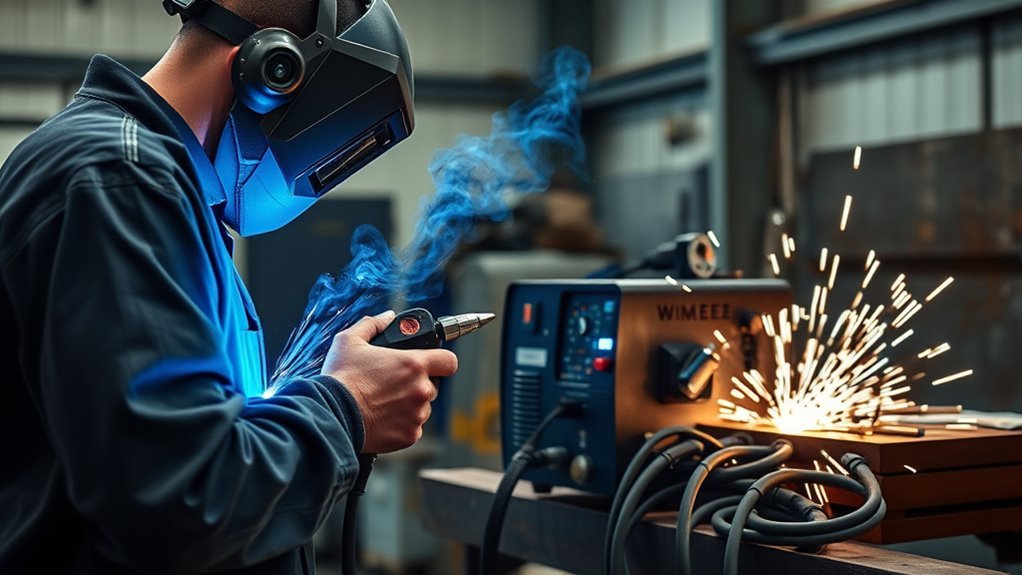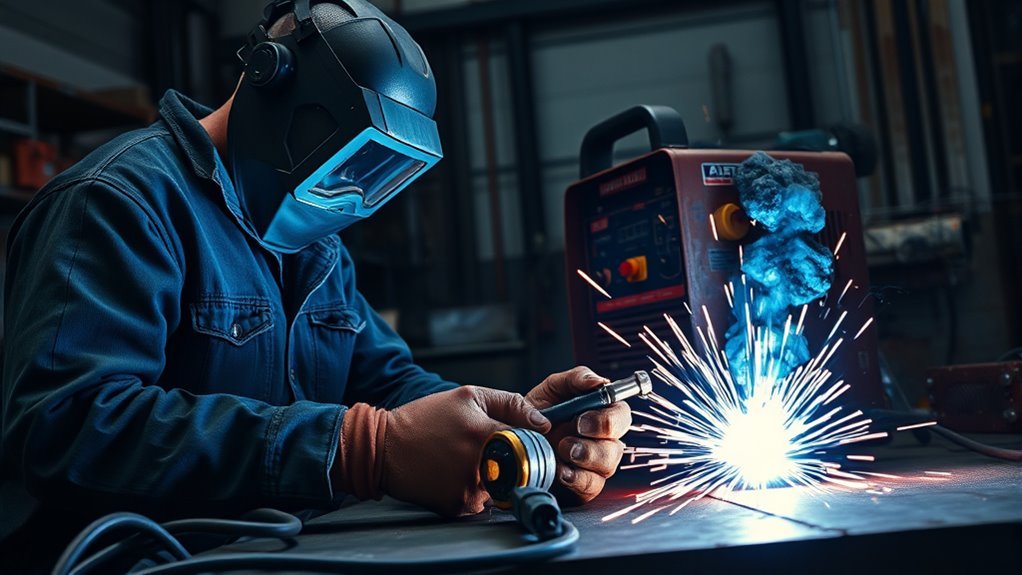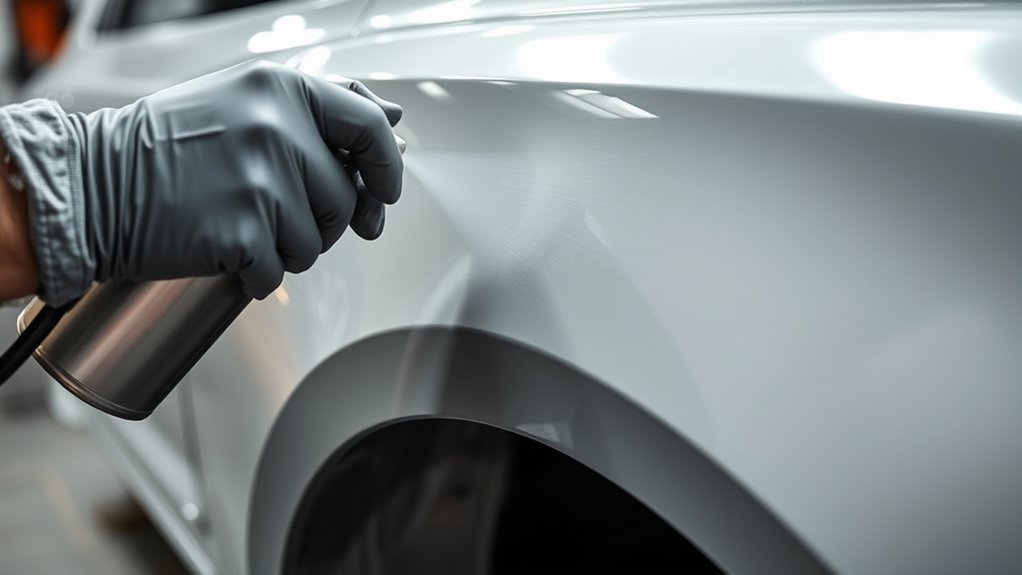
After welding auto body panels, your next job is to protect the metal, level the repair, and create a smooth base for paint. In most repairs, that means cleaning and sanding the welded area, checking for pinholes, applying body filler only where needed, sealing exposed metal with epoxy primer, and finishing with high-build primer before final sanding.
Quick Answer
Use epoxy primer after welding auto body panels because it seals clean bare metal and helps prevent corrosion. First grind, clean, and inspect the weld. Apply body filler to properly sanded bare metal, or over cured and scuffed epoxy only if your product system allows it. Finish with high-build primer before paint.
Key Takeaways
- Epoxy primer is the main primer to use on clean bare steel after welding because it seals the repair against moisture.
- Do not hide pinholes with filler or putty. Re-weld, metal-repair, or professionally correct them before priming.
- Body filler usually goes over 80-grit sanded bare metal, but some systems allow filler over cured, scuffed epoxy.
- High-build primer is used after filler work to fill small sanding scratches and prepare the surface for paint.
- Always follow the technical data sheets for your filler, epoxy primer, seam sealer, surfacer, and topcoat.
At a Glance
| Time Required | 1 to 2 days, depending on filler cure time, epoxy cure time, primer flash time, and final sanding |
| Difficulty | Moderate for cosmetic panels; professional help is best for structural panels, aluminum, or safety-system areas |
| Tools Needed | Degreaser, clean towels, grinder, sanding blocks, 80-, 180-, 220-, 320-, and 400-grit paper, body filler, spreaders, guide coat, epoxy primer, seam sealer, high-build primer, PPE |
| Cost | Usually $50 to $250 for small DIY materials, more if you need spray equipment, respirator equipment, or professional refinishing |
Warning: Welding fumes, sanding dust, solvents, epoxy primers, and 2K urethane primers can be hazardous. Work with ventilation, eye protection, gloves, protective clothing, and the correct respirator for the product. If you are spraying 2K products, follow the product safety sheet and local workplace rules. OSHA notes that isocyanates are used in polyurethane paints and can cause serious respiratory problems.
What Primer Goes on After Welding?
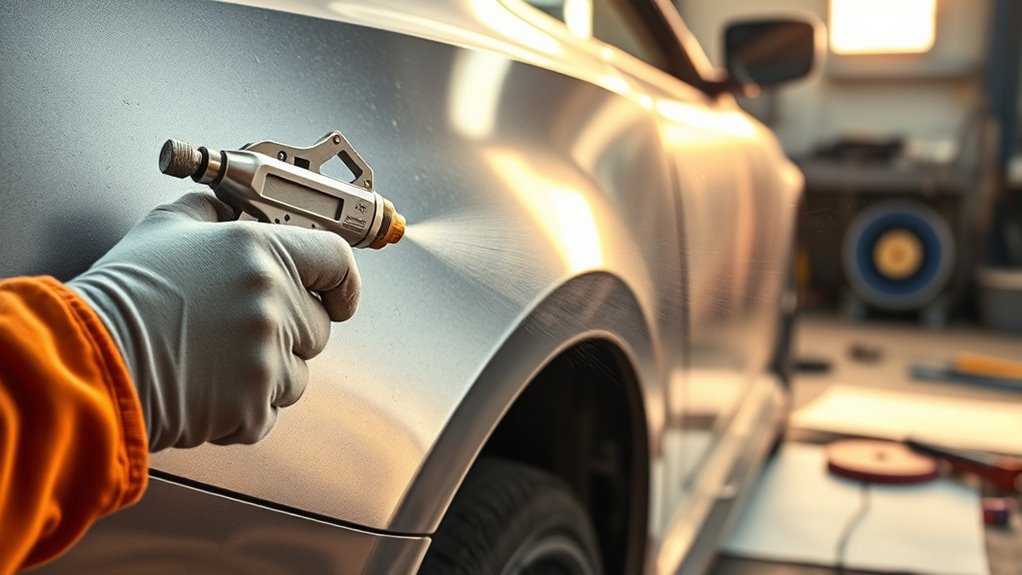
After welding, the best first primer for exposed auto body steel is usually epoxy primer. It bonds to clean, sanded metal and forms a moisture-resistant barrier that helps protect the weld and surrounding panel from corrosion.
Do not spray primer over soot, oil, grinding dust, rust, or glossy paint. Let the metal cool, grind and sand the repair, clean it with wax and grease remover, and make sure the surface is fully dry before coating. Bare welds can flash rust quickly, so prime as soon as the panel is clean, sanded, dry, and ready within the coating maker’s instructions.
The main sequence is simple: repair the metal, clean it, shape the filler, seal exposed metal with epoxy primer, then use high-build primer for final leveling. The exact recoat and sanding windows depend on your product system, so read the technical data sheet before mixing or spraying.
Note: Epoxy primer and high-build primer do different jobs. Epoxy primer seals and protects bare metal. High-build primer fills small sanding marks and minor surface texture before paint.
Safe Prep Before Primer and Filler
Before you sand or spray, set up the workspace. Welding and grinding can create metal fumes and fine dust, and refinishing materials can release vapors or aerosols. The CDC/NIOSH welding guidance notes that welding fumes are made of metals and that confined spaces can increase exposure. The EPA collision repair guidance also lists particulate matter, VOCs, hazardous air pollutants, diisocyanates, and solvents as collision-repair exposure concerns.
Wear safety glasses or a face shield when grinding, gloves when handling solvents and filler, and protective clothing when sanding or spraying. Use dust collection or wet-cleaning methods where appropriate, and never blow sanding dust around the shop without control. If respiratory protection is required, choose a NIOSH-approved respirator matched to the actual hazard and use it as directed by the CDC/NIOSH respirator guidance.
Keep sparks, open flames, and heaters away from solvents, primers, and paint materials. Read every product safety data sheet before use, especially for 2K primers and coatings.
Tools and Materials You Need
| Cleaning | Wax and grease remover, lint-free towels, compressed air with water control, tack cloth used only after sanding dust is removed |
| Metal Prep | Grinder, sanding block, 80-grit paper for filler bite, 180-, 220-, 320-, and 400-grit paper for shaping and primer prep |
| Repair Materials | Body filler, spreaders, stopper putty or finishing glaze, epoxy primer, seam sealer, high-build 2K surfacer primer, guide coat |
| Protection | Eye protection, gloves, protective clothing, hearing protection, ventilation, and respirator equipment matched to the material being sanded or sprayed |
Products Worth Considering

Filler and sandable primer is suitable for use on wood, metal and fiberglass surfaces
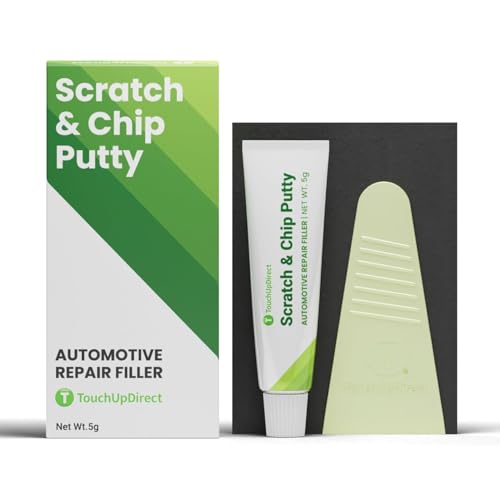
READY-TO-USE NO-MIX FORMULA: Unlike traditional auto body fillers requiring hardener mixing, this squeeze-tube putty applies directly from the container. Skip the two-part fillers and reach for our car scratch remover kit when you need results without complicated prep work.
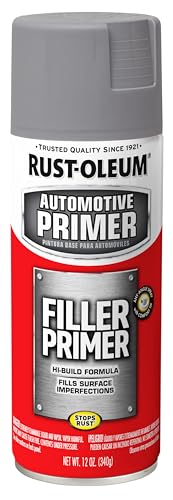
Filler primer is suitable for use on wood, metal and fiberglass surfaces
Clean and Scuff the Welded Panel
Clean the welded panel with wax and grease remover before sanding so oil and residue do not get ground into the surface. Wipe in one direction with a clean towel, then dry the area with a second clean towel.
Grind the weld only as much as needed to level the seam without thinning the surrounding sheet metal. Remove spatter, sharp edges, and rough ridges. Then sand the repair area with the grit required by the next material. Use 80-grit where body filler will be applied to bare metal, and use 220- to 320-grit where cured epoxy or primer needs a scuffed surface for the next coat.
Inspect the panel with a strong light. Look for high spots, low spots, pinholes, cracks, and rust near the heat-affected area. Remove every trace of sanding dust before moving to filler or primer.
Check for Pinholes Before Filling
Inspect the welds carefully with a bright light before you apply body filler. Pinholes are small openings in the weld that can let moisture travel behind the repair. If you cover them with filler, the repair can bubble, crack, or rust from the inside later.
If you find pinholes, do not bridge them with body filler or stopper putty. Re-weld the area, use an approved metal-repair process, or have the panel repaired by a qualified technician. Once the metal is solid, grind the weld smooth and clean the area again.
Inspect Welds Carefully
Start by checking the front side of the repair under bright light. Move slowly along the seam and mark any pits, missed welds, cracks, or dark spots that may show a hole.
Then check the reverse side if you can reach it. The back of the weld often shows gaps, burn-through, or contamination that the front side hides. If the panel is boxed in or structural, stop and follow the vehicle maker’s repair procedure.
Backlight Pinholes
Hold a bright light behind the welded repair so small holes show through from the front. Backlighting is one of the easiest ways to find pinholes before filler work begins.
| Check | Action |
|---|---|
| Light shines through the weld | Re-weld or metal-repair the defect before filler |
| Rough weld edge | Grind lightly and avoid thinning the panel |
| Open reverse side | Seal with epoxy and seam sealer after the repair is sound |
| Rust or contamination remains | Remove it before primer or filler |
Weld Before Filler
Complete the metal repair before reaching for filler. Body filler shapes the surface, but it does not replace missing metal, seal holes, or restore a weak weld. A solid weld line gives the filler a stable base and helps the paint last longer.
After the weld is sealed and smooth, protect the reverse side where possible. Epoxy primer followed by seam sealer can help keep moisture from entering the back of the repair. In enclosed cavities, use cavity wax only after the coating system has cured and only where the vehicle maker allows it.
Correct Order: Filler, Epoxy Primer, and High-Build Primer
The most confusing part of this repair is the order of filler and epoxy primer. The right answer depends on the products you use. Many traditional filler systems call for filler over clean, 80-grit sanded bare metal. Some modern systems allow filler over cured and properly scuffed epoxy primer. Both can work when the product maker approves the process.
| Workflow | Best Use | Basic Order |
|---|---|---|
| Filler over bare metal | Common cosmetic steel-panel repairs when the filler maker allows bare-metal application | Clean metal, sand with 80-grit, apply filler, block sand, epoxy prime exposed metal and repair area, then high-build primer |
| Filler over epoxy | Repairs where corrosion protection is the priority and the filler and epoxy system approves it | Clean metal, apply epoxy, let it cure, scuff within the product window, apply filler, block sand, seal again if needed, then high-build primer |
Do not mix systems by guessing. If the filler says bare metal only, use bare metal. If the epoxy says filler can be applied inside a certain window, follow that window. If the instructions conflict, choose one complete system rather than combining random products.
Products Worth Considering

2K EPOXY PRIMER - WHITE
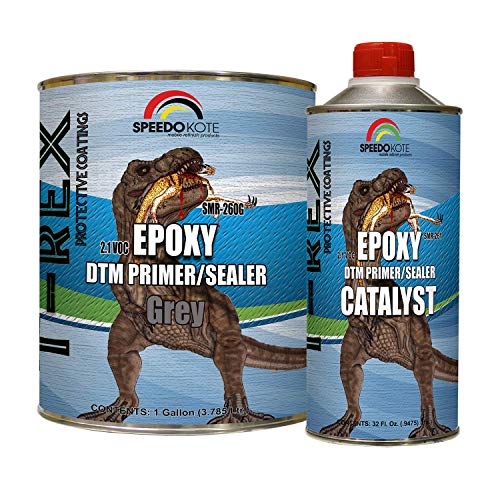
Easy 4:1 mix primer with optional 5-10% reduction with 0 voc reducer (SMR-0075)

Excellent adhesion and corrosion protection properties, even critical surfaces such as aluminum
Apply Body Filler Over Bare Metal
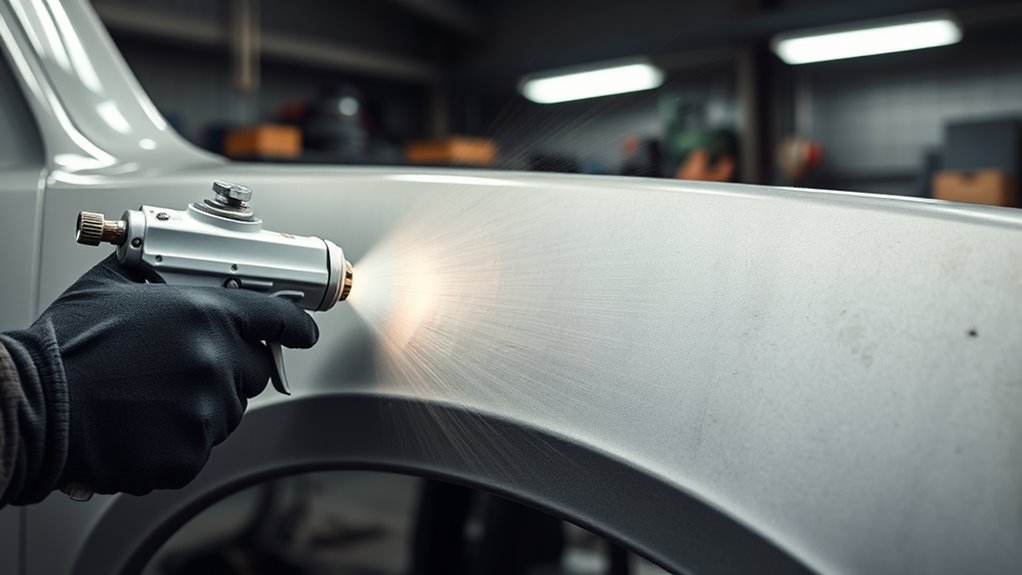
Before you apply body filler, grind the welded area smooth, fix any pinholes, and sand the bare metal with 80-grit paper. The coarse scratch gives the filler a mechanical bite.
Keep filler thin. It should level small lows and shape the repair, not bury bad metalwork. Heavy filler can shrink, crack, or print through later.
Bare Metal Prep
Sand the welded area to clean bare metal with 80-grit paper where filler will be applied. Remove paint edges, rust, soot, oil, and sanding dust. Feather the surrounding paint edge so the repair does not have a hard step.
After sanding, wipe the area with the cleaner recommended for your filler system. Let the surface dry fully before mixing filler. Trapped solvent can cause adhesion problems and later bubbling.
Filler Application Steps
Mix the filler and hardener on a clean mixing board until the color is uniform. Do not whip air into the filler. Fold and spread it smoothly so the hardener blends evenly.
Press the filler into the sanded surface with firm pressure, then spread it in thin, even passes. Feather the edges so the repair fades into the surrounding panel. Let the filler cure fully before sanding. If it gums up the paper, it is not ready.
Start shaping with 80- or 120-grit only if the repair is rough, then move to 180-grit for leveling and 220- to 320-grit for refinement before primer.
Pro Tip: Use the longest sanding block that fits the panel shape. A long block bridges small waves and shows the true contour better than your fingers.
Shape the Filler With Block Sanding
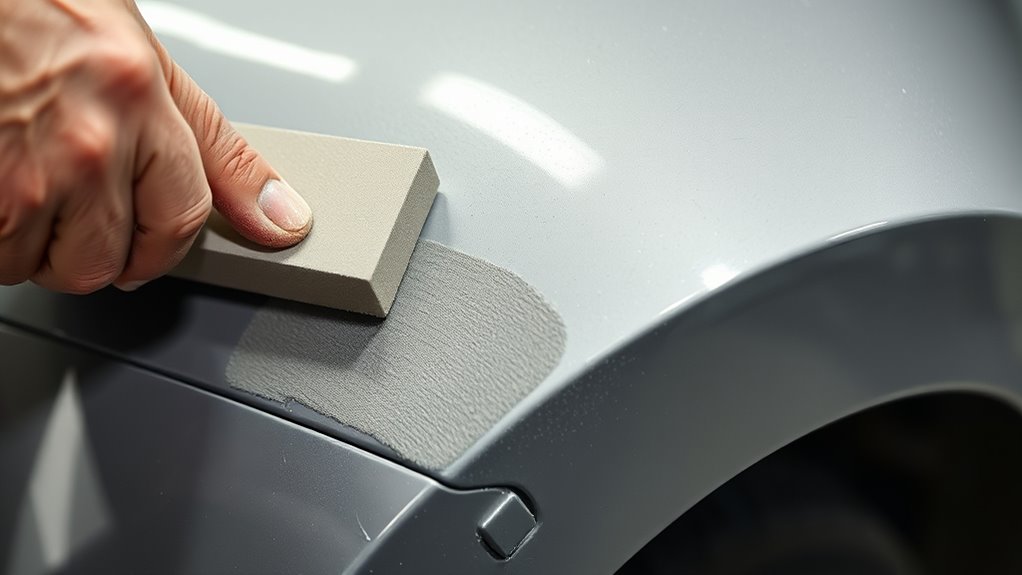
Block sanding is the best way to shape filler because it spreads pressure across the repair. Hand sanding with your fingers can dig grooves into the filler and create waves that show through paint.
| Grit | Use |
|---|---|
| 80 to 120 | Rough shaping only when the filler is high |
| 180 | Main leveling grit for shaped filler |
| 220 | Refines edges and prepares for finer sanding |
| 320 | Final refinement before primer or guide coat checks |
| Guide coat | Shows lows, highs, scratches, and uneven sanding |
Sand in controlled passes, not tight circles. Keep the block flat on broad areas and use a flexible block on curved panels. Stop often, wipe the dust away, and feel the surface with a clean hand.
Use Stopper Putty for Small Imperfections
Stopper putty or finishing glaze is for tiny surface flaws, shallow scratches, and small pinprick imperfections left after filler sanding. It is not for welded pinholes, open seams, rust holes, or deep lows.
Lightly scuff the repair first, then spread a thin layer with a clean plastic spreader. Keep the layer tight and controlled. Let it cure fully, then sand it with 320-grit paper until the surface blends into the surrounding repair.
If a low spot is deeper than a skim coat, use body filler instead of trying to build it with putty. Thick putty can shrink and show later under paint.
Sand the Repair With 180 and 320 Grit
Once the filler or finishing glaze has cured, block sand the repaired area with 180-grit to level the shape. Use steady pressure and keep the block moving across the full repair, not just the center.
After the panel is shaped, switch to 320-grit to refine the surface and feather the edges. The goal is a smooth transition from filler to surrounding paint with no hard ridge.
If 320-grit exposes a low spot, stop and fix the low before primer. Primer can fill small scratches, but it should not be used to hide poor panel shape.
Finish by removing all sanding dust from the panel, seams, and nearby edges. Dust left in seams can blow into wet primer and ruin the surface.
Guide Coat the Panel and Spot Low Areas
Apply a light contrasting guide coat over the sanded repair so you can see lows, highs, and scratches. A guide coat helps you check the panel honestly instead of relying only on feel.
Apply Guide Coat
Mist the guide coat lightly over the repair. You do not need heavy coverage. The goal is to dust the surface so the color stays in low areas while sanding removes it from high areas.
Use a block sander with 320-grit paper for the first check. Keep the block flat and work in straight, overlapping passes. Do not use a dual-action sander for this shape check because it can soften edges and hide waves.
Block Sand Low Spots
As you sand, the guide coat will disappear from high areas and remain in low areas. Mark persistent lows so you know exactly where filler or glaze is needed.
If the surface needs more correction, step back to 220-grit or 180-grit only in the target area, then refill and block again. Do not keep sanding the surrounding metal lower just to chase a low spot.
Fill Remaining Imperfections
Fill only the areas that need correction. After the filler or glaze cures, sand again and reapply guide coat to confirm the shape.
| Grit | Use | Result |
|---|---|---|
| 320 | Guide-coat sanding | Reveals fine lows and scratches |
| 220 | Targeted scuffing | Improves bite for small corrections |
| 180 | Refill prep | Creates tooth for body filler |
Seal the Repair With Epoxy Primer
After the metal and filler work are shaped, seal the repair with epoxy primer where the coating system calls for it. Epoxy primer is especially important on exposed bare steel, welded seams, and sand-through spots.
Clean the area again before spraying. Mix the epoxy primer exactly as directed, including reducer and induction time if required. Spray light, even coats over the repair and slightly beyond the sanded edge so the whole repair is sealed.
Let the epoxy cure for the time listed on the technical data sheet. Some systems allow a wet-on-wet recoat window, while others require sanding after cure. If the window has passed, scuff the epoxy before applying the next layer.
Spray High-Build Primer Before Paint
Spray high-build primer after the repair is sealed and shaped. High-build primer, often a 2K urethane surfacer, adds enough film build to fill fine scratches, minor texture, and small featheredge marks.
Spray light, even coats and allow each coat to flash as directed by the maker. Do not flood the panel. Heavy coats can run, trap solvent, or shrink later.
After the high-build primer cures, block sand it with guide coat. Many repairs are finished with 400-grit before sealer or basecoat, but the final grit depends on the paint system. If you sand through to bare metal, spot-prime those areas again before paint.
Warning: Do not spray 2K urethane primer in a home garage without understanding the respirator, ventilation, and overspray requirements. These products can contain hazardous hardeners. Use the exact PPE listed in the product safety data sheet.
Protect the Back Side of the Weld
The front of the panel may look perfect while the back side is still vulnerable. If you can access the reverse side, clean it, remove weld residue, and apply epoxy primer after the metal repair is complete.
Use seam sealer on joints, lap seams, and moisture paths after the primer stage if your coating system allows it. In hidden cavities, cavity wax can add extra moisture protection after paint and primer have cured. Do not apply wax before welding, priming, or painting because it can contaminate the repair.
Troubleshooting After Welding and Primer
| Problem | Likely Cause | Fix |
|---|---|---|
| Bubbles over the weld | Pinholes, trapped moisture, or solvent left under filler | Strip the area, repair the metal, clean, dry, and refinish |
| Rust bleed-through | Bare metal was not sealed or backside was left exposed | Remove rust, epoxy prime exposed metal, and protect the reverse side |
| Primer lifting | Wrong recoat window, poor sanding, or surface contamination | Remove failed coating, clean, sand, and reapply within the product instructions |
| Sanding scratches show through | Skipped grit steps or primer was sanded too soon | Re-prime if needed, guide coat, and sand with the correct final grit |
| Filler shrinkage | Filler applied too thick or not fully cured before primer | Sand back, correct the low, allow full cure, then prime again |
When to Get Professional Help
Get professional help if the welded area is structural, close to airbag sensors, part of a crumple zone, aluminum, high-strength steel, or near bonded panels. Modern vehicles often require OEM repair procedures, corrosion protection steps, and calibration checks after body repair.
If you are not set up to spray epoxy or 2K primer safely, you can still do metal cleanup and basic prep, then have a qualified body shop handle the priming and refinishing.
Frequently Asked Questions
Can you put body filler over welds?
Yes, you can put body filler over welded auto body panels after the weld is fully repaired, ground smooth, cleaned, and sanded. Do not apply filler over pinholes, rust, slag, oil, or weak welds.
Do I use filler before or after primer?
Many traditional repairs use filler before primer, directly over 80-grit sanded bare metal. Some epoxy systems allow filler over cured, scuffed epoxy primer. Use the sequence approved by your filler and primer technical data sheets.
Do you put body filler over bare metal or primer?
Body filler commonly goes over clean, 80-grit sanded bare metal. It can go over epoxy primer only when the filler and epoxy maker allow it, and only after the epoxy is cured or inside the listed recoat window and properly scuffed.
How do you properly use filler primer?
Use filler primer after the body filler is shaped, sanded, cleaned, and sealed as required by the coating system. Spray light coats, let each coat flash, allow full cure, then block sand with guide coat before paint.
Should I seal the back side of a welded panel?
Yes, if you can reach it. The back side of the weld should be cleaned, epoxy primed, and seam sealed where appropriate. This helps stop moisture from entering behind the repair.
Can high-build primer replace body filler?
No. High-build primer fills fine sanding scratches and very small texture, but it should not replace body filler or metal repair. Shape the panel first, then use high-build primer for final surface refinement.
Conclusion
After welding and shaping an auto body panel, do not rush straight to paint. Clean the metal, repair pinholes, use body filler only where needed, block sand the surface, and seal exposed metal with epoxy primer. Then use high-build primer to refine the surface before final sanding and color.
The best repair is not the thickest repair. It is the cleanest, driest, best-sealed repair that follows the product system from metal prep to paint. That is what protects the weld, controls corrosion, and gives the finish a smooth base.
Sources
- OSHA Welding, Cutting, and Brazing Hazards and Solutions — supports welding hazard and PPE guidance.
- CDC/NIOSH Welding Fumes and Manganese — supports welding fume and confined-space exposure cautions.
- OSHA Isocyanates Overview — supports warnings about polyurethane paints, isocyanates, and respiratory health risks.
- CDC/NIOSH Respirator Types and Use — supports respirator selection and proper-use guidance.
- EPA Reduce Exposure to Air Toxics in Collision Repair Shops — supports collision-repair exposure concerns for PM, VOCs, air toxics, diisocyanates, and solvents.