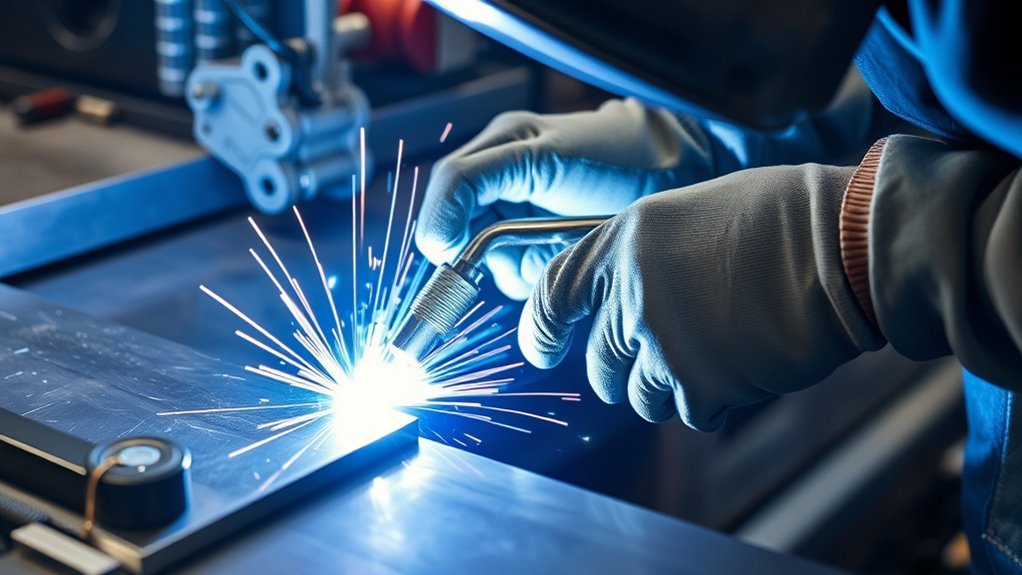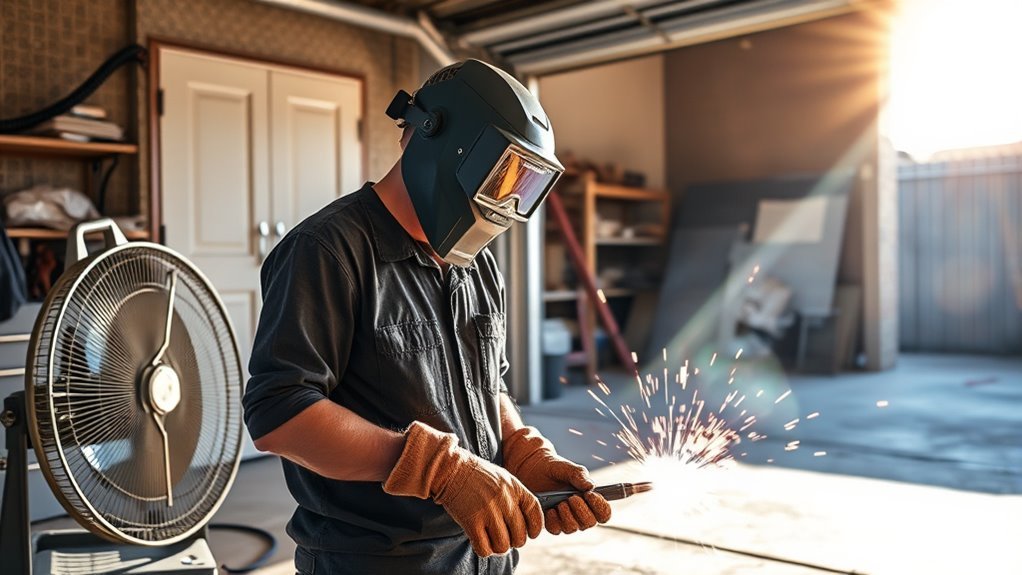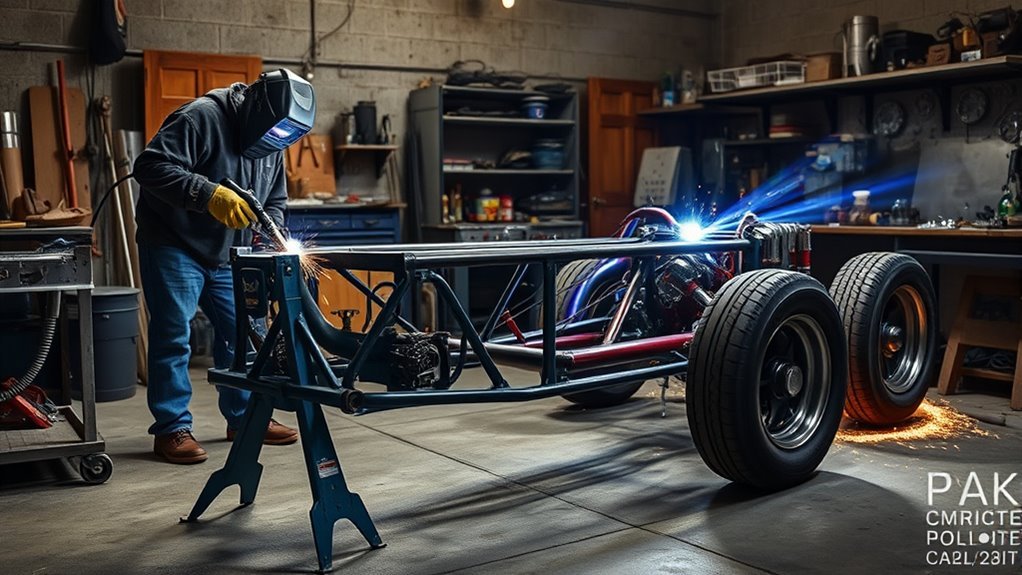
To weld a rat rod frame, start with a straight donor chassis or a carefully planned mild-steel frame layout, then confirm your local registration, inspection, and roadworthiness rules before cutting any steel. Set the frame on a level jig, mock up the body, engine, transmission, axles, steering, brakes, and suspension, then measure from fixed reference points. Cut and fit each tube tightly, tack in a balanced sequence, recheck square, finish with controlled welds, and have the frame inspected before road use.
Quick Answer
You weld a rat rod frame by planning the wheelbase and ride height first, setting the rails in a rigid jig, cleaning every joint to bare metal, tack welding in a staggered pattern, checking diagonal measurements often, then completing final welds only after the frame is square and all mounts fit correctly.
Key Takeaways
- Check your state or local rules before you alter, build, register, or drive a custom frame.
- Use a level jig, fixed centerline, and diagonal measurements to keep the frame square.
- Clean, bevel, and fit each joint before welding so the weld can penetrate sound metal.
- Tack weld first, then finish weld in a balanced sequence to reduce heat distortion.
- Do not road test the build until welds, steering, brakes, suspension, and mounts have been inspected.
At a Glance
| Time Required | Several weekends to several months, depending on fabrication skill, frame condition, parts fitment, and inspection needs. |
| Difficulty | Advanced. A road-going frame is structural work, not a beginner practice project. |
| Tools Needed | MIG welder, welding table or jig, clamps, grinder, chop saw or band saw, square, level, tape measure, plumb bobs, PPE, fire extinguisher, and ventilation. |
| Cost | Varies widely. Budget for steel, consumables, donor parts, inspection, registration, safety repairs, coatings, and professional welding help if needed. |
Warning: A rat rod frame carries the engine, suspension, steering, brakes, and passengers. If you are not trained in structural welding, build only under the guidance of a qualified fabricator and have the frame inspected before it goes on the road. This guide is general information, not engineering or legal approval.
Check Legal, Safety, and Inspection Rules First
Before you weld a rat rod frame, confirm what your local DMV, inspection office, or registration authority requires for a modified, homemade, reconstructed, or specially constructed vehicle. Rules can affect the title, VIN verification, frame receipts, engine documentation, body changes, safety-system inspection, emissions testing, weight certificates, and insurance.
Use official sources first. For example, the California DMV explains that a specially constructed vehicle may require title forms, vehicle verification, construction statements, receipts for major parts, safety-system inspection, smog certification, and fees. Your state may use different names and rules, so do not copy another builder’s process without checking your own location.
Also decide who will inspect the finished frame. A skilled fabricator, certified welding inspector, chassis shop, or engineer can catch problems that are easy to miss at home, such as poor penetration, frame twist, bad mount geometry, stress risers, and unsafe brake or steering layout.
Note: Keep receipts, steel specifications, photos of the bare frame, weld-progress photos, and measurement notes. They help with registration, inspection, insurance, and future repairs.
Pick the Best Rat Rod Frame
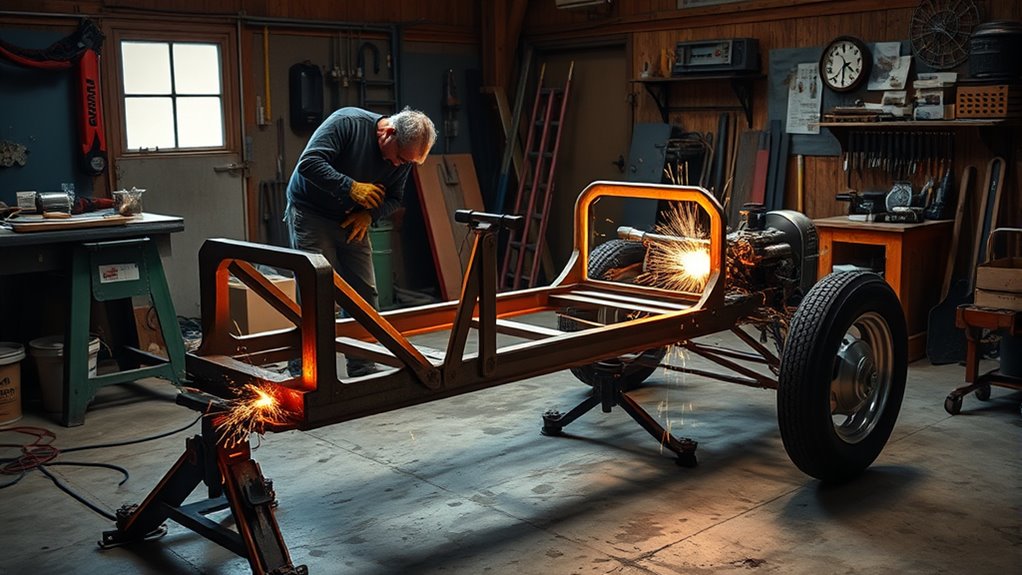
When you pick a rat rod frame, start with a straight Model A or Model T style chassis if you want a classic profile and strong customization potential. You can also build from new mild-steel tubing, but a scratch-built frame needs careful design, bracing, and inspection.
A good rat rod frame starts with straight rails, sound steel, clean joints, legal paperwork, and suspension geometry that can be measured instead of guessed.
You can pick the best rat rod frame by matching the chassis to your build’s function: cruiser, show car, or performance street build. Heavy-duty steel tubing gives you stiffness and load capacity, while clean metal, sound joints, and uncracked welds protect the structure’s integrity.
Inspect every rail, crossmember, weld, and junction closely. Rust, deep pitting, cracks, torch gouges, poor old repairs, and twisted rails can weaken the frame and limit what your welding can safely correct. Choose dimensions that support your planned ride height, wheelbase, track width, body placement, tire clearance, engine placement, and suspension travel.
Do not assume a rusty frame is safe because it looks thick. Probe suspicious areas, grind small test areas to bare metal, and reject rails with deep corrosion near suspension, steering, or drivetrain mounts. If you repair or box an original frame, size the welds and plates to the joint design instead of guessing. Understanding maximum fillet weld size can help you avoid welds that look large but do not match the material.
When you evaluate the frame this way, you gain a solid base for the rest of the build and avoid fighting hidden frame problems after the body, engine, and suspension are already in place.
Products Worth Considering

Eastwood 2K Aerospray Rat Rod Satin Black Aerosol provides the durability and precision of a two-component coating without the need for a paint gun.

Rust Seal is ideal for a brush, roll or spray application. Rust Seal has superior flow and leveling properties. The brush marks flow out and the surface looks like it has been powder coated.

Rust Seal is ideal for a brush, roll or spray application. Rust Seal has superior flow and leveling properties. The brush marks flow out and the surface looks like it has been powder coated.
Plan Wheelbase, Ride Height, and Component Layout
Before cutting steel, create a simple frame plan with a centerline, front axle centerline, rear axle centerline, wheelbase, ride height, engine location, transmission location, body mounts, steering box, brake pedal, master cylinder, fuel tank, radiator, and suspension mounts.
Many traditional rat rod builds land near a 100-inch to 120-inch wheelbase range, but your correct number depends on body length, engine setback, tire size, axle choice, and the stance you want. The goal is not only style. The frame must also have safe driveshaft angles, suspension travel, steering clearance, brake-line routing, exhaust clearance, and tire-to-body clearance.
Mock up the heavy parts before you weld final mounts. Set the engine, transmission, body, axles, wheels, steering box, pedals, and radiator in place with temporary supports. This lets you find clearance problems while changes are still easy.
Pro Tip: Mark a centerline on the floor or table, then measure every major point from that centerline. A centerline catches left-to-right drift faster than eyeballing the frame from one side.
Gather Tools, Steel, and Safety Gear
You’ll need a MIG welder, angle grinder, clamps, and the right fasteners to build and fixture the frame accurately. Choose mild steel tubing in practical sizes, such as 1.5-inch to 2-inch square or round stock, to balance strength, weldability, and fabrication control. Match wall thickness to the frame design and expected loads, not only to what is available locally.
Set up a clean, well-lit, ventilated workspace, and wear a welding helmet, gloves, eye protection, hearing protection, and flame-resistant clothing before you strike an arc. Review OSHA welding, cutting, and brazing safety requirements for fire prevention, eye protection, protective clothing, and ventilation. You can also review a basic home welding setup if you are organizing a small shop.
Products Worth Considering

Comprehensive Set: the welding kit comes with a welding glass, 5 replaceable lenses, a mask to keep your face protected, an elastic band, and a storage box to store all your gears; This is everything a professional welder would need

9 oz. Flame-resistant treated cotton

True Color Clear View: A 3.64" x 1.67" viewing area with 1/1/1/1 optical clarity delivers a true color view for improved visibility and reduced eye strain.
Essential Tools and Gear
Start with the right tools and materials. A MIG welder can give you controllable welds on mild steel when it is set correctly, while a grinder, chop saw, band saw, or plasma cutter handles edge prep and accurate cuts.
You’ll also need a welding helmet, gloves, flame-resistant jacket, cotton or leather workwear, safety glasses, hearing protection, and a respirator when dust, coatings, fumes, or local rules require it.
Use clamping tools to lock frame members in position, because alignment errors and heat distortion can compound fast. Add a tape measure, framing square, machinist square, level, plumb bobs, straight edge, angle finder, and marker to verify dimensions before you strike an arc.
- MIG welder sized for the tubing thickness
- Grinder, flap discs, wire wheels, saw, and deburring tools
- Welding helmet, gloves, jacket, safety glasses, and hearing protection
- Clamps, magnets, squares, tape measure, plumb bobs, level, and angle finder
- Fire extinguisher, welding blanket, ventilation fan, and clean work area
Choose Strong Steel
Strong steel sets the foundation for a rat rod frame, so choose mild steel or DOM tubing for their weldability and structural strength. You need high-quality stock with consistent wall thickness because weak material compromises load paths and weld integrity.
Mild steel gives you predictable fusion, while DOM tubing offers tighter tolerances and better strength-to-weight performance. Gather a MIG welder, angle grinder, metal cutting saw, and clamps so you can cut, fit, and lock components accurately.
Use a level and square to verify alignment before you strike an arc. Wear a welding helmet, gloves, and fire-resistant clothing to shield yourself from heat, sparks, and UV exposure.
Clean every surface by removing rust, paint, undercoating, oil, grease, mill scale, and debris. Clean base metal helps the weld penetrate and reduces the risk of porosity, lack of fusion, and contaminated welds.
Prep Your Workspace
Before you weld a rat rod frame, set up a dedicated workspace with a sturdy welding table or frame jig, strong lighting, and good ventilation so you can work accurately and safely. Clear flammables, level the floor, and arrange your tools so every motion stays deliberate and efficient.
Keep a fire extinguisher nearby and remove combustibles from the welding area. OSHA hot-work guidance uses a 35-foot fire-hazard zone in many welding and cutting situations, and a fire watch may be needed where sparks can reach combustible material. Never weld or grind near fuel, oily rags, aerosol cans, solvent vapors, or unvented containers.
- Place safety gear at the bench edge
- Check gloves, helmet, jacket, and eye protection
- Verify ventilation and spark control
- Keep a fire extinguisher close and accessible
- Align material, tools, and measurements before welding
This disciplined setup gives you control, reduces error, and helps you fabricate with precision.
Build a Level Jig Before You Cut
A rat rod frame should be held on a flat, rigid surface before you cut, tack, or final weld it. A welding table, rectangular jig, or heavy fixture keeps the rails from moving as heat enters the steel.
Start by leveling the jig front to back and side to side. Mark a centerline, then mark the front axle centerline, rear axle centerline, crossmember locations, body mount points, and suspension pickup points. Use stops, tabs, clamps, and temporary braces to hold the rails in position.
Temporary bracing is worth the time. Welded tabs, bolt-on braces, or clamped crossbars can keep the frame from pulling inward, spreading outward, or twisting during tack welding. Remove temporary bracing only after the permanent crossmembers and welds can hold the structure.
Measure and Mark the Frame Layout
You’ll set your frame lines first, using your design dimensions to mark the full layout on a flat surface with a chalk line, marker, string line, or tape measure.
Then you’ll establish square reference points with a framing square so each corner holds a true 90-degree angle.
Finally, you’ll check wheelbase spacing against your component layout and label each section to keep every cut and joint in exact position. Ensure that your metal is clean before you start welding for the best results, as clean base metal improves weld quality.
Set Your Frame Lines
Set your frame lines by establishing the rat rod’s final dimensions and overall shape from reliable measurements tied to the vehicle’s specs and intended design. Transfer those measurements onto a flat workspace with a chalk line, straight edge, or string line.
Mark locations for crossmembers and suspension mounts now, not later, so the layout stays controlled. Consider a wood, cardboard, or PVC mock-up if you need to test proportions before cutting steel.
- Verify each measurement twice.
- Align marks with intended component placement.
- Trace clean, visible reference lines.
- Write part names and cut angles on the material.
- Correct deviations before fabrication begins.
Precise marks give you freedom from guesswork and keep the build accurate and structurally sound.
Square Reference Points
With your frame lines established, lock in square reference points by checking the frame’s overall dimensions against your plan and marking the key corners and joints.
Use a tape measure to map each point, then measure diagonally between opposite corners to confirm the layout is not drifting. A square tool helps you verify every angle stays at 90 degrees, so make adjustments before any cut is made.
Mark each cut and weld location with chalk, soapstone, or a permanent marker, and make sure one side does not pull the frame out of square.
Recheck every dimension and reference mark now. This prevents wasted material and keeps your build aligned.
Check Wheelbase Spacing
Start by dialing in the wheelbase based on your body, tire size, suspension, and stance. Measure from the front axle centerline to the rear axle centerline with a tape measure and mark that span on a flat, level surface.
- Verify the frame is square by checking diagonal measurements.
- Use chalk or paint to map cuts, welds, and axle points.
- Recheck all measurements before you cut steel.
- Adjust until both sides match within a tight tolerance.
- Record the final wheelbase, rail width, and crossmember spacing.
This layout locks your rat rod’s stance and keeps the frame honest. If the wheelbase drifts, the whole build loses proportion and may create steering, driveline, or suspension problems.
Cut and Fit the Frame Pieces
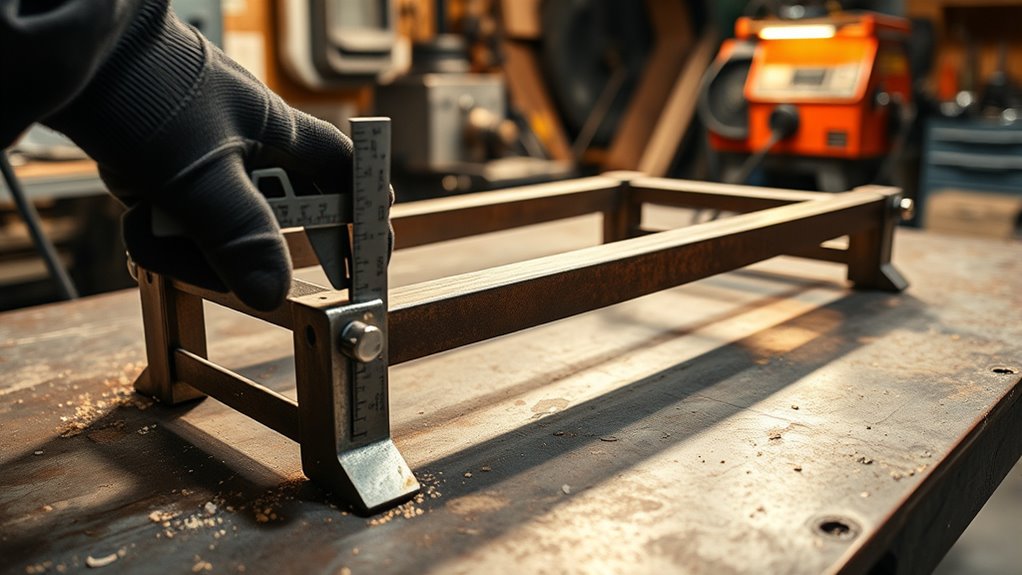
Measure and cut the frame pieces from heavy-duty steel tubing to match your design specs, keeping strength, durability, and joint geometry in mind. Use cutting tools like a band saw, chop saw, or plasma cutter to make precise sections, and account for every angle where parts will later weld.
You’ll want each piece to align with the chassis plan, because small deviations compound fast and weaken the structure. Clean every cut edge with a grinder or flap disc to strip rust, scale, paint, and contamination that can compromise fusion.
Fit-up matters as much as welding skill. Joints should sit tight, square, and fully supported. Large gaps make it harder to control heat and can leave weak welds. Bevel thicker material when needed so the weld can reach the root of the joint.
Place the parts in a jig or fixture so they stay locked in position while you test fit the assembly. Check all measurements again, then verify the fit from multiple viewpoints before you proceed. If you are still learning, review proper weld settings as a reminder that material, wire, polarity, and shielding method must match the job.
Before touching the frame, weld practice coupons from the same steel thickness and joint style. Cut or bend a test coupon if you can. A clean-looking bead is not enough if the weld lacks penetration.
Tack Weld the Rat Rod Frame
Align and secure all frame members before you strike an arc, because tack welding locks the assembly in place for final welding. You’ll use tack welding to hold frame components with precision, not to finish the joint yet.
Clean each joint first. Rust, oil, paint, undercoating, and debris weaken fusion and compromise structural integrity. Set your welder for the material thickness and make short, controlled tacks at key intersections where the tubes meet.
- Use a staggered tack pattern.
- Tack opposite sides instead of working only one side.
- Check alignment after every few tacks.
- Reposition clamps if movement appears.
- Recheck diagonal measurements before final welding.
This approach distributes heat more evenly and cuts distortion, so your frame stays true. Remember that surface preparation is crucial for achieving strong welds and avoiding issues like porosity.
Every tack should confirm fit, preserve geometry, and keep the chassis ready for the next stage without introducing unnecessary stress.
Finish the Frame Welds
With the frame tacked and checked, you can run the final welds to lock in full structural strength. Clean every joint first; grind off rust, paint, oil, and scale so your bead ties into bare metal.
Do not weld long seams in one direction without stopping. Alternate sides, skip around the frame, and let sections cool naturally so heat does not pull the rails out of square. Keep checking the centerline, diagonals, rail height, and crossmember position as you work.
Where the structure needs more load capacity, use boxing plates, fish plates, gussets, or rosette welds only when they match the joint design. Do not add random plate thickness just because it looks strong. Poorly shaped reinforcements can create stress risers beside the weld.
Watch heat input closely. If the frame starts pulling, pause, re-clamp, shorten weld segments, adjust travel speed, or review your settings before continuing. Maintain correct polarity and settings for your wire and process so the arc stays stable.
Work methodically, alternating sides when needed, so you preserve alignment and keep the frame true. Your goal is not just a bead on the surface. Your goal is a rigid, durable chassis that keeps its shape under real road loads.
Check Suspension Mounts and Axle Placement
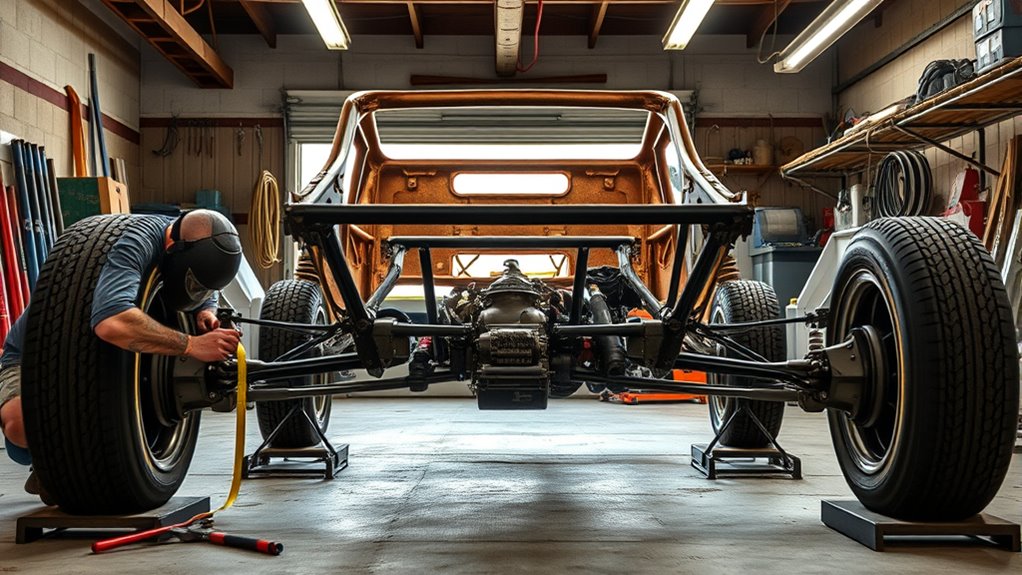
Before you lock in the suspension, verify that every mount sits at the correct height and angle so the frame will support proper ride quality, steering control, and handling.
Mark each location, measure twice, and do not trust eyeballed placement. A small error here can throw off alignment, steering feel, tire wear, and structural integrity.
Use a level, straight edge, plumb bob, and angle finder to confirm the axle runs parallel to the frame centerline. A twisted setup can cause steering pull, uneven load transfer, and poor braking behavior.
Next, check the axle-to-frame distance and make sure you have clearance for full suspension travel without body, steering, brake-line, driveshaft, exhaust, or tire contact.
Check the axle-to-frame distance at ride height and at full bump so the suspension can move without metal-to-metal contact.
If you’re going for a freer, dialed-in ride, adjustable mounts can help you fine-tune geometry after initial assembly. Also review proper joint preparation because mount welds carry high loads.
- Confirm mount height and angle.
- Level the axle against the frame centerline.
- Measure clearance at full suspension travel.
- Check steering, brake-line, and tire clearance.
- Use adjustable mounts only where they are designed for the load.
Check Steering, Brakes, and Driveline Clearance
A rat rod frame is not ready because the rails are welded. You still need to confirm the systems that make the vehicle stop, steer, and track straight.
Cycle the steering from lock to lock and watch the tie rods, steering shaft, pitman arm, drag link, headers, frame rails, and tires. Check brake-pedal travel, master-cylinder mounting, brake-line routing, hose movement, and bleeder access. Brake lines should be protected from heat, sharp edges, and moving suspension parts.
Set the engine and transmission in place before finalizing the transmission crossmember. Check driveshaft angle, U-joint operating angle, floor clearance, exhaust routing, and service access. A mount that looks fine on an empty frame can be wrong once the drivetrain is installed.
Grind, Clean, and Inspect the Welds
Grind only where needed. Do not grind structural welds flat just to make them look smooth unless the design calls for it and you know you are not removing required weld throat. A visible bead is often better than a pretty ground joint that has lost strength.
Before welding, grind every weld zone down to clean, bare metal so rust, paint, oil, and other contaminants do not compromise joint strength. You’ll improve weld preparation techniques by exposing sound parent metal and rejecting cracked, pitted, or distorted sections before they become part of the frame.
After fabrication, use surface cleaning methods like a wire brush or flap disc to strip slag, spatter, and oxidation from the bead and surrounding heat-affected area. This gives you a cleaner finish and stronger adhesion for primer, paint, or coating systems that protect your build.
Then apply inspection best practices. Visually check each weld for a uniform profile, good tie-in at the toes, no cracks, no undercut, no obvious porosity, no missed starts or stops, and no cold lap. Mark suspect areas and repair them before coating the frame.
A tap test is not enough for a road-going frame. If a weld is critical or questionable, have it checked by a qualified welding inspector or chassis professional. When needed, they may recommend dye penetrant, magnetic particle inspection, or another non-destructive test. Be mindful of proper ventilation during grinding because dust, sparks, and coating residue can create health and fire risks.
Protect the Frame After Welding
Once the frame passes inspection, protect it from corrosion. Bare steel rusts quickly, especially around weld seams, boxed sections, and brackets where moisture can sit.
Remove spatter, sharp edges, and loose scale. Degrease the frame, then apply a compatible primer and topcoat or chassis coating. If the frame has boxed sections, use drain holes, access points, and internal frame coating where appropriate so trapped moisture does not attack the inside of the rails.
Reinstall mounts, hardware, and suspension parts with the correct fasteners. Use locking hardware where required, torque bolts properly, and mark critical fasteners after final tightening so movement is easy to spot during the first inspections.
Final Pre-Road Checklist
Before the rat rod moves under its own power, complete a final checklist. Do not skip this step because the frame is hidden under the body once the build is assembled.
- Frame rails are square, level, and measured diagonally.
- All welds are visually inspected and corrected where needed.
- Suspension moves through full travel without contact.
- Steering moves lock to lock without binding.
- Brake pedal, lines, hoses, and master cylinder are secure.
- Engine, transmission, and driveline have safe clearance.
- Fuel lines and electrical wiring are protected from heat and abrasion.
- Lights, tires, seat belts, mirrors, and required road equipment meet local rules.
- Registration, title, VIN, insurance, and inspection steps are complete.
- A qualified person has inspected the frame before road use.
Frequently Asked Questions
Why do welders coat welding rods with WD-40?
Do not coat welding rods with WD-40 before welding. Oil can contaminate the weld, add smoke, and cause defects. If rods need storage protection, keep them in the correct sealed container or rod oven and follow the electrode manufacturer’s instructions.
Is it legal to weld a trailer frame?
It can be legal, but it depends on your location, trailer type, manufacturer rules, inspection requirements, and whether the repair affects a certified structure. For public-road use, check your local DMV or inspection authority and use a qualified welder for structural trailer-frame repairs.
How do you weld at home without a welding machine?
You cannot make a true structural weld without welding equipment. Brazing, soldering, bolts, rivets, and metal epoxy can work for some light nonstructural jobs, but they are not substitutes for welding a rat rod frame, suspension mount, steering bracket, or trailer frame.
How do you dry welding rods at home?
Follow the electrode manufacturer’s storage and redrying instructions. Some electrodes only need dry storage, while low-hydrogen rods may need a controlled rod oven. Do not rely on a kitchen oven for structural work unless the rod maker’s instructions allow that method and temperature.
Can you weld directly over rust or paint on a rat rod frame?
No. Grind the weld area to clean bare steel before welding. Rust, paint, undercoating, oil, and mill scale can cause porosity, poor fusion, smoke, and weak welds. Be extra careful with old coatings because some can release hazardous fumes when heated.
Do you need a professional inspection after welding a rat rod frame?
Yes, it is strongly recommended for any frame that will be driven on public roads. A professional can check weld quality, frame alignment, suspension geometry, brake and steering mounts, and any local inspection items before the vehicle is tested or registered.
Conclusion
When you finish welding, you should see a straight, solid rat rod frame taking shape like a steel spine in the shop light. You have cut, fitted, tacked, measured, and welded each joint with care, and now the frame carries the weight of your work.
Before you call it done, check every mount, grind only what needs cleanup, protect the steel from corrosion, and inspect each bead for strength. Then have the frame reviewed before road use. If you stay precise, you’ll leave with a chassis that looks raw, feels honest, and stands ready for the next stage of the build.
Sources
- eCFR 29 CFR 1910.252, Welding, Cutting, and Brazing — fire prevention, eye protection, PPE, ventilation, and hazardous-material precautions.
- OSHA Welding, Cutting, and Brazing: Hazards and Solutions — welding safety hazards and control resources.
- California DMV Specially Constructed or Modified Vehicle Registration — example of state-level documentation and inspection requirements for modified or specially constructed vehicles.
- NHTSA Adapted Vehicles — vehicle modification documentation, qualified modifiers, maintenance, and safety-check guidance.