Choosing the wrong MIG wire diameter can cause burn-through, weak fusion, excess spatter, or poor puddle control. Match the wire to your base metal thickness, welding position, and the penetration you need. Use .023″ to .024″ for thin sheet, .030″ for general work up to about 1/8″, .035″ for 1/8″ to 3/8″, and .045″ for thicker stock when your machine supports it.
Quick Answer
Choose MIG wire diameter by matching wire size to metal thickness, joint fit, welding position, and your welder’s rated range. Smaller wire gives you better control on thin sheet, vertical welds, and overhead welds. Larger wire adds more fill and penetration on thicker metal, but it also needs enough amperage and the right feed setup.
Key Takeaways
- Match MIG wire size to metal thickness before you set voltage or wire feed speed.
- Use smaller wire for thin sheet, vertical welds, and overhead welds where puddle control matters.
- Use larger wire for thicker stock when you need more fill and deeper fusion.
- Check your contact tip, drive rolls, liner, and machine range before you load a new wire size.
- Test on scrap metal first when joint fit, position, or material thickness changes.
How to Choose MIG Wire Diameter

Choose the right MIG Welding Wire by matching it to the base metal’s thickness, amperage range, and joint needs. You also need to verify your machine can feed that wire size with the right contact tip, drive roll, and liner.
Use .024″ for thin sheet, .030″ when you need a versatile size up to 1/8″, and .035″ for thicker material up to 3/8″. Smaller wires help you control the molten pool, especially in vertical or overhead welding positions. Larger wire can raise deposition, but it can also add too much heat if you use it on thin metal.
Check wire size charts and your welder’s manual before you weld. Wrong sizing can weaken penetration, increase spatter, or make the bead harder to control. A precise choice gives you cleaner starts, steadier feeding, and stronger results. Proper filler wire selection also helps improve weld quality and strength.
Products Worth Considering

ER308L WIRE: A low-carbon stainless steel wire engineered to minimize intergranular carbide precipitation. This enhances corrosion resistance without the need for stabilizers, making it ideal for critical applications.

Commonly used for general shop applications with poor fit-up

E71T-GS GASLESS FLUX CORE WIRE: This AWS E71T-GS self-shielded flux-cored wire delivers smooth, stable welding without external shielding gas. It offers excellent arc stability, consistent feedability and reliable performance, allowing users to produce clean welds with minimal setup work. Its advanced flux formulation enables welding over light rust and mill scale for improved everyday practicality.
Pick Wire Size for Metal Thickness
Match wire diameter to the base-metal thickness because wire size affects penetration and fusion. Use .023 in. for 24–18 gauge, .030 in. for 16–12 gauge, and .035 in. or .045 in. as thickness rises. This helps you balance deposition with heat input.
If you choose wire that’s too small, you may struggle to fill the joint. If you choose wire that’s too large, you can lose control or burn through thin metal. Selecting the correct wire diameter also supports high deposition rates when the job calls for more fill.
Match Gauge To Thickness
Choose welding wire size by material thickness, not guesswork. Each wire diameter works best within a practical range. For 24 to 18 gauge base metal, use .023-inch (0.6 mm) wire to control heat and reduce burn-through risk.
For 16 to 12 gauge, move to .030-inch (0.8 mm) wire for balanced handling and strength. When you weld 1/8 to 3/8 inch stock, .035-inch (0.9 mm) wire gives solid fill without too much heat. For sections thicker than 3/8 inch, use .045-inch (1.2 mm) wire only if your welder can run it well.
Balance Penetration And Control
Balance penetration against weld-pool control by matching the wire to material thickness and joint condition. Treat welding wires as settings you tune, not defaults you accept.
| Thickness | Common wire diameter |
|---|---|
| 24–18 gauge | .023 in to .024 in |
| Up to 1/8 in | .030 in |
| 1/8–3/8 in | .035 in |
| Over 3/8 in | .045 in, if your welder supports it |
Use smaller wires on thin sheet to reduce burn-through and keep control. Choose a larger diameter wire on thicker stock or open butt gaps to drive penetration and fill voids. In vertical and overhead work, smaller wires help you manage the pool and limit sagging.
Match Wire Size to Penetration
Match wire size to the material thickness because thicker base metal often needs more heat, fill, and fusion. For thinner stock, a smaller wire helps you control heat input and avoid burn-through while still reaching the needed penetration depth.
The best choice balances wire size and penetration so you get sound fusion without losing precision. Wire type also matters. A flux-core wire such as E71T-GS for mild steel may behave differently from solid MIG wire, so match the process to the job.
Material Thickness
Material thickness should guide wire diameter selection. Larger wires generally suit thicker sections, while smaller wires help prevent burn-through on thin material. The wrong choice can weaken weld quality and limit penetration depth.
For light-gauge work, choose a smaller wire to control heat input and protect edges. For heavier sections, use larger wires to support adequate fusion across the joint. Let the joint, fit-up, and welder capacity guide your final choice.
Penetration Depth
Penetration depth should guide wire-size selection as much as material thickness does. The wire you choose affects how deeply the weld ties into the base metal.
Thicker sections often need larger diameter wires to drive heat and fusion deeper. Thinner sections usually perform better with smaller wires that limit excess buildup. Too little penetration weakens the joint, while too much heat can burn through thin metal.
Wire Size Balance
Wire diameter must match the penetration depth you need. Larger wires suit deep fusion in thicker material. Smaller wires suit shallow penetration and better control in thin sections.
Your wire size balance should match joint thickness, heat input, and travel speed. Choose a larger wire when you need stronger root fusion. Use smaller wires when thin stock risks burn-through.
If you select wire that’s too small, you may add weld time and reduce weld integrity. If you select wire that’s too large, you may overheat the joint or lose puddle control. The right match helps you keep a porosity-free surface and a clean bead profile.
Choose Wire Diameter by Welding Position
Your welding position should guide wire diameter selection because gravity changes how the weld metal behaves. In flat 1G or 1F work, you can often use a larger wire diameter because the molten pool stays supported.
In horizontal 2G or 2F joints, choose a wire size that limits undercut and overlap while keeping enough fill. For vertical 3G or 3F welding, smaller diameter wires give you tighter control as you travel upward. In overhead 4G or 4F positions, smaller wires reduce sagging and make the weld pool easier to manage.
When you match wire diameter to welding position, you improve control and produce cleaner welds. Understanding the maximum fillet weld size can also help you plan stronger joints.
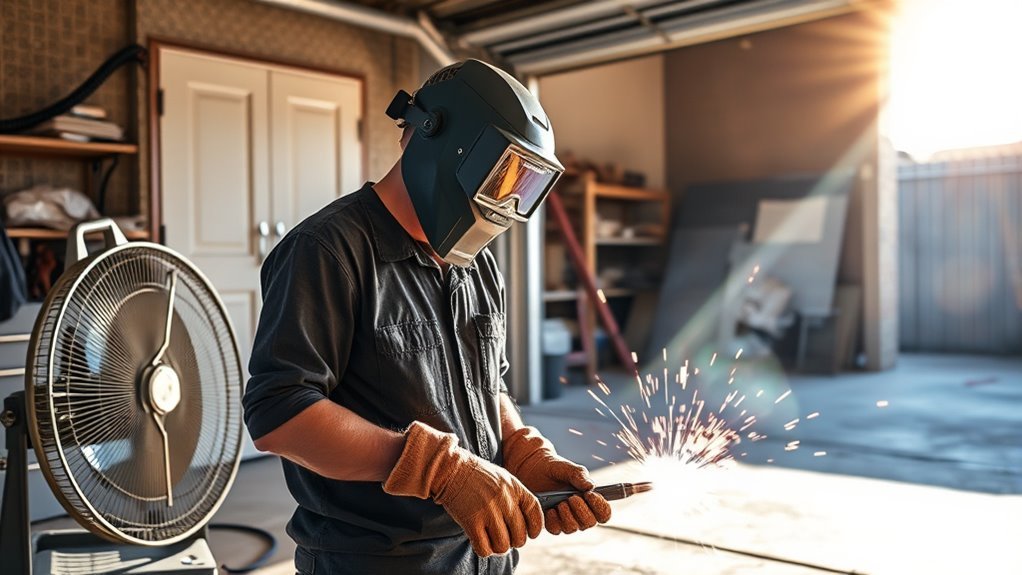
Warning: Welding creates heat, fumes, sparks, and eye hazards, so wear proper protection and follow your welder’s manual.
Choose the Right MIG Wire Size

Choose the right MIG wire size by matching wire diameter to metal thickness, joint demands, and arc control. For thin metals, use .024″ to keep heat low and protect weld quality. For general welding applications up to 1/8″, .030″ gives you a balanced wire choice.
If you’re working toward 3/8″ material, .035″ gives stronger deposition. Reserve .045″ for thick sections that need deeper penetration. On thin metals, .045″ can add too much heat and cause burn-through.
Match MIG wire diameter to metal thickness: .024 for thin stock, .030 for general use, .035 for 3/8″, and .045 for heavy sections.
- Use small wire for a narrow bead on sheet metal.
- Use .030 wire for a steady molten pool on 1/8″ plate.
- Use .035 wire for a controlled fillet on 3/8″ steel.
- Use .045 wire for heavy stock when your machine can run it well.
You should also choose the right MIG alloy for the base metal. ER70S-6 commonly suits mild steel. ER4045 or ER5356 can suit aluminum when your welding setup supports aluminum wire feeding.
Consult wire size charts before you weld, then select the wire diameter that helps you work efficiently and accurately. Selecting the correct shielding gas mix can also improve weld quality and reduce defects.
Products Worth Considering

High-quality: ARCCAPTAIN's ER70S-6 mig welding wire .030" meets industry standards(Net Weight: 10lbs), ensuring consistent performance, superior strength. With its smooth feeding and stable welding parameters, you can achieve optimal penetration, high deposition rates, and exceptional overall welding performance.
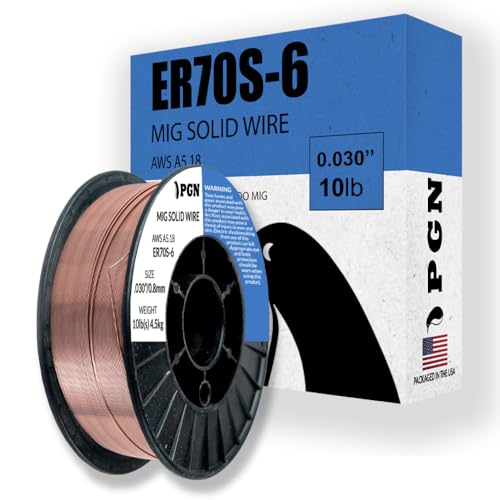
Do Your Best Work ... Color all your clients impressed with the precision and arc control of the ER70S-6 solid MIG welder wire. You'll love the low splatter whether you're performing single or multi-pass welds. Great for T-joints, butt welds & lap welds.

Welding Easy and Quick: AWS E71T-GS 030” Flux Core welding wire (The actual Net Weight of Wire is 2LB), no need for shielding gas, install it then you can welding all positions, single and multi pass welding. Great for T-joints, butt welds & lap welds.
Check Wire Diameter Before You Weld
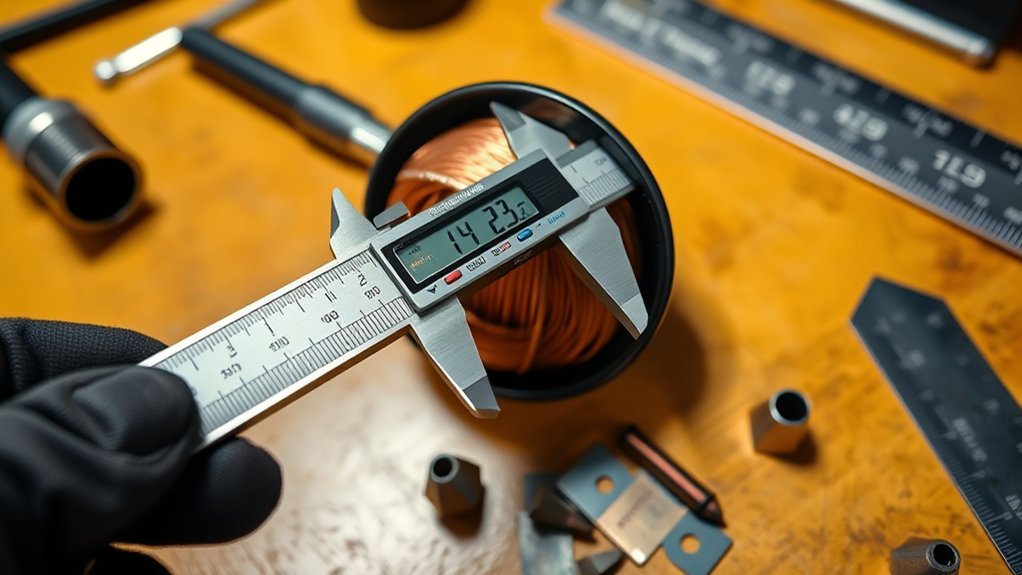
Before you strike an arc, verify the wire diameter matches the weld you’re planning. Measure the wire with a caliper or wire gauge tool, then compare it with the job specification and the welder setup.
Smaller wire diameters such as 0.023” or 0.030” suit thin material and tighter control. Larger sizes such as 0.035” or 0.045” work better on thicker sections when your equipment can feed them correctly.
Follow the manufacturer’s recommendations for wire size because position and process can demand different diameters. Inspect your welding equipment too. The wrong diameter can wear the liner, contact tip, and drive rolls faster.
When you check wire diameter first, you reduce guesswork and protect weld quality. Using the correct diameter wire can also improve weld quality and overall performance.
Wire Diameter, Feed Speed, and Equipment
Wire diameter affects wire feed speed, motor load, and arc stability. Tune the full system instead of only swapping spools. Smaller wire usually needs higher feed speed to keep the arc tight, while larger wire runs slower and often needs higher amperage.
If you push feed speed too hard, you load the motor and weaken wire feeding. Long conduits between the drum and feeder add drag, so keep the path short and smooth. Check drive rolls often, and set tension so they grip without crushing the wire.
Wire diameter, feed speed, and drive tension must work together to keep the arc steady and the weld clean.
- Set thin wire to feed smoothly without bird-nesting.
- Set thick wire to move steadily without slipping.
- Use drive rolls that match the wire type and size.
- Watch the arc and bead shape while you tune settings.
When you match wire diameter, feed speed, and equipment settings, you protect the quality of the weld. Maintaining proper gas flow also helps reduce defects such as porosity.
Wire Diameter Mistakes That Hurt Weld Quality

Choosing the wrong wire diameter can hurt weld quality fast. A wire that’s too large can push excessive heat into the joint and burn through thin material. A wire that’s too small may lack the fill and penetration needed for sound fusion.
When you select MIG wire without matching the base metal thickness, you raise the risk of inadequate penetration and weak joints. If you ignore recommended sizes for vertical, overhead, or flat positions, you lose puddle control and increase the risk of undercut or overlap.
Wire diameter also needs to fit the joint gap. If it doesn’t, you may struggle to fill the joint cleanly, and structural weaknesses can remain. You also need to set feed speed for the chosen wire, or arc instability, spatter, and erratic bead shape can reduce weld quality.
Surface preparation also matters, especially when welding galvanized steel. Treat wire diameter as a controlled variable, not a guess. That precision gives you cleaner fusion and stronger joints.
How Wire Size Lowers Welding Costs
The right wire diameter does more than improve weld quality. It can also cut production costs by reducing spatter, cleanup, and rework. You gain control when you match wire size to the joint, material, and process.
The correct size keeps arc stability high, supports the needed deposition rate, and improves welding efficiency. This helps you avoid wasted motion, wasted filler, and wasted time.
The right wire diameter improves weld quality while reducing spatter, cleanup, and costly rework.
- Use smaller wire only when thin material needs more control.
- Choose larger wire for thicker plate to speed fill and lower cycle time.
- Select quality wire to avoid clogging, erratic feeding, and costly rework.
- Verify fit-up and penetration so you don’t pay for excess cleanup.
Wire diameter affects performance because smaller diameters suit lighter gauges and all-position work, while larger diameters suit heavier plate. When you size wire correctly, you reduce hidden waste. Less spatter means less grinding, and fewer passes can mean faster output.
Test Settings on Scrap Before Final Welding
After you choose a wire size, test your settings on scrap metal with the same thickness and joint style. This short test helps you check bead shape, penetration, spatter, and puddle control before you weld the real part.
Adjust wire feed speed, voltage, travel speed, and stickout until the arc sounds steady and the bead looks consistent. If the weld sits too high, lacks fusion, or burns through, change settings before you continue. A scrap test can save more time than grinding out a failed weld.
Frequently Asked Questions
How do you choose welding wire diameter?
Choose welding wire diameter by matching your material thickness, joint design, welding position, and desired penetration. Then confirm your wire feed speed, contact tip, drive rolls, and shielding gas match that wire size.
Should you use .030 or .035 welding wire?
Use .030 wire for better control on thinner metal and general shop work up to about 1/8 inch. Use .035 wire when you need more fill, stronger deposition, and better performance on material closer to 3/8 inch.
What gauge is .030 welding wire?
.030 welding wire is roughly 22 gauge. In MIG work, wire diameter matters more than gauge wording because your machine settings, metal thickness, and joint type control the final result.
Is .6 or .8 wire better for MIG welding?
0.6 mm wire works better for thin sheet and tight heat control. 0.8 mm wire gives more fill and works well for general mild-steel welding when your machine settings match the job.
Can you use the wrong contact tip with MIG wire?
You should not use the wrong contact tip size. A loose or tight tip can cause poor current transfer, feeding trouble, burnback, or an unstable arc.
Welding Safety Disclaimer: This article is for informational purposes only and does not replace training, your welder’s manual, or professional welding guidance. Always use proper personal protective equipment and follow safety rules for your material, gas, and welding process.
Conclusion
Choosing the right weld wire diameter helps you control penetration, arc stability, and cost. Match wire size to metal thickness, welding position, and your machine’s feed setup before you weld.
Verify the wire diameter, contact tip, drive rolls, liner, and settings before each important job. Then test on scrap when the material, joint, or position changes. Careful setup helps you weld more consistently, reduce waste, and get stronger results.