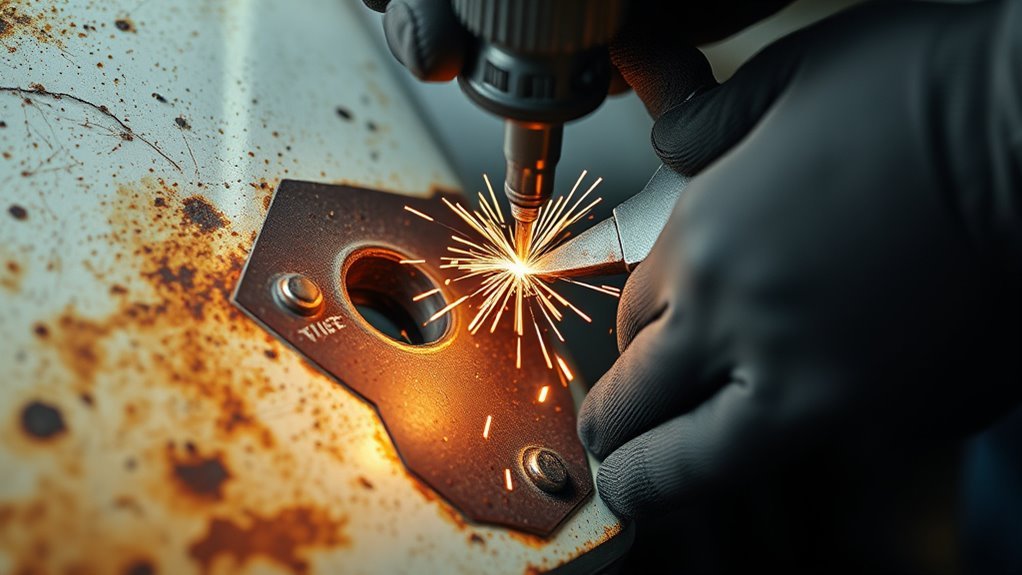
Drilling out spot welds is a controlled way to remove an auto body panel without tearing up the metal underneath. The goal is simple: find the center of each weld, drill only the top layer or weld cap, watch for the seam to release, and separate the panels without gouging the support structure.
Quick Answer
To drill out spot welds, expose and mark each weld, center punch the mark, drill a small pilot hole, then use a spot-weld cutter or larger bit sized to the weld. Stop as soon as the top panel releases, then use a seam splitter or air hammer to separate the panels cleanly.
Key Takeaways
- Mark the exact center of every spot weld before drilling so the cutter does not walk across the panel.
- Use a pilot hole, cutting oil, low drill speed, and a depth stop to protect the lower layer.
- A spot-weld cutter is usually cleaner than a standard twist bit when you need to save the backing panel.
- Use an air hammer only after the weld has been weakened; forcing it too early can bend the flange.
- Follow the vehicle maker’s repair procedure before welding structural panels back in place.
At a Glance
| Time Required | 30 minutes to 2 hours, depending on the number of welds, access, and panel condition |
| Difficulty | Intermediate; structural rocker panels and high-strength steel sections may need a trained collision technician |
| Tools Needed | Safety glasses with side shields, face shield, gloves, hearing protection, marker or scribe, center punch, drill, 1/8-inch pilot bit, spot-weld cutter or step bit, cutting oil, clamps, seam splitter, vacuum, and air hammer with panel chisel if needed |
| Cost | About $15 to $80 for drill bits or cutters, more if you need pneumatic tools, replacement panels, primer, seam sealer, or cavity wax |
Warning: Wear proper eye and face protection before drilling or using an air hammer. Metal chips, broken drill bits, and sharp panel edges can cause serious injury. If you later weld the panel, clear combustibles, keep fire protection nearby, and control fumes from coated or galvanized metal.
Tools for Drilling Out Spot Welds
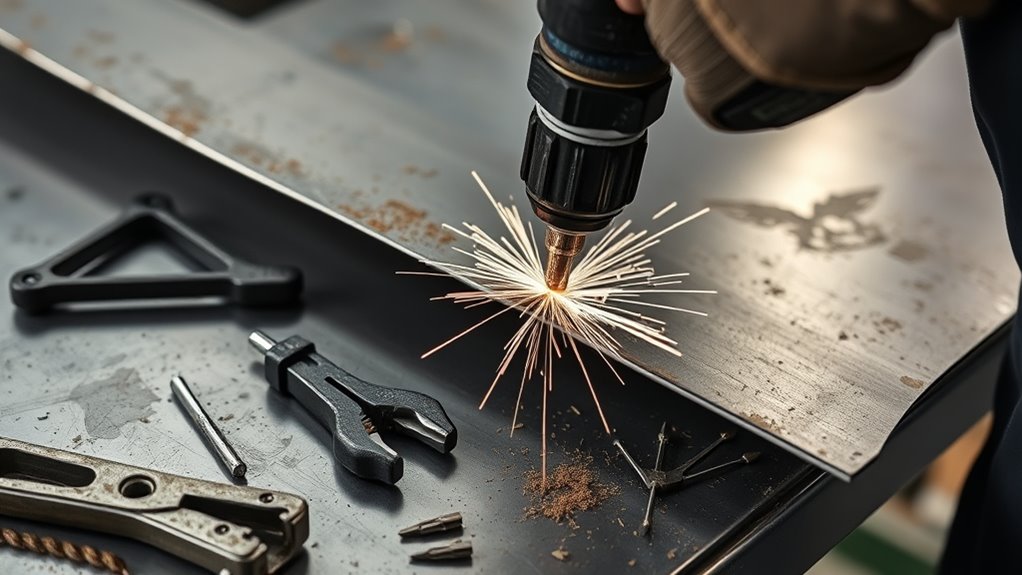
The right tools make spot weld removal faster, cleaner, and safer. At minimum, you need a drill, a sharp pilot bit, a spot-weld cutter or larger bit, a marker, a center punch, cutting oil, and a way to hold the panel steady.
A spot-weld cutter is usually the best choice when you want to save the lower panel. It cuts around the weld instead of drilling a full hole through both layers. A standard twist bit or step bit can work when the outer panel is scrap, but you still need to stop before the lower layer is damaged.
Use sharp bits only. A dull bit makes heat, walks off center, widens the hole, and can tear the surrounding sheet metal. Keep a few replacement bits nearby if you are removing a long rocker panel or a panel with many factory welds.
- Marker or scribe: marks each weld center clearly.
- Center punch: creates a small dent so the drill starts in the right spot.
- 1/8-inch pilot bit: gives the cutter a controlled starting point.
- Spot-weld cutter or step bit: removes the weld cap without chewing up the lower panel.
- Cutting oil: reduces heat and helps the bit last longer.
- Seam splitter or panel knife: checks whether the weld has released.
- Air hammer with panel chisel: helps separate stubborn seams after the welds are weakened.
Note: On structural panels, do not guess the weld locations, weld count, sectioning point, or replacement weld method. Check the vehicle maker’s repair information first, especially around rocker reinforcements, pillars, frame rails, airbag sensor areas, and EV battery structures.
Products Worth Considering

High-Quality Material: Spot Weld Cutter Tool is made from premium HSS (High-Speed Steel) for superior durability and heat resistance. The sturdy construction ensures long-lasting performance, even in tough metalworking tasks.

18-Pack Comprehensive Kit: The spot weld removal tool kit includes 2 pcs spot Weld Drill, 8 pcs replacement cutting blades and 4 pcs pilot pin replacement. 3 pcs spot weld drill bits include 1/4in (6.5mm), 5/16in (8mm), 3/8in (10mm)—It is easy to replace when the cutter blades begin to dull.

Spot Weld Cutter Kit: It is easy to replace when the cutter blades begin to dull. The spot weld removal tool kit includes 2 complete spot weld cutters, 11 replacement 3/8" double-sided cutter blades, 2 replacement center pins, and a storage case
Prepare the Panel Before Marking Welds
Clean the area before you mark the welds. Dirt, paint, seam sealer, undercoating, and rust can hide the weld centers and make the drill wander. Wipe off loose debris first, then use a wire wheel, abrasive pad, or scraper to expose the seam.
If the panel has thick seam sealer, soften and scrape it away carefully so you can see the factory weld pattern. Do not grind aggressively into the base metal. You only need enough clean surface to identify each weld and drill accurately.
Support the panel so it cannot shake while you drill. Vibration makes the bit chatter and increases the chance of a jagged hole. If the vehicle is on stands, make sure it is stable before you lean on the drill or use an air hammer.
Mark the Spot Welds Before Drilling
You should visually inspect the panel and locate each weld center before you drill. Accurate targeting starts with a clear reference point, not with guessing.
Mark each drill target with a marker or scribe, then use a center punch to keep the bit from skating across the metal. Trace the full seam and verify the spacing of every mark so you do not miss hidden welds along the flange.
Locate Weld Centers
Start by looking for the shallow circular marks left by the factory spot welder. On painted panels, the weld may look like a slight dimple or raised ring. On rusty panels, you may need to clean the seam before the weld pattern becomes clear.
Make sure every mark sits near the true center of the weld. A mark on the edge of the weld can make the cutter grab one side and scar the surrounding panel.
Mark Drill Targets
After you find the weld centers, mark each target clearly. A crisp mark gives you a reliable reference when the drill is moving and chips start covering the surface.
Use a center punch with a light, controlled tap. The punch mark should be deep enough to guide the pilot bit but not so hard that it dents or stretches the panel.
Trace Panel Seams
Trace the panel seams carefully so you understand where the outer panel overlaps the inner structure. This helps you choose the drilling angle and removal order.
When two layers overlap, mark the side you plan to remove and protect the side you plan to keep. If a seam has adhesive, brazing, weld bonding, or high-strength steel, stop and confirm the correct repair method before cutting.
Drill a Pilot Hole in Each Weld
Start each weld with a small pilot hole. A 1/8-inch bit is a common starting size because it gives the larger cutter a centered path without removing too much metal.
Keep the drill square to the panel, use steady pressure, and run the drill at a controlled speed. Do not force the bit. If it squeals, smokes, or stops cutting, add cutting oil or replace the bit.
Products Worth Considering

Helps deliver no walk start and speed with pilot point

High-speed steel tools are good for most general purpose applications, offering a combination of hardness and toughness for wear resistance

[1/8 Inch 20PCS] A pack containing 20 pieces 1/8"(Dia 3.175mm) cobalt metal drill bits comes in plastic storage case for easy storage.
Pilot Hole Placement
Place the pilot bit directly in the center-punched mark. Let the bit establish the path, then stop. The pilot hole is not meant to drill through the entire panel stack.
Check your angle from two directions before drilling. A drill that leans to one side can cut into the lower layer even if the surface mark looks centered.
Small Bit First
Using the small bit first gives you better control with the larger cutter. It also helps prevent the cutter from wandering into the surrounding sheet metal.
Once the guide hole is made, brush away chips and confirm the pilot hole is still centered. If it is off-center, correct your angle before moving to the larger bit.
Center Each Weld
Centering matters more than speed. A clean, centered cut releases the weld with less grinding later and reduces the chance of thinning the lower panel.
- Mark each weld clearly.
- Hold the drill square to the surface.
- Use cutting oil on stubborn welds.
- Stop often to check depth.
- Move to the larger cutter only after the pilot hole is stable.
Use a Larger Bit to Remove the Weld
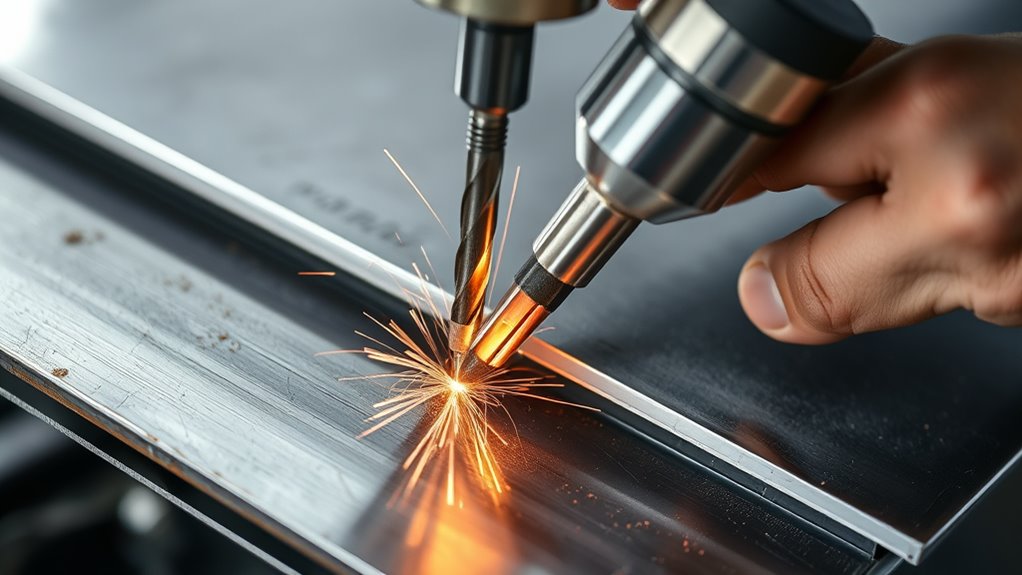
Step up to a larger bit, step bit, or spot-weld cutter after the pilot hole is started. A cutter near the size of the weld is usually enough. Many auto body spot welds can be removed with a cutter around 3/8 inch to 1/2 inch, but the right size depends on the actual weld diameter and the repair procedure.
Keep the cutter centered, apply steady pressure, and drill only until the weld cap or top layer releases. You are not trying to make a deep hole. You are trying to break the bond between the panel you are removing and the structure underneath.
Use a low to moderate drill speed and let the cutter work. High speed overheats the bit and can harden the weld area, which makes the next weld harder to cut.
Pro Tip: Wrap a piece of tape around the bit or use a drill stop collar as a depth guide. It is not a substitute for checking the seam, but it helps you avoid drilling too deep.
Stop Before You Drill Into the Bottom Panel
As you drill, stop before the bit reaches the bottom panel. The lower layer often becomes the mounting surface for the replacement panel, so cutting it up creates extra repair work and can weaken the area.
Watch for the seam to move, the chips to change, or a slight gap to open between the panels. Those signs tell you the weld is close to releasing.
The cleanest spot weld removal happens when you cut only enough metal to release the weld, then stop before the lower structure is damaged.
- Use the pilot hole to guide the larger cutter.
- Keep the bit square to the panel.
- Pause often and check the seam.
- Stop at the first sign of layer separation.
- Protect the lower panel if it will be reused.
Check for Panel Separation as You Drill
As you drill, watch for a slight gap between the panels. That gap usually means you are cutting the weld instead of drilling into the base metal below it.
Use a thin seam splitter or panel knife to test the spot. Do not pry hard. If the tool slides under the top layer with light pressure, the weld is released. If it feels locked, drill a little more or move to a spot-weld cutter that better matches the weld diameter.
Watch for Metal Separation
Metal separation often appears before the weld fully lets go. You may see the edge lift, hear a slight change in the drill sound, or feel the panel relax.
When that happens, slow down. A few extra seconds of drilling can turn a clean release into an unnecessary hole through the backing panel.
Drill Progress Check
Check your work after every weld or every few welds. Brush or vacuum the chips away so you can see the seam clearly. Do not use full-pressure compressed air to blast chips unless it is properly reduced and guarded, because metal chips can fly back at you.
If the cutter is making dust instead of clean chips, it may be dull. Replace it before it overheats the panel or slips out of the weld center.
Stop Before Penetration
Stop before the cutter breaks through the lower layer. If you accidentally nick the backing panel, mark the damaged spot so you can repair, dress, and protect it before the new panel is installed.
- Watch for separation.
- Stay centered on the weld.
- Limit drilling depth.
- Inspect the lower panel often.
- Finish the release with a seam splitter, not brute force.
Create a Slot to Start Splitting the Panels
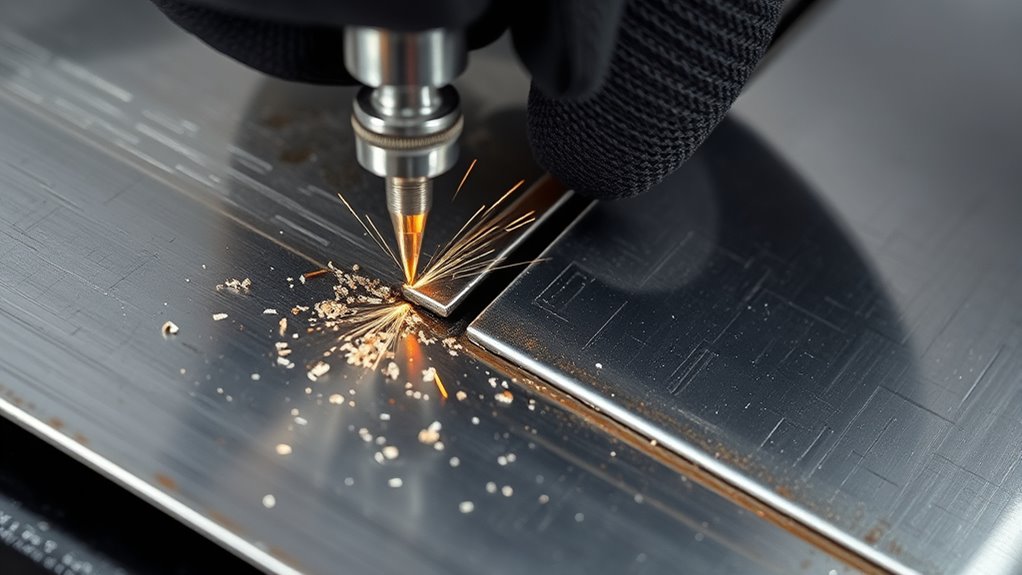
After the spot weld is weakened, you can widen the pilot hole into a small slot if the seam still will not open. This gives a seam splitter or air-hammer chisel a starting point.
Keep the slot controlled and centered on the weld. Do not make the slot longer than needed, and do not cut into the structure you plan to keep.
| Step | Action | Result |
|---|---|---|
| 1 | Center punch | Stable start |
| 2 | 1/8-inch bit | Pilot hole |
| 3 | Spot-weld cutter or larger bit | Weld cap removed |
| 4 | Controlled depth | Lower panel preserved |
| 5 | Light seam splitting | Panel starts to release |
That slot gives you room to separate the rocker from the inner panel with control. If the seam still feels solid, there is probably another weld nearby or the weld is not fully cut.
Use an Air Hammer to Separate the Panels
With the slot opened, you can use an air hammer to split the rocker panel from the inner panel. Fit a panel-separating chisel, guide it into the gap, and work along the drilled weld line in short bursts.
Keep the chisel angle low so it follows the seam instead of digging into the lower structure. Let the tool do the work. If you have to force it, stop and look for a missed weld.
- Hold the tool steady and keep both hands clear of the seam.
- Advance a short distance at a time.
- Follow the existing gap, not the outer skin.
- Do not pry hard against a flange you need to reuse.
- Stop once the rocker panel breaks free from the inner panel.
If the panel resists, bend the scrap panel slightly to open the weld area. Do this only on the panel you are removing, not on the structure you need to keep straight.
Clean Up the Spot Weld Area
Once the panels are separated, remove metal shavings and debris from the spot weld area so you can inspect the surrounding metal clearly.
Vacuum the seam first, then use a wire brush, abrasive pad, or grinder with light pressure. Keep your passes controlled so you do not thin the parent metal.
Check the exposed edge for rust, distortion, torn metal, or hidden damage. Any flaw you leave now can affect how the replacement panel fits and how well the new welds hold.
Clean until the surface is uniform and bare where welding will occur. Remove loose paint, seam sealer, heavy rust, and coating only where required for the repair. If the panel is zinc-coated or galvanized, control fumes when welding and use ventilation or respiratory protection based on the job conditions.
Finish by vacuuming again and wiping the area clean. A clean surface gives you a better fit, easier weld inspection, and stronger corrosion protection after the repair.
Fit the New Rocker Panel and Weld It In
Before you fit the new rocker panel, make sure the mounting area is clean and free of debris so the panel sits snugly against the existing structure.
Position the replacement carefully, checking rocker panel alignment with factory holes, body contours, and door openings. Use clamps or temporary screws to hold it steady while you verify fit and adjust as needed.
Before welding, confirm the replacement weld type and spacing in the repair information for the vehicle. Some areas may require plug welds, squeeze-type resistance spot welds, weld bonding, sectioning limits, or special treatment for high-strength steel.
- Check panel alignment from both ends.
- Confirm door gaps stay even.
- Clamp before every tack weld.
- Protect nearby glass, wiring, trim, insulation, and fuel or brake lines.
- Watch heat to avoid distortion.
- Inspect seams for gaps after welding.
After the welds cool, perform seam inspection along every joint. Look for pinholes, cracks, poor fusion, missed welds, or uneven gaps. Correct problems before sealing the repair.
Finish with corrosion protection. Apply primer or weld-through primer where the repair procedure calls for it, then use seam sealer, paint, and cavity wax to protect the rocker area from future rust.
Warning: Welding and grinding can ignite hidden insulation, seam sealer, carpet, undercoating, or debris on the back side of a panel. Move or shield combustibles, keep suitable fire extinguishing equipment ready, and maintain a fire watch after welding when conditions require it.
Common Problems When Drilling Out Spot Welds
If the panel will not separate cleanly, do not keep drilling blindly. Stop, clean the area, and check the cause.
- The bit walks off center: Re-punch the mark, slow the drill speed, and start with a sharper pilot bit.
- The cutter gets hot: Add cutting oil, reduce speed, and let the bit cut instead of forcing it.
- The weld still holds: The cutter may be too small, off-center, or not deep enough through the top layer.
- The lower panel is nicked: Dress the sharp edge, inspect for cracks, and repair it before fitting the new panel.
- The seam bends: Stop prying and look for missed welds, adhesive, or seam sealer.
- Rust hides the welds: Clean a wider area and trace the factory weld pattern before drilling again.
Frequently Asked Questions
Can you drill out spot welds?
Yes. You can drill out spot welds by marking the weld center, drilling a pilot hole, then using a spot-weld cutter or larger bit to release the top layer. The key is to stop before you damage the lower panel.
What size drill bit should you use for spot welds?
A 1/8-inch bit is a common size for the pilot hole. For the final cut, use a spot-weld cutter or bit close to the weld diameter, often around 3/8 inch to 1/2 inch. Match the cutter to the actual weld and the vehicle repair procedure.
Is a spot-weld cutter better than a regular drill bit?
A spot-weld cutter is usually better when you need to save the lower panel because it cuts the weld cap more cleanly. A regular drill bit can work when the outer panel is scrap, but it is easier to drill too deep.
How do you detach spot-welded panels?
Detach spot-welded panels by drilling each weld until the top layer releases, then use a seam splitter or air hammer with a panel chisel to separate the seam. Work slowly and check for missed welds before prying.
Which tools can be used to remove spot welds?
Common tools include a marker, center punch, drill, pilot bit, spot-weld cutter, step bit, seam splitter, panel knife, grinder, and air hammer. A spot welder makes welds; it does not remove them.
What if you drill through the bottom panel by mistake?
Stop drilling, mark the damaged area, and inspect it closely. Small nicks may need dressing and corrosion protection, while larger holes or cracks may need welding repair before the replacement panel is fitted.
Conclusion
You can drill out spot welds cleanly if you work with control. Mark each weld, center punch it, start with a pilot hole, use a cutter sized to the weld, and stop as soon as the top layer releases. If the seam still holds, use a seam splitter or air hammer only after the weld has been weakened.
Before welding the new rocker panel or body panel in place, clean the joint, confirm fit, follow the vehicle maker’s repair procedure, protect against fire and fumes, and finish the repair with proper primer, seam sealer, paint, and cavity wax.
Sources
- OSHA 1910.133 Eye and Face Protection — supports eye and face protection guidance for flying particles, molten metal, and welding hazards.
- OSHA 1910.242 Hand and Portable Powered Tools — supports safe tool condition and compressed-air chip-guarding guidance.
- OSHA 1910.252 Welding, Cutting, and Brazing — supports fire prevention, fire watch, ventilation, and zinc-coated metal precautions.
- CDC/NIOSH Welding Fumes and Manganese — supports welding fume exposure and ventilation awareness.