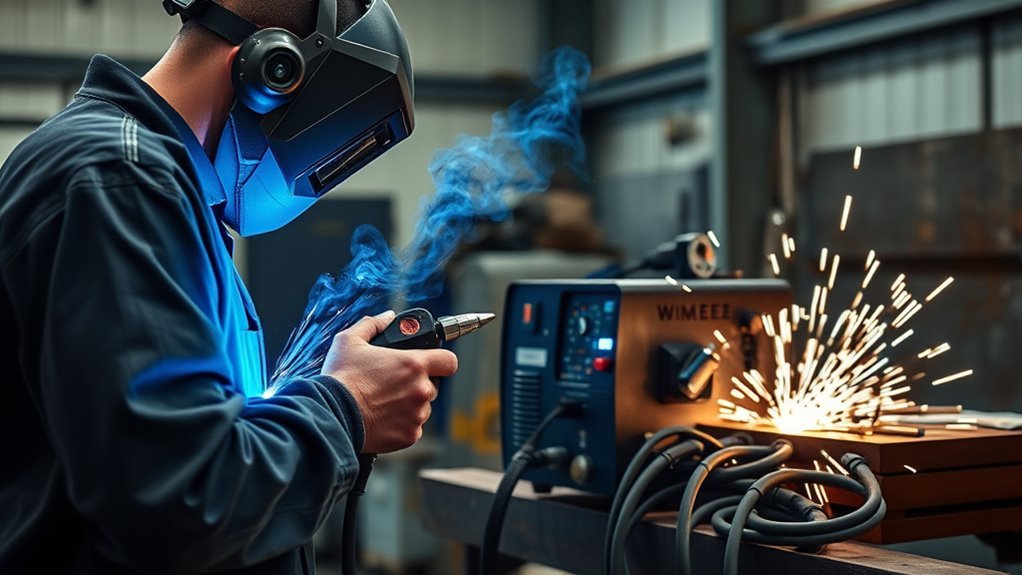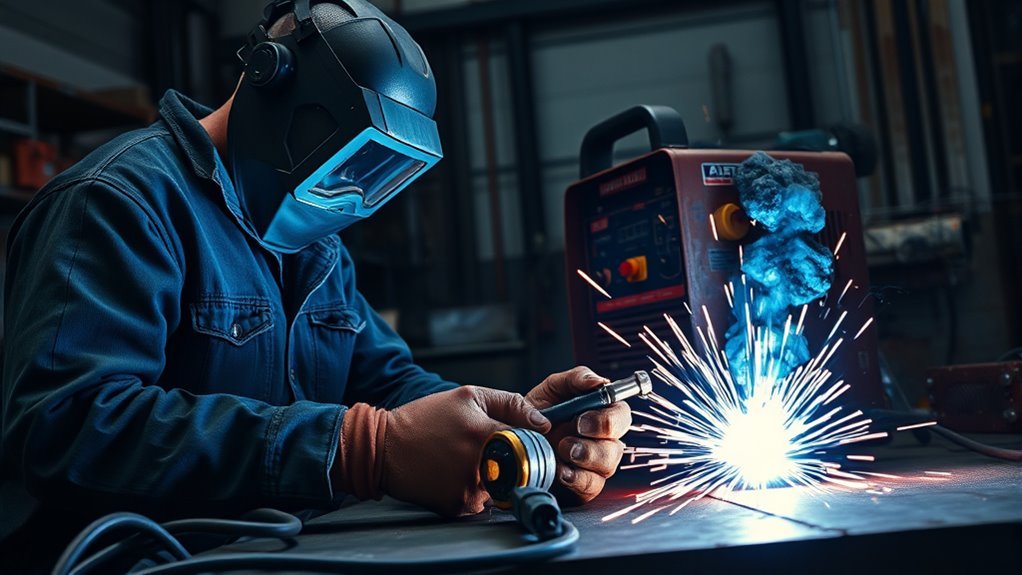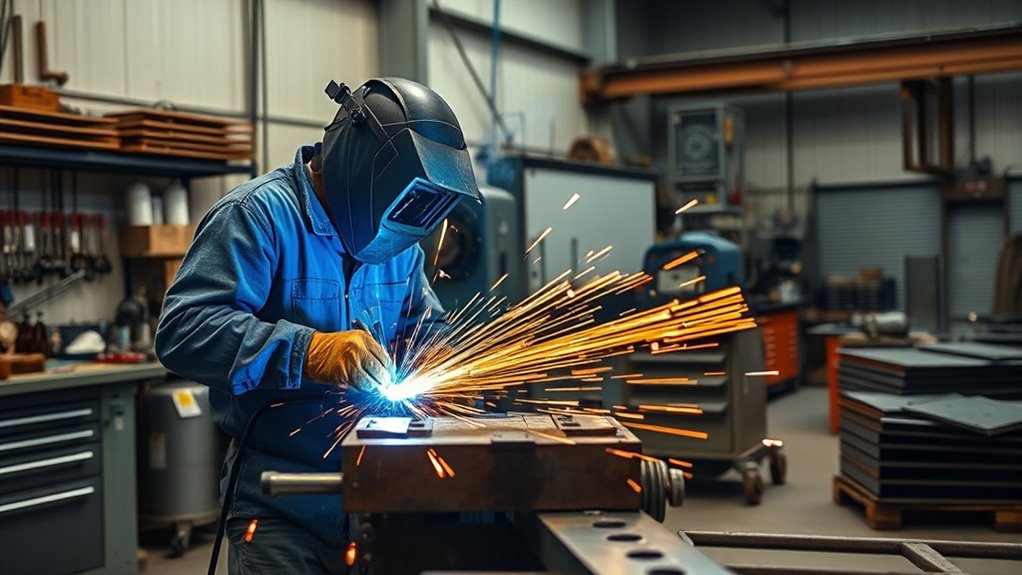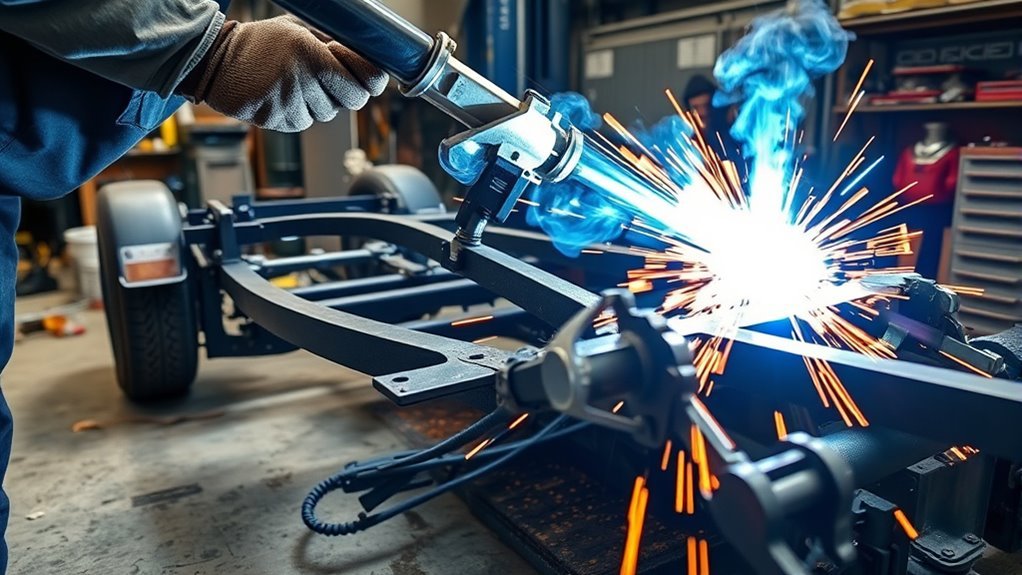
Welding front frame horns is a structural repair, not a cosmetic patch. You need clean metal, accurate measurements, controlled heat, proper reinforcement, and a careful inspection before the vehicle returns to the road. If the frame horns are bent, cracked, rusted, or poorly aligned, the repair should be handled by a qualified frame or welding professional with the right measuring equipment.
Quick Answer
To weld front frame horns, cut and bevel the damaged ends, clean every mating surface to bare metal, align both horns from fixed chassis reference points, clamp them level, tack-check alignment, then weld with controlled heat and full fusion. Add sleeves or patches where needed, and inspect the repair before any road test.
Key Takeaways
- Measure from the factory centerline, bumper mounts, crossmember points, and other fixed references before cutting or welding.
- Strip paint, rust, undercoating, grease, and scale from all weld areas so the joint can fuse cleanly.
- Use tack welds first, then recheck height, width, diagonal measurements, bumper fit, and twist before final welding.
- Sleeves, plug welds, and shaped external patches can spread load and reduce stress at the repair joint.
- Do not road test until the welds, reinforcement, steering feel, bumper fit, and frame alignment have been inspected.
At a Glance
| Time Required | Several hours to a full day, depending on damage, fit-up, reinforcement, and inspection needs. |
| Difficulty | Advanced. This is a structural frame repair and is not suitable for beginner welding practice. |
| Tools Needed | MIG welder, grinder, cutoff wheel, flap disc, clamps, measuring tape, straightedge, square, level, marker, PPE, and frame reference points. |
| Cost | Varies by vehicle, steel thickness, reinforcement material, shop labor, and whether frame-machine measuring is required. |
Warning: Frame horn repairs can affect crash structure, steering alignment, bumper mounting, suspension geometry, and road safety. If you are not trained in structural welding and vehicle frame measurement, have the repair inspected or completed by a qualified professional.
Prep Frame Horns for a Clean Weld
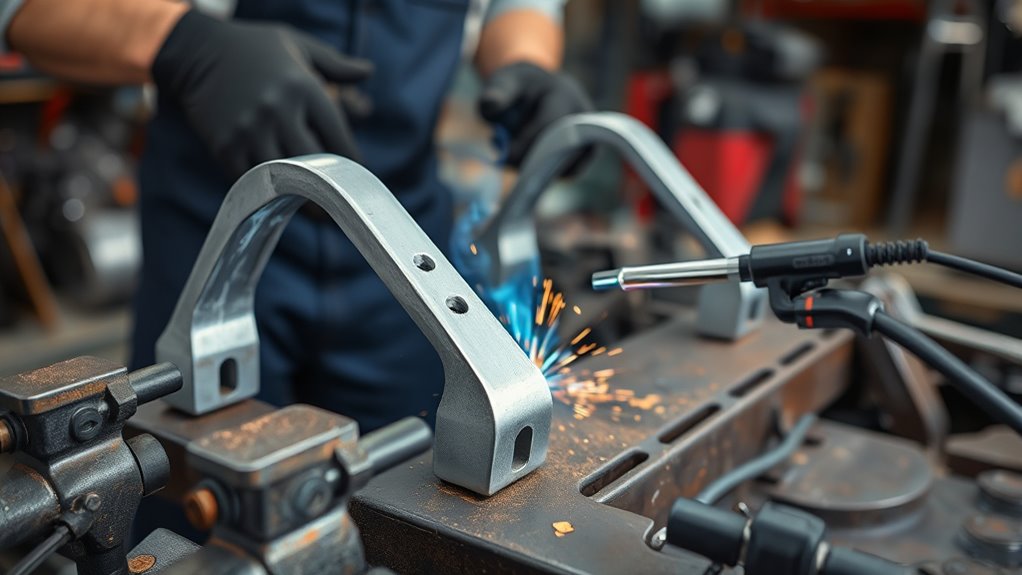
Start by checking the damage before you cut. Look for cracks, rust thinning, torn metal, previous poor welds, crushed bumper mounts, twisted flanges, and any signs that the damage reaches deeper into the frame rail.
Mark the cut lines only after you measure both sides of the chassis. A clean repair starts with a repeatable reference point, not a guess. Use fixed points such as factory holes, bumper brackets, crossmember mounts, suspension pickup points, or a centerline marked on the chassis.
Start by measuring and cutting the frame horns so they fit snugly and stay aligned, since any gap or mismatch can weaken the structure.
Then bevel each cut edge to open the joint and help the weld penetrate deeper. A bevel gives the weld more room to tie into the parent metal instead of sitting only on the surface.
A tight, clean, beveled joint is easier to weld than a rusty gap that has to be filled with excessive heat.
Clean every mating surface until you’ve removed rust, paint, grease, undercoating, seam sealer, and scale. A clean joint gives you better fusion and less contamination.
Clean beyond the weld zone, too. Heat can pull hidden grease, paint, zinc coating, or undercoating into the weld puddle. That can create porosity and weak spots that are hard to see after grinding.
If you’re using a stock bumper as a reference, set it in place now to verify that the frame horns sit where they should before you weld. The bumper, brackets, and mounting holes can reveal a horn that looks straight by eye but is shifted up, down, inward, or outward.
Take your time and check both sides for equal fit. Compare left-to-right measurements, diagonal measurements, bumper bracket spacing, horn height, and horn angle.
You can also preheat the area around the welds when the steel is thick or cold, but do it carefully. Too much heat can increase distortion, damage nearby parts, or weaken coatings. Heat input management is crucial for achieving better weld quality.
Note: Disconnect the battery, protect wiring, move fuel lines or hoses away from heat when possible, and keep a fire watch after welding. Undercoating and seam sealer can smolder even after the bead looks finished.
Wear welding gloves, a proper helmet, eye protection, hearing protection, long sleeves, and respiratory protection when grinding or welding coated metal. Good frame repair starts with safe, disciplined prep.
When you prepare the frame horns correctly, you give your weld the best chance to hold strong and carry the load.
How to Align Frame Horns
With the frame horns cut, beveled, and cleaned, the next step is to set their position with exact measurements. Alignment matters because the frame horns often support bumper brackets, front structure, splash shields, tow points, or related body hardware.
In frame repair, you align frame horns by measuring from symmetrical points on both sides of the chassis, then comparing each reading to the factory centerline. Use a stock bumper as a reference so the horns track with the body and front structure.
Check these points before tacking:
- Distance from each horn tip to the same fixed rear reference point.
- Left-to-right width between bumper mounting holes.
- Diagonal measurements from each horn to the opposite-side reference point.
- Horn height from the floor, frame table, or a stable reference plane.
- Bumper bracket fit and bolt-hole alignment.
- Side-to-side twist, especially at the cut line and horn end.
Because you cut the ends at 45 degrees, they should nest more naturally than a square cut and resist pull during fit-up. A diagonal seam also gives more weld length than a straight butt joint, but the final strength still depends on fit-up, penetration, reinforcement, and heat control.
Clamp each horn, check that both sit level, and confirm they meet the original surfaces snugly without gaps or twist. Use strong clamps and temporary braces if the horn wants to move as you tack it.
Recheck every dimension twice, then document them before you move on. This disciplined process helps you preserve structure, avoid costly correction, and weld the seam with confidence. Remember to size welds according to the thinner plate to help protect structural integrity.
Pro Tip: Tack the horn in four small spots, then bolt the bumper or bracket in place before final welding. If the bolt holes do not line up during tack-up, they will not magically line up after the final bead.
Products Worth Considering

Compact Practical Door Alignment Tool: This handy door aligner efficiently fixes misaligned doors and uneven gaps caused by body collisions, bringing precise adjustment for flush door fit and smooth closing

【Professional-Grade 2D Measuring System for Accurate Repairs】This High-Precision 2D Measuring Ruler is engineered for automotive professionals who demand accuracy. Made from aviation aluminum with an electrophoresis finish, it resists wear, corrosion, and deformation. Ideal as a 2D Measuring System or Tram Gauge, it ensures reliable, repeatable measurements across vehicle frames and body parts.
Weld Frame Horns for Full Penetration
Once the frame horns are clamped in alignment, you can weld them for full penetration by keeping every mating surface clean and bare metal, so rust, paint, and scale don’t weaken the bond.
Bevel the edges of both front pieces to form a tight V-groove, giving your weld more access and deeper fusion through the frame joint. Leave enough root opening for fusion if the joint design calls for it, but do not leave a large gap that forces you to dump excess heat into the frame.
If the material is thick, preheat it evenly so you reduce thermal shock and improve arc stability in these high-stress areas. Keep heat controlled and localized, especially near brackets, bushings, steering parts, sensors, wiring, and fuel-related components.
Run your bead with a steady travel speed, correct angle, and consistent heat so you drive for strong penetration without undercut or cold lap. Keep your front frame secure, watch the puddle closely, and stop if the metal starts to distort.
Use short, controlled passes when needed instead of trying to finish a long seam in one hot run. Let the repair cool naturally between passes. Do not quench the weld with water, because rapid cooling can increase stress in the repair area.
Where the design calls for extra reinforcement, add plug welds to share load across the frame horn connection and help your weld hold the road with strength. Additionally, ensure you have a properly set MIG welder to achieve better results in your welding process.
Warning: Do not weld over rust-thinned frame metal. If the parent metal is weak, porous, or delaminated, the weld may look acceptable on the surface while the surrounding frame still fails under load.
Add Sleeves and Patches for Strength
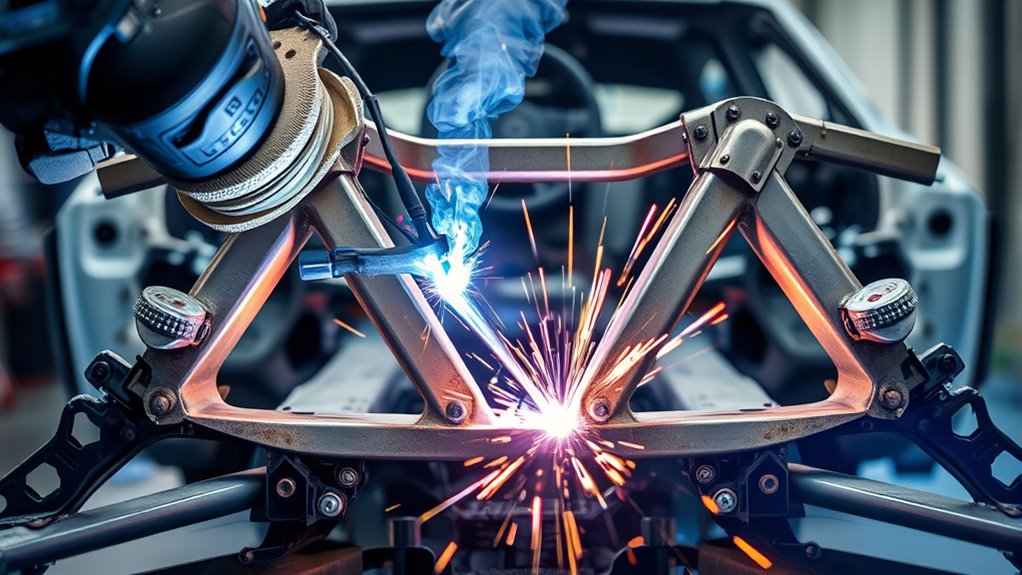
After you’ve got full-penetration welds in place, you can strengthen the repair by adding 1/8-inch steel sleeves inside the frame horns for a snug internal fit.
The sleeve should fit tightly enough to support the joint but not so tight that it forces the frame horn out of alignment. Match the sleeve to the frame shape as closely as possible so load can pass through the repair instead of concentrating at one edge.
Bevel the ends of the frame and sleeve pieces so your weld can bite deep and fuse cleanly. Align the sleeves with the original frame, because any twist or offset can compromise vehicle integrity and straight-line tracking.
Then plug weld all sides of each sleeve, spacing the welds to lock the reinforcement into the parent metal and spread load across the joint. Drill or prepare clean plug-weld holes before final assembly, then weld from the center outward where practical to reduce movement.
If you need external reinforcement, fit patches that follow the horn profile and avoid square ends where possible. A patch should sit tight against clean metal with no trapped scale, rust, or undercoating behind it.
Triangle cutouts at patch ends help you dodge perpendicular welds, which can create stress risers and invite cracking. Rounded patch ends can also reduce sharp stress points compared with square-ended plates.
Keep every patch and sleeve tight, clean, and properly located before you weld. Additionally, ensure to preheat the material only when the material thickness and repair situation justify it, and avoid overheating thin frame sections.
Done right, these reinforcements help you reclaim strength without surrendering safety, control, or the ability to drive with confidence.
Inspect the Repair Before Road Testing
Before you road test the repair, inspect the welds closely for consistent bead profile, full fusion, and any visible defects that could compromise strength.
You should inspect every joint on the frame section with a bright light and a clean mirror if needed, looking for porosity, undercut, cracks, pinholes, overlap, or gaps that signal weak penetration.
Measure horn alignment against fixed reference points so you know the parts sit true and secure.
Measure horn alignment against fixed reference points before and after welding, because heat can pull the repair out of position.
Check the weld toes and adjacent metal for heat-affected cracking, distortion, or stress marks. Also check the bumper, brackets, splash shields, radiator support parts, and any nearby bolt holes for fit.
If you find any misalignment, stop and correct it before you move on. Safe road use starts with disciplined verification in the bay.
After the first low-speed test, stay alert for vibration, pull, odd steering feel, bumper movement, unusual noises, or uneven panel gaps, because those symptoms can reveal hidden damage in the structure. Additionally, ensure your protective clothing is in good condition to maintain safety while assessing the repairs.
Note: A visual weld check is not the same as a full structural inspection. If the vehicle was hit hard, pulls to one side, or has suspension damage, use proper frame measuring and alignment checks before normal driving.
Frequently Asked Questions
What kind of welding is used for car frames?
MIG welding is commonly used for car frame repair because it is practical for steel automotive structures and can provide strong fusion when the joint is clean, fitted, and set up correctly. The best process still depends on the frame material, thickness, joint design, welder skill, and repair requirements.
What is the best welder for car frame repair?
A capable MIG welder with enough output for the frame thickness is usually the practical choice for steel frame horn repair. Many structural repairs need a machine with stable voltage control, the correct wire, proper shielding gas, and enough amperage for full fusion. TIG can be precise, and flux-core can work in some conditions, but setup and technique matter more than the label on the machine.
Can a car subframe be welded?
A car subframe can sometimes be welded, but it depends on the material, damage location, rust level, vehicle design, and safety rules in your area. Some subframes are better replaced than repaired, especially if the damage is near suspension mounting points or the metal is heavily corroded.
Can a cracked car frame be welded?
Yes, a cracked car frame can sometimes be welded, but the crack must be inspected first. The repair may need stop-drilling, beveling, reinforcement, sleeve work, plug welds, or frame-machine measurement. Do not weld over a crack without checking why it formed and whether the surrounding metal is still strong.
Should front frame horns be sleeved before welding?
Sleeving is often useful when the repair joint needs more support or the horn carries bumper or recovery loads. The sleeve should fit the inside of the frame horn, line up with the original structure, and be secured with plug welds and edge welds where appropriate.
Can I road test the vehicle right after welding?
Do not road test until the welds have cooled naturally, the frame horn alignment has been rechecked, nearby parts are reinstalled correctly, and the repair has been inspected for cracks, porosity, undercut, distortion, and poor fit. Start with a slow test only after the vehicle is safe to move.
Conclusion
When you finish welding the front frame horns, you’re not just joining steel. You’re restoring part of the car’s structure. If you’ve cleaned, aligned, tacked, remeasured, welded, reinforced, and inspected every seam, the repair has a much better chance of holding under real driving loads.
Still, treat the work as a serious safety repair, not a quick patch. Check your welds, confirm measurements, watch for heat distortion, and road-test carefully at low speed first. A straight, strong frame horn helps the vehicle track true, mount the bumper correctly, and stay safer on the road.