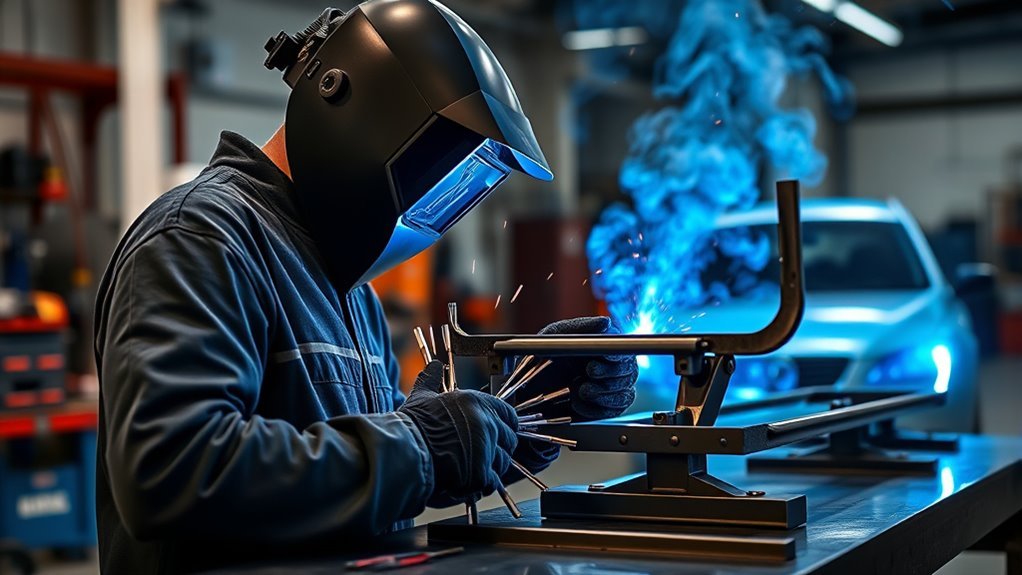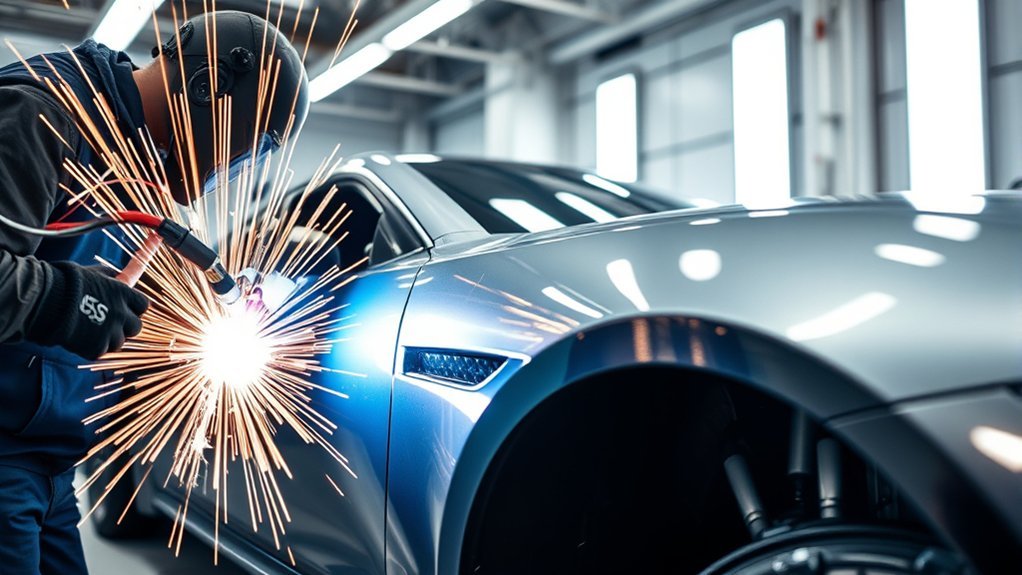
Laser welding can help auto body repair when you need a narrow, controlled weld on thin metal with less panel movement than many arc-welding methods. It is not a universal replacement for MIG, TIG, resistance spot welding, structural adhesive, or OEM-specified joining methods. The best results come from clean metal, tight fit-up, trained technicians, approved procedures, and strict laser-safety controls.
Quick Answer
Laser welding benefits auto body repair by focusing heat into a small joint area, which can reduce warping, shrink the heat-affected zone, and create clean seams on thin panels. It works best with approved procedures, tight gaps, clean surfaces, proper shielding, trained operators, and Class IV laser safety controls.
Key Takeaways
- Laser welding can reduce heat distortion because the beam concentrates energy into a small weld area.
- It is useful for some thin-panel patches, cosmetic seams, brackets, and custom fabrication, but only when the repair procedure supports it.
- It is not automatically approved for structural collision repair. Always check the OEM repair information for the exact vehicle and repair location.
- Class IV handheld laser welders require laser-rated eyewear, controlled access, barriers, ventilation, fire precautions, and trained operators.
- Clean metal, tight fit-up, correct shielding gas, and test welds matter as much as the laser itself.
Warning: Do not treat a handheld laser welder like a standard MIG or TIG machine. Many welding lasers fall into high-powered laser categories that can injure eyes and skin from direct or reflected beams. Use only with proper training, laser-rated eyewear for the exact wavelength and optical density, controlled access, beam barriers, ventilation, and written shop procedures.
What Is Laser Welding and How Does It Work?
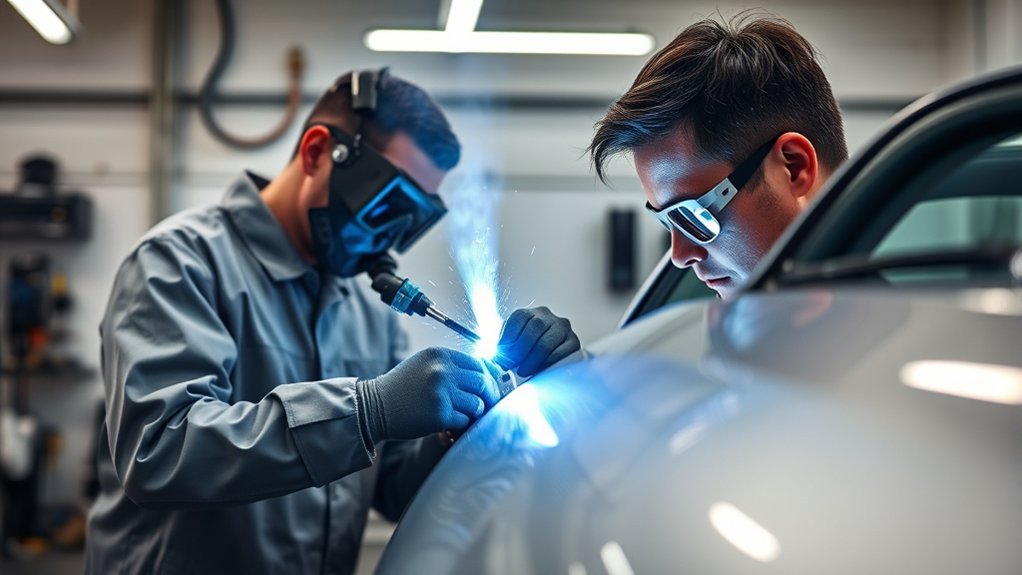
Laser welding uses a focused beam of light to melt the joint area and fuse metal together. In auto body work, that focused heat can help you make a narrow weld with less heat spread into the surrounding panel. That matters because modern body panels are often thin, shaped, coated, and sensitive to heat distortion.
The process may use conduction welding for shallow, controlled fusion or keyhole welding for deeper penetration. The right mode depends on laser power, travel speed, beam focus, material thickness, joint design, and surface condition. A laser weld is not automatically strong just because it looks clean. It still needs the correct procedure, joint fit, penetration, shielding, and inspection.
Laser beam welding is known for high energy concentration, narrow welds, and high welding rates in industrial applications. Research on laser beam welding also notes its short cycle times and small heat-affected zones, while warning that cracking can occur in some alloys if the procedure is not controlled. Recent laser beam welding research highlights both the process benefits and the need to control weldability issues.
Why Laser Welding Can Reduce Heat Distortion
Heat distortion happens when a panel expands and contracts unevenly during welding. The more heat you put into a thin panel, the more likely it is to ripple, pull, shrink, or lose its original shape. Laser welding can reduce that problem because the beam concentrates energy into a small area and can move quickly when the joint fit and settings are right.
This smaller heat-affected zone helps preserve panel shape, especially on thin exterior panels, tabs, small brackets, and controlled patch repairs. The benefit is not automatic. Poor fit-up, slow travel, dirty metal, wrong focus, bad shielding, or repeated passes can still overheat the panel.
Note: Laser welding reduces heat input only when the procedure is dialed in. If the gap is too wide or the operator dwells too long, the panel can still warp, crack, or burn through.
Key Benefits of Laser Welding for Auto Body Repair
Laser welding is most valuable when you need controlled heat, a clean seam, and minimal finishing. It can improve repair quality in the right setting, but it should be treated as a specialized process rather than a shortcut.
Precision and Accuracy
The focused beam lets you place heat directly at the seam. That helps when you are working near body lines, flanges, small patches, and areas where excess grinding could thin the metal. A narrow weld also means you may spend less time dressing the bead before primer and paint.
Smaller Heat-Affected Zone
A smaller heat-affected zone can reduce shrinkage around the weld. This is especially helpful on thin sheet metal where heat control determines whether the repair stays flat. It can also reduce the amount of hammer-and-dolly correction, filler work, and sanding needed after welding.
Cleaner Welds With Less Finishing
When the fit-up is tight and the settings are correct, laser welding can leave a smooth, narrow seam. That can save time on cosmetic repairs because there is less weld bead to grind. Less grinding also reduces the risk of thinning the surrounding panel.
Potential for Some Dissimilar-Material Repairs
Laser welding can work with some dissimilar material combinations, but this is not a blanket rule. Steel-to-steel, stainless-to-steel, aluminum, coated steels, and mixed-material joints all behave differently. Use only a validated procedure for the exact material pair. Some dissimilar-metal welds can form brittle intermetallic layers or crack if the process is not engineered correctly.
Real-World Uses of Handheld Laser Welders in Auto Repair
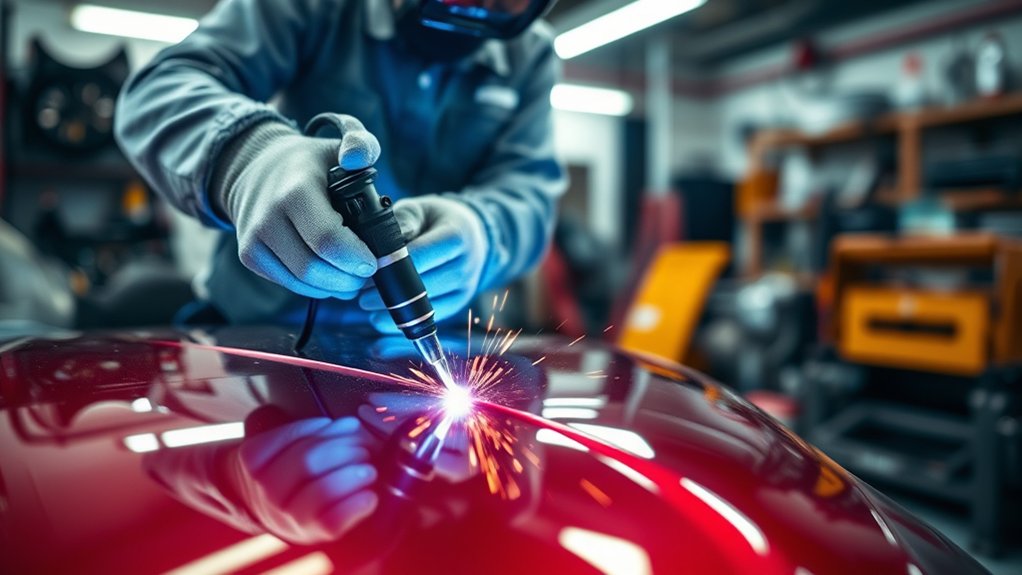
Handheld laser welders are most useful in controlled shop work where the technician can manage access, reflection, ventilation, fit-up, and inspection. They are not a substitute for checking the vehicle maker’s repair procedure.
Products Worth Considering
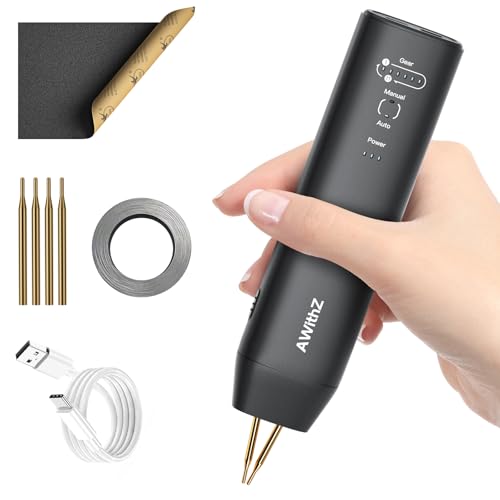
NO Spot Welding Pen------No need for a spot welding pen when going out or at home, handheld spot welder that does not require additional spot welding pens, carry it with you and it's convenient to go anywhere. It combines the built-in power supply and welding pen into one, making it easy to weld without the need for an external welding pen.

【Effortless Operation for Everyone】Introducing the 2025 Laser Welding Machine, designed with a built-in intelligent application system that makes welding accessible for novices and experts alike. Experience a simple and efficient welding process that allows you to achieve professional results with ease.
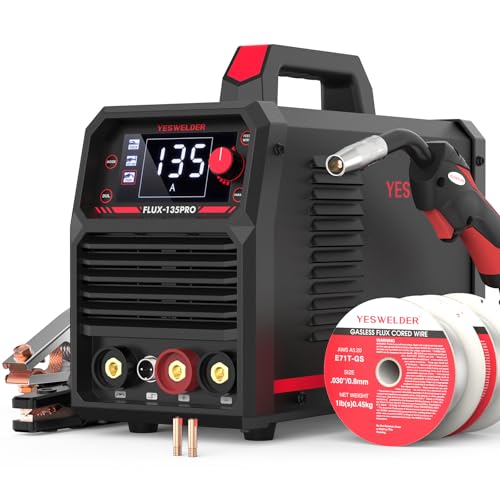
READY OUT OF THE BOX: Start welding immediately! It masterfully handles Gasless Flux Core MIG, Stick, and Lift TIG (Extra Lift TIG torch required). This budget-friendly 3-in-1 machine includes extra E71T-GS .030''&.035'' flux core wires, known for its smooth arc and high feedability. Say goodbye to heavy shielding gas cylinders—perfect for outdoor, windy, or all-position welding.
Thin Metal Applications
Laser welding can be useful for thin patch panels, small cracks, tabs, and cosmetic seams. It works best when the joint is tight and clean. On thin material, the goal is to fuse the seam without overheating the surrounding metal.
Structural Reinforcement Techniques
Laser welding may help with small brackets, supports, and reinforcement pieces when the repair procedure allows welding in that location. For structural collision repairs, do not guess. If the OEM calls for resistance spot welding, MIG brazing, rivet bonding, sectioning, or replacement, follow that procedure instead of substituting laser welding.
Custom Modifications and Repairs
For custom fabrication, restoration work, and non-OEM cosmetic modifications, laser welding can produce clean seams with less panel movement. It can also be helpful when one-sided access is available but clamp access is limited. Even then, make test coupons from similar material before welding the actual panel.
When Laser Welding Makes Sense
- Thin sheet metal: Useful when you need a narrow, controlled seam and want to limit warping.
- Cosmetic welds: Helpful where a smaller bead can reduce grinding and finishing.
- Small tabs and brackets: Good for precise heat placement when the joint is accessible and approved.
- Controlled custom work: Useful in fabrication when the shop can test, inspect, and document the weld.
- Repeatable repairs: Best when the technician can use known parameters on the same material and joint style.
When Not to Use Laser Welding
Laser welding is not the right answer for every auto body repair. Avoid it in these cases:
- No OEM approval or qualified procedure: Do not use it for structural collision repair unless the repair information or engineering procedure allows it.
- Poor fit-up: Wide gaps, uneven edges, and loose panels can cause burn-through or weak fusion.
- Unknown metals or coatings: Galvanized, aluminum, high-strength steel, and coated panels need the correct procedure and fume controls.
- Reflective surfaces without controls: Reflections can create serious laser hazards.
- No controlled laser area: Do not operate a high-powered handheld laser in an open bay with unprotected workers nearby.
- No inspection plan: If you cannot verify penetration and weld quality, use the approved repair method instead.
Comparing Laser Welding to Traditional Welding Methods
Laser welding has real advantages, but MIG, TIG, and resistance spot welding still have strong roles in body repair. The best method depends on the panel, repair location, access, material, and OEM instructions.
| Method | Best Use | Main Advantage | Main Limitation |
| Laser welding | Thin panels, cosmetic seams, precise repairs, controlled fabrication | Low heat spread and narrow welds | Needs strict safety controls, tight fit-up, training, and approved procedures |
| MIG welding | General steel body repair and sectioning where approved | Fast, common, and easier to learn | More heat input and more finishing than a well-set laser weld |
| TIG welding | Precision work, stainless, aluminum, and custom fabrication | Excellent control and clean welds | Slower and more skill-intensive |
| Resistance spot welding | Factory-style flange welds where access and OEM procedure allow | Fast, repeatable, and common in collision repair | Needs access for electrodes and correct squeeze force |
Products Worth Considering

【200Amp Power for Home Repairs & DIY】 This 110V stick welder Adjustable Current: 20-200A. Easily weld metal materials with 0.06-0.2 inch thickness, such as cast iron, mild steel, etc. For stainless steel, use E308L-16 rods only. Includes 20 welding rods right out of the box, so you can start your first project immediately.
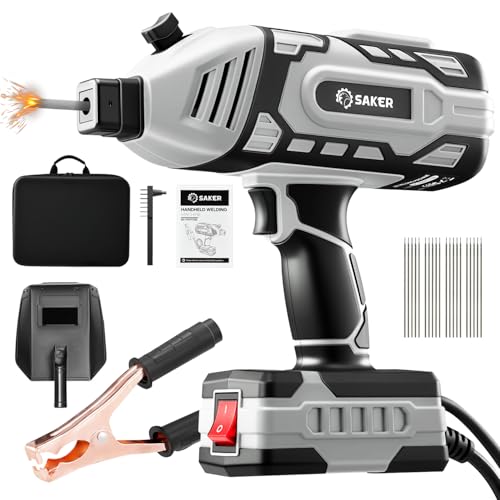
PORTABLE WELDER WITH ADVANCED IGBT INVERTER TECHNOLOGY: Saker 110V portable welder features advanced IGBT inverter technology, providing high no-load voltage and enhanced arc stability. This unit helps maintain consistent current output for improved welding performance and easier arc starting. The current adjustment function assists in achieving cleaner welds with reduced spatter, suitable for materials including carbon steel and iron.

9-IN-1 WELDER:ARCCAPTAIN MIG205MP MIG welder has 9 welding modes: Gas MIG/Gasless MIG/Cut/DC HF TIG/DC Lift TIG/MMA Stick/Clean/Spot Welding/Spool Gun Aluminum Welding (Need to buy extra spool gun). This multiprocess welder perfectly handles all your needs—from home DIY and garage projects to outdoor repairs, farm equipment, and road maintenance and repairs.
Fit-Up, Surface Prep, and Quality Checks
Laser welding is sensitive to joint condition. Before welding a body panel, confirm these basics:
- Clean metal: Remove paint, seam sealer, adhesive, rust, oil, and zinc residue as required by the procedure.
- Tight gaps: Keep the joint fit consistent. Gaps that MIG can bridge may be too wide for laser welding.
- Correct focus: A small focus change can alter penetration and bead shape.
- Shielding gas: Use the gas type and flow recommended for the laser, metal, and joint.
- Test coupons: Practice on the same material thickness before welding the vehicle.
- Inspection: Check bead shape, penetration, porosity, cracks, undercut, backside condition, and panel movement.
Pro Tip: Make a short test weld on matching scrap before touching the vehicle. Cut and inspect the test piece if the weld is structural or if you are setting up a new material, seam style, or laser program.
Staying Safe While Using Handheld Laser Welders
Laser safety must be built into the work area before the trigger is pulled. OSHA’s laser hazard guidance covers eye injury, thermal injury, fumes, nonbeam hazards, controlled areas, barriers, warning systems, eyewear, and written procedures. OSHA notes that ventilation is needed to control potentially hazardous fumes and vapors from laser welding and cutting, and that Class IV systems require strong access controls.
Laser-Controlled Area
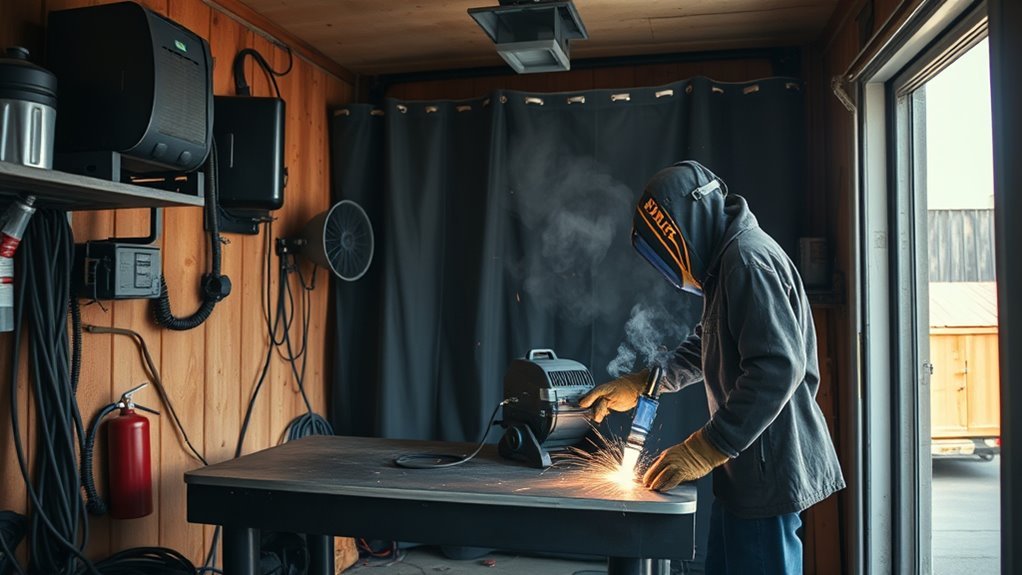
Set up a controlled area so unprotected people cannot enter the beam hazard zone. Use laser-rated curtains or barriers, warning signs, warning lights, and access control. Block windows, shiny surfaces, and open paths where a reflection could escape.
Laser-Rated Eye and Skin Protection
Use eyewear rated for the exact wavelength and optical density required by the laser manufacturer. A standard welding helmet is not enough unless it is specifically rated for that laser hazard. OSHA guidance says laser eye protection should be clearly labeled with the OD values and wavelengths it protects against. OSHA’s control guidance also points to protective clothing, barriers, gloves, and other controls when needed.
Ventilation, Fire, and Reflection Controls
Laser welding can produce fumes, vapors, UV radiation from welding plasma, and fire hazards. Use local exhaust ventilation, remove flammables, control coated-metal fumes, and avoid reflective fixtures near the beam path. Keep a suitable fire extinguisher nearby and follow your shop’s hot-work policy.
Training and Written Procedures
High-powered laser equipment should be used only by trained operators. The FDA says Class IIIb and IV laser products should be used only by people with proper training and a legitimate need for high-powered products. Shops should also have written standard operating procedures for setup, welding, maintenance, emergency shutdown, and bystander protection.
Training and Skills Required for Technicians
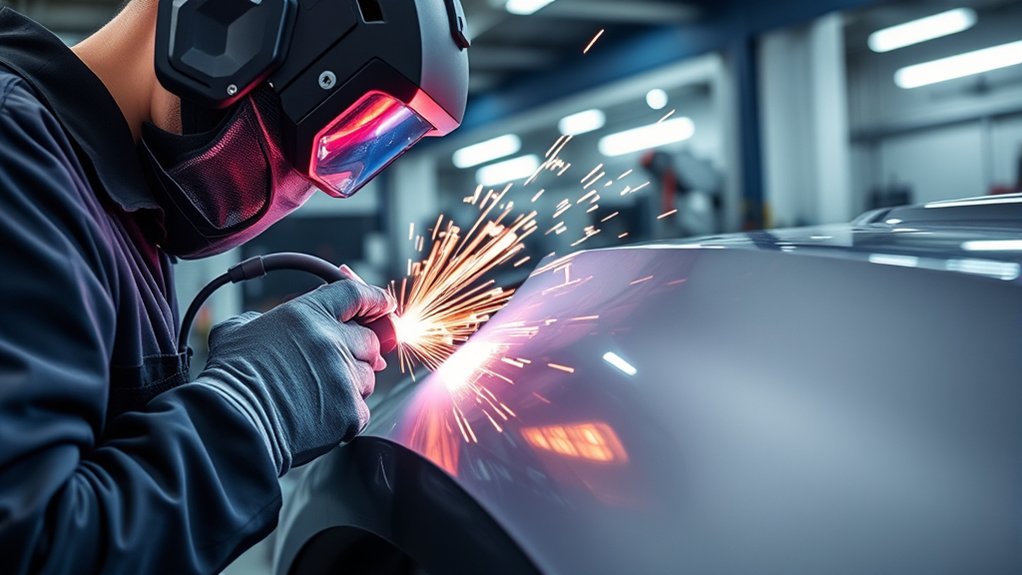
Laser welding can be easier to guide by hand than TIG in some small repairs, but it is not a beginner process. The operator must understand the laser’s power settings, focus, wobble pattern if used, shielding gas, speed, joint fit, and safety limits.
| Training Focus | Why It Matters |
| Laser safety | Protects workers from eye, skin, reflection, fume, and fire hazards. |
| Joint fit-up | Laser welds need consistent contact or tight gaps for reliable fusion. |
| Parameter control | Power, speed, focus, and shielding affect penetration and distortion. |
| Inspection | Prevents attractive but weak welds from passing unnoticed. |
| Maintenance | Dirty optics, damaged fiber, poor gas flow, or worn nozzles can ruin weld quality and increase hazards. |
Common Laser Welding Defects and Troubleshooting
Clean-looking laser welds can still fail if the setup is wrong. Watch for these problems before the vehicle leaves the shop.
| Defect | Likely Cause | Fix |
| Burn-through | Too much power, too slow travel, gap too wide, or metal too thin | Lower heat input, improve fit-up, increase travel speed, or change process. |
| Lack of fusion | Too little power, wrong focus, poor angle, or contamination | Reset focus, clean the joint, verify power and speed, and inspect test coupons. |
| Porosity | Paint, oil, coating residue, moisture, or poor shielding | Clean deeper, improve gas coverage, and remove coatings as required. |
| Cracking | Wrong alloy, high cooling stress, poor procedure, or unsuitable material pair | Stop and verify material, procedure, filler need, preheat need, or alternate joining method. |
| Excessive distortion | Too much dwell time, repeated passes, poor clamping, or wrong sequence | Use shorter welds, improve clamping, adjust sequence, and reduce heat input. |
Key Challenges in Adopting Laser Welding for Auto Body Repair
Laser welding has strong potential, but shops face real barriers before it becomes a routine collision repair tool.
- OEM repair approval: The biggest question is not whether the laser can make a weld. The question is whether that weld is allowed for the exact vehicle, panel, and repair location.
- Safety investment: A shop may need a laser-controlled area, laser curtains, warning systems, eyewear, ventilation, fire controls, training, and written procedures.
- Equipment cost: Handheld laser welders, chillers, optics, safety accessories, and maintenance can cost far more than common MIG setups.
- Fit-up sensitivity: Laser welding is less forgiving of gaps and contamination than many technicians expect.
- Inspection requirements: The weld may look clean on the surface while still lacking penetration or having internal defects.
Future Trends in Laser Welding for Collision Repair
Laser welding will likely keep growing in automotive manufacturing and specialized repair because vehicles use thinner metals, mixed materials, and complex body structures. Better handheld systems, built-in monitoring, safer enclosures, and technician training may make the process more practical for collision shops.
The key trend is not just more power. The future is better control: stable parameters, weld monitoring, safer beam containment, approved procedures, and clearer technician training. Until those pieces are in place, laser welding should be treated as an advanced tool for qualified repairs, not a general replacement for standard collision joining methods.
Frequently Asked Questions
What are the downsides of laser welding?
The main downsides are equipment cost, strict safety requirements, fit-up sensitivity, training needs, maintenance, and limited approval for some collision repairs. Laser welding can also cause cracking, porosity, lack of fusion, or burn-through if the metal, joint, or settings are wrong.
What is the best type of welder for auto body repair?
For many collision repairs, MIG welding, resistance spot welding, MIG brazing, rivet bonding, or adhesive bonding may be the required method. TIG is useful for custom and precision work. Laser welding can be excellent for certain thin-panel and cosmetic repairs, but the best welder is the one specified by the OEM repair procedure for that vehicle and repair location.
What are the advantages of laser welding?
Laser welding can offer precise heat placement, narrow seams, less heat distortion, faster welding in controlled settings, reduced grinding, and clean cosmetic results. It is especially useful when the metal is thin and the joint fit is tight.
What are the common problems with laser welders?
Common problems include dirty optics, poor shielding gas coverage, wrong focus, inconsistent travel speed, reflective hazards, inadequate ventilation, porosity, cracking, lack of fusion, and operators using the tool without a controlled laser area.
Can a handheld laser welder replace MIG welding in a body shop?
No. A handheld laser welder can expand what a shop can do, but it does not replace MIG welding, TIG welding, resistance spot welding, rivet bonding, or OEM-specified joining methods. Use it only where the material, repair procedure, safety setup, and inspection plan support it.
Is laser welding safe for auto body repair?
It can be safe only with proper controls. That includes trained operators, laser-rated eyewear for the correct wavelength and OD, barriers or curtains, warning signs, controlled access, ventilation, fire precautions, and written operating procedures. Without those controls, high-powered laser welding is unsafe.
Conclusion
Laser welding can be a powerful tool for auto body repair because it places heat precisely, limits distortion, and can leave clean seams on thin metal. Its value depends on more than the machine. You still need approved repair information, tight fit-up, clean metal, correct parameters, proper shielding, inspection, and strong laser-safety controls.
Use laser welding where it is supported by the repair procedure and shop setup. For structural collision work, never substitute it for the OEM-required joining method unless the procedure clearly allows it. In the right hands, laser welding can improve repair quality. In the wrong setting, it can create safety risks and welds that look better than they perform.
Sources
- OSHA Technical Manual: Laser Hazards — laser eye injury, controlled areas, ventilation, PPE, warning systems, and Class IV laser controls.
- FDA: Frequently Asked Questions About Lasers — laser product classes, regulation, and training expectations for high-powered laser products.
- Large-scale Thermo-Mechanical Simulation of Laser Beam Welding — supports laser beam welding’s short cycle times, small heat-affected zones, and cracking considerations.
- Transmission Laser Welding of Similar and Dissimilar Semiconductor Materials — supports the need to treat dissimilar-material laser welding as procedure-specific rather than automatic.
- Laser Beam Welding overview — general process background, concentrated heat source, narrow welds, and automotive/aerospace use context.